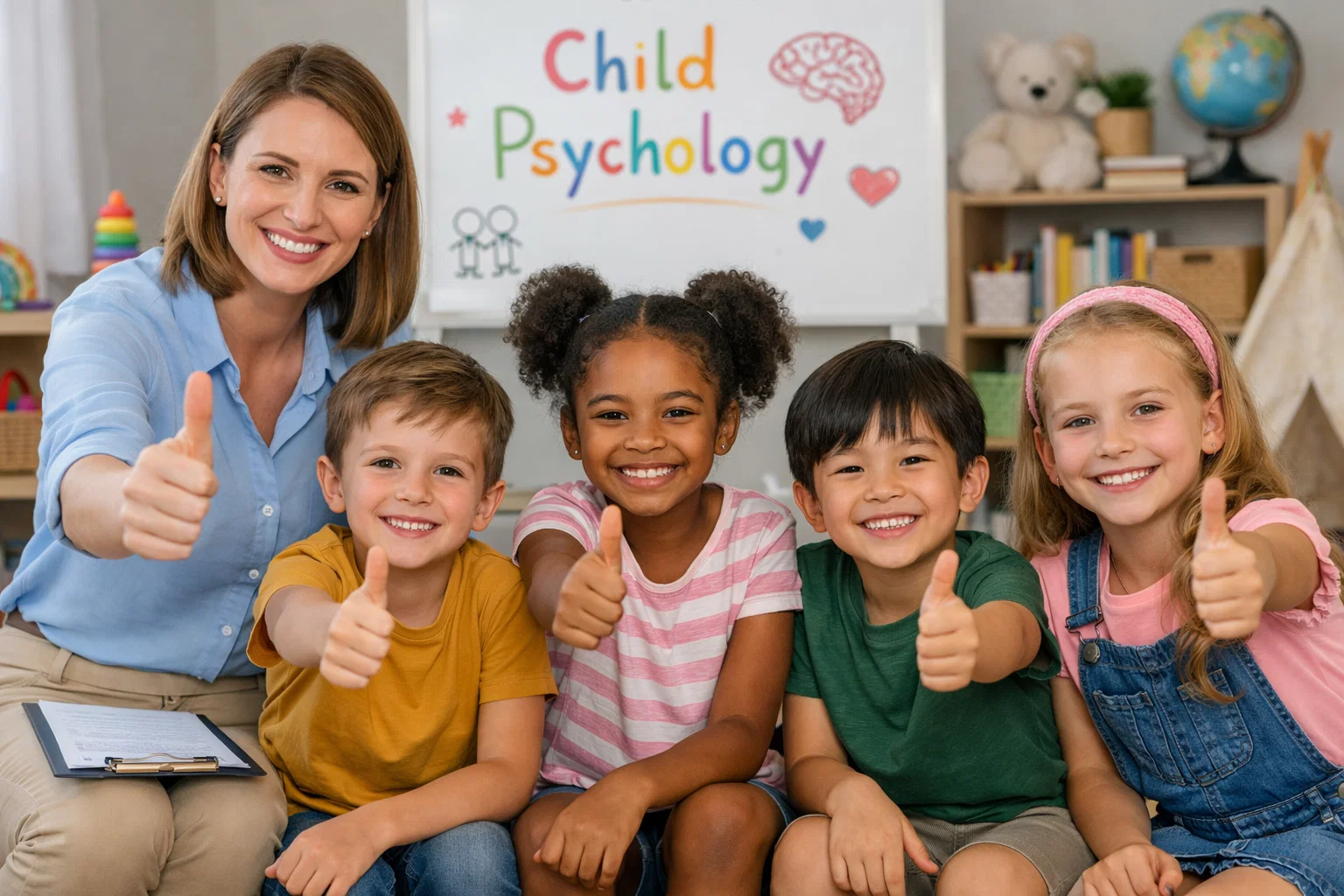
Have you ever wondered why children behave in certain ways? Do you want to help them grow and feel safe? Learning more about how their minds work can guide you.
A child psychology course makes this easier. It shows you how to care for, teach, and support young children in better ways.
What Is A Child Psychology Course?
A child psychology course teaches you how children grow, learn, and think. You will learn about their emotions, behaviour, and mental growth. This helps you support them at every age.
What You Learn In The Course
This course teaches important ideas about how children change as they grow.
Stages of child development
How children learn new things
Why do they act in certain ways
What they need to feel safe
How to talk to children clearly
Why It Is Important
Knowing how a child thinks helps you help them. You will make better choices for their learning and care.
Makes you a better teacher or parent
Helps you spot when a child needs help
Gives you ways to guide good behaviour
Builds strong child relationships
Gives clear steps to help children grow
Who Should Take This Course
This course is for anyone who wants to work with or care for children.
Parents and guardians
Teachers and classroom helpers
Childcare workers
Youth group leaders
People starting a child care career
A child psychology course gives you the tools to help children grow in healthy and happy ways.
How Does The Course Help You Understand Children?
The course explains how children think, feel, and act as they grow. It helps you see the world through their eyes. This makes you more patient and kind.
Why Children Behave The Way They Do
Children often act out because they cannot explain how they feel. The course helps you understand the reasons behind their behaviour.
Tantrums and mood swings
Trouble with sharing or waiting
Fear of new places or people
Changes during growth stages
Needing comfort and praise
What Feelings Children Have
Children feel things deeply but do not always know the words to say them. The course helps you spot feelings and respond with care.
Joy and excitement
Anger or sadness
Fear or worry
Trust and love
Loneliness or confusion
How To Respond In The Right Way
Learning how to react in a caring and helpful way is key. You will learn to guide behaviour without being harsh.
Stay calm when a child is upset
Use kind words and simple steps
Praise good actions often
Set safe and clear limits
Help them feel safe to speak
When you know how children feel and think, you can help them in the best way.
What Skills Do You Gain From The Course?
The course gives you clear and practical skills for understanding child minds. You learn how to support and guide a child with care and knowledge. This builds your confidence and understanding.
Observation Skills
You learn to watch a child’s behaviour without judgement.
Notice small changes in mood or play
Understand what actions might mean
Learn to record what you see
Be patient when observing
See patterns over time
Communication Skills
You learn how to talk and listen in a child‑friendly way.
Use words that children understand
Ask open questions and listen patiently
Match tone and volume to their age
Show empathy and attention
Respond with calmness and clarity
Problem Solving Skills
You learn how to help when a child struggles.
Think about reasons for behaviour
Use strategies to help the child
Reflect on what works and what does not
Plan ways to support in future
Adjust as you see results
With these skills, you can better understand and support children in a caring way.
How Are Assignments Designed To Help You Learn?
Assignments in this child psychology course are simple and useful. They help you practise what you learn in a real way. You build your knowledge step by step.
Observation Journal
You keep a journal of what you see in child behaviour.
Write notes after watching a play or a talk
Reflect on what feelings or stages you saw
Link observations to what you learn
Note what you might do next
Share your thoughts with a tutor
Case Studies
You read stories about children and answer questions.
Look at a child’s background and needs
Think about how you might help or guide them
Reflect on what worked and what did not
Compare ideas with what you study
Summarise your insights in writing
Short Quizzes
You test your understanding with simple questions.
Check your knowledge of stages and emotion
Learn from mistakes with gentle feedback
Track your progress each week
Answer in short sentences or tick boxes
See quick results and feel encouraged
Assignments help you practise new ideas and see your learning grow every day.
What Support Do You Get While Studying?
You get helpful support from tutors and peers in this course. That means help with tricky ideas and fast feedback. You never have to feel stuck or alone.
Tutor Feedback
You receive comments on assignments in a few days.
Tutors explain what you did well
They help you correct mistakes
They guide your next steps
You can ask questions anytime
Feedback helps you improve
Peer Sharing
You can share ideas with other students in groups.
Exchange notes and tips
Learn different views on cases
Offer and receive encouragement
Build friendships and support
Try new ideas in a safe space
Study Guides and Videos
You get simple guides and videos to explain ideas.
Watch short clips to show children playing
Use guides that match lessons
See examples of stages and emotion
Learn at your own pace
Review content when needed
You are supported at every step with help and tools that make learning easy and caring.
How Does The Course Fit With Your Goals?
This course fits your reason for studying children, whether for care, work, or personal interest. It helps you build skills that match your future plans. You can choose how you want to use it.
Personal Growth
You learn more about the children you know or care for.
Improve your understanding of young minds
Use knowledge with nieces, nephews, and cousins
Support children in family settings
Grow in empathy and awareness
Apply new ideas in everyday life
Career Pathways
You can use the course to start working with children.
Show knowledge in job or volunteer applications
Understand key ideas in education or care
Discuss child behaviour with confidence
Prepare for further studies or training
Use skills in schools, clinics, or care centres
Teaching and Tutoring
You can share your learning as a teacher or tutor.
Use ideas to support learners in class
Explain growth and emotion clearly to others
Create caring and safe environments
Use observations to meet needs
Inspire trust in young people
The course links to your goals by giving you knowledge you can use in life and work with children.
How Is The Course Structured?
This child psychology course organizes lessons into clear, short parts that build on each other. You progress step by step and see your growth. It is simple and well paced.
Module Layout
The course is divided into easy topics called modules.
Each module covers one idea or stage
You work module by module at your pace
You build from simple to more complex concepts
Each ends with an assignment or quiz
You know what to expect next
Time Frame
You can finish the course in weeks or months.
Study as quickly or slowly as you like
Take time if you are busy
Speed up when you have spare time
Use weekends or evenings
Fit learning into your life
Access To Resources
You can access all materials online anytime.
Study portals with all lessons
Videos, guides, and quizzes in one place
Download or print what you need
Accessible from phone or tablet
Review past lessons easily
The course structure makes learning easy, clear, and flexible for your lifestyle.
How Do You Track Your Progress?
The course helps you see how far you have come and what is left to learn. This keeps you motivated and guided. You feel proud of what you achieve.
Progress Dashboard
A dashboard shows your completed work and quiz scores.
Eye‑catching bar or list shows tasks done
See quiz marks at a glance
Check upcoming work or unused modules
Stay on top of what is next
Feel motivated by progress visuals
Feedback Summary
You receive a record of tutor feedback and guidance.
Get a clear summary after the assignments
Note what areas need work
See what you did well each time
Use feedback to focus your learning
Build improvement over time
Self‑Reflection Tools
You reflect on your own growth after each module.
Write a short note on what you learned
State what you understood better
Plan one thing to practise next
Notice changes in your thinking or feeling
Use this to guide your next steps
Tracking progress shows your learning path and encourages you each step of the way.
How Practical Is What You Learn?
The knowledge from this child psychology course is practical and useful in real life. You can apply what you learn to actual child situations. It helps you help children.
Real‑Life Scenarios
You study stories or examples that mimic real child behaviour.
Children in play, school, or home settings
Situations of emotions or learning stages
Common problems that arise in daily life
Cultural and social examples, too
You reflect on how you would respond
Role‑Playing Exercises
You imagine a situation and decide what to do.
Practice responses to upset or shy children
Think through steps to calm or support
Choose words that are kind and clear
Build confidence in helping
Learn by thinking and acting
Practical Tips And Tools
You receive simple ideas to use with children.
How to ask gentle questions
Ways to observe without interrupting
How to praise positive behaviour
Games or talks that encourage sharing
Tips to manage focus and mood
What you learn is not just theory—it is useful and ready for life with children.
How Does The Course Encourage Ethical Practice?
This course teaches you to respect children and protect their wellbeing. You learn ethical ways to observe, help and teach. You do work in a kind and safe way.
Respect For Privacy
You learn how to keep children’s personal stories safe.
Do not share private details in assignments
Use general descriptions without naming
Show children respect in every note
Ask for permission when necessary
Keep written work confidential
Consent And Permission
You learn to ask for consent before observing or helping.
Explain to child or parent what you are doing
Ask for verbal or written agreement
Respect a child’s right to decline
Be clear and kind in asking
Keep records of consent
Safeguarding Principles
You learn how to protect children from harm.
Recognise early signs of distress or neglect
Know when to refer to professionals
Act with care when concerned
Never ignore worrying behaviour
Follow rules and guidelines firmly
Ethical learning safeguards children and builds trust and respect in your care.
Conclusion
This child psychology course helps you truly understand young minds, develop useful skills, and apply practical knowledge with care. It supports your personal and career goals in learning or working with children.
Ethical guidance ensures you act with respect and safety. The flexible and clear structure makes the learning journey smooth and meaningful.
Begin this course today and build a strong foundation for helping children.
Frequently Asked Questions
Can I study child psychology online at my own pace?
Yes you can study the course online at your own pace. You choose when to study and how fast to go through modules. It fits around your other commitments.
Do I need experience with children to start this course?
No experience is needed to start this course. It is designed for anyone interested in learning about children. You will learn from the basics.
How long does the course take to finish?
You can finish in a few weeks or take a few months. It depends on how much time you dedicate. The course is flexible and adapts to your pace.
Will I get a certificate for completing the course?
Yes you will receive a certificate of completion at the end. This shows that you have studied child psychology basics. It may help in job or care situations.
Can this course help me work with children?
Yes the course gives you practical skills for work or volunteering with children. You learn about behaviour, emotion, and support. You will feel more confident in caring roles.
Are there tutors to help me if I struggle?
Yes tutors are available to help with assignments or questions. You get feedback to guide your learning. You are never alone in your studies.
Can I share ideas with other students?
Yes, you can join study groups or chats with peers. You can share notes and help each other. This makes learning more fun and social.
What if I need more guidance on a topic?
You can ask your tutor for extra help or clarification. They offer feedback and support on your work. You will get help when needed.
Is the course content easy to understand?
Yes, the content is simple and clear with stories and examples. It is designed for low reading levels and easy learning. You will find it easy to follow and apply.
How does this course fit into my future plans?
The course supports careers in education, care, or parenting. It also helps you understand children better at home or work. It can motivate you for further study in related fields.
Surrounding yourself with supportive people inspires action because they help you believe in yourself. In fact, friends, family, and teachers who care make you feel brave enough to try.
As a result, you want to learn and do your best. Just as important, their kindness reminds you that you are never alone. Besides, when you listen to advice, you can make good choices and grow.
Above all, people who encourage you can inspire you to study a child psychology course and learn how people think and behave.
Supportive people lift your mood. They help you stay focused. They share good ideas when you feel unsure. They cheer when you do well. They remind you to keep trying.
What Are Supportive People?
Supportive people are those who care about you and help when things feel hard. In addition, they listen, give advice, and share in your success.
They make you feel safe and proud of yourself. Just as important, support can come from family, friends, teachers, and mentors.
Knowing that someone believes in you makes every challenge easier to face.
How Can Friends Offer Support?
Friends show care and kindness every day.
Share ideas for learning
Help with schoolwork or fun projects
Cheer for you when you do well
Listen when you feel sad
Remind you to try again
How Can Family Give Encouragement?
Family helps you feel strong and loved.
Give calm and kind advice
Help when work feels too hard
Celebrate little steps of progress
Talk through new ideas together
Encourage learning every day
How Can Teachers Assist You?
Teachers guide you to learn and grow.
Explain things clearly
Give tips to do better next time
Show easier ways to solve problems
Praise you for effort
Answer your questions kindly
Supportive people make learning easier. They give you courage to act and confidence to keep going.
How Can Encouragement Motivate Action?
Encouragement motivates action because it helps you believe that trying matters. In fact, kind words make you feel brave.
Just as important, seeing others cheer for you helps you try harder. It also reminds you that progress takes time. Besides, encouragement makes learning fun and full of energy.
How Can Positive Words Inspire?
Kind words give you strength to act.
Listen to encouraging voices
Repeat happy thoughts to yourself
Write good words in a notebook
Say nice things to others
Notice how it makes you smile
How Can Celebrating Small Wins Help?
Small wins make you proud of progress.
Mark what you have finished
Give yourself small rewards
Tell family or friends about it
Smile and say, “I did it!”
Keep track of each step
How Can Support Reduce Fear?
Feeling safe helps you try again.
Ask questions without worry
Talk about mistakes openly
Listen to caring advice
Try new things slowly
Focus on learning, not being perfect
Encouragement makes you brave and full of energy. It inspires you to take action every day.
How Can Feedback Improve Effort?
Feedback improves effort because it shows what works and what can be better. In addition, it teaches you how to grow.
Just as important, listening to feedback helps you fix mistakes. It also helps you notice what you do well.
Besides, feedback keeps you moving forward with confidence.
How Can Listening Help?
Listening carefully helps you learn faster.
Focus on what others say
Write notes about good advice
Ask questions to be sure
Try the tips you hear
Check what improves next time
How Can Mistakes Teach Lessons?
Mistakes show you how to grow stronger.
Write down what went wrong
Think about how to fix it
Try another way next time
Be proud of what you learned
Keep practising
How Can Reflection Boost Improvement?
Thinking helps you plan better next time.
Look back on what worked
Change what needs improving
Keep a journal of progress
Remember what made you proud
Set new goals for next time
Feedback helps you understand yourself better. It teaches you to keep learning and trying.
How Can Teamwork Encourage Learning?
Teamwork encourages learning because it brings ideas together. In addition, working with others makes problems easier to solve.
Just as important, teamwork helps you make friends and learn new ways of thinking. It also builds trust and care.
Besides, sharing work teaches patience and joy.
How Can Group Discussions Help?
Talking together builds ideas.
Listen to everyone’s thoughts
Share your own ideas
Ask questions kindly
Agree on what to try
Respect different views
How Can Shared Tasks Improve Skills?
Working together makes learning fun.
Give each person a role
Help one another
Support when things feel hard
Celebrate finished work
Learn from each other
How Can Team Encouragement Inspire?
Teams build courage and joy.
Cheer for friends often
Offer help kindly
Notice small improvements
Encourage brave ideas
Share success stories
Teamwork builds friendship and learning. It helps everyone feel proud and ready to grow.
How Can Mentors Guide Action?
Mentors guide action because they share experience and support. In fact, they show how to solve challenges wisely. Just as important, they help you stay focused on your goals.
They also believe in your potential. Besides, mentors can inspire you to study a child psychology course to understand people better.
How Can Mentors Share Knowledge?
Mentors teach through experience.
Share real examples
Explain clear steps
Show what works well
Suggest helpful tools
Encourage questions
How Can Mentors Give Advice?
Good advice keeps learning safe.
Listen with care
Ask about choices
Think about what fits you
Try new ideas slowly
Reflect on results
How Can Mentors Inspire Confidence?
Mentors help you believe in yourself.
Praise your effort
Support you when things go wrong
Share learning stories
Celebrate your progress
Encourage new dreams
Mentors help you learn from life. They make you stronger and more confident to act.
How Can Goal-Setting Help Support Learning?
Goal-setting helps because it gives clear direction. In addition, it shows what to do first. Just as important, goals keep your focus strong.
They also help you see how much you have grown. Besides, goal-setting makes you proud when you reach each step.
How Can Short-Term Goals Be Made?
Short goals make big tasks smaller.
Write daily or weekly steps
Focus on one at a time
Track your work in a notebook
Reward small success
Change goals if needed
How Can Long-Term Goals Be Planned?
Big goals help you dream ahead.
Write what you want in months
Break it into small actions
Review often to stay on track
Keep learning from progress
Celebrate milestones
How Can Goals Be Reviewed?
Checking goals keeps motivation high.
Look at what you have done
See what worked best
Change plans if needed
Note what to improve
Plan the next steps
Goal-setting builds direction and focus. It helps you stay organised and happy to learn.
How Can Celebrating Progress Inspire Action?
Celebrating progress inspires action because it shows that hard work pays off. In addition, it reminds you that every step matters.
Just as important, it helps you stay excited to learn. Celebration also fills you with pride. Besides, it gives energy to keep trying.
How Can Small Wins Be Recognised?
Little wins make a big difference.
Mark what you finished
Give a small reward
Tell someone who cares
Think about what worked
Feel proud of effort
How Can Rewards Encourage Effort?
Rewards make work joyful.
Plan a small treat for effort
Use stickers or stars
Share success with friends
Enjoy a happy break
Smile at your progress
How Can Reflection Support Celebration?
Thinking helps you see your growth.
Write your best moments
Compare with where you began
Notice how you improved
Be thankful for learning
Plan your next step
Celebration keeps motivation bright. It makes you want to keep going and growing.
How Can Encouragement From Friends Make A Difference?
Encouragement from friends makes a difference because it helps you stay positive. In addition, it gives you courage to try new things.
Just as important, friends share ideas and support. It also makes school and learning fun.
Besides, true friends remind you to believe in yourself.
How Can Friends Offer Advice?
Friends guide you with care.
Share ideas kindly
Listen to problems
Suggest new ways
Ask questions together
Reflect on what works
How Can Friends Celebrate Success?
Celebrating together builds happiness.
Cheer for each other
Share fun rewards
Say kind words
Try harder next time
Keep spirits high
How Can Friends Provide Support During Challenges?
Friends stay close during hard times.
Offer help when needed
Listen to feelings
Suggest gentle solutions
Stay patient
Encourage trying again
Friends give strength and comfort. They inspire you to act with courage.
How Can Family Support Inspire Learning?
Family support inspires learning because it gives care and guidance. In addition, families help plan better steps. Just as important, they keep you calm when things feel difficult.
They also celebrate when you do well. Besides, their support can help you dream about a child psychology course to understand people more deeply.
How Can Parents Offer Guidance?
Parents help you stay focused.
Explain steps clearly
Help plan learning goals
Give praise for trying
Talk about progress
Celebrate together
How Can Family Build Confidence?
Family makes you feel proud and safe.
Encourage effort
Praise trying new things
Listen to worries
Remind you of strengths
Keep positivity at home
How Can Family Encourage Persistence?
Family helps you never give up.
Remind you of success
Encourage new tries
Suggest simple solutions
Celebrate each step
Stay patient and kind
Family love helps you stay strong. It inspires you to learn more every day.
How Can Teachers Encourage Action?
Teachers encourage action because they teach and guide every step. In addition, they share feedback to help you grow.
Just as important, teachers praise progress and make learning exciting. They also help you set goals and dream big.
Besides, teachers can inspire you to study a child psychology course to learn how minds grow.
How Can Teachers Give Clear Instructions?
Clear steps make learning simple.
Explain what to do
Show good examples
Check understanding
Give gentle reminders
Answer kindly
How Can Teachers Offer Feedback?
Feedback helps you improve faster.
Listen carefully
Try suggestions
Learn from mistakes
Keep track of results
Stay proud of progress
How Can Teachers Inspire Confidence?
Teachers help you believe in yourself.
Praise effort often
Encourage brave ideas
Support questions
Celebrate growth
Motivate with kindness
Teachers build knowledge and strength. They help you grow into your best self.
How Can Mentors Guide Success?
Mentors guide success because they share knowledge and kindness. In addition, they help plan your steps wisely.
Just as important, mentors inspire confidence and teach through stories. They also remind you that learning never ends.
Besides, they may encourage studying a child psychology course to understand people and behaviour.
How Can Mentors Share Knowledge?
Mentors teach from experience.
Share lessons from life
Show what works well
Explain methods clearly
Suggest good tools
Encourage curiosity
How Can Mentors Offer Guidance?
Good guidance helps you choose well.
Listen to advice
Ask about choices
Reflect on what fits best
Try new ways
Review what worked
How Can Mentors Inspire Confidence?
Mentors make you believe in success.
Praise your growth
Help during challenges
Motivate you kindly
Celebrate with you
Inspire new dreams
Mentors teach lessons that last. They guide you to act with purpose and pride.
Conclusion
Surrounding yourself with supportive people inspires action because it fills you with courage, love, and confidence. In addition, friends, family, teachers, and mentors remind you that you can do great things.
Just as important, they help you see that mistakes are part of learning. Support also gives you hope when things feel tough. Besides, encouragement makes each small step exciting.
In fact, reflection and journaling can help you notice progress and keep learning. Above all, having caring people around can inspire you to study a child psychology course and understand how kindness shapes minds and hearts.
Start today by choosing to stay close to people who lift you up. You can do wonderful things when you feel supported.
Frequently Asked Questions
How can supportive people help me?
Supportive people give you courage and cheer for your success. They share ideas that make learning easier.
Their kindness helps you feel ready to act.
Why is encouragement important?
Encouragement helps you believe in yourself. It reminds you that effort matters more than perfection.
It keeps learning fun and full of hope.
How can friends make learning easier?
Friends share ideas, help solve problems, and celebrate progress. They listen kindly when things feel hard.
Working with friends makes school more joyful.
How can family support learning?
Family gives advice and helps plan goals. They cheer for every step you take.
Their support keeps you calm and motivated.
How can teachers inspire action?
Teachers explain lessons clearly and praise hard work. They give advice to improve and help you grow.
Their guidance builds confidence and success.
How can mentors help me succeed?
Mentors share wisdom and experience. They guide you through challenges with care.
Their advice keeps you moving forward.
How can celebrating progress help me?
Celebrating progress reminds you that small steps count. It makes you proud of your effort.
It keeps motivation strong for the next task.
How can reflection and journaling support learning?
Reflection helps you see what works best. Writing in a journal shows how much you have grown.
It builds confidence to keep learning.
Can supportive people inspire me to study more?
Yes, supportive people inspire curiosity and growth. They help you dream bigger goals.
They may even encourage you to take a child psychology course.
Why is a child psychology course helpful?
A child psychology course teaches how people think and feel. It helps you understand behaviour and learning.
It builds care, knowledge, and confidence for life.
Have you ever wondered what challenges child psychologists face and how they manage to solve them? Child psychologists help children with their feelings, thoughts, and behaviour, but their work is not always easy.
They face many difficulties while trying to understand and support children. These challenges can be tough, but there are ways to overcome them.
This article will guide you through common problems child psychologists meet and explain how they deal with them.
What Makes Understanding Children Difficult?
Understanding children can be hard because every child is different. Some children find it difficult to express their feelings with words.
Child psychologists need to be patient and creative to understand what children really feel.
Listening Carefully
Listening well helps psychologists learn what a child wants to say.
Paying attention to words
Watching body language
Not rushing the child
Asking gentle questions
Giving time to answer
Using Different Ways To Communicate
Some children speak better through play or drawings.
Drawing pictures
Playing games
Using stories
Using toys to explain feelings
Observing behaviour
Being Patient
It takes time to understand children fully.
Waiting without interrupting
Showing kindness
Encouraging children gently
Giving children time to open up
Avoiding pressure
Child psychologists need patience and different ways to understand children’s feelings. Start building these skills today to make a real difference!
How Do Child Psychologists Handle Emotional Situations?
Child psychologists often work with children who feel sad, scared, or angry. These feelings can be hard to handle for both the child and the psychologist.
They learn to stay calm and offer comfort.
Staying Calm
Keeping calm helps the child feel safe.
Taking deep breaths
Speaking softly
Keeping a relaxed body language
Not showing frustration
Staying focused
Offering Support
Being kind and caring helps children feel better.
Giving hugs if allowed
Listening carefully
Saying encouraging words
Being present and patient
Helping children name their feelings
Knowing When To Ask For Help
Sometimes, psychologists need advice from others.
Talking to teachers
Consulting other psychologists
Asking for help from families
Using team meetings
Getting expert advice
Child psychologists stay calm and kind to help children feel safe.
Why Is It Hard To Solve Every Problem?
Not all problems can be fixed quickly or easily. Some children’s difficulties are very deep or last a long time.
Psychologists try many ways and work slowly to help.
Trying Different Methods
If one way does not work, they try another.
Changing activities
Using new games
Adjusting talk methods
Trying art or music
Using more play
Working Together With Others
Helping children often needs a team effort.
Talking with parents
Meeting teachers
Working with doctors
Joining community workers
Sharing ideas
Being Patient Over Time
Some problems take a long time to improve.
Checking progress often
Celebrating small steps
Keeping plans flexible
Being hopeful
Never giving up
Child psychologists use many ways and work slowly to help children.
What Are The Challenges With Families?
Sometimes families have problems that affect children. Psychologists work with families, but this can be difficult.
Families may not always agree or understand the help needed.
Building Trust
Psychologists try to earn the family’s trust.
Listening without judging
Being honest and kind
Showing respect
Explaining clearly
Being patient
Explaining The Child’s Needs
Helping families understand is very important.
Using simple language
Giving examples
Showing progress
Answering questions
Providing advice
Handling Different Opinions
Families may not always agree on what to do.
Listening to all sides
Finding common ground
Staying calm
Being fair
Suggesting compromises
Psychologists work carefully with families to build trust and understanding.
How Do Child Psychologists Manage Their Workload?
Child psychologists often have many children to help. Managing their time and tasks can be hard.
They need to stay organised and take breaks.
Planning Their Time
Good planning helps manage many tasks.
Making daily lists
Setting priorities
Scheduling appointments
Leaving time for paperwork
Avoiding rushing
Taking Care Of Themselves
Looking after themselves helps psychologists do their best.
Taking breaks
Eating well
Exercising
Spending time with friends
Getting enough rest
Asking For Support
Sometimes they ask others for help.
Talking to supervisors
Sharing tasks with colleagues
Joining support groups
Using professional help
Asking for advice
Child psychologists stay organised and take care of themselves to manage their work.
Why Is Confidentiality Important And Hard To Keep?
Child psychologists must keep what children say private. This can be hard if a child is in danger or others need to know.
Psychologists must find the right balance.
Respecting Privacy
Keeping information private builds trust.
Not sharing secrets without permission
Talking in private places
Protecting notes
Using codes or initials
Keeping computer files safe
Knowing When To Tell Others
If a child is in danger, psychologists must tell someone.
Following rules
Talking to supervisors
Informing parents or authorities
Protecting the child’s safety
Being careful with information
Explaining Confidentiality To Children
Children need to know what will be shared.
Using simple words
Being honest
Answering questions
Explaining limits
Building trust
Psychologists keep secrets but know when to speak up for safety.
What Happens When Children Do Not Want To Talk?
Sometimes children do not want to share their feelings. This can make the psychologist’s job harder.
Psychologists find other ways to help.
Giving Space
Giving children time helps them open up.
Not pushing to talk
Allowing silence
Watching behaviour
Being patient
Waiting for signs
Using Play Or Art
Children often express themselves better through play or art.
Drawing feelings
Playing with toys
Making stories
Using games
Acting out scenes
Building Trust Slowly
Trust makes children feel safe to talk.
Meeting often
Being kind
Showing interest
Keeping promises
Listening well
Psychologists use patience and play to help children share their feelings.
How Do Child Psychologists Deal With Behaviour Problems?
Children sometimes behave in ways that are hard to manage. Psychologists help understand and change behaviour with care.
They use positive methods to guide children.
Understanding The Cause
Knowing why a child acts out helps solve problems.
Looking at feelings
Checking the environment
Talking to family
Watching patterns
Considering health
Using Positive Reinforcement
Rewarding good behaviour helps children learn.
Praising efforts
Giving small rewards
Setting clear rules
Using encouragement
Ignoring minor misbehaviour
Teaching New Skills
Helping children learn better ways to act is important.
Showing calm behaviour
Teaching problem-solving
Practising patience
Role-playing
Using stories
Psychologists guide children with kindness and positive support to improve their behaviour.
How Do Psychologists Handle Stress In Their Work?
Working with children and families can be stressful. Psychologists find ways to manage their feelings so they can help better.
Taking care of themselves is very important.
Recognising Stress
Knowing when stress builds helps take action.
Noticing tiredness
Feeling overwhelmed
Getting headaches
Having trouble sleeping
Becoming impatient
Using Relaxation Techniques
Relaxing the mind and body helps reduce stress.
Deep breathing
Taking walks
Listening to music
Doing hobbies
Meditating
Seeking Support
Talking with others helps handle stress.
Sharing feelings with friends
Going to support groups
Talking to supervisors
Getting counselling
Taking breaks
Child psychologists use rest and support to keep their minds healthy.
Why Is It Hard To Measure Progress?
It can be hard to know exactly how much a child has improved. Changes may be small or slow.
Psychologists look for many signs to see progress.
Watching Behaviour Changes
New behaviours show progress over time.
More smiling
Better listening
Following rules
Trying new things
Less anger
Asking For Feedback
Parents and teachers help give information.
Talking about changes
Sharing observations
Reporting improvements
Pointing out concerns
Celebrating successes
Using Tests And Checklists
Psychologists use tools to measure progress.
Questionnaires
Rating scales
Observation sheets
Self-reports
Progress notes
Psychologists look at many things to understand a child’s growth.
How Do Child Psychologists Keep Learning?
Child psychologists keep learning to help children better. They study new methods and share ideas with others.
This helps them stay good at their job.
Attending Training
Training teaches new skills and ideas.
Workshops
Seminars
Online courses
Conferences
Study groups
Reading Research
New research helps psychologists learn what works best.
Books
Articles
Reports
Journals
Websites
Sharing With Others
Talking to other psychologists helps everyone improve.
Team meetings
Peer supervision
Professional networks
Case discussions
Study groups
Learning never stops for child psychologists. They keep growing to help children better.
What Skills Do Child Psychologists Need To Grow?
Child psychologists need many skills to keep growing in their work. These skills help them understand children better and solve problems well.
Learning new skills is important for their success.
Listening Carefully
Listening helps psychologists understand children and families better.
Paying close attention to words
Not interrupting while others talk
Watching body language
Asking questions to learn more
Remembering important details
Being Patient
Patience helps psychologists work well with children who take time to open up.
Waiting calmly without rushing
Staying kind even when children are upset
Giving children time to think
Accepting slow progress
Being supportive always
Solving Problems
Psychologists need to find answers for many challenges.
Thinking of different solutions
Trying new ways to help
Asking for advice when stuck
Staying calm during tough times
Learning from mistakes
Growing skills like listening, patience, and problem-solving help child psychologists become better helpers every day.
Conclusion
Child psychologists face many challenges, but they work hard to help children grow and feel better.
They use patience, kindness, and many different ways to understand and support children. If you want to help children and enjoy solving problems, this career could be for you.
Start learning today and prepare to make a big difference in the lives of children.
Frequently Asked Questions
What does a child psychologist do?
A child psychologist helps children understand their feelings and behaviour. They listen, support, and guide children to grow in healthy ways.
They also work with families and teachers to help children.
Do child psychologists only work with sad children?
No, they work with all children, not just sad ones. They help children with many feelings and problems, like anger, fear, or trouble at school.
Their goal is to support children’s mental health in many ways.
Is it hard to become a child psychologist?
It can take time and study to become one. You need to learn about how children grow and how to help them.
Training helps you gain the skills to do this important work.
Can child psychologists work in schools?
Yes, many child psychologists work in schools to help students. They support children with learning and emotional challenges.
They also work with teachers and parents.
Do child psychologists always talk to children?
No, sometimes children do not want to talk. Psychologists use play, art, and other ways to understand children.
They also observe how children behave.
How do child psychologists help families?
They teach families how to support children better. They listen to parents’ concerns and offer advice.
They help families work together to help children.
Can child psychologists get stressed?
Yes, their work can be stressful because it involves tough situations. They learn ways to manage stress and take care of themselves.
This helps them stay strong for their work.
What skills do child psychologists need?
They need to be good listeners, patient, kind, and creative. They must understand children’s feelings and behaviour.
Problem-solving and communication skills are also important.
Do child psychologists work alone?
No, they often work with teachers, doctors, social workers, and families. Working as a team helps give the best support to children.
Sharing ideas and plans makes a big difference.
Can anyone become a child psychologist?
Anyone who loves helping children and wants to learn can become one. You need to study and practise important skills.
With effort and care, you can build a career in this field.
Reflection and journaling can reignite your drive because they help you understand your thoughts and feelings clearly. In fact, writing down ideas and feelings shows what matters most to you.
As a result, you feel motivated to act and reach goals. Just as important, reflecting helps you notice progress you may miss otherwise.
Above all, it builds confidence and prepares you for learning new things. Besides, reflection can inspire you to explore a child psychology course to understand how your mind works.
What Is Reflection And Journaling?
Reflection and journaling are ways to think about your experiences and write them down. Reflection helps you notice what worked well and what can improve.
Journaling gives a safe place to express feelings and ideas. These practices make it easier to understand yourself.
They also encourage planning for the future and feeling more motivated.
How Does Reflection Work?
Reflection helps you think about what happened and why.
Think about your day and what you learned
Ask yourself what you could do differently
Notice moments that made you happy or proud
Write your thoughts in a notebook
Review your ideas regularly
How Does Journaling Help?
Journaling gives you a place to write freely.
Record your thoughts without fear
Track goals and progress
Draw or doodle feelings
Write successes and challenges
Keep your journal safe and private
Why Are They Important Together?
Reflection and journaling work best when combined.
Reflect on your day then write it down
See patterns in your thoughts and feelings
Notice growth over time
Solve problems more easily
Celebrate small wins
Reflection and journaling help you understand yourself better. They make motivation easier to find.
How Can Reflection Reignite Your Motivation?
Reflection can reignite your motivation because it shows your progress. In addition, it helps you see what you want to achieve next.
Thinking about past successes makes you feel ready to try again. Reflection also helps you focus on small steps rather than big problems.
It encourages a positive attitude toward challenges.
How Can Noticing Progress Help?
Seeing your progress shows you are improving.
Look back at old journal entries
Mark the tasks you completed
Celebrate even tiny successes
Keep a list of achievements
Reward yourself for effort
How Can Goals Stay Clear?
Reflection keeps your goals in sight.
Write goals in your journal
Check if your actions match goals
Adjust plans if needed
Set new mini-goals often
Review goals weekly
How Can Challenges Be Solved?
Reflection helps you solve challenges calmly.
Write what went wrong
Think of better solutions
Ask for advice if stuck
Plan steps to fix issues
Try the new plan patiently
Reflection helps you feel ready to act. It makes challenges seem easier.
If you have always wanted to study, you can start with a basic child psychology course and then work your way up in your child psychology studies.
How Can Journaling Build Confidence?
Journaling builds confidence because it shows what you can do. In fact, seeing your achievements on paper reminds you of your skills.
Writing about challenges you overcame proves you are capable. It also helps you believe in trying new things.
Journaling teaches patience and persistence.
How Can Small Wins Be Noticed?
Small wins boost confidence quickly.
Write daily achievements
List completed tasks
Highlight improvements
Celebrate progress with friends or family
Keep a sticker or chart for motivation
How Can Skills Be Tracked?
Tracking skills show growth over time.
Note new things you learn
Write steps to improve skill
Compare past and present abilities
Reflect on learning speed
Adjust methods to improve faster
How Can Self-Belief Grow?
Journaling strengthens belief in yourself.
Write encouraging statements
List what you do well
Reflect on how problems were solved
Focus on your efforts
Celebrate your determination
Journaling builds confidence and belief. It makes learning exciting and enjoyable.
How Can Reflection And Journaling Reduce Stress?
Reflection and journaling reduce stress because they help you understand your feelings. Because writing down worries makes them smaller, you feel calmer.
Thinking about what caused stress shows solutions. Journaling lets you release emotions safely.
Reflection helps you focus on positives, not just problems.
How Can Feelings Be Understood?
Understanding feelings helps you feel better.
Write about emotions every day
Note what triggers happy or sad moments
Think about how to handle difficult feelings
Identify patterns in behaviour
Plan actions to improve mood
How Can Journaling Calm The Mind?
Journaling helps clear your head.
Write freely about worries
Draw thoughts to express feelings
List things that make you happy
Focus on things you can change
Use calm colours or stickers to decorate
How Can Reflection Solve Problems?
Reflection turns problems into lessons.
Write down problems faced
Think of ways to fix them
Break problems into small steps
Ask for help if stuck
Try one solution at a time
Reflection and journaling help you feel calm. They make challenges less scary.
How Can Journaling Inspire Creativity?
Journaling inspires creativity because it gives freedom to explore ideas. Besides, writing freely makes the imagination grow.
Drawing, doodling, and storytelling spark new thoughts. Reflection also helps plan creative projects.
Creativity helps you solve problems in new ways.
How Can Ideas Be Explored?
Exploring ideas strengthens imagination.
Write new story ideas
Draw pictures for thoughts
List questions about the world
Try new ways to solve tasks
Record ideas for later
How Can Journaling Support Learning?
Journaling improves learning by connecting thoughts.
Note lessons learned each day
Reflect on successes and mistakes
Record interesting facts
Practice writing new words
Review notes weekly
How Can Reflection Fuel Projects?
Reflection improves projects by planning better steps.
Think about the project goal
Break tasks into small steps
Review progress each day
Adjust methods if needed
Celebrate project milestones
Journaling inspires creativity and learning. It also helps you plan exciting projects.
How Can Reflection And Journaling Encourage Persistence?
Reflection and journaling encourage persistence because they show how far you have come. Just as important, they remind you that mistakes are part of learning.
Writing progress helps you see improvements. Reflection shows that trying again is worthwhile.
Journaling teaches patience and resilience.
How Can Challenges Be Tracked?
Tracking challenges encourages persistence.
Write difficulties faced each day
Note how you tried to solve them
Reflect on what worked best
Plan next attempts carefully
Celebrate progress
How Can Motivation Stay High?
Motivation grows when achievements are visible.
Write achievements daily
Review old entries to see growth
Celebrate completed tasks
Focus on small wins regularly
Keep a positive attitude
How Can Effort Be Recognised?
Writing shows effort and hard work.
Note tasks completed even if small
Reflect on the effort you put in
Celebrate trying even when it is hard
Share achievements with family or friends
Keep encouraging notes in your journal
Reflection and journaling help you persist. They make challenges easier to face.
How Can Reflection Improve Problem-Solving?
Reflection improves problem-solving because it helps you see what works and what does not. In addition, thinking carefully shows new ways to approach challenges.
Writing ideas down helps plan better solutions.
How Can Problems Be Broken Down?
Breaking problems into steps makes them easier to solve.
Write each step needed to solve a problem
Focus on one step at a time
Track progress as you complete each step
Adjust steps if needed
Celebrate finishing each step
How Can Solutions Be Tested?
Testing solutions shows what works best.
Try ideas one by one
Observe what happens
Write down results
Change plans if something fails
Keep notes for next time
How Can Reflection Guide Decisions?
Reflection helps choose the best option.
Think about past experiences
Compare different solutions
Write pros and cons
Pick the option that seems easiest and safest
Review if it worked
Reflection helps make problem-solving clear. It shows the best ways to act.
How Can Journaling Boost Self-Understanding?
Journaling boosts self-understanding because it makes feelings and thoughts visible. Just as important, it helps notice patterns in behaviour.
Writing regularly helps you learn more about yourself.
How Can Feelings Be Noticed?
Noticing feelings helps you understand reactions.
Write daily emotions and what caused them
Identify happy, sad, or frustrated moments
Think about why you felt that way
Record patterns over time
Plan how to manage difficult feelings
How Can Strengths Be Discovered?
Journaling highlights what you are good at.
Write about tasks you did well
Note skills you used successfully
Record compliments or positive feedback
Reflect on improvements
Keep a list of strengths
How Can Weaknesses Be Understood?
Understanding weaknesses shows where to grow.
Note mistakes without judgement
Think about ways to improve
Write strategies to overcome difficulties
Track progress over time
Review lessons learned
Journaling helps you understand yourself. It shows strengths and areas to grow.
How Can Reflection Encourage Goal-Setting?
Reflection encourages goal-setting because it shows what is important to achieve. In addition, writing down goals makes them real.
Reviewing past attempts helps plan new steps. Set a study goal for a child psychology course.
How Can Short-Term Goals Be Made?
Short-term goals make progress easier to see.
Write simple daily or weekly goals
Focus on completing one at a time
Track completion in your journal
Adjust goals if needed
Celebrate each achievement
How Can Long-Term Goals Be Planned?
Long-term goals guide your bigger plans.
Write your big goals clearly
Break them into smaller steps
Plan how to reach each step
Review progress monthly
Reward yourself for milestones
How Can Progress Be Reviewed?
Reviewing progress keeps you motivated.
Look back at past goals
Check completed steps
Note what worked and what did not
Adjust future goals
Celebrate achievements
Reflection helps you set and reach goals. It keeps you motivated to try.
How Can Journaling Support Learning?
Journaling supports learning because it helps remember lessons and ideas. Besides, it makes connections between experiences clearer.
Writing every day strengthens memory and understanding.
How Can Lessons Be Recorded?
Recording lessons improves memory.
Write key points learned each day
Note examples or stories that helped
Highlight important ideas
Review regularly
Add diagrams or drawings
How Can Mistakes Teach Lessons?
Mistakes become useful when written down.
Record what went wrong
Think about why it happened
Write how to do better next time
Review past mistakes to avoid repeating
Celebrate learning from errors
How Can New Skills Be Practised?
Journaling helps track skill practice.
Write what skills were tried
Note improvements over time
Plan what to practise next
Track successes and struggles
Reflect on effort
Journaling improves learning and memory. It helps you grow stronger in skills.
How Can Reflection And Journaling Inspire Future Plans?
Reflection and journaling inspire future plans because they help imagine what is possible. In fact, thinking about goals and dreams shows new opportunities.
Writing ideas down makes them easier to follow.
How Can Dreams Be Imagined?
Imagining dreams gives direction.
Write down what you hope to do
Think about steps to reach dreams
Add drawings or charts
Record feelings about achieving them
Review often
How Can Plans Be Made Realistic?
Planning realistically shows what is possible.
Break dreams into small steps
Check which steps can be done now
Adjust plans if needed
Make timelines for actions
Celebrate progress
How Can Action Be Taken?
Taking action makes plans happen.
Write what to do first
Complete steps one at a time
Note results
Adjust next steps based on what works
Reward yourself for effort
Reflection and journaling help make dreams real. They show steps to follow for the future.
Conclusion
Reflection and journaling help you understand your thoughts and feelings. They build confidence and show progress.
They reduce stress, inspire creativity, and encourage persistence. Writing every day helps you notice small wins.
Reflection shows what works and what can be improved. Journaling helps plan solutions and set goals. These practices prepare you for learning and success.
Start looking at a child psychology course today to learn more about yourself and others.
Frequently Asked Questions
What is reflection?
Reflection is thinking carefully about your experiences and the choices you made each day. It helps you understand what went well and what could be improved in a kind and helpful way.
Reflection also encourages learning and personal growth by showing how small steps can lead to big improvements over time.
How does journaling help?
Journaling gives you a safe and private place to write down thoughts, feelings, and ideas. It helps you track your progress, notice patterns in behaviour, and plan ways to improve.
Journaling also builds confidence and creativity by allowing you to explore ideas freely and see your own growth clearly.
Can reflection improve motivation?
Yes, reflection shows how much progress you have made and reminds you of past achievements. It helps you set new goals and think about the steps needed to reach them.
Reflection encourages trying again with confidence and helps you feel proud of your efforts along the way.
Can journaling reduce stress?
Yes, writing down your feelings helps release worries and clears your mind. It makes problems feel smaller and easier to manage.
Journaling encourages calm thinking and helps you approach challenges in a more positive and focused way.
How can journaling encourage creativity?
Journaling lets you explore ideas freely without fear of being wrong. It sparks imagination through words, drawings, and even small plans for new projects.
This practice inspires new solutions for problems and helps you discover fun ways to express yourself.
How does reflection support persistence?
Reflection shows clearly how much you have achieved over time. It reminds you that mistakes are natural and important lessons for growth.
Reflection motivates you to keep trying, even when tasks feel hard, and helps you believe in your own abilities.
What is a child psychology course?
A child psychology course teaches how thoughts, emotions, and behaviour are connected. It helps you understand yourself and the children around you in a thoughtful way.
This knowledge prepares you for learning, caring roles, and exploring ways to support growth and development in young learners.
Can reflection and journaling improve schoolwork?
Yes, reflection and journaling show what methods help your learning succeed. They make planning school tasks easier and clearer.
These practices boost focus, organisation, and confidence, which helps you try new strategies and reach better results.
How can journaling track goals?
Journaling shows small steps you have taken toward each goal and helps plan the next actions. It allows you to see achievements clearly and keeps motivation high.
Writing regularly makes it easier to review progress and adjust goals so that each step is successful.
Why is reflection important for young learners?
Reflection helps you notice achievements, challenges, and patterns in your learning. It builds self-awareness by showing what works well and what needs improvement.
This process guides future actions, supports better decision-making, and makes learning more exciting and meaningful.
Changing your mindset can help you feel less stuck. When you think differently, problems feel smaller and easier. A growth mindset helps you try new things without fear.
This builds confidence and makes you ready to act. Learning to shift your mindset can also inspire you to study a child psychology course to understand how thoughts affect behaviour.
What Is A Mindset Shift?
A mindset shift happens when you change how you think about yourself or a problem. It helps you see new possibilities instead of only obstacles.
Without changing your thoughts, you may stay stuck. Mindset shifts make finding solutions easier and can encourage you to enrol in achild psychology course.
How Does a Growth Mindset Work?
A growth mindset believes skills can get better with practice.
Try new things even if they are hard
Learn from mistakes
Celebrate small wins
Keep practising regularly
Believe you can improve
How Does a Fixed Mindset Hold You Back?
A fixed mindset makes you feel stuck because you think skills cannot change.
Avoid hard challenges
Give up when mistakes happen
Compare yourself to others
Focus only on what you already know
Ignore chances to learn
Why Is Mindset Important for Students?
Your mindset affects how you feel, learn, and solve problems.
Helps you keep trying at school
Keeps you calm during challenges
Builds confidence to try new things
Makes learning more enjoyable
Prepares you for growth
Understanding mindset shifts helps you feel less stuck and motivates you to study.
How Can Positive Thinking Help You Move Forward?
Positive thinking focuses on solutions, not problems. It builds confidence and reduces fear. Negative thinking can make you feel trapped.
Thinking positively helps you take small steps to solve challenges and prepares you for future learning.
How Do Affirmations Work?
Affirmations are positive statements to boost belief in yourself.
Say “I can try this” every morning
Remember past successes
Focus on what you can do today
Repeat encouraging words aloud
Believe in yourself
How Does Gratitude Help?
Being thankful shifts your mind to positive things.
Write three things you are thankful for each day
Notice small wins
Thank people who help you
See your progress
Celebrate learning moments
How Can Visualisation Boost Motivation?
Visualising success helps your brain plan and believe you can do it.
Imagine completing a hard task
Picture learning new skills
Think about the steps needed
Feel proud of progress
Keep visual reminders of your goals
Positive thinking focuses on solutions and can inspire studying achild psychology course.
How Can Trying New Approaches Help?
Trying new approaches gives fresh ways to solve problems. Experimenting shows what works best. Doing the same thing repeatedly can make problems feel impossible.
New approaches build creativity and confidence.
Why Is Creativity Important?
Creativity helps you find new solutions.
Brainstorm ideas
Think outside the box
Combine old ideas in new ways
Ask friends or family for ideas
Try different methods
How Does Experimenting Help Learning?
Experimenting shows what works and what does not.
Test small changes first
Watch the results carefully
Adjust methods if needed
Learn calmly from mistakes
Record findings for future use
Why Should You Take Small Steps?
Small steps make change easier.
Break problems into small tasks
Focus on one step at a time
Celebrate progress
Avoid doing everything at once
Keep moving forward
Trying new approaches opens possibilities, builds confidence, and encourages learning.
How Can Learning From Mistakes Help?
Learning from mistakes helps you feel less stuck because mistakes are lessons. Recognising errors helps you try better strategies. Ignoring mistakes can make problems repeat.
Mistakes teach lessons and prepare you to overcome challenges.
Why Are Mistakes Important?
Mistakes show where you can improve.
Accept mistakes without fear
Look at what went wrong
Ask how to do better next time
Adjust your approach
See mistakes as lessons
How Can Feedback Help?
Feedback shows things you may not notice.
Listen to advice
Ask questions to understand
Use tips next time
Appreciate helpful criticism
Keep improving
How Do Mistakes Build Confidence?
Learning from mistakes shows that challenges can be solved.
Notice your improvements
Celebrate success after learning
Stay motivated to try again
Encourage others with your lessons
Keep a positive mindset
Learning from mistakes builds growth and encourages studying a child psychology course.
How Can Support From Others Help?
Support from family, friends, and teachers helps you feel less stuck. Encouragement guides you through problems. Trying everything alone can make challenges bigger.
Support gives confidence and prepares you to study further.
How Can Friends Encourage You?
Friends cheer you on and help find solutions.
Work together on tasks
Share ideas
Encourage each other
Celebrate achievements together
Try learning new things together
How Can Family Support Help?
Family guides and encourages you.
Listen to advice from parents or siblings
Ask for help when stuck
Celebrate progress at home
Discuss ideas calmly
Give guidance for better solutions
How Can Teachers Assist You?
Teachers help you understand and learn.
Explain clearly
Give feedback on progress
Encourage problem-solving
Suggest new methods
Celebrate learning successes
Support from others builds confidence.
How Can Small Steps Lead To Big Change?
Small steps help you feel less stuck. Progress does not happen all at once. Small steps make tasks easier and less scary. Waiting for perfect conditions can keep you stuck.
Consistent small efforts create momentum and help achieve big goals.
Why Start Small?
Small actions make progress easier.
Break tasks into tiny steps
Focus on one step at a time
Avoid doing everything at once
Reward yourself for each step
Reflect on progress daily
How Does Consistency Help?
Doing a little every day creates results.
Stick to daily routines
Repeat positive habits
Track progress
Adjust steps if needed
Stay motivated
How Can Patience Make a Difference?
Patience keeps you calm while making progress.
Understand growth takes time
Avoid rushing or giving up
Celebrate small wins
Keep practising
Encourage yourself
Small steps and consistency build big change and motivate learning.
How Can Celebrating Progress Boost Motivation?
Celebrating progress keeps you motivated. Noticing small wins encourages you to continue. Without recognition, hard work may feel pointless.
Celebrating builds confidence.
Why Recognise Small Wins?
Small wins show you are moving forward.
Note each completed task
Reward yourself for steps
Share achievements
Reflect on progress
Be proud of your efforts
How Can Rewards Encourage Effort?
Rewards make tasks enjoyable.
Give small treats for finishing work
Plan fun activities after goals
Celebrate learning new skills
Use stickers or charts
Celebrate wins with friends
Why Does Reflection Support Celebration?
Thinking back shows progress clearly.
Write down accomplishments
Compare today to yesterday
Notice improvements
Celebrate learning moments
Stay motivated for the next goals
Celebrating progress boosts motivation and encourages studying child psychology.
How Can Setting Clear Goals Help?
Clear goals help you feel less stuck. They give direction. Knowing what you want makes steps meaningful. Without goals, it is easy to feel lost.
Goal-setting focuses your energy and prepares you to study further.
How Can Short-Term Goals Help?
Short-term goals make big tasks easier.
Break projects into small tasks
Set deadlines
Focus on one goal at a time
Celebrate each achievement
Adjust goals if needed
How Can Long-Term Goals Inspire You?
Long-term goals give a vision for the future.
Picture where you want to be
Plan steps to reach your dream
Stay motivated during challenges
Remember your purpose
Keep working steadily
How Can Tracking Goals Support Growth?
Tracking progress keeps you on track.
Use a journal or chart
Mark completed tasks
Reflect on what worked
Find areas to improve
Keep goals visible
Clear goals guide actions and encourage studying.
How Can Building Resilience Help You Keep Going?
Resilience helps you feel less stuck. It teaches you to bounce back from challenges. Setbacks feel smaller when you can try again. Giving up makes small problems seem big.
Resilience builds confidence.
How Can Challenges Build Strength?
Challenges teach lessons.
Try again when tasks are hard
Learn calmly from mistakes
Focus on solutions
Stay patient
Appreciate progress
How Can Positive Self-Talk Improve Resilience?
Kind self-talk helps you persist.
Say “I can try again”
Remember past successes
Encourage yourself
Replace negative thoughts
Celebrate effort, not just results
How Can Support Networks Boost Resilience?
Friends, family, and teachers help you stay strong.
Share challenges
Listen to advice
Accept help
Celebrate small wins
Learn coping strategies
Resilience helps you bounce back and prepares you for further studies.
How Can Visualising Success Guide Your Actions?
Visualising success helps you feel less stuck. Imagining goals makes them feel real. Without visualisation, tasks can feel confusing.
Visualisation guides steps.
How Can Mental Pictures Help?
Imagining success motivates you.
Picture completing tasks
Visualise learning new skills
Feel proud of achievements
Think about the steps to take
Keep successful images in mind
How Can Vision Boards Support Your Goals?
Vision boards make goals visible.
Create a board with pictures
Add motivating words
Update as you achieve goals
Look at it daily
Stay focused
How Can Positive Outcomes Encourage Action?
Focusing on success builds confidence.
Imagine the rewards of finishing tasks
Think how good it will feel
Let positive feelings motivate effort
Encourage yourself
Celebrate small steps
Visualising success clarifies goals and motivates action.
How Can Reflecting on Progress Strengthen Learning?
Reflecting on progress helps you feel less stuck. Ignoring reflection makes growth hard to see. Thinking about your efforts teaches lessons and shows what works.
Reflection prepares you to study confidently.
Why Is Daily Reflection Helpful?
Daily reflection helps notice achievements.
Write down completed tasks
Note challenges and solutions
Celebrate small wins
Identify areas to improve
Stay motivated for tomorrow
How Can Journaling Support Reflection?
Journaling keeps thoughts clear.
Record progress in a notebook
Track habits
Write lessons from mistakes
Note strategies that worked
Review entries to see growth
How Can Reflection Guide Future Action?
Reflection helps plan improvement.
Adjust plans based on results
Set better strategies
Focus on strengths
Avoid repeating mistakes
Keep moving forward
Reflecting strengthens learning, builds confidence, and encourages a child psychology studies.
Conclusion
Shifting your mindset helps you feel less stuck. Positive thinking, trying new approaches, learning from mistakes, seeking support, and taking small steps all help you move forward.
These strategies make challenges easier and prepare you to grow. Practising mindset shifts can inspire you to study a child psychology course.
Starting today can turn obstacles into achievements and make learning exciting.
Frequently Asked Questions
What is a mindset shift?
A mindset shift is when you change how you think about challenges. It helps you see new possibilities instead of just problems.
This makes solving problems feel easier.
How does positive thinking help?
Positive thinking focuses on solutions, not problems. It builds confidence and makes you feel ready to act.
It encourages you to take steps forward even when challenges appear.
What is a growth mindset?
A growth mindset believes skills and abilities can improve with effort. It encourages trying new things and learning from mistakes.
It helps you keep improving and stay motivated.
How can trying new approaches help?
New approaches give different ways to solve problems. They encourage creativity and help you find better solutions.
They stop challenges from feeling impossible.
Why should I learn from mistakes?
Mistakes show where you can improve. They teach lessons for the future.
Learning from mistakes builds confidence and resilience.
How does support help overcome feeling stuck?
Support from family, friends, or teachers gives guidance and encouragement. It helps you see solutions you might miss alone.
It makes challenges feel easier to handle.
Why are small steps important?
Small steps make big tasks more manageable. They help you build progress slowly and steadily.
They stop you from feeling overwhelmed.
Can mindset shifts improve school performance?
Yes, mindset shifts help with focus, learning, and confidence. They encourage trying new strategies.
They help you overcome challenges in schoolwork.
How can reflection help with mindset?
Reflection shows what worked and what needs improvement. It helps you understand yourself better.
It guides your actions for next time.
How can a child psychology course help?
A child psychology course teaches how thoughts and behaviour connect. It helps you understand yourself and others.
It prepares you for learning and growth in the future.
Daily habits that boost motivation and productivity are small actions that help you feel happy, focused, and ready to learn. In fact, practising simple routines can make each day easier and more exciting.
Besides, when you are organised, your mind can concentrate better on school or other activities. As a result, you finish tasks faster and have more time for fun things.
Above all, these habits help you grow as a student and even encourage you to study a child psychology course later in life.
How Can Morning Routines Improve Motivation?
Morning routines improve motivation because they help you start your day with energy and focus. Having simple steps to follow makes your morning calm and organised.
However, skipping a routine can make you feel rushed and distracted. Because routines give your mind a clear start, you can enjoy learning more.
Morning routines prepare you for bigger challenges, and they can even inspire you to enrol in a child psychology course in the future.
Why is waking up early helpful?
Waking up early gives your body and mind quiet time to get ready for the day. It allows you to think about what you want to do and start slowly without stress.
Early mornings can also make you feel proud for starting your day well.
Enjoy a healthy breakfast
Do light stretching or exercise
Plan your morning tasks
Read a short story or book
Drink water to wake your body
How can a to-do list guide your day?
A simple to-do list helps you remember important tasks and finish them one by one. It makes your day organised and gives you small achievements.
Checking off tasks can make you feel happy and motivated.
Write down school homework
List chores or responsibilities
Plan fun activities
Set reminders for breaks
Tick off finished tasks
What role does a healthy breakfast play?
A healthy breakfast fuels your body and mind so you can focus on learning. It gives energy for morning activities and keeps you awake.
Eating well can also help you feel cheerful and ready to work.
Eat fruits like bananas or apples
Drink milk or juice
Eat whole-grain cereal
Avoid too much sugar
Sit calmly to enjoy your meal
Morning routines give your day energy and focus. They also encourage you to learn more with a child psychology course as you grow.
How Can Exercise Boost Productivity?
Exercise boosts productivity because it gives your body energy and your mind clarity. In addition, moving your body keeps you healthy and helps you concentrate better.
However, skipping exercise can make you feel tired and sluggish. Because your body and brain work together, exercise can help you stay alert for school tasks.
Besides, staying active encourages good habits that will help you further your studies in the future.
What exercises are best for focus?
Simple exercises can wake up your body and help your mind focus for school and learning.
Stretch your arms and legs
Do a short walk outside
Jump or hop for a few minutes
Try light yoga stretches
Dance to your favourite music
How can exercise improve mood?
Exercise releases happy feelings in your brain and makes learning more fun.
Smile while moving
Take deep breaths
Enjoy the fresh air
Stretch before schoolwork
Keep a positive attitude
How does regular exercise affect learning?
Regular exercise helps you remember things and stay alert at school.
Move daily at the same time
Set simple goals for activity
Keep track of progress
Encourage friends to join
Celebrate small achievements
Exercise energises your mind and body for learning. It also inspires you to study a child psychology course later in life.
Why Should You Plan Your Day?
Planning your day improves productivity because it helps you know what to do and when. In addition, planning reduces stress and makes tasks easier.
Skipping planning can make the day feel messy. Because a clear plan guides your actions, you complete more tasks happily.
Planning every day can motivate you to enrol in a child psychology course in the future.
How do to-do lists help?
To-do lists show all your tasks and give you a sense of achievement when finished.
Write homework assignments
Include daily chores
Add fun activities
Set priorities for tasks
Check off completed tasks
Why set goals for the day?
Goals give your day purpose and focus. You know what to achieve and feel proud when you do it.
Make small daily goals
Keep goals simple and clear
Reward yourself after finishing
Review goals at the end of the day
Adjust goals for tomorrow
How can breaks improve planning?
Breaks refresh your mind and body so you can stay productive.
Take short pauses after tasks
Walk or stretch during breaks
Drink water to refresh
Relax your eyes from screens
Listen to calm music
Planning your day gives structure and focus. It also motivates you to learn more with a child psychology course.
How Does Reading Improve Motivation?
Reading improves motivation because it opens your mind to new ideas. Reading helps you understand the world and yourself.
Skipping reading limits knowledge and imagination. Because reading inspires curiosity, it encourages you to try new things.
Besides, reading every day can spark interest to study a child psychology course one day.
What kinds of books boost learning?
Books with stories or facts make learning fun and exciting.
Choose adventure stories
Read books about animals
Pick books on science
Read biographies of heroes
Explore picture books
How does daily reading help focus?
Daily reading trains your mind to concentrate on one task at a time.
Read for ten minutes daily
Sit in a quiet place
Avoid distractions while reading
Discuss stories with friends
Take notes on interesting points
Can reading reduce stress?
Reading can calm your mind and help you feel relaxed and happy.
Read before bedtime
Choose calming stories
Avoid stressful topics
Share stories with family
Enjoy the story without rushing
Reading inspires curiosity and focus. It also encourages you to further your studies in child psychology.
Why Is Sleep Important For Productivity?
Sleep improves productivity because it helps your brain rest and refresh. In addition, good sleep keeps your body healthy and your mind sharp.
However, missing sleep can make learning hard and slow your focus. Sleep repairs your energy, you can do tasks better.
Besides, sleeping well supports long-term habits for students who want to enrol in a child psychology course.
How much sleep do children need?
Children need enough sleep to feel awake and ready to learn each day.
Sleep at the same time every night
Have a calm bedtime routine
Avoid screens before sleep
Keep the bedroom quiet and dark
Relax before bed
How does sleep improve learning?
Sleep helps your brain remember what you studied during the day.
Review your lessons before sleep
Take short naps if needed
Avoid overthinking before bed
Rest your mind with calm thoughts
Wake up refreshed for school
Can sleep affect mood?
Good sleep keeps you happy and less irritable during the day.
Get at least eight hours of sleep
Wake up at a similar time daily
Keep bedtime consistent even on weekends
Avoid heavy meals before bed
Practice deep breathing to relax
Sleep refreshes your mind and body. It also motivates you to learn more with a child psychology course.
How Can Positive Thinking Boost Motivation?
Positive thinking boosts motivation because it helps you see the good in every situation. Thinking positively makes challenges feel easier.
Negative thoughts can slow you down and make learning hard. Positive thinking improves confidence, you try new things happily.
Besides, a positive attitude can inspire you to study a child psychology course one day.
How does believing in yourself help?
Believing in yourself makes tasks seem easier and more fun
Say kind words to yourself
Focus on what you can do
Try new things without fear
Celebrate small successes
Learn from mistakes
Can positive thinking improve learning?
Positive thinking helps your brain remember and understand lessons better
Smile while studying
Stay curious about topics
Ask questions when confused
Enjoy challenges
Avoid comparing yourself to others
How does gratitude affect motivation?
Gratitude helps you feel happy and focused for your day
Write down things you are thankful for
Thank your teachers and friends
Notice small achievements
Keep a gratitude journal
Share gratitude with family
Positive thinking improves confidence and motivation. It also encourages you to further your studies in the future.
How Can Staying Organised Help?
Staying organised helps motivation because it keeps your mind clear and tasks manageable. In addition, organisation saves time and reduces stress.
However, clutter and mess can make learning hard. Organised habits help you finish tasks easily, you can enjoy your free time more.
Being organised is a skill that will help if you enrol in a child psychology course.
Why is a tidy study area important?
A tidy space helps you focus and work faster
Keep your desk clean
Store books in order
Remove distractions from your table
Have pencils and pens ready
Use folders for schoolwork
How can routines help organisation?
Routines make tasks easier and faster to complete
Set the same time for homework daily
Plan your morning and evening activities
Check your schedule every day
Prepare school items the night before
Review your progress regularly
How does planning help schoolwork?
Planning your schoolwork keeps you on track and organised
Break big tasks into small steps
Set goals for each subject
Use a notebook to track progress
Avoid last-minute rushing
Ask for help when needed
Staying organised improves focus and reduces stress. It also inspires you to learn more with a child psychology course.
How Can Breaks Improve Productivity?
Breaks improve productivity because they refresh your brain and body. In addition, taking breaks helps you return to tasks with energy.
However, skipping breaks can make you tired and distracted. Because your mind needs rest to work well, short pauses are important.
Good break habits can motivate you to study a child psychology course in the future.
How often should you take breaks?
Short breaks between tasks keep your brain alert and focused
Pause for five minutes every hour
Stretch your arms and legs
Drink water during breaks
Take deep breaths
Move around to refresh
What activities are good for breaks?
Doing simple activities helps your mind relax and recharge
Walk outside
Listen to music
Draw or doodle
Play a short game
Talk to a friend
How do breaks affect mood?
Breaks improve your mood and help you feel happy and ready to learn
Smile and relax during pauses
Avoid stressful tasks in breaks
Enjoy your favourite snack
Take deep breaths calmly
Stretch to release tension
Taking breaks keeps your mind alert and happy. It also encourages you to further your studies later.
How Can Goal-Setting Increase Motivation?
Goal-setting increases motivation because it gives your day purpose and direction. In addition, clear goals make it easy to know what to do next.
However, not having goals can make tasks feel confusing. Because goals guide your focus, you can finish work faster and feel proud.
Learning to set goals can inspire you to study a child psychology course one day.
How do small goals help?
Small goals make tasks easier to complete and less scary
Break big tasks into small steps
Celebrate each small success
Keep track of what you finish
Focus on one goal at a time
Adjust goals if needed
How do long-term goals motivate?
Long-term goals give you something to aim for in the future
Imagine your future achievements
Write down what you want to achieve
Make a plan to reach your goals
Ask for guidance from teachers
Review progress regularly
How do rewards improve goal-setting?
Rewards make achieving goals fun and motivating
Treat yourself after finishing a task
Enjoy a favourite activity after work
Share success with family
Keep a sticker chart or reward chart
Encourage friends to set goals too
Goal-setting gives purpose and focus to your day. It also motivates you to learn more with a child psychology course.
How Can Learning New Skills Boost Productivity?
Learning new skills boosts productivity because it makes your brain stronger and more creative. In addition, trying new skills keeps learning fun and exciting.
However, avoiding new things can make your mind feel bored. New skills help you grow, practising them every day is important.
Learning new skills prepares you to further your studies or enrol in a child psychology course.
Why try new skills?
New skills help you discover your talents and interests
Learn to draw or paint
Try simple science experiments
Play a new instrument
Practice problem-solving games
Explore hobbies you like
How do skills improve confidence?
Learning skills makes you proud and more willing to try other things
Celebrate small achievements
Share your skills with friends
Teach someone what you learned
Try harder challenges step by step
Keep practising daily
How do skills improve learning?
Skills strengthen your brain and help you focus on new challenges
Use creative thinking in schoolwork
Solve puzzles regularly
Work on hands-on projects
Try teamwork activities
Keep a learning journal
Learning new skills keeps your brain active and happy. It also encourages you to study a child psychology course in the future.
How Can Reflection Improve Motivation?
Reflection improves motivation because it helps you see what you did well and what to improve. In addition, thinking about your actions guides your learning.
However, ignoring reflection can make mistakes repeat. Reflection teaches lessons, it helps you grow as a student.
Besides, reflecting daily can inspire you to learn more with a child psychology course.
How do you reflect daily?
Daily reflection shows what went well and what needs attention
Write a short diary about your day
Think about challenges you faced
Celebrate your achievements
Note things to improve tomorrow
Ask for feedback from teachers
How does reflection improve learning?
Reflection helps you understand mistakes and try again
Review your homework after finishing
Check which subjects were easy or hard
Learn from errors calmly
Keep a progress journal
Set small improvements daily
Can reflection improve confidence?
Reflection helps you feel proud of your successes and ready to try again
Recognise your growth each day
Share reflections with family
Celebrate even small wins
Plan steps for tomorrow
Keep a positive mindset
Reflection guides learning and growth. It also motivates you to further your studies later.
How Can Fun and Play Improve Productivity?
Fun and play improve productivity because they give your mind energy and make learning enjoyable. Breaks with play reduce stress and improve focus.
Avoiding fun can make work feel heavy. Because play refreshes your mind, it helps you return to learning happily.
Including fun encourages habits that support students who want to study a child psychology course.
Why is play important?
Play keeps your mind active and happy while learning new things
Play outdoor games
Try board games with family
Draw or paint for fun
Listen to music and dance
Build things with blocks or LEGO
How can play improve focus?
Short playful activities give your brain a rest and prepare you for work
Take five-minute play breaks
Stretch and move around
Solve puzzles or brain games
Play memory or matching games
Share playtime with friends
Can fun boost learning?
Fun makes learning enjoyable and helps you remember information
Turn study into a game
Use songs to learn facts
Make quizzes for yourself
Reward learning with small fun activities
Keep learning playful and exciting
Fun and play refresh your mind and body. They also encourage you to learn more with a child psychology course.
How Can Support From Others Help Motivation?
Support from family, friends, and teachers improves motivation because it makes learning easier and more enjoyable. In addition, encouragement helps you try new challenges.
However, lack of support can make you feel alone and unsure. Support guides your learning, it builds confidence.
Having a support system prepares you to further your studies or enrol in a child psychology course.
How does family support help?
Family encouragement gives you confidence to try your best
Ask for help when needed
Share achievements with parents
Listen to advice calmly
Celebrate successes together
Ask family to join learning activities
How does peer support help?
Friends can make learning fun and help each other understand tasks
Work together on projects
Explain concepts to each other
Encourage classmates to try
Play educational games together
Share tips for learning
How do teachers support motivation?
Teachers guide learning and give advice for improvement
Listen carefully in class
Ask questions when confused
Follow teacher guidance
Participate in group activities
Show effort in all tasks
Support from others makes learning easier and fun. It also motivates you to study a child psychology course.
Conclusion
Daily habits like morning routines, exercise, planning, reading, sleep, positive thinking, organisation, breaks, goal-setting, learning new skills, reflection, fun, and support can boost motivation and productivity.
Practising these habits helps you feel happy, focused, and confident every day. Above all, they guide you to enjoy learning and achieve your goals.
You can also use these habits to further your studies or even enrol in a child psychology course later. By taking small steps every day, you build skills and confidence for the future.
Remember to stay positive, enjoy learning, and keep trying new things. Every small habit adds up to big success. Start today and see how your motivation grows.
Learn more with a child psychology course to continue your journey.
Frequently Asked Questions
What is motivation?
Motivation is the feeling that helps you do things. It makes learning and tasks easier. It comes from habits, support, and positive thinking.
How do habits improve productivity?
Habits make daily tasks easier to complete. They help organise your mind and actions. Good habits save time and reduce stress.
Can children learn to be more productive?
Yes, children can learn simple routines. Daily practice improves focus and energy. Support from family helps them succeed.
Why is exercise important for motivation?
Exercise gives energy to the body and mind. It improves mood and focus. It helps children enjoy learning.
How does reading help productivity?
Reading improves focus and imagination. It teaches new ideas and skills. Daily reading builds knowledge and curiosity.
How can sleep improve motivation?
Sleep refreshes the brain and body. It helps children feel awake and ready to learn. Lack of sleep makes tasks harder.
What role does reflection play?
Reflection helps children see what went well and what to improve. It teaches lessons from mistakes. It builds confidence and motivation.
How does support from others help?
Support gives encouragement and advice. Family, friends, and teachers make learning easier. It improves confidence and happiness.
Can fun and play improve learning?
Yes, fun refreshes the mind and makes tasks enjoyable. Play helps focus and memory. It builds positive habits for learning.
How can a child psychology course help students?
A child psychology course teaches about learning and emotions. It helps children understand themselves and others. It encourages further studies and career growth.
Setting small goals can help you regain motivation because each little step gives you a sense of achievement and makes big tasks easier. Child psychology courses teach how small steps can improve focus and build confidence.
In addition, small goals help you stay on track without feeling stressed. They make tasks fun and exciting.
Because small goals are clear, you know exactly what to do next. Above all, they help you feel proud and motivated every day. In fact, starting small can lead to big success over time.
Why Are Small Goals Better Than Big Ones?
Small goals are better than big ones because they are easier to reach. They stop you from feeling overwhelmed and keep your energy high. In addition, small goals let you celebrate often.
Just as important, they help you build confidence gradually. Small steps are simple; you stay focused and motivated.
Easier To Finish
Small goals are simple and quick to complete, so you feel happy when you finish them.
Completing a task gives a sense of pride
Progress feels visible and clear
Helps build a habit of finishing tasks
Makes even hard work feel manageable
Encourages trying again
Keeps Motivation Up
Each small goal gives you a little win, which keeps you going.
Feeling excited after finishing a step
Boosts energy for the next task
Makes you want to try more
Reduces feeling tired or bored
Shows progress in a simple way
Helps You Plan Better
Small goals make it easier to organise your day and work step by step.
Dividing big tasks into parts
Knowing what to do first
Making time for each step
Avoiding confusion or mistakes
Feeling in control of your work
Small goals are easier to handle and keep motivation high. They make work fun and manageable.
How Can Small Goals Improve Focus?
Small goals improve focus because you know exactly what to do next. They stop your mind from wandering and help you pay attention.
So, small goals make it easier to notice mistakes early. In fact, they give your brain a clear path to follow.
Because you focus step by step, work feels simpler and more fun.
Clear Steps
Breaking tasks into small steps helps your mind stay on track.
Knowing the first action to take
Avoiding distraction from big tasks
Feeling confident about what comes next
Keeping attention on one thing at a time
Reducing stress
Less Stress
Small goals prevent worry about finishing everything at once.
Completing a small step calms the mind
Feeling less pressure
Enjoying progress slowly
Making learning fun
Reducing fear of mistakes
Builds Routine
Small goals create daily habits that improve focus.
Doing tasks at the same time each day
Practising little skills regularly
Remembering important steps
Feeling ready for bigger tasks
Turning goals into habits
Small goals help you focus clearly. They reduce stress and make your routine easier to follow.
How Do Small Goals Boost Confidence?
Small goals boost confidence because each completed step shows you can succeed. They prove that you can finish tasks and reach targets. I
In addition, confidence grows as you achieve more small wins. Sharing achievements with friends or teachers feels rewarding.
Because confidence grows gradually, you are ready to take on bigger challenges.
Celebrate Achievements
Completing small goals gives reasons to celebrate and feel proud.
Smiling at finished tasks
Feeling happy with progress
Encouraging yourself to try again
Sharing wins with others
Feeling capable
Encourages Effort
Small goals show that effort pays off and motivates you to keep going.
Trying even if a task is trick
Not giving up easily
Learning from mistakes
Feeling determined
Understanding that effort leads to success
Prepares For Bigger Goals
Small wins help you handle larger challenges confidently.
Practising skills in steps
Feeling ready for hard tasks
Gaining experience slowly
Reducing fear of failure
Using what you learn for bigger achievements
Small goals make you feel proud and confident. They prepare you to try bigger tasks successfully.
How Can Small Goals Improve Time Management?
Small goals improve time management because tasks are clear and easy to schedule. You know exactly how long each step takes.
You can finish more work without feeling rushed. It teaches planning skills for school and daily life.
Because time is used wisely, you feel calm and in control.
Plan Step by Step
Small goals help divide work into manageable parts.
Writing a list of small tasks
Scheduling each task
Tracking time spent
Adjusting plans if needed
Making sure tasks are finished
Avoid Procrastination
Small steps make it easier to start work without delay.
Beginning with easy tasks
Feeling progress quickly
Reducing excuses for waiting
Staying on track
Preventing last-minute stress
Track Progress
Small goals make it easy to see what you have done.
Checking completed steps
Feeling accomplished
Seeing how close you are to finishing
Adjusting plans for remaining tasks
Feeling motivated to continue
Small goals help manage time well. They keep work organised and stress-free.
How Do Small Goals Encourage Motivation Every Day?
Small goals encourage motivation every day because completing tasks gives you little wins. These wins make you feel excited and ready for the next task.
Besides, they make work or study feel fun instead of hard. Just as important, small goals help you start even when you do not feel like it.
Because you see progress step by step, motivation grows naturally.
Daily Wins
Every small goal gives a reason to feel proud.
Finishing a small task successfully
Smiling at your own progress
Feeling excitement for the next step
Enjoying learning and work
Recognising improvement
Keeps You Moving
Small goals make it easier to keep going.
Starting work without delay
Finishing each step before moving on
Feeling encouraged to continue
Avoiding giving up
Making each day productive
Rewards Effort
Small goals reward your effort and show that trying is important.
Praising yourself for finishing tasks
Feeling satisfied with progress
Sharing achievements with friends or family
Recognising that effort leads to results
Feeling proud of persistence
Small goals give daily motivation. They make every step feel exciting and achievable.
How Can Small Goals Help You Learn Better?
Small goals help you learn better because you focus on one thing at a time. Learning step by step makes it easier to remember.
You will understand tasks more clearly when they are smaller. Just as important, small goals reduce mistakes.
Because you practice each step, learning becomes easier and more enjoyable.
Focused Learning
Focusing on small tasks makes studying easier.
Paying attention to one task at a time
Avoiding distractions
Understanding instructions clearly
Practising skills regularly
Remembering steps easily
Reduces Mistakes
Small goals help you avoid errors while learning.
Doing tasks slowly and carefully
Checking work before moving on
Correcting mistakes early
Feeling more confident in results
Learning from small errors
Builds Habits
Small goals create good learning habits for life.
Practising every day
Completing steps on time
Organising study sessions
Tracking progress regularly
Feeling proud of consistency
Small goals make learning easier and more effective. They build habits that last a long time.
How Do Small Goals Increase Creativity?
Small goals increase creativity because they encourage trying new ideas in small steps. You can experiment without fear.
Besides, small goals make it easier to think of different solutions. More so, they help you imagine new ways to do tasks.
Because you practise regularly, your creativity grows naturally.
Try New Things
Small steps give a safe space to explore.
Testing ideas on a small scale
Experimenting with different approaches
Using imagination freely
Making projects more fun
Learning from trial and error
Encourages Ideas
Small goals make it easier to share ideas.
Writing down thoughts
Discussing ideas with friends or teachers
Drawing or sketching solutions
Seeing new possibilities
Feeling confident to suggest changes
Improves Projects
Small goals improve projects step by step.
Adding creative touches slowly
Making changes based on results
Trying new strategies
Testing what works best
Making final results better
Small goals help you think creatively. They allow ideas to grow safely and improve projects.
How Can Small Goals Help Manage Feelings?
Small goals help manage feelings because they make tasks less scary. Each small success gives happiness and calm. Small goals reduce worry about big challenges.
Just as important, they encourage patience and persistence. Because you take tasks step by step, your feelings stay positive.
Less Stress
Small goals reduce stress at school or work.
Focusing on one step at a time
Avoiding feeling overwhelmed
Feeling in control of tasks
Taking breaks when needed
Celebrating small wins
Encourages Patience
Small goals teach patience through practice.
Waiting to finish one step before the next
Accepting learning takes time
Being patient with mistakes
Practising slowly and carefully
Feeling calm and satisfied
Builds Happiness
Small achievements give joy and pride.
Smiling at completed tasks
Feeling proud of your efforts
Sharing successes with family or friends
Enjoying learning
Feeling motivated for more
Small goals make emotions calm and positive. They help you enjoy learning and succeed.
How Can Small Goals Make Teamwork Better?
Small goals make teamwork better because each person knows what to do. They help everyone share tasks fairly.However, small goals encourage cooperation and communication.
They help solve problems together. Because small steps are clear, teams work faster and happier.
Clear Roles
Small goals make it easy to understand your role.
Knowing your part in the project
Following instructions carefully
Helping team members effectively
Reducing confusion
Supporting group success
Encourages Sharing
Small goals encourage sharing ideas with teammates.
Discussing each small step
Asking questions politely
Giving helpful suggestions
Listening to others
Working together
Solves Problems Together
Small goals help teams solve issues in steps.
Identifying the problem
Trying solutions carefully
Adjusting steps when needed
Learning from mistakes
Celebrating successes
Small goals improve teamwork. They make tasks clear, fair, and fun.
How Can Small Goals Improve Focus?
Small goals improve focus because they guide your attention to one thing at a time. Focusing step by step makes tasks easier to finish.
So, small goals stop distractions from taking over. Also, they make your brain work steadily. Because attention grows gradually, learning and work feel smoother.
Step-by-Step Tasks
Small goals break big jobs into steps for easier focus
Completing one task before starting the next
Paying attention to instructions carefully
Working slowly and carefully
Checking each step
Avoiding rushing
Reduces Distractions
Small goals help you stay on track
Ignoring interruptions
Keeping materials ready
Staying on task during study or work
Taking short breaks between steps
Rewarding yourself after each step
Builds Patience
Small goals teach patience and careful thinking
Waiting to finish one step before moving on
Understanding that progress takes time
Practising calm problem-solving
Not getting upset when something is hard
Learning to try again if it does not work
Small goals make it easier to focus. They also teach patience while learning or working.
How Do Small Goals Boost Motivation?
Small goals boost motivation because achieving even tiny steps feels rewarding. In addition, they give a sense of accomplishment that inspires more effort.
Motivation grows when you see progress clearly. Because small goals are easy to reach, your energy for learning increases.
Above all, small goals keep you moving forward without feeling stuck.
Feeling Proud
Achieving small goals helps you feel proud and motivated
Celebrating each step completed
Sharing achievements with others
Smiling at your own progress
Remembering past successes
Setting a reward for finishing
Maintaining Energy
Small goals help keep your energy high
Breaking tasks into short steps
Taking small breaks to recharge
Drinking water and eating snacks when needed
Stretching between tasks
Staying positive while working
Encouraging Effort
Small goals encourage you to keep trying
Trying even when something is hard
Asking for help when stuck
Practising skills little by little
Reviewing what worked and what did not
Keeping a list of small successes
Small goals increase motivation by giving rewards often. They also help you keep energy and effort high.
Conclusion
Setting small goals can help you regain motivation because they make tasks easier to manage. In addition, small goals give a sense of achievement often.
Just as important, they build confidence and make learning more fun. Because small steps are clear and simple, you do not feel stuck. Above all, small goals encourage creativity and new ideas.
They help you plan better and finish projects successfully. Learning with small goals teaches patience, energy, and focus.
If you want to feel motivated every day, start setting small goals now. Consider exploring child psychology courses to learn more ways to grow, plan, and succeed in life.
Frequently Asked Questions
What are small goals?
Small goals are simple steps that help you finish a bigger task. They are easy to reach and do not feel scary.
Small goals make learning or work more fun and clear.
Why do small goals help motivation?
Small goals give quick rewards when you complete them. This makes you feel proud and excited to try more.
Motivation grows when you see your progress clearly.
Can small goals improve learning?
Yes, small goals break tasks into simple parts. They make remembering and understanding easier.
Learning becomes less stressful and more enjoyable.
How do small goals build confidence?
Each time you reach a small goal, you feel proud. Confidence grows when you know you can succeed step by step.
Small wins encourage you to try new things.
Can small goals help teamwork?
Yes, small goals help teams share tasks clearly. Everyone knows what to do first.
Teams work together better and finish projects faster.
Do small goals reduce stress?
Small goals reduce stress because tasks feel easier. You do not feel overwhelmed by a big project.
Step-by-step progress keeps you calm and happy.
How do small goals help creativity?
Small goals let you try new ideas safely. You can experiment with different ways to do something.
Creativity grows when you feel free to explore.
Can children use small goals too?
Yes, children can use small goals for homework, projects, or hobbies. It helps them stay organised and confident.
Small goals teach good habits for life.
How do small goals improve problem-solving?
Small goals help you think carefully about each step. You can fix mistakes early and learn faster.
Problem-solving becomes easier with clear steps.
Can small goals be used in real life?
Yes, small goals are useful at school, home, and work. They help with planning, projects, and daily tasks.
Small goals make life more organised and successful.
When you feel stuck, the best way to find motivation is to start with small steps. Then, noticing what makes you happy can give you energy.
Next, learning new ideas from child psychology courses can help you understand yourself and others. After that, daily routines, journaling, and creative activities can keep your mind active.
Because every small achievement matters, it is good to celebrate even little successes. Motivation can feel hard, but simple actions can make a big difference.
Then, positive thinking can help you see chances instead of problems. Next, support from friends, family, and teachers makes challenges easier.
After that, trying new activities can bring confidence. Because taking action, even if you are unsure, helps you move forward.
How Can Understanding Motivation Help You?
Understanding motivation helps you know why you do things. Then, it gives you energy to start tasks.
Next, noticing your feelings makes challenges easier.
Why Motivation Matters
Motivation helps you try new things.
Helps you start tasks even if they are hard
Gives energy to finish what you begin
Encourages you to try again after mistakes
Makes learning fun
Builds confidence
How Motivation Changes
Motivation goes up and down during the day.
Notice when you feel excited or tired
Change tasks to match your energy
Take breaks when needed
Try fun activities to feel better
Celebrate small wins
Finding Your Personal Motivation
Everyone likes different things.
List activities you enjoy
Think why they make you happy
Try new hobbies
Use hobbies to help learning or work
Share achievements with others
Understanding motivation helps you act when stuck. Knowing what excites you makes tasks easier.
How Can Small Goals Improve Motivation?
Small goals make big tasks easier. Then, they give you clear steps. Next, completing small tasks makes you feel proud.
Breaking Tasks Into Steps
Big tasks can feel hard, but small steps help.
Divide tasks into easy parts
Do one step at a time
Tick off each step when done
Change steps if needed
Reward yourself for finishing
Celebrating Small Wins
Every small win matters.
Smile at progress
Tell someone about it
Keep a success journal
Draw or write about achievements
Give yourself a reward
Keeping Goals Realistic
Realistic goals are easier to reach.
Pick tasks you can finish
Do not take too many tasks at once
Focus on progress, not perfection
Change goals if needed
Learn from challenges
Small goals make big tasks easier. Success from small steps gives confidence.
How Can Learning Inspire Motivation?
Learning new things gives energy and ideas. Then, it makes tasks more fun. Next, studying child psychology courses shows how people think and feel.
Choosing What to Learn
Pick topics you like and enjoy.
Start with favourite subjects
Try different learning styles
Use books, videos, or online courses
Talk about ideas with friends
Ask teachers for help
Using Learning to Take Action
Learning helps you do new things.
Try ideas in real life
Make small projects or experiments
Share discoveries with family
Write notes about learning
Try new ways to solve problems
Making Learning Fun
Learning can be playful.
Play educational games
Draw diagrams or pictures
Study with a friend
Take breaks while learning
Reward yourself for progress
Learning makes tasks exciting. Studying new topics keeps you motivated.
How Can Positive Thinking Keep You Going?
Positive thinking helps you see good opportunities. Then, it makes challenges feel easier. Next, it grows your motivation.
Replacing Negative Thoughts
Change thoughts that stop you.
Notice when thoughts are negative
Say kind words to yourself
Focus on what you can do
Remember past successes
Smile and breathe deeply
Using Affirmations
Affirmations make your mind positive
Repeat positive statements each day
Believe in yourself
Encourage others with kind words
Write affirmations in a journal
Read them out loud
Surrounding Yourself With Positivity
Being around positive people helps motivation.
Spend time with kind friends
Listen to happy stories or music
Avoid negative talk
Celebrate wins together
Join fun activities with others
Positive thinking makes tasks easier. Kind thoughts increase motivation.
How Can Routines Support Motivation?
Routines help organise your day. Then, they show you what to do next. Next, following a plan gives confidence.
Creating a Daily Routine
A routine keeps you on track.
Plan your day with tasks
Include study, play, and rest
Set times for each activity
Change routine if needed
Include fun
Balancing Work and Rest
Balance stops you feeling tired.
Take short breaks while studying
Sleep well each night
Spend time on hobbies
Move your body daily
Eat healthy snacks
Staying Consistent
Doing the same routines makes them work.
Follow your plan each day
Check your progress
Adjust weekly if needed
Keep reminders
Celebrate small wins
Routines help you stay focused. Consistent habits grow motivation.
How Can Exercise Boost Energy And Motivation?
Exercise makes your body strong and mind ready. Then, it gives energy and focus. Next, it helps you feel happier.
Simple Physical Activities
You do not need special equipment.
Take walks outside
Stretch your muscles
Play active games with friends
Ride a bike
Dance to music
Exercise and Mental Focus
Moving helps you concentrate.
Take breaks to move while studying
Notice how energy increases
Try breathing exercises after moving
Mix fun with learning
Think about how you feel
Making Exercise Fun
Fun activities are easier to keep doing.
Play favourite sports
Make a mini obstacle course
Invite friends to join
Track progress like a game
Reward effort
Exercise gives energy to keep going. Being active makes motivation stronger.
How Can Mindfulness Help You Stay Focused?
Mindfulness calms your mind. Then, it helps you notice your thoughts. Next, it makes tasks easier to start.
Simple Breathing Exercises
Breathing makes your mind calm.
Inhale slowly and deeply
Hold for a moment
Exhale slowly
Repeat several times
Focus on each breath
Paying Attention to the Present
Notice what is happening now.
Listen to sounds around you
Feel your body as you move
Focus on one task at a time
Avoid thinking about past or future stress
Notice sights and feelings
Mindful Activities
Simple activities teach mindfulness.
Colour or draw slowly
Listen to calming music
Take a short walk
Think about the experience
Enjoy the moment
Mindfulness keeps your mind calm. It helps you start tasks even when stuck.
How Can Journaling Improve Motivation?
Writing helps you see solutions. Then, journaling shows what worries or excites you. Next, it helps plan your next steps.
Writing Daily Thoughts
Writing each day gives clarity.
Write about feelings and problems
Record achievements
Plan tasks for tomorrow
Note ideas to improve
Think about progress
Using Journals to Set Goals
Journals help set and track goals.
List small daily goals
Check completed goals
Adjust goals if needed
Celebrate small wins
Track long-term progress
Creative Journaling
Journaling can be fun.
Draw or doodle ideas
Add stickers or colours
Write stories about challenges
Share with a friend
Try different writing styles
Journaling shows progress. It helps you keep trying.
How Can Creative Activities Inspire You?
Creativity gives new ideas and excitement. Then, it helps you show your feelings. Next, it makes you feel confident.
Drawing and Painting
Art helps express thoughts and feelings.
Draw what you imagine
Paint with colours
Use pencils or brushes
Show your work proudly
Share creations with others
Crafting Projects
Crafting improves focus and skills.
Make small handmade items
Follow simple instructions
Mix materials in new ways
Work on projects step by step
Celebrate finished crafts
Music and Performance
Music gives energy and joy.
Listen to happy songs
Play an instrument
Sing along to songs
Dance or move to music
Join group performances
Creative activities make motivation fun. They encourage trying new things.
How Can Support From Others Help?
Support gives ideas and encouragement. Then, it makes tasks easier. Next, asking for help builds confidence.
Talking to Friends
Friends give advice and cheer you on.
Share problems openly
Listen to their ideas
Encourage honesty
Celebrate wins together
Give support back
Guidance From Adults
Adults have experience and knowledge.
Ask teachers for help
Talk to family
Discuss challenges calmly
Follow their advice step by step
Think about suggestions
Joining Groups
Groups give teamwork and support.
Join study groups
Take part in hobby clubs
Share ideas and tips
Work together with others
Celebrate group achievements
Support makes challenges easier. Sharing and guidance grow motivation.
How Can Positive Self-Talk Encourage You?
Positive self-talk reminds you of your abilities. Then, it grows confidence. Next, it helps you keep trying.
Encouraging Words
Say kind words to yourself every day.
Repeat statements of confidence
Celebrate past successes
Focus on your strengths
Smile and take deep breaths
Encourage yourself daily
Reminding Yourself of Achievements
Remember past successes to stay motivated.
Look back at completed tasks
Think about how you felt after success
Keep a record of achievements
Reward accomplishments
Stay motivated by progress
Combining Self-Talk With Action
Positive thinking works best with effort.
Say encouraging words before tasks
Take action immediately
Break tasks into small steps
Adjust steps if needed
Celebrate when finished
Positive self-talk builds confidence. It encourages you to keep trying.
How Can You Keep Motivation Long-Term?
Long-term motivation grows from daily habits. Then, learning, routines, and support create lasting energy. Next, practising these skills keeps you focused on your goals.
Daily Habits
Small habits build consistency.
Study regularly
Take short breaks
Exercise every day
Write in a journal
Review your progress
Lifelong Learning
Learning helps motivation stay strong.
Try new topics and skills
Study child psychology courses to learn about people
Attend online classes or workshops
Practice what you learn
Think about lessons learned
Reflect and Adjust
Reflection helps you improve and stay motivated.
Think about what works best
Change strategies if needed
Celebrate small improvements
Share tips with others
Keep trying new ways
Long-term motivation needs practice. Consistent effort keeps your energy high.
Conclusion
Finding motivation when you feel stuck starts with small steps. Then, using routines, journaling, and creative activities keeps your mind active.
Next, studying child psychology courses gives you new ways to understand yourself and others. After that, support from friends, family, and teachers makes challenges easier.
Because positive self-talk and celebrating small wins build confidence, it is important to practise them daily. Then, following daily habits and reflection helps motivation last longer.
Next, taking action, even when unsure, brings progress. Start today by setting small goals, trying mindfulness, and exploring new activities.
You can become motivated, confident, and ready for success. Every small action counts.
Frequently Asked Questions
What is motivation?
Motivation is the desire to do something. It helps you start and finish tasks. Motivation grows with small steps and positive thinking.
Can learning inspire motivation?
Yes, learning gives energy and new ideas. Studying child psychology courses helps you understand people. Learning makes tasks feel fun and meaningful.
Why are small goals important?
Small goals are easier to reach than big goals. They give a sense of achievement. Completing them encourages you to try bigger tasks.
How do routines help motivation?
Routines organise your day. They help you remember tasks and stay focused. Including fun activities makes motivation stronger.
Can support from others improve motivation?
Yes, friends, family, and teachers guide and encourage you. They give advice and share experience. Support makes tasks easier to do.
Does exercise affect motivation?
Exercise increases energy and mood. It helps your mind focus. Simple movement like walks or stretches boosts motivation.
What is mindfulness?
Mindfulness means noticing your thoughts and feelings. It helps calm your mind. Mindfulness improves focus and energy.
How can journaling help?
Journaling helps you see challenges clearly. Writing ideas or feelings shows solutions. It also inspires new steps to take.
Why are creative activities helpful?
Creativity gives new ideas and excitement. Drawing, music, and crafts improve mood. Creative activities also build confidence.
How can positive self-talk help?
Positive self-talk reminds you of your abilities. It reduces fear or doubt. Speaking kindly to yourself encourages motivation.
You can set realistic goals when everything is changing by focusing on what you can control and taking small steps. Setting goals helps you stay calm and confident, even when life feels unpredictable.
It shows you how to manage your time and energy wisely. By using simple strategies, you can achieve more than you expect.
Learning about yourself is important, and child psychology courses can guide you in understanding your feelings and planning better.
When you practise setting goals, you become stronger and braver every day.
Why Are Realistic Goals Important?
Realistic goals keep you motivated and focused. They prevent frustration when things change suddenly.
You feel proud when you reach them.
How Do Goals Build Confidence?
Small goals help you see progress.
Celebrate completing each step
Reflect on what you achieved
Encourage yourself when things are tricky
Keep a positive mindset
Share progress with friends
How Can Goals Reduce Stress?
Clear goals make challenges manageable.
Plan small steps daily
Focus on one task at a time
Avoid worrying about everything
Take breaks when needed
Think positively about progress
How Can Goals Improve Learning?
Goals guide your effort and focus.
Try new strategies for tasks
Track what works and what does not
Ask questions to learn more
Apply lessons from mistakes
Review progress regularly
Realistic goals make change less stressful. They help you feel confident and organised.
How Can You Break Big Goals Into Small Steps?
Big goals can feel scary, but breaking them into smaller steps makes them easier. Small steps show progress and keep you motivated.
You can adjust steps when things change.
Why Break Goals Into Steps?
Breaking goals gives a clear plan.
Divide tasks into easy actions
Focus on one action at a time
Check each completed step
Adjust plans if needed
Reward yourself for progress
How Can Step-by-Step Planning Help?
Step-by-step planning reduces worry.
Write a list of tasks
Prioritise important tasks
Take breaks after completing steps
Track progress each day
Celebrate small achievements
How Can Small Steps Build Habits?
Small steps create good routines.
Repeat steps regularly
Notice improvements
Adjust steps for better results
Encourage friends to try the steps
Keep practising daily
Breaking goals into steps makes them easier. Small steps help you build confidence and habits.
How Can You Stay Flexible When Plans Change?
Flexibility helps you adjust when things do not go as expected. It keeps your mind calm and open.
People who stay flexible can find new solutions quickly.
How Can Flexibility Improve Success?
Being flexible helps you adapt.
Accept that plans may change
Look for alternative ways
Stay calm during surprises
Ask for advice when needed
Keep trying different strategies
How Can Flexibility Build Confidence?
Adjusting shows your inner strength.
Celebrate when you adapt well
Learn from unexpected events
Try new approaches without fear
Encourage yourself and others
Stay patient with the results
How Can Flexibility Reduce Stress?
Flexible thinking keeps you relaxed.
Take deep breaths in tricky moments
Focus on what you can control
Think positively about new options
Adjust goals if needed
Reflect on lessons learned
Flexibility makes change easier. It helps you stay calm and find new solutions.
How Can Reflection Help With Goal Setting?
Reflection helps you understand what worked and what did not. It guides better decisions and planning.
People who reflect can adjust goals more easily.
How Can Reflection Improve Learning?
Thinking back teaches lessons.
Write what went well and what did not
Plan improvements for next time
Ask for feedback from teachers or friends
Set small achievable goals
Celebrate learning moments
How Can Reflection Improve Emotions?
Reflection helps you manage feelings.
Notice how you feel during tasks
Understand why emotions appear
Plan ways to feel calm
Talk about feelings with someone you trust
Encourage yourself when upset
How Can Reflection Improve Habits?
Reflection helps develop routines.
Track small successes daily
Adjust steps for better results
Recognise patterns that work
Repeat positive routines
Reward progress regularly
Reflection helps you understand yourself. It makes planning and achieving goals easier.
How Can You Stay Positive During Change?
Positivity helps you see opportunities even in difficult times. It keeps your mind calm and focused.
People who stay positive try solutions instead of worrying.
How Can Positive Thinking Help?
Thinking positively improves mindset.
Replace negative thoughts with encouraging ones
Celebrate small wins
Focus on what you can control
Smile and stay hopeful
Share positive ideas with friends
How Can Encouragement Help?
Encouragement motivates you to keep going.
Listen to advice from others
Praise your own efforts
Celebrate achievements with friends
Give support to others
Accept compliments kindly
How Can Positivity Build Confidence?
Positivity helps you trust yourself.
Focus on what you can do
Notice improvements over time
Try new activities bravely
Share successes with friends
Keep practicing daily
Positivity makes change manageable. It gives courage and confidence.
How Can Setting Short-Term Goals Help?
Short-term goals give quick wins and motivation. They guide daily actions and decisions.
People who set short-term goals feel progress more easily.
Why Are Short-Term Goals Useful?
Short-term goals provide focus.
Complete small daily tasks
Try one new thing each day
Organise schoolwork or chores
Celebrate the completion of each task
Reflect on progress
How Can Short-Term Goals Build Habits?
Small goals become routine.
Repeat tasks daily
Track improvements over time
Reward yourself for consistency
Encourage friends to join
Keep practising small goals
How Can Short-Term Goals Improve Confidence?
Short-term goals show achievements quickly.
Notice success daily
Share wins with others
Reflect on effort, not just results
Adjust tasks if needed
Keep trying even if hard
Short-term goals guide daily progress. They build confidence and motivation.
How Can Long-Term Goals Inspire You?
Long-term goals give direction and purpose. They show what you can achieve over time.
People who set long-term goals feel motivated to keep improving.
Why Are Long-Term Goals Important?
Long-term goals guide bigger achievements.
Plan for future success
Break goals into smaller steps
Track progress over months or years
Visualise achievements
Celebrate milestones
How Can Long-Term Goals Build Patience?
Big goals take time to reach.
Focus on one step at a time
Accept that results take effort
Stay motivated even during delays
Reflect on progress regularly
Adjust plans when needed
How Can Long-Term Goals Improve Motivation?
Big goals keep energy high.
Imagine your success
Reward progress along the way
Encourage friends to join your journey
Track improvements monthly
Celebrate long-term wins
Long-term goals inspire focus. They help you stay motivated through change.
How Can You Track Your Progress?
Tracking progress helps you see improvements over time. It shows what works and what needs change.
People who track progress stay motivated and focused.
How Can Journals Help?
Writing your progress makes it clear.
Record daily or weekly achievements
Note challenges faced
Reflect on emotions during tasks
Plan next steps
Celebrate each success
How Can Charts Help?
Visual tracking shows progress quickly.
Create simple charts or graphs
Colour code different tasks
Update charts daily or weekly
Share with a teacher or parent
Notice patterns of success
How Can Feedback Help?
Feedback guides improvement.
Ask teachers or friends for advice
Listen carefully and apply suggestions
Discuss ways to improve
Compare feedback with your goals
Adjust actions for better results
Tracking progress shows improvement. It motivates you to keep moving forward.
How Can You Adjust Goals When Things Change?
Adjusting goals keeps them realistic and achievable. It helps you handle unexpected events calmly.
People who adjust goals stay on track even during change.
Why Is Flexibility Important?
Being flexible keeps you balanced.
Accept that plans may need change
Reassess what is realistic
Focus on what you can control
Stay positive about new options
Keep goals achievable
How Can Reflection Help?
Reflection shows where changes are needed.
Review what is working and not working
Plan adjustments carefully
Think about lessons learned
Discuss ideas with a trusted adult
Record your new steps
How Can Support Help?
Support makes adjusting easier.
Ask parents or teachers for advice
Share feelings with friends
Celebrate progress together
Encourage others to adapt too
Learn from shared experiences
Adjusting goals keeps them realistic. It helps you manage change calmly.
How Can You Stay Motivated Every Day?
Motivation helps you keep going even when tasks are hard. It shows why goals matter and keeps energy high.
People who stay motivated reach goals more successfully.
How Can Rewards Help?
Rewards encourage effort.
Celebrate each small achievement
Treat yourself after completing tasks
Share success with friends
Keep a progress journal
Notice improvements
How Can Reminders Help?
Reminders keep you focused.
Post goals where you can see them
Use timers or alarms
Make lists of tasks
Check items daily
Reflect on completed tasks
How Can Encouragement Help?
Encouragement strengthens motivation.
Listen to kind words from others
Praise your own effort
Support friends with their goals
Share achievements
Keep a positive mindset
Motivation helps you continue daily. It keeps energy and focus high.
How Can Positive Thinking Support Goals?
Positive thinking turns challenges into opportunities. It helps you focus on solutions instead of problems.
People who think positively feel confident to try new things.
How Can Self-Talk Help?
Kind words build confidence.
Say encouraging words daily
Remind yourself of past successes
Replace negative thoughts with positive ones
Smile and stay hopeful
Believe in your abilities
How Can Gratitude Help?
Being thankful improves mindset.
Notice small achievements
Appreciate help from others
Celebrate progress daily
Write down things you are grateful for
Share gratitude with friends
How Can Optimism Help?
Optimism gives courage.
Picture your goals achieved
Focus on positive outcomes
Adjust plans with hope
Encourage yourself during setbacks
Celebrate small wins
Positive thinking helps you reach goals. It gives courage and hope.
How Can Self-Care Improve Goal Success?
Self-care keeps your mind and body strong. Rest, healthy food, and fun activities make it easier to work on goals.
People who practise self-care focus better and feel happier.
How Can Healthy Eating Help?
Eating well supports energy.
Eat fruits and vegetables
Drink plenty of water
Avoid too many sweets
Plan balanced meals
Try new healthy foods
How Can Rest Help?
Rest improves focus.
Sleep enough each night
Take short breaks when tired
Relax after schoolwork
Avoid too much screen time
Follow a calm bedtime routine
How Can Fun Activities Help?
Enjoying life reduces stress.
Play games with friends
Listen to music
Draw, paint, or craft
Join hobbies or sports
Spend time outdoors
Self-care improves focus and energy. It helps you reach goals successfully.
How Can Child Psychology Courses Support Goal Setting?
Child psychology courses teach how to understand emotions and behaviour. They show ways to set realistic goals and stay motivated.
Learning about child psychology helps you plan for challenges wisely.
How Can Courses Teach Planning?
Courses provide strategies for goal-setting.
Learn about breaking goals into steps
Understand how effort improves results
Discover ways to stay motivated
Apply lessons to daily life
Reflect on progress
How Can Courses Teach Self-Understanding?
Understanding yourself guides goals.
Recognise feelings during change
Learn coping strategies
Practice positive thinking
Build confidence through learning
Track personal growth
How Can Courses Inspire Future Learning?
Courses encourage lifelong growth.
Explore new skills and ideas
Prepare for school or career goals
Stay curious and motivated
Celebrate achievements along the way
Share knowledge with others
Child psychology courses support realistic goals. They help you understand yourself and plan for success.
How Can You Celebrate Achievements?
Celebrating achievements builds confidence and motivation. It shows how far you have come and encourages continued effort.
People who celebrate progress enjoy learning and growth more.
Why Is Celebration Important?
Celebration reinforces effort.
Recognise small wins daily
Share successes with friends or family
Reward yourself for completing tasks
Reflect on progress
Smile and feel proud
How Can Sharing Achievements Help?
Sharing builds support.
Tell teachers or parents about your progress
Encourage friends to celebrate too
Give compliments and receive praise
Join group celebrations
Reflect together on lessons learned
How Can Reflection Complement Celebration?
Reflection helps understand success.
Note what strategies worked well
Plan how to improve further
Write thoughts in a journal
Set new achievable goals
Celebrate learning and growth
Celebrating achievements motivates further progress. It helps you stay proud and encouraged.
Conclusion
Setting realistic goals when everything is changing helps you stay calm, confident, and focused. Breaking big goals into small steps makes tasks easier.
Flexibility allows you to adjust when plans change. Positive thinking and self-care keep your mind and body strong. Reflection and tracking progress show improvement and guide future actions.
Child psychology courses provide useful tools to understand emotions, manage change, and plan for success.
Daily practice of these strategies helps you reach goals and enjoy learning. Start today by writing your goals, taking small steps, and staying positive through change.
Frequently Asked Questions
What are realistic goals?
Realistic goals are achievable and clear. They help you stay focused. They prevent frustration during change.
Why should I break goals into small steps?
Small steps make big goals easier. They help track progress. They encourage confidence and motivation.
How can flexibility help goal-setting?
Flexibility allows you to adjust goals calmly. It helps you find new solutions. It reduces stress during change.
Why is reflection important for goals?
Reflection shows what worked and what did not. It guides improvements. It helps you make better plans.
How does positive thinking support goals?
Positive thinking encourages effort and optimism. It builds confidence. It helps face challenges with courage.
How can self-care improve goal success?
Self-care keeps mind and body healthy. It improves focus and energy. It makes achieving goals easier.
How can child psychology courses help?
Courses teach understanding of emotions and behaviour. They show strategies for realistic goal-setting. They improve confidence and planning skills.
Why celebrate achievements?
Celebration reinforces effort and progress. It encourages continued motivation. It helps you feel proud of your work.
Can goals reduce stress?
Yes, clear goals make tasks manageable. They provide direction and focus. They reduce worry during change.
How do short-term and long-term goals work together?
Short-term goals provide quick wins and motivation. Long-term goals guide bigger achievements. Together, they create balance and progress.
A growth mindset can help you navigate change by teaching you to see challenges as chances to learn and improve. When you face new situations, you can stay calm and try different ways to solve problems.
For example, studying through child psychology courses shows how learning and patience help you grow. A growth mindset encourages you to keep trying, even when things are hard.
It also reminds you that mistakes are part of learning. By practising a growth mindset, you can enjoy learning, feel confident, and handle change more easily.
What Is A Growth Mindset?
A growth mindset is believing that your abilities can grow with effort and learning. People with this mindset do not give up easily.
They see mistakes as lessons and challenges as opportunities.
How Can You Recognise a Growth Mindset?
A growth mindset helps you notice your strengths and weaknesses.
Pay attention to your thoughts about challenges
Notice when you feel nervous or unsure
Write down your feelings in a journal
Ask yourself what you can learn from mistakes
Celebrate small successes
Why Is It Important to Believe in Growth?
Believing in growth helps you try new things.
Remind yourself you can improve
Encourage friends to try together
Focus on effort rather than result
Look for lessons in every task
Say kind words to yourself
How Does Mindset Affect Change?
Your mindset decides how you face change.
Think of change as a chance
Plan small steps for new tasks
Ask questions when unsure
Stay patient with yourself
Celebrate learning each day
A growth mindset helps you see learning everywhere. It makes challenges easier to face.
How Can Positive Thinking Support Change?
Positive thinking helps you notice solutions, not just problems. It allows you to feel hopeful during changes.
Thinking positively gives energy to try again when things are difficult.
How Can You Think Positively?
Positive thoughts help you stay calm.
Say encouraging words to yourself
Focus on things you can control
Replace negative ideas with helpful ones
Notice your achievements daily
Smile and stay hopeful
Can Encouragement Help?
Encouragement builds confidence.
Talk with friends who support you
Ask teachers for advice
Celebrate small successes
Help others when possible
Share happy stories
How Does Positivity Affect Learning?
Positive thinking makes learning fun.
Try new things without fear
Focus on progress instead of perfection
Take small challenges each day
Reward effort, not just results
Reflect on your growth
Positive thinking guides you through changes. It makes learning enjoyable.
How Can Setting Goals Help Navigate Change?
Goals give direction and focus. They turn big challenges into small steps.
With a clear plan, it is easier to adjust to new situations.
What Are Short-Term Goals?
Short-term goals give quick wins.
Complete daily tasks
Try one new thing each day
Organise your study or homework
Learn a new skill bit by bit
Celebrate each completion
What Are Long-Term Goals?
Long-term goals give a big purpose.
Plan for achievements over months
Break tasks into smaller steps
Stay patient and keep going
Visualise success at the end
Share milestones with friends
How Does Achieving Goals Feel?
Achieving goals builds confidence.
Notice the effort you put in
Reward yourself for consistency
Encourage friends to keep going
Reflect on lessons learned
Plan next goals
Goals guide your actions and choices. They make change easier to manage.
How Can Learning From Mistakes Help?
Mistakes teach lessons that make you stronger. Each mistake shows what to improve.
They also encourage trying new ways and ideas.
How Can You Accept Mistakes?
Accepting mistakes is the first step to learning.
Admit when you are wrong
Avoid blaming yourself
See mistakes as chances
Discuss what you learned
Be patient with progress
How Can Reflection Help?
Reflection improves learning from mistakes.
Write what went right and wrong
Plan new strategies
Ask mentors or teachers for advice
Think about better approaches
Consider how to do tasks differently
How Can You Try Again?
Retrying builds courage.
Take small steps to improve
Keep practising patiently
Stay determined and motivated
Encourage yourself
Celebrate small wins
Mistakes are chances to grow. They help you navigate change confidently.
How Can Curiosity Encourage Growth?
Curiosity makes learning exciting. Asking questions leads to new ideas.
It encourages trying new things without fear.
How Can You Be Curious?
Curiosity drives learning and discovery.
Ask questions about everything
Explore books or online resources
Observe carefully around you
Experiment with small activities
Try different ways to solve problems
How Does Curiosity Improve Thinking?
Curiosity develops problem-solving skills.
Think about why things happen
Predict what could happen next
Compare different solutions
Discuss ideas with friends
Note interesting discoveries
Can Curiosity Boost Confidence?
Curiosity builds courage.
Celebrate discoveries
Share findings with classmates
Keep learning even if it is hard
Try new hobbies or games
Ask for help when needed
Curiosity opens new doors. It helps you explore and adjust to change.
How Can Reflection Strengthen Your Mindset?
Reflection is thinking about your day or actions. It helps you understand your choices.
It also shows ways to improve.
Why Is Reflection Useful?
Reflection teaches lessons from experience.
Write a few sentences about the day
Note successes and challenges
Think about what you could do differently
Celebrate learning moments
Make plans for improvement
How Can Reflection Affect Emotions?
Reflection improves self-awareness.
Recognise feelings calmly
Consider why you feel a certain way
Plan how to handle emotions next time
Discuss feelings with a trusted adult
Use reflection to stay calm
How Can Reflection Improve Skills?
Reflection encourages problem-solving.
Identify solutions that worked
Plan small changes for next time
Try new approaches to tasks
Ask friends for feedback
Track progress daily
Reflection builds understanding and focus. It strengthens a growth mindset for change.
How Can Mindfulness Help With Change?
Mindfulness is paying attention to the present moment. It calms the mind.
It also helps you notice thoughts and feelings clearly.
What Are Simple Mindfulness Practices?
Mindfulness keeps you calm and focused.
Take deep breaths slowly
Notice sounds around you
Observe how your body feels
Focus on one task at a time
Enjoy small details
How Does Mindfulness Reduce Worry?
Mindfulness lessens stress.
Stay in the present, not the past
Avoid thinking too much about mistakes
Pay attention to your breathing
Walk quietly outside
Colour or draw slowly
Can Mindfulness Improve Learning?
Mindfulness strengthens focus.
Notice when your mind wanders
Take short breaks to reset
Reflect calmly on lessons
Practice daily for a few minutes
Keep a mindfulness journal
Mindfulness keeps you calm and clear. It helps you face change positively.
How Can Help From Others Support Growth?
Friends, teachers, and family can guide you. They offer advice, encouragement, and support.
Listening and sharing make change easier.
Why Is Asking for Help Useful?
Asking for help shows courage.
Talk to parents or teachers
Share feelings honestly
Ask questions clearly
Seek advice when needed
Encourage friends to ask too
How Can Mentors Help?
Mentors guide learning and growth.
Find someone experienced
Listen carefully to advice
Follow step-by-step guidance
Discuss progress regularly
Ask for feedback
How Can Friends Support You?
Friends motivate and encourage.
Praise small achievements
Share tips and successes
Encourage trying again
Support during difficult tasks
Celebrate growth together
Support from others builds confidence. It makes navigating change easier.
How Can Self-Care Improve Your Mindset?
Self-care keeps body and mind healthy. Healthy habits increase energy and focus.
They make challenges easier to face.
How Does Rest Help?
Rest restores energy and calmness.
Sleep enough each night
Take short breaks after tasks
Relax after schoolwork
Avoid too much screen time
Create a calm bedtime routine
How Does Healthy Eating Help?
Eating well strengthens the mind.
Eat fruits and vegetables daily
Drink plenty of water
Avoid too many sweets
Plan balanced meals
Try new healthy foods
How Can Play and Fun Help?
Fun activities refresh the mind.
Play games with friends
Listen to music or sing
Draw, paint, or craft
Join hobbies or sports
Spend time outdoors
Self-care strengthens resilience. It helps you stay positive during change.
How Can Adaptability Help You Navigate Change?
Adaptability is being able to adjust when things are different. It helps you stay calm during surprises.
People who are adaptable try new ways and keep learning.
How Can You Practice Adaptability?
Adaptability makes change easier to handle.
Try doing tasks in a new order
Explore different solutions to a problem
Stay open when plans change
Learn from new experiences
Ask for help when unsure
How Can Adaptability Build Confidence?
Adapting teaches you that you can cope.
Celebrate small successes with changes
Reflect on what you learned
Encourage yourself when things are hard
Share experiences with friends
Keep a positive attitude
How Does Adaptability Improve Learning?
Being adaptable strengthens your mind.
Notice what works and what does not
Try alternative ways of studying
Be patient when learning is hard
Take lessons from mistakes
Track your progress
Adaptability helps you manage surprises. It keeps your mind calm and flexible.
How Can Perseverance Strengthen a Growth Mindset?
Perseverance is continuing even when things are hard. It helps you face challenges with courage.
People who persevere try again and do not give up easily.
Why Is Perseverance Important?
Perseverance builds strength and courage.
Keep trying even after mistakes
Focus on effort, not just results
Take small steps every day
Reward yourself for persistence
Encourage friends to persevere
How Can You Stay Motivated?
Motivation keeps you moving forward.
Set short-term goals to guide you
Celebrate each achievement
Remind yourself of past successes
Think about your long-term goals
Ask for help when needed
How Does Perseverance Improve Skills?
Perseverance teaches problem-solving.
Try new methods when stuck
Learn from every attempt
Ask questions to understand better
Practice patiently every day
Reflect on what you did well
Perseverance helps you keep going. It makes challenges easier to face.
How Can Self-Reflection Guide Your Growth?
Self-reflection is thinking about your thoughts and actions. It helps you understand what you did well and what could improve.
Reflection strengthens your mind for future challenges.
How Can Reflection Improve Learning?
Reflection helps you see lessons in experience.
Write about successes and mistakes
Think about better ways to handle tasks
Ask for feedback from teachers
Plan improvements for the future
Celebrate learning moments
How Can Reflection Help Emotions?
Reflection teaches self-awareness.
Notice how you feel during tasks
Understand why you feel certain ways
Plan strategies for calming down
Discuss feelings with someone you trust
Stay patient with your emotions
How Can Reflection Encourage Goal Setting?
Reflection shows what goals to aim for.
Identify small achievable goals
Break big tasks into steps
Track progress daily
Adjust plans if needed
Celebrate reaching goals
Reflection helps you understand yourself. It strengthens a growth mindset.
How Can Curiosity Inspire Learning?
Curiosity makes you want to explore and ask questions. It encourages trying new ways to learn.
Curious minds enjoy challenges and keep improving.
How Can You Be Curious Every Day?
Curiosity grows your knowledge and skills.
Ask questions about your surroundings
Explore books, videos, and experiments
Observe how things work
Try new games and activities
Discuss ideas with friends
How Can Curiosity Build Problem-Solving Skills?
Curiosity makes finding solutions fun.
Think about why things happen
Predict what could happen next
Try different ways to solve problems
Reflect on what worked well
Learn from experiments and results
How Can Curiosity Encourage Confidence?
Curiosity helps you trust yourself.
Celebrate discoveries and new ideas
Share findings with others
Keep learning even when it is hard
Try activities without fear
Ask for guidance when needed
Curiosity opens doors to learning. It helps you adapt to change.
How Can Encouragement From Others Help?
Encouragement gives support during challenges. Friends, family, and teachers help you stay motivated.
Listening and sharing ideas make facing change easier.
Why Is Encouragement Important?
Encouragement increases confidence.
Praise yourself for the effort
Share successes with friends
Encourage others to keep trying
Listen to advice carefully
Celebrate small achievements
How Can Teachers and Mentors Help?
Mentors guide and support your learning.
Follow step-by-step instructions
Ask questions when unsure
Discuss progress regularly
Receive feedback calmly
Practice new skills with support
How Can Friends Make a Difference?
Friends provide motivation and care.
Share advice and tips
Celebrate each other’s progress
Help each other during challenges
Offer encouragement and support
Learn together every day
Encouragement strengthens your confidence. It makes learning and adapting easier.
How Can Studying Help Build A Growth Mindset?
Studying teaches you new ideas and skills. Learning helps you realise that you can improve.
Studying through courses, like child psychology courses, shows how effort leads to success.
How Can Learning New Things Help?
Learning improves confidence and focus.
Try new skills and activities
Read about topics that interest you
Explore practical experiments
Ask questions to understand better
Practice regularly
How Can Online Courses Help?
Courses give structured learning.
Follow the lessons step by step
Submit assignments and get feedback
Learn at your own pace
Track progress carefully
Receive guidance from tutors
How Can Studying Inspire You?
Studying encourages curiosity and effort.
Celebrate completing lesson
Share what you learn with friends
Reflect on improvements
Keep trying even when it is difficult
Plan future learning goals
Learning strengthens your growth mindset. It helps you handle change with confidence.
How Can Problem-Solving Build Resilience?
Problem-solving teaches you to find solutions. It builds patience and confidence.
People who solve problems calmly can handle change better.
How Can You Solve Problems Step by Step?
Step-by-step approaches make tasks easier.
Break big problems into small parts
Think of several solutions
Try one solution at a time
Check what worked and what did not
Adjust your plan if needed
How Can Collaboration Help?
Working with others improves problem-solving.
Ask friends for ideas
Discuss challenges together
Share tasks evenly
Learn from different perspectives
Celebrate teamwork successes
How Can Challenges Improve Your Skills?
Challenges teach new abilities.
Notice how you respond to problems
Reflect on what you learned
Try new approaches if needed
Stay patient and calm
Recognise your improvement
Problem-solving strengthens your mind. It prepares you for any change.
How Can Mindset Practice Make It Easier?
Practising a growth mindset makes it natural. The more you try, the better you become.
Daily small steps create lasting habits.
How Can Daily Practice Help?
Practice turns effort into skill.
Repeat new ways of thinking
Reflect on lessons daily
Set small goals every day
Celebrate progress regularly
Encourage yourself often
How Can Journaling Support Growth?
Writing helps track progress.
Note daily successes
Write about mistakes and lessons
Plan improvements for tomorrow
Track goals carefully
Celebrate learning moments
How Can Rewards Encourage Practice?
Rewards motivate continued effort.
Praise yourself for trying
Share achievements with friends
Take small breaks as rewards
Recognise improvements in skills
Reflect on growth weekly
Practising daily makes a growth mindset natural. It helps you stay confident during change.
How Can Self-Belief Guide Your Actions?
Believing in yourself helps you face challenges. Self-belief encourages effort and persistence.
People with self-belief stay motivated even in hard situations.
How Can Self-Belief Build Confidence?
Confidence grows with small wins.
Celebrate completing tasks
Remind yourself of past successes
Focus on what you can control
Encourage yourself during mistakes
Share achievements with friends
How Can Positive Words Support Belief?
Words can strengthen self-trust.
Say encouraging words daily
Replace negative thoughts with positive ones
Believe you can improve
Encourage friends with kind words
Visualise your success
How Can Challenges Test Belief?
Challenges show your inner strength.
Try new activities
Solve problems patiently
Reflect on lessons learned
Ask for advice when needed
Keep going even if it is hard
Self-belief guides your choices. It helps you handle change with courage.
Conclusion
A growth mindset helps you see challenges as opportunities. It teaches you to keep trying and learn from mistakes. Positive thinking, curiosity, and reflection guide your actions.
Setting goals and practising problem-solving builds confidence. Mindfulness, self-care, and encouragement from others help you stay calm.
Studying, including child psychology courses, shows how learning and effort lead to improvement. Adaptability, perseverance, and self-belief make change easier to navigate.
Start today by practising a growth mindset, asking questions, and believing in your abilities. You can face change with courage, curiosity, and confidence every day.
Frequently Asked Questions
What is a growth mindset?
A growth mindset is believing that you can improve with effort. It helps you see challenges as learning opportunities.
Practising it every day builds confidence and resilience.
How does positive thinking help?
Positive thinking encourages hope and courage. It helps focus on solutions rather than problems.
Thinking positively makes challenges easier to face.
Why are goals important?
Goals give direction and focus. They turn big challenges into small steps.
Achieving goals builds confidence and perseverance.
How can mistakes help me grow?
Mistakes teach lessons and new ways to try. They show what can be improved.
Learning from mistakes strengthens your mindset.
What is reflection?
Reflection is thinking about your actions and choices. It helps you notice what worked well and what can improve.
Reflection guides better decisions and learning.
How does curiosity help learning?
Curiosity encourages asking questions and exploring. It helps you try new solutions.
Being curious builds knowledge and confidence.
How can encouragement help?
Encouragement gives support and motivation. Friends, family, or teachers make challenges easier.
It helps you believe in your abilities.
How does self-care improve mindset?
Self-care keeps your mind and body healthy. Rest, nutrition, and fun activities increase focus.
It makes handling challenges easier.
How can adaptability help me?
Adaptability is adjusting to change calmly. It teaches flexibility and patience.
Being adaptable helps you face new situations confidently.
How do child psychology courses help?
Child psychology courses teach about emotions and learning. They show how effort and practice improve skills.
Studying helps you develop confidence and a growth mindset.
You can create a calm mind by practising simple daily routines every day. Starting your day with small positive habits helps you feel peaceful and focused. Learning to manage your feelings makes challenges easier.
Child psychology courses show how to notice emotions and practise calm thinking. Even small actions, like breathing and mindful activities, can make your mind calm.
Daily routines help you stay happy, focused, and ready for each new day. Creating a calm mind begins with simple daily routines. Leading yourself through positive actions makes life feel brighter.
Practising calm habits helps you respond to problems with confidence. Learning how to stay relaxed improves your focus and energy.
Child psychology courses teach practical ways to understand emotions and stay calm in different situations.
How Can Morning Habits Set A Calm Tone For The Day?
Morning habits help you start the day with calm energy. Simple routines can make your mind feel ready for anything.
Practising mindfulness and organisation in the morning improves focus.
How Can Stretching Help?
Stretching wakes up your body gently.
Reach arms towards the sky
Stretch legs slowly
Roll shoulders carefully
Move your neck gently
Take deep breaths while stretching
How Can Healthy Breakfast Help?
Eating well fuels your brain.
Eat fruits and vegetables
Drink water or milk
Avoid too many sweets
Include proteins in meals
Eat slowly and mindfully
How Can Morning Reflection Help?
Thinking for a few minutes sets your mind.
Plan your tasks for the day
Think about what you are grateful for
Set small goals
Imagine doing your best
Take a moment to breathe calmly
Morning routines give a calm start. Simple habits in the morning prepare your mind for the day.
How Can Breathing Exercises Calm Your Mind?
Breathing exercises slow your thoughts and relax your body. Practising breathing daily helps control emotions.
Calm breathing can be done anywhere and anytime.
How Can Deep Breathing Help?
Deep breaths send oxygen to your brain.
Inhale slowly for four counts
Hold for two counts
Exhale slowly for four counts
Repeat several times
Focus only on your breath
How Can Counting Breaths Help?
Counting keeps your mind attentive.
Count each inhale and exhale
Repeat up to ten times
Notice your body relaxing
Stay patient and calm
Focus on your breathing rhythm
How Can Combining Breathing with Stretching Help?
Breathing and stretching together relax you.
Stretch arms while inhaling
Reach up slowly while exhaling
Roll shoulders with deep breaths
Move legs gently while counting breaths
Take slow, full breaths with each motion
Breathing exercises reduce stress. Daily practice helps you stay calm and focused.
How Can Mindful Activities Improve Calmness?
Mindful activities keep your mind present and peaceful. Simple tasks can help you notice your thoughts.
Practising mindfulness improves focus and reduces worry.
How Can Drawing or Colouring Help?
Creative activities calm your mind.
Colour pictures slowly
Draw shapes and patterns
Focus on colours and lines
Avoid rushing your work
Enjoy the process fully
How Can Listening to Music Help?
Music can change your mood.
Play soft, calming music
Listen carefully to different instruments
Sing quietly along
Move gently to the rhythm
Focus only on the sounds
How Can Mindful Walking Help?
Walking with awareness improves calm.
Walk slowly and notice your steps
Observe trees, sky, and surroundings
Breathe deeply while walking
Feel your body moving
Take time to enjoy nature
Mindful activities improve calmness. Practising them daily keeps your mind peaceful.
How Can Organised Daily Tasks Reduce Stress?
Organisation helps you manage tasks without worry. Planning your day prevents stress and confusion.
Daily routines for school, homework, and chores create calm.
How Can Using a Schedule Help?
A simple schedule guides your day.
Write tasks for morning and afternoon
Include breaks and fun activities
Tick off completed tasks
Prepare materials before starting
Adjust the schedule as needed
How Can Preparing School Items Help?
Being ready reduces morning stress.
Pack your school bag the night before
Check homework is completed
Lay out uniform or clothes
Prepare lunch or snacks
Keep items in the same place daily
How Can Prioritising Tasks Help?
Focusing on important tasks reduces overwhelm.
List tasks in order of importance
Start with easier tasks for confidence
Break bigger tasks into smaller steps
Take short breaks in between
Review what you achieved
Organisation makes your day calmer. Completing tasks step by step keeps your mind focused.
How Can Healthy Eating Boost Calmness?
Eating well affects your mood and energy. Nutritious meals help your brain stay calm.
Avoiding too many sweets prevents mood swings.
How Can Balanced Meals Help?
Eating a variety improves energy
Include fruits and vegetables
Add proteins like eggs or beans
Drink water regularly
Avoid excessive sugar
Eat slowly and mindfully
How Can Snacks Support Calmness?
Healthy snacks keep you focused
Choose nuts or seeds
Eat fruit slices
Drink water instead of sugary drinks
Avoid chips or candies often
Snack at regular times
How Can Regular Meal Times Help?
Eating at the same times prevents hunger stress.
Have breakfast, lunch, and dinner at planned times
Include small healthy snacks if needed
Avoid skipping meals
Notice how food affects your mood
Take time to enjoy your meals
Healthy eating supports calmness. Nutritious meals and snacks keep your mind focused.
How Can Physical Activity Reduce Stress?
Exercise releases energy and improves mood. Moving your body helps calm your mind.
Daily activity is important for both body and mind.
How Can Walking or Running Help?
Simple movements release tension.
Walk around your home or garden
Run slowly for a few minutes
Stretch after walking or running
Breathe deeply while moving
Focus on how your body feels
How Can Playing Sports Help?
Games are fun and calming.
Play football or basketball
Jump rope or swim
Dance with friends
Take turns fairly
Enjoy the activity without pressure
How Can Stretching and Yoga Help?
Stretching relaxes your muscles.
Stretch arms and legs slowly
Move your neck and shoulders gently
Try simple yoga poses
Focus on breathing while stretching
Notice how your body feels
Physical activity reduces stress. Daily movement makes your mind and body calm.
How Can Limiting Screen Time Help Calmness?
Too much screen time can make your mind restless. Reducing devices gives your brain a break.
Balanced use of technology improves focus and peace.
How Can Setting Time Limits Help?
Limits help you stay focused.
Decide how long to use devices daily
Take breaks every 30 minutes
Focus on other activities in between
Use timers to remind yourself
Stick to the plan
How Can Screen-Free Activities Help?
Alternative activities improve calm.
Read a book or story
Draw or colour
Play board games
Go outside to play
Help with home tasks
How Can Bedtime Rules Help?
Screens before bed affect sleep.
Turn off devices 1 hour before bed
Relax with reading or calm music
Take warm baths
Prepare clothes and school items for the next day
Breathe deeply to sleep calmly
Limiting screen time improves focus. Balanced use of devices keeps your mind calm.
How Can Journaling Support A Calm Mind?
Writing about thoughts releases stress. Journaling helps you understand your emotions.
Self-care keeps body and mind healthy. Practising daily self-care improves focus.
It helps you manage emotions and stress effectively.
How Can Sleep Support Calmness?
Resting is essential for a calm mind.
Sleep 8–10 hours each night
Maintain a bedtime routine
Avoid screens before bed
Take short naps if needed
Relax before sleeping
How Can Relaxation Time Help?
Quiet time restores energy.
Read a book or story
Listen to calming music
Sit quietly and breathe
Draw or colour
Spend a few minutes alone
How Can Fun Activities Help?
Enjoying life reduces stress.
Play games with friends
Join hobbies or sports
Listen to music
Dance or move your body
Enjoy outdoor play
Self-care strengthens calmness. Daily attention to rest, relaxation, and fun keeps your mind peaceful.
How Can Learning About Emotions Help?
Understanding feelings improves calmness. Knowing why you feel a certain way helps you manage emotions.
Child psychology courses teach how to notice feelings and respond calmly.
How Can Recognising Emotions Help?
Naming feelings improves control.
Notice when you feel happy, sad, or angry
Talk about your feelings with someone you trust
Keep a diary of emotions
Reflect on what caused feelings
Practice calm responses
How Can Managing Strong Feelings Help?
Controlling reactions reduces stress.
Take deep breaths when upset
Step away to calm down
Think before reacting
Count slowly to ten
Focus on solutions
How Can Understanding Others Help?
Seeing others’ feelings builds empathy.
Listen to friends and family
Notice facial expressions and tone
Ask questions politely
Offer help when needed
Practice patience
Learning about emotions improves calm thinking. Practising emotional awareness daily keeps your mind peaceful.
How Can Routine Reflection Improve Calmness?
Reflecting on your day encourages calm. Thinking about what went well helps you feel positive.
Reflection teaches lessons for tomorrow.
How Can Daily Journaling Help?
Writing about your day clarifies thoughts.
Note what made you happy or calm
Record challenges and solutions
Write small goals for tomorrow
Reflect on your achievements
Celebrate your progress
How Can Evening Reflection Help?
Thinking before bed helps relaxation.
Review your day calmly
Consider what went well
Think about ways to improve tomorrow
Relax and breathe deeply
Prepare for sleep
How Can Weekly Reflection Help?
Weekly thinking helps growth.
Summarise highlights of the week
Note lessons learned
Plan small improvements
Recognise your efforts
Set goals for next week
Reflection improves calmness. Daily and weekly review helps your mind stay peaceful.
How Can Asking For Help Keep You Calm?
Asking for help reduces stress and confusion. Sharing worries makes problems easier. Support from others builds calm confidence.
How Can Talking to Parents or Teachers Help?
Adults provide guidance.
Explain your problem clearly
Ask for advice politely
Listen carefully to suggestions
Take notes if needed
Follow instructions calmly
How Can Friends Help?
Friends provide understanding.
Share feelings openly
Offer support and encouragement
Suggest solutions
Praise your effort
Celebrate small successes
How Can Mentors Help?
Mentors guide and teach.
Ask questions about challenges
Follow step-by-step advice
Review progress together
Seek encouragement when stuck
Apply tips to daily life
Asking for help improves calmness. Support from others keeps your mind steady and relaxed.
Conclusion
Creating a calm mind is possible with daily routines. Starting your day with positive habits improves focus. Breathing exercises, mindfulness, and organisation reduce stress.
Healthy eating, physical activity, and limited screen time support calm thinking. Journaling, reflection, and self-care strengthen your mind.
Helping others and learning about emotions build peace and confidence. Child psychology courses teach simple ways to practise calmness and understand feelings.
Start small, use daily routines, and enjoy a calm, happy mind every day.
Frequently Asked Questions
What are daily routines?
Daily routines are simple actions you do every day. They help you stay organised and calm.
Practising routines regularly creates good habits and a peaceful mind.
How can I start a calm morning routine?
Wake up at the same time each day. Stretch, eat a healthy breakfast, and plan your tasks.
Starting small helps your mind feel ready for the day.
Why is breathing important for calmness?
Breathing exercises slow down your mind and body. They help you focus on the present.
Practising deep breaths reduces stress and worry.
Can mindful activities really calm my mind?
Yes, paying attention to what you do keeps your mind peaceful. Drawing, colouring, or walking helps focus on the present.
Practising mindfulness daily reduces stress.
How does journaling help?
Writing about your feelings clarifies thoughts. It helps you understand your emotions better.
Daily journaling improves calmness and focus.
How can exercise reduce stress?
Moving your body releases energy and tension. Playing sports or walking improves your mood.
Daily activity keeps your mind calm and focused.
Why is self-care important for calmness?
Self-care helps your mind and body stay healthy. Sleeping well, relaxing, and having fun reduce stress.
Practising self-care daily builds calm habits.
How can learning about emotions help?
Understanding feelings helps you respond calmly. You can manage strong emotions better.
Child psychology courses teach practical ways to notice and handle feelings.
How can helping others make me calm?
Acts of kindness create positive feelings. Helping friends or family reduces stress.
Daily small acts of kindness improve calm and happiness.
What is reflection and why is it important?
Reflection is thinking about your day. It helps you notice what went well and what you can improve.
Daily reflection strengthens calm thinking and planning skills.
You can build resilience when life feels uncertain by staying strong and calm. Understanding your feelings helps you cope better.
Small positive actions every day make you braver. Talking to friends or family makes problems easier. Child psychology courses can teach simple ways to manage feelings and stay strong.
What Is Resilience?
Resilience is the ability to stay strong when things are difficult. It helps you keep going even when challenges feel big.
Practising resilience teaches patience, courage, and hope.
How Does Resilience Help You?
Resilience keeps you calm and focused.
Focus on small steps
Believe in your abilities
Learn from mistakes
Keep trying new solutions
Stay hopeful
Can Resilience Be Learned?
Resilience is a skill that anyone can practise.
Face challenges daily
Try small actions
Ask for advice when needed
Celebrate small wins
Notice progress
Why is Resilience Important?
Resilience makes problems easier to face.
Helps manage stress
Improves decision-making
Increases confidence
Supports happiness
Encourages hope
Resilience grows with practice. Everyone can become stronger and braver.
How Can You Understand Your Feelings?
Understanding feelings helps you act calmly. It is the first step to building inner strength.
Child psychology courses teach ways to notice emotions in yourself and others.
Positive thinking helps you face challenges with courage. It shifts your mind from problems to solutions.
Practising positivity every day makes life feel brighter.
How Can You Replace Negative Thoughts?
Changing your thoughts encourages confidence.
Say helpful words to yourself
Focus on solutions
Remember past successes
Think about what you can control
Celebrate small achievements
How Can You Stay Encouraged?
Encouragement keeps your spirit high.
Praise your effort
Reward yourself for trying
Share achievements with friends
Keep a journal of progress
Remind yourself of good things
How Can Positive Thinking Affect Others?
Positivity helps people around you.
Encourage classmates
Compliment friends
Share hopeful ideas
Smile during hard times
Help others see solutions
Thinking positively improves mood and focus. Positivity helps you and those around you feel stronger.
How Can You Seek Support?
Support from others makes challenges easier to face. Talking and sharing feelings helps you feel understood.
Support encourages confidence and hope.
Who Can You Ask for Help?
Knowing who to trust is important.
Parents or guardians
Teachers or school counsellors
Friends you can rely on
Mentors or coaches
Support group members
How Can You Share Feelings Openly?
Sharing feelings relieves stress.
Speak honestly about worries
Use calm words
Write feelings in a journal
Ask for advice
Listen to advice carefully
How Can Others Help You?
Supportive people give guidance.
Give suggestions for problems
Offer kind words and encouragement
Celebrate achievements
Check on your feelings
Encourage you to keep going
Asking for help is brave. Support makes challenges feel lighter.
How Can You Manage Stress?
Managing stress keeps your mind calm and focused. Simple activities help your body and brain feel balanced.
Practising stress relief strengthens resilience.
How Can Deep Breathing Help?
Breathing exercises calm the mind.
Breathe in slowly for four counts
Hold briefly
Breathe out slowly
Repeat several times
Focus only on breathing
How Can Physical Activity Help?
Exercise reduces tension and improves mood.
Walk or run outdoors
Play sports or dance
Ride a bicycle
Stretch muscles daily
Play active games with friends
How Can Relaxing Activities Help?
Relaxing keeps your mind clear.
Listen to soft music
Read a favourite book
Draw or colour quietly
Take warm baths
Spend time in nature
Managing stress keeps your mind strong. Daily stress relief helps you stay calm and confident.
How Can Daily Habits Strengthen Resilience?
Good habits make you stronger over time. Practising routines helps your mind stay calm.
Healthy habits make challenges easier to face.
How Can Gratitude Build Strength?
Being thankful increases hope.
List three things you are grateful for
Say thank you to people
Notice small good things
Keep a gratitude journal
Share gratitude with friends
How Can a Healthy Lifestyle Help?
A healthy body supports a healthy mind.
Eat nutritious food
Drink plenty of water
Sleep enough each night
Move your body daily
Limit screen time
How Can Reflection Help?
Thinking about experiences improves understanding.
Write about successes and challenges
Plan ways to improve
Set small goals
Review your progress
Celebrate lessons learned
Practising good habits strengthens resilience. Routines help you face challenges confidently.
How Can You Stay Positive During Uncertainty?
Staying positive brings hope and courage. It helps you focus on solutions.
Positive actions make challenges easier to manage.
How Can Positive Self-Talk Help?
Kind words to yourself build confidence.
Remind yourself of past wins
Encourage your abilities
Say helpful words daily
Smile and stay hopeful
Replace negative thoughts
How Can Surrounding Yourself with Positivity Help?
Being around positive people lifts your mood.
Spend time with uplifting friends
Avoid negative talk
Share happy stories
Participate in fun activities
Celebrate together
How Can Celebrating Small Wins Help?
Recognising progress builds motivation.
Keep a list of achievements
Reward yourself for effort
Share successes with friends
Look back at growth
Be proud of small steps
Staying positive helps you feel hopeful. Positivity makes challenges easier to face.
How Can Setting Goals Build Resilience?
Setting goals gives focus and purpose. Small goals help tackle big challenges.
Achieving goals builds confidence and persistence.
How Can Short-Term Goals Help?
Small goals give daily wins.
Complete homework or tasks
Try one new skill each day
Organise your schoolwork
Practise a hobby regularly
Celebrate completion
How Can Long-Term Goals Help?
Big goals encourage perseverance.
Plan for future achievements
Break tasks into steps
Stay patient with progress
Visualise success
Track milestones
How Can Rewarding Effort Help?
Rewarding effort motivates you.
Praise yourself for trying
Keep a progress chart
Encourage friends
Reflect on lessons
Celebrate small successes
Goals give direction and hope. Achieving them builds confidence and determination.
How Can Learning From Mistakes Help?
Mistakes teach important lessons. They show what can be improved.
Trying again builds courage and skill.
How Can Accepting Mistakes Help?
Understanding mistakes is the first step.
Admit when you are wrong
Avoid blaming yourself
Learn from errors
Discuss lessons with adults
Stay patient
How Can Reflecting on Mistakes Help?
Thinking improves problem-solving.
Write what went wrong
Plan new strategies
Ask for advice
Discuss with mentors
Adjust actions next time
How Can Trying Again Help?
Retrying builds confidence.
Take small steps to improve
Keep practising
Stay determined
Encourage yourself
Celebrate progress
Mistakes teach lessons for growth. Trying again makes you stronger and braver.
How Can Friendships Support Resilience?
Friends make challenges easier. They offer support and advice. Positive friendships encourage hope and confidence.
How Can Sharing Feelings Help?
Talking to friends relieves stress.
Express worries openly
Listen to advice
Encourage honesty
Offer support to friends
Spend quality time together
How Can Building Trust Help?
Trust strengthens connections.
Be reliable and kind
Respect feelings and secrets
Keep promises
Support friends consistently
Celebrate loyalty
How Can Encouraging Each Other Help?
Friends motivate each other.
Praise small achievements
Share helpful tips
Celebrate successes together
Encourage to try again
Support during challenges
Friendships help you cope with challenges. Caring relationships strengthen hope.
How Can Mindfulness Build Resilience?
Mindfulness keeps your mind calm. It helps you notice thoughts and feelings.
Practising mindfulness improves focus and patience.
How Can Breathing Exercises Help?
Breathing slows your mind.
Breathe deeply
Hold for a moment
Exhale slowly
Repeat several times
Focus on breathing
How Can Focusing on the Present Help?
Being present improves awareness.
Notice sights and sounds
Feel your body sensations
Listen carefully
Observe thoughts without judgement
Practice daily
How Can Mindful Activities Help?
Activities teach calmness.
Colour or draw slowly
Listen to calming music
Take a short walk
Focus on one task at a time
Reflect after activity
Mindfulness helps you stay calm. Practising daily improves focus and resilience.
How Can Self-Care Improve Resilience?
Self-care keeps body and mind healthy. Rest, food, and fun give energy. Practising self-care strengthens coping skills.
How Can Healthy Eating Help?
Food fuels your mind and body.
Eat fruits and vegetables
Drink water regularly
Avoid too many sweets
Plan balanced meals
Try new healthy foods
How Can Rest and Sleep Help?
Resting helps recovery.
Sleep enough each night
Take short breaks
Relax after schoolwork
Avoid too much screen time
Create a calm bedtime routine
How Can Fun and Play Help?
Enjoying life reduces stress.
Play games with friends
Join hobbies or sports
Listen to music
Draw or craft
Spend time outdoors
Self-care strengthens your mind and body. Practising it daily improves resilience and mood.
How Can Learning New Skills Build Resilience?
Learning new skills challenges your mind. It teaches patience and focus.
Skills help you overcome obstacles and grow confidence.
How Can Creative Skills Help?
Creativity improves thinking.
Draw or paint
Write stories
Make crafts
Explore music
Share creations with friends
How Can Practical Skills Help?
Practical skills build confidence.
Cook a simple meal
Plant a garden
Build a small project
Organise school tasks
Help at home
How Can Online Courses Help?
Structured learning improves focus.
Follow guided lessons
Complete assignments
Learn from mentors
Share progress
Achieve certificates
Learning new skills builds confidence. Practising daily makes you ready for challenges.
How Can Optimism Support Resilience?
Optimism helps you stay motivated. It encourages hope in difficult times.
Positive thinking inspires courage and creativity.
How Can Positive Words Help?
Speaking kindly boosts hope.
Use encouraging words daily
Praise effort instead of results
Remind yourself of past wins
Encourage friends
Celebrate small achievements
How Can Visualising Success Help?
Imagining outcomes motivates.
Picture solving problems
Visualise goals achieved
Focus on positive results
Share visions with friends
Adjust plans as needed
How Can Persistence Help?
Keep going builds optimism.
Keep trying
Overcome obstacles patiently
Learn from setbacks
Stay motivated
Celebrate progress
Optimism gives courage to face challenges. Practising hope strengthens resilience naturally.
How Can Reflection Build Resilience?
Reflection teaches lessons from experiences. It helps you understand successes and mistakes.
Practising reflection improves confidence and patience.
How Can Journaling Help?
Writing helps understand experiences.
Note successes and challenges
Write feelings and thoughts
Plan improvements
Set small goals
Celebrate progress
How Can Talking About Lessons Help?
Sharing reflections improves learning.
Discuss experiences with friends
Ask for advice
Listen carefully to feedback
Think about better strategies
Reflect on emotions
How Can Planning for Improvement Help?
Planning helps future growth.
Set new goals
Take small steps
Track progress
Adjust strategies
Celebrate achievements
Reflection helps you learn from experiences. Practising it builds confidence and resilience.
How Can You Ask For Help?
Asking for help is brave and smart. It gives guidance and support. Help makes challenges easier to handle.
How Can Speaking Up Help?
Speaking openly is the first step.
Talk to parents or teachers
Share feelings honestly
Ask questions clearly
Seek advice when needed
Encourage friends to ask too
How Can Mentors Help?
Mentors provide guidance.
Look for teachers or counsellors
Listen carefully to advice
Ask for step-by-step guidance
Discuss progress regularly
Follow recommendations
How Can Building a Support Network Help?
A network helps during challenges.
Include family and friends
Join clubs or groups
Share experiences
Offer support to others
Celebrate team achievements
Asking for help shows courage. Support from others makes challenges easier.
How Can You Use Resilience In Daily Life?
Resilience helps in school, at home, and with friends. It keeps you calm and helps solve problems.
Practising it daily improves confidence and coping.
How Can Resilience Help at School?
School challenges become easier.
Focus on difficult tasks
Ask for help when needed
Stay calm during tests
Work well in groups
Celebrate achievements
How Can Resilience Help at Home?
Family life is smoother with resilience.
Help with chores patiently
Discuss feelings calmly
Share responsibilities
Encourage siblings
Solve small problems together
How Can Resilience Help With Friends?
Friendships are stronger.
Support friends in challenges
Share advice kindly
Listen actively
Celebrate successes together
Include everyone
Using resilience daily makes life easier. Practising it in school, at home, and in friendships builds strength and confidence.
Conclusion
Building resilience means staying strong, positive, and hopeful. Child psychology courses show ways to understand emotions and practise resilience.
Daily habits, stress management, mindfulness, and support from friends and family strengthen your skills. Reflection, goal-setting, and optimism make challenges manageable.
Practising self-care and learning new skills builds confidence. Asking for help shows courage and makes problem-solving easier.
Start today by taking small steps, sharing ideas, and staying positive in every situation. You can enrol in child psychology courses to learn more about understanding yourself and helping others.
Remember, every small action counts and makes you braver and stronger every day.
Frequently Asked Questions
What is resilience?
Resilience is the ability to stay strong and positive during challenges. It helps you face problems calmly.
Practising resilience daily improves confidence and hope.
How can I practise resilience every day?
You can practise by managing stress, setting goals, and reflecting. Doing small positive actions regularly builds coping skills.
Sharing feelings and asking for help also strengthens resilience.
Why is mindfulness important for resilience?
Mindfulness keeps your mind calm and focused. It helps you notice feelings and thoughts clearly.
Practising mindfulness regularly improves patience and confidence.
How do friendships help resilience?
Friends provide support and encouragement. They listen to problems and share advice.
Spending time with caring friends makes challenges easier to face.
Can learning new skills improve resilience?
Yes, learning new skills boosts confidence and problem-solving. Trying new activities teaches patience and focus.
Child psychology courses are a great way to practise these skills.
How does positive thinking build resilience?
Positive thinking encourages hope and courage. It helps you focus on solutions instead of problems.
Practising optimism makes challenges easier to face.
Why is self-care important for resilience?
Self-care keeps your body and mind healthy. Rest, healthy food, and fun activities increase energy and focus.
The best tools to stay focused when facing change are simple habits that calm your mind and guide your actions. You can start by noticing your feelings and taking small steps every day.
Writing down your thoughts helps you understand what is happening inside. Learning about your mind through a child psychology course can give you strong ideas to manage changes with courage.
Talking to someone you trust also makes change easier. You can plan small goals and celebrate each success. By using these tools, you will feel stronger and ready for anything.
How Can Deep Breathing Help You Stay Calm?
Deep breathing helps your body and mind feel calm when things around you change. It slows your heartbeat and clears worries.
You can try it anytime you feel nervous.
How to Start Deep Breathing
It is simple to start deep breathing anytime you feel tense.
Sit quietly in a comfortable spot
Close your eyes
Inhale slowly through your nose
Hold your breath gently
Exhale slowly through your mouth
Practising this regularly helps you feel calm and focused.
Benefits of Deep Breathing
Deep breathing has many positive effects on your mind and body.
Reduces stress quickly
Makes your thoughts clearer
Helps you feel confident
Lowers tension in your muscles
Improves focus for school or activities
Using deep breathing often makes change easier.
Tips for Practising Daily
You can make deep breathing part of your daily routine.
Breathe for five minutes in the morning
Try it before homework or sports
Share the practice with friends
Use it whenever you feel upset
Make a breathing corner at home
Regular practice strengthens your focus and calmness.
How Can Writing Help You Focus On Change?
Writing helps you understand your thoughts when things feel different. You can put your feelings on paper and see them clearly.
A child psychology course can teach you how writing can make change easier.
How to Begin Writing
Starting is easy when you use a notebook and a pen.
Write one thought per page
Draw pictures if words are tricky
Use bright colours for ideas
Write without worrying about mistakes
Keep your notebook handy
Writing daily helps you see your progress.
Benefits of Writing
Writing has special ways to help your mind stay organised.
Makes your feelings clearer
Helps you solve small problems
Shows how you are growing
Encourages creativity
Helps you remember important events
Writing gives you control over your thoughts.
Tips for Daily Writing
You can practise writing every day to stay focused.
Write for five minutes each morning
Share your writing with someone you trust
Reflect on your successes
Use fun pens and colours
Keep your notebook private
Daily writing helps you feel confident and ready for change.
How Can Planning Your Day Help You Stay Focused?
Planning your day makes change less scary. It gives you small steps to follow. A child psychology course can help you learn how to plan and organise your day.
How to Plan Your Day
Making a plan is simple and fun when you follow steps.
List three important tasks for the day
Decide which task comes first
Include small breaks for rest
Use colours or stickers to highlight tasks
Keep the plan where you can see it
Planning gives your day structure and confidence
Benefits of Planning
Planning can make your mind feel calm and organised.
Reduces stress when things change
Helps you remember tasks
Encourages good habits
Boosts your focus
Makes you feel accomplished
Daily planning makes facing change easier.
Tips for Daily Planning
Using your plan every day is the key to success.
Check off completed tasks
Adjust your plan if needed
Include fun activities
Ask for help when tasks are tricky
Celebrate finishing your plan
A good plan helps you stay calm and happy.
How Can Talking To Someone Help You Handle Change?
Talking to someone you trust can make change less scary. It allows you to share worries and ideas.
A child psychology course can teach you ways to communicate your feelings. Learn how to support yourself and others by enroling in a child psychology course today!
How to Start Talking
Starting a conversation is easier than it seems.
Choose a calm and quiet time
Tell the person how you feel
Ask questions if you do not understand
Listen carefully to the advice
Be honest about your worries
Talking helps you feel supported and understood.
Benefits of Talking
Sharing your feelings has many advantages.
Reduces stress and worry
Helps you find solutions
Makes you feel supported
Builds confidence
Improves friendships
Talking gives your mind comfort and clarity.
Tips for Talking Often
You can make talking a habit to stay strong.
Speak to family or friends daily
Join a club or group for support
Share happy and sad moments
Ask teachers for advice
Reflect on conversations
Talking regularly helps you handle change easily.
How Can Exercise Help You Stay Focused?
Exercise keeps your body strong and your mind sharp. It can help you feel calm when facing change. A child psychology course shows how movement can improve focus.
How to Begin Exercising
Starting is fun when you choose activities you enjoy.
Walk or run outside
Ride a bike
Play games with friends
Dance to music
Stretch in the morning
Exercise boosts your energy and mood.
Benefits of Exercise
Exercise gives your body and mind many advantages.
Reduces stress and tension
Improves concentration
Strengthens your body
Increases happiness
Helps you sleep better
Exercise makes change easier to manage.
Tips for Daily Exercise
Daily movement keeps your mind and body ready for change.
Play outside for 20 minutes
Try new sports or activities
Include fun exercises at home
Join a sports team
Stretch before bed
Regular exercise makes you feel calm and confident.
How Can Mindfulness Help You Stay Focused?
Mindfulness helps you notice what is happening right now. It slows your mind and makes you calmer. A child psychology course can teach simple mindfulness exercises.
How to Start Mindfulness
Mindfulness is simple with short exercises.
Sit quietly and focus on breathing
Notice sounds and sights around you
Pay attention to feelings in your body
Use a calm voice for thoughts
Smile gently as you notice yourself
Practising mindfulness daily helps you feel peaceful.
Benefits of Mindfulness
Mindfulness has many ways to help you focus.
Reduces stress and anxiety
Improves attention
Helps you enjoy the present
Encourages patience
Increases self-awareness
Mindfulness makes it easier to stay calm during change.
Tips for Practising Mindfulness
You can add mindfulness to your daily routine.
Take 5 minutes each morning
Use guided audio or apps
Practice before school
Include mindful pauses in homework
Share mindfulness with friends
Mindfulness daily helps you stay strong and focused.
How Can Positive Thinking Help You Stay Focused?
Positive thinking helps your mind stay hopeful and strong. It makes facing change easier. A child psychology course can teach you ways to develop positive thoughts.
How to Think Positively
Thinking positively begins with small steps.
Notice good things in your day
Replace negative thoughts with positive ones
Write happy moments in a notebook
Smile often
Encourage yourself kindly
Positive thinking boosts your confidence.
Benefits of Positive Thinking
Positive thinking can change the way you feel.
Reduces worry and stress
Improves mood
Helps solve problems
Supports friendships
Encourages learning new skills
Positive thinking makes facing change easier and fun.
Tips for Practising Positivity
You can practise positive thinking every day.
Say kind words to yourself
Celebrate little wins
Focus on what you can do
Surround yourself with happy people
Keep a gratitude journal
Positive thoughts make your mind bright and ready for change.
How Can Rewards Help You Stay Motivated?
Rewards give your mind something to look forward to. They make completing tasks fun. A child psychology course can explain how to use rewards wisely.
How to Choose Rewards
Pick rewards that encourage your goals.
Small treats after homework
Stickers for completed tasks
Extra playtime
A special outing
Praise from family
Rewards help you stay motivated.
Benefits of Rewards
Rewards make your brain feel good and focused.
Encourage consistent effort
Celebrate achievements
Keep you happy and motivated
Reinforce learning
Build confidence
Rewards make change feel positive.
Tips for Using Rewards
Using rewards regularly strengthens your habits.
Plan rewards in advance
Adjust rewards for bigger tasks
Keep them fair and safe
Share achievements with family
Reflect on your progress
Rewards make your efforts feel important and fun.
How Can Breaks Help You Stay Focused?
Taking breaks refreshes your mind and body. It helps you feel ready to continue tasks. A child psychology course can teach you the right balance of work and rest.
How to Take Breaks
Breaks are simple and can be short.
Stand up and stretch
Drink water
Look outside for a few minutes
Take deep breaths
Walk around the room
Breaks help your mind stay alert.
Benefits of Breaks
Breaks give your brain a chance to rest.
Improve focus after resting
Reduce tiredness
Make learning easier
Increase energy
Improve mood
Short breaks make change easier to handle.
Tips for Daily Breaks
Regular breaks help you feel calm and focused.
Schedule 5-minute breaks every hour
Do a fun activity
Step outside for fresh air
Talk to a friend
Listen to calming music
Breaks make learning and change more enjoyable.
How Can Asking For Help Make Change Easier?
Asking for help is a strong tool when things feel tricky. You can get advice or support from others. A child psychology course can show you when and how to ask for help.
How to Ask for Help
It is simple to ask someone for support.
Speak kindly and clearly
Explain what is difficult
Choose someone you trust
Listen to suggestions
Say thank you
Asking for help makes problems smaller.
Benefits of Asking for Help
Getting help gives your mind confidence.
Reduces stress
Provides solutions
Improves learning
Builds friendships
Shows you are brave
Asking for help makes facing change easier.
Tips for Practising Asking for Help
You can practise asking for help every day.
Start with small questions
Gradually ask bigger ones
Share feelings honestly
Listen carefully
Reflect on advice
Asking for help helps you grow and feel strong.
How Can Learning New Skills Help You Stay Focused?
Learning new skills gives you the confidence to face change. It teaches your mind to adapt and stay positive. A child psychology course can help you learn exciting skills to stay focused.
How to Start Learning
You can start learning small skills step by step.
Pick one skill at a time
Watch videos or read guides
Practise daily for a few minutes
Ask someone to guide you
Celebrate progress
Learning makes change feel easier.
Benefits of Learning Skills
New skills improve your brain and confidence.
Boost focus
Reduce worry
Encourage creativity
Build self-esteem
Help achieve goals
Learning makes facing change fun and positive.
Tips for Daily Learning
Small daily steps make learning easier and fun.
Set a daily learning goal
Track progress in a notebook
Reward yourself for effort
Ask questions when confused
Share what you learn with friends
Learning new skills helps your mind stay strong.
Conclusion
Staying focused during change is easier with simple tools. Deep breathing, writing, planning, exercise, mindfulness, positive thinking, rewards, breaks, asking for help, learning new skills, and gratitude all help you stay calm and strong.
Each tool helps your mind feel ready and supported. A child psychology course can teach you how to use these tools every day. Start small, try one tool, and see the difference it makes. Change can be exciting when you feel confident.
You can practise these tools at home or school. Remember, learning about your mind gives you strength and courage. Take the first step today and explore a child psychology course to grow your skills and happiness.
Frequently Asked Questions
What is a child psychology course?
A child psychology course teaches how children’s minds work. It helps you understand feelings and behaviours. You can learn ways to support children through change.
Who can study a child psychology course?
Anyone who wants to learn about children can study it. It is good for teachers, parents, and students. You can start even if you are young and curious
How long does a child psychology course take?
The course usually takes a few months to complete. You can study at your own pace. Practice helps you remember what you learn
Can I study online?
Yes, many courses are online. You can study at home or anywhere. This makes learning easier and flexible
Why is child psychology important?
It helps understand children better. You can help them manage feelings. You can create happy and safe environments
Do I need previous experience?
No prior experience is needed. Anyone can join and learn. The course guides you step by step
Will it help me in school?
Yes, it teaches skills like focus and calmness. You will manage changes better. It also improves how you think and learn
Can I practise the tools at home?
Yes, you can practise tools like breathing, writing, and planning at home. It makes learning fun. Family can join too
Are there exercises in the course?
Yes, there are exercises for practice. They help you understand your mind. You can apply them every day
Can I become confident with this course?
Yes, learning about your mind boosts confidence. You will handle change calmly. It also makes you happy and strong
Turning setbacks into opportunities for growth is possible when you know how to act positively. A child psychology course can teach practical ways to learn from challenges. Furthermore, understanding your feelings helps you respond calmly and wisely.
As you can see, reflecting on what happens, getting support, and setting goals can build your confidence. Additionally, looking at problems as chances to learn makes life happier and more rewarding. Finally, practising these ideas every day helps you grow stronger and smarter.
Setbacks do not have to stop you. They can show you new paths. Every challenge can teach something important. When you see setbacks this way, you will feel braver. Start small and keep learning.
What Is a Setback?
A setback is something that slows you down or stops you from reaching a goal. Child psychology courses explain that setbacks are normal and can be useful. They can make you feel sad or frustrated, but they also teach lessons.
Furthermore, everyone faces setbacks sometimes. Knowing what a setback is helps you stay calm.
Examples of Setbacks
Setbacks can be big or small. They can happen at school, at home, or with friends.
For example:
Forgetting homework
Losing a game
Making mistakes at school
Changes at home
Feeling nervous about trying
Why Setbacks Happen
Setbacks happen for different reasons. They can be mistakes, accidents, or things we cannot control.
A child psychology course teaches ways to cope.
For example:
Unexpected changes in routine
Misunderstandings with friends
Forgetting responsibilities
Feeling tired or unprepared
Facing difficult tasks
Learning From Setbacks
Setbacks are like hidden lessons. They show what you can do better next time.
Furthermore, they help you grow stronger.
You can:
Reflect on what went wrong
Ask for advice from adults
Make a plan to try again
Celebrate small improvements
Keep a positive attitude
As you can see, setbacks help you learn. Learning helps you feel stronger.
Take the first step now and learn practical strategies to stay positive, set goals, and grow from every setback!
How Can Mindset Change Your Response To Setbacks?
Your mindset can change how you handle problems. A positive mindset makes challenges easier. A child psychology course shows ways to think positively.
Furthermore, thinking in helpful ways gives hope and courage. Then, you can stay calm and find solutions.
Positive Thinking
Positive thoughts guide you through hard times.
They help you stay motivated.
You can:
Say encouraging words to yourself
Focus on what you can control
Notice small successes
Keep trying even if it is difficult
Imagine solving the problem
Reframing Problems
Reframing means looking at problems differently.
It helps you find new solutions.
You can:
Think about what you can learn
Turn mistakes into lessons
Focus on opportunities instead of failures
Ask what could be done better next time
See challenges as practice
Self-Belief
Believing in yourself makes you brave.
It helps you keep trying after mistakes.
For example:
Remind yourself of past successes
Celebrate small achievements
Encourage yourself with positive words
Focus on your strengths
Keep trying even if it is hard
A positive mindset helps you turn problems into lessons.
How Can Goal Setting Help With Growth?
Setting goals gives you focus. It helps you know what to do next. Furthermore, a child psychology course teaches ways to set easy and big goals.
Goals make challenges less scary. Then, you can feel motivated and proud.
Short-Term Goals
Short-term goals give quick wins. They make you feel successful.
For example:
Complete one task at a time
Track your progress daily
Reward small achievements
Adjust goals if needed
Share progress with friends
Long-Term Goals
Long-term goals give direction for bigger things. They need patience.
A child psychology course teaches planning strategies.
You can:
Set realistic expectations
Break goals into smaller steps
Review progress regularly
Ask for help when needed
Celebrate milestones
Tracking Goals
Tracking goals shows how much you improve. It helps you see what works best.
You can:
Keep a journal of tasks
Use charts to show progress
Discuss achievements with a mentor
Review obstacles faced
Adjust plans for success
As you can see, setting goals helps you grow and learn.
How Can Support From Others Help You Grow?
Support from friends, family, and teachers helps you stay strong. It gives you confidence. A child psychology course shows how to ask for help.
Furthermore, sharing challenges makes them easier. Then, you can feel safer and more motivated.
Encouragement From Adults
Adults give advice and reassurance. They help you see solutions clearly.
For example:
Listen to advice
Ask questions
Follow suggestions
Celebrate successes with them
Share feelings honestly
Peer Support
Friends can encourage and support you. They understand challenges.
You can:
Talk to friends about problems
Offer help and receive it
Encourage each other
Celebrate small victories together
Share tips and strategies
Mentors and Teachers
Mentors guide learning. They show positive ways to handle setbacks.
You can:
Ask for guidance regularly
Observe their advice in action
Follow structured plans
Celebrate improvements
Reflect on lessons learned
Support helps you grow. It makes learning easier.
How Can Reflection Turn Mistakes Into Learning?
Reflecting on mistakes helps you see what went wrong. It turns errors into chances to grow. Furthermore, a child psychology course teaches easy ways to reflect.
As you can see, thinking carefully helps you plan better next time. Then, you can feel more confident.
Thinking About Actions
Thinking about what caused a setback is important. You understand how choices affect results.
You can:
Review the steps you took
Identify mistakes
Consider better approaches
Write down lessons learned
Plan next steps carefully
Emotional Reflection
Your feelings give clues about challenges. Noticing them helps you cope better.
For example:
Recognise feelings
Talk about emotions
Practice calming techniques
Consider triggers for stress
Use positive self-talk
Planning Improvement
Planning actions helps prevent repeating mistakes. It gives you confidence for the next challenges.
You can:
Set small steps for improvement
Monitor progress
Adjust actions as needed
Ask for feedback
Celebrate progress
Reflection turns setbacks into lessons. It helps you feel stronger and smarter.
How Can Challenges Build Resilience?
Challenges teach you patience, flexibility, and strength. Facing setbacks makes you more resilient. Furthermore, a child psychology course shows ways to grow stronger.
Then, you can handle future problems better. Resilience helps you stay positive.
Practising Patience
Patience helps you wait and try again. It reduces frustration.
For example:
Take deep breaths
Wait before reacting
Reflect before acting
Break tasks into smaller parts
Celebrate effort, not just success
Adapting To Change
Change is normal and helps you learn. Flexibility makes challenges easier.
You can:
Try new approaches
Be open to feedback
Change routines when needed
Experiment with strategies
Observe results carefully
Strengthening Problem Solving
Problem-solving improves your skills. It helps you find answers. A child psychology course gives techniques.
You can:
Identify the problem clearly
Brainstorm solutions
Test ideas safely
Evaluate results
Adjust actions
Challenges make setbacks into opportunities. They teach you strength and creativity.
How Can Positive Habits Help You Overcome Setbacks?
Good habits help you respond well to challenges. They make learning easier. Furthermore, a child psychology course teaches habit-building strategies.
Then, you can grow steadily every day. Positive habits help you feel calm and prepared.
Daily Routines
Daily routines make life predictable. They reduce stress.
For example:
Plan the day ahead
Include breaks
Track progress
Reflect on achievements
Stay consistent
Healthy Mindset
Thinking positively becomes easier with practice. It gives confidence.
You can:
Repeat positive statements
Focus on solutions
Reward effort
Practice gratitude
Celebrate small wins
Continuous Learning
Learning from experience becomes natural. It helps you adapt to change.
You can:
Read and learn daily
Try new tasks
Reflect on experiences
Seek advice
Apply lessons
Positive habits turn setbacks into lessons. They help you grow stronger every day.
How Can Motivation Influence Growth?
Motivation helps you keep going after setbacks. It drives action and learning. Furthermore, a child psychology course explains how to stay motivated.
As you can see, small rewards and encouragement help. Then, you can feel excited about learning.
Setting Rewards
Rewards make challenges fun. They give joy and encourage persistence.
For example:
Reward small successes
Celebrate achievements
Set milestones for motivation
Share rewards with others
Reflect on progress
Encouraging Self-Talk
Talking kindly to yourself boosts confidence. It helps stay positive.
You can:
Say encouraging words
Focus on strengths
Recognise effort
Repeat motivating phrases
Avoid negative thoughts
Celebrating Progress
Noticing progress motivates learning. It shows improvement.
You can:
Track small wins
Reflect on lessons learned
Share success with peers
Reward effort
Adjust goals for growth
Motivation helps you keep learning. It turns setbacks into opportunities.
How Can Learning From Others Inspire You?
Watching how others succeed shows possibilities. It teaches strategies and solutions. Furthermore, a child psychology course explains how peer learning works.
As you can see, observing others helps you grow. Then, you can try new ways confidently.
Role Models
Role models inspire confidence. They show how to overcome setbacks.
You can:
Observe successful people
Ask questions about strategies
Take notes
Apply ideas safely
Reflect on lessons
Peer Stories
Hearing others’ experiences helps you learn. You see mistakes and successes.
You can:
Listen to stories of setbacks
Discuss lessons learned
Share your own experiences
Reflect on similarities
Encourage others
Mentorship
Mentors guide learning. They teach skills and boost confidence.
You can:
Schedule regular mentorship
Ask for feedback
Follow the advice carefully
Practice taught strategies
Reflect on results
Learning from others inspires action. It shows how to overcome setbacks.
How Can Patience Support Growth?
Patience helps you stay calm and try again. It allows learning from mistakes. Furthermore, a child psychology course teaches ways to develop patience.
As you can see, patience reduces stress and helps you think clearly. Then, you can make better choices.
Waiting Calmly
Waiting reduces stress and improves focus. It helps you plan better.
You can:
Take deep breaths
Pause before reacting
Reflect on options
Focus on solutions
Avoid rushing
Accepting Delays
Delays are normal in learning. They give time to prepare.
You can:
Understand timelines
Adjust plans when needed
Use waiting for preparation
Observe outcomes carefully
Stay consistent
Persisting Through Challenges
Persistence builds resilience. It ensures learning and growth.
You can:
Keep trying after failure
Track progress
Adjust strategies
Celebrate effort
Reflect on improvement
Patience helps learning. It makes setbacks chances to grow.
How Can Creativity Help Solve Problems?
Creativity finds new ways to overcome setbacks. It encourages flexibility and imagination. Furthermore, a child psychology course teaches creative thinking.
As you can see, trying new approaches helps you solve challenges. Then, you can feel proud of the solutions.
Brainstorming Ideas
Brainstorming produces many solutions. It encourages experimentation.
You can:
Write down all ideas
Consider unusual solutions
Discuss ideas with friends
Test safe options
Reflect on results
Thinking Differently
Looking at problems differently shows new options. It makes challenges less scary.
You can:
Imagine different perspectives
Use analogies
Apply lessons from other areas
Combine solutions
Reflect on results
Trying New Approaches
Experimenting helps find solutions. It builds confidence.
You can:
Test small changes
Observe results
Adjust strategies
Keep learning
Celebrate improvements
Creativity solves problems. It turns setbacks into learning.
Start your journey today by exploring a child psychology course and discover how to turn challenges into exciting opportunities for growth!
Conclusion
Turning setbacks into growth is possible with simple strategies. Mindset, reflection, and goal-setting are important. Support from others makes learning easier.
Motivation and patience help you keep trying. Creativity guides solutions. Positive habits make growth natural. A child psychology course teaches these skills.
Start small and celebrate progress every day. Share your experiences with friends and mentors. Observe challenges and apply lessons learned. Use creativity to solve problems.
Reflect on feelings and actions. Celebrate successes, no matter how small. Learning from setbacks is exciting. Growth happens when you try again. Take action today and enjoy learning.
Frequently Asked Questions
What is a setback?
A setback is something that slows you down or stops a goal. It can be big or small. Setbacks teach important lessons.
How can I turn setbacks into growth?
By reflecting, setting goals, and staying positive. A child psychology course teaches strategies. Growth comes from learning lessons.
Can mindset really help?
Yes, thinking positively changes how you react. It helps you stay calm. Mindset encourages solutions.
How do goals support growth?
Goals give direction and motivation. They help track progress. They make challenges easier.
How can support from others help?
Friends, family, and mentors provide guidance. They encourage learning. They help you stay motivated.
Why is reflection important?
Reflection turns mistakes into lessons. It helps identify better strategies. It builds confidence.
How can creativity solve problems?
Creativity finds new ways to overcome challenges. It encourages flexibility. It supports learning.
Do positive habits help?
Yes, they make responses easier. They support persistence. They turn challenges into learning.
Can a course in child psychology help?
Yes, it teaches strategies for growth. It explains feelings and thinking. It provides practical tools.
How do I stay motivated after setbacks?
Celebrate small victories. Keep trying and learning. Reflect on progress and improvements.
Positive habits make a difference when things are unpredictable because they create calm and order when life feels uncertain. When you build small, steady routines, you help your mind feel safe and ready for change.
Good habits make challenges easier to face. As you can see, even tiny actions can bring big peace of mind.
In addition, habits help you focus on what you can control. More importantly, they build your strength and confidence.
Learning about how people grow and adapt through a child psychology course can show you why habits matter so much. When you understand this, you can face change with courage and kindness.
Why Do Positive Habits Help You Stay Calm?
Positive habits help you stay calm because they bring structure when everything else feels uncertain. When you follow routines, you know what to expect next.
This gives your mind rest from worrying. It also helps you focus on your goals.
Building Daily Routines
Daily routines are small actions that help you feel safe and balanced.
Wake up at the same time each day
Plan your meals ahead of time
Spend time reading or studying daily
Set small goals for the week
Rest and sleep at regular times
Creating daily routines keeps you grounded. Even small steps give you strength during change.
Creating a Peaceful Space
A peaceful space helps your mind focus better.
Keep your study area clean
Add calming colours or soft lighting
Remove distractions like loud noises
Use gentle background music
Add something that makes you smile
A peaceful space supports calm thinking. It makes habits easier to follow.
Balancing Work and Rest
Balance helps you stay positive and strong.
Take short breaks between study sessions
Stretch your body often
Spend time outdoors for fresh air
Limit screen time
Enjoy quiet time before bed
Balance keeps your energy high. It reminds you that rest is part of progress.
How Can Positive Habits Boost Your Confidence?
Positive habits build confidence by showing you what you can achieve through steady effort. Each time you keep a promise to yourself, your belief grows stronger.
A child psychology course explains how consistent actions shape self-belief and motivation.
Celebrating Small Wins
Recognising your progress makes you proud.
Write down achievements each day
Reward yourself with something kind
Share success stories with friends
Reflect on how far you have come
Keep a gratitude journal
Celebrating small wins keeps you motivated. It reminds you that every step matters.
Setting Clear Goals
Clear goals guide your daily actions.
Decide what you want to learn this week
Break big tasks into small pieces
Keep your goals visible
Adjust them as you grow
Ask for feedback when unsure
Setting clear goals keeps your focus strong. It gives your actions a purpose.
Practising Positive Self-Talk
Positive words shape how you think.
Speak kindly to yourself
Replace “I cannot” with “I will try”
Remind yourself of your strengths
Avoid comparing yourself to others
Focus on learning, not perfection
Positive self-talk builds inner strength. It teaches your mind to believe in success. Start building your positive habits today.
See how a child psychology course can guide you to stay calm, confident, and ready for any challenge!
How Do Good Habits Support Emotional Health?
Good habits protect your emotional health by bringing calm and routine to your day. When you care for your mind and body, you feel balanced even in stressful times.
Keeping a Healthy Lifestyle
Healthy choices help your emotions stay steady.
Eat nourishing meals
Drink enough water
Exercise regularly
Get enough rest
Avoid skipping meals
Healthy living supports emotional balance. It helps you manage stress with ease.
Practising Gratitude Daily
Gratitude helps you focus on the good.
List three things you are thankful for each day
Share your gratitude with others
Keep a small gratitude notebook
Reflect on past happy moments
Smile when you think of what you love
Gratitude brightens your day. It helps your mind stay peaceful.
Using Relaxation Techniques
Relaxation helps release tension and worry.
Practise deep breathing
Try simple meditation
Listen to calming music
Spend quiet time in nature
Take short breaks often
Relaxation gives your mind a rest. It prepares you to handle change calmly.
How Can Learning New Skills Reduce Stress?
Learning new skills builds focus and keeps your mind active. It reminds you that growth never stops.
A child psychology course encourages curiosity and continuous learning.
Trying New Hobbies
Hobbies make learning joyful.
Paint or draw something creative
Learn to play an instrument
Write stories or poems
Cook simple recipes
Try a new craft project
Hobbies refresh your energy. They teach patience and focus.
Expanding Your Knowledge
Knowledge opens new paths of understanding.
Read about topics that interest you
Watch educational videos
Ask questions often
Join online study groups
Reflect on what you have learnt
Expanding knowledge makes life exciting. It helps you feel prepared for the future.
Challenging Yourself Gently
Gentle challenges build courage.
Try one new task each week
Step slightly outside your comfort zone
Keep track of your progress
Learn from mistakes kindly
Celebrate bravery
Challenges teach growth. They remind you that progress takes time.
How Can Planning Ahead Reduce Worry?
Planning ahead helps reduce worry because it creates order in uncertain times. A child psychology course shows how planning supports mental well-being.
When you plan, you feel more in control of what is coming next.
Organising Your Week
Organisation saves time and energy.
Use a planner or notebook
Write tasks for each day
Add reminders for deadlines
Review progress each evening
Plan rest days
Planning your week reduces confusion. It makes your goals feel achievable.
Setting Priorities
Priorities help you focus on what matters most.
Choose three key tasks daily
Start with the most important
Avoid multitasking too often
Say no to distractions
Review your results weekly
Setting priorities keeps your focus clear. It helps you feel steady during change.
Preparing for Surprises
Preparation reduces fear of the unknown.
Have a backup plan for delays
Keep important notes ready
Stay flexible with time
Accept that surprises happen
Respond calmly when plans shift
Preparedness builds calmness. It reminds you that you can adapt with ease.
Why Does Kindness Matter In Difficult Times?
Kindness connects people when times are tough. When you show kindness, it spreads calm and trust.
Learning empathy through a child psychology course helps you understand why kindness makes such a difference.
Helping Others
Helping others lifts your own heart.
Offer a kind word or smile
Share time with someone who needs company
Listen carefully without judging
Lend a helping hand when possible
Encourage others gently
Helping others creates hope. It reminds you that goodness grows through action.
Showing Kindness to Yourself
Self-kindness builds resilience.
Forgive yourself for mistakes
Rest when tired
Speak kindly to yourself
Let go of guilt
Treat yourself with care
Being kind to yourself gives strength. It helps you recover from stress faster.
Encouraging a Kind Environment
Kind environments inspire growth.
Use positive words in conversation
Avoid gossip or criticism
Support teamwork
Celebrate others’ efforts
Create a welcoming space
Kind surroundings bring peace. They make hard times feel softer.
How Can Understanding Emotions Build Strength?
Understanding emotions makes you aware of how feelings affect behaviour. This awareness helps you make wise choices.
A child psychology course explores how emotional understanding shapes healthy responses.
Naming Your Feelings
Naming emotions gives clarity.
Say how you feel out loud
Write emotions in a journal
Notice changes in mood
Identify what caused them
Share feelings with someone you trust
Naming feelings helps release them. It turns confusion into calm.
Accepting All Emotions
Acceptance allows healing to begin.
Remember that all feelings are normal
Do not hide emotions
Take time to sit with them
Express them through art or writing
Reflect without judgment
Accepting emotions brings peace. It helps you handle change wisely.
Responding Calmly
Calm responses create harmony.
Take a breath before reacting
Think about your words
Choose gentle actions
Focus on solutions
Seek help if needed
Calm responses strengthen relationships. They help you grow emotionally mature.
Why Does Routine Bring Comfort?
Routine brings comfort because it feels familiar. When life changes, steady habits remind you of stability.
They also save energy for new challenges.
Creating Morning Routines
Mornings set the tone for the day.
Wake up at a fixed time
Eat a healthy breakfast
Review your plans
Stretch or exercise lightly
Begin with a smile
Morning routines prepare you for success. They make the day feel manageable.
Developing Evening Routines
Evenings are for reflection and rest.
Write down what went well
Plan for tomorrow
Avoid screens before bed
Read something calming
Sleep early
Evening routines restore peace. They help your body and mind recharge.
Maintaining Consistency
Consistency builds confidence.
Follow routines even on hard days
Remind yourself why they matter
Adjust gently when needed
Ask for support when tired
Celebrate your effort
Consistency makes habits strong. It turns effort into comfort.
How Can Learning From Others Inspire You?
Learning from others gives new ideas and courage. It reminds you that everyone faces challenges and grows differently.
A child psychology course encourages learning through sharing.
Listening to Experiences
Hearing others’ stories teaches lessons.
Attend group discussions
Ask people about their journeys
Take notes from their advice
Appreciate their honesty
Reflect on what you learnt
Listening builds wisdom. It connects you with shared strength.
Observing Role Models
Role models inspire positive action.
Watch how they handle stress
Notice their good habits
Learn from their mistakes
Ask respectful questions
Try their strategies yourself
Role models show that growth is possible. They give you direction and hope.
Sharing Your Own Story
Sharing helps others learn from you.
Be honest about your challenges
Describe how you overcame them
Share what you discovered
Offer encouragement
Remind others to keep trying
Sharing your story builds confidence. It inspires kindness and connection.
How Does Patience Support Positive Habits?
Patience is the heart of all habits. It keeps you going even when progress feels slow.
A child psychology course shows how patience supports emotional development.
Taking One Step at a Time
Small steps lead to big success.
Focus on one goal daily
Avoid rushing progress
Trust the process
Take breaks when needed
Keep moving forward
Patience makes success meaningful. It turns waiting into learning.
Learning from Delays
Delays teach flexibility.
Reflect on what caused them
Adjust your plans kindly
Stay calm when results take time
Remind yourself of your effort
Use waiting time to rest
Learning from delays builds resilience. It keeps your mindset positive.
Believing in Growth
Belief gives strength to continue.
Visualise your success
Remind yourself of your growth
Encourage yourself daily
Keep your dreams in sight
Share your belief with others
Believing in growth gives motivation. It turns hope into reality.
Conclusion
Positive habits create peace, strength, and balance in uncertain times. They help you focus on what you can control. A child psychology course teaches how the mind adapts through routines and positive thinking.
By practising gratitude, planning ahead, and showing kindness, you can build a life filled with calm and confidence. Keep taking small steps forward. Keep learning about yourself and others.
Remember, every habit you build becomes a part of your success story. Start today by choosing one new habit to grow. Watch how it changes your mindset over time.
Study how children learn and adapt, and apply those lessons to your own life. Growth begins with one small, brave step. Take it now.
Frequently Asked Questions
What are positive habits?
Positive habits are good actions repeated often. They help you grow stronger and stay calm. They bring structure and comfort to your daily life.
Why do habits matter during change?
Habits create stability when life feels uncertain. They remind you that you can control your actions. This helps reduce stress and worry.
Can a child psychology course help build good habits?
Yes, it teaches how people form habits through learning and care. It explains why consistency helps the mind stay balanced. You learn how to support growth in yourself and others.
How do habits affect emotions?
Good habits keep emotions steady. They reduce anxiety and improve happiness. They give your day a sense of rhythm.
Why is kindness an important habit?
Kindness builds trust and friendship. It makes people feel valued and supported. It spreads peace in hard times.
How does planning ahead help with stress?
Planning creates order. It reduces last-minute panic and uncertainty. It gives you a clear path forward.
What role does patience play in positive habits?
Patience keeps you steady when results are slow. It reminds you that progress takes time. It helps you enjoy the learning process.
How do routines make life easier?
Routines save energy and time. They make daily life more predictable. They help you manage change with confidence.
Why should I keep learning new skills?
New skills keep your mind active. They make you adaptable in uncertain times. They also bring joy and satisfaction.
How can I start building positive habits today?
Begin with one small change. Repeat it every day until it feels natural. Then add another habit when ready.
Planning ahead helps because it turns uncertainty into small, manageable steps. Child psychology course lessons show how organising tasks reduces stress. When you know what to do, you can stay calm.
Planning allows you to prioritise important tasks. In addition, it prepares you to face unexpected changes. With a plan, you feel ready for anything.
Furthermore, planning makes it easier to stay motivated and positive. You can celebrate small wins along the way. Planning ahead is like building a safety net for your mind.
Why Does Planning Reduce Stress?
Planning reduces stress because it gives you structure and direction. Child psychology course students understand that seeing a clear path calms the mind.
Structure helps you focus on what matters. Moreover, knowing the next step prevents confusion. Planning turns big problems into smaller, easier tasks.
Making a Simple Plan
Simple plans guide your actions clearly.
List tasks in order
Highlight important tasks first
Break large tasks into small steps
Assign times for each task
Review the plan daily
Prioritising Tasks
Priorities help focus your energy.
Finish urgent tasks first
Save easier tasks for later
Use a simple checklist
Avoid distractions during priorities
Celebrate completing priority tasks
Reviewing Plans
Looking back improves planning.
Check which tasks are done
Note what took longer than expected
Adjust for the next day
Learn from mistakes calmly
Reward yourself for small successes
Planning reduces stress. Clear steps make uncertain times easier to handle
How Can Setting Goals Help During Uncertainty?
Setting goals helps because it gives your mind a target. Child psychology course learners see that clear goals guide actions.
Goals keep you motivated and positive. Small goals make big tasks less scary. Goals give a sense of achievement along the way.
Short-Term Goals
Short-term goals show quick progress.
Write tasks to finish today
Focus on one step at a time
Check off completed tasks
Adjust goals if needed
Celebrate small achievements
Long-Term Goals
Long-term goals give direction for the future.
Plan what you want to achieve in weeks
Break long tasks into smaller steps
Track progress over time
Stay motivated with reminders
Reflect on success
Rewarding Achievements
Rewards motivate continued effort.
Give yourself a small treat
Celebrate finishing a task
Share achievements with family
Keep a journal of successes
Recognise improvements
Goals reduce stress. They guide actions and create motivation. Learn how studying child psychology can help you understand emotions, plan better, and bring out the best in yourself and others.
How Can Time Management Reduce Anxiety?
Time management reduces anxiety because it organises your day. Child psychology course students learn that using time wisely gives calmness and focus.
When tasks have set times, they feel manageable. Moreover, planning breaks prevents feeling overwhelmed. Time management helps you enjoy tasks more.
Creating a Schedule
Schedules give a clear path for the day.
Write tasks with times
Include breaks and meals
Plan homework and fun activities
Review the schedule in the morning
Adjust as needed
Avoiding Procrastination
Avoiding delay keeps stress low.
Start with the most important tasks
Set small time goals
Break work into short segments
Reward yourself for starting
Track completed tasks
Using Timers
Timers help manage focus and breaks.
Set a timer for tasks
Take a short break after each session
Limit long distractions
Track time for improvement
Use alarms to stay on track
Time management reduces anxiety. Scheduling and focus make uncertain times easier
How Can Mindfulness Reduce Stress?
Mindfulness reduces stress because it helps you focus on now. Child psychology course, students learn that paying attention to the present calms the mind.
When you notice your thoughts, worry decreases. Moreover, mindfulness improves decision-making. Calm minds solve problems faster.
Deep Breathing
Breathing exercises help you relax.
Breathe slowly and deeply
Count each inhale and exhale
Focus on your breath
Repeat for a few minutes
Notice how your body feels
Paying Attention
Focusing on the moment improves calmness.
Listen carefully to sounds
Notice colours and shapes around you
Feel the textures of objects
Stay present during tasks
Avoid thinking about problems
Meditation
Meditation clears your mind.
Sit quietly for a few minutes
Close your eyes and relax
Focus on breathing
Let thoughts come and go
Practice daily
Mindfulness reduces stress. Focusing on the present calms your mind
How Can Talking About Feelings Help Reduce Stress?
Talking about feelings helps because it shares the burden. Child psychology course, students learn that expressing emotions makes problems easier.
When you talk, your mind feels lighter. Moreover, friends or family give advice and comfort. Talking helps you see solutions clearly.
Sharing with Friends
Friends can listen and support.
Tell them how you feel
Ask for advice politely
Listen to their stories too
Share solutions together
Celebrate small improvements
Sharing with Family
Family support provides safety.
Discuss worries calmly
Ask for guidance when needed
Reflect together on solutions
Enjoy shared activities
Thank them for their support
Using Journals
Writing down feelings helps with reflection.
Note daily worries and achievements
Write solutions to problems
Reflect on emotions
Celebrate personal growth
Review progress regularly
Talking about feelings reduces stress. Sharing emotions makes challenges easier
How Can Positive Thinking Help You Plan Better?
Positive thinking helps you plan better because it builds hope. Child psychology course lessons show that a hopeful mind sees more options.
When you stay positive, challenges feel smaller. Moreover, positive thoughts make you believe in your own ability. Confidence grows when you think kindly.
Using Affirmations
Affirmations create confidence.
Say “I can do this” often
Repeat kind thoughts to yourself
Focus on your effort, not just success
Write affirmations on sticky notes
Read them every morning
Finding the Good
Seeing good moments brings calm.
Write one good thing daily
Notice happy moments
Smile often
Share gratitude with others
Keep a list of good memories
Avoiding Negative Talk
Stopping negative thoughts keeps energy high.
Replace “I cannot” with “I will try”
Avoid comparing with others
Speak gently to yourself
Focus on progress, not perfection
Keep friends who lift your mood
Positive thinking helps you plan better. A kind mind handles challenges calmly.
How Can Staying Organised Bring Calmness?
Staying organised brings calmness because it keeps everything in order. Child psychology course learners know that order reduces confusion.
When things are in place, you can think clearly. Furthermore, the organisation saves time and reduces frustration.
Keeping a Clean Space
A tidy space improves focus.
Clean your study area
Store items neatly
Use labelled folders
Throw away old papers
Keep supplies in one place
Using Checklists
Checklists make tasks easier to track.
Write all tasks in a notebook
Tick off completed items
Add new tasks daily
Use colours for priority
Review before bedtime
Storing Materials
Good storage prevents clutter.
Use boxes for schoolwork
Keep files by topic
Label shelves clearly
Store digital work neatly
Revisit storage weekly
Staying organised brings calm. Order helps your mind feel peaceful
How Can Learning New Skills Build Confidence?
Learning new skills builds confidence because it shows growth. Child psychology course lessons teach that every skill strengthens the mind.
Each new skill gives pride and courage. Moreover, skills prepare you for challenges ahead.
Trying Something New
New experiences boost self-belief.
Join a new club
Learn a simple recipe
Try painting or music
Practice small daily goals
Reflect on what you learn
Building Step by Step
Growth takes small steps.
Start with easy tasks
Increase difficulty slowly
Ask for help if needed
Stay patient with mistakes
Celebrate each milestone
Sharing Skills
Sharing knowledge increases confidence.
Teach a friend something new
Help classmates learn
Join study groups
Discuss what works best
Encourage others
Learning new skills builds confidence. Every skill adds to your strength.
How Can Routine Reduce Worry?
Routine reduces worry because it creates a pattern. Child psychology course students learn that regular habits bring peace.
A steady routine makes each day predictable. Moreover, predictability removes sudden surprises.
Morning Routine
A good start creates calm energy.
Wake up at the same time
Eat breakfast
Review plans for the day
Stretch or exercise
Smile before starting tasks
Study Routine
Study habits build focus.
Pick a regular study time
Keep distractions away
Take short breaks
Revise before sleeping
Stay consistent daily
Evening Routine
Evenings help rest and reflect.
Write down achievements
Prepare for tomorrow
Relax with music or reading
Say thank you for the day
Sleep early
Routine reduces worry. Regular habits bring peace and order.
How Can Exercise And Health Improve Focus?
Exercise and health improve focus because your body supports your mind. Child psychology course lessons show that movement improves mood.
Healthy choices make thinking clear. Furthermore, good habits give lasting energy.
Moving Daily
Movement keeps the body happy.
Walk or stretch every day
Join a sport you enjoy
Take breaks to move
Dance to music
Play outdoors often
Eating Balanced Meals
Good food fuels the brain.
Eat fruits and vegetables
Drink enough water
Avoid too much sugar
Choose whole foods
Enjoy family meals
Resting Well
Rest renews energy for planning.
Sleep at regular hours
Avoid screens before bed
Keep your room quiet
Breathe slowly before sleeping
Wake up with gratitude
Exercise and health improve focus. A healthy body supports a peaceful mind.
How Can Creativity Help With Planning?
Creativity helps with planning because it finds new ways forward. Child psychology course students discover that creative minds adapt easily.
When plans change, creativity gives options. Moreover, creativity makes learning fun and interesting.
Using Imagination
Imagination turns ideas into plans.
Picture success in your mind
Draw your ideas
Create colourful charts
Use stories to explain tasks
Dream big
Problem Solving
Creativity solves problems quickly.
Think of three solutions for each problem
Ask “what if” questions
Look for new patterns
Learn from others’ ideas
Stay open to surprises
Expressing Ideas
Sharing ideas builds teamwork.
Speak kindly in groups
Draw or write your thoughts
Ask for feedback
Listen to others
Improve your idea together
Creativity helps with planning. New ideas make challenges easier.
How Can Teamwork Help You Cope With Uncertainty?
Teamwork helps you cope because people support one another. Child psychology course lessons highlight that shared effort reduces fear.
Working together builds trust and strength. Moreover, teamwork helps everyone find better solutions.
Sharing Work
Shared work reduces pressure.
Divide tasks fairly
Help teammates when needed
Trust others to do their part
Communicate clearly
Celebrate group success
Supporting Each Other
Support builds confidence.
Encourage your friends
Listen with care
Offer kind advice
Stay patient with mistakes
Cheer each other on
Learning Together
Learning in teams builds joy.
Study in groups
Discuss lessons openly
Solve problems as a team
Ask questions freely
Share helpful notes
Teamwork helps you cope. Shared strength reduces uncertainty.
How Can Gratitude Make You Feel Calm?
Gratitude makes you feel calm because it reminds you of good things. Child psychology course topics teach that thankful hearts stay positive.
When you focus on gratitude, fear fades. Furthermore, appreciation improves happiness.
Keeping a Gratitude Journal
Writing thanks builds positivity.
List three good things daily
Thank someone often
Reflect on kind acts
Keep notes colourful
Read entries weekly
Saying Thank You
Words of thanks spread kindness.
Thank teachers and friends
Smile often
Appreciate small gestures
Write thank-you notes
Encourage gratitude in others
Focusing on the Present
Living in the moment builds peace.
Notice what makes you happy
Breathe deeply during calm moments
Smile for small joys
Share gratitude at dinner
Reflect before bed
Gratitude makes you calm. Thankfulness replaces fear with peace.
How Can Learning About Psychology Reduce Stress?
Learning about psychology reduces stress because it teaches understanding. Child psychology course topics explain why people feel emotions.
Knowing how minds work builds empathy and patience. Moreover, it helps you manage your own feelings.
Understanding Emotions
Emotional awareness builds control.
Recognise feelings like joy, anger, and sadness
Name your emotions aloud
Reflect on why they appear
Learn calm ways to respond
Talk about feelings safely
Helping Others
Helping others strengthens kindness.
Listen to friends’ worries
Offer gentle comfort
Encourage problem-solving
Be patient with differences
Learn to care deeply
Managing Thoughts
Control over thoughts brings peace.
Replace worry with positive action
Take short breaks for calm
Write or draw feelings
Use deep breathing
Focus on hopeful ideas
Learning psychology reduces stress. Understanding feelings builds calm and care.
How Can You Prepare For The Future With Confidence?
Preparing for the future gives strength during change. Child psychology course learners understand that preparation turns fear into courage.
When you plan your next steps, you feel steady. Moreover, confidence grows with each goal achieved.
Setting Study Goals
Study goals guide your future.
Choose subjects that interest you
Plan short study times daily
Ask for help when needed
Review progress weekly
Stay focused on improvement
Visualising Success
Seeing success motivates action.
Picture yourself achieving goals
Imagine a calm, successful you
Write your dream job on paper
Share your goals with family
Keep working with patience
Staying Persistent
Persistence builds success.
Keep trying even when tired
Learn from mistakes
Rest but never give up
Celebrate small wins
Believe in your strength
Preparing for the future builds confidence. Careful planning makes the path bright.
Conclusion
Planning ahead truly reduces stress during uncertain times. It gives your mind direction and control. Every plan, no matter how small, brings calmness. When you prepare, you replace fear with hope.
A child psychology course teaches valuable lessons about handling pressure with care and wisdom. You learn how emotions, planning, and habits work together.
Moreover, you grow into someone who stays steady during change. So, start planning your next step today. Prepare your study schedule, write down your goals, and take the first move toward peace.
Take charge of your future today. Enrol in a child psychology course and learn how planning, positivity, and balance can shape a calm and confident mind.
Frequently Asked Questions
What is the main benefit of planning ahead?
Planning helps you stay calm and organised. It reduces last-minute stress and confusion. It also allows you to handle change with confidence.
How does a child psychology course teach stress management?
It teaches emotional understanding and positive coping habits. Students learn how thoughts affect feelings. They also discover ways to help others manage stress.
Why is routine important in uncertain times?
Routine makes days predictable and balanced. It creates a sense of safety. It also helps the mind stay focused and steady.
Can mindfulness really help reduce stress?
Yes, mindfulness keeps you in the present moment. It stops worrying about the future. It makes the mind peaceful and alert.
How can teamwork lower stress?
Working with others spreads tasks and support. It builds trust and friendship. It also reminds you that you are not alone.
Why is health linked to focus?
A healthy body keeps the mind sharp. Exercise improves mood. Good rest and food give energy for clear thinking.
How can gratitude help during uncertain times?
Gratitude turns worry into calmness. It helps you notice what is still good. It strengthens a positive mindset.
How does goal setting make life easier?
Goals give direction and purpose. They help you stay motivated. They turn big challenges into small, simple steps.
Can learning psychology help with planning?
Yes, it helps you understand your emotions and thoughts. It shows how people think and act. It teaches calm and positive planning habits.
Why is staying positive so powerful?
Positive thinking changes how you see problems. It gives hope during hard times. It helps you believe that you can improve.
Meta Description: Discover how planning ahead reduces stress in uncertain times. Learn positive strategies and calm techniques inspired by a child psychology course.
Page Excerpt: Planning ahead can turn uncertainty into peace. Explore easy ways to reduce stress, stay positive, and feel in control through helpful lessons from a child psychology course.
Staying motivated during challenges can be difficult, but it is possible. Child psychology courses teach ways to understand your mind and keep positive.
Challenges can feel big and scary. However, small steps make a big difference. Furthermore, celebrating small wins gives energy to keep going.
Positive thinking and planning help you focus. Even small improvements matter a lot. As you can see, having strategies makes challenges easier.
Practising these ideas every day will make you stronger. Start using these methods today and notice your progress.
How Can Setting Small Goals Help You Stay Motivated?
Setting small goals helps because they are easier to reach. Big tasks can feel overwhelming. Child psychology courses show how small steps improve focus and confidence.
Achieving one goal makes you ready for the next. So in other words, small successes builds momentum and keep your mind positive.
Planning Your Goals
Planning goals makes tasks clear.
Write down each goal
Decide when to finish each one
Start with easy tasks first
Check progress every day
Adjust goals if needed
Rewarding Achievements
Rewards make motivation stronger.
Give yourself small treats
Share success with friends or family
Celebrate with a fun activity
Mark goals on a chart
Take a short break after finishing
Tracking Progress
Tracking shows how far you have come.
Use a notebook to record progress
Highlight completed tasks
Notice improvements weekly
Compare past and current efforts
Share achievements with someone supportive
Small goals help you stay motivated. Each step shows that progress is possible.
Take action today and join a child psychology course to learn how to guide, motivate, and inspire children every day.
Why Does Positive Thinking Matter?
Positive thinking helps because it changes how you feel. Thinking positively can make challenges easier. Child psychology courses explain how thoughts affect behaviour.
Optimistic thoughts improve energy and focus. Believing in yourself encourages action. Positive thinking helps you try new solutions.
It supports learning from mistakes. Keeping a hopeful attitude makes every challenge less scary.
Using Affirmations
Affirmations give your mind encouragement.
Repeat simple positive phrases daily
Write them in your notebook
Say them before starting tasks
Believe in the words you say
Remind yourself of past successes
Visualising Success
Visualisation helps you picture goals.
Imagine finishing a task
Picture how it will feel
Think about solutions to challenges
Draw your vision if possible
Share your ideas with friends
Surrounding Yourself with Positivity
Your environment affects motivation.
Spend time with encouraging friends
Avoid negative conversations
Decorate your space with inspiring notes
Listen to uplifting music
Look at pictures that make you happy
Positive thinking improves motivation. It helps you see challenges as possible to overcome.
How Can Staying Organised Improve Motivation?
Staying organised helps because it keeps your mind clear. Messy tasks can feel stressful. Child psychology courses teach how planning and organisation improve focus.
A clear plan reduces confusion. Organising your day makes it easier to track progress.
Organisation saves time and energy. It helps you see what needs to be done. Structured routines make challenges less scary.
Making To-Do Lists
To-do lists keep you on track.
Write daily tasks in order
Highlight the most important items
Tick off tasks when finished
Update lists regularly
Keep a notebook for ideas
Creating a Routine
Routines give structure to your day.
Set specific times for tasks
Include breaks to refresh
Plan homework and fun activities
Stick to a simple schedule
Adjust routines when needed
Using a Clean Workspace
A tidy space improves focus.
Keep your desk organised
Remove unnecessary items
Have all materials ready
Decorate with positive reminders
Keep tools and books in order
Staying organised increases motivation. Clear plans make challenges manageable.
How Can Rewards Boost Motivation?
Rewards boost motivation because they give your brain a happy signal. Completing tasks feels more exciting when there is a reward. Child psychology courses explain how rewards increase positive behaviour.
Rewards make you want to keep going. Small treats or recognition build confidence.
They also encourage you to try harder. Rewards can be simple and fun. Positive reinforcement helps maintain focus.
Using Small Treats
Treats make effort feel worthwhile.
Give yourself a snack for completing a task
Take a short play break
Watch a favourite video
Enjoy a hobby after finishing work
Celebrate small milestones
Sharing Success
Sharing achievements encourages support.
Tell a friend about progress
Show completed work to family
Share goals and rewards with peers
Ask for feedback on success
Celebrate together
Tracking Rewards
Tracking rewards keeps motivation high.
Keep a chart of tasks and rewards
Note what works best
Adjust rewards to stay interested
Celebrate cumulative successes
Review progress weekly
Rewards boost motivation. They make hard tasks enjoyable and encourage progress.
How Can Friends and Family Help You Stay Motivated?
Friends and family help because they give support and encouragement. Positive people make challenges easier. Child psychology courses show how social support improves confidence.
Encouragement makes you feel capable. Sharing tasks with friends can make learning fun.
Support helps you stay on track. Friendly reminders increase focus. Talking about progress reduces stress.
Encouraging Words
Kind words motivate action.
Receive compliments graciously
Give yourself positive phrases too
Ask friends for encouragement
Keep supportive notes around
Repeat kind words during hard tasks
Working Together
Collaboration makes challenges easier.
Solve tasks with friends
Share ideas and strategies
Help each other complete projects
Teach something new to a peer
Take turns leading activities
Asking for Help
Help prevents frustration.
Request guidance when stuck
Ask questions politely
Listen carefully to advice
Use suggestions to improve
Thank those who help
Friends and family increase motivation. Support and encouragement make tasks manageable.
How Can Taking Breaks Improve Motivation?
Taking breaks helps because the mind needs rest to stay focused. Working continuously can feel exhausting. Child psychology courses teach how short pauses improve learning and energy.
Breaks prevent burnout and maintain enthusiasm. Furthermore, a short walk or snack refreshes the mind.
Breaks give time to think creatively. They make challenges feel smaller. Rested brains solve problems faster.
Short Activity Breaks
Activity breaks refresh the body and mind.
Stretch or walk around
Play a quick game
Listen to a short song
Do a fun task unrelated to work
Move away from your desk
Mindful Breaks
Mindfulness helps clear thoughts.
Take deep breaths slowly
Close your eyes for a few minutes
Focus on positive thoughts
Imagine a calm place
Relax your muscles
Snack and Hydration
Food and water boost energy.
Drink water regularly
Have a healthy snack
Avoid too much sugar
Eat light meals during study
Stay hydrated throughout the day
Taking breaks improves motivation. Rested minds are ready to focus on challenges.
How Can Positive Self-Talk Help You Stay Motivated?
Positive self-talk helps because it shapes how you feel and act. Thinking kind thoughts about yourself makes challenges easier.
Child psychology courses show how words in your mind affect motivation. Encouraging thoughts increase confidence. Reminding yourself of past successes helps you believe in new tasks.
Positive self-talk reduces fear and doubt. It gives energy to keep trying. Thinking positively helps your brain focus on solutions.
Encouraging Phrases
Kind phrases boost your mind.
Say “I can do this” out loud
Repeat encouraging sentences in your head
Write positive notes in a notebook
Remind yourself of past achievements
Read affirmations every morning
Correcting Negative Thoughts
Changing negative thoughts improves focus.
Notice when you feel worried
Replace “I cannot” with “I can try”
Think about solutions instead of problems
Focus on what is possible
Share worries with a supportive friend
Rewarding Self-Encouragement
Recognising your efforts motivates further action.
Give yourself a small treat for trying
Celebrate completing a difficult task
Keep a success diary
Acknowledge your progress daily
Reflect on improvements weekly
Positive self-talk increases motivation. Encouraging thoughts help overcome challenges.
How Can Visualisation Keep You Motivated?
Visualisation helps because it allows you to imagine success. Seeing the goal in your mind makes it feel real. Child psychology courses show how picturing success improves focus.
Visualising steps to achieve a goal makes them clearer. Imagining positive outcomes reduces fear.
Visualisation gives confidence to try new ideas. It helps solve problems creatively. Picturing progress keeps energy high.
Creating Mental Pictures
Mental images guide your actions.
Picture completing a task successfully
Imagine feeling proud of your work
See yourself solving problems calmly
Visualise each step clearly
Repeat images regularly
Drawing Goals
Drawing makes ideas visible.
Sketch your target in a notebook
Use colours to highlight progress
Make diagrams of tasks
Create vision boards
Update drawings as you succeed
Reviewing Visualisations
Checking your mental pictures keeps focus sharp.
Look at your drawings daily
Reflect on imagined success
Adjust images for new goals
Share visuals with a friend for feedback
Celebrate improvements
Visualisation keeps motivation strong. Imagining success guides you through challenges.
How Can Practising Gratitude Help You Stay Motivated?
Gratitude helps because noticing what you have makes challenges feel smaller. Being thankful gives positive energy. Child psychology courses explain how gratitude improves mood and effort.
Feeling grateful increases patience and focus. Writing down things you are thankful for helps you stay calm.
Gratitude shifts attention from problems to progress. It makes hard tasks feel more achievable. Practising gratitude strengthens resilience and confidence.
Writing Gratitude Lists
Lists remind you of good things.
Write three things you are thankful for every day
Include people who support you
Note achievements and small successes
Reflect on what made you happy
Add new items regularly
Saying Thank You
Expressing thanks encourages positivity.
Thank friends or family for help
Share appreciation with teachers or peers
Say thank you for advice or support
Smile when showing gratitude
Write small notes of thanks
Reflecting on Progress
Looking back motivates future action.
Review past achievements
Notice improvements over time
Recognise lessons learned
Celebrate small wins
Think about how challenges were overcome
Gratitude increases motivation. Focusing on positives encourages effort.
How Can Learning from Mistakes Improve Motivation?
Learning from mistakes helps because errors show ways to get better. Mistakes are part of learning. Child psychology courses teach how to see errors as opportunities.
Mistakes improve understanding and skills. Furthermore, reflecting on errors reduces fear of trying again.
They guide better decisions in the future. Mistakes build resilience. Each error teaches something new.
Analysing Mistakes
Understanding mistakes improves performance.
Look carefully at what went wrong
Ask why it happened
Identify ways to correct it
Discuss errors with a friend
Write lessons learned
Trying Again
Repeating tasks strengthens skills.
Attempt tasks a second time
Apply new strategies
Take small steps to improve
Be patient with progress
Celebrate small improvements
Staying Positive
Attitude affects learning from mistakes.
Avoid blaming yourself harshly
Focus on solutions
Keep encouraging thoughts
Remember past successes
Reward efforts to try again
Learning from mistakes improves motivation. Mistakes help you grow and succeed. Enrol in a child psychology course now and take the first step towards making a positive difference in young lives.
Conclusion
Staying motivated during challenges can be fun and rewarding. Using strategies like setting small goals, thinking positively, staying organised, rewarding yourself, and asking for support makes a big difference.
Child psychology courses teach simple ways to understand your mind and behaviour. Taking breaks, practising gratitude, learning from mistakes, staying healthy, and planning your day all help.
Mindfulness keeps your mind calm, and encouraging others spreads energy. Each small step matters. As you can see, motivation grows with practice and patience.
Start today by choosing one strategy. Keep trying, celebrate wins, and watch yourself improve. Remember, challenges are opportunities to learn.
Stay positive and share what you know. Motivation makes every goal possible. Keep moving forward and never give up.
Frequently Asked Questions
What is motivation?
Motivation is the energy that makes you act. It helps you try new things. Motivation keeps you going even when tasks are hard.
Why is it important to stay motivated?
Staying motivated helps you finish tasks. It makes learning fun and easier. Motivation improves confidence and focus.
Can child psychology courses help with motivation?
Yes, they teach how the mind works. You learn strategies to stay positive. Courses explain ways to overcome challenges.
How can small goals help me?
Small goals are easier to reach. They give confidence and energy. Achieving little steps keeps you motivated.
Why should I take breaks?
Breaks refresh your brain and body. They prevent tiredness. Short pauses make challenges feel easier.
How does positive thinking help motivation?
Positive thoughts increase confidence. They reduce worry about failure. Thinking positively makes tasks more enjoyable.
Can friends and family really help?
Yes, support encourages action. They give guidance and praise. Motivation improves when others help you.
Why is gratitude useful?
Gratitude makes you notice good things. It shifts focus from problems. Feeling thankful increases energy and positivity.
How do rewards improve motivation?
Rewards give your brain happy signals. They make tasks more fun. Rewards encourage you to keep trying.
Can mindfulness really make a difference?
Yes, mindfulness keeps your mind calm. It improves focus and energy. Practising daily strengthens motivation.
You can maintain momentum even when things feel uncertain by staying focused, organised, and positive. Child psychology courses can help you learn how to manage your feelings and stay motivated.
You feel stronger when you keep learning, even during hard times. You can set small goals and celebrate each step. Momentum grows when you take action every day.
Staying calm and confident helps you continue. Support from others makes challenges easier. Every little effort counts and builds courage. You can face change with hope and energy.
Why Is Planning Important When Things Are Uncertain?
Planning shows you what to do next. It helps when life feels unclear.
Planning keeps worry away and helps you focus.
Setting Goals
Small goals keep you moving forward
Choose easy goals first
Write your goals down
Make a simple checklist
Tick off finished tasks
Celebrate each success
Prioritising Tasks
Do the most important things first.
List tasks in order
Start with easy tasks
Save harder tasks for later
Avoid distractions
Check progress daily
Flexible Plans
Plans can change if needed.
Be ready to change tasks
Adjust goals if necessary
Ask teachers or mentors for help
Stay positive
Review your plan often
Planning gives direction. It helps you keep moving when things feel uncertain.
How Can A Positive Mindset Help You Keep Going?
A positive mindset makes challenges easier. It helps you believe in yourself.
Thinking positively gives energy to keep learning.
Seeing Opportunities
Look for chances to grow.
Find lessons in mistakes
Celebrate small wins
Notice good moments every day
Encourage friends and peers
Keep hope in your heart
Using Encouragement
Encouragement helps you continue.
Say kind words to yourself
Write a motivational note
Ask friends to cheer you on
Listen to inspiring stories
Share successes
Believing in Yourself
Belief in yourself keeps you strong.
Remember past successes
Practice confidence exercises
Take small steps
Avoid negative thinking
Focus on effort, not results
Positivity gives energy and hope. It helps you continue when times are uncertain.
How Can Support Systems Keep You Motivated?
Support systems are people or groups who help you. They guide you when things feel confusing.
Support gives comfort and courage.
Family Support
Family helps you feel safe and strong.
Talk about worries
Celebrate achievements
Listen to your problems
Offer advice
Spend time together
Teacher Support
Teachers guide your learning.
Explain tasks clearly
Help with homework
Encourage effort
Celebrate progress
Answer your questions
Friend Support
Friends make learning fun.
Play and learn together
Share ideas
Give compliments
Cheer each other on
Work on projects together
Support systems give courage. They make uncertainty easier to manage. Child psychology courses teach skills to manage emotions.
How Can Daily Routines Help You Stay Focused?
Routines make life calm and organised. They help you feel ready for each day.
Regular habits keep your energy high.
Morning Routines
Start the day in a happy way.
Wake up at the same time
Eat a healthy breakfast
Plan your day
Practice mindfulness
Get dressed for school
Learning Routines
Set times for study and practice.
Review schoolwork every day
Study in a quiet space
Use a timetable
Take short breaks
Check your progress
Evening Routines
End the day with calm activities.
Prepare for tomorrow
Read or write in a journal
Reflect on achievements
Plan tasks for the next day
Relax before sleep
Routines give comfort and structure. They help you keep momentum every day.
How Can Small Goals Build Big Progress?
Small goals make big challenges easier. They give regular motivation.
Every small step brings confidence.
Breaking Tasks into Steps
Small tasks feel easier to do.
Divide the big work into parts
Focus on one part at a time
Tick off each finished step
Adjust tasks if needed
Reward yourself after finishing
Celebrating Achievements
Celebrating keeps you motivated.
Share success with family
Give yourself small rewards
Write your progress in a journal
Say kind words to yourself
Reflect on improvement
Keeping Focus
Focus stops distractions.
Set a clear time for tasks
Avoid noisy places
Limit screen time
Take short breaks
Remind yourself of goals
Small goals create momentum. They make big tasks easier to achieve.
How Can Mindfulness Keep You Calm And Focused?
Mindfulness helps you stay calm. It shows you how to notice your feelings.
Being mindful gives control and confidence.
Breathing Exercises
Breathing can calm your mind.
Take slow deep breaths
Count each breath
Feel the air in your lungs
Breathe out slowly
Repeat for five minutes
Quiet Thinking
Quiet time helps you focus.
Sit in a calm place
Close your eyes
Think about happy memories
Imagine solving a problem
Picture a happy moment
Mindful Activities
Fun activities make you calm.
Colouring or drawing
Listening to calm music
Gentle stretching
Gardening
Simple crafts
Mindfulness keeps your mind calm. It helps you stay focused during uncertain times.
How Can Learning Help You Keep Momentum?
Learning builds skills and confidence. It keeps your mind active.
Child psychology courses teach ways to stay motivated during change.
Reading and Exploring
Books and stories teach lessons.
Read stories about challenges
Learn from biographies
Explore problem-solving books
Use activity books
Read about emotions
Online Learning
Study anytime with online lessons.
Watch educational videos
Take interactive quizzes
Join online learning groups
Follow guided activities
Earn certificates
Study Groups
Learning with friends is fun.
Discuss new ideas
Share tips
Solve problems together
Encourage each other
Celebrate progress
Learning keeps your mind active. Child psychology courses give extra skills for growth.
How Can Positive Habits Support Your Momentum?
Habits help you do things easily. They make life organised.
Good habits keep your energy high.
Healthy Eating
Food helps your mind and body.
Eat fruits and vegetables
Drink water often
Limit sweets
Have balanced meals
Try new foods
Regular Exercise
Exercise keeps your body strong.
Walk or run every day
Play sports
Dance to music
Stretch before bed
Ride a bike
Sleep and Rest
Sleep gives energy to keep going.
Go to bed at the same time
Have a quiet routine
Avoid screens before sleep
Rest if tired
Wake up refreshed
Good habits give energy. They help you keep momentum every day.
How Can Friends Encourage You During Uncertainty?
Friends make hard times easier. They give fun and support. Friends share advice and joy.
Listening and Sharing
Talking helps you feel understood.
Listen to each other
Share your thoughts
Give advice kindly
Comfort each other
Celebrate together
Playing Together
Fun reduces stress.
Play games
Share hobbies
Work on projects
Do puzzles or sports
Try creative activities
Encouraging Words
Friends inspire you to keep going.
Say kind phrases
Celebrate small wins
Give compliments
Remind each other of strengths
Encourage effort
Friends give support and joy. They help you keep momentum.
How Can Teachers Guide You To Stay Motivated?
Teachers help you learn and grow. They give guidance, encouragement, and advice.
Teachers help you feel confident and focused.
Clear Instructions
Teachers show steps so tasks are easy.
Show examples clearly
Give homework guidance
Break big tasks into parts
Offer help when needed
Check your progress
Motivation and Encouragement
Teachers help you try your best.
Celebrate achievements
Give small rewards
Encourage curiosity
Give positive feedback
Set achievable goals
Guidance for Growth
Teachers guide you in learning and life.
Share study tips
Teach problem-solving
Give emotional support
Show learning strategies
Encourage confidence and independence
Teachers guide, motivate, and advise. They help you continue learning with confidence.
How Can Family Support You In Uncertain Times?
Family gives love, advice, and encouragement. They help you feel safe and strong.
Family support makes it easier to keep momentum.
Listening and Understanding
Family listens and cares for you.
Talk about worries
Share successes
Offer advice
Spend quality time together
Give hugs and comfort
Helping With Daily Tasks
Family helps with routines and learning.
Plan study time
Organise chores together
Cook meals together
Prepare for school
Help with learning activities
Celebrating Achievements
Family cheers for every success.
Applaud your effort
Attend performances or events
Share certificates
Take photos of memories
Encourage trying new things
Family support strengthens you. It helps you keep going with confidence.
How Can Mentors Inspire You During Change?
Mentors give advice and encouragement. They share experience and wisdom. Mentors help you stay focused and positive.
One-on-One Support
Mentors guide you personally.
Help set goals
Answer questions patiently
Suggest helpful resources
Encourage learning
Celebrate small achievements
Sharing Experience
Mentors teach with stories and examples.
Talk about challenges
Share solutions
Give guidance for school and life
Inspire confidence
Offer encouragement
Building Confidence
Mentors help you believe in yourself.
Praise your efforts
Give small challenges
Celebrate milestones
Suggest practice exercises
Encourage reflection
Mentors inspire and guide you. They help you stay motivated during uncertain times.
How Can Understanding Emotions Help You Keep Momentum?
Knowing your emotions makes change easier. It helps you feel calm and confident.
Study a child psychology to learn how to handle feelings.
Identifying Feelings
Know how you feel each day.
Notice happiness
Recognise sadness
Identify anger or worry
Track excitement
Express feelings
Expressing Emotions
Sharing feelings keeps your mind calm.
Talk to friends or family
Write in a journal
Draw your emotions
Act out feelings in role-play
Use kind words to explain
Managing Emotions
Controlling feelings helps you make good choices.
Take deep breaths
Count to ten
Think before acting
Take breaks
Practice mindfulness
Understanding emotions gives strength. Education in child psychology helps you manage feelings during uncertainty.
How Can Online Learning Help You Stay Motivated?
Online learning is flexible and fun. It helps you continue learning anywhere.
You can study at your own pace.
Flexible Lessons
Learn anytime that suits you.
Watch videos at home
Pause and repeat lessons
Study at your pace
Join interactive classes
Take quizzes
Learning Resources
Courses give tools to help you.
PDFs and notes
Worksheets and activities
Video demonstrations
Games for learning
Extra exercises
Certification and Progress
Show your achievements and growth.
Earn certificates
Track learning progress
Share results with family
Prepare for next lessons
Celebrate milestones
Online learning keeps you motivated. It makes studying fun and flexible. Education in child psychology gives tools to stay motivated.
How Can Positive Reflection Improve Momentum?
Reflection helps you understand progress. It shows what works and what does not.
Reflection builds confidence and focus.
Daily Journals
Writing helps you think and learn.
Write what you learned
Note your achievements
Record challenges
Track feelings
Set goals for tomorrow
Reviewing Goals
Check goals often.
See what is finished
Adjust goals if needed
Celebrate success
Plan next steps
Stay focused
Learning from Mistakes
Mistakes teach lessons.
Think about what went wrong
Find solutions
Ask for advice
Try again
Stay positive
Reflection improves learning. It helps you maintain momentum.
Conclusion
Maintain momentum during uncertain times is possible. Planning, positive thinking, support, routines, and learning all help.
Habits, family, friends, teachers, and mentors give strength. Study a child psychology to understand yourself and others.
Celebrate small achievements. Keep learning and asking for help. Momentum grows when you take action every day.
Change can be exciting and full of chances. You can face challenges with hope. Stay positive and keep going.
Frequently Asked Questions
What is momentum?
Momentum means keeping going even when times are hard. It helps you reach your goals. Small steps every day build momentum.
How can planning help me?
Planning gives your day structure. It helps you focus on important tasks. Plans reduce worry and confusion.
Why is a positive mindset important?
Thinking positively gives energy and hope. It helps you handle challenges calmly. Positivity helps you continue learning.
Who can support me?
Family, friends, teachers, and mentors can help. Clubs and online learning also give support. Support makes hard times easier.
How can small goals help?
Small goals make big tasks easier. They give little achievements to celebrate. They help build confidence.
What are positive habits?
Good habits make life easier and calmer. They keep your mind and body healthy. Habits help you continue learning.
Why study emotions?
Emotions guide your actions. Understanding them reduces stress. Education in child psychology shows how to manage feelings.
How can online learning help?
Online learning is flexible and fun. You can study anywhere at your own pace. Videos, activities, and quizzes help growth.
What is child psychology?
Child psychology studies how children feel, think, and grow. Child psychology courses teach skills to manage feelings. They help you support yourself and others.
Why should I study a child psychology?
It teaches about emotions and growth. It shows ways to handle challenges. Study a child psychology to help yourself and others.
Change can feel scary. Support systemshelp you feel safe and ready. People, habits, and learning tools can all help. Child psychology courses can show you how to understand your feelings and help others too.
When you have support, change feels easier. You can stay calm and confident. Support makes learning fun. Everyone needs help sometimes.
Even small support can make a big difference. When you learn to ask for help, change feels less scary. You can face challenges with courage and curiosity.
Who Can Be Part Of Your Support System?
Support systems are people who care about you. They help you when things are new or difficult. You can feel safe with the right support.
Support can be big or small. Even one kind person can make a difference.
Family Support
Family helps you feel loved and strong. They are usually the first people to help you.
Parents who listen
Siblings who share
Grandparents who give advice
Cousins who play together
Family friends who care
Family can guide you through hard days. They cheer when you succeed. They comfort when you feel sad.
They teach lessons and show kindness. Family support helps you grow safely.
Teacher Support
Teachers guide you and explain new things. They help you understand the world. They make learning less scary.
Showing steps for tasks
Encouraging effort
Giving kind feedback
Offering help when needed
Sharing extra resources
Teachers give motivation when you feel unsure. They show ways to solve problems. They inspire curiosity and joy in learning.
Friend Support
Friends make change easier and fun. They make hard things feel lighter. Friends give smiles and laughter when you need it most.
Listening to problems
Playing and learning together
Cheering you on
Sharing ideas
Giving compliments
Friends can also teach new ideas. They can make learning more exciting. They can be there in both happy and hard times.
Family, teachers, and friends help you feel strong. They make change easier. They give love, guidance, and fun.
How Do Positive Habits Help You Cope With Change?
Good habits make your day easier. They help you feel calm and ready. Habits give you confidence and control.
Habits make life predictable and less scary. They help your mind and body feel steady.
Daily Routines
Routines make your day smooth. They give comfort when things feel new.
Wake up at the same time
Do homework regularly
Eat healthy meals
Go to bed on time
Practice hobbies
Routines help your mind prepare for the day. They make surprises less stressful. They give a sense of order and security.
Exercise and Movement
Exercise keeps your body and mind happy. Moving helps you release stress. It gives energy to handle challenges.
Walking or running
Playing sports
Dancing
Stretching
Riding a bike
Movement also improves your mood. It helps you sleep better. It gives confidence in your body.
Mindful Moments
Mindfulness helps you feel calm. It slows your thoughts and worries. Mindfulness teaches patience and focus.
Take deep breaths
Think quietly
Write your thoughts
Listen to calm music
Try simple meditation
Mindfulness helps you notice feelings and thoughts. It helps you choose how to act. It gives a clear mind for learning and problem-solving.
Good habits help you manage change. Routines, exercise, and calm thinking make life easier. They strengthen both mind and body.
Can Learning Help You Manage Change Better?
Learning gives you new skills and confidence. It makes challenges easier. Child psychology courses teach you about emotions, growth, and coping skills.
Learning prepares you for new situations. Learning gives knowledge and tools to handle change.
Reading Books
Books teach ideas and solutions. They give lessons in stories and adventures.
Storybooks with lessons
Books about feelings
Problem-solving books
Inspirational stories
Activity books
Books show examples of people handling challenges. They inspire courage and creativity. Reading helps your mind feel ready for change.
Online Courses
Online courses help you learn at home. They give flexible ways to study new things.
Child psychology programmes
Learning videos
Fun quizzes
Interactive lessons
Certificates
Online learning allows you to go at your own pace. You can watch again and again. You can explore new topics safely and comfortably.
Learning Clubs
Clubs make learning social and fun. You can share ideas and projects. Clubs give motivation to keep learning.
School clubs
Study groups
Hobby clubs
Online learning groups
Peer workshops
Learning in groups makes challenges exciting. It gives teamwork skills. It teaches how to ask questions and listen.
Learning gives tools for change. Child psychology courses help you grow and understand yourself. Learning builds confidence and curiosity.
Why Is Emotional Support Important?
Emotional support helps you handle feelings. It makes change less scary. Talking about feelings is helpful. Support teaches you to manage emotions wisely.
Talking About Feelings
Sharing feelings helps your mind feel lighter. Speaking to someone you trust can make you feel understood.
Talk to parents
Talk to teachers
Talk to friends
Write in a journal
Draw your feelings
Talking reduces worries. It also helps you find solutions. It makes challenges feel smaller.
Practising Gratitude
Gratitude makes you focus on good things. It helps you see positives even during change.
Say thank you daily
List happy moments
Notice little things
Smile at others
Keep a gratitude diary
Gratitude improves your mood. It builds hope and joy. It strengthens relationships with others.
Seeking Professional Help
Sometimes you need extra help from experts. Professionals give special guidance when needed.
School counselors
Child psychologists
Online programmes
Workshops for kids
Support groups
Professionals can help with big feelings. They give safe advice and strategies. They teach skills to manage change and stress.
Emotional support is important. Talking, gratitude, and guidance help you feel strong. They give confidence and peace of mind.
How Can Friends Make Change Easier?
Friends make change less scary. They share fun, help, and advice. Having friends to rely on makes you feel happy.
Friends give support and make learning exciting. They also make you laugh when things feel hard.
Encouraging Words
Friends can say kind words to cheer you up. They make you feel brave and confident.
Say “You can do it”
Give compliments
Celebrate achievements
Write encouraging notes
Praise effort
Encouragement helps you try new things. It makes mistakes feel smaller. It also inspires you to keep going.
Shared Experiences
Doing things together makes challenges easier. Friends give ideas and teamwork. Sharing experiences teaches patience and creativity.
Play games together
Share hobbies
Learn new skills
Work on projects
Attend events
Shared experiences make change feel less lonely. They give memories and stories to remember. They also teach cooperation.
Problem Solving Together
Friends can help find solutions. They make tricky tasks easier to manage. Working together builds confidence.
Brainstorm ideas
Help with homework
Plan activities together
Give advice kindly
Work as a team
Problem-solving with friends gives new perspectives. It teaches communication skills. It also makes you feel supported and capable.
Friends give support and joy. They make change easier. Friends help you face challenges happily and safely.
What Role Do Teachers Play In Change?
Teachers guide learning and behaviour. They help you understand new things. Teachers make you feel safe and confident. They encourage curiosity and growth.
Clear Instructions
Teachers explain things in steps to help you. They make tricky work easier. Clear steps give confidence.
Show examples
Give homework guidance
Check progress
Offer help
Answer questions
Clear instructions reduce worry. They make tasks feel manageable. They help you learn new things with confidence.
Motivation
Teachers encourage you to do your best. They celebrate small successes. Motivation keeps learning exciting.
Celebrate your success
Give small rewards
Encourage curiosity
Inspire confidence
Set achievable goals
Motivation inspires persistence. It makes challenges feel like opportunities. Teachers help you believe in yourself.
Guidance and Advice
Teachers help with decisions and growth. They give tips for learning and life. Advice from teachers helps you stay focused and safe.
Give study tips
Offer emotional support
Help plan learning
Share strategies
Promote leadership skills
Teachers guide and mentor. They help you understand mistakes and successes. They give tools for handling change positively.
Teachers guide, motivate, and advise. They help you feel ready for change. They teach confidence, patience, and curiosity.
How Can Family Support Your Growth?
Family love makes you feel safe and strong. They encourage you to try new things. Family support builds confidence and resilience.
Families teach lessons and give comfort. They make challenges feel easier.
Listening and Caring
Family listens and understands your feelings. They make you feel heard and valued.
Talk about worries
Share successes
Offer advice
Give hugs and comfort
Spend time together
Listening helps your mind feel calm. Caring from family teaches empathy. It gives a safe space to express yourself.
Teaching Life Skills
Family teaches useful skills for life. They prepare you to handle daily tasks.
Cooking meals
Managing money
Cleaning and organising
Planning tasks
Solving problems
Life skills make you independent. They give confidence in your abilities. They also reduce stress during change.
Celebrating Achievements
Family cheers you on for every success. Celebrations encourage effort. They also create happy memories.
Celebrate birthdays
Applaud efforts
Share certificates
Attend performances
Take photos of memories
Celebrating achievements boosts self-esteem. It motivates you to keep learning. It also strengthens family bonds.
Family support makes you strong. They help you grow and enjoy change. Families give love, guidance, and encouragement every day.
How Do Clubs and Teams Help You Adapt?
Clubs and teams give friendship and skills. They make learning new things fun. Being part of a group helps you feel included.
Clubs and teams also build teamwork and responsibility. They give chances to try new activities safely.
Learning Clubs
Clubs are for learning together. They make studying enjoyable. Clubs also provide support from peers.
Science clubs
Reading clubs
Art clubs
Music groups
Drama clubs
Learning clubs give encouragement and inspiration. They teach collaboration skills. They make learning exciting.
Sports Teams
Sports teach teamwork and practice. Playing together builds confidence and fitness. Teams also give social support.
Football teams
Netball teams
Swimming groups
Athletics
Dance teams
Sports improve mood and reduce stress. They teach perseverance and fair play. Teams give friends to rely on.
Hobby Groups
Hobbies help you enjoy new challenges. They build skills and confidence. Hobbies also give creative ways to manage change.
Chess clubs
Gardening groups
Coding clubs
Cooking classes
Craft groups
Hobbies develop patience and focus. They make learning fun and interactive. They also connect you with others who share your interests.
Clubs and teams help you feel included. They give fun, skills, and support during change. They make learning and growth exciting and safe.
How Can Mentors Guide You Through Change?
Mentors give advice and share experience. They guide you in school and life. Mentors help you make better choices.
They provide encouragement and motivation. Mentors show how to handle challenges wisely.
One-on-One Guidance
Mentors focus on your needs. They help you achieve your personal goals.
Give advice on tasks
Answer questions patiently
Help set goals
Suggest resources
Encourage learning
One-on-one guidance makes you feel supported. It helps you feel capable. It teaches practical ways to manage change.
Sharing Experience
Mentors teach through stories and examples. They show how they solved problems. Stories inspire learning and confidence.
Talk about challenges
Share success stories
Show problem-solving methods
Explain lessons learned
Offer encouragement
Mentors provide examples you can follow. They give hope and motivation. They show that challenges can be overcome.
Building Confidence
Mentors help you believe in yourself. They encourage you to try new things. Confidence makes change easier to handle.
Praise efforts
Celebrate milestones
Give small challenges
Suggest practice exercises
Encourage self-reflection
Confidence grows with guidance. Mentors inspire courage and persistence. They help you face change with positivity.
Mentors guide and inspire you. They help you handle change positively. Mentors give wisdom, motivation, and support for growth.
How Can Learning About Emotions Help You?
Understanding emotions makes change easier. It helps you feel calm and confident. Child psychology courses teach skills to handle emotions wisely.
Learning emotions gives you control over your reactions. It also helps you understand others.
Identifying Feelings
Learning feelings helps you understand yourself. Recognising emotions is the first step to handling them.
Recognise happy feelings
Notice sadness
Identify anger
Understand fear
Track excitement
Identifying feelings makes it easier to manage reactions. It teaches self-awareness. It also helps you connect with others.
Expressing Feelings
Sharing emotions keeps your mind calm. Expressing feelings safely reduces stress.
Talk to parents
Write in a journal
Draw emotions
Share with friends
Use role-play
Expressing emotions teaches empathy. It strengthens relationships. It also gives confidence in dealing with change.
Managing Emotions
Controlling emotions helps you act wisely. Emotional management improves focus.
Take deep breaths
Count to ten
Think before acting
Take breaks
Try mindfulness
Managing emotions helps you make good decisions. It reduces fear and worry. It also builds resilience and calmness.
Understanding emotions makes you stronger. Child psychology courses give tools to handle change calmly. Emotions are friends that guide you if you listen carefully.
How Can Online Learning Support Your Change?
Online learning gives flexible ways to study. It helps you keep learning during big changes. You can study anywhere, anytime.
Online learning is safe and fun. It allows you to explore new skills at your own pace.
Flexible Lessons
Online lessons fit your schedule. You can learn when it is convenient for you.
Watch videos at home
Pause and repeat lessons
Learn at your pace
Join interactive classes
Take quizzes
Flexible lessons reduce stress. They make learning easier and more enjoyable.
Learning Resources
Online courses give many helpful tools. They provide guidance for students of all ages.
PDFs and notes
Worksheets and activities
Video demonstrations
Games for learning
Extra exercises
Resources support your growth. They make learning interactive and fun.
Certification and Progress
Online learning shows your achievement. Certificates make your efforts visible.
Certificates after completion
Track learning progress
Share results with family
Prepare for next lessons
Gain recognition
Certificates motivate you to keep learning. They give pride and confidence. They show that learning pays off.
Online learning helps you keep growing. It makes change easier and fun. Learning online teaches flexibility, responsibility, and independence.
Conclusion
Support systems help you navigate change smoothly. Family, friends, teachers, mentors, and clubs all make life easier. Positive habits and learning tools build confidence.
Understanding emotions and learning online gives extra help. Child psychology courses teach you how to manage feelings and support others.
With the right support, change can be exciting and fun. You can face challenges with courage. Take small steps and ask for help when needed.
Change becomes a chance to grow and learn. Support systems make life happier, safer, and full of learning opportunities.
Frequently Asked Questions
What is a support system?
A support system is people and tools that help you. They give advice and comfort. They make change easier and safer.
Who can be in a support system?
Family, friends, teachers, and mentors can help. Clubs and online learning can also support you. Everyone needs someone to rely on for guidance.
How do habits help with change?
Good habits make life easier. They help you stay calm and organised. Habits give confidence and help you manage surprises.
Why are emotions important?
Emotions show how you feel. Understanding feelings helps you respond wisely. Managing emotions reduces stress and worry.
How do friends support change?
Friends share advice and fun. They encourage and cheer you on. Friends make challenges feel lighter and enjoyable.
Can teachers help with change?
Yes, teachers explain tasks and guide learning. They give motivation and advice. Teachers help you feel safe and confident.
What do mentors do?
Mentors guide you with experience and advice. They help you make smart choices. Mentors build confidence and support growth.
How can clubs help me?
Clubs give friendship and learning. They make new skills fun to practise. Clubs help you feel included and supported.
How does learning online help?
Online learning is flexible and fun. It gives videos, exercises, and quizzes. You can study anytime at your own pace and explore new skills.
Why take child psychology courses?
Child psychology courses teach about feelings and growth. They help you support yourself and others. They give skills for life, learning, and understanding change.
Life transitions can be turned into growth opportunities when you approach them with the right mindset. By learning new skills, staying positive, and asking for help, every change can become exciting.
Students who study child psychology courses can understand their feelings better. Understanding emotions helps children face challenges with confidence.
With support, every change becomes a chance to learn and grow. Life transitions teach patience, resilience, and new ways of thinking.
You can turn challenges into opportunities to become stronger and wiser.
Why Is Understanding Your Feelings Important?
Understanding your feelings helps you manage changes. When you know how you feel, you can make better choices.
Life transitions often bring mixed emotions. Knowing your feelings helps you respond calmly. Students who enrol in a course learn strategies to recognise emotions.
How Can You Identify Feelings?
Recognising your emotions is the first step.
Notice if you feel happy, sad, or worried
Pay attention to changes in your mood
Observe how your body reacts to stress
Talk about your feelings with a trusted adult
Write your feelings down in a journal
How Can Talking Help?
Sharing your feelings can make them easier to handle.
Speak to a parent or guardian
Talk to a teacher or mentor
Share with friends you trust
Join a discussion group at school
Ask for advice when confused
How Can You Respond To Feelings?
Responding wisely helps you manage transitions.
Take deep breaths when anxious
Take short breaks to calm down
Use positive words about yourself
Focus on what you can control
Practice patience and kindness to yourself
Understanding your feelings makes life transitions easier. Children feel calmer and more confident.
How Can Staying Positive Help You Grow?
A positive attitude makes changes less scary. Believing in yourself helps you see opportunities. Positivity makes challenges exciting.
Children who stay positive learn faster. Students can also benefit from child psychology courses to build positive thinking habits.
How Can You Think Positively?
Positive thinking helps you enjoy growth.
Focus on solutions, not problems
Celebrate small achievements
Keep a daily gratitude journal
Encourage yourself with kind words
Imagine good outcomes for changes
How Can Encouragement From Others Help?
Support from adults makes positivity stronger.
Listen to encouraging words from family
Ask teachers for guidance
Share successes with friends
Accept compliments gracefully
Talk about challenges with mentors
How Can You Celebrate Successes?
Celebrating motivates you to keep growing.
Give yourself a small reward
Share achievements with family
Record successes in a journal
Reflect on your progress
Encourage others to celebrate too
Staying positive improves resilience and growth. Children enjoy challenges when they stay hopeful.
Why Is Learning New Skills Helpful?
Learning new skills makes transitions easier. Children can adapt faster when they have tools. Students who further their child psychology education understand ways to cope.
Skills give confidence during changes. Learning also creates excitement about new opportunities.
What Skills Can Help?
Skills make life transitions manageable.
Problem-solving for tricky situations
Communication to express feelings
Stress management techniques
Organising tasks and priorities
Social skills to make friends
How Can Practice Help?
Practising skills makes them stronger.
Role-play situations with family
Repeat tasks until comfortable
Ask for feedback from teachers
Try new approaches to problems
Keep practising daily
How Can Learning Be Fun?
Enjoying learning helps motivation.
Play games that teach skills
Join online learning clubs
Explore hobbies related to learning
Ask mentors to make learning interactive
Reward yourself for completing tasks
Learning skills turns challenges into growth opportunities. Children feel ready to face changes.
Why Is Asking For Help Important?
Asking for help shows courage. Adults can guide children through changes. Friends can provide support too. Students who enrol in a course can learn how to seek guidance.
Asking questions makes transitions easier.
Who Can You Ask?
Knowing who to ask makes help effective.
Parents or guardians
Teachers or mentors
Friends who understand
Counsellors or psychologists
Trusted community members
How Can You Ask For Help?
Asking the right way makes support easier.
Use polite words to request help
Explain your feelings clearly
Listen to advice carefully
Ask follow-up questions if unsure
Thank helpers for their guidance
How Can We Help Build Confidence?
Support strengthens skills and courage.
Apply advice to new situations
Learn from guidance received
Solve problems with support
Share achievements after help
Encourage others to ask for help
Asking for help makes challenges manageable. Children feel confident and supported.
How Can Setting Goals Make Change Easier?
Setting goals gives direction. Goals help children focus. Achieving small steps makes big changes easier.
Students who study child psychology courses can set realistic goals. Goals also build motivation and excitement.
How Can You Set Goals?
Clear goals make progress visible.
Break tasks into small steps
Write goals in a journal
Set deadlines for each step
Ask an adult for suggestions
Celebrate completing each step
How Can Tracking Goals Help?
Tracking ensures you stay on track.
Check progress daily
Mark completed tasks
Adjust steps if needed
Ask for advice when stuck
Reflect on lessons learned
How Can Rewards Motivate Growth?
Rewards make progress enjoyable.
Treat yourself for finishing tasks
Share success with family
Record achievements for reflection
Praise your effort even if results vary
Encourage friends to reward themselves
Setting goals improves focus and achievement. Children feel proud and motivated.
How Does Practising Self-Care Support Growth?
Self-care keeps children strong. Good habits reduce stress during transitions. Students who further their child psychology education learn ways to care for themselves.
Rest, food, and exercise are important. Self-care makes challenges easier.
How Can You Rest Properly?
Rest improves focus and energy.
Sleep 8–10 hours each night
Take short naps when tired
Relax before bedtime
Avoid screens before sleep
Rest when feeling overwhelmed
How Can Healthy Eating Help?
Nutrition keeps the body strong.
Eat fruits and vegetables
Drink plenty of water
Avoid too much sugar
Have balanced meals daily
Try new healthy foods
How Can Exercise Improve Growth?
Movement keeps the mind and body active.
Walk or run daily
Play games that use energy
Stretch in the morning
Join sports or clubs
Encourage friends to exercise
Self-care boosts energy and focus. Children handle life transitions better.
Why Is Reflection Important During Transitions?
Reflection helps children understand their experiences. Thinking about what worked and what did not teaches lessons.
Students who study child psychology courses can use reflection to manage emotions better. Reflection also builds confidence. It helps children make smart choices next time.
How Can Journaling Help?
Writing down thoughts makes reflection easy.
Write about what happened each day
Note feelings about changes
Record successes and challenges
List lessons learned from mistakes
Track progress over time
How Can Talking About Experiences Help?
Talking strengthens understanding of lessons learned.
Share experiences with parents or guardians
Discuss emotions with teachers or mentors
Ask friends about their experiences
Explain challenges faced at school or home
Celebrate solutions found together
How Can Reflection Build Growth?
Reflection turns experiences into learning.
Recognise personal strengths
Identify areas to improve
Plan better strategies next time
Learn patience and resilience
Apply lessons to new situations
Reflecting helps children understand themselves. They can grow from every experience.
How Can Embracing Mistakes Lead To Growth?
Mistakes are part of learning. Children who accept mistakes grow stronger. Students who enrol in a course learn how mistakes become opportunities.
Mistakes teach problem-solving skills. They also show what to try differently next time.
How Can You Learn From Mistakes?
Mistakes become lessons with reflection.
Identify what went wrong calmly
Ask what could be done differently
Discuss solutions with adults
Apply new ideas in future tasks
Celebrate progress despite errors
How Can Mistakes Build Confidence?
Handling mistakes shows courage.
Try again after failing
Recognise improvement
Reward yourself for effort
Share learning moments with friends
Encourage others to embrace mistakes
How Can Mistakes Improve Skills?
Mistakes highlight areas to practice.
Focus on areas that need attention
Practice until more confident
Seek guidance when unsure
Track improvements over time
Record successes after trying again
Mistakes help children become resilient. Learning from errors encourages growth.
How Can Supporting Others Build Growth?
Helping others develops empathy and social skills. Students who further your child psychology education learn teamwork and communication.
Supporting friends during transitions strengthens relationships. It also teaches patience. Sharing knowledge or skills with others builds confidence.
How Can You Support Friends?
Helping friends builds kindness and trust.
Listen when they share feelings
Encourage them during challenges
Help with tasks or learning
Share tips for coping with change
Celebrate their achievements
How Can Volunteering Help Growth?
Helping others outside school builds experience.
Join community activities
Participate in school clubs
Offer to help younger students
Take part in group projects
Recognise teamwork achievements
How Can Teaching Others Strengthen Skills?
Sharing knowledge improves understanding.
Explain lessons learned to friends
Help classmates understand new ideas
Discuss coping strategies
Show problem-solving techniques
Encourage others to reflect on their growth
Supporting others teaches children empathy. It makes life transitions easier and rewarding.
Why Is Staying Curious Important?
Curiosity helps children explore and learn. Students who study child psychology courses can understand themselves and others better.
Asking questions during transitions helps children find solutions. Curiosity also makes learning exciting. It turns challenges into opportunities.
How Can You Explore New Ideas?
Exploration grows understanding.
Read books about new topics
Watch educational videos
Try new hobbies or activities
Ask questions in class
Discuss ideas with adults
How Can Questions Help Learning?
Questions lead to new knowledge.
Ask “why” to understand reasons
Ask “how” to find solutions
Ask adults or teachers for advice
Discuss ideas with friends
Keep a notebook of questions
How Can Trying New Things Help?
Experiences teach lessons beyond books.
Participate in school projects
Join new clubs or teams
Explore online learning activities
Experiment with creative tasks
Reflect on what worked and what did not
Curiosity turns life transitions into exciting opportunities. Children enjoy learning and growth.
How Can Celebrating Achievements Motivate Growth?
Celebrating successes encourages children to keep trying. Recognising effort boosts confidence.
Students who enrol in a course can enjoy small victories during learning. Celebrations also show progress. They make children feel proud and motivated.
How Can You Recognise Success?
Recognising success builds confidence.
Write achievements in a journal
Share progress with family
Talk about goals reached
Reflect on effort put into tasks
Recognise small improvements
How Can Rewards Encourage Growth?
Rewards make learning exciting.
Give yourself a small treat
Celebrate completing tasks on time
Share achievements with friends
Praise yourself for trying hard
Enjoy activities as a reward
How Can Reflection on Achievements Help?
Looking back teaches lessons and inspires more growth.
Think about what worked well
Plan for the next goal
Learn from effort and results
Record successes for motivation
Encourage friends to celebrate too
Celebrating achievements keeps children motivated. They feel ready to face new challenges.
Conclusion
Life transitions can be turned into growth opportunities. Children who study child psychology courses can understand emotions and cope with changes better.
Learning new skills, asking for help, and staying positive all build confidence. Reflection and celebrating successes make challenges easier. Supporting others, staying curious, and embracing mistakes turn transitions into learning moments.
Practising self-care keeps children strong and healthy. Children can succeed when they approach change with curiosity, patience, and hope.
Start exploring opportunities today and enjoy growth with child psychology courses. Every change is a chance to learn and improve.
Frequently Asked Questions
How can life transitions help children grow?
Transitions teach new skills and resilience. They allow children to discover strengths. Students can learn strategies to handle challenges effectively.
Why is understanding emotions important?
Knowing feelings helps children respond calmly. They can make better decisions. Students can recognise stress and manage it effectively.
How can mistakes become learning opportunities?
Mistakes teach problem-solving skills. Children can reflect on errors. They learn to improve and gain confidence.
How can curiosity help during changes?
Curiosity encourages exploring new ideas. Asking questions helps find solutions. It turns challenges into learning chances.
Why should children celebrate achievements?
Celebrations recognise effort and progress. They motivate children to keep trying. Positive reinforcement builds confidence.
How does helping others benefit growth?
Supporting friends teaches empathy and teamwork. It strengthens social skills. Children learn to share knowledge and solutions.
What role does self-care play during transitions?
Self-care keeps children healthy and strong. It improves focus and energy. Children handle challenges more easily.
Why is reflection useful?
Reflection helps children learn from experience. They can see what worked and what did not. It guides future decisions and growth.
How can goal-setting make transitions easier?
Goals give direction and structure. They allow children to measure progress. Small steps make big changes manageable.
How do child psychology courses support growth?
Courses teach coping strategies for changes. Children understand emotions and behaviours. Learning helps children approach transitions positively.
Adjusting to new situations can feel tricky, but there are ways to make it easier. Learning helpful strategies can guide children to feel calm and confident.
One way to understand these strategies is to study a child psychology course. These courses teach children how to manage change in positive ways.
With the right steps, children can adapt to school, home, or life changes smoothly. Learning about feelings and behaviour helps children feel safe and ready for anything.
How Can Planning Help Children Adjust?
Planning helps children know what to expect. It gives them control and reduces worry. By thinking ahead, they can see the steps they need to take.
Why Is Making a Simple Plan Useful?
A simple plan breaks tasks into small parts. Children feel confident completing each part.
Write down what needs to be done
Make a timetable for daily activities
Pack schoolbags ahead of time
Prepare clothes for the next day
Check homework or study tasks
How Can Visual Schedules Help?
Visual schedules show children what will happen next. Seeing steps helps them feel calm.
Use pictures for each activity
Place the schedule where it is visible
Update the schedule daily
Include fun breaks
Celebrate completed steps
What About Step-by-Step Practice?
Practising steps before the change builds confidence. Repetition makes tasks familiar.
Role-play new routines
Practise walking to school
Rehearse introducing yourself to new friends
Try new activities in small steps
Discuss what might happen
Planning gives children control over change. It makes new situations less scary.
How Can Asking For Help Make Transitions Easier?
Children do not need to face change alone. Asking for help provides guidance and reassurance.
Teachers, parents, and friends can give support.
Who Can Children Ask For Help?
Support comes from trusted adults and peers. They listen and guide.
Parents or caregivers
Teachers or school counsellors
Friends or classmates
Coaches or mentors
Family members
How Can Talking Reduce Worry?
Talking helps children share feelings. Expressing emotions reduces stress.
Explain what worries you
Describe what you hope will happen
Ask questions about new routines
Share concerns about tasks
Discuss positive outcomes
Why Is Guidance Important?
Guidance provides safe steps for new situations. Adults can show ways to adjust successfully.
Suggest routines for homework
Give tips for meeting new friends
Encourage safe behaviour
Offer encouragement daily
Celebrate progress
Asking for help makes children feel supported. They learn strategies from others.
How Can Positive Thinking Help Adjust?
Positive thinking changes the way children view new situations. It helps them focus on possibilities rather than fears.
What Are Positive Thoughts?
Positive thoughts encourage calm and confidence. They remind children of their strengths.
I can try my best
New friends will be kind
I can learn new things
I can ask for help
I will succeed
How Can Gratitude Support Positivity?
Gratitude shifts focus to good things. Children notice what is safe and helpful.
Thank parents for support
Thank teachers for guidance
Notice small successes
Appreciate friends’ help
Celebrate achievements
Why Are Encouraging Words Helpful?
Hearing encouraging words helps children believe in themselves. Words boost confidence.
Remind children of past successes
Say “You can do this”
Praise efforts, not only results
Share kind words daily
Encourage positive self-talk
Positive thinking creates hope and excitement. Children feel ready for change.
How Can Routines Make Change Easier?
Routines provide structure and predictability. Children feel safe when they know what to expect.
Why Are Morning Routines Important?
A morning routine starts the day with calm. It prepares children for learning and play.
Wake up at the same time
Eat a healthy breakfast
Brush teeth and get dressed
Pack schoolbags
Review tasks for the day
How Can Bedtime Routines Help?
Bedtime routines improve rest and readiness for the next day. Sleep supports learning and mood.
Set a regular bedtime
Read a calming book
Prepare clothes for tomorrow
Limit screen time before bed
Create a quiet environment
How Can Daily Tasks Be Organised?
Daily organisation reduces confusion and stress. Children know what to do and when.
Make a checklist of tasks
Follow set times for activities
Include fun breaks
Review completed tasks
Adjust tasks if needed
Routines give children comfort and stability. They help manage the uncertainty of change.
How Can Practising Self-Calm Help?
Self-calming techniques reduce anxiety and stress. Children learn to manage strong emotions.
Why Is Deep Breathing Useful?
Deep breathing helps calm the body and mind. It slows the heart rate and reduces worry.
Breathe in slowly through the nose
Hold for a few seconds
Breathe out through the mouth
Repeat for several breaths
Focus on feeling calm
How Can Mindfulness Help?
Mindfulness teaches children to focus on the present moment. It prevents overthinking.
Notice sounds around you
Observe what you see
Feel textures with your hands
Focus on your breath
Pay attention to feelings without judgement
What About Quiet Time?
Quiet time gives children space to recharge. It reduces stress and builds focus.
Sit in a calm space
Read a book
Draw quietly
Listen to soft music
Relax without distractions
Self-calming makes children feel in control. It helps them respond to change positively.
How Can Trying New Things Gradually Help?
New experiences can feel scary. Taking small steps builds confidence.
Why Start Small?
Small steps reduce fear. Children gain success with each attempt.
Visit a new classroom first
Meet one new person at a time
Try a new activity briefly
Learn part of a task first
Explore a new place gradually
How Can Rewards Motivate?
Rewards encourage effort and courage. They make learning fun.
Praise for trying
Stickers or small treats
Extra playtime
Special time with family
Celebrate milestones
Why Is Repetition Important?
Repeating actions helps children become familiar. Familiarity reduces anxiety.
Repeat new routines
Practice new skills daily
Review steps often
Encourage regular practice
Track progress
Gradual steps make change easier. Children feel brave and ready to succeed.
How Can Support From Family And Friends Help?
Family and friends give encouragement and comfort. Their support makes new situations less scary.
Children feel safer when someone listens and helps them understand.
Why Talk To Family?
Family members offer guidance and advice. They help children solve problems.
Share your worries
Ask for suggestions
Discuss what is changing
Get tips for coping
Celebrate small successes
How Can Friends Make Adjusting Easier?
Friends provide encouragement and companionship. Sharing experiences reduces stress.
Talk about new activities together
Invite friends to join new routines
Ask friends for help
Share positive stories
Play together safely
Why Is Asking For Advice Important?
Advice helps children make good choices. Adults can guide steps to manage change.
Seek suggestions from teachers
Discuss challenges with caregivers
Ask friends how they cope
Listen carefully to advice
Apply tips to daily routines
Support from family and friends makes transitions easier. Children feel loved and confident.
How Can Setting Goals Help?
Setting goals gives children direction. It helps them focus on what they can do. Achieving small goals builds confidence.
Why Start With Small Goals?
Small goals are easier to complete. They give children a sense of accomplishment.
Write down one task for today
Focus on finishing homework
Learn one new skill at a time
Practise a routine slowly
Celebrate each success
How Can Long-Term Goals Help?
Long-term goals give children something to look forward to. They provide motivation.
Plan for learning new activities
Aim to join a club or team
Work toward a reward
Track progress weekly
Adjust goals if needed
Why Is Tracking Progress Important?
Tracking progress helps children see improvement. It encourages continued effort.
Check off completed tasks
Make a visual chart
Share progress with family
Note challenges and solutions
Celebrate milestones
Setting goals helps children feel in control. It makes adjusting to new situations easier.
How Can Learning About Emotions Help?
Understanding emotions helps children know why they feel a certain way. It reduces confusion and worry.
Children can manage stress better when they understand feelings.
Why Identify Feelings?
Naming feelings makes them easier to handle. Children feel more aware.
Say “I feel nervous”
Say “I feel excited”
Talk about feelings with family
Draw how you feel
Share feelings with friends
How Can Talking About Feelings Help?
Sharing feelings reduces stress. Children feel supported and understood.
Explain worries at home
Discuss emotions at school
Ask friends how they feel
Listen carefully
Practice expressing feelings calmly
Why Is Learning About Emotions Important?
Learning about emotions gives children tools to cope. Understanding emotions improves confidence.
Learn how to calm down
Recognise stress triggers
Identify positive coping skills
Use problem-solving strategies
Practice kindness to self and others
Learning about emotions helps children adapt quickly. They feel confident in new situations.
How Can Healthy Habits Support Adjustment?
Healthy habits strengthen the mind and body. They make coping with new experiences easier.
Why Is Eating Well Important?
Good nutrition helps children feel strong. It supports learning and focus.
Eat fruits and vegetables
Drink enough water
Avoid too much sugar
Eat balanced meals
Try new healthy foods
How Can Exercise Help?
Exercise releases energy and reduces worry. It also improves mood.
Play outside
Walk or cycle
Join sports or games
Stretch each morning
Practice active play with friends
Why Is Sleep Essential?
Sleep restores energy and improves focus. It helps children manage stress better.
Go to bed at the same time
Avoid screens before bedtime
Read a book to relax
Create a calm sleeping space
Take naps if needed
Healthy habits help children feel ready for change. Body and mind work together to adapt.
How Can Practising Self-Care Make Adjustment Easier?
Self-care teaches children to manage stress. It promotes well-being and confidence.
Why Take Breaks?
Breaks give the mind time to rest. They prevent overwhelm.
Pause after schoolwork
Take a short walk
Do quiet activities
Listen to calming music
Enjoy hobbies
How Can Hobbies Help?
Hobbies provide fun and relaxation. They make new routines enjoyable.
Draw, paint, or craft
Play music
Read stories
Play games with friends
Explore nature
Why Is Mindful Relaxation Important?
Mindfulness calms thoughts and emotions. It helps children focus on the present.
Focus on breathing
Notice surroundings
Sit quietly for a few minutes
Pay attention to feelings
Repeat daily
Self-care builds confidence and reduces stress. Children feel prepared for new challenges.
How Can Practising Gratitude Help?
Gratitude shifts focus from worries to positive things. Children feel happier and more hopeful.
Why Notice Good Things?
Focusing on positives helps children see progress. They feel proud of achievements.
List three good things daily
Thank family for support
Celebrate small successes
Recognise friends’ kindness
Enjoy simple pleasures
How Can Journaling Help?
Writing about good experiences strengthens awareness. It encourages reflection.
Write about happy moments
Note achievements
Record feelings and solutions
Colour or decorate journal pages
Review entries weekly
How Can Sharing Gratitude Help?
Sharing appreciation builds connections. It creates a positive environment.
Thank teachers and friends
Share happy stories
Compliment classmates
Express thanks to caregivers
Discuss achievements at home
Practising gratitude helps children adjust with optimism. They notice positives in every change.
How Can Reflection Improve Adjustment?
Reflection helps children understand experiences. They learn from challenges and successes.
Why Look Back on Experiences?
Looking back helps children see progress. It teaches lessons for next time.
Think about what worked well
Notice what caused worry
Plan improvements
Celebrate achievements
Discuss feelings with family
How Can Journals Support Reflection?
Writing reflections gives clarity. It helps children manage emotions.
Note experiences daily
Write about solutions tried
Record feelings
Highlight small successes
Review weekly
Why Discuss Reflections With Adults?
Adults offer guidance and reassurance. They provide perspective.
Talk about challenges
Ask for advice
Share achievements
Listen to suggestions
Set new goals together
Reflection helps children feel ready for future changes. Learning from experiences builds confidence.
How Can Learning Skills From Others Help?
Watching and learning from others teaches strategies. Children see how to cope and adapt.
Why Observe Peers?
Peers show examples of courage and problem-solving. Children can try similar strategies.
Watch friends handle tasks calmly
See how peers ask for help
Notice positive behaviours
Discuss solutions together
Celebrate teamwork
How Can Teachers Guide?
Teachers offer structured support and tips. They help children learn routines.
Follow classroom rules
Ask questions when unsure
Practice new skills with guidance
Receive feedback positively
Join class activities confidently
Why Is Mentorship Important?
Mentors provide advice from experience. They encourage learning and confidence.
Talk with older students
Learn from achievements and mistakes
Receive step-by-step guidance
Build trusting relationships
Apply advice to daily routines
Learning from others makes adjustment easier. Children gain confidence by observing and practising.
How Can Practising Patience Help?
Patience teaches children to cope with change slowly. It reduces stress and frustration.
Why Wait For Results?
Not everything changes immediately. Patience allows growth and understanding.
Take one step at a time
Accept mistakes as learning
Recognise improvement
Try tasks repeatedly
Celebrate gradual success
How Can Slow Practice Help?
Practising slowly improves skills. Children gain mastery and confidence.
Break tasks into small steps
Repeat each step carefully
Ask for help when needed
Track improvements
Reflect after practice
Why Is Patience Rewarding?
Being patient teaches children to manage expectations. It encourages resilience.
Notice small achievements
Remind yourself progress takes time
Praise your efforts
Set realistic goals
Stay motivated
Patience makes adjusting to new situations less stressful. Children feel stronger and capable.
How Can Children Celebrate Success?
Celebrating success builds confidence and joy. It motivates children to keep trying.
Why Recognise Achievements?
Recognising progress encourages children to continue learning. It reinforces positive behaviour.
Say “Well done” daily
Share success with family
Note achievements in journals
Give small rewards
Celebrate milestones
How Can Family Support Celebration?
Family encouragement strengthens confidence. Children feel valued.
Praise efforts openly
Celebrate birthdays or achievements
Include friends in celebrations
Share happy moments
Encourage reflection on success
Why Is Self-Praise Important?
Children learn to feel proud of themselves. Self-recognition motivates further progress.
Say “I did my best”
Recognise hard work
Celebrate learning steps
Share feelings of pride
Encourage consistency
Celebrating success motivates children. They feel confident to face more changes.
How Can Children Learn From Mistakes?
Mistakes are opportunities to learn. Children gain resilience by understanding errors.
Why Are Mistakes Important?
Mistakes teach lessons for improvement. Children become problem-solvers.
Identify what went wrong
Think about solutions
Ask for guidance
Try again carefully
Celebrate efforts
How Can Reflection Improve Learning?
Reflection on mistakes helps children plan next steps. It strengthens understanding.
Write about what happened
Note solutions tried
Ask adults for advice
Discuss emotions calmly
Set goals for improvement
Why Is Encouragement Needed After Mistakes?
Encouragement supports children through setbacks. It builds confidence.
Praise effort over outcome
Remind them learning takes time
Offer positive guidance
Celebrate courage to try again
Support problem-solving
Learning from mistakes helps children adjust faster. They become confident and resilient.
Conclusion
Adjusting to new situations is easier with strategies. Planning, asking for help, thinking positively, following routines, self-calming, gradual steps, family support, goal-setting, understanding emotions, healthy habits, self-care, gratitude, reflection, learning from others, practising patience, celebrating success, and learning from mistakes all help children feel confident.
Enrol in a course today to learn more strategies. Practising these strategies builds strength, independence, and resilience. Children can feel ready for school, home, or life changes.
Exploring how others cope and practising skills daily improves adjustment. Supportive adults make transitions smooth. Start your journey now to further your child psychology education. You can even study a child psychology course to learn more tools for growth.
Frequently Asked Questions
What strategies help with new situations?
Planning, asking for help, positive thinking, routines, and self-care all help. Children feel confident with guidance. Practising these strategies makes change easier.
How can routines help children adjust?
Routines provide structure and predictability. They make daily life easier. Children feel safe when they know what to expect.
Why is talking important during change?
Talking helps children share feelings and worries. Adults provide guidance and support. It reduces stress and confusion.
How can gratitude help adjustment?
Gratitude focuses on positive things. Children notice small successes and feel happier. It encourages optimism during change.
What role do goals play in coping?
Goals give children direction and motivation. Completing small tasks builds confidence. Long-term goals encourage progress.
How does self-care support adjustment?
Self-care reduces stress and promotes well-being. Children relax and feel confident. Activities like hobbies, breaks, and mindfulness help.
Why is patience important?
Patience allows children to adjust gradually. They learn from mistakes and grow. It reduces stress and frustration.
How can children learn from mistakes?
Mistakes are learning opportunities. Reflection and guidance help children improve. Encouragement builds confidence to try again.
How can support from family and friends help?
Family and friends provide encouragement, advice, and companionship. Children feel safe and confident. Support makes transitions easier.
How can I learn more strategies to adjust?
You can study a child psychology course to learn tools for managing change. Enrol in a course for practical guidance. This helps you further your child psychology education and grow skills for life.
You can manage stress during major life changes by using small steps, just like students in child psychology courses learn every day.
Stress can feel big. Stress can feel heavy. But stress can also be managed. You are not alone. You can learn new skills. You can feel strong.
When change happens, your body and mind react. You might feel nervous. You might feel worried. But with guidance, you can stay calm. You can even grow stronger through change.
This means stress does not have to control you. It can help you move forward. Remember, with the right tools, you can turn stress into strength. Start learning how today.
What Is Stress And Why Does It Happen?
Stress is what you feel when life feels too much. It is your body’s way of saying slow down. It happens to everyone.
Stress comes when life changes. Change can make you feel unsure. Change can also make you feel hopeful. It is both scary and exciting.
Students in child psychology courses learn that stress is a normal part of life. It is not a sign of weakness. It is a signal that your body and mind need care.
Signs Of Stress
Stress can show in your body and in your mind. Look for these signs:
Feeling very tired
Getting stomach aches
Worrying too much
Feeling angry or sad
Struggling to sleep
Why Do Changes Bring Stress?
Now think about change. Change feels new. New things are unknown. This can cause worry.
But change can also open doors.
Moving to a new home
Starting a new school
Meeting new people
Saying goodbye to old friends
Facing something new for the first time
How Can You See Stress As A Signal?
Stress is not always bad. Stress can be a guide. It is like a small alarm bell.
It tells you that something needs your care.
Take a deep breath
Talk to someone you trust
Rest when you feel tired
Ask for help when unsure
Remember, you can learn
Stress is a teacher. Let it guide you, not stop you.
How Can Talking To Someone Help With Stress?
Talking is powerful. When you speak, you share your feelings. Sharing brings relief.
Parents, teachers, or friends can listen. Listening makes you feel understood. You realise you are not alone.
In child psychology courses, students learn that talking builds trust. It opens the door for solutions. It makes problems smaller.
Who Can You Talk To?
You can talk to people you trust. They care and can help you feel safe.
Parents or guardians
Teachers at school
Friends who listen
Counsellors at school
Family members
What Should You Share?
You can share what feels heavy. You can also share your wins. Talking helps with both.
Share when you feel sad
Say when you are worried
Talk about school changes
Share when you feel proud
Tell someone if you feel unsafe
Why Is Talking A Good Step?
Talking makes feelings lighter. It helps you understand them. It shows you that others can support you.
Talking builds trust
Talking makes stress smaller
Talking opens ideas
Talking gives strength
Talking helps you heal
Talking is a bridge to calm. Use it when stress feels heavy.
What Role Does Rest Play In Stress Management?
Rest is important for your body and mind. It recharges your energy. It helps you cope with change.
When you rest, your body recovers. Your thoughts slow down. You feel calmer and stronger.
Students in child psychology courses learn that rest is not lazy. It is healthy. It is a tool for balance.
Why Is Sleep Important?
Sleep helps your brain and body reset. It prepares you for new challenges.
Go to bed early
Keep a bedtime routine
Avoid screens before bed
Rest in a quiet room
Sleep enough hours
How Can Breaks Help You?
Breaks during the day reduce stress. They give your brain time to breathe.
Take short walks
Stretch your body
Drink water
Read a book
Sit in silence
What Other Resting Activities Help?
Rest does not always mean sleep. Quiet activities also help you calm down.
Listen to soft music
Draw or paint
Spend time in nature
Pray or meditate
Write in a journal
Rest makes stress smaller. It gives you the strength to face change.
How Can Healthy Habits Reduce Stress?
Healthy habits make you strong. They protect your body. They support your mind.
When you follow routines, you feel safe. Routines bring comfort during change. They remind you that life has order.
Healthy routines are often taught in child psychology courses. They show that small habits bring big results.
Eating Well
Food fuels your body and brain. Eating well helps you stay focused.
Eat fruits daily
Drink enough water
Avoid too much sugar
Eat balanced meals
Do not skip breakfast
Moving Your Body
Exercise is a natural stress reliever. It helps release tension.
Play outside
Walk daily
Join a sports team
Stretch in the morning
Dance to music
Keeping Routines
Daily routines bring stability. They help you stay in control.
Wake up at the same time
Follow a study schedule
Set meal times
Rest at the same time
Plan tasks for the day
Healthy habits give you strength. They protect you from stress.
Why Is Positive Thinking Important During Change?
Positive thinking shapes how you see change. It makes stress easier to handle. It helps you stay calm.
Negative thoughts can make stress worse. But you can replace them. You can train your mind to see hope.
Students in child psychology courses learn that thoughts affect feelings. Positive thoughts bring courage. They build strength.
What Are Positive Thoughts?
Positive thoughts are like friendly voices. They remind you of what is possible.
I can try my best
I can learn from mistakes
I can handle new things
I am not alone
I can keep going
How Can You Practise Positivity?
Practise positivity with small steps. It becomes a daily habit.
Start your day with thanks
Write one good thing daily
Smile when you can
Speak kindly to yourself
Look for solutions
What Happens When You Think Positively?
Positive thinking changes your view. It makes challenges feel smaller.
You feel braver
You focus better
You enjoy learning
You trust yourself
You stay hopeful
Positive thinking lights the way through change. It makes stress less heavy.
How Do Relaxation Techniques Help With Stress?
Relaxation techniques calm your body. They slow your thoughts. They bring peace.
When you relax, stress goes down. Your body feels light. Your mind feels clear.
Students in child psychology courses use relaxation to focus better. It helps them learn calmly.
Deep Breathing
Breathing deeply brings calm quickly. It helps when you feel nervous.
Sit in a quiet place
Breathe in slowly
Hold for a few seconds
Breathe out gently
Repeat until calm
Simple Meditation
Meditation helps you stay present. It quiets busy thoughts.
Sit still
Close your eyes
Focus on your breath
Let go of worries
Stay calm for a few minutes
Gentle Movement
Movement can also relax you. It helps you release stress.
Stretch your arms
Move your neck slowly
Shake out your hands
Walk slowly
Relax your shoulders
Relaxation helps you cope with change. It brings balance to your day.
How Can Support From Family And Friends Help?
Family and friends bring comfort. They make you feel safe during change. Their support reduces stress.
When you share with loved ones, you feel lighter. They remind you of your strengths. They give you encouragement.
In child psychology courses, students learn that connection makes stress easier to face. Together, people can handle more.
Why Is Family Support Helpful?
Family members give guidance and love. They help you feel safe at home.
Listen to worries
Share advice
Offer comfort
Give hugs and care
Create safe routines
How Do Friends Bring Comfort?
Friends share fun and laughter. They remind you that you are not alone.
Play games together
Talk about feelings
Encourage each other
Share stories
Build trust
What Other Support Can You Seek?
Support can come from many people. Each person gives a different kind of help.
Teachers at school
Counsellors who listen
Coaches or mentors
Community groups
Faith leaders
Family and friends remind you that you are not alone. With their support, stress feels smaller.
How Can School Or Learning Spaces Help With Stress?
Schools are places for learning, but they are also places for support. Teachers and classmates can make changes easier.
Learning spaces bring structure and safety. They offer guidance through routines. This makes stress less heavy.
Students in child psychology courses discover that safe classrooms build confidence. A safe space encourages growth.
What Role Do Teachers Play?
Teachers guide and encourage students. They notice when a student is struggling.
Answer questions
Give advice
Offer kind words
Support with schoolwork
Help solve problems
How Do Classmates Support Each Other?
Classmates understand each other. They share the same experiences.
Work on tasks together
Play at break time
Listen to each other
Encourage teamwork
Celebrate success
Why Are Safe Learning Spaces Important?
Safe spaces make children feel secure. They reduce fear and worry.
Clear rules in class
Friendly teachers
Respect between students
Positive learning environment
Opportunities to share
Schools and learning spaces are not just for study. They are places to build strength and safety.
What Role Does Creativity Play In Managing Stress?
Creativity gives your mind a break. It allows feelings to come out in new ways.
Drawing, writing, or music can calm stress. They also bring joy. Creative outlets open space for healing.
Students in child psychology courses practise creativity as part of learning. It makes self-expression safe.
How Can Art Help?
Art gives feelings a voice. It is a way to show emotions without words.
Draw pictures
Paint with colours
Make crafts
Create collages
Try clay or modelling
How Can Writing Help?
Writing helps you clear your mind. It gives thoughts a safe home.
Keep a diary
Write short stories
Create poems
List things you are thankful for
Write letters to yourself
How Can Music Help?
Music changes mood quickly. It helps you relax or energise.
Listen to calming songs
Play an instrument
Sing out loud
Dance to the rhythm
Write your own lyrics
Creativity opens doors to peace. It helps you handle stress in positive ways.
How Can Setting Goals Make Stress Easier?
Goals give direction. They help you stay focused during change.
When you have goals, you know what steps to take. This brings order to your day.
In child psychology courses, students learn how goals build confidence. Small steps lead to big results.
Why Are Small Goals Useful?
Small goals feel easier to achieve. They bring success quickly.
Finish homework
Organise your room
Read one chapter
Take a short walk
Practise a new skill
How Do Big Goals Help?
Big goals give long-term vision. They help you plan ahead.
Work towards exams
Learn a new subject
Train for a sport
Save for something special
Plan for future learning
How Can You Track Goals?
Tracking goals shows progress. It makes success visible.
Use a checklist
Mark tasks done
Write in a journal
Share goals with family
Celebrate each step
Goals bring direction. They guide you through stress.
How Do Professionals Support Stress Management?
Sometimes stress feels too heavy to carry alone. Professionals can guide you through it.
Counsellors, doctors, and mentors have tools to help. They listen and give advice.
Students in child psychology courses learn about professional roles. They see how experts help children grow.
What Do Counsellors Do?
Counsellors give safe spaces for talking. They guide coping strategies.
Listen carefully
Ask gentle questions
Suggest solutions
Teach breathing tools
Build confidence
How Do Doctors Help?
Doctors check your body’s health. They ensure stress is not hurting you physically.
Look for stress signs
Give health advice
Suggest rest or exercise
Offer treatment if needed
Encourage balance
What Do Mentors Offer?
Mentors share their wisdom. They inspire and encourage growth.
Guide learning
Share personal stories
Motivate students
Help solve problems
Celebrate success
Professionals bring guidance. They show safe ways to manage stress.
How Can You Prepare For Change Before It Happens?
Preparing for change reduces stress. It makes new experiences less scary.
Planning helps you feel ready. It gives you control.
In child psychology courses, students learn to face change with preparation. It makes the transition smoother.
How Can Planning Help?
Planning breaks tasks into small steps. It brings clarity.
Write down tasks
Make a timetable
Gather materials early
Ask questions before starting
Think ahead
How Can You Practise New Situations?
Practising makes new things easier. It builds confidence.
Role-play at home
Visit new places early
Talk through steps
Imagine the change
Practise with friends
Why Is Flexibility Important?
Flexibility helps you adjust when things change. It makes stress smaller.
Stay calm when plans shift
Accept small mistakes
Focus on solutions
Try again if needed
Keep hope alive
Preparation makes change less scary. It brings strength to face stress.
How Can Gratitude Reduce Stress?
Gratitude shifts focus from stress to joy. It helps you see what is good.
When you give thanks, your heart feels lighter. You notice positives, even in change.
In child psychology courses, gratitude is taught as a way to build happiness. It supports mental health.
What Is Gratitude?
Gratitude is being thankful. It is recognising the good around you.
Thank family
Thank friends
Thank teachers
Thank yourself
Thank each day
How Can You Show Gratitude?
You can show gratitude in small acts. They bring joy to others too.
Write thank-you notes
Say thank you daily
Share kind words
Smile often
Help someone in need
What Does Gratitude Change?
Gratitude changes your perspective. It makes stress feel smaller.
You see more good
You feel happier
You stay calm
You build strong bonds
You focus on hope
Gratitude is a gift. It makes life brighter and stress lighter.
Conclusion
Managing stress during major life changes takes patience and care. Stress is natural, but it can be managed with healthy steps.
Talking, resting, and building habits bring balance. Positive thoughts and creativity open new ways to cope.
Family, friends, and schools all bring comfort. Professionals also offer guidance when stress feels heavy.
Preparing for change and setting goals creates strength. Gratitude shifts your heart from fear to hope.
Remember, stress is not a weakness. It is a signal that care is needed. You can learn to manage it. You can even grow from it.
Take small steps today. Try deep breathing. Share your feelings. Start a simple routine.
Enrol in child psychology courses to learn more about how people think, feel, and cope with stress. With guidance, you can turn challenges into growth.
Frequently Asked Questions
Why do we feel stress during change?
Stress happens because change feels unknown. The mind and body react to something new. With care, stress can be reduced.
How can talking to others reduce stress?
Talking shares feelings and makes them lighter. It brings support and comfort. It also helps you find solutions.
What role does rest play in stress management?
Rest restores your body and mind. It reduces tension and clears thoughts. Good rest makes change easier.
How can healthy habits help with stress?
Healthy habits like eating well and moving daily keep your body strong. They give energy to face change. They protect you from more stress.
Why is positive thinking important?
Positive thinking changes your perspective. It makes challenges smaller. It helps you stay hopeful.
What relaxation techniques help with stress?
Breathing, meditation, and gentle movement calm the body. They reduce worry. They bring peace.
Why are family and friends important in stress management?
Family and friends give comfort. They share encouragement. Their support makes stress lighter.
How does creativity reduce stress?
Creativity lets you express feelings. It brings joy and calm. It gives your mind a break.
What role do professionals play in stress management?
Professionals listen and guide. They give tools for coping. They support you through tough times.
How can gratitude help during stress?
Gratitude shifts focus to what is good. It lightens the heart. It makes stress smaller.
Have you ever wondered what it takes to work well with children and understand how they think and feel? In child psychology, there are certain skills that will help you do your job better and make a difference in a child’s life.
These skills are important whether you want to work in schools, clinics, or community services. Learning them will help you understand children, guide their growth, and support them through challenges.
In this guide, we will explore the top skills you need to succeed in child psychology and how they can help you in your career.
By learning these skills, you will be ready to make a real difference in children’s lives.
Why Is Empathy A Key Skill In Child Psychology?
Empathy helps you feel what a child feels and build trust. When you understand their feelings, children feel safe to share.
Empathy lets you support them gently and wisely.
Being Open to Feelings
Empathy lets you sense what a child is feeling inside
Notice when they seem sad or scared
Try to imagine how they feel
Speak kindly when they share feelings
Validate their emotions
Show calm understanding
Why Children Trust Empathetic Helpers
Children feel safe when they know you care
They share more honestly
They relax in your presence
They feel heard and understood
They build a stronger friendship with you
They open up about worries
How to Grow Empathy
Practice listening and imagining their view
Listen carefully to stories
Ask how they feel
Observe their expressions
Reflect on your own childhood memories
Be patient when they speak
Empathy builds trust and makes children feel understood. Helping them open up and share their thoughts and feelings more freely.
How Does Observation Help In Child Psychology?
Observation helps you see what the child does, not just what they say. You learn from their actions to understand how they grow and what they need.
This skill guides your support and responses.
What Observation Teaches You
You discover behaviour you cannot ask about
Watch play to learn likes and fears
See how they share or respond
Notice friendships or distress
Look for body language clues
Understand their strengths and struggles
How Observation Guides Care
Seeing patterns informs how you help
Spot worries early through behaviour
Adjust how you talk to support them
Build on things they do well
Plan gentle steps ahead
Know when to seek help from others
Practising Observation
Notice small details with care and patience
Write simple notes of actions seen
Look at how they play
Try to name the feelings behind actions
Compare changes over time
Share observations with others to learn more
Observation helps you truly understand and support each child. Allowing you to notice their needs, strengths, and areas where they may need extra guidance.
Why Is Critical Thinking Needed In Child Psychology?
Critical thinking helps you make sense of what you observe and decide what to do. It lets you examine behaviour, ask why, and plan help carefully.
This thinking makes your support thoughtful and fair.
Using Steps of Critical Thinking
It guides you to think clearly and fairly
Gather facts you see
Ask why they might behave that way
Compare with what is normal for their age
Choose actions that help gently
Check if your idea works
Why This Matters for Children
It keeps you helping them in the right way
Avoid rushing to conclusions
Consider the child’s view gently
Make plans that truly fit them
Solve problems in a caring way
Support in safe and smart ways
How to Grow Critical Thinking
Practice thinking step-by-step with care
Ask what happened and why
Discuss your thoughts with others
Learn from mistakes and try again
Use simple journals to write ideas
Remember to be fair and open-minded
Critical thinking helps you help children wisely and safely. Making sure your decisions are thoughtful and in the best interest of the child.
What Role Does Communication Play In Child Psychology?
Good communication helps children feel heard and valued. It guides how you ask, explain, and support children.
It also builds trust with parents and helpers.
Clear Ways to Share with Children
Speak in simple, kind words
Use phrases they understand
Ask one question at a time
Listen to what they mean, not just words
Show you are listening with nods
Use a friendly tone and eye contact
Working with Parents and Helpers
You must share what you see and learn clearly
Explain simply what you notice
Use gentle words with parents
Invite them to ask questions
Share the steps you plan to take
Keep them informed kindly
Practising Better Communication
Speak kindly and write simply to explain ideas
Use a soft tone in speech
Use drawings or stories when needed
Ask for feedback from others
Reflect on what helped or not
Always be calm and patient
Communication keeps everyone working together to help children. Creating a team of support that understands and meets each child’s needs.
Why Is Resilience Important In Child Psychology?
Resilience helps you keep caring even when work is hard. Children may share sad or scary stories, and you need to stay calm and steady.
Resilience helps you care with strength and kindness.
What Resilience Looks Like
It means you stay calm and caring during hard days
Take breaks to rest
Seek support when feeling sad
Remember why you want to help
Stay gentle with yourself too
Keep going even when things are tough
How It Helps Children
They feel more secure when you stay calm
They sense you can support them safely
They feel stronger too by seeing you steady
They trust you can help, even in storms
They learn from how you bounce back
Ways to Build Resilience
Take care of yourself as you care for others
Talk with friends or mentors
Do quiet activities to rest the mind
Reflect on your accomplishments daily
Keep learning to support better
Be kind to yourself when things go wrong
Resilience keeps you strong to help children through tough times. Allowing you to stay calm and caring even when challenges arise.
How Do Ethical Standards Matter In Child Psychology?
Ethics guide how you keep children safe and respected. You must always act in a caring, honest, and protective way.
This makes your work wise and safe for children.
What Ethics Ensure
Ethics keep children’s best interests first
Respect their privacy
Act with honesty and fairness
Keep their safety as the main goal
Share only with trusted helpers
Honour their rights and dignity
When Ethics Support You
Ethics guide tough choices
Know when to share concerns with parents
Avoid using power in wrong ways
Get help when unsure of next steps
Learning to Use Ethics
Practice doing the right thing through training and guidance
Study simple rules for care
Ask mentors when unsure
Discuss tricky situations in groups
Follow local child protection laws
Ethics ensure your help is always safe, respectful, and right. And right, protecting the child’s well-being and building trust with families.
Why Is Analytical Thinking Useful In Child Psychology?
Analytical thinking helps you connect what you observe to how you support children. You study patterns and make smart plans to help them feel better.
This thinking makes your actions meaningful and helpful.
What Analysis Tells You
It helps you break down worries or behaviours clearly
Notice patterns in how a child acts
Match them to possible causes
Think of gentle ways to respond
Plan next steps carefully
Track progress over time
How Analysis Helps Children
You make care that fits the child’s needs
You do not guess, you plan gently
You adjust when needed to help better
You learn what works and keep doing it
Practising Analytical Thinking
Look closely and make simple notes often
Write down behaviour patterns
Think aloud about what they might mean
Discuss your ideas with others
Review changes over time
Stay open and curious
Analytical thinking helps you support children thoughtfully and well. By carefully understanding their needs and planning the best ways to help them.
How Does Cultural Awareness Matter In Child Psychology?
Cultural awareness helps you understand that families and children come from many backgrounds. It helps you respect their ways and tailor your support kindly.
Being aware helps children and families feel valued and understood.
Respecting Diversity
Different families have different customs and beliefs
Ask about their traditions gently
Be open to their choices
Avoid making assumptions
Learn from them kindly
Value their culture in your support
Why It Helps Families
Children feel safer when their background is seen
Families trust you more
You support them in ways that make sense to them
You avoid misunderstandings
Growing Cultural Awareness
Learn about people and stay curious
Read about different cultures
Ask families kindly about their ways
Attend cultural learning when possible
Reflect on your own background too
Cultural awareness helps you honour and support every child and family well. By respecting their unique backgrounds and making your care more meaningful and inclusive.
Why Is Research And Evidence-Based Practice Important In Child Psychology?
Evidence helps you know what works and what does not. Research shows how children learn and grow, so you use caring methods that are proven.
This gives your work a strong and helpful base.
Why Use Research
Research guides good practice
Shows what helps best
Prevents harmful ideas
Gives proof for talking to helpers
Builds your skill with facts
How Evidence Helps Children
You use methods that have helped others before
You feel more confident in what you do
Children get safer and smarter support
How to Use Research
Find simple studies and training you can follow
Read short guides with facts
Use tested models like play therapy
Ask mentors for advice
Reflect on what works and adjust
Research-based practice ensures your help is wise and safe. Using proven methods that give children the best chance to grow and heal.
How Does Teamwork Support Success In Child Psychology?
Working with others helps children get complete support. You are not alone—you share ideas with teachers, parents, and experts.
Teamwork makes your care stronger and more helpful.
Why You Work with a Team
Children benefit from many helpers working together
Parents know the child best at home
Teachers offer insights from school
Other helpers add ideas and care
How Teamwork Helps Children
You combine strengths to support the child
Everyone plays their part gently
You all stay on the same page
Support is kind and consistent
How to Build Good Teamwork
Share clearly, listen kindly, and plan together
Ask for input from others
Communicate progress simply
Respect each person’s role
Schedule regular check-ins
Celebrate small wins together
Teamwork makes support richer and better for the child. By bringing together different helpers who share ideas and work towards the same goals.
Conclusion
These top skills—empathy, observation, critical thinking, communication, resilience, ethics, analysis, cultural awareness, research, teamwork, and learning—come together to help you succeed in child psychology.
They guide how you understand children, build trust, make wise decisions, and support them with care. Practice these skills daily, and you will grow stronger in helping young minds.
Begin building one skill today and watch how you grow into a caring helper for children.
Frequently Asked Questions
Do I need empathy to succeed in child psychology?
Yes, empathy helps you understand and connect with children. It builds trust and helps you support them gently. It shows you care about their feelings.
Why is observation important with children?
Children often show how they feel through actions. Watching quietly helps you know what they really need. It guides your help in caring ways.
How is critical thinking used when helping children?
You use it to understand why a child behaves a certain way. It helps you plan helpful steps to support them. It keeps your help clear and thoughtful.
What makes communication important in child psychology?
Clear and kind words help children feel safe. Good communication helps families and helpers work together. It shows respect and builds trust.
Why must you be resilient in this work?
Child psychology work can be hard or sad at times. Resilience keeps you steady and caring when it is tough. It helps you continue being their support.
How do ethics guide my help?
Ethics protect children and respect their rights. They make sure your care is fair and safe. They guide your actions in the right way.
Why must I use research in my work?
Research shows what methods actually help children. It helps you choose ways that are proven and safe. This builds confidence in your care.
How does cultural awareness help support children?
It helps you understand and respect each child’s family and background. This makes your care fit them better. They feel seen and valued when you notice their culture.
Why is teamwork necessary in child psychology?
Children live in families and schools—they need many helpers. Teamwork means everyone works together to support them. It makes your care stronger.
Is lifelong learning important?
Yes, because children grow and the world changes too. Learning helps you keep giving the best support. It keeps your skills fresh and caring.
Transitions can feel easier when you take clear steps to guide yourself through change. With support, planning, and practice, students can move into new situations with less stress and more confidence.
Learning how to manage change helps students feel calm, safe, and ready for growth. These steps also help in school, friendships, and daily life.
You can also learn about transitions and growth by studying a child psychology course, which teaches about feelings and behaviour.
What Does It Mean To Make A Transition Smoother?
Making a transition smoother means taking steps to reduce stress and fear during change. It means finding ways to adjust calmly and happily to new routines. With clear steps, students can feel safe and ready to learn.
Smooth transitions allow students to stay positive and confident. They also create a strong foundation for new opportunities.
What Are Simple Steps For Smooth Transitions?
Small actions can make a big difference.
Take deep breaths to stay calm
Prepare for changes in advance
Ask for support from trusted people
Keep a positive attitude
Focus on small successes
These steps guide students to face change with courage. They show that transitions can be easier with the right tools.
How Can Planning Help With Transitions?
Planning gives direction and reduces confusion.
Write down tasks or goals
Break big steps into smaller ones
Talk with adults about worries
Review your plan daily
Celebrate progress often
Planning makes transitions less scary. It helps students know what to expect and how to succeed.
Why Does Support Matter In Transitions?
Support brings care and comfort during new situations.
Share feelings with family
Ask teachers for guidance
Spend time with friends
Accept encouragement
Use advice wisely
Support helps students know they are not alone. It makes every step smoother and safer.
Why Is Preparation A Key Step?
Preparation helps students feel ready before a big change happens. It builds confidence and reduces worry about surprises. With preparation, students step into new places with courage.
Prepared students feel calm and strong. They also enjoy learning and adapting more easily.
How Can Students Prepare At Home?
Home is the best place to start practising.
Create routines that match new schedules
Talk about what will change
Practise skills needed for school
Set aside quiet time to rest
Build habits of responsibility
Home practice makes transitions smoother. It teaches students to handle changes calmly.
What Role Does Practising Play In Preparation?
Practice builds skills step by step.
Rehearse conversations
Use role-play games
Practise morning routines
Review notes or books
Repeat new habits often
Practising turns new ideas into familiar ones. This makes students confident in real situations.
Why Does Preparation Reduce Worry?
Knowing what to expect lowers stress.
Talk about fears with adults
Prepare school bags early
Visit new places before moving
Ask questions in advance
Think of positive outcomes
Preparation gives students control. It helps them face change with courage and peace.
How Can Communication Make Transitions Smoother?
Communication allows students to share feelings, ask questions, and listen to others. It reduces confusion and builds trust with teachers and friends. Talking and listening are key to smooth change.
Good communication creates safety during transitions. It also makes friendships stronger.
What Are Ways To Speak Clearly?
Clear words help others understand you.
Speak slowly and calmly
Use polite words
Ask questions when unsure
Explain feelings openly
Share ideas with respect
Speaking clearly makes change less stressful. It gives students confidence and understanding.
How Can Listening Help In Change?
Listening shows care and builds learning.
Focus on the speaker
Avoid interrupting
Notice tone of voice
Respond politely
Ask for clarity
Listening strengthens relationships during transitions. It helps students learn faster and feel included.
Why Do Questions Matter In Communication?
Questions help clear doubts.
Ask about routines
Ask teachers for help
Ask friends about their experiences
Ask for advice from adults
Ask for examples to learn
Questions create learning and calmness. They help students feel guided and safe.
Why Does Flexibility Support Smoother Transitions?
Flexibility helps students adjust when things change unexpectedly. It allows them to stay calm and open to new ideas. With flexibility, students enjoy learning even during challenges.
Flexible students handle surprises better. They also grow stronger in friendships and study.
What Are Examples Of Being Flexible?
Flexibility shows in simple actions.
Try new activities
Change routines calmly
Accept new friends
Adjust to different teachers
Stay positive during change
These steps build strength in transitions. They help students see change as a chance to grow.
How Can Flexibility Build Confidence?
Confidence grows with flexible choices.
Speak kindly to yourself
Accept mistakes as lessons
Celebrate small wins
Try again after failing
Trust in your effort
Flexibility makes confidence stronger. It prepares students for both school and life.
Why Is Flexibility A Skill To Practise?
Practising flexibility makes it easier over time.
Start with small changes
Adapt to daily routines
Accept advice from others
Try new hobbies
Welcome new opportunities
Flexibility turns fear into courage. It makes every transition smoother.
How Does Emotional Support Make Change Easier?
Emotional support gives students care and comfort during new experiences. It helps them feel safe, even when life is uncertain. Support turns change into a chance for growth.
Students with support feel calm and ready. They build confidence in every step.
What Are Ways To Give Emotional Support?
Support comes through kind actions.
Listen with care
Offer gentle words
Show patience
Give encouragement
Spend time together
Support makes students feel loved. It creates courage during transitions.
How Can Students Ask For Support?
Asking shows bravery and trust.
Talk to parents
Share with teachers
Open up to friends
Write down feelings
Ask questions calmly
Asking ensures students are not alone. It makes change feel safer and easier.
Why Does Support Build Confidence?
Support reminds students they are valued.
Praise their efforts
Recognise their strengths
Celebrate achievements
Encourage new tries
Offer hope
Confidence grows through support. It helps students face challenges with courage.
How Does Self-Reflection Help Transitions?
Self-reflection helps students think about their feelings and actions. It allows them to learn from mistakes and grow stronger. Reflection makes transitions smoother by showing what to improve.
Students who reflect build awareness and control. They face change with more calmness.
What Are Simple Ways To Reflect?
Reflection can be gentle and easy.
Keep a journal
Think about daily choices
Talk about feelings
Ask for feedback
Notice body reactions
Reflection makes learning clear. It teaches students about themselves.
How Does Reflection Build Growth?
Growth happens when students learn from reflection.
Spot areas for improvement
Celebrate small progress
Use advice wisely
Repeat better actions
Build healthy habits
Growth through reflection creates strength. It makes transitions smoother and happier.
Why Is Reflection A Helpful Habit?
Habits shape daily life.
Reflect at the same time each day
Write thoughts down
Talk openly with adults
Think before acting
Review goals often
Reflection habits guide learning and behaviour. They give students a strong sense of direction.
Why Is Time Management Helpful In Transitions?
Time management keeps students organised and calm. It helps them complete tasks without rushing. With good planning, transitions feel easier.
Organised students feel less stress. They also enjoy smoother routines.
What Are Time Management Skills?
Skills build structure and peace.
Use a timetable
Break work into steps
Include breaks
Prioritise tasks
Prepare early
Time skills make transitions smoother. They also support better learning.
How Can Students Practise Time Skills?
Daily practice builds strong habits.
Use a clock or timer
Follow routines
Set goals each day
Review tasks at night
Ask adults for tips
Time habits bring balance. They make students ready for change.
Why Does Time Management Reduce Stress?
Less stress means better focus.
Avoid rushing
Plan ahead
Keep materials ready
Finish tasks early
Stay calm during work
Time skills create peace of mind. They help students face transitions confidently.
Why Does Resilience Matter In Change?
Resilience helps students recover after mistakes. It teaches them to keep trying even when things are hard. With resilience, transitions become learning experiences.
Resilient students stay hopeful and strong. They also inspire others with courage.
What Are Signs Of Resilience?
Resilience shows strength in action.
Keep trying after failing
Stay calm during stress
Accept feedback kindly
Smile after challenges
Focus on hope
Resilient students inspire confidence. They bring positivity into transitions.
How Can Students Build Resilience?
Small actions grow resilience daily.
Practise patience
Try again often
Ask for support
Set goals
Celebrate effort
Building resilience takes practice. It gives students the courage to succeed.
Why Is Resilience Important For Growth?
Growth comes from bouncing back.
Learn from mistakes
Accept challenges
Keep hope alive
Build inner strength
Move forward bravely
Resilience creates life-long confidence. It makes transitions smoother and brighter.
How Does Problem-Solving Make Transitions Easier?
Problem-solving allows students to find solutions instead of worrying. It helps them think clearly and calmly. With problem-solving, change feels like a puzzle that can be solved.
Problem-solvers feel capable and prepared. They also trust themselves more.
What Are Problem-Solving Steps?
Clear steps guide thinking.
Identify the problem
Think of options
Ask for advice
Choose the best step
Review results
Problem-solving turns stress into action. It gives students courage and clarity.
How Can Students Practise Problem-Solving?
Practice makes skills stronger.
Use role-play games
Solve puzzles
Ask “what if” questions
Discuss ideas with adults
Reflect on results
Practising makes problem-solving natural. It prepares students for daily transitions.
Why Does Problem-Solving Build Confidence?
Confidence grows with solutions.
Face challenges calmly
Trust your choices
Learn from mistakes
Believe in your skills
Celebrate success
Problem-solving skills make transitions smoother. They create independence and strength.
Why Do Positive Relationships Support Transitions?
Positive relationships bring trust and safety. Friends, teachers, and family give encouragement during change. With relationships, transitions feel less lonely.
Good relationships build courage. They also make new experiences enjoyable.
How Can Students Build Friendships?
Friendships grow with effort.
Listen with care
Share politely
Help others
Show kindness
Celebrate together
Friendships bring joy to transitions. They give students a sense of belonging.
Why Do Teachers Play A Role?
Teachers guide and support learning.
Offer advice
Listen with patience
Give encouragement
Answer questions
Provide comfort
Teachers give students tools for success. They make new settings feel safe.
How Can Families Give Support?
Families bring love and stability.
Offer daily encouragement
Listen to worries
Celebrate success
Give guidance
Share quality time
Families strengthen transitions. They help students grow with confidence.
Why Should Students Learn About Transitions In A Course?
A child psychology course teaches why people act and feel differently during change. It helps students understand emotions and behaviour. It gives tools to make transitions smoother.
Learning from a course brings knowledge and awareness. It also builds skills for life and school.
What Do Students Learn In This Course?
The course explores many areas.
Emotions and feelings
Behaviour and reactions
Communication skills
Support systems
Ways to adapt
The course gives deep understanding. It prepares students for growth.
How Does This Course Support Confidence?
Confidence grows through knowledge.
Learn about emotions
Practise communication
Understand resilience
Build empathy
Gain problem-solving skills
The course helps students trust themselves. It also supports better learning and friendships.
Why Does This Course Help In Daily Life?
Daily life brings many changes.
Moving to new classes
Meeting new friends
Adjusting to routines
Facing challenges
Building success
The course makes everyday changes smoother. It helps students grow in every way.
Conclusion
Making transitions smoother requires clear steps, support, and practice. Students can use communication, reflection, problem-solving, and resilience to guide them through change.
Emotional support, flexibility, and preparation also play a big role in building confidence. By learning these skills, students face transitions with less fear and more courage.
If you want to understand emotions and growth, you can study achild psychology course. Take the next step today and enrol to gain knowledge that helps you and others.
Frequently Asked Questions
What is a transition?
A transition is a time when something in life changes, like moving to a new class or learning new skills.
It means adjusting to something different. Transitions can feel easier when you take the right steps.
Why do students find transitions hard?
Students may feel worried because they do not know what to expect. They may also be nervous about meeting new people or learning new routines.
With support and practice, transitions can feel less scary.
How can preparation help with transitions?
Preparation gives students a plan before change happens. It reduces worry because they know what will come next.
This makes students feel ready and safe.
Why does support matter during change?
Support makes students feel cared for and not alone. Friends, teachers, and family can offer encouragement.
With support, transitions become smoother and happier.
What role does communication play in transitions?
Communication allows students to share feelings and ask for help. Talking and listening reduce stress and confusion.
Clear communication makes transitions calm and successful.
How can a child psychology course help with transitions?
A child psychology course teaches why people feel and act the way they do. It shows how to manage emotions and adapt to new situations.
Students gain tools to handle transitions with confidence.
Why is flexibility important in change?
Flexibility helps students stay calm when things do not go as planned. It teaches them to accept new routines and surprises.
Flexible students find change easier and less stressful.
How does problem-solving help in transitions?
Problem-solving gives students a way to face challenges. It turns stress into action by helping them think of solutions.
This skill makes every transition more manageable.
What is resilience, and why does it matter?
Resilience is the ability to bounce back after difficulties. It helps students keep trying even when things are hard.
Resilient students stay strong during transitions.
How can students feel more confident during change?
Students can feel more confident by preparing, asking for support, and practising new skills. Positive thinking also helps build inner strength.
With these steps, confidence grows during transitions.
Emotional support builds confidence by giving comfort, trust, and courage during new experiences. It helps students feel safe, even when life feels uncertain.
With support, change becomes a chance to learn and grow. Understanding support is also part of what a child psychology course can teach.
When students know they are supported, they start to believe in themselves more. They learn that it is normal to feel unsure, but with encouragement, they can still take brave steps forward.
Support creates a space where students can ask questions, share worries, and feel understood. Each time they are supported, they grow stronger and more confident in handling the next change.
This is how emotional support slowly builds courage, step by step, until students feel ready to face new challenges with hope.
What Is Emotional Support In Simple Words?
Emotional support is when someone cares, listens, and understands your feelings. It helps students feel safe and valued during times of change.
Support gives strength when life feels different.
Who Can Give Emotional Support?
Emotional support can come from many people. These people help students face change calmly.
Parents guide and comfort
Teachers listen and explain
Friends share kindness
Family members show care
Counsellors offer advice
Support can come from many helpers. It makes new situations easier to handle.
What Does Emotional Support Look Like?
Support is shown in both words and actions. It makes students feel cared for and not alone.
Smiles show kindness
Listening gives comfort
Encouraging words bring hope
Advice guides decisions
Praise builds courage
Support can be seen every day. It helps students feel stronger in change.
Why Does Emotional Support Matter?
Support matters because it gives courage in new situations. It helps students trust themselves.
It reduces fear
It builds safety
It shows kindness
It makes learning easier
It creates calm feelings
Emotional support matters for every student. It makes change a positive journey.
How Does Emotional Support Build Confidence?
Support builds confidence by reminding students they are valued.
It helps them believe in their own strength.
Confidence grows when students feel supported.
What Role Does Encouragement Play?
Encouragement gives students bravery and hope. It shows them they can achieve goals.
Positive words inspire effort
Praise shows growth
Reminders give focus
Motivation builds energy
Trust brings courage
Encouragement is a strong tool. It makes confidence shine in change.
How Can Support Reduce Fear?
Support reduces fear by creating calm. Students feel safe when cared for.
Listening lowers worry
Guidance gives direction
Comfort reduces stress
Care builds trust
Advice helps choices
Support takes away fear. It allows students to face change with peace.
Why Does Confidence Grow With Support?
Confidence grows when students feel trusted. Support shows them they are not alone.
Care builds value
Praise shows progress
Help makes learning easier
Encouragement creates hope
Trust builds courage
Confidence grows stronger with support. It helps students enjoy change.
What Is The Link Between Emotional Support And Change?
The link is clear: support makes change smoother. It helps students adapt without fear.
It builds strength in new times.
How Does Support Help with New Routines?
New routines feel easier with support. Students adjust with less stress.
Guidance shows steps
Encouragement brings calm
Care makes transitions smoother
Advice gives direction
Understanding reduces worry
Support makes routines simple. It helps students feel steady.
How Can Support Guide During School Changes?
Support is key in new schools or classes. It helps students feel prepared.
Teachers explain new work
Friends share kindness
Parents give guidance
Family shows love
Counsellors help with emotions
Support turns school changes into growth. It makes learning enjoyable.
Why is Support Needed in Friendships?
Support keeps friendships strong. It helps students trust one another.
Listening builds respect
Kind words show care
Sharing reduces stress
Encouragement grows trust
Caring creates joy
Support makes friendships safe. It helps students face change together.
How Does Emotional Support Improve Learning?
Support makes learning easier and calmer. It reduces stress and builds focus.
Students learn better when supported.
How Can Teachers Give Support?
Teachers can show care in many ways. Their actions help students succeed.
Listening to questions
Giving clear guidance
Offering praise
Showing patience
Encouraging effort
Teachers’ support builds learning confidence. It makes studying feel safe.
How Do Friends Support Learning?
Friends make learning fun and less stressful. Their care builds teamwork.
Helping with homework
Sharing ideas
Giving encouragement
Listening kindly
Celebrating success
Friends’ support makes learning joyful. It helps students stay motivated.
Why Does Support Create Focus?
Support creates focus by reducing stress. Students concentrate better when calm.
Comfort reduces distraction
Guidance builds clarity
Care builds trust
Encouragement gives energy
Praise rewards effort
Focus grows with support. It makes studying smooth and strong.
How Can Support Build Resilience?
Support builds resilience by helping students recover. It teaches them to keep trying.
Students face challenges with courage.
What Role Does Care Play in Resilience?
Care gives strength during challenges. It helps students not to give up.
Listening shows safety
Encouragement brings hope
Praise rewards effort
Patience builds strength
Trust gives courage
Care supports resilience. It makes students strong in hard times.
How Can Encouragement Build Resilience?
Encouragement teaches students to keep trying. It shows them they can succeed.
Positive words give energy
Praise celebrates effort
Support lowers stress
Hope creates strength
Trust builds courage
Encouragement makes resilience possible. It helps students grow braver.
Why is Resilience Needed in Change?
Resilience is needed to face the unknown. It keeps students calm in change.
It builds courage
It reduces stress
It teaches patience
It grows problem-solving
It supports confidence
Resilience makes change less scary. It turns challenges into lessons.
How Can Support Strengthen Emotional Awareness?
Support strengthens awareness by teaching students about feelings. It helps them recognise emotions.
Students learn to share feelings safely.
How Do Students Learn to Recognise Feelings?
Support helps students notice emotions. It teaches them to understand themselves.
Naming emotions aloud
Writing in journals
Talking with trusted adults
Watching body signals
Reflecting on moods
Recognising feelings builds awareness. It helps students manage change.
Why is Sharing Feelings Important?
Sharing feelings builds trust. It helps students feel lighter.
Talking to parents
Sharing with friends
Asking for help
Writing thoughts down
Celebrating happy feelings
Sharing feelings creates safety. It reduces stress in change.
How Does Awareness Build Confidence?
Awareness gives students control. It helps them face emotions calmly.
Understanding fears
Celebrating successes
Managing stress
Explaining emotions clearly
Making positive choices
Awareness grows confidence. It helps students adapt smoothly.
How Can Support Improve Problem-Solving?
Support helps students think of solutions. It makes problem-solving easier.
With support, challenges become steps forward.
How Can Guidance Help Problem-Solving?
Guidance teaches students steps to solve problems. It gives direction.
Listening to advice
Following examples
Asking for help
Practising solutions
Reviewing results
Guidance builds problem-solving. It helps students feel ready.
How Do Students Solve Problems Together?
Support grows teamwork in problem-solving. Students learn from each other.
Sharing ideas
Respecting opinions
Dividing tasks
Encouraging effort
Celebrating success
Teamwork makes solutions stronger. It builds confidence in groups.
Why Does Problem-Solving Build Independence?
Problem-solving builds independence by teaching responsibility. It shows students they can succeed.
Making choices
Facing challenges
Learning from mistakes
Finding solutions
Growing skills
Independence grows with problem-solving. It makes change easier to face.
Why Should Students Study A Child Psychology Course?
Studying a child psychology course helps students understand emotions and behaviour. It teaches why people feel differently.
This knowledge supports confidence in change.
How Does the Course Teach About Feelings?
The course explains emotions clearly. It helps students notice feelings.
Learning about emotions
Understanding behaviours
Exploring moods
Studying reactions
Linking thoughts to feelings
The course builds knowledge about emotions. It helps students adapt.
Why Does the Course Help Students Grow?
The course encourages learning about self and others. It supports personal growth.
Learning empathy
Building patience
Understanding friendships
Gaining problem-solving skills
Practising awareness
The course supports growth. It prepares students for life.
How Can the Course Build Confidence?
The course gives knowledge and skills. It makes students ready for change.
Learning coping skills
Understanding support
Building resilience
Exploring communication
Growing awareness
The course builds confidence. It helps students enjoy learning.
Can Practising Support Skills Help Every Day?
Yes, practising support skills daily makes students calm and ready. It prepares them for school and life.
Every day practice builds confidence.
How Can Daily Practice Look?
Daily practice is simple and useful. It grows confidence.
Sharing kindness
Listening carefully
Practising patience
Talking openly
Helping others
Daily practice makes support natural. It helps students grow stronger.
Why Does Practice Build Routine?
Practice creates good habits. It makes support part of daily life.
Repeating skills
Using routines
Learning from mistakes
Building patterns
Strengthening actions
Routine builds calmness. It makes confidence steady.
How Does Practice Create Calm?
Practice creates calm by building trust. It teaches control.
Breathing calmly
Speaking kindly
Listening fully
Reflecting often
Acting gently
Calm comes with practice. It helps students adapt each day.
Conclusion
Emotional support builds confidence in change by giving care, courage, and trust. It makes students feel safe when facing new experiences. Support helps them learn, adapt, and grow with confidence.
If you want to explore more about emotions and growth, you can learn by studying a child psychology course. Take the next step and enrol to build skills that support yourself and others.
When students feel supported, they believe that they can face challenges with hope instead of fear. Support gives them the courage to keep trying, even when life feels different or uncertain.
It shows them that change does not have to be scary, but can instead open doors to new learning. By practising support and care, students also learn how to be there for others, creating stronger friendships and communities.
With guidance, encouragement, and study, every student can grow into someone who feels confident, calm, and ready for new chapters in life.
Frequently Asked Questions
What is emotional support in simple words?
Emotional support means care, listening, and kindness. It helps students feel safe. It builds courage in change.
With steady support, students learn that they are never alone.
Why is emotional support important during change?
It reduces fear and stress. It builds trust and calmness. It helps students adapt with ease.
Support gives them the courage to face new experiences step by step.
How does support build confidence?
Support reminds students they are valued. It gives courage to try new things. It makes learning smoother.
When students feel supported, they believe more in their own abilities.
What role does encouragement play?
Encouragement inspires effort. It creates energy and hope. It helps students face challenges.
Gentle encouragement makes them believe they can grow stronger each day.
How does support reduce stress?
It gives comfort during challenges. It lowers fear and worry. It builds peace of mind.
Support allows students to focus on solutions instead of problems.
Can emotional support improve friendships?
Yes, support builds trust. It creates kindness between friends. It helps friendships grow.
With emotional support, friendships become a source of joy and safety.
How can teachers give emotional support?
Teachers listen and guide. They offer praise and patience. Their care builds learning confidence.
A supportive teacher helps students feel valued and ready to learn.
Why is resilience important in change?
Resilience helps students recover. It teaches them to keep trying. It builds courage in life.
With resilience, students see challenges as lessons instead of failures.
Why should students study a child psychology course?
The course teaches about feelings and behaviour. It builds awareness and empathy. It helps students adapt to change.
A child psychology course gives knowledge that supports both learning and personal growth.
Can practising support skills help every day?
Yes, practice builds habits. It creates calm and trust. It prepares students for challenges.
Daily practice makes confidence and kindness part of life.
Have you ever felt nervous when something changes at school or at home? Skills to adapt are important because they help people feel calm and ready for new situations.
When students practise these skills, they can face challenges with confidence. Imagine starting a new class or joining a new activity and feeling excited instead of worried.
You can also explore a child psychology course to understand how people think and adjust to change.
How Can Flexibility Help People Adapt?
Flexibility is important because it lets students adjust to new situations calmly. It helps them try new activities and ideas without fear. Flexible students enjoy learning and feel ready for surprises.
Practising flexibility helps students stay calm. Flexibility makes learning and life easier and happier.
How Can Students Accept New Ideas?
Imagine a teacher suggesting a different way to do a project. Accepting new ideas helps students stay positive
Listen carefully to suggestions
Try new activities
Ask questions politely
Share thoughts openly
Stay open-minded
Accepting ideas makes learning fun. Flexible students feel ready for anything.
How Can Students Adjust To Routines?
Think about a new timetable or schedule at school. Adjusting to routines keeps students organised
Follow new schedules carefully
Prepare for changes calmly
Ask for help when unsure
Keep a small plan for the day
Stay patient with new tasks
Adjusting routines makes days smoother. Flexibility helps students feel safe.
How Can Students Handle Surprises?
Next, imagine an unexpected change at school. Handling surprises calmly helps students stay confident
Take deep breaths
Think before reacting
Ask what to do next
Share feelings with adults
Look for solutions calmly
Surprises are easier to manage. Flexible students feel happy and secure.
How Can Emotional Awareness Support Adaptation?
Emotional awareness helps students understand their feelings and others. When students know how they feel, they can respond better to change. Recognising emotions supports calmness and understanding.
Emotional awareness helps students stay balanced. Students enjoy learning and friendships more.
How Can Students Recognise Their Feelings?
Think about noticing how your body feels during change. Recognising feelings helps students express them safely
Notice body reactions like a fast heartbeat
Recognise facial expressions
Name feelings aloud
Keep a feelings journal
Talk to trusted adults
Understanding feelings improves choices. Emotional awareness makes students confident.
How Can Students Express Feelings Safely?
Next, imagine sharing your feelings with a friend or teacher. Expressing emotions helps students feel supported
Speak calmly about feelings
Draw or write emotions
Use safe gestures
Ask for support when needed
Celebrate positive feelings
Expressing emotions builds trust. Students form healthy friendships.
How Can Emotional Awareness Reduce Stress?
Think about feeling worried during a change. Awareness of emotions helps students stay calm
Take deep breaths
Talk about worries
Focus on solutions
Notice positive moments
Keep a steady routine
Emotional awareness lowers stress. Flexible students enjoy learning and life.
How Can Problem-Solving Skills Help Adaptation?
Problem-solving skills let students find answers when challenges happen. They help students stay calm and think clearly. Flexible students feel capable and independent when solving problems.
Problem-solving improves confidence. Students handle changes smoothly.
How Can Students Identify Problems?
Think about noticing a problem before it gets bigger. Identifying problems helps students act quickly
Watch for challenges in school or at home
Ask questions about confusing tasks
Notice small mistakes
Think about what is happening
Talk with trusted adults
Identifying problems prevents stress. Students feel ready to act.
How Can Students Find Solutions?
Next, imagine thinking of different ways to fix a problem. Finding solutions improves confidence
List possible solutions
Try small steps first
Ask for ideas from others
Consider consequences
Choose the best option
Solutions help students feel capable. Problem-solving makes tasks easier.
How Can Students Check Results?
Think about checking if a solution worked. Reviewing results helps students improve
Look at what happened after acting
Ask if help is needed
Adjust the solution if necessary
Reflect on learning
Celebrate success
Checking results helps students learn. Students become more confident problem-solvers.
How Can Communication Skills Support Adaptation?
Good communication helps students explain their thoughts and feelings. It helps them ask questions and share ideas. Flexible students connect better with friends and teachers.
Communication strengthens learning and social skills. Students feel confident in new situations.
How Can Students Listen Actively?
Imagine listening carefully to teachers or friends. Active listening helps students understand clearly
Focus your eyes on the speaker
Avoid interruptions
Repeat or ask questions
Show understanding with nods
Respond thoughtfully
Listening improves understanding. Students feel included and safe.
How Can Students Speak Clearly?
Think about explaining what you feel or need. Clear speaking helps others understand
Use simple words
Speak slowly and politely
Make eye contact
Ask for feedback
Share ideas calmly
Clear words reduce confusion. Students build confidence and respect.
How Can Students Ask Questions?
Next, imagine asking questions to understand better. Questions help students learn and adapt
Ask about rules or routines
Ask for help with tasks
Ask about classmates’ experiences
Ask teachers for examples
Ask about expectations
Questions guide understanding. Curious students enjoy learning.
How Can Resilience Improve Adaptation?
Resilience helps students recover from mistakes and challenges. It builds confidence and determination. Flexible students face changes without fear.
Resilience makes students strong. They handle new situations happily.
How Can Students Bounce Back From Mistakes?
Think about trying again after making a mistake. Bouncing back builds strength
Admit mistakes calmly
Ask for advice
Try again with new ideas
Learn from experience
Keep a positive attitude
Mistakes become lessons. Students feel proud and confident.
How Can Students Try New Challenges?
Next, imagine doing something for the first time. Trying challenges improves courage
Take small steps first
Ask for guidance
Keep practising
Celebrate progress
Stay positive
Challenges become fun. Students feel brave and strong.
How Can Students Stay Determined?
Think about not giving up when tasks feel hard. Determination helps students succeed
Focus on solutions
Break big tasks into smaller ones
Ask for support
Encourage yourself
Reflect on achievements
Determination improves learning. Flexible students handle change well.
How Can Time Management Skills Help Adaptation?
Time management helps students organise tasks and activities. It prevents stress and keeps learning smooth. Students feel ready for new routines and challenges.
Good time management improves focus. Students enjoy learning and life more.
How Can Students Plan Their Day?
Think about deciding what to do first and next. Planning helps students stay organised
Make a list of tasks
Set priorities
Use a timetable
Review tasks regularly
Include breaks
Planning keeps students focused. Flexible students manage time well.
Balancing tasks helps students feel calm. Time management supports adaptation.
How Can Students Avoid Procrastination?
Think about starting tasks early instead of waiting. Avoiding procrastination helps students adapt
Begin with simple tasks
Set short goals
Stay focused
Reward achievements
Ask for support
Avoiding delay improves learning. Students feel organised and confident.
How Can Self-Reflection Skills Help Adaptation?
Self-reflection lets students think about their feelings and actions. It helps them understand what works best. Flexible students make better choices and grow faster.
Reflection builds understanding. Students feel ready for new experiences.
How Can Students Think About Their Actions?
Imagine reviewing what you did during the day. Thinking about actions helps students improve
Consider what went well
Notice mistakes
Think about reactions to change
Ask for feedback
Plan improvements
Reflection guides growth. Flexible students make better decisions.
How Can Students Learn From Experiences?
Next, imagine remembering a past challenge. Learning from experience improves confidence
Review what worked
Notice what could be better
Apply lessons next time
Celebrate improvements
Keep a learning journal
Experiences teach lessons. Flexible students feel capable.
How Can Students Adjust Their Behaviour?
Think about changing habits to improve outcomes. Adjusting behaviour helps students adapt
Notice habits that need change
Try new strategies
Ask for advice
Practice improvements
Reflect on results
Behaviour adjustment supports adaptation. Flexible students feel stronger.
Conclusion
Skills to adapt to new situations help students stay calm, confident, and ready for anything. Flexibility, emotional awareness, problem-solving, communication, resilience, time management, and reflection make learning and friendships easier.
Practising these skills helps students face surprises without fear. You can also study a child psychology course to understand how people think and adjust to change.
Take the next step and enrol in a course to grow stronger and be ready for new experiences.
Frequently Asked Questions
What are adaptation skills?
Adaptation skills are the abilities that help students adjust when something in life changes. These skills allow students to stay calm instead of feeling worried or upset.
They include important traits such as flexibility, resilience, and problem-solving. By using these skills, students can manage new situations with courage and ease.
Adaptation skills give students confidence and help them feel ready for anything that comes their way.
Why is flexibility important for adaptation?
Flexibility is important because it helps students accept changes without fear. When they are flexible, they can try new activities, routines, or ideas with an open mind.
Flexibility also supports learning, as students can switch to new methods when needed. It strengthens friendships because flexible students can listen, share, and work well with others.
With flexibility, students feel happier and more relaxed when daily routines or plans change.
How can emotional awareness help adaptation?
Emotional awareness means noticing and understanding your feelings and the feelings of others. This skill helps students stay calm when faced with something new or unexpected.
It also makes it easier to respond kindly and thoughtfully to people around them. Students with emotional awareness are more likely to stay balanced and steady in times of change.
This makes learning, teamwork, and friendships much smoother.
How does problem-solving help?
Problem-solving is a skill that helps students find answers when challenges appear. Instead of feeling stuck, they learn to think of solutions and try different options.
This makes them feel capable of managing new tasks or difficulties. Students who solve problems calmly build strong confidence in themselves.
Over time, problem-solving gives them independence and the courage to face bigger challenges.
How can communication skills help?
Communication skills are powerful tools that allow students to share their thoughts and feelings. With good communication, they can ask clear questions when they are unsure.
They can also explain their ideas in a way that others understand easily. Strong communication helps with teamwork, as students learn to listen and respond kindly.
It helps them feel safe, supported, and included in any new situation.
Why is resilience important?
Resilience is the strength that helps students bounce back after mistakes or challenges. Instead of giving up, they keep trying until they succeed.
This builds a positive attitude, even when life feels difficult. Resilient students know that every setback is also a chance to learn.
With resilience, they face changes with courage and believe in their ability to overcome them.
How can time management support adaptation?
Time management helps students stay organised and ready for new experiences. By planning their day, they make sure there is enough time for schoolwork, play, and rest.
Managing time wisely also stops students from feeling rushed or stressed. When students know what to do and when to do it, they feel calm and prepared.
Good time management makes adapting to change much easier.
How does self-reflection help?
Self-reflection gives students the chance to think about what they have done and how it made them feel. It helps them notice what worked well and what can be improved next time.
By reflecting, students learn from their own experiences instead of repeating the same mistakes. This skill makes them more aware of their actions during change.
With self-reflection, students make better choices for the future.
Why should students study a child psychology course?
Studying a child psychology course teaches students about how people think, feel, and behave during different situations. It shows them why people react differently to changes and challenges.
By learning this, students can better understand themselves and others around them. It also gives them skills to adapt more easily to school, friendships, and life.
A child psychology course helps students grow with knowledge and confidence.
Can practising these skills help every day?
Yes, practising adaptation skills makes daily life easier and happier. Skills like flexibility, communication, and reflection help students feel calm in school, at home, or with friends.
By using these skills every day, students learn to face surprises with confidence.
They also enjoy building stronger friendships and learning new things. With practice, these skills become natural tools for success.
Have you ever felt nervous when things change at school or at home? Flexibility is important because it helps students face new situations with calm and confidence.
When you can bend and adjust your plans, learning becomes easier. Imagine trying new activities and feeling excited instead of worried.
You can also study a child psychology course to understand how your mind works when things change.
How Can Flexibility Help Students Feel Calm?
Think about how it feels when your routine changes. Flexibility helps you stay calm and ready. Students who can adapt feel safer and happier when surprises happen.
When students practise flexibility, they feel secure. They enjoy learning and making friends more.
How Can Students Accept New Ideas?
Imagine a teacher suggesting a new game or project. Accepting new ideas helps students feel confident and curious.
Listen carefully to teachers
Try new activities
Ask questions when unsure
Share thoughts politely
Stay open-minded
Accepting ideas makes learning fun. Students feel ready for anything.
How Can Students Adjust To New Routines?
Think about a new timetable or schedule. Adjusting to routines helps students feel in control.
Follow new schedules
Prepare for changes in class
Ask for help when confused
Keep a small plan for the day
Stay calm if things change
Adjusting routines helps students feel secure. Flexibility makes days easier.
How Can Students Handle Surprises?
Next, imagine an unexpected event in class or at home. Handling surprises helps students stay positive.
Take deep breaths
Think before reacting
Ask what to do next
Share feelings with trusted adults
Look for solutions calmly
Surprises feel easier to manage. Flexible students stay happy and confident.
How Can Flexibility Improve Learning?
When lessons change or new topics appear, flexibility helps students try them without worry. It encourages curiosity and creativity. Flexible students enjoy school and discover new things.
Flexibility boosts learning. Students enjoy discovering new ideas.
How Can Students Try New Methods?
Imagine learning in a different way than before. Trying new methods helps students find the best approach.
Experiment with study techniques
Write notes in different ways
Ask for examples
Work with classmates
Use drawings or charts
Trying methods makes lessons fun. Students find what works best for them.
How Can Students Solve Problems Better?
Think about a tricky question or challenge. Flexible students find solutions faster.
Think of many solutions
Listen to others’ ideas
Stay calm when stuck
Try different approaches
Celebrate small successes
Flexible thinking solves problems faster. Students feel capable and proud.
How Can Students Learn From Mistakes?
Next, imagine getting an answer wrong or making a small error. Learning from mistakes helps students improve.
Admit errors kindly
Ask how to improve
Try again with new ideas
Listen to feedback
Keep a positive attitude
Mistakes become lessons. Flexibility turns challenges into learning.
How Can Flexibility Improve Friendships?
When friends have different ideas or feelings, flexibility helps students get along. It teaches understanding and care. Friends enjoy spending time together when everyone can adapt.
Flexible students make better friends. They feel happier in social situations.
How Can Students Listen To Friends?
Imagine a friend sharing their feelings. Listening helps students understand and support others.
Pay attention to feelings
Ask questions kindly
Repeat what friends say
Respect different opinions
Show understanding
Listening helps friendships grow. Students feel closer to classmates.
How Can Students Share Ideas Openly?
Think about group activities or class projects. Sharing ideas encourages teamwork.
Speak clearly
Use polite words
Take turns in conversation
Include others’ thoughts
Encourage discussion
Sharing helps everyone feel valued. Flexible students work well with friends.
How Can Students Solve Social Problems?
Next, imagine a small argument or misunderstanding. Flexibility helps students fix problems calmly.
Talk calmly about issues
Find compromises
Apologise when needed
Suggest solutions
Keep a positive attitude
Social problems are easier to fix. Flexible students feel happier with friends.
How Can Flexibility Improve Confidence?
Think about trying something new for the first time. Being flexible helps students feel ready. Confidence grows when students know they can adjust.
Flexibility builds confidence. Students enjoy learning and new experiences.
How Can Students Speak Up?
Imagine asking a question in class or sharing an idea. Speaking up builds confidence.
Ask questions in class
Share ideas with friends
Respond politely to feedback
Express feelings clearly
Use kind words
Speaking up builds self-esteem. Flexible students feel proud of their voice.
How Can Students Make Decisions?
Next, picture choosing how to do a project or task. Making decisions shows independence.
Think about choices calmly
Ask for advice if unsure
Consider different options
Choose the best solution
Reflect on results
Decisions become easier. Flexible students trust their thinking.
How Can Students Try New Challenges?
Think about a new game, project, or lesson. Trying challenges grows courage.
Take small steps first
Ask for guidance
Keep practising
Celebrate progress
Learn from results
Challenges become fun. Flexible students feel strong and capable.
How Can Flexibility Reduce Stress?
Imagine facing a big change or surprise. Flexibility helps students stay calm. They worry less and feel more comfortable.
Being flexible reduces stress. Students feel relaxed and happy.
How Can Students Plan For Change?
Planning helps students feel prepared
Write down the steps
Talk to teachers or parents
Prepare for new routines
Keep a simple schedule
Review plans daily
Planning keeps students ready. Flexible students feel secure and safe.
How Can Students Stay Positive?
Next, think about thinking positively during changes. Positivity helps flexibility.
Say encouraging words
Focus on solutions
Notice good things daily
Smile at challenges
Share positivity with friends
Positive students manage change better. Flexibility keeps mood happy and calm.
How Can Students Ask For Help?
Imagine asking an adult when unsure. Asking for help supports learning.
Speak to teachers kindly
Ask friends for advice
Share worries with parents
Take suggestions seriously
Practice solutions together
Help makes challenges easier. Flexible students feel supported and strong.
How Can Students Learn To Adapt Quickly?
Imagine a new game, lesson, or routine. Quick adaptation helps students stay confident. Flexible students enjoy trying new activities without fear.
Adapting quickly helps students succeed. Flexibility keeps learning fun.
How Can Students Notice Changes?
Think about observing what is different around you. Noticing changes helps students adjust faster.
Watch routines carefully
Listen to instructions
Observe classmates’ behaviour
Spot new rules
Remember key points
Noticing changes improves readiness. Flexible students feel calm and alert.
How Can Students Practice Adaptation?
Next, imagine practising new tasks at home or school. Practising makes flexibility easier.
Try new games
Use different study methods
Change seating or groups
Practice new tasks
Keep a positive attitude
Practising helps students adjust. Flexibility grows stronger every day.
How Can Students Stay Calm During Change?
Think about taking a deep breath before responding. Calmness helps students adapt.
Take deep breaths
Focus on solutions
Count to ten if upset
Talk to a trusted adult
Keep a steady pace
Calm students adjust better. Flexibility reduces worry and fear.
How Can Flexibility Help With Learning Goals?
Imagine setting a target for your schoolwork. Flexibility helps students reach goals even if plans change. Students stay motivated and focused when they adapt.
Flexible students reach goals faster. They enjoy learning and growth.
How Can Students Change Study Plans?
Next, think about changing your plan when something is difficult. Changing plans keeps learning smooth.
Try different schedules
Adjust tasks if too hard
Include breaks
Ask for guidance
Review progress
Plans stay helpful. Flexible students stay on track.
How Can Students Try New Subjects?
Imagine exploring a subject you have never studied before. Flexibility helps students enjoy learning.
Explore topics with curiosity
Ask questions
Join class discussions
Use resources like books or videos
Share ideas with classmates
New subjects become easier. Flexible students enjoy learning more.
How Can Students Set Achievable Goals?
Think about breaking a big task into small steps. Achievable goals help students succeed.
Break big tasks into steps
Focus on one step at a time
Celebrate small wins
Ask for guidance
Adjust goals if needed
Achievable goals build success. Flexible students feel proud of their progress.
How Can Flexibility Support Friendships?
Imagine playing or learning with friends. Flexibility helps students cooperate. It reduces conflicts and helps everyone feel included.
Flexible students make stronger friendships. They feel happy and accepted.
How Can Students Share Ideas In Groups?
Think about sharing ideas during a class project. Sharing improves teamwork.
Speak clearly
Listen to others
Include everyone
Encourage teamwork
Respect suggestions
Sharing builds trust. Flexible students cooperate well.
How Can Students Solve Group Problems?
Next, imagine a small argument in a group. Flexibility helps students fix problems calmly.
Stay calm
Listen to everyone
Find solutions together
Compromise when needed
Celebrate agreements
Group problems become easier. Flexible students feel supported and capable.
How Can Students Encourage Friends?
Think about cheering for a friend who is learning something new. Encouragement helps friendships.
Praise efforts
Offer help
Share happy thoughts
Include others in activities
Give positive feedback
Encouraging friends builds trust. Flexible students strengthen relationships.
How Can Students Build Resilience With Flexibility?
Imagine facing a challenge or mistake. Resilience helps students recover quickly. Flexible students keep trying and do not give up.
Flexibility grows resilience. Students stay strong during change.
How Can Students Handle Mistakes?
Think about a mistake in homework or a game. Mistakes become lessons with flexibility.
Admit errors calmly
Ask how to fix them
Try again
Learn from experience
Stay positive
Mistakes become learning moments. Flexible students feel confident.
How Can Students Try New Challenges?
Next, imagine attempting something you have never done. New challenges grow strength.
Take small steps first
Practice regularly
Ask for help
Celebrate progress
Keep a positive attitude
New challenges feel easier. Flexible students build courage.
How Can Students Bounce Back From Problems?
Think about finding a solution after a setback. Bouncing back improves resilience.
Think of solutions
Ask advice
Stay calm
Focus on what can be done
Keep trying
Problems become manageable. Flexibility makes students stronger.
How Can Students Prepare For Future Change?
Imagine what school or life might be like next year. Flexibility helps students feel ready for the future. They can enjoy new lessons, friends, and experiences.
Preparing helps students succeed. Flexibility supports confidence and happiness.
How Can Students Make Plans For Change?
Planning makes surprises easier.
Write tasks or goals
Talk to teachers or parents
Discuss worries and hopes
Break big steps into small ones
Review progress
Plans give guidance. Flexible students feel safe and ready.
How Can Students Learn From Experiences?
Think about what you did yesterday or last week. Experiences teach lessons.
Reflect on what went well
Think about improvements
Ask questions
Share experiences with others
Keep learning
Experiences guide future actions. Flexibility helps students grow.
How Can Students Stay Positive About Change?
Next, imagine looking forward to something new. Positivity supports readiness.
Focus on solutions
Notice good things
Smile and encourage friends
Think of new opportunities
Share happiness
Positive students adapt faster. Flexibility makes change exciting.
Conclusion
Flexibility is important during times of change because it helps students stay calm, confident, and ready. Flexible students can manage surprises, make friends, and enjoy learning.
By practising flexibility, students learn faster and feel happier. You can also study a child psychology course to understand why people react to change.
Take the next step and enrol in a course to discover how to grow and adapt successfully.
Frequently Asked Questions
What is flexibility in simple words?
Flexibility means being able to change what you do when things around you change. It helps students try new activities without feeling worried.
Flexible students stay calm, happy, and ready to enjoy new lessons. They can also make friends more easily because they adjust to different ideas.
Practising flexibility helps students feel strong and confident every day.
Why is flexibility important for students?
Flexibility makes change feel easier and less scary. It helps students learn new things faster because they can try different ways of doing tasks.
Students feel confident when routines change or surprises happen. They can join new activities without worrying.
Being flexible also makes friendships stronger because students can understand others better.
How can flexibility improve learning?
Flexible students try new methods when learning feels hard. They do not give up when they make mistakes, and they look for new ways to solve problems.
Learning becomes fun because they can explore different ideas. Flexibility helps students ask questions and stay curious.
They enjoy school more and feel proud of what they achieve.
How can flexibility help friendships?
Flexible students listen carefully to what their friends say. They share ideas politely and include everyone in activities.
When problems happen, they stay calm and find solutions together. Flexibility helps friends feel happy and supported.
Students enjoy spending time with classmates because everyone can adjust and work together.
How does flexibility reduce stress?
Flexible students stay calm when things do not go as planned. They can make small plans to be ready for changes. Asking for help when needed also makes them feel safe.
Flexibility helps students avoid feeling worried or upset. They can enjoy learning and have fun without stress.
How can students practice flexibility?
Students can try new activities every day to practise flexibility. They can adjust routines at school or home calmly.
Listening carefully to teachers and friends helps them learn new ways of doing things. They can try different approaches to tasks and see what works best.
Practising flexibility makes students feel strong and confident.
Can flexibility build confidence?
Yes, flexibility helps students feel brave and ready for challenges. Flexible students try new things without fear. They solve problems calmly and keep trying even if it is difficult.
They feel proud when they learn something new. Confidence grows every time they practise being flexible.
How can students handle surprises better?
Students can take deep breaths to stay calm when surprises happen. They can think carefully before acting. Asking for advice or support from teachers, parents, or friends helps too.
Flexible students adjust quickly and feel ready for anything. Surprises become exciting chances to learn instead of scary moments.
How can flexibility improve problem-solving?
Flexible students look at problems in different ways. They listen to ideas from others and think carefully. They try different solutions until they find the best one.
Flexibility helps students stay calm even when challenges feel tricky. They enjoy solving problems and feel proud of finding answers.
Why should students study a child psychology course?
Studying a child psychology course teaches students why people feel and act in different ways. They learn how to adapt to changes and understand others better.
This knowledge helps students at school, with friends, and in everyday life. It also helps them solve problems calmly and build confidence.
Learning about people makes students feel stronger and ready for anything.
Further your education with a child psychology course to understand nonverbal communication better.
Why Does Non-Verbal Communication Matter?
Non-verbal signs show feelings clearly
Support words you say
Make new friends feel welcome
Reduce arguments
Show kindness
Help solve problems quietly
Non-verbal skills help learning with others. Students feel safe and understood.
How Can Listening Make Learning Smoother?
Listening carefully helps students follow instructions. It stops mistakes. Listening also makes learning less stressful.
Listening is important for learning. Students enjoy school more.
How Does Active Listening Work?
Active listening keeps students focused
Look at the speaker
Do not interrupt
Repeat or ask questions
Nod to show understanding
Respond thoughtfully
Active listening helps students understand. They feel confident and involved.
How Can Students Remember Instructions?
Remembering instructions stops mistakes
Take notes or draw pictures
Repeat instructions quietly
Ask teachers to explain again
Review notes after class
Follow steps carefully
Remembering instructions builds confidence. Students feel ready and independent.
Why Is Listening Important for Social Skills?
Listening helps students make friends
Understand friends’ feelings
Respect classmates’ opinions
Join group work easily
Support others
Reduce conflicts
Listening builds teamwork. Students have smoother social transitions.
How Can Questions Improve Understanding?
Asking questions helps students learn faster. It shows curiosity. Questions make it easier to adjust to new tasks.
Questions unlock learning. Students feel confident and clear.
What Types of Questions Help?
Good questions guide learning
Ask about rules
Ask for help with tasks
Ask about classmates’ experiences
Ask teachers for examples
Ask about expectations
Questions keep students learning safely. Curiosity makes school fun.
How Can Students Ask Questions Politely?
Polite questions improve communication
Use kind words
Wait for your turn
Look at the listener
Speak softly
Say thank you
Polite questions get better answers. Students feel respected and confident.
Why Does Asking Improve Confidence?
Questions make students feel capable
Show interest
Reduce worry about mistakes
Help understand lessons
Encourage independent thinking
Build trust with adults
Asking questions grows confidence. Students feel ready for change.
How Can Emotional Awareness Help Communication?
Knowing your emotions helps students explain feelings. It makes sharing worries easier. Emotional awareness helps smooth transitions.
Recognising feelings guides communication. Students enjoy learning with less stress.
How Can Students Recognise Their Emotions?
Knowing emotions makes sharing easier
Notice body reactions
Recognise facial expressions
Say feelings out loud
Keep a feelings journal
Talk to trusted adults
Knowing emotions improves communication. Students feel in control.
How Can Students Express Emotions Safely?
Sharing feelings helps others understand needs
Speak calmly
Draw or write feelings
Use safe gestures
Ask for support
Celebrate positive emotions
Expressing feelings builds trust. Students make healthy friendships.
Why Does Emotional Awareness Help Learning?
Understanding feelings stops distractions
Reduces stress
Improves focus
Helps make good choices
Improves problem-solving
Supports good habits
Emotional awareness improves learning and friendships. Students thrive during transitions.
How Can Communication Build Positive Relationships?
Good communication helps students make friends. Talking and listening show care. Strong friendships make students feel safe and happy.
Communication strengthens friendships. Students enjoy school and social life more.
How Do Students Show Respect Through Words?
Respectful words help students connect
Say please and thank you
Speak kindly
Listen carefully
Share ideas politely
Encourage friends
Respectful words build trust. Students feel welcomed and safe.
How Can Students Build Teamwork?
Teamwork grows when students cooperate
Help classmates
Participate in group tasks
Listen to everyone
Share responsibilities
Celebrate group successes
Teamwork strengthens friendships. Students adapt to new places faster.
Why Are Positive Relationships Important?
Friendships help students learn and feel happy
Build confidence
Reduce stress
Make school fun
Provide emotional support
Create belonging
Positive relationships improve school life. Students feel motivated and secure.
How Can Communication Reduce Stress?
Talking about worries helps students feel calm. Sharing feelings makes students feel supported. Feeling safe helps learning and making friends easier.
Communication eases stress. Students enjoy school and new experiences.
How Can Talking Relieve Stress?
Talking helps manage anxiety
Explain fears clearly
Ask for reassurance
Share problems with adults
Discuss solutions together
Celebrate small wins
Talking lightens worries. Students feel safe and happy.
How Can Writing Help Communication?
Writing helps when speaking is hard
Keep a feelings diary
Write notes to teachers
Describe daily experiences
Plan questions before asking
Track achievements
Writing supports communication. Students organise ideas and feelings.
Why Does Reducing Stress Help Learning?
Less stress helps students focus
Stay calm during tasks
Participate confidently
Remember instructions
Enjoy lessons
Solve problems better
Less stress improves learning. Students feel confident in new situations.
How Can Students Use Communication To Solve Problems?
Talking helps students explain problems. It also helps find answers. Problem-solving improves with practice.
Words create solutions. Students feel capable and independent.
What Steps Help Solve Problems?
Step-by-step thinking helps students succeed
Identify the problem
Discuss possible solutions
Ask for advice
Choose the best option
Check results
Step-by-step thinking works. Students feel confident handling challenges.
How Can Students Collaborate With Others?
Working together gives better results
Listen to others’ ideas
Share suggestions
Divide tasks fairly
Respect opinions
Celebrate achievements
Collaboration strengthens teamwork. Students adapt to change faster.
Why Is Problem-Solving Important?
Solving problems helps students adjust
Encourages independent thinking
Builds confidence
Reduces frustration
Supports learning goals
Creates good habits
Problem-solving prepares students for life. Students enjoy challenges and success.
How Can Feedback Improve Communication Skills?
Feedback helps students speak and listen better. Teachers and friends guide improvement. Feedback helps students grow quickly.
Feedback improves communication. Students achieve growth and understanding.
How Should Students Accept Feedback?
Being open helps students improve
Listen carefully
Ask questions if unsure
Avoid negative reactions
Apply advice
Say thank you
Accepting feedback builds trust. Students feel supported and motivated.
How Can Students Use Feedback to Improve?
Feedback guides learning
Practice tips regularly
Rehearse skills often
Reflect on progress
Ask for clarification
Celebrate achievements
Using feedback helps students grow. They feel proud and capable.
Why Is Feedback Important for Growth?
Feedback shows strengths and weaknesses
Guides improvement
Encourages persistence
Improves communication
Supports learning
Builds confidence
Feedback is important for learning. Students get better results and self-confidence.
How Can Students Plan Transitions With Communication?
Planning helps students feel ready. Talking and asking questions makes change less scary. Planning helps with school and friendships.
Planning makes transitions easier. Students feel ready and confident.
What Steps Can Students Take to Plan Transitions?
Simple steps help students succeed
List tasks or goals
Ask teachers or parents for guidance
Discuss worries and hopes
Set small steps
Review progress regularly
Planning gives clarity. Students adjust successfully.
How Can Students Involve Others in Planning?
Adults and friends give support
Share plans with teachers
Talk to parents
Discuss ideas with classmates
Ask for suggestions
Adjust plans when needed
Involving others builds support. Students feel safe and prepared.
Why Is Planning Important for Confidence?
Planning builds readiness
Reduces worry
Gives clear direction
Encourages independence
Improves decisions
Creates positive results
Confidence grows with preparation. Students enjoy smoother learning experiences.
Conclusion
Good communication helps students share feelings, ask questions, and listen carefully. It makes learning and friendships easier.
Practising communication helps students understand others and feel confident. You can further your studies by exploring child psychology courses. Take the next step and enrol in a course to learn more about yourself and others.
Learning how to talk and listen well can make school more fun. It helps students make friends and feel safe when things change.
By studying child psychology courses, you can also learn why people feel and act the way they do. Enrol in a course today and start discovering new ways to understand yourself and others.
Frequently Asked Questions
What is communication in simple words?
Communication is sharing thoughts and feelings. It includes speaking, listening, and using gestures.
It helps students understand and be understood.
How can communication reduce stress during transitions?
Talking about worries calms students. Listening and asking questions prevent confusion.
Sharing feelings makes change easier.
Why is confidence important in communication?
Confidence helps students speak clearly. It makes asking questions easier.
Confident communication supports learning and friendships.
What are non-verbal communication skills?
Non-verbal skills are gestures, facial expressions, and body language. They show feelings without words.
Students connect better using them.
How can feedback improve communication?
Feedback shows what to improve. It teaches strengths and weaknesses.
Using feedback builds skills and confidence.
What role do questions play in learning?
Questions show curiosity. They help students understand new things.
Asking questions improves learning.
How does emotional awareness help students?
Knowing emotions helps students express feelings safely. It helps learning and friendships.
Awareness reduces stress.
Why is listening important for students?
Listening helps students follow instructions. It strengthens friendships and teamwork.
Active listening makes learning easier.
How can students plan transitions effectively?
Planning helps organise tasks and goals. Talking to adults gives guidance.
Students feel confident and ready.
How do child psychology courses support communication skills?
Courses teach emotions and behaviour. Students learn to express themselves clearly.
Understanding others improves friendships and studies.
Have you ever noticed how moving from one task to another can sometimes feel hard? Children need gentle steps to feel ready for change.
Patience and teamwork help make these steps softer and calmer. When adults learn from child psychology courses, they gain skills to guide children with care.
Together, families and teachers can use patience and teamwork to turn change into growth.
What Are Child Psychology Courses?
Child psychology courses teach adults how children grow, think, and feel. They give knowledge to understand children’s emotions and actions.
These courses show adults how to guide learning and behaviour with kindness.
Why Do Adults Learn About Children?
Adults want to help children. They study to understand feelings and needs.
They gain skills to support growth.
Learn how children develop
Understand emotions
Explore behaviour patterns
Gain support skills
Build safe spaces
Adults gain tools to guide children. They can give care with more wisdom.
They can make learning gentle and strong.
How Do These Courses Support Transitions?
These courses explain how change affects children. They share steps to make transitions smooth.
They give ideas to lower stress.
Study change patterns
Learn calming tools
Practise soft routines
Explore step-by-step guidance
Focus on children’s needs
Transitions become safe. Children gain trust.
Change becomes easier to face.
Why Are These Courses Important For Adults?
Adults who study know how to guide better. They learn patience.
They learn teamwork skills.
Grow understanding
Practise gentle support
Learn guiding methods
Build helpful routines
Shape strong teamwork
Adults become stronger leaders. They give better care.
They turn change into growth moments.
Why Are Patience And Teamwork Important?
Patience and teamwork help children feel safe. They stop stress from building.
They make moving between activities calm and kind.
How Does Patience Help Children?
Patience gives children time to adjust. It shows them that adults will wait.
It makes them feel respected.
Extra time for tasks
Gentle waiting
Soft reminders
Calm voices
Steady guidance
Patience builds trust. It lowers worry.
It makes children feel valued.
Why Is Teamwork Strong?
Teamwork means adults work together. Families and teachers share the same plan.
This makes children feel safe in both places.
Shared routines
Same calming words
Support at home and schoo
Adults guiding together
Clear and steady rules
Teamwork gives strength. It builds unity.
It makes transitions steady.
How Do Courses Show Patience And Teamwork?
Child psychology courses teach why these skills matter. They show adults how to use them daily.
They guide ways to practise in real life.
Learn calm methods
Practise joint planning
Explore guiding tools
Build clear steps
Study patience in action
Patience and teamwork become habits. Adults feel stronger.
Children feel secure.
How Do Visual Tools Support Transitions?
Visual tools show what comes next. Children see steps clearly.
They move between tasks with more ease.
What Are Visual Tools?
They are pictures, charts, or cards. They guide children gently.
They make routines easier to follow.
Picture cards
Daily charts
Coloured labels
Step-by-step posters
Fun drawings
Visuals make things clear. They turn words into images.
They give children direction.
Why Do Children Like Visual Tools?
Children enjoy seeing what to do. Pictures are simple to follow.
They make tasks less confusing.
Easy to see steps
Fun and colourful
Quick reminders
Help memory
Reduce stress
Visual tools bring comfort. They guide softly.
They make transitions smooth.
How Do Courses Teach Visual Tools?
These courses explain why visuals work. They show how to create simple guides.
They give ideas for classrooms and homes.
Learn picture use
Explore child memory
Practise chart building
Share examples
Guide routine use
Visuals become teaching aids. They support daily life.
They make change lighter.
How Do Breaks Help In Smooth Transitions?
Breaks give children rest. They refill energy.
They make the next task easier.
What Do Breaks Look Like?
Breaks are small pauses. They give calm moments.
They help children stay fresh.
Stretch arms and legs
Take deep breaths
Drink water
Listen to soft music
Rest quietly
Breaks bring peace. They calm the body.
They prepare children again.
Why Do Children Need Short Pauses?
Pauses stop stress. They help children think clearly.
They keep learning strong.
Relax the body
Calm the mind
Lower stress
Build focus
Add energy back
Pauses bring balance. They give strength.
They keep children happy.
How Do Courses Teach Breaks?
Child psychology courses show why rests matter. They explain how to use pauses daily.
They give skills for gentle breaks.
Learn rest ideas
Study child needs
Practise calm steps
Build safe routines
Explore stress relief
Breaks become part of care. They guide children kindly.
They make transitions soft.
Why Does Praise Make Transitions Smoother?
Praise gives children pride. It pushes them to try again.
It makes change joyful.
How Do Adults Give Praise?
Adults give praise with small acts. A smile or kind word is enough.
Praise shows care.
Say “well done”
Give a smile
Clap gently
Offer a sticker
Share kind words
Praise lifts the heart. It gives courage.
It turns stress into joy.
How Do Children Feel With Praise?
Children feel proud with praise. They see that effort matters.
This makes them stronger.
Gain confidence
Feel happy
Try harder
Trust adults
Enjoy routines
Praise gives energy. It makes change less scary.
It makes learning bright.
How Do Courses Explain Praise?
Courses show why praise matters. They teach how to use it wisely.
They explain balance.
Learn timing
Explore gentle methods
Practise feedback
Study child response
Build guiding skills
Praise becomes a tool. It supports children.
It makes transitions smoother.
How Does Teamwork Between Families And Teachers Help?
Teamwork builds unity. It gives children the same message.
It makes life feel steady.
Why Is Shared Guidance Key?
Shared guidance means both adults agree. They use the same plan.
This avoids confusion.
Same steps
Clear words
Joint routines
Shared praise
Equal rules
Shared guidance gives order. It lowers stress.
It makes children secure.
How Do Families Add Support?
Families guide at home. They practise routines with love.
They build trust daily.
Morning routines
Homework times
Bedtime steps
Mealtime habits
Gentle guidance
Families shape safety. They add warmth.
They help children grow.
How Do Courses Teach Teamwork?
Child psychology courses show how to link home and school. They explain joint plans.
They give tools for unity.
Learn shared methods
Practise joint work
Build parent-teacher talks
Explore family care
Guide with teamwork
Teamwork grows strong. It supports children.
It builds smooth paths.
How Does Patience Build Confidence?
Patience shows care. It gives time.
It builds courage in children.
Why Do Children Need Extra Time?
Extra time stops pressure. It helps children finish calmly.
It gives them space to learn.
Gentle reminders
No rushing
Supportive waiting
Small steps
Encouraging words
Extra time builds trust. It lowers worry.
It makes children stronger.
How Does Patience Grow Courage?
Patience helps children try. It lowers fear. It makes them brave.
Feel safe
Try again
Keep practising
Believe in self
Gain pride
Patience lifts courage. It opens doors.
It makes children bold.
How Do Courses Teach Patience?
Courses share methods of waiting. They show how to give children time.
They guide with calm.
Study calm skills
Learn waiting tools
Practise patience
Explore gentle voices
Teach steady habits
Patience becomes natural. It makes adults gentle.
It makes transitions light.
What Role Does Play Have In Transitions?
Play makes change fun. It turns stress into laughter.
It helps learning flow.
How Does Play Support Children?
Play makes tasks light. It gives joy.
It builds energy.
Fun games
Role play
Story time
Songs and rhymes
Creative play
Play adds colour. It lowers fear.
It makes steps bright.
Why Is Play A Tool For Learning?
Play teaches skills. It helps memory.
It makes ideas stick.
Problem solving
Team skills
Language growth
Imagination
Social care
Play teaches without stress. It builds growth.
It makes transitions smooth.
How Do Courses Teach About Play?
Child psychology courses explain play as a guide. They show why play matters.
They give tools for playful learning.
Study play theory
Practise play steps
Learn safe play
Explore fun routines
Use play daily
Play becomes a helper. It turns change into fun.
It makes growth joyful.
How Do Routines Support Smooth Steps?
Routines give order. They guide children gently.
They make each day safe.
Why Do Children Need Routines?
Routines give predictability. They lower fear.
They guide daily life.
Same wake-up
Regular meals
Bedtime steps
Daily tasks
Repeated habits
Routines give calm. They build trust.
They make life safe.
How Do Routines Make Change Easier?
Routines show what comes next. They make new tasks less scary.
They bring comfort.
Clear plans
Step-by-step moves
Same patterns
Lower stress
Build readiness
Routines help children trust. They add order.
They make learning soft.
How Do Courses Teach About Routines?
Courses show why routines matter. They teach how to plan.
They give skills to guide.
Build daily plans
Study predictability
Practise routines
Guide with care
Explore gentle changes
Routines become habits. They shape safety.
They guide transitions.
How Do Adults Show Teamwork With Children?
Adults can be role models. They can guide together.
They can work as a team.
Why Is Adult Unity Important?
Unity shows strength. Children see trust.
They follow the same rules.
Shared guidance
Equal rules
Calm tone
Same messages
Clear direction
Unity gives order. It lowers worry.
It brings peace.
How Do Adults Model Teamwork?
Adults model by working together. They share ideas.
They solve problems as a team.
Joint talks
Shared problem-solving
Showing kindness
Listening well
Guiding together
Modelling teamwork teaches by example. It shows cooperation.
It guides children softly.
How Do Courses Train Adults In Teamwork?
Child psychology courses guide teamwork. They give tools for unity.
They explain strong support.
Learn planning
Practise team steps
Build trust
Explore joint care
Guide with teamwork
Adults grow stronger. They share guidance.
They guide children with unity.
How Do Patience And Teamwork Shape The Future?
Patience and teamwork are life skills. They shape children’s growth.
They make transitions stepping stones.
Why Do Children Carry These Skills Forward?
Children remember lessons. They keep patience and teamwork.
They use them later in life.
Problem solving
Group work
Independence
Respect
Confidence
Skills last long. They guide futures.
They make life smoother.
How Do These Skills Build Success?
Patience and teamwork build success. They grow courage.
They create trust.
Work skills
Family care
School progress
Social bonds
Emotional growth
These skills open doors. They bring happiness.
They build strong lives.
How Do Courses Shape These Skills?
Child psychology courses teach patience and teamwork. They explain their value.
They guide how to pass them on.
Teach guiding methods
Practise patience
Explore teamwork
Share role models
Build strong futures
These courses give lasting knowledge. They guide adults.
They prepare children for life.
Conclusion
Patience and teamwork are keys to smooth transitions. They give children time, safety, and unity. They make changes less scary and more hopeful.
With guidance from child psychology courses, adults can shape routines that bring peace. Families and teachers can work hand in hand to guide children.
Small steps of patience and teamwork build confidence, strength, and joy for every child.
Frequently Asked Questions
What is the main role of patience in children’s transitions?
Patience gives children time to adjust. It lowers stress and helps them feel valued.
Adults who show patience create safe spaces for growth.
How does teamwork help between families and teachers?
Teamwork keeps routines steady in both home and school. Children get the same message everywhere.
Which builds trust and lowers stress.
Why do visual tools make change easier?
Visual tools show steps clearly. They help children know what to expect and reduce confusion.
Pictures and charts turn words into actions.
What kind of breaks are best for children?
Short, calm breaks are most helpful. Stretching, drinking water, or quiet breathing can refresh a child.
These pauses bring back focus.
Why is praise powerful during transitions?
Praise builds confidence and joy. Children see that effort is noticed and they feel proud.
Small words of praise encourage them to keep trying.
How do routines guide children through daily changes?
Routines bring order to daily life. They show what comes next, lowering fear.
Children feel safe when routines stay steady.
How can play support transitions?
Play makes tasks fun and light. Games, songs, or role play help children accept changes with joy.
Play also supports memory and learning.
What do child psychology courses teach about change?
These courses explain how children react to change. They provide tools like patience, routines, and visuals.
They guide adults in lowering stress during transitions.
Do teamwork and patience help children later in life?
Yes, these skills carry into adulthood. They support school, work, and relationships.
Children who learn patience and teamwork grow more confident.
How can parents prepare children for transitions at home?
Parents can use simple words, routines, and praise. They can guide with patience and calm voices.
Gentle steps at home prepare children for bigger changes outside.
Have you ever noticed how children sometimes struggle when they move from one activity to another? Play can help make these changes easier and more fun.
Children feel calmer and more confident when play is part of their routine. Adults trained in child psychology courses learn how to use play to guide children during transitions.
This article will show simple ways that play helps children feel safe, ready, and happy every day.
Why Is Play Important During Transitions?
Play is more than fun. It helps children understand changes and feel secure.
Adults who studychild psychology courses learn how play can guide children through new experiences.
Comfort Through Play
Play makes children feel safe
Role-play different activities
Use dolls or toys to show steps
Practice new routines during play
Rehearse what comes next
Help children express feelings
Building Confidence
Playing gives children small wins
Complete play tasks on time
Follow simple rules in games
Solve problems during play
Take turns and share ideas
Celebrate success together
Learning Flexibility
Play teaches children to adapt
Change rules in games slowly
Try different roles in pretend play
Experiment with new materials
Solve small problems during play
Enjoy surprises without stress
Play helps children feel safe and confident. Adults can use strategies from child psychology courses to guide play for smooth transitions.
How Can Pretend Play Help?
Pretend play is powerful for learning about change. Children act out situations and feel prepared.
Child psychology courses show adults how pretend play supports transitions.
Acting Out Daily Routines
Pretend play shows what comes next
Pretend to pack a school bag
Practice cleaning up toys
Role-play getting dressed
Act out morning routines
Rehearse bedtime tasks
Expressing Feelings
Children share emotions through pretend play
Act out happy moments
Show worries safely
Explore new feelings
Use toys to show emotions
Talk about pretend experiences
Learning Rules and Order
Play helps children follow steps
Play games with clear rules
Take turns and wait patiently
Follow step-by-step tasks in play
Understand what comes first and next
Enjoy completing challenges
Pretend play helps children practice and feel ready. Adults can use child psychology courses to make play supportive and fun.
How Can Outdoor Play Support Transitions?
Outdoor play lets children move, explore, and refresh. It helps them prepare for the next activity.
Adults trained in child psychology courses know how outdoor play improves transitions.
Physical Movement
Moving helps children release energy
Run or jump before lessons
Play tag to practise stopping
Use playground equipment safely
Stretch and bend to focus
Move in small groups or pairs
Social Play
Playing with friends teaches teamwork
Take turns on swings
Help peers in games
Share balls and toys
Work together on outdoor tasks
Celebrate team achievements
Sensory Play
Outdoor activities engage the senses
Feel sand, water, or grass
Listen to nature sounds
Watch insects or birds
Use sticks or leaves creatively
Explore textures safely
Outdoor play helps children feel ready for new tasks. Adults can apply child psychology courses tips to make outdoor play purposeful for transitions.
How Can Music And Movement Play Help?
Music and movement are a fun way to signal changes. Children respond well to rhythm and songs.
Adults trained in child psychology courses know how to use music for smooth transitions.
Using Songs
Songs help children know what to do
Sing a short tune before cleanup
Use a special song to start reading time
Repeat songs for consistency
Play action songs to move between activities
Encourage children to join in
Rhythmic Movement
Movement with music helps focus
Clap along to a beat
March to a rhythm
Tap instruments to signal change
Dance for short bursts between tasks
Make music part of daily routines
Sound Signals
Sounds guide children calmly
Use bells or chimes for transitions
Play a drum softly to get attention
Associate a sound with cleanup or storytime
Keep tones the same each day
Teach children to notice auditory cues
Music and movement make transitions fun and predictable. Child psychology courses teach adults how to use auditory cues effectively.
How Can Play Teach Problem-Solving During Transitions?
Play gives children chances to solve small problems. This helps them handle changes calmly.
Adults trained in child psychology courses guide children to practise problem-solving.
Puzzle Games
Puzzles teach children patience
Fit pieces together step by step
Complete small tasks alone
Work on matching games
Use simple board puzzles
Celebrate completed puzzles
Cooperative Games
Team games teach collaboration
Build blocks together
Share materials fairly
Take turns in group tasks
Solve small challenges with friends
Encourage discussion during play
Role-Playing Challenges
Pretend problems prepare children for change
Act out disagreements safely
Find ways to solve conflicts
Practice waiting for turns
Explore choices and outcomes
Reflect on pretend solutions
Play develops problem-solving skills. Adults can use child psychology courses to structure play that supports transitions.
How Can Play Build Emotional Skills?
Play helps children recognise and manage feelings. Transitions can be emotional.
Adults trained in child psychology courses learn how play teaches emotional skills.
Identifying Feelings
Children name emotions through play
Use toys to show happy or sad faces
Talk about how characters feel
Express excitement or worry safely
Role-play calm responses
Share feelings with peers
Coping Skills
Play helps children practise coping
Act out taking deep breaths
Use quiet corners during pretend play
Solve small problems calmly
Learn patience through games
Reflect on how play helped
Confidence Through Play
Play builds self-esteem
Complete tasks successfully
Try new roles without fear
Receive praise for effort
Encourage creativity
Celebrate small wins
Play teaches children emotional skills. Adults can guide children using child psychology course strategies.
How Can Play Encourage Independence?
Through play, children learn to do things on their own. Adults trained in child psychology courses support independence gradually.
Simple Play Tasks
Children complete small steps alone
Put toys away after play
Prepare materials for games
Follow the instructions in the play
Choose roles in pretend play
Solve small challenges independently
Gradual Responsibility
Responsibility grows with practice
Repeat play tasks daily
Encourage self-checking
Adjust the difficulty slowly
Offer reminders when needed
Celebrate effort and success
Self-Reflection
Thinking about play helps children learn
Ask what went well
Talk about challenges
Note what skills were used
Encourage self-praise
Plan next steps
Play helps children practise independence. Adults can use child psychology courses to teach skills step by step.
How Can Families Use Play At Home?
Families can use play to support routines and transitions. Children feel safer when home and school routines match.
Adults trained in child psychology courses know how to guide play at home.
Morning and Evening Play
Consistent routines help children feel secure
Play a short game before school
Use pretend play for morning tasks
Make bedtime routines playful
Use songs or rhymes for transitions
Encourage creativity in daily tasks
Shared Play Responsibilities
Involving children teaches responsibility
Set up toys together
Pack school materials in play
Plan small household tasks as games
Rotate responsibilities
Praise children for helping
Celebrating Play Success
Rewards motivate children
Give praise for effort
Celebrate completing routines with play
Share achievements with family
Offer small incentives
Reflect on learning through play
Home play strengthens routines and transitions. Adults can apply child psychology courses to guide children consistently.
How Can Play Reduce Stress During Transitions?
Play gives children a safe way to release tension. It makes moving between activities calmer.
Adults trained in child psychology courses know how play lowers stress.
Physical Play
Movement relieves tension
Jump or run safely
Stretch or do yoga
Play tag or simple games
Shake hands or wiggle fingers
Move before starting new tasks
Creative Play
Art and building calm children
Draw feelings on paper
Build with blocks
Use clay or playdough
Paint or colour quietly
Create imaginative stories
Quiet Play
Calm activities help children reset
Read a story
Play quietly with toys
Listen to soft music
Use a calm corner
Reflect on feelings
Play helps children feel calm and ready. Adults can use child psychology courses to include calming play in routines.
How Can Play Encourage Social Skills?
Transitions often involve working with others. Play teaches sharing, teamwork, and kindness.
Adults trained in child psychology courses guide social learning through play.
Turn-Taking
Children learn patience
Play games with clear turns
Wait for their chance in activities
Practice following rules
Celebrate completed turns
Encourage fairness
Cooperation
Working together makes tasks easier
Build structures in teams
Solve puzzles together
Role-play helping friends
Share toys during activities
Praise teamwork
Communication
Play helps children express ideas
Use words to explain actions
Ask questions politely
Listen to peers
Share opinions in games
Reflect on how communication helps
Play teaches social skills and teamwork. Adults can use child psychology courses to make social learning fun.
How Can Play Make Learning Enjoyable During Transitions?
Play keeps children motivated and happy. Adults trained in child psychology courses use play to make learning seamless.
Learning Through Games
Games help children practise skills
Count or sort objects
Match shapes or colours
Use letter or number games
Solve simple challenges
Repeat steps in a fun way
Role-Play Learning
Pretend play teaches concepts
Act out school subjects
Explore jobs or roles
Rehearse routines in play
Use stories to explain ideas
Encourage creativity
Rewarding Play
Rewards keep children motivated
Give points or stickers
Celebrate small wins
Share achievements
Use positive praise
Reflect on what was learned
Play makes learning and transitions fun. Adults can guide children using child psychology course strategies.
Conclusion
Play is a powerful tool for children during transitions. Adults trained in child psychology courses can make play safe, fun, and helpful. Families and teachers can work together to include play in routines.
Children learn confidence, independence, emotional skills, and social skills through play. Small, playful steps every day help children feel ready, calm, and happy.
When play is part of change, children see new situations as fun adventures instead of scary steps. They can explore, ask questions, and practise new skills in a safe way. Adults can join in the play to gently guide and give support.
This makes transitions smoother, because children are busy learning while also enjoying themselves. With play, every change becomes a chance to grow and discover something new.
Frequently Asked Questions
What are child psychology courses?
These courses teach adults how children think, feel, and act. Adults learn ways to guide learning and emotions.
They help children feel safe, confident, and happy.
Why is play important during transitions?
Play helps children understand changes. It makes moving between activities fun.
Children feel calm and confident when adults include play.
Can pretend play help transitions?
Yes, pretend play lets children act out steps. They practice routines and emotions.
Adults guide them using child psychology course tips.
How does outdoor play help?
Outdoor play gives children movement and energy. It teaches teamwork and sharing.
It makes transitions smoother and more enjoyable.
How can music and movement help?
Music signals change and guides children. Rhythms and songs make transitions fun.
Adults can use these strategies from child psychology courses.
Can play teach problem-solving?
Yes, puzzles, role-play, and games help children solve problems. They learn patience and flexibility.
Adults can structure play to build these skills.
How does play support emotional skills?
Play lets children express feelings safely. It helps them calm down and cope.
Praise during play builds confidence.
How can families use play at home?
Families can make routines playful and consistent. Children feel safe when home and school match.
Adults can guide tasks and celebrate achievements.
How does play reduce stress?
Physical, creative, and quiet play calms children. They release tension and feel ready for the next tasks.
Adults can use play to manage stress.
What skills do children learn from play?
Children learn independence, confidence, social skills, and problem-solving. They practise teamwork, communication, and focus.
Play makes learning enjoyable and transitions easier.
Have you ever noticed that switching from one activity to another can be tricky for children?Simple routines can make moving between activities much easier. Children feel calmer and more confident when they know what will happen next.
Child psychology courses help adults learn how to create routines that help children grow. This article will show easy ways to make transitions smooth and fun every day.
Why Are Routines Important For Children?
Routines help children feel safe and ready. They know what comes next and feel confident.
Adults can learn from child psychology courses how to make routines that help children grow.
Feeling Safe
Children feel calm when they know the plan
Predictable activities make children less worried
Knowing the order of events gives comfort
Familiar routines reduce stress
Children can focus better
Routines give a sense of safety
Building Confidence
Routines help children feel proud of themselves
Completing small tasks on time
Knowing what happens next
Feeling proud after finishing activities
Learning to do things on their own
Practising new skills
Learning New Skills
Routines help children learn little by little
Repeating steps builds memory
Practising helps focus
Children understand what is expected
Small tasks become easier
Learning becomes fun
Routines make children feel safe and confident. Adults can use child psychology courses to design them.
How Can Morning Routines Help Transitions?
Morning routines help children start the day right. They make it easier to move to school or other activities.
Child psychology courses explain how a structured morning helps children.
Preparing the Night Before
Doing things the night before makes mornings easier
Pack a school bag
Lay out clothes
Check homework
Prepare lunch
Set alarm
Step-by-Step Morning Plan
A plan helps children know what to do
Wake up at the same time
Eat breakfast calmly
Brush teeth and get dressed
Gather school items
Review the day ahead
Encouraging Independence
Morning routines teach responsibility
Let children pick clothes
Encourage simple chores
Make the bed together
Pack their own bag
Praise their efforts
Morning routines reduce stress and make children ready for the day. Child psychology courses give adults tips to make mornings smooth.
How Can Teachers Use Routines In Class?
Teachers can guide transitions with clear routines. Children feel safe when routines are the same every day.
Adults can learn from child psychology courses how to make classrooms calm and predictable.
Clear Instructions
Clear rules help children know what to do
Give step-by-step guidance
Repeat instructions
Use pictures or charts
Offer reminders
Check children understand
Transition Signals
Signals help children move between tasks easily
Ring a bell or chime
Use a visual timer
Give a 5-minute warning
Show a transition card
Say the same phrase every time
Encouraging Participation
Routines can include children in planning
Let children pick small tasks
Rotate helpers for activities
Praise their participation
Give choices for breaks
Encourage teamwork
Classroom routines make transitions easier. Teachers can use child psychology courses to help children feel safe.
What Simple Steps Can Children Take?
Children can do small things to prepare themselves. These steps make moving between activities easier.
Child psychology courses teach adults how to help children practice these skills.
Preparing Materials
Being ready makes transitions simple
Keep books and pencils ready
Pack folders for activities
Gather toys for play
Place items near the workspace
Check supplies
Mental Preparation
Thinking ahead helps children feel ready
Picture the next activity
Think about what is expected
Take deep breaths
Say a calming phrase
Imagine success
Following a Timer
Timers give children a clear signal
Set a 5-minute timer for cleanup
Use an alarm for homework
Track time for games
Practice stopping when the timer rings
Celebrate finishing on time
Small steps help children feel ready. Adults can use child psychology courses to teach these routines.
How Can Visual Schedules Help?
Visual schedules show children what is coming next. They make transitions predictable and fun.
Adults can learn from child psychology courses how to make simple visual aids.
Using Pictures
Pictures help children understand routines
Show morning tasks
Show school subjects
Show snack and lunch times
Show playtime and cleanup
Use bright, clear images
Colour-Coding Tasks
Colours make routines easier
Blue for learning
Green for play
Red for cleanup
Yellow for snack
Assign each child a colour
Reward Charts
Charts make transitions exciting
Stickers for completing steps
Points for smooth transitions
Extra playtime for reaching goals
Praise for the following schedule
Celebrate milestones
Visual schedules make routines fun. Adults can use child psychology courses to design them.
Why Should Breaks Be Part Of Routines?
Breaks help children reset and focus. Short pauses make transitions easier.
Adults can learn from child psychology courses how to include breaks.
Short Physical Breaks
Movement helps children refresh
Jump or stretch
Walk around the room
Play a short game
Shake hands or wiggle fingers
Take deep breaths
Quiet Time
Quiet activities give children a calm
Read a story
Draw quietly
Listen to music
Sit in a calm corner
Close your eyes for a moment
Snack Time
Food gives children energy
Eat healthy snacks
Drink water
Share with friends
Prepare the next activity
Use a snack as a calm transition
Breaks help children be ready for the next activity. Child psychology courses help adults plan them.
How Can Adults Give Clear Warnings?
Warnings help children get ready for the next activity. They make moving easier and calmer.
Adults can use tips from child psychology courses to give clear warnings.
Time-Based Warnings
Timers help children know when to stop
Give a 5-minute warning
Use a visual timer
Say the same phrase each time
Show a countdown
Remind children gently
Verbal Signals
Clear words guide children
Say “Finish in five minutes”
Use a calm tone
Repeat instructions if needed
Encourage children to check progress
Praise effort before transition
Visual Signals
Pictures or signs show what comes next
Show a card for the next activity
Change a colour on a chart
Use hand signals
Display the next task
Encourage children to watch carefully
Warnings make transitions smoother. Adults can use child psychology courses to give signals calmly.
How Can Music Or Sounds Help Transitions?
Music or sounds can signal changes and routines. Children respond well to songs or tones.
Adults trained in child psychology courses know how to use sound to guide children.
Using a Song
A special song can start an activity
Play a 1-minute tune
Start the cleanup with music
Begin reading time with a song
Use favourite songs to motivate
Repeat songs for consistency
Chimes or Bells
Short sounds help children notice change
Ring a small bell
Use a chime for the next task
Signal storytime or lunch
Keep the same tone every day
Encourage children to listen
Rhythm Games
Games with sound make transitions fun
Clap along to a rhythm
Tap a beat for movement
Sing transition songs
Make simple instruments
Celebrate participation
Sounds help children know what is coming next. Child psychology courses teach adults how to use auditory cues effectively.
How Can Adults Use Positive Praise?
Praise helps children feel proud and motivated. Adults trained in child psychology courses can give praise that works.
Specific Praise
Praise shows children what they did well
Say “You finished your work quickly”
Praise for cleaning up
Celebrate the following steps
Acknowledge focus and effort
Highlight small achievements
Encouraging Words
Words help children feel ready for the next task
“You are ready for the next activity”
“I like how you are preparing”
“Well done for finishing early”
“Keep up the good work”
“I am proud of your effort”
Celebrating Success
Rewards make routines fun
Give stickers or points
Show progress on a chart
Allow extra playtime
Share achievements with friends
Praise consistently
Praise makes routines fun and motivating. Adults can use child psychology courses to give positive feedback.
How Can Children Learn to Follow Routines Independently?
Children can learn routines step by step. Adults trained in child psychology courses show how to guide children.
Small Responsibilities
Children feel confident with small tasks
Pack their own bag
Put away materials
Set up the desk
Prepare snack
Follow a checklist
Gradual Practice
Practice builds independence
Repeat daily routines
Encourage self-checking
Adjust the difficulty slowly
Give reminders when needed
Celebrate progress
Reflection Time
Thinking about routines helps children improve
Ask what went well
Discuss challenges
Note new skills
Encourage self-praise
Plan next steps
Independence grows with guidance and practice. Child psychology courses help adults teach children gradually.
How Can Families Reinforce Routines At Home?
Families can make routines the same at home and school. Children feel safer when routines match.
Adults can learn from child psychology courses to make consistent routines.
Morning and Evening Routines
Consistent routines help children feel secure
Wake up at the same time
Eat meals at the same time
Prepare school items
Clean up rooms together
Follow the bedtime schedule
Shared Responsibilities
Involving children teaches responsibility
Pack school bag
Prepare own clothes
Clean up toys
Help set the table
Plan activities together
Celebrating Routine Success
Celebration encourages children to follow routines
Give praise or stickers
Share success stories
Offer small rewards
Highlight improvements
Encourage reflection
Home routines support learning and confidence. Adults can apply child psychology courses to guide children every day.
Conclusion
Simple routines make moving between activities easy and fun. Adults trained in child psychology courses can help children feel confident and ready.
Families and teachers can work together to make transitions calm and happy. Children can grow independence, responsibility, and joy through small, consistent steps.
When children follow simple routines every day, they start to understand what comes next. They feel safe because they know the plan.
Adults can guide them gently and show them small steps. Over time, children can do more on their own and feel proud of themselves.
This makes learning, playing, and moving between activities much more enjoyable for everyone.
Frequently Asked Questions
What are child psychology courses?
Have you ever wondered how children grow and learn? Child psychology courses teach adults how children think, feel, and act. They show how to understand feelings and behaviour.
Adults learn ways to help children at home, school, or play. These courses give skills to help children grow and feel safe.
Why are routines important for children?
Do you know why routines help children? Routines make children feel safe. They know what will happen next.
This helps them focus and feel calm. Following simple steps each day makes activities easier and fun.
Can children follow routines on their own?
Have you seen children try routines by themselves? Yes, they can with practice. Adults guide them step by step.
Over time, children do tasks independently. This helps them feel proud and confident.
How do visual schedules help?
Do you know how pictures can help children? Visual schedules show what comes next. Children can see tasks and follow them easily.
Charts, pictures, or colours make steps clear. This makes transitions smoother and less stressful.
Why should adults give warnings?
Have you noticed children reacting to sudden changes? Adults give warnings to help children get ready.
A 5-minute warning helps them finish calmly. Warnings reduce stress and make moving easier.
How can music or sounds help?
Did you know sounds can guide children? Music or tones show a change is coming. Children listen and follow the signal.
Bells, songs, or claps tell them when to switch tasks. This makes transitions fun and easy.
What role do breaks play?
Why do children need breaks? Breaks let children rest and move. Short pauses help them calm down and refresh.
Breaks also make it easier to focus. They help children feel ready for the next activity.
How does praise help routines?
Do you know why praise is helpful? Praise encourages children to follow routines. Kind words make them feel proud and happy.
Praise shows that effort is important. Children feel motivated to keep trying.
How can families support routines?
Have you seen how families help with routines? Families can make routines the same at home and school. Children feel safe when adults are consistent.
Adults guide tasks and celebrate successes. This makes routines easier and fun.
What skills do children learn from routines?
Do you know what children learn from routines? Children learn responsibility by doing small tasks. They practise focus, problem-solving, and independence.
Routines also build confidence and pride. Children become happier, organised, and ready to learn.
Have you ever wondered how children feel when everything around them changes? Parents and teachers can prepare children for change by helping them understand new situations and feel safe.
Change can be exciting, but it can also make children feel worried or scared. Learning through child psychology courses can give adults the tools to guide children gently.
Children notice everything around them, even small changes. They may feel unsure about new routines, new people, or new places. When adults explain what is happening and show calm, children start to feel more confident.
With gentle guidance, children can learn to cope with change and even enjoy new experiences. This helps them grow stronger, happier, and ready for whatever comes next.
This article will show how parents and teachers can make change easier and more positive for children.
Why Do Children Struggle With Change?
Children sometimes struggle with change because they are still learning how to handle new situations. It can feel confusing and scary for them.
Child psychology courses teach adults how to recognise these feelings and help children cope.
Understanding Emotions
Children often feel many emotions when things change.
They may feel nervous
They may feel sad
They may feel angry
They may feel shy
They may feel unsure
Recognising Signs
It is important to watch how children react to change.
They may cry more often
They may argue with others
They may hide from activities
They may become quiet
They may lose interest in play
Helping With Feelings
Adults can help children talk about their feelings.
Ask how they feel
Listen carefully
Explain that feelings are normal
Give hugs and comfort
Show calm behaviour
Understanding emotions is the first step to helping children. Parents and teachers should use child psychology courses to guide their support.
How Can Parents Talk About Change?
Parents can explain change using simple words and examples that children know. Talking calmly helps children feel safe and ready.
Child psychology courses show parents how to use words that children understand.
Using Stories
Stories make change easier to understand.
Tell stories about friends who face change
Use favourite books to explain situations
Create small role-playing games
Ask children to tell their own story
Show examples from daily life
Simple Explanations
Children understand better with short, simple words.
Say exactly what will happen
Use familiar words
Repeat explanations if needed
Check if the children understood
Give examples from home or school
Listening Carefully
Listening shows children they are important.
Ask open questions
Wait for answers
Show interest in their feelings
Avoid interrupting
Repeat what they said to confirm
Parents can use clear talk and stories to help children feel safe. Child psychology courses teach these skills in easy ways.
How Can Teachers Support Change At School?
Teachers are very important when children face change at school. They can create routines and support children to feel confident.
Learning from child psychology courses helps teachers guide children through changes.
Setting Clear Rules
Children feel safe when rules are clear.
Tell children about daily routines
Explain classroom rules
Remind them of the rules often
Show what is expected
Encourage children to follow rules
Encouraging Questions
Questions help children understand and feel included.
Allow children to ask anything
Answer simply
Repeat if needed
Encourage discussion with friends
Praise curiosity
Offering Comfort
Teachers can calm children during difficult moments.
Give time to adjust
Offer a quiet space
Be kind and patient
Give supportive words
Celebrate small successes
Teachers can make school a safe place during change. Child psychology courses give teachers strategies to help children feel secure.
How Can Children Prepare Themselves For Change?
Children can learn to get ready for change with small steps. They feel stronger when they know what is coming.
Child psychology courses show adults how to teach children these skills.
Planning Ahead
Children feel confident when they know what will happen.
Talk about the next day
Pack school bags in advance
Prepare clothes for the next day
Practice new routines
Visualise changes before they happen
Practising Skills
Practising helps children feel ready.
Try new games before class
Role-play new situations
Practise meeting new friends
Learn new tasks slowly
Repeat steps until comfortable
Talking About Worries
Children feel lighter when they share worries.
Encourage sharing feelings
Listen without judging
Draw feelings on paper
Talk to trusted adults
Teach calming exercises
Children can be active in preparing for change. Adults trained in child psychology courses can guide them safely.
How Can Routine Help Children Adapt?
Routine makes children feel safe and ready. Regular activities give comfort during change.
Child psychology courses show how routines help children adjust.
Morning Routines
Starting the day in order helps children feel prepared.
Wake up at the same time
Eat breakfast calmly
Pack school items the night before
Dress in the same order daily
Review the daily schedule together
After-School Routines
Evening routines help children reflect on their day.
Do homework at set times
Eat dinner calmly
Share stories about the day
Prepare for bedtime gradually
Practice small chores regularly
Consistent Rewards
Rewards encourage children to follow routines.
Praise achievements
Offer small incentives
Celebrate efforts
Encourage responsibility
Show appreciation for good behaviour
Routine gives children security and confidence. Child psychology courses teach adults how to create strong routines.
How Can Adults Encourage Positive Thinking?
Positive thinking helps children see changes as opportunities. Adults can guide this skill through gentle examples.
Child psychology courses teach adults techniques to encourage optimism.
Using Encouraging Words
Words can change a child’s outlook.
Say “You can try”
Praise effort, not just results
Say “Mistakes help us learn”
Encourage curiosity
Focus on strengths
Modelling Calm Behaviour
Children copy adults’ reactions.
Stay calm in change
Show problem-solving
Use positive words
Handle mistakes kindly
Demonstrate patience
Celebrating Small Wins
Success, even small, boosts confidence.
Recognise achievements
Give small rewards
Encourage sharing success with friends
Use charts or stickers
Praise effort consistently
Positive thinking makes change exciting. Child psychology courses give adults tools to guide children’s mindsets.
How Can Adults Use Play To Teach Change?
Play is a natural way for children to learn about life. Adults can guide children to explore change safely through games.
Child psychology courses explain how play helps learning.
Role-Playing
Acting out situations makes learning fun.
Pretend new school days
Act as teacher or parent
Play new social scenarios
Encourage sharing ideas
Discuss what happened
Board Games
Games teach rules and patience.
Play turn-based games
Teach winning and losing
Encourage teamwork
Discuss strategies
Praise good sportsmanship
Creative Play
Arts and crafts can express feelings.
Draw feelings about change
Build models of new places
Make stories about new experiences
Share creations with adults
Discuss emotions expressed
Play teaches skills for real life changes. Adults trained in child psychology courses can make play meaningful.
How Can Adults Help Children Build Friendships?
Friends make change easier and fun. Adults can help children make new friends confidently.
Child psychology courses explain strategies for social skills development.
Introducing New Friends
Adults can create opportunities to meet peers.
Invite classmates to play
Encourage teamwork in games
Join group activities
Teach greetings and sharing
Support friendly conversation
Teaching Social Skills
Children need guidance to interact politely.
Say hello to others
Take turns in games
Listen carefully
Share toys or resources
Solve disagreements calmly
Handling Conflicts
Conflicts are normal but manageable.
Teach calm talking
Encourage listening
Offer problem-solving steps
Praise good resolutions
Model respectful behaviour
Friendships help children feel secure during change. Child psychology courses teach adults how to guide social growth.
How Can Adults Support Emotional Growth?
Emotional growth makes children resilient. Adults can guide children through feelings safely.
Child psychology courses teach adults techniques to support emotions.
Naming Feelings
Children feel more control when they name emotions.
Teach words like happy, sad, scared
Encourage describing feelings
Read stories about emotions
Use drawings to show emotions
Discuss feelings daily
Managing Strong Emotions
Children need strategies to handle big feelings.
Take deep breaths
Count slowly to ten
Use calm corners
Talk about feelings later
Use positive distractions
Celebrating Emotional Achievements
Recognising growth builds confidence.
Praise handling feelings well
Celebrate kindness to friends
Show pride in effort
Encourage reflection
Encourage self-expression
Emotional growth helps children manage change. Child psychology courses give adults tools to teach these skills.
How Can Adults Teach Problem-Solving Skills?
Problem-solving skills make children confident and independent. Adults can guide children through small challenges.
Child psychology courses show methods to teach problem-solving step by step.
Step-by-Step Thinking
Breaking tasks into steps makes problems easier.
Identify the problem
Think of possible solutions
Pick the best option
Try it calmly
Check results and adjust
Encouraging Creativity
Creative thinking makes children flexible.
Ask “What if” questions
Suggest alternative solutions
Encourage drawing solutions
Role-play scenarios
Celebrate creative ideas
Supporting Independence
Children feel proud solving problems themselves.
Let children try first
Give guidance only if needed
Praise efforts
Encourage reflection
Support repeated attempts
Problem-solving builds confidence in change. Adults trained in child psychology courses can guide children effectively.
How Can Parents And Teachers Celebrate Successful Change?
Celebrating change helps children feel proud and motivated. Adults can make achievements memorable.
Child psychology courses show how to celebrate in simple, meaningful ways.
Small Rewards
Small rewards make children feel recognised.
Stickers or stars
Certificates of achievement
Praise verbally
Special treats
Extra playtime
Sharing Success
Sharing with others reinforces pride.
Tell family about achievements
Share with friends
Celebrate in class
Take photos of achievements
Talk about experiences
Reflecting On Growth
Looking back helps children appreciate effort.
Discuss challenges overcome
Show improvements made
Encourage journaling
Draw before and after pictures
Celebrate lessons learned
Celebrating success motivates children for future change. Child psychology courses give adults ideas to make recognition meaningful.
Conclusion
Change can feel big and scary, but with guidance from adults trained in child psychology courses, children can feel safe, confident, and ready.
Parents and teachers can make change positive, exciting, and full of learning opportunities. Children can learn to prepare, cope, and grow through small steps and support.
Adults who understand child psychology know that every child is different. Some may adjust quickly, while others need more time and encouragement. By observing, listening, and gently guiding children, adults can help them build skills that last a lifetime.
When children feel supported, they become more curious, resilient, and open to new experiences. This makes change not just manageable, but a chance for growth and discovery.
Frequently Asked Questions
What is child psychology?
Child psychology studies how children think, feel, and behave. It helps adults understand children’s actions.
Learning can improve support at home and school.
Who can study child psychology courses?
Anyone interested in helping children can study these courses. Parents, teachers, and older children can learn simple skills.
They give practical ways to guide growth.
Why are routines important for children?
Routines give children security. They know what to expect each day.
It makes change easier to handle.
How can play help children adjust?
Play teaches skills naturally. Children learn about emotions and social interactions.
It also builds problem-solving abilities.
How can adults teach positive thinking?
Adults can model calm behaviour and praise effort. Encouraging children to focus on their strengths helps boost optimism.
Positive thinking builds resilience.
How can friendships help during change?
Friends provide support and fun. They make new situations less scary.
Social skills grow through interacting with peers.
Can children prepare themselves for change?
Yes, small steps like practising routines help. Talking about worries also prepares them.
Adults guide this process safely.
How do adults help with emotional growth?
Adults teach naming feelings and coping strategies. Reflection and praise build confidence.
Children learn to manage big emotions.
How do problem-solving skills help children?
They build independence and confidence. Children learn to face challenges calmly.
Adults guide step-by-step methods.
Why is celebrating success important?
Celebrating motivates children. They feel proud of their efforts.
Have you noticed how children sometimes get upset when it is time to stop playing or start a new activity? Children struggle with transitions because their brains need time to adjust.
Changes can feel sudden and confusing. Understanding this helps adults guide children calmly and kindly. Child psychology courses teach ways to help children during these changes.
What Are Transitions And How Do They Affect Children?
Transitions happen when children move from one activity or place to another. This could be from playtime to homework, or from home to school.
They are important because they affect how children feel, behave, and learn.
How Can Transitions Make Children Feel?
They might feel worried about what is next
They can become restless or fidgety
They may have trouble concentrating
They sometimes stay quiet and withdrawn
They may show sudden emotions
How Can Adults Support Children?
Give a short warning before a change
Explain step by step what will happen
Encourage children to prepare materials
Let children make simple choices
Praise children when they adjust
How Can Children Adapt?
Practice moving between activities daily
Talk about what will happen next
Use pictures or charts to help
Take deep breaths to stay calm
Celebrate small successes
Transitions are normal but can be tricky. Child psychology courses teach ways to make changes easier.
Why Do Children Resist Change?
Children resist change because new things can feel scary. They feel safe when routines are familiar.
Child psychology courses teach adults how to help children feel comfortable with new activities.
How Do Children Show Resistance?
They may refuse to do something
They might cry or shout
They can avoid activities
They ask the same questions many times
They may stay close to a trusted adult
How Can Adults Help Children Accept Change?
Break tasks into small steps
Explain what will happen
Encourage trying new things slowly
Stay calm and reassure children
Remind children of past successes
How Can Children Build Confidence?
Try small changes at home
Talk about feelings with an adult
Try new activities for short times
Ask for help when unsure
Celebrate brave choices
Resistance is normal, but children can learn to adapt. Child psychology courses provide helpful strategies.
How Do Routines Help Children?
Routines make children feel safe and prepared. They know what to expect, which reduces worry.
Child psychology courses explain how routines support children’s growth.
Why Are Routines Important?
They make children feel secure
They help children focus
They encourage independence
They teach self-control
They make daily life predictable
How Can Adults Create Routines?
Keep consistent times for meals, work, and play
Include fun breaks
Give instructions before transitions
Adjust routines slowly if needed
Praise children when they follow routines
How Can Children Follow Routines?
Use charts or lists
Practice tasks at the same time each day
Ask questions if confused
Reward themselves for completing tasks
Prepare for what comes next
Routines make children feel safe. Child psychology courses help adults create supportive routines.
How Do Emotions Affect Transitions?
Strong emotions can make transitions harder. Excitement, worry, or sadness can make children resist change.
Child psychology courses show how to manage emotions effectively.
What Emotions Can Make Transitions Hard?
Feeling nervous about what comes next
Getting frustrated when interrupted
Feeling sad leaving a favourite activity
Feeling overwhelmed by tasks
Being too excited to focus
How Can Adults Help Children?
Talk calmly about feelings
Offer comfort and reassurance
Encourage drawing or talking about emotions
Suggest short breaks if needed
Praise children for managing feelings
How Can Children Learn to Handle Feelings?
Name their feelings
Take slow, deep breaths
Ask for help when stuck
Practice small transitions
Celebrate when they adjust well
Emotions affect transitions. Child psychology courses teach ways to help children manage feelings.
Why Do Attention And Focus Matter?
When children struggle with attention, transitions become harder. Losing focus makes it difficult to stop one activity and start another.
Child psychology courses explain ways to improve concentration.
How Does Attention Affect Transitions?
Children may get distracted easily
They might forget instructions
They can miss steps in a task
They sometimes wander or daydream
They may need extra time to adjust
How Can Adults Support Attention?
Give short, clear instructions
Use visual or verbal reminders
Break activities into smaller steps
Remove distractions from the area
Praise children for staying on task
How Can Children Improve Focus?
Practice short, focused tasks each day
Use timers to manage time
Ask for guidance when unsure
Follow a simple routine
Celebrate completing tasks successfully
Attention helps transitions happen smoothly. Child psychology courses show ways to strengthen focus.
How Does Playtime Influence Transitions?
Playtime is important for learning, but it can make transitions tricky. Children may not want to stop playing because it is fun.
Child psychology courses teach ways to make transitions from play easier.
Why Can Playtime Make Change Hard?
Children feel attached to toys or games
They may not want to share attention
They can lose track of time
They feel relaxed and comfortable
They might get frustrated when asked to stop
How Can Adults Help Children Move From Play?
Give a five-minute warning before stopping
Explain the next activity clearly
Offer choices for ending play
Praise children when they stop on time
Use a gentle routine to guide transitions
How Can Children Adjust Better Through Play?
Plan end times in advance
Use visual timers to track play
Take short breaks before starting a new task
Practice stopping play gradually
Celebrate smooth transitions
Playtime can make transitions tricky but manageable. Child psychology courses teach ways to guide children positively.
How Do Social Interactions Affect Transitions?
Friends or siblings can make transitions harder. Children may get distracted or upset when moving from group activities.
Child psychology courses show how social factors affect daily routines.
How Can Social Time Make Transitions Hard?
Children want to keep talking or playing
They may feel left out if play ends
They can argue with friends
They might cling to friends during change
They may resist joining the next activity
How Can Adults Support Smooth Social Transitions?
Give clear cues before ending social time
Encourage sharing feelings with friends
Set gentle limits for group activities
Offer structured opportunities for interaction
Praise children for cooperating
How Can Children Adjust Socially?
Practice finishing games politely
Learn to say goodbye to friends
Follow visual or verbal schedules
Take turns during activities
Celebrate kind behaviour
Social interactions affect transitions. Child psychology courses provide techniques to manage them effectively.
How Can Environment Help Or Hinder Transitions?
The environment can make transitions easier or harder. Noise, clutter, and distractions increase stress.
Child psychology courses explain how to create supportive spaces.
What Environmental Factors Affect Transitions?
Too much noise
Cluttered spaces
Bright or uncomfortable lighting
Crowded areas
Hard-to-move spaces
How Can Adults Improve the Environment?
Keep spaces tidy and organised
Provide quiet areas for focus
Arrange seating for comfort
Use signs or charts for guidance
Reduce distractions during changes
How Can Children Adapt to the Environment?
Follow visual cues
Use quiet corners if needed
Prepare materials ahead
Take short breaks
Celebrate smooth transitions
The environment affects how easily children move between activities. Child psychology courses teach ways to create supportive spaces.
How Do Schedules Affect Daily Transitions?
Children adjust better when they know what is coming next. Clear schedules give order and predictability.
Child psychology courses explain how planning routines helps transitions.
Why Can Schedules Help Children?
They know what will happen next
They feel less anxious
They can prepare for tasks
They learn responsibility
They stay on track
How Can Adults Create Helpful Schedules?
Write daily activities where children can see them
Include short breaks
Review the plan each morning
Adjust slowly if needed
Praise children for following the schedule
How Can Children Use Schedules Effectively?
Check the schedule each day
Tick off completed activities
Ask for help if confused
Take small steps between tasks
Reward themselves for staying on schedule
Schedules make transitions predictable and calm. Child psychology courses provide methods to plan routines.
How Does Communication Help During Transitions?
Clear communication helps children understand what will happen next. Explaining changes reduces stress.
Child psychology courses teach adults how to communicate clearly.
Why Does Communication Matter?
Children know what to expect
They feel safe
They can ask questions
They are less likely to resist
They can make choices
How Can Adults Communicate Effectively?
Use simple words
Give warnings before transitions
Explain why changes happen
Listen carefully
Praise children for understanding
How Can Children Communicate Their Needs?
Ask questions if unsure
Say how they feel
Signal when they need help
Share ideas about activities
Practice polite requests
Good communication makes transitions easier. Child psychology courses provide practical guidance.
How Can Skills Learned In Child Psychology Courses Help?
Learning about child psychology gives adults tools to guide children. It helps understand emotions, routines, and behaviour.
Child psychology courses prepare adults to support children with patience and knowledge.
What Skills Can Adults Learn?
Recognise children’s emotions
Use routines to support daily life
Encourage independence
Guide transitions calmly
Support social and emotional growth
How Can Adults Apply These Skills?
Implement routines at home and school
Prepare children for changes ahead
Use positive reinforcement
Provide gentle guidance
Observe and adjust support
How Can Children Benefit?
Feel safer during changes
Gain confidence in tasks
Express themselves clearly
Build trust with adults
Manage emotions independently
Skills from child psychology courses improve children’s daily lives. Adults can help children thrive during transitions.
How Can Children Practice Transition Skills?
Children can get better at transitions with practice. Small steps and praise make changes easier.
Child psychology courses show how to teach these skills.
How Can Practice Help Children?
Build confidence in handling change
Reduce anxiety
Teach coping strategies
Improve focus
Encourage independence
What Are Ways to Practice Transitions?
Role-play moving between activities
Use timers to signal changes
Start with short transitions
Praise effort during practice
Review what went well
How Can Adults Support Practice?
Guide children gently
Give feedback and encouragement
Celebrate successes
Adjust difficulty gradually
Model calm behaviour
Practice makes transitions easier. Child psychology courses teach ways to build lasting skills.
Conclusion
Transitions can be hard for children, but they help children grow. Understanding emotions, routines, attention, and social factors makes it easier to guide children.
Child psychology courses give adults tools to help children adapt, manage emotions, and feel confident.
With patience, communication, and practice, transitions can be smoother and more positive.
Frequently Asked Questions
What are transitions in daily life?
Transitions are when children move from one activity or place to another. They can be small, like stopping play, or bigger, like going to school.
Understanding them helps children adjust.
Why do children struggle with transitions?
Children struggle because changes can feel sudden. Their brains need time to adjust.
With guidance, they can learn to handle transitions calmly.
How do routines help?
Routines make children feel safe. They know what comes next.
Routines also improve focus and independence.
Can playtime make transitions harder?
Yes, children may resist leaving play. They might lose track of time or get frustrated.
Warnings and visual cues help.
How can adults communicate effectively?
Use simple words and give warnings. Listen carefully.
Praise children for following instructions.
How does attention affect transitions?
Children may get distracted or forget instructions. Guidance and reminders help.
Practicing focus-building tasks is useful.
How do social interactions affect transitions?
Friends or siblings may distract children. They can resist joining new activities.
Teaching polite goodbyes helps.
Can the environment affect transitions?
Yes, noise or clutter can make changes harder. Calm, tidy spaces reduce stress.
Adults can design helpful areas.
How can children practice transition skills?
Children can role-play, use timers, or try short transitions. Praise reinforces learning.
Repetition builds confidence.
How do child psychology courses help?
They teach adults about emotions, routines, and behaviour. They provide practical tools to guide children.
Have you ever noticed that children sometimes find it hard to move from one activity to another? Strategies can help children handle transitions with less stress and more confidence.
When children know what to expect, they move more calmly between tasks. By studyingchild psychology, we learn how routines and tools guide children through these changes.
Transitions can become smooth moments instead of stressful times.
How Do Transitions Affect Children?
Transitions are times when children move from one task to another. These can be from play to class, from reading to writing, or from school to home.
Many children find these changes difficult because they do not like surprises. Predictable strategies help them feel calmer.
Studyingchild psychology shows that when transitions are managed well, children feel safe and supported.
Daily Changes
Daily changes are small but important.
Children move between lessons
They stop and start new activities
They adjust to new tasks
They listen to signals
They follow instructions
Larger Shifts
Big changes can be harder for children.
Moving to a new class
Starting school
Meeting a new teacher
Changing friends
Adjusting to new rules
Feelings During Transitions
Transitions bring many emotions.
Children may feel nervous
They may feel excited
They can feel confused
They may feel unsure
They sometimes feel calm
Understanding transitions helps teachers and parents guide children better. Clear strategies reduce worry and make change easier.
Why Do Children Find Transitions Difficult?
Children like knowing what will happen next. Transitions bring change, and that can feel scary. Some children take longer to adjust than others.
Studyingchild psychology shows that fear of the unknown is common. With support, children can learn to move through changes more easily.
Disrupted Routines
Routines help children feel secure.
Sudden changes feel stressful
Children lose focus
They feel less safe
They may refuse tasks
They show frustration
Emotional Reactions
Transitions can trigger emotions.
Children may cry
They may feel angry
They may resist
They may cling to adults
They may avoid work
Confusion and Uncertainty
Children can feel unsure in new tasks.
They do not know what to expect
They may fear failure
They may feel shy
They may forget the rules
They may avoid trying
Transitions are hard because they bring surprises. Strategies make them easier to accept.
What Role Does Preparation Play In Transitions?
Preparation helps children know what is coming. A simple warning gives time to finish a task and get ready for the next one.
Studyingchild psychology shows that preparation reduces fear. Children learn to expect change and accept it calmly. Preparing helps them feel in control.
Verbal Warnings
Teachers and parents can warn children ahead.
Five-minute warnings
Clear reminders
Repeated signals
Calm instructions
Friendly tone
Visual Cues
Pictures or charts can prepare children.
Daily schedules
Simple drawings
Colour codes
Timetables
Step-by-step guides
Practice Activities
Children can practise changes.
Role play routines
Pretend classroom shifts
Home practice transitions
Small task changes
Step-by-step rehearsal
Preparation is the first step to smoother transitions. It gives children the confidence to handle changes well.
How Do Clear Instructions Help?
Children need to understand what to do during a change. Clear words guide them without confusion. Studyingchild psychology shows that instructions reduce stress.
They give structure to children who need direction. Instructions make transitions smoother and quicker.
Step-by-Step Directions
Breaking down tasks makes transitions easier.
One clear step at a time
Easy-to-follow rules
Slow guidance
Gentle reminders
Clear routines
Consistent Language
Using the same words builds comfort.
Familiar phrases
Repeated signals
Predictable tone
Calm language
Known commands
Encouraging Reminders
Positive reminders make transitions less scary.
Gentle encouragement
Praise for effort
Friendly smiles
Reassuring words
Patience shown
Simple and clear words help children follow changes. Guidance gives them security and success.
How Can Visual Tools Support Transitions?
Visual tools give children something to see and follow. Schedules, charts, or cards help them understand changes.
Studyingchild psychology shows that visual aids help memory and focus. They make transitions predictable. Children feel safer when they can see what comes next.
Daily Charts
Charts explain the day clearly.
List of activities
Colour coding
Simple designs
Easy reading
Predictable order
Transition Cards
Cards show next steps.
Stop card
Go card
Picture cards
Colour cards
Action cards
Visual Timers
Timers show time left.
Clear countdown
Visible numbers
Simple shapes
Easy clocks
Colour signals
Visual tools guide children through changes. They add comfort and structure to the classroom and home.
Why Are Predictable Routines Helpful?
Routines create patterns children can trust. They know what happens at the same time every day. Studying child psychology shows that routines make children feel secure.
Routines turn transitions into habits. Predictability makes change easier.
Morning Routine
Starting the day with structure helps.
Same arrival time
Morning greetings
Organised start
First lesson prepared
Calm beginning
Lesson Flow
Lessons follow the same order.
Set activity start
Clear middle
Planned ending
Predictable shift
Consistent timing
End of Day Routine
Ending the day calmly supports children.
Pack up at the same time
Daily reflection
Goodbye signals
Organised dismissal
Predictable closing
Predictable routines guide children through the day calmly. They learn to accept changes as normal and safe.
How Does Praise Encourage Smooth Transitions?
Children respond well to positive words. Praise makes them feel proud of their effort. Studying child psychology shows that encouragement builds confidence.
Praise helps children try harder during difficult changes. It also makes transitions a positive moment.
Verbal Praise
Words matter in every change.
“Good job listening”
“Thank you for moving quietly”
“I like how you tried”
“You followed directions well”
“You worked hard”
Reward Systems
Rewards make effort fun.
Stickers
Points
Stars
Badges
Certificates
Group Encouragement
Groups support each other with praise.
Team cheers
Shared rewards
Group goals
Class celebrations
Joint recognition
Praise gives children the confidence to move calmly. Encouragement builds trust and effort.
How Do Calm Environments Support Transitions?
A quiet and calm space helps children feel safe. Too much noise or rush can upset them. Studyingchild psychology shows that peaceful spaces reduce stress.
Calmness helps them focus on instructions. It also makes transitions smooth and gentle.
Quiet Spaces
Quiet areas reduce stress.
Calm corners
Reading zones
Relaxing areas
Soothing colours
Comfortable seats
Soft Sounds
Gentle sounds can relax children.
Soft music
Quiet tones
Nature sounds
Gentle reminders
Predictable signals
Reduced Clutter
Simple spaces help focus.
Clean desks
Clear floors
Neat shelves
Organised materials
Less distraction
Calm environments make changes easier to handle. A peaceful setting helps children feel safe and cared for.
How Do Practice And Repetition Help?
Practice makes transitions easier. Repeating routines helps children learn them faster. Studyingchild psychology shows that repetition builds memory.
With practice, children know what to expect. Repetition also builds confidence.
Role Play Practice
Children act out changes.
Pretend lessons
Practice lining up
Play activity shifts
Rehearse rules
Small group practice
Daily Repetition
Repeating steps makes them natural.
Same morning flow
Daily packing routine
Repeated clean-up
Consistent signals
Clear ending
Step-by-Step Growth
Practice grows confidence.
Start small
Add more steps
Celebrate progress
Guide gently
Build skills slowly
The more children practise, the smoother transitions become. Repetition builds trust, memory, and comfort.
How Do Teachers and Parents Work Together?
Children benefit when adults use the same strategies. Teachers and parents can share ideas and routines. Studying child psychology shows that consistency across places helps.
Children feel secure when home and school follow similar steps. Shared support makes transitions smoother.
Shared Routines
Home and school use the same routines.
Bedtime habits
Morning flow
Homework time
Playtime signals
Consistent words
Shared Communication
Parents and teachers talk often.
Daily updates
Shared concerns
Positive messages
Clear strategies
Regular feedback
Shared Support
Children feel cared for by both.
Same guidance
Same praise
Same rules
Same signals
Same love
Working together gives children the same support everywhere. Consistent care builds confidence and safety.
How Do Transitions Build Confidence Over Time?
When children succeed in small changes, they feel proud. Each smooth transition makes them stronger. Studying child psychology shows that confidence grows with practice.
Over time, children manage bigger changes calmly. Transitions become chances to learn and grow.
Small Successes
Little wins matter most.
Quick shifts done well
Calm listening
Ready behaviour
Smiling after a change
Happy participation
Bigger Challenges
Children face harder shifts next.
Moving classes
Starting projects
Meeting new people
New lessons
New spaces
Lasting Confidence
Confidence continues to grow.
Trust in self
Courage in new places
Calm reactions
Positive attitude
Lifelong strength
Transitions teach children courage and independence. Confidence builds step by step through support and practice.
How Do Strategies Turn Transitions Into Learning Moments?
Strategies not only guide transitions but also teach skills. Children learn patience, planning, and teamwork. Studyingchild psychology shows that transitions are opportunities.
They teach children about change in life. Strategies help children face challenges calmly.
Patience Skills
Children practise waiting calmly.
Take turns
Pause between tasks
Listen quietly
Share space
Respect others
Planning Skills
Transitions teach organisation.
Prepare materials
Plan steps
Manage time
Follow schedules
Think ahead
Teamwork Skills
Children work together in changes.
Line up calmly
Share tasks
Help friends
Move as a group
Support each other
Transitions are more than just changes. With strategies, they become lessons that build lifelong strength.
How Do Transitions Build Confidence In Children?
Transitions, when guided with care, help children believe in themselves. Each successful change shows them they are capable.
Studying child psychology explains how small wins during transitions build strong confidence for bigger challenges.
Confidence grows when children practise transitions successfully. With the right support, they begin to see change as something they can manage.
Trying New Steps
Transitions give chances to try small, new actions.
Start a new task
Follow fresh instructions
Accept a new routine
Step into a different space
Adjust to change calmly
Overcoming Worries
Transitions help children face fears.
Let go of old tasks
Learn that change is safe
Replace worry with action
Trust the next step
Find courage in practice
Celebrating Success
Transitions allow children to see their progress.
Notice what they achieved
Feel proud of their effort
Share success with teachers
Gain encouragement from friends
Build strength for future changes
Confidence is built one step at a time. With practice and praise, transitions become pathways to courage and self-belief.
Conclusion
Children can manage transitions better when given clear strategies. Preparation, routines, visual tools, and praise all guide them.
By studying child psychology, we see how transitions shape emotional growth and confidence. With the right support, every change becomes a chance to learn, grow, and succeed.
When children know what to expect, they begin to trust the process of change. Step by step, they gain skills that help them in school, at home, and later in life.
Each successful transition builds courage and shows them that change is not something to fear but something to embrace.
By guiding children gently, adults can turn transitions into powerful lessons of strength and resilience.
Frequently Asked Questions
Why do children struggle with transitions?
Children often feel unsure when things change suddenly. They prefer routines because they feel safe.
Clear strategies can make these moments easier.
How can teachers make transitions smoother?
Teachers can use signals, songs, or clear instructions. Children then know what to do next.
This helps them feel calm and ready.
Do routines help children manage transitions?
Yes, routines create predictability. Children know what to expect, so they feel secure.
Predictable steps reduce stress during changes.
Can transitions affect behaviour?
Transitions can lead to frustration if they are not managed well. Children may act out when they feel confused.
Good strategies reduce misbehaviour.
How do transitions affect emotions?
Children can feel nervous, excited, or upset during change. Emotions can shift quickly.
Support helps them manage these feelings.
What role does child psychology play in transitions?
Child psychology teaches us how children think and react. It explains why routines and structure matter.
It gives tools to make transitions smoother.
Can transitions be taught and practised?
Yes, children can learn to handle transitions. Practising small changes prepares them for bigger ones.
This builds confidence over time.
How do transitions prepare children for life?
Transitions happen everywhere, not only in school. Learning to adjust builds resilience.
It teaches children how to handle change in the future.
Are some children more sensitive to transitions?
Yes, some children need extra support. They may take longer to adjust.
Gentle strategies help them cope.
What simple strategies help most?
Simple tools like countdowns, songs, or visual charts work well. They guide children through the change.
These strategies keep transitions calm and positive.
Have you ever wondered why teachers follow the same routines every day? Classroom routines help children feel safe and confident while learning.
When children know what to expect, they are calmer and can focus better on their lessons. By studying child psychology, we can understand how routines support emotional and social growth.
Routines make the classroom a place where children feel cared for and ready to learn.
How Do Routines Make Children Feel Safe?
Routines give children a sense of order and control. They know what will happen next, which reduces worry and confusion.
When children feel safe, they are ready to join activities and try new things. By studyingchild psychology, we see that predictable routines help children trust their teachers and the classroom environment.
Feeling safe also helps children listen better and enjoy learning more.
Predictable Start of the Day
Starting the day the same way helps children feel secure.
Children know when to arrive
They understand morning activities
They prepare for learning
They can greet friends calmly
They feel ready for the day
Clear Instructions
Clear instructions help children know what to do next.
Children follow the steps easily
They feel confident in tasks
They reduce mistakes
They complete work on time
They ask for help when needed
Consistent Break Times
Breaks at the same time give children rest and energy.
Children relax between lessons
They socialise with friends
They refresh their minds
They return focused
They build healthy habits
Children feel calm and happy when routines are in place. Safe routines help them grow and enjoy learning every day.
Why Is Knowing What Comes Next Important?
Knowing what will happen next helps children feel calm. Predictable schedules reduce stress and confusion. Children can enjoy learning without worrying about surprises.
They feel ready to join new activities with confidence. Studying child psychology shows that this sense of control improves participation and learning.
Predictable routines help children feel prepared for each part of the day.
Daily Timetable
Timetables tell children what to expect.
Children plan for lessons
They prepare materials
They focus on learning
They manage time
They feel confident
Transition Signals
Teachers use signals to move between activities.
Children understand the change
They adjust quickly
They stay focused
They reduce disruptions
They feel organised
Planned Lessons
Planned lessons keep learning smooth.
Children know the topic
They follow the steps
They ask questions
They practise skills
They gain knowledge
When children know what is coming, they are happier and more confident. This helps them learn better and enjoy school more.
How Do Routines Reduce Anxiety?
When children know the rules and schedule, they worry less. They feel supported and safe. Routines give children control over their day.
Predictable routines reduce fear of mistakes or surprises. Studying child psychology explains that children with less anxiety enjoy school more.
Anxiety goes down because children feel prepared and guided.
Clear Classroom Rules
Rules make behaviour predictable.
Children understand expectations
They respect others
They feel safe
They follow routines
They solve conflicts calmly
Structured Activities
Activities follow a sequence.
Children know what comes first
They complete tasks easily
They stay engaged
They enjoy learning
They learn responsibility
Regular Praise
Routine praise encourages children.
Children feel valued
They try harder
They behave positively
They respect rules
They participate more
Less anxious children can join lessons with focus and joy. Routines help them feel calm and secure all day.
How Do Routines Help Children Focus?
Routines help children concentrate on learning. They know when to listen, write, or ask questions. Children can finish tasks without confusion.
Predictable routines help them pay attention for longer. Studying child psychology shows that focus improves behaviour and learning outcomes.
Routines also help children understand when it is time to work and when it is time to rest.
Quiet Reading Time
Reading at the same time strengthens focus.
Children settle down
They understand texts
They enjoy reading
They improve skills
They develop habits
Repetition of Lessons
Repeating key lessons helps memory.
Children remember information
They understand concepts
They practise skills
They feel confident
They answer questions
Scheduled Group Work
Group work at set times encourages teamwork.
Children collaborate easily
They share ideas
They respect others
They complete tasks
They develop social skills
Children who focus well learn more and feel proud of themselves. Routines guide them to stay calm and organised during class.
How Do Routines Build Good Habits?
Routines teach children how to be organised and responsible. Habits formed in class last a lifetime. Children learn to take care of their materials.
They practise finishing tasks on time and following instructions. Studyingchild psychology shows that early habits support future success.
Habits like cleaning up and finishing homework become natural.
Organised Materials
Children know where to find supplies.
They keep desks tidy
They bring materials on time
They finish assignments
They respect property
They feel prepared
Homework Routines
Homework at the same time improves learning.
Children plan work
They complete tasks daily
They ask for help
They track progress
They succeed academically
Responsibility Tasks
Routines include classroom responsibilities.
Children help peers
They care for the classroom
They develop leadership
They feel proud
They learn teamwork
Good habits help children succeed in school and life. Routines make learning and responsibilities easier every day.
How Do Routines Support Emotional Growth?
Routines help children understand feelings and manage emotions. Predictable environments reduce stress and improve social skills.
Children feel safer when they know what comes next. They practise patience and self-control naturally. Studyingchild psychology shows emotional regulation grows with routine.
Children can express feelings without fear and solve small problems calmly.
Morning Check-Ins
Children share feelings at the start of the day.
They express emotions
They feel heard
They understand peers
They practise empathy
They feel supported
Calm Down Activities
Routines include moments to relax.
Children reduce anger
They control frustration
They stay focused
They feel safe
They improve behaviour
Reflection Time
Reflection helps children understand themselves.
Children think about actions
They learn consequences
They set goals
They improve habits
They gain confidence
Emotional skills help children make friends and enjoy learning. Routines guide them to stay calm and happy during the school day.
How Do Routines Encourage Social Skills?
Children learn to interact positively through repeated routines. They practise sharing, listening, and teamwork. Routines give children chances to work with friends.
Studying child psychology shows that social skills develop in predictable settings. Children can play, talk, and solve problems together with guidance.
Group Projects
Children work together in set activities.
They communicate ideas
They share responsibilities
They listen to peers
They respect differences
They build friendships
Circle Time
Circle time helps everyone talk and listen.
Children wait for their turn
They express thoughts
They hear others
They feel included
They learn cooperation
Classroom Jobs
Classroom jobs teach teamwork.
Children help each other
They complete tasks together
They feel proud
They develop trust
They gain respect
Strong social skills help children make friends and enjoy school. Routines teach children to cooperate and understand each other.
How Do Routines Improve Behaviour?
Routines reduce confusion and misbehaviour. Children know what is expected at every moment. Predictable routines help them behave in a positive way.
Studyingchild psychology shows that clear routines support positive behaviour. Children can correct mistakes quickly and learn responsibility.
Behaviour Charts
Charts remind children of expectations.
Children see progress
They aim for goals
They follow rules
They celebrate success
They reduce conflicts
Clear Consequences
Consequences for actions are predictable.
Children understand rules
They correct mistakes
They learn responsibility
They behave better
They feel safe
Positive Reinforcement
Praise encourages good behaviour.
Children repeat positive actions
They feel valued
They respect teachers
They improve self-esteem
They participate more
Good routines help children follow rules and be kind. Behaviour improves when expectations are clear and consistent.
How Do Routines Help Teachers Guide Learning?
Routines make teaching easier and more effective. Teachers know when to teach, review, and assess. Studying child psychology helps teachers plan lessons with confidence.
Children feel more organised and ready to learn. Clear routines save time and reduce confusion.
Lesson Planning
Routines guide lesson flow.
Teachers follow the steps
Children understand lessons
Time is used wisely
Learning goals are met
Students feel confident
Assessment Schedules
Regular assessment checks understanding.
Teachers track progress
Children see results
Feedback is consistent
Skills improve
Confidence grows
Organised Classroom
Routines keep the room structured.
Materials are ready
Children know where to sit
Activities run smoothly
Distractions are fewer
Learning is effective
Teachers and students work better together with routines. Learning becomes smooth and enjoyable for everyone.
How Do Routines Prepare Children For School Success?
Children with routines are better learners. They manage time, focus, and tasks effectively. They know when to start work and when to ask for help.
Studyingchild psychology shows that success grows from a strong foundation. Routines also give children confidence to try new lessons. They practise planning and organisation every day.
Study Time Habits
Children learn to study daily.
They review lessons
They practise skills
They organise notes
They complete tasks
They feel ready
Time Management
Routines teach planning.
Children use time wisely
They finish homework
They balance activities
They reduce stress
They succeed academically
Confidence Building
Routines make children confident.
They know what to do
They feel prepared
They participate actively
They solve problems
They enjoy learning
Routines help children feel ready for school challenges. Consistent habits improve learning and self-confidence.
How Do Routines Support Lifelong Skills?
Routines teach children important life skills. Skills like organisation, responsibility, and cooperation grow with practice. They learn to plan, finish tasks, and help others.
Studyingchild psychology helps children understand the benefits of habits early. Children gain independence and pride in their work. Routines also prepare them for challenges outside school.
Organised Thinking
Children plan tasks in order.
They think ahead
They complete steps
They solve problems
They feel prepared
They reduce mistakes
Responsibility Growth
Routines teach accountability.
Children manage tasks
They care for property
They help others
They gain respect
They feel proud
Teamwork Practice
Routines encourage collaboration.
Children cooperate
They share ideas
They solve conflicts
They learn leadership
They build relationships
Lifelong skills begin with small daily routines. These habits help children succeed in school and life.
How Do Routines Make Learning Enjoyable?
Children enjoy learning when the day flows smoothly. Predictable routines reduce stress and increase fun. They feel ready to try new activities and explore ideas.
Studyingchild psychology shows that enjoyment improves attention and effort. Routines allow children to be creative and curious safely. They also feel proud when they complete tasks successfully.
Fun Learning Activities
Routines include engaging lessons.
Children participate eagerly
They try new skills
They ask questions
They share ideas
They enjoy class
Celebration of Achievements
Routines reward success.
Children feel proud
They work harder
They help peers
They build confidence
They celebrate learning
Creative Time
Routine creative activities spark imagination.
Children draw or write
They express feelings
They collaborate
They explore ideas
They enjoy learning
Learning becomes fun when children know what to expect. Enjoyable routines keep children interested and motivated.
How Do Classroom Routines Help Children Grow Confidently?
Routines guide children to succeed in learning, behaviour, and friendships. They understand rules, manage time, and cooperate with others.
Studying child psychology shows that routines build trust, independence, and self-control. Children also feel supported and proud of their progress. Predictable routines help them enjoy school and learning new skills.
Self-Confidence Activities
Children practise new skills daily.
They try new tasks
They celebrate successes
They ask questions
They feel capable
They encourage others
Independence Tasks
Routines teach children to manage work alone.
They follow the steps
They organise materials
They solve small problems
They complete activities
They take responsibility
Cooperation Challenges
Children work together in structured ways.
They share ideas
They listen carefully
They help each other
They solve problems
They feel connected
Routines help children grow safely, socially, and academically. They learn confidence and skills that last a lifetime.
Conclusion
Classroom routines help children feel safe, confident, and ready to learn. They support focus, behaviour, social skills, emotional growth, and lifelong habits.
Studying child psychology shows that consistent routines give children a strong foundation for school and life. When routines are predictable and positive, learning becomes enjoyable and rewarding.
Frequently Asked Questions
Why are classroom routines important?
Routines give children security and predictability. They help children focus on learning.
They reduce stress and misbehaviour.
How do routines improve behaviour?
Children know what to expect and follow rules. Positive routines reduce confusion.
This encourages good actions.
Can routines help emotional growth?
Yes, routines teach children how to manage feelings. They provide calm and structure.
Children practise patience and empathy.
Do routines support social skills?
Routines include group work and teamwork. Children learn to communicate and share.
They build friendships through repetition.
How do routines aid learning?
Routines organise time for lessons and study. Children know what to do next.
Focus and memory improve.
Are routines helpful for teachers?
Yes, routines make lesson planning easier. Teachers manage time effectively.
Classroom flow is smoother.
Do routines reduce anxiety?
Predictable routines reduce worry and confusion. Children feel safe and supported.
Learning becomes easier.
Can routines teach responsibility?
Children follow schedules and classroom jobs. They learn to care for tasks.
Responsibility grows with repetition.
How long do children need routines to benefit?
Routines show effects quickly when consistent. Children adjust to predictability.
Skills strengthen over time.
Are routines useful outside school?
Yes, routines help with home study and daily tasks. Children plan activities and manage time.
Have you ever wondered why children love to play every day? Play is very important because it helps children grow in many ways.
It strengthens their minds, bodies, and feelings. Children learn to solve problems, make friends, and try new things while playing.
Studying child psychology courses helps us understand why play is not just fun—it is also how children learn and develop.
How Does Play Help Children Learn New Skills?
Play teaches children skills that they will use for life. Moving, thinking, and talking all happen naturally during play.
Child psychology courses explain how these skills grow while children have fun.
Physical Skills
Children practise moving their bodies.
Run and jump
Balance and climb
Use your hands for small tasks
Improve hand-eye coordination
Explore safely
Thinking Skills
Play helps children solve simple problems.
Count and sort objects
Remember rules
Make choices
Solve puzzles
Think creatively
Social Skills
Playing teaches children how to get along with others.
Share toys
Take turns
Talk to friends
Show empathy
Work in teams
Play helps children practise many skills every day. It makes learning fun and helps them grow strong, smart, and confident.
Why Does Play Improve Emotional Development?
Playing helps children understand and manage their feelings. They learn to express happiness, sadness, or frustration safely.
Child psychology courses explain why this strengthens emotional growth.
Managing Feelings
Children practise controlling emotions.
Take deep breaths
Talk about feelings
Draw emotions
Role-play situations
Solve conflicts
Confidence
Play builds belief in their abilities.
Try new games
Make decisions
Celebrate wins
Learn from mistakes
Explore challenges
Imagination
Children create and explore ideas.
Pretend to be characters
Build stories with toys
Invent games
Use art to share ideas
Make new worlds
Playing helps children understand and control their feelings. It also helps them feel happy and confident in themselves.
How Does Play Support Brain Development?
Play strengthens memory, attention, and problem-solving skills. Child psychology courses show how the brain grows through fun activities.
Memory Skills
Children remember things better through play.
Repeat patterns
Recall rules
Remember stories
Memorise songs
Practice sequences
Attention
Focusing on activities improves concentration.
Complete puzzles
Follow instructions
Concentrate on art
Build carefully
Listen to friends
Problem Solving
Play allows children to try solutions safely.
Fix toys
Plan moves
Build structures
Solve puzzles
Find solutions
Play helps children think clearly and remember things better. It makes their brains stronger and ready for learning new ideas.
What Types of Play Help Learning?
Different kinds of play teach different lessons. Child psychology courses explain how each type helps children grow.
Physical Play
Active play keeps the body healthy.
Running games
Sports activities
Dancing and moving
Climbing and swinging
Obstacle courses
Creative Play
Children express themselves.
Drawing and painting
Storytelling
Building with blocks
Music and singing
Crafting
Social Play
Playing with others teaches cooperation.
Board games
Team sports
Group projects
Sharing toys
Cooperative activities
Different kinds of play teach children different lessons. Together, they help children grow in many ways every day.
How Can Play Improve Communication Skills?
Children learn to talk and listen during play. Child psychology courses explain how play strengthens speaking and understanding.
Speaking Skills
Children practise using words.
Tell stories
Explain games
Ask questions
Describe objects
Give instructions
Listening Skills
Children learn to understand others.
Follow rules
Respond to friends
Pay attention
Listen carefully
Understand feelings
Social Interaction
Play helps children work together.
Team activities
Ask for help politely
Encourage friends
Take turns
Discuss ideas
Play helps children talk, listen, and understand others. It also helps them work well with friends and teachers.
Why Is Play Important For Problem Solving?
Children try new ideas and learn from mistakes through play. Child psychology courses explain how problem-solving is strengthened.
Creativity
Children invent ways to play.
Make new rules
Use toys differently
Create pretend worlds
Draw imaginative pictures
Write short stories
Logical Thinking
Children plan and organise.
Sort items
Plan strategies
Predict outcomes
Follow steps
Recognise patterns
Decision Making
Children practise making choices.
Choose roles
Pick materials
Decide turns
Select teams
Solve conflicts
Playing lets children try new ideas safely. It also helps them think creatively and make smart choices.
How Does Play Encourage Cooperation?
Playing teaches teamwork and understanding others. Child psychology courses show why cooperation is essential.
Sharing
Children learn giving and taking.
Share toys
Take turns
Help friends
Pass materials
Wait patiently
Teamwork
Working together achieves goals.
Play team games
Complete projects
Support teammates
Communicate clearly
Listen carefully
Leadership
Play helps children guide others.
Lead games
Make group decisions
Encourage participation
Plan activities
Solve conflicts
Play teaches children to share and work together. It helps them make friends and solve problems with others.
How Does Play Encourage Physical Health?
Active play keeps children strong and energetic. Child psychology courses show how physical health supports learning.
Strength
Children develop muscles through play.
Climb
Lift light objects
Run and jump
Dance
Carry safely
Coordination
Children control their movements better.
Throw and catch balls
Balance
Ride bikes
Kick balls
Swing
Endurance
Children gain energy to play longer.
Run distances
Play sports
Participate in games
Dance
Complete obstacle courses
Active play keeps children strong, healthy, and full of energy. It also helps them move safely and confidently.
How Does Play Boost Creativity?
Imagination grows when children play. Child psychology courses explain how creativity develops naturally.
Art
Drawing and painting show ideas.
Use colours freely
Paint stories
Draw from imagination
Mix colours
Create patterns
Music
Music inspires creativity.
Play instruments
Sing tunes
Clap to beats
Compose songs
Move with music
Role Play
Pretend games teach imagination.
Act as characters
Create stories
Pretend to be animals
Use toys for stories
Solve pretend problems
Play lets children imagine, create, and invent new ideas. It also helps them express themselves in fun ways.
How Can Play Reduce Stress In Children?
Play helps children feel happy and relaxed. Child psychology courses show how play improves mental health.
Fun Activities
Children enjoy laughter and movement.
Jump and run
Play games with friends
Laugh at ideas
Dance freely
Enjoy toys
Relaxation
Quiet play calms children.
Read books
Colour
Listen to music
Solve puzzles
Play with soft toys
Friendship
Playing builds trust and friendships.
Talk to friends
Solve small disagreements
Share experiences
Encourage friends
Make new friends
Play helps children feel happy, safe, and calm. It also helps them enjoy life and feel relaxed.
How Does Play Improve Concentration?
Play helps children focus and stay patient. Child psychology courses show how attention grows naturally.
Focused Games
Games teach children to pay attention.
Complete puzzles
Play board games
Follow steps
Sort objects
Play memory games
Practice Patience
Waiting teaches self-control.
Take turns
Wait for results
Build slowly
Listen carefully
Complete tasks
Observation
Children learn by watching others.
Notice patterns
Watch friends
Recognise details
Copy actions
Learn new skills
Playing helps children focus and pay attention. It also teaches patience and careful thinking.
How Can Play Prepare Children For School?
Play helps children learn skills for school. Child psychology courses explain how play develops attention, social, and problem-solving skills.
Listening Skills
Children practise following instructions.
Hear teachers carefully
Remember rules
Answer politely
Listen to classmates
Participate actively
Problem Solving
Children learn to think clearly.
Solve puzzles
Find solutions
Plan tasks
Test ideas
Make choices
Social Skills
Play teaches children how to work with others.
Share
Take turns
Help peers
Encourage friends
Work in groups
Play helps children learn skills they need for school. It also makes them confident, ready to learn, and happy to join activities.
How Does Play Build Self-Confidence?
Play helps children feel proud of what they can do. Child psychology courses explain how confidence grows when children try new things and succeed.
Achievements
Children feel happy when they accomplish tasks.
Complete puzzles or games
Finish art or craft projects
Solve problems successfully
Learn new skills
Celebrate small successes
Independence
Play encourages children to try things on their own.
Make choices during games
Pick materials for activities
Try new skills without help
Lead small group activities
Solve minor challenges by themselves
Positive Feedback
Encouragement helps children believe in themselves.
Receive praise from teachers or parents
Celebrate accomplishments
Share achievements with friends
Encourage peers during play
Recognise effort, not just results
Play builds children’s self-confidence by helping them achieve goals, try things independently, and receive positive encouragement. It prepares them to feel proud and ready for learning challenges every day.
How Can Play Teach Responsibility?
Play helps children learn how to take care of themselves and others. Child psychology courses show that children who practice responsibility through play grow into helpful and organised learners.
Caring for Belongings
Children learn to look after toys and materials.
Put toys away after playing
Handle materials carefully
Share items responsibly
Keep craft tools organised
Return borrowed items politely
Helping Others
Play teaches children to support friends and classmates.
Assist peers in games
Offer help when someone is stuck
Encourage teamwork
Follow the rules to keep the play fair
Solve small disagreements
Following Rules
Children understand the importance of rules during play.
Listen to instructions
Wait for turns
Respect limits and boundaries
Complete tasks as expected
Cooperate with friends during group activities
Play teaches children responsibility by helping them care for belongings, assist others, and follow rules. This prepares them to be responsible, thoughtful learners both at school and home.
Conclusion
Play is very important because it helps children grow in every way. It makes their bodies strong, their minds sharp, and their feelings easy to understand.
Through play, children learn to solve problems, work with friends, and try new things. Studying child psychology courses helps adults understand how play supports children and how to make learning fun.
When adults guide play in a safe and positive way, children can enjoy learning while growing happy, confident, and ready for life.
Start exploring how play can make learning exciting and meaningful today.
Frequently Asked Questions
What is child psychology?
Child psychology is the study of how children think, feel, and behave. It helps adults understand why children act a certain way.
This knowledge helps parents, teachers, and carers support children as they grow.
Why is play important for children?
Play helps children learn new skills and solve problems. It also teaches them to make friends and work together.
Play supports growth in the mind, body, and feelings.
What can I learn from child psychology courses?
Child psychology courses show how children grow and develop. They teach ways to help learning and emotional skills.
Adults also learn how to guide children safely and positively.
Can play improve concentration?
Yes, play helps children pay attention and focus better. Games teach patience and help children complete tasks.
Practising focus during play helps children learn at school and home.
How does play help emotional growth?
Play lets children show their feelings safely. They learn to manage strong emotions like anger or sadness.
Play also helps them feel confident and happy.
Can play improve social skills?
Yes, children learn to share, communicate, and work with others. Play teaches teamwork and kindness.
It also helps children make friends and keep them.
What is creative play?
Creative play includes drawing, painting, music, storytelling, and imagination. It helps children think of new ideas.
Creative play also supports problem-solving and fun learning.
Does physical play matter?
Yes, physical play helps children grow strong and healthy. It improves muscles, coordination, and confidence.
Active play also gives children energy for daily activities.
Can adults learn from child psychology courses?
Yes, adults learn how children grow and play safely. Courses explain how to support learning and emotional skills.
Adults also learn how to guide play in a fun and positive way.
How does play prepare children for school?
Play teaches children to focus, solve problems, and work with friends. They gain confidence and independence.
This makes learning in school easier and more fun.
Have you ever wondered how parents can help children enjoy homework? Parents can make homework easier and fun by making routines, giving support, and guiding children.
Children learn better when parents understand how their minds work. Parents can also study child psychology courses to learn how to help.
Knowing children well makes homework a positive and happy part of the day.
How Can Parents Create A Homework Routine?
A routine helps children know when and where to study. It makes homework easier to start and finish.
Children feel safe when routines are clear.
Setting a Regular Time
Choosing a good time helps children focus
Pick a time when the child is not tired
Keep the same time every day
Plan around meals and play
Avoid late-night homework
Use reminders
Choosing a Quiet Place
A calm place helps children learn
Pick a room with few distractions
Make sure there is light
Have materials ready
Use a comfortable chair and desk
Keep noise low
Making a Visual Schedule
Charts show children their tasks
Use daily homework charts
Add checkboxes for finished tasks
Make it colourful and fun
Include short breaks
Change it when tasks change
Routines help children know what to do. Homework feels simple and safe.
How Can Parents Encourage Focus During Homework?
Parents can help children focus by giving clear instructions. Focus improves when children know what to do.
Study child psychology courses teach ways to help children pay attention.
Breaking Work Into Small Steps
Small tasks make learning easier
Split assignments into parts
Focus on one part at a time
Take short breaks
Reward finishing steps
Keep instructions simple
Removing Distractions
Distractions make homework hard
Turn off TV and devices
Put toys away
Avoid noisy rooms
Use a timer
Encourage quiet voices
Using Timers for Focus
Timers help children work better
Set short work periods
Take breaks between tasks
Use visual timers
Celebrate finishing tasks
Slowly increase focus time
Focus helps children finish homework faster. Quiet space and small steps make learning easy.
How Can Parents Motivate Children To Do Homework?
Motivation helps children enjoy homework. Parents can use praise and rewards.
Study child psychology courses teach ways to motivate children.
Giving Praise for Effort
Praise children for trying
Notice effort, not just results
Say kind words
Celebrate small wins
Give hugs or high-fives
Keep praise real
Using Small Rewards
Rewards make homework fun
Stickers for finished tasks
Extra playtime for good work
Small treats sometimes
Choose rewards the child likes
Keep rewards consistent
Making Homework Fun
Fun keeps children interested
Turn homework into games
Use colourful pens and paper
Let children answer creatively
Include puzzles or drawings
Encourage friendly competition
Motivation makes children want to learn. Praise and fun rewards help them do better.
How Can Parents Help Children Understand Homework?
Children sometimes do not understand tasks. Parents can explain and guide them.
Study child psychology courses teach how to make homework simple.
Explaining Instructions Clearly
Clear words help children
Read instructions slowly
Repeat key points
Use simple words
Give examples
Ask the child to repeat
Asking Questions to Guide Learning
Questions help children think
Ask what they understand
Let them try first
Give hints, not answers
Ask “why” and “how” questions
Help them connect ideas
Using Visual Aids
Pictures help children learn
Draw diagrams for problems
Use step charts
Use flashcards for key points
Highlight important words
Make mind maps
Clear instructions help children learn. Pictures and questions make homework easier.
How Can Parents Encourage Responsibility?
Homework teaches responsibility when children do it themselves. Parents guide without doing the work.
Study child psychology courses show how to build responsibility.
Letting Children Take the Lead
Children learn by doing
Let them start on their own
Avoid doing tasks for them
Encourage planning
Let them make mistakes
Celebrate independence
Teaching Time Management
Time helps children finish homework
Use a clock to track work
Break tasks into small parts
Plan for big assignments
Avoid delaying work
Reward finishing on time
Encouraging Self-Checking
Checking work helps learning
Review answers together
Look for mistakes calmly
Talk about improvements
Let children fix mistakes
Praise self-checking
Responsibility grows when children lead. Planning and checking work helps them succeed.
How Can Parents Handle Homework Stress?
Stress can make homework hard. Parents can help by being calm and giving breaks.
Study child psychology courses teach ways to reduce stress.
Recognising Stress Signs
Notice if the child is stressed
Look for frustration or crying
Check for tiredness or headaches
Watch for anger or avoidance
Give support early
Talk calmly about feelings
Teaching Relaxation Techniques
Relaxation helps children focus
Take deep breaths
Stretch or move
Try short meditation
Play calm music
Use positive words
Encouraging Healthy Breaks
Breaks refresh the mind
Go outside for fresh air
Drink water or eat a snack
Short playtime
Move between tasks
Avoid long distracting breaks
Stress makes homework hard. Calm support and breaks help children feel better.
How Can Parents Use Praise Effectively?
Praise helps children feel proud and happy. It makes them want to try harder.
Study child psychology courses teach parents how to give good praise.
Focus on Effort
Praise the child for trying, not just results
Notice when they try hard
Encourage them to keep going
Celebrate their effort
Give specific compliments
Avoid comparing with others
Be Honest and Specific
Honest praise makes children trust you
Say exactly what was good
Avoid empty praise
Point out improvements
Use kind words
Be clear and warm
Praise Immediately
Quick praise works best
Give feedback right away
Celebrate small successes
Reinforce good behaviour
Show excitement
Encourage continued effort
Praise makes children feel proud. Honest and quick praise helps them keep trying.
How Can Parents Support Learning Styles?
Children learn in different ways. Some learn by seeing, some by hearing, and some by doing. Parents can match homework to each style.
Study child psychology courses explain how to do this.
Recognising Learning Styles
Watch how children learn best
Some learn by looking
Some learn by listening
Some learn by doing
Try different ways
See what works best
Adjusting Homework Methods
Change homework to suit the child
Use drawings for visual learners
Talk for auditory learners
Hands-on tasks for doing learners
Mix methods when possible
Let them try new ways
Encouraging Exploration
Exploration helps children learn
Ask questions about topics
Try different ways to learn
Experiment safely
Learn from mistakes
Celebrate discoveries
Matching learning styles helps children understand better. Trying new ways makes learning exciting.
How Can Parents Communicate With Teachers?
Talking to teachers helps children do better. Parents can know what support is needed.
Study child psychology courses teach how to communicate well.
Attending Meetings
Meetings help parents understand progress
Go to parent-teacher meetings
Ask about strengths and problems
Talk about homework strategies
Take notes
Stay involved regularly
Sending Notes or Emails
Writing helps communication
Email teachers for updates
Send notes for absences
Ask questions clearly
Ask for extra help if needed
Share successes
Asking for Feedback
Feedback helps children improve
Ask for specific examples
Ask what works best for the child
Talk about homework changes
Use feedback to help learning
Encourage child to follow advice
Talking to teachers helps children succeed. Updates and feedback make homework easier.
How Can Parents Encourage Reading?
Reading helps children understand homework and learn new words. Parents can make reading fun and part of daily learning.
Study child psychology courses show how reading improves learning.
Set Reading Time
Reading regularly helps focus
Pick a quiet time daily
Read together as a family
Encourage reading alone
Talk about stories after reading
Celebrate finishing books
Choose Interesting Books
Books make learning fun
Pick topics the child likes
Use fiction and non-fiction
Change books regularly
Explore new topics
Ask for recommendations
Discuss Stories Together
Talking about books helps understanding
Ask about characters
Talk about main events
Ask what might happen next
Share opinions
Connect stories to real life
Reading improves learning and focus. Talking about stories makes reading enjoyable.
How Can Parents Encourage Homework Independence?
Children feel confident when they do homework on their own. Parents guide without doing the tasks.
Study child psychology courses teach ways to support independence.
Let Children Organise Tasks
Organisation helps children learn responsibility
Make a checklist for homework
Use folders for subjects
Plan long assignments
Track progress
Review organisation together
Teach Problem-Solving Skills
Problem-solving builds confidence
Encourage thinking before asking
Suggest ways to find answers
Praise trying solutions
Guide without giving answers
Help build logical thinking
Encourage Self-Motivation
Motivation grows with support
Set small goals
Reward progress
Encourage reflection
Talk about learning benefits
Praise achievements
Independence makes children confident. Organising and solving problems alone builds strong skills.
How Can Parents Make Homework A Positive Experience?
Homework is more fun when it is positive. Parents can encourage children with support, praise, and fun activities.
Study child psychology courses explain how to make homework enjoyable.
Celebrate Efforts
Recognising effort builds confidence
Give praise and hugs
Show excitement for achievements
Encourage learning every day
Reward effort consistently
Make rewards meaningful
Keep Attitude Positive
A positive attitude motivates children
Stay calm during struggles
Avoid criticism
Encourage a growth mindset
Use kind words
Model positivity
Reflect on Learning
Thinking about learning helps improve habits
Ask what went well
Talk about challenges calmly
Encourage ideas to improve
Note successes
Change routines if needed
Positive homework experiences make learning fun. Praise and reflection help children enjoy studying.
How Can Parents Balance Homework And Play?
Balance helps children enjoy learning and rest. Parents can plan homework and play together.
Study child psychology courses explain why balance is important.
Schedule Playtime
Playtime keeps children happy
Set fixed times for play
Include outdoor activities
Mix physical and quiet play
Reward finishing homework
Let children choose activities
Encourage Outdoor Activities
Fresh air helps the brain
Go for walks, play sports, or garden
Encourage team games
Limit screen time
Combine learning and play
Watch children’s interests
Combine Learning and Fun
Learning can be enjoyable
Use educational games
Try science experiments
Include art and drawing
Make challenges playful
Celebrate curiosity
Balance helps children stay happy and motivated. Play with learning makes homework fun.
How Can Parents Track Progress?
Tracking shows children how they are improving. Children feel proud when they see results.
Study child psychology courses teach ways to track homework and learning.
Use a Homework Journal
Journals keep track of tasks
Write daily assignments
Note completed work
Include difficulty notes
Review weekly
Set new goals
Review Weekly
Weekly reviews make progress clear
Check completed homework
Talk about struggles
Celebrate successes
Adjust strategies
Encourage reflection
Set New Goals
Goals motivate children
Make small, easy goals
Review past performance
Set rewards for milestones
Encourage improvement
Keep goals simple
Tracking shows children what they have learned. Reviewing progress and setting goals helps them improve.
Conclusion
Parents can encourage positive homework habits by guiding, supporting, and celebrating their children.
Study child psychology courses teach strategies to make homework easier, fun, and successful. Parents who understand children’s feelings and learning needs help children feel confident.
Homework becomes less stressful with routines, praise, and support. Positive guidance helps children enjoy learning and finish tasks on their own.
Frequently Asked Questions
What is child psychology?
Child psychology studies how children grow, think, and feel. It helps parents understand children’s behaviour.
Study child psychology courses teach how to support children.
How can parents help with homework?
Parents can set routines, remove distractions, and encourage effort. They guide without doing the work.
Learning these skills comes from study child psychology courses.
Why is routine important?
A routine shows children what to expect. It reduces stress and confusion.
Regular homework times make learning easier.
How do rewards help?
Rewards motivate children to complete tasks. They make homework enjoyable.
Small rewards encourage effort.
What is the best homework environment?
A quiet, comfortable, well-lit space works best. Materials should be ready.
Distractions like TV should be avoided.
How can parents teach focus?
Break tasks into small steps. Use timers and remove distractions.
Praise effort and persistence.
How do learning styles affect homework?
Children learn differently, like seeing, hearing, or doing. Homework can match their style.
Study child psychology courses explain this.
How can parents handle homework stress?
Notice signs of stress early. Encourage breaks and relaxation.
Stay calm and supportive.
How can parents communicate with teachers?
Attend meetings and ask questions. Use emails or notes for updates.
Discuss homework strategies.
How can children become independent?
Encourage organisation, problem-solving, and self-motivation. Avoid doing tasks for them.
Sleep plays a very important role in how children learn and how they behave each day. When children get enough sleep, they can focus better in class and remember what they learn.
Sleep also helps children feel calmer and kinder when they are with friends and family. Without sleep, learning becomes harder and behaviour may become restless or sad.
That is why many child psychology courses teach about the power of good sleep in child development.
Why Is Sleep Important For Children?
Sleep is important because it gives the brain time to rest and grow. When children sleep well, they can learn and behave in positive ways.
Without good sleep, the mind feels tired and struggles to focus.
Why does the brain need rest?
The brain is busy all day, so rest helps it stay strong. Sleep clears space for new learning.
A rested brain works faster and remembers better.
Builds memory
Improves focus
Supports growth
Helps problem solving
Increases energy
Why do children feel better after sleep?
Sleep makes children feel calmer and happier. It gives the body balance and peace.
With enough sleep, moods become lighter and brighter.
Less stress
Better emotions
More patience
Greater confidence
Stronger happiness
Why is sleep linked to child psychology courses?
These courses study how sleep shapes learning and behaviour. They show why rest is part of healthy growth.
Sleep is one of the key lessons in understanding children.
Studies child growth
Focuses on behaviour
Explains learning needs
Guides teachers and parents
Helps children succeed
Sleep is the basis of a strong and healthy mind, and learning about it in child psychology courses shows us how important it truly is.
How Does Sleep Help With Learning?
Sleep makes the brain ready for learning new things. It helps children remember lessons and stay alert in class.
Without it, schoolwork feels harder.
Why does memory need sleep?
During sleep, the brain saves what was learned in the day. This makes recalling facts easier.
Sleep protects new knowledge.
Stores lessons
Saves skills
Strengthens recall
Connects ideas
Keeps information safe
Why does focus need rest?
Children who sleep well can pay attention longer. They listen and answer more clearly.
Sleep makes minds sharp.
Improves listening
Builds attention
Stops distraction
Helps problem solving
Strengthens thinking
Why do child psychology courses study learning and sleep?
Courses show how sleep affects memory and focus. They explain the link between rest and school success.
They teach why teachers must notice sleep patterns.
Studies focus levels
Explains memory growth
Shows classroom effects
Helps with learning plans
Builds strong study tips
Sleep is like fuel for the mind, helping children learn and remember what matters most.
How Does Sleep Affect Behaviour?
Sleep shapes how children act and respond. Without rest, children may feel moody or restless.
With rest, they feel calmer and kinder.
Why do moods change with sleep?
Good sleep makes children cheerful. Tiredness leads to anger or sadness.
Rest balances emotions.
Calmer feelings
Happier moods
More patience
Fewer outbursts
Peaceful days
Why does energy matter?
Sleep brings energy to play, study, and share. Without energy, children get upset.
Rest restores their strength.
More play
Better focus
Stronger body
Positive behaviour
Less frustration
Why do child psychology courses teach this?
They explain how behaviour changes when children lack rest. They help carers notice sleep problems.
They offer ways to improve habits.
Studies mood shifts
Guides behaviour care
Explains rest effects
Supports family help
Teaches calm skills
Sleep is the secret key to good behaviour, and caring adults can help children find it.
Why Do Children Need A Sleep Routine?
Routines make sleep easier and more peaceful. A set bedtime helps children feel safe and ready to rest.
Child psychology courses often show why routines matter for growth.
Why does routine bring comfort?
Children feel secure when they know what to expect. Sleep routines create safety.
Safety leads to peace.
Comfort in order
Calm mind
Predictable night
Easier rest
Happier mornings
Why do parents need to guide?
Parents can set times and rules. Their guidance shapes habits.
Habits lead to healthy sleep.
Set bedtime
Limit screens
Encourage reading
Create a calm space
Offer comfort
Why is this taught in courses?
Child psychology studies how habits shape the mind. Sleep routines are one of these habits.
Learning them helps carers build stronger homes.
Explains habit power
Shows family roles
Links routine to growth
Guides daily planning
Helps teachers advise
Sleep routines guide children to better rest, and small steps each day make big changes.
How Much Sleep Do Children Need?
Children need different hours of sleep depending on their age. More sleep helps younger children, while older ones need less.
Enough sleep builds strong learning and behaviour.
Why do young children need more?
Young minds and bodies grow fast. They need extra rest.
Sleep fuels their growth.
Fast brain growth
Active play
Growing body
New learning daily
More rest needed
Why do older children need less?
Older children grow slower than toddlers. They need sleep but fewer hours.
Balance still matters.
Slower growth
More schoolwork
Changing bodies
More focus needs
Still requires rest
Why do courses teach sleep needs?
Child psychology courses guide carers about the hours of sleep. They teach how age changes sleep patterns.
This helps parents and teachers support children.
Explains age groups
Studies patterns
Gives sleep charts
Shows health effects
Guides classroom care
Sleep needs change with age, but the goal stays the same—healthy rest for a healthy child.
How Does Sleep Impact School Performance?
Sleep makes schoolwork smoother and brighter. Tired children struggle more.
Rested children shine.
Why do grades improve with sleep?
Grades show learning success. Good sleep builds focus.
This leads to higher marks.
Clearer thinking
Better test scores
Faster problem solving
Stronger memory
More success
Why does participation improve?
Children join in more when rested. They answer and ask questions.
This builds learning skills.
More confidence
Active voices
Group learning
Better sharing
Joy in class
Why is this in child psychology courses?
Courses explain how sleep and learning connect. They prepare carers to guide children.
They build awareness for schools.
Shows school impact
Guides teaching plans
Supports learning tools
Helps in study groups
Explains brain growth
Sleep and schoolwork walk together, and one supports the other for success.
How Does Sleep Influence Emotions?
Sleep shapes how children feel inside. It calms fears and lifts moods.
Tiredness makes emotions heavy.
Why do children feel calmer?
Sleep clears the stress of the day. It gives balance to emotions.
Calm minds feel safe.
Less worry
More joy
Easier to talk
Kinder actions
Peace inside
Why do emotions get stronger without sleep?
Tired minds react quickly. Sadness and anger grow fast.
Sleep loss weakens control.
Short tempers
Quick tears
More stress
Restless minds
Heavy moods
Why do courses explain emotions and sleep?
Child psychology courses link sleep and emotions. They show how rest balances feelings.
They prepare carers to help children cope.
Explains mood links
Guides parents
Supports schools
Studies brain care
Helps emotional growth
Sleep is the gentle helper that guides children’s emotions into balance.
Why Do Some Children Struggle To Sleep?
Some children face sleep problems. This can be due to stress, habits, or health.
Knowing this helps find solutions.
Why does stress stop sleep?
Stress keeps the brain awake. Children may worry at night.
Sleep comes late.
School worries
Family stress
Loud noises
Busy thoughts
Night fears
Why do habits cause issues?
Poor routines make rest harder. Late nights disturb sleep.
Habits shape sleep quality.
Late screens
No routine
Unhealthy snacks
Busy play
Lack of calm
Why do child psychology courses explore this?
They study why children cannot rest. They explain causes.
They provide ways to fix problems.
Studies stress
Explains bad habits
Shows solutions
Guides parents
Helps teachers support
Understanding sleep problems is the first step to making nights calmer for children.
How Can Parents Help With Better Sleep?
Parents play a big role in sleep care. Their guidance sets the path.
With help, children rest well.
Why create bedtime rituals?
Rituals calm the mind. They prepare children for sleep.
Rituals bring comfort.
Reading books
Gentle talk
Soft music
Warm bath
Quiet lights
Why limit technology?
Screens disturb sleep. Limiting them makes rest easier.
Parents guide this rule.
Turn off screens
No phones at night
Encourage reading
Create a quiet space
Teach balance
Why are courses useful for parents?
Child psychology courses give parents knowledge. They teach sleep methods.
Parents feel prepared.
Provide guidance
Explain the child’s needs
Share sleep rules
Support families
Build strong homes
Parents can be sleep guides, and small actions each night create big rewards.
How Do Teachers Notice Sleep Issues?
Teachers see sleep effects in class. They notice focus, mood, and behaviour.
They can guide children and families.
Why do tired students stand out?
Tiredness shows quickly. Teachers spot yawns, distractions, and low energy.
They see patterns.
Sleepy eyes
Slow work
Restless moods
Low answers
Lack of focus
Why can teachers give support?
Teachers can talk to families. They can share ideas for better rest.
They can adjust class needs.
Share sleep notes
Give feedback
Offer advice
Suggest routines
Support homework
Why do courses prepare teachers?
Child psychology courses train teachers to see signs. They give tools to help.
They explain sleep behaviour.
Study the child’s needs
Guide teaching plans
Share classroom tools
Build awareness
Teach support steps
Teachers who understand sleep can guide students to healthier habits.
What Happens When Sleep Improves?
When sleep improves, life improves. Learning gets stronger and behaviour grows brighter.
Families and schools see the change.
Why does learning shine?
Better rest fuels memory. Children recall more.
Success grows.
Stronger grades
Clearer minds
Easier recall
Faster skills
More success
Why does behaviour improve?
Children stay calm with sleep. Anger lowers.
Peace rises.
Kinder words
More sharing
Less anger
Friendly play
Better respect
Why is this taught in child psychology courses?
It shows the power of sleep. It explains why rest is key.
It proves sleep supports growth.
Explains results
Proves growth links
Supports families
Shows real examples
Guides schools
Better sleep builds better lives, and learning this helps every child thrive.
Conclusion
Sleep is one of the most powerful helpers in a child’s life. It shapes learning, behaviour, emotions, and growth.
Child psychology courses explain how sleep links to every part of development. Parents, teachers, and carers can use this knowledge to support children.
Start making sleep a priority today and watch children grow with joy and success.
Frequently Asked Questions
Why is sleep important in child psychology courses?
Sleep is studied because it supports learning and behaviour. It explains how rest links to growth.
Courses teach carers why sleep matters.
How many hours should children sleep?
It depends on their age. Young children need more, while older ones need less.
All children need enough rest to feel well.
Can poor sleep affect schoolwork?
Yes, poor sleep makes focus harder. It lowers memory and grades.
Sleep improves school success.
How do parents help with sleep?
Parents set routines and rules. They limit screens and guide bedtime.
Their role shapes habits.
Why do teachers care about sleep?
Teachers see the effects in class. Tired children struggle more.
Teachers guide families about better rest.
Can sleep affect a child’s emotions?
Yes, lack of sleep makes moods worse. Rest brings balance.
Sleep helps children stay calm.
Do all child psychology courses talk about sleep?
Most include sleep as a lesson. They show how it links to learning.
They guide carers to understand sleep better.
What happens if children do not sleep well?
They feel tired, moody, and restless. Learning is harder.
Behaviour may change.
Why are routines important for sleep?
Routines prepare the mind for rest. They bring safety and peace.
They make sleep easier.
How can better sleep change a child’s life?
It brings stronger learning, calmer moods, and better health. Families see joy. Children shine brighter.
Do you want to know how routines help children grow and learn? Consistent routines support children’s learning and behaviour by giving them structure, predictability, and confidence.
When children know what to expect, they feel safe and can focus better. Routines also teach responsibility and time management.
By studying child psychology courses, parents and teachers can understand why routines are so important.
Why Do Children Need Consistent Routines?
Children need routines because they give a sense of security. Knowing what comes next helps them feel calm.
Routines also help children behave better and stay focused.
How can predictable schedules help?
Predictable schedules guide children through their day. They know what to do and when.
This reduces stress and confusion.
Wake up at the same time
Eat breakfast at set times
Follow the school timetable
Bedtime routines
Regular homework time
Why do routines reduce anxiety?
Routines help children feel safe and prepared. They reduce fear of surprises.
Children feel more confident with clear plans.
Morning preparations
Packing school bags
Organising clothes
Planning meals
Knowing weekend plans
How does routine improve behaviour?
Consistent routines teach self-discipline. Children learn rules and limits.
They also practise patience and focus.
Cleaning up after play
Following classroom rules
Taking turns
Completing chores
Preparing for bedtime
Routines make children feel safe and confident. They also guide children to behave better.
Consistency helps children thrive at school and at home.
How Do Routines Improve Learning?
Routines create a calm environment for study. They help children focus and remember instructions.
Regular routines also make learning easier.
What study routines work best?
Study routines make homework and learning predictable. They teach discipline and responsibility.
This supports better results.
Set homework time
Quiet study space
Review lessons daily
Organise books and stationery
Break study into parts
How does repetition help memory?
Repeating activities helps children remember lessons. Practice becomes easier when it is part of routine.
Memory improves through consistent review.
Daily reading
Practising maths problems
Spelling practice
Writing exercises
Language drills
Why is planning important for learning?
Planning helps children use their time wisely. It reduces stress and confusion.
Children feel proud of completing tasks.
Weekly schedules
Monthly goals
Task checklists
Time blocking
Study planners
Routines support learning by building focus and memory. Children feel capable and organised.
Learning becomes easier and enjoyable.
How Do Routines Teach Responsibility?
Routines teach children to manage tasks and follow rules. They learn to take care of themselves and their environment.
Responsibility grows when routines are consistent.
How can chores help?
Chores give children small tasks to practise responsibility. They learn skills and independence.
Chores also teach teamwork with family.
Making beds
Washing dishes
Sorting laundry
Feeding pets
Tidying rooms
Why do homework routines help?
Homework routines show children how to complete tasks on time. They learn discipline and organisation.
Routines reduce excuses and stress.
Setting a fixed homework time
Checking schoolwork daily
Using homework folders
Reviewing notes
Asking for help when needed
How do daily rituals support responsibility?
Daily rituals guide children to follow rules consistently. They learn self-care and respect for others.
This builds long-term responsibility.
Morning hygiene
Organising school bags
Packing lunches
Bedtime routines
Reading before sleep
Consistent routines teach children how to be responsible. They understand their duties and manage themselves.
Responsibility strengthens their independence.
How Do Routines Reduce Stress For Children?
Routines reduce stress by making life predictable. Children know what comes next and feel safe.
They also feel calmer and more confident.
How do morning routines help?
Morning routines set a positive tone for the day. Children start focused and calm.
Predictable mornings reduce chaos.
Wake up on time
Eat breakfast
Brush teeth
Dress for school
Pack a school bag
How can bedtime routines reduce stress?
Bedtime routines help children relax before sleep. They improve sleep quality.
Children feel rested and ready for the next day.
Reading quietly
Warm bath
Saying goodnight
Preparing sa chool bag
Setting clothes for the next day
How does break and play time help?
Scheduled breaks relieve tension and refresh children. They return to tasks feeling focused.
Play teaches social skills and cooperation.
Outdoor play
Short walks
Quiet reading
Drawing
Music or singing
Routines reduce worry and promote calmness. Children feel secure and ready to face the day.
Stress becomes easier to manage with routines.
How Do Routines Teach Self-Discipline?
Self-discipline is learning to follow rules and complete tasks. Routines guide children to practise patience.
This helps them behave well and succeed.
How can classroom routines help?
Classroom routines teach children to follow instructions. They learn to respect rules.
Children also develop focus.
Entering class calmly
Lining up for activities
Using materials carefully
Cleaning workspace
Following schedules
How do daily habits support self-discipline?
Daily habits make behaviour predictable. Children practise doing tasks without reminders.
This builds independence.
Making the bed
Brushing teeth
Completing homework
Preparing meals
Cleaning up after play
How do goal routines improve self-control?
Goal-setting routines teach patience and effort. Children practise finishing tasks before fun activities.
They learn delayed gratification.
Weekly goals
Progress charts
Reward systems
Checking off tasks
Celebrating achievements
Routines build self-discipline over time. Children learn to control impulses and follow instructions.
Self-discipline supports learning and growth.
How Do Routines Support Healthy Behaviour?
Routines teach children healthy habits. They encourage good sleep, nutrition, and exercise.
Healthy behaviour improves focus and mood.
How can mealtime routines help?
Mealtime routines teach children to eat properly. They learn table manners and balance.
Healthy meals support learning.
Eat at same times
Balanced meals
Family meals
Clean up after eating
Drink water regularly
Why are sleep routines important?
Sleep routines ensure children get enough rest. Rest improves mood and learning.
Consistent sleep also reduces irritability.
Same bedtime daily
Nighttime calm activities
Avoid screens before bed
Comfortable sleep environment
Relaxation routines
How do exercise routines support health?
Exercise routines keep children active and strong. They improve focus and energy.
Exercise also reduces stress.
Morning stretching
Play outdoors
Walking or cycling
Sports practice
Yoga for kids
Healthy routines guide children to care for their bodies. Good habits improve learning, behaviour, and overall well-being.
How Do Routines Encourage Focus And Attention?
Routines help children know what to do and when. This improves focus and reduces distractions.
Children complete tasks more effectively when they follow routines.
How can classroom routines improve attention?
Classroom routines guide children through lessons. They reduce confusion and interruptions.
Children learn to focus on tasks.
Sitting in assigned seats
Listening quietly during lessons
Following instructions step by step
Participating in activities on time
Organising materials before class
How can study routines support attention?
Study routines help children stay on task at home. They focus better on homework.
Regular study habits build concentration.
Set study time
Quiet study area
Break tasks into steps
Check completed work
Review notes daily
How do small daily routines help?
Daily routines train children to pay attention to small tasks. Children practise finishing each step carefully.
They learn patience and persistence.
Morning hygiene tasks
Packing school bags
Cleaning room
Preparing meals
Daily exercise
Routines help children concentrate and stay on task. Focus improves learning and builds confidence.
Attention becomes a natural habit with consistency.
How Do Routines Improve Time Management?
Routines teach children to manage time wisely. They learn to complete tasks without rushing.
Consistent schedules make days predictable and organised.
How can school routines teach time management?
School schedules show children when to do each activity. They learn to plan their day.
Time management becomes easier with practice.
Lesson start and end times
Break schedules
Homework periods
Library time
Extracurricular activities
How can home routines teach time management?
Home routines give children a clear plan for the day. They learn to balance work and play.
Children also develop independence.
Wake up and bedtime
Breakfast and meals
Study time
Chores
Play or screen time
Why do visual schedules help?
Visual schedules help children understand what comes next. They can see tasks and follow instructions.
This reduces confusion and lateness.
Wall charts
Checklists
Timetable boards
Colour-coded tasks
Reminder notes
Routines guide children to plan their time wisely. They finish tasks efficiently and feel accomplished.
Time management is easier when life is predictable.
How Do Routines Support Emotional Well-being?
Routines give children stability, which reduces stress. Knowing what to expect builds confidence and calmness.
Emotional well-being improves when routines are consistent.
How do morning routines affect mood?
Morning routines start the day positively. Children feel prepared and happy.
Calm mornings reduce anxiety.
Wake up on time
Eat breakfast
Morning hygiene
Prepare a school bag
Quick review of schoolwork
How do bedtime routines affect emotions?
Bedtime routines help children relax before sleep. They sleep better and feel refreshed.
Children wake up in a positive mood.
Quiet reading
Warm bath
Gentle conversation
Preparing next day’s clothes
Saying goodnight
How do regular breaks affect emotions?
Breaks in routine prevent stress and frustration. They allow children to refresh and reset.
Emotional balance improves with planned rest.
Outdoor play
Short walks
Listening to music
Quiet drawing time
Snack breaks
Routines build emotional stability and calmness. Children feel safe, confident, and ready for challenges.
Emotional control grows with predictability.
How Do Routines Support Social Skills?
Routines teach children how to behave with others. They learn to take turns, share, and cooperate.
Social skills improve with predictable group interactions.
How do classroom routines help social skills?
Classroom routines guide polite behaviour. Children practise respect and cooperation.
They build friendships and trust.
Lining up quietly
Group activities
Sharing materials
Helping classmates
Classroom responsibilities
How can home routines support social skills?
Home routines show children manners and teamwork. They learn how to cooperate with family members.
Consistency builds respect.
Family meal time
Shared chores
Turn-taking in games
Family discussions
Helping siblings
How can peer routines improve behaviour?
Play routines with friends teach children fairness and patience. They practise following rules and sharing.
Social confidence grows with repeated practice.
Board games
Sports
Group crafts
Storytelling circles
Team challenges
Routines improve behaviour with others. They teach respect, sharing, and teamwork.
Social skills develop naturally with consistency.
How Do Routines Support Independence?
Routines help children complete tasks without reminders. They build confidence and self-reliance.
Independent children feel proud of their achievements.
How do self-care routines help independence?
Self-care routines teach children to manage personal needs. They learn skills like dressing and hygiene.
Independence grows with daily practice.
Brushing teeth
Bathing
Dressing themselves
Preparing a school bag
Packing lunch
How do homework routines help independence?
Homework routines encourage children to complete tasks alone. They learn responsibility and focus.
Independence builds through consistent practice.
Set study times
Organised workspace
Checklists for tasks
Review completed work
Ask for help only when needed
How do daily chores build independence?
Chores teach children to care for their space. They develop practical life skills.
Regular chores build confidence.
Cleaning room
Setting table
Feeding pets
Laundry tasks
Organising belongings
Routines guide children to become independent. They learn skills and responsibility step by step.
Independence prepares children for life challenges.
Conclusion
Consistent routines support children’s learning and behaviour by creating structure, security, and predictability. They help children focus, manage time, develop responsibility, and build emotional and social skills.
By studying child psychology courses parents and teachers can understand how routines shape a child’s growth.
Studying child psychology teaches practical ways to create routines that support learning, behaviour, and overall development.
Frequently Asked Questions
Why are routines important for children?
Routines give children structure and predictability. They make children feel safe and confident.
Routines also support learning and behaviour.
How do routines improve learning?
Routines create calm and organised environments. Children focus better on tasks.
Regular schedules help them remember instructions.
Can routines reduce stress?
Yes, predictable routines make children feel safe. They know what to expect, which reduces worry.
Routines also help children manage emotions.
How do routines teach responsibility?
Children learn to complete tasks regularly. They practise self-care and chores.
Responsibility grows naturally with consistency.
How do routines support social skills?
Routines teach children to share, take turns, and cooperate. They practise polite behaviour with others.
Social skills improve with repetition.
Can routines help emotional well-being?
Yes, routines provide stability and reduce anxiety. Children feel calm and confident.
Emotional control grows with predictable schedules.
How do routines support independence?
Children learn to complete tasks on their own. They build confidence and self-reliance.
Daily routines teach practical life skills.
How do routines teach self-discipline?
Routines guide children to follow instructions. They practise patience and focus.
Self-discipline grows with consistent habits.
How can parents create routines at home?
Parents can set fixed times for meals, homework, and sleep. They can guide children with checklists and schedules.
Consistency is key to success.
How can studying child psychology help?
Studying child psychology explains why routines are important. It teaches how to guide children effectively.
Child psychology education shows practical strategies to support learning and behaviour.
What activities help children develop social skills?Children develop social skills by joining fun group activities, playing games, and learning how to share with others.
These activities help them build friendships, improve communication, and understand different feelings. When children take part in teamwork, they practise kindness and respect.
If you study child psychology courses, you can learn how to guide children in building social skills. With the help of child psychology studies, parents and teachers can give the right support to children.
Child psychology education shows us how children grow in their emotions and how they can connect better with others. Do you want to know what activities help children grow socially?
Children learn best when they play, share, and spend time with friends. Simple activities at home or school can help them become kind, respectful, and happy.
In this article, you will see how different activities can make children more confident and friendly. Let us explore these ideas together.
How Does Playtime Help Children Develop Social Skills?
Playtime helps children practise sharing, taking turns, and solving small problems. It also teaches them patience and teamwork.
Through play, children discover how to communicate and respect others.
What are fun games for social learning?
Games can be used to help children work together. They allow children to practise rules and fairness.
Playing games also brings joy and laughter.
Board games
Group puzzles
Hide and seek
Building blocks
Role-play games
How can outdoor play help?
Outdoor play gives children freedom to move and play in groups. It teaches them about working together and enjoying nature.
Playing outside also builds friendships.
Playing football
Skipping rope
Group races
Sandpit building
Treasure hunts
Why is creative play important?
Creative play helps children express themselves and share ideas. They learn to listen and respect each other’s thoughts.
This builds confidence and imagination.
Drawing together
Storytelling
Puppet shows
Singing songs
Building crafts
Playtime is more than fun. It is a way for children to grow in confidence and kindness.
Simple play teaches them how to be fair, patient, and caring.
Why Is Teamwork Useful For Social Growth?
Teamwork helps children learn that they can achieve more when working together. It shows them the value of sharing responsibilities.
Children also learn how to listen and accept different ideas.
What group activities can teachers use?
Teachers can create teamwork games in class. These activities help children share and respect each other.
Group tasks also build trust.
Group projects
Shared reading
Science experiments
Classroom clean-up
Drama acting
How do sports teach teamwork?
Sports show children how to cooperate and respect rules. They learn the importance of cheering for others and being fair.
Sports also bring fun and unity.
Netball
Relay races
Football
Swimming teams
Tug of war
What about home teamwork?
At home, teamwork helps children feel important. It teaches them that they are part of a family group.
Home teamwork builds respect and care.
Cooking together
Cleaning as a team
Gardening
Setting the table
Organising toys
Teamwork gives children the gift of friendship and respect. It shows them that working together is better than working alone.
These skills prepare them for real-life challenges.
How Do Stories Help Children Learn Social Skills?
Stories show children how people feel, act, and solve problems. Reading stories allows them to imagine different situations.
It also helps them understand kindness and empathy.
Why are storybooks useful?
Storybooks help children learn values. They teach lessons about respect, honesty, and care.
Stories also build imagination.
Fairy tales
Fables
Picture books
Adventure stories
Family stories
How can role-play from stories help?
Role-play lets children act out what they read. It helps them practise emotions and actions.
This builds communication and teamwork.
Acting scenes
Pretend play
Dress-up games
Story retelling
Group drama
What about telling personal stories?
Personal stories connect children to real life. They help them feel close to their teachers or parents.
These stories also build trust and respect.
Sharing family memories
Talking about school
Describing pets
Holiday stories
Friendship stories
Stories give children a mirror of life. They help them learn feelings, values, and respect.
Every story builds empathy and social understanding.
Why Is Sharing Important For Social Growth?
Sharing helps children learn to care for others. It teaches fairness and respect.
Sharing also builds trust and friendship.
How can toys help children share?
Toys give children the chance to practise fairness. Sharing toys builds kindness.
It also shows them how to take turns.
Building blocks
Dolls and cars
Puzzle sets
Art supplies
Soft toys
How can food sharing help?
Food sharing teaches children to think of others. It shows care and respect.
It also builds a sense of family.
Picnic snacks
Lunchbox swaps
Baking treats
Fruit sharing
Birthday cake
How can classroom sharing help?
Sharing in class builds teamwork. It shows pupils that learning is for everyone.
Sharing helps make lessons fair.
Sharing books
Lend stationery
Share art tools
Group science items
Classroom games
Sharing makes children caring and fair. It teaches them that kindness creates trust.
Small acts of sharing lead to strong friendships.
How Do School Clubs Help Children?
School clubs give children a place to meet new friends. They teach teamwork and respect.
Clubs also build confidence.
What clubs teach social growth?
Clubs bring children with the same interests together. They help children share ideas and work as a team.
This makes learning enjoyable.
Choir
Debate club
Art club
Drama club
Science club
Why are cultural clubs useful?
Cultural clubs teach respect for diversity. They help children value traditions.
They also build pride in identity.
Dance clubs
Language clubs
Heritage days
Music groups
Cultural exchange
How can service clubs help?
Service clubs teach children to care for others. They build values like kindness and giving.
They also bring happiness.
Clean-up groups
Animal care
Community visits
Charity work
Planting trees
School clubs grow more than skills. They grow character, confidence, and respect.
They give children a chance to belong and contribute.
How Does Role-Play Build Social Skills?
Role-play lets children act out real-life situations. It helps them practise speaking and listening.
Children also learn to understand feelings better.
What role-play can be done at home?
At home, role-play helps children explore family roles. It teaches care and responsibility.
It also builds imagination.
Pretend cooking
Playing teacher
Doctor and patient
Shopkeeper games
Family role play
How can classroom role-play help?
In class, role-play builds teamwork. It helps pupils act out lessons.
It also builds confidence in speaking.
History role-play
Story acting
Puppet play
Interview role-play
Problem-solving scenes
Why is role-play with friends good?
With friends, role-play makes bonding strong. It teaches teamwork and fairness.
It also builds laughter and fun.
Adventure play
Superhero games
Fantasy acting
Detective play
Storytelling games
Role-play makes children confident in real-life situations. It also teaches them empathy and kindness.
These skills prepare them for social challenges.
Why Is Listening Important For Social Growth?
Listening helps children understand others. It teaches respect and patience.
Good listening also improves friendships.
How can teachers teach listening?
Teachers can show children how to listen carefully. They can use class activities for practice.
Listening builds respect.
Storytime listening
Repeating instructions
Question and answer
Music listening
Partner talks
What listening activities can parents do?
Parents can build listening skills at home. They can use games and simple talks.
Listening time builds family bonds.
Listening games
Following directions
Reading aloud
Memory games
Family talks
How can friends practise listening?
Friends can learn listening through play. They can practise waiting for turns.
This builds care and respect.
Guessing games
Telephone game
Sharing stories
Group discussions
Friendship talks
Listening makes children better friends. It shows care and patience.
Good listening builds trust and harmony.
How Do Group Projects Help Children?
Group projects let children share ideas. They teach teamwork and leadership.
They also help children feel proud of their success.
What projects can schools give?
Schools can give projects that need teamwork. This helps pupils share tasks.
It also builds respect.
Science projects
Art murals
Class posters
History displays
Drama plays
How can home projects help?
Home projects bring the family together. They teach children responsibility.
They also build creativity.
Family gardening
Cooking together
Home repairs
Building crafts
Decorating rooms
What about community projects?
Community projects teach children to care for others. They build kindness and unity.
They also make children feel useful.
Street clean-up
Food donations
Tree planting
Visiting elders
Community art
Group projects teach children the value of working together. They take pride in shared success.
These lessons prepare them for the future.
Why Are Routines Helpful For Social Skills?
Routines give children structure and order. They teach responsibility and discipline.
Routines also help children feel safe.
How can school routines help?
School routines give clear rules. They help pupils know what to expect.
Routines build respect.
Morning greetings
Lining up
Class duties
Regular breaks
End-of-day review
How can home routines help?
At home, routines create peace. They help children feel secure.
They also build respect for time.
Bedtime
Family meals
Homework time
Playtime
Chores
Why do routines build responsibility?
Routines make children responsible. They learn to complete tasks.
This builds discipline.
Keeping rooms tidy
Preparing school bags
Setting the table
Feeding pets
Washing hands
Routines create safe and happy spaces. They build order, trust, and peace. These habits grow into life skills.
How Do Emotions Connect To Social Skills?
Emotions guide how children react to others. Learning about feelings builds empathy.
Emotional skills also help avoid conflict.
How can teachers teach emotions?
Teachers can use stories and lessons. They can show feelings in simple ways.
This builds understanding.
Feelings chart
Story emotions
Drama acting
Mood discussions
Group sharing
How can parents guide emotions?
Parents can talk about feelings at home. They can show children how to calm down.
This builds self-control.
Talking at dinner
Sharing daily feelings
Breathing exercises
Journaling
Gentle guidance
How can friends learn emotions?
Friends can learn emotions by sharing. They see how actions affect each other.
This builds empathy.
Friendship talks
Helping games
Apology role-play
Happy sharing
Group reflections
Emotions help children connect deeply with others. They teach kindness and understanding.
Social skills grow stronger with empathy.
How Can Kindness Improve Social Skills?
Kindness makes friendships stronger. It builds respect and trust.
Kind acts also create happiness.
How can schools teach kindness?
Schools can encourage acts of care. Teachers can reward kindness.
This creates a positive culture.
Helping others
Sharing items
Complimenting
Encouraging friends
Classroom kindness chart
How can kindness be taught at home?
Parents can show kindness daily. Children copy what they see.
Home kindness creates peace.
Helping siblings
Saying thank you
Helping parents
Caring for pets
Sharing food
How can friends show kindness?
Friends can support each other. They can stand together in hard times.
Kindness keeps friendships strong.
Giving support
Sharing toys
Helping with homework
Celebrating together
Saying kind words
Kindness is a simple gift with big results. It builds harmony and respect.
Every kind act makes social skills stronger.
Why Is Respect Important For Social Skills?
Respect helps children treat others fairly. It builds peace in groups.
Respect also makes everyone feel valued.
How can respect be taught in school?
School lessons can show respect. Rules can guide pupils.
Respect makes classrooms happy.
Listening in class
Polite greetings
Respecting teachers
Sharing spaces
Fair teamwork
How can parents guide respect?
Parents can model respect daily. Children copy actions at home.
Respect creates a peaceful family.
Respecting siblings
Helping parents
Speaking politely
Taking turns
Caring for belongings
How do friends show respect?
Friends show respect by valuing each other. They listen and support each other.
This keeps trust strong.
Accepting differences
Listening to feelings
Playing fairly
Using kind words
Supporting ideas
Respect is the root of all social growth. It builds peace, kindness, and unity.
Respect prepares children for life.
Conclusion
Children grow socially when they join fun activities that build sharing, teamwork, kindness, and respect. By using play, stories, routines, and role-play, children can become confident and caring.
If you study child psychology courses, you will understand how children build social skills step by step.
With child psychology studies, you will learn to guide children in becoming kind, confident, and ready for the world.
Frequently Asked Questions
What are social skills for children?
Social skills are the ways children talk, listen, and play with others. These skills help them make friends and solve problems.
Good social skills also build confidence and kindness.
Why are social skills important?
Social skills help children work with others. They make learning and playing easier.
They also prepare children for future teamwork and relationships.
What activities build social skills best?
Games, role-play, and group projects are very helpful. They teach sharing, respect, and teamwork.
These activities also make learning fun.
How can parents build social skills at home?
Parents can play games, read stories, and teach daily routines. Talking about feelings is also important.
Home lessons build respect and empathy.
How do teachers encourage social skills?
Teachers can use role-play, group work, and class discussions. They set rules that guide children.
School activities make children confident in groups.
Can friends help build social skills?
Yes, friends give children the chance to practise. They learn sharing, respect, and kindness through play.
Friends also help children feel included.
What role do emotions play in social skills?
Emotions guide how children react to others. When children learn to manage feelings, they understand friends better.
Emotional learning builds empathy.
Can routines help with social skills?
Yes, routines give children structure and safety. They teach respect for time and order.
Clear routines also build discipline.
Why is kindness important for social skills?
Kindness creates trust and respect. It makes friendships stronger.
Every small kind act helps children feel closer to others.
How can studying child psychology help?
Child psychology studies explain how children grow socially. They teach how to guide children with care.
Studying child psychology education also helps parents and teachers understand children better.
Do you want to know how teachers can make classrooms safe and happy places for children? A safe classroom is one where children feel cared for, and a happy classroom is one where they enjoy learning.
Teachers can build this kind of space with kindness, structure, and support. When children feel safe, they can focus on their studies and grow with confidence.
Teachers who study child psychology can learn helpful skills to create this caring environment.
How Can Teachers Use Kindness To Create Safety?
Kindness makes children feel welcome and valued. When teachers speak gently and show respect, children feel safe to learn.
A kind classroom grows trust and happiness.
Why Do Kind Words Matter?
Kind words build strong self-belief. They remind children that they belong.
Words of care bring joy.
Praise for effort
Gentle reminders
Respectful tone
Encouraging phrases
Supportive feedback
How Do Actions Show Kindness?
Actions can match words to build safety. Simple gestures show care every day.
Children learn from what teachers do.
Smile often
Listen carefully
Show patience
Offer help
Celebrate progress
Why Is Fairness Part Of Kindness?
Being fair shows that every child is valued. Children trust teachers who treat them equally.
Fairness builds a safe classroom.
Same rules for all
Equal chances
Respect differences
Share attention
Avoid favourites
Kindness makes every child feel special. When teachers are kind and fair, children know they are in a safe space.
Why Is Listening Important For A Happy Classroom?
When teachers listen, children feel heard and respected. Listening makes students open up and trust their teacher.
This helps the classroom feel safe and calm.
How Does Listening Build Trust?
Listening shows care and respect. Children share more when they feel heard.
Trust creates comfort in class.
Look at the speaker
Nod gently
Stay quiet
Reflect back words
Respond kindly
Why Should Teachers Let Pupils Finish Speaking?
Allowing children to finish shows patience. It makes their words feel important. This builds confidence and safety.
Wait calmly
Do not interrupt
Respect time
Listen fully
Encourage speaking
How Can Teachers Show They Value Opinions?
Valuing opinions helps children believe in themselves. Teachers can ask for ideas and respect answers.
This makes children feel included.
Ask for views
Listen to answers
Respect replies
Thank pupils
Use ideas in class
Listening creates trust and safety. A classroom where children are heard becomes a happy place to learn.
How Do Rules Help Keep A Classroom Safe?
Rules give structure and guidance. Children know what to expect, and this reduces fear.
Clear rules make learning safe and calm.
Why Are Simple Rules Best?
Simple rules are easy to follow. They keep the classroom clear and safe.
Children learn faster when rules are short.
Keep the rules few
Use simple words
Repeat often
Post on the wall
Remind gently
How Do Rules Build Respect?
Rules help children respect each other. They learn fairness and kindness through structure.
Respect creates safety.
Share fairly
Take turns
Respect space
Speak kindly
Listen quietly
Why Should Rules Be Consistent?
Consistency means rules apply every time. This creates safety and trust.
Children know what will happen.
Same rules daily
Same tone
No exceptions
Clear reminders
Predictable actions
Rules bring order and calm. With fair and simple rules, every child feels safe.
How Can Teachers Build Trust In The Classroom?
Trust makes children feel safe to share and learn. When teachers keep promises, students believe in them.
A classroom with trust feels calm.
Why Does Honesty Build Trust?
Honesty shows teachers can be relied upon. Students feel safe with truthful adults.
Trust grows stronger each day.
Tell the truth
Keep promises
Be open
Admit mistakes
Speak clearly
How Can Teachers Be Reliable?
Reliability makes children feel safe. Doing what you say builds respect.
Children know they can depend on the teacher.
Be on time
Follow through
Stay calm
Keep order
Be steady
Why Is Respect Important For Trust?
Respect makes children feel valued. Teachers who respect students earn trust back.
Respect builds safety and happiness.
Listen fairly
Respect space
Use kind tone
Honour feelings
Show patience
Trust grows when teachers are honest and reliable. A classroom built on trust becomes a safe home for learning.
How Can Teachers Use Encouragement To Boost Confidence?
Encouragement makes children brave enough to try. With support, they keep learning even when work is hard.
Confidence grows from positive words and actions.
Why Should Teachers Praise Effort?
Praising effort shows trying matters. Children learn that progress is important.
This builds lasting confidence.
Praise small steps
Notice progress
Value hard work
Celebrate practice
Reward bravery
How Does Encouragement Remove Fear?
Encouragement reduces worry of failure. Children feel safe to take risks.
This helps them learn more.
Say “you can do it”
Give second chances
Remind them of progress
Share positive stories
Reduce pressure
Why Is Gentle Support Helpful?
Gentle support guides children without stress. They feel cared for and safe.
This grows happiness in class.
Offer help kindly
Give quiet time
Share calm words
Guide step by step
Encourage retry
Encouragement builds courage. A child who feels supported will always keep trying.
Why Is Teamwork Important For A Happy Class?
Teamwork teaches children to work together. It builds respect and friendship.
A team classroom feels joyful and strong.
How Do Group Tasks Build Teamwork?
Group tasks teach sharing and helping. Children learn from each other.
This grows respect and connection.
Share duties
Divide tasks
Respect roles
Work fairly
Support peers
Why Should Teachers Guide Teamwork?
Teacher’s guide to keep teamwork fair. They help children solve problems.
This creates balance and safety.
Watch groups
Guide gently
Correct kindly
Support leaders
Praise fairness
How Can Teamwork Build Confidence?
Teamwork shows children their value. They see their part matters.
Confidence grows from shared success.
Value each role
Praise group wins
Respect ideas
Encourage sharing
Celebrate results
Teamwork makes classrooms lively and fair. When children work together, happiness grows.
How Can Classrooms Use Play For Safety And Joy?
Play makes learning fun and safe. Children learn skills while enjoying themselves.
A playful classroom feels happy.
Why Is Play Useful In Learning?
Play makes lessons exciting. Children remember more through fun.
Safe play builds confidence.
Games in lessons
Creative tasks
Active play
Group fun
Joyful breaks
How Does Play Build Friendship?
Play brings children together. They learn to share and support.
Friendship makes classrooms safe.
Pair games
Sharing toys
Building groups
Talking kindly
Smiling often
Why Should Teachers Join Play?
Joining play shows care. Teachers build bonds through fun.
Children feel safe when teachers join.
Join in games
Show laughter
Encourage joy
Play fairly
Respect rules
Play brings joy into learning. A classroom with play becomes a place of trust.
Fair solutions make children feel safe. Everyone is treated equally.
This builds respect.
Hear both sides
Be fair
Explain reasons
Show kindness
Keep rules clear
Why Does Calmness Teach Children?
Children copy teacher’s behaviour. Calmness teaches self-control.
They learn to handle stress kindly.
Show patience
Model control
Breathe deeply
Stay steady
Teach by example
Calmness brings peace to the classroom. Teachers who stay steady guide children well.
How Do Classroom Spaces Affect Safety?
The classroom itself shapes feelings. A neat, bright room feels safe.
Space can bring joy to learning.
Why Should Classrooms Be Organised?
The organisation makes the movement safe. Children know where to go.
Safety grows from order.
Clear pathways
Tidy desks
Organised shelves
Safe corners
Easy access
How Do Colours And Displays Help?
Colours bring joy. Displays show pride in work.
Happy spaces build confidence.
Use bright colours
Show student work
Change displays
Share posters
Create themes
Why Should Spaces Feel Welcoming?
Welcoming spaces make children feel at home. Safety grows when rooms feel warm.
Children enjoy learning more.
Soft touches
Friendly notes
Positive signs
Caring designs
Happy corners
Safe spaces make children feel ready to learn. A bright and organised classroom builds happiness.
Why Is Respect Between Pupils Important?
Respect creates safety among classmates. It stops unkindness and builds friendship.
Respect makes classrooms happy.
How Do Teachers Teach Respect?
Teachers model respect daily. Children copy what they see.
Respect grows from example.
Say please
Say thank you
Listen kindly
Respect turns
Honour space
Why Does Respect Stop Bullying?
Respect stops harm. Children learn to treat others kindly.
Safe spaces grow when bullying ends.
Stop unkind acts
Teach kindness
Correct fast
Protect pupils
Support victims
How Can Pupils Practise Respect?
Respect grows from practice. Pupils learn by daily actions.
Teachers remind them often.
Share kindly
Speak gently
Wait turns
Encourage friends
Be honest
Respect creates peace among pupils. A respectful classroom is always safe.
How Do Teachers Show Care Through Learning?
Care in lessons makes learning safe. Teachers guide gently with patience.
Safe teaching creates joy in study.
Why Is Clear Teaching Helpful?
Clear lessons reduce stress. Children know what to do.
This grows calm confidence.
Simple steps
Clear tasks
Repeat directions
Show examples
Give time
How Can Teachers Help Struggling Pupils?
Helping gently keeps learning safe. Children feel cared for.
Support makes them brave.
One-on-one time
Gentle hints
Extra practice
Encouraging tone
Step-by-step
Why Does Celebrating Success Matter?
Celebrating wins builds pride. Every small step counts.
Children feel joy in learning.
Clap for effort
Share progress
Show work
Give praise
Mark success
Caring lessons help every child grow. Learning feels safe when teachers show patience.
Conclusion
Teachers foster safe and happy classrooms through kindness, trust, respect, and joy. They listen, guide, and support every pupil.
By using skills from child psychology studies, teachers understand children better. Parents and teachers can also study child psychology through online courses and learn more.
With care and learning, every classroom can be a safe and happy place.
Frequently Asked Questions
What does a safe classroom mean?
A safe classroom is a place where children feel protected and respected. It is free from fear, bullying, or unfair treatment.
In this space, students can focus on learning and growing.
Why is kindness important in a classroom?
Kindness makes children feel valued and welcome. When teachers and classmates use kind words, everyone feels more comfortable.
This helps build trust and happiness.
How do rules make learning better?
Rules give children structure and clear expectations. They help everyone understand what is allowed and what is not.
With rules in place, classrooms stay calm and fair.
Why should teachers listen to their pupils?
Listening shows children that their ideas and feelings matter. When teachers listen, pupils feel respected and more willing to share.
This makes the classroom a happier and safer space.
What role does trust play in a classroom?
Trust helps children feel secure with their teachers and classmates. When pupils trust their teachers, they are not afraid to ask questions or make mistakes.
Trust creates a calm and supportive classroom.
Why is encouragement important for children?
Encouragement helps children feel confident and brave. It makes them believe they can keep trying even when something is hard.
With encouragement, pupils are not afraid to learn new things.
How does teamwork help pupils?
Teamwork teaches children to share, support, and respect others. Working in groups helps them learn from each other’s ideas.
This builds friendship and makes learning fun.
Why is play useful in school?
Play makes lessons enjoyable and easier to understand. Children learn faster when they are having fun.
It also helps build friendship and joy in the classroom.
How should teachers handle problems in class?
Teachers should stay calm and fair when solving problems. This shows children how to handle stress kindly.
A calm teacher helps the whole class feel safe.
Why is respect between pupils important?
Respect stops unkind behaviour and builds peace in class. When pupils respect each other, everyone feels safe and welcome.
Respect makes the classroom a positive place to learn.
Do you want to know how to make children feel strong and sure of themselves at home? Confidence means believing in yourself and knowing that you can do things.
Parents and carers can boost confidence in small but powerful ways each day. When you learn how children grow and think, it becomes easier to guide them with care.
A child psychology course can help you learn these skills, and you can also study child psychology through online and distance learning to understand children better.
How Can Parents Use Kind Words To Build Confidence?
Using kind words makes children feel safe and valued. When parents notice good behaviour and praise it, children believe in themselves more.
Kind words show children that their efforts matter.
Why Do Words Matter?
Words can shape how children feel about themselves. Good words make them stand taller and smile.
Harsh words make them feel small.
Praise for trying
Saying “well done”
Encouraging effort
Gentle reminders
Positive feedback
What Happens When You Praise Effort?
Children learn that trying is just as important as winning. They begin to see mistakes as part of learning.
This builds long-lasting strength.
Praise small steps
Notice progress
Value hard work
Cheer for practice
Reward improvement
How Can Parents Show They Believe In Their Child?
When parents use strong but gentle words, children feel trusted. They start to believe in their own skills.
Confidence grows when support feels real.
Say “I believe in you”
Use hopeful words
Speak with calmness
Remind them they are loved
Celebrate bravery
Why Is Listening To Children Important?
When parents listen carefully, children feel that their voice matters. Listening builds trust and makes children share more.
Confidence grows when they know they are heard.
How Does Listening Build Trust?
Children who are heard feel safe. They trust their parents and speak openly.
This trust gives them courage.
Give full attention
Look at them
Respond with care
Repeat back words
Show patience
Why Should Parents Let Children Finish Speaking?
Interrupting makes children feel unimportant. Allowing them to finish gives respect.
This makes them confident to speak again.
Stay quiet until done
Nod as they talk
Avoid rushing
Respect their time
Wait before answering
How Can Parents Ask Questions To Show Care?
Asking gentle questions shows interest. It tells children their thoughts matter.
Questions also guide them to share more.
Ask open questions
Use a gentle tone
Show real interest
Ask “how do you feel”
Let them explain
What Role Does Play Have In Building Confidence?
Play is more than fun—it teaches children skills. Through play, they test ideas and feel proud of their achievements.
Play gives them the courage to try again.
Why Is Free Play Helpful?
Children use free play to explore their own world. They become leaders of their game.
This freedom grows their confidence.
Let them choose games
Allow creativity
Support their ideas
Encourage imagination
Give playtime daily
How Do Games Teach Skills?
Games help children learn problem-solving. Winning or losing shows them new lessons.
Confidence grows with each turn.
Play family board games
Teach teamwork
Show fair rules
Handle losing kindly
Reward good effort
Why Should Parents Play Along?
When parents join, children feel supported. Shared fun builds bonds.
Confidence rises when they feel loved during play.
Take part in activities
Share laughter
Teach gently
Join in their world
Show excitement
How Can Daily Routines Support Confidence?
Daily routines give children structure. They know what to expect, which helps them feel secure.
A steady routine builds self-control and trust in themselves.
Why Does Routine Give Security?
Routines make life feel safe. Children know what happens next.
This safety builds confidence.
Morning rituals
Evening routines
Mealtimes together
Bedtime stories
Homework times
How Does Responsibility Grow Confidence?
Chores and tasks show children they can handle duties. Each completed job boosts pride.
Small steps create strong habits.
Small chores daily
Care for pets
Help in the kitchen
Pack a school bag
Tidy room
How Can Parents Balance Fun And Routine?
A routine does not mean no fun. Adding joy makes tasks enjoyable.
Balance keeps children happy and confident.
Dance while cleaning
Play music at bedtime
Add story breaks
Celebrate chores done
Smile through tasks
Why Should Parents Encourage Choices?
Allowing children to choose builds independence. Choices help them trust their judgement.
Confidence grows when decisions are valued.
What Small Choices Can Children Make?
Children can begin with simple choices. This lets them practise decision-making.
They feel proud when choices are respected.
Choose clothing
Pick snacks
Select books
Decide games
Plan activities
How Do Choices Build Independence?
Making decisions teaches problem-solving. Children learn to weigh options.
This skill builds long-term confidence.
Offer two options
Ask for opinions
Let them plan
Respect their pick
Guide gently
Why Is Respect Important In Choices?
When parents respect choices, children feel valued. Even small decisions matter.
Respect creates self-belief.
Listen to the choice
Support decision
Avoid teasing
Encourage variety
Honour their words
How Do Mistakes Help Children Learn Confidence?
Mistakes teach courage and growth. Children see that failing is not the end.
With guidance, they learn to try again.
Why Should Parents Allow Mistakes?
Mistakes are part of learning. Shielding children takes away chances to grow.
Confidence grows when they learn through errors.
Allow natural mistakes
Guide gently
Show patience
Teach lessons kindly
Celebrate effort
How Do Parents React To Mistakes?
Calm reactions build trust. Anger makes children afraid.
Support builds courage to keep trying.
Stay calm Speak kindly
Offer help
Teach steps
Encourage retry
What Do Mistakes Teach About Strength?
Mistakes show children they can recover. Every retry makes them braver.
Confidence grows each time.
Accept setbacks
Learn from errors
Keep trying
Build patience
Show resilience
Why Is Family Support Key For Confidence?
Family gives children their first sense of belonging. Love and care shape their self-image.
Strong support makes them feel valued.
How Can Families Show Support?
Families can create safe spaces. They remind children they are not alone.
This builds strong confidence.
Family meals
Listening times
Shared activities
Showing hugs
Speaking kindly
Why Do Shared Activities Help?
Doing things together builds connection. Confidence grows in safe groups.
Shared joy creates trust.
Cook together
Go for walks
Play sports
Read stories
Craft projects
How Does Family Praise Work?
Praise from loved ones feels powerful. It tells children they are important.
This support grows their belief in themselves.
Praise daily
Celebrate effort
Share kind words
Recognise achievements
Encourage teamwork
How Can Children Gain Confidence Through Reading?
Reading opens new worlds and builds knowledge. Stories inspire children to believe in themselves.
Learning new words makes them proud.
Why Should Parents Read With Children?
Reading together builds a bond. Children gain joy and skills.
Confidence grows when learning is shared.
Bedtime stories
Read aloud
Share books
Ask questions
Enjoy together
How Do Stories Teach Lessons?
Stories teach values and courage. Children see heroes face challenges.
They learn confidence from characters.
Pick positive books
Find brave characters
Talk about lessons
Learn from endings
Compare to life
Why Does Independent Reading Matter?
Reading alone grows independence. Children take pride in their skills.
This builds lasting confidence.
Choose own books
Read quietly
Visit libraries
Explore topics
Share summaries
Why Should Children Be Given Responsibilities?
Responsibilities teach children that they can handle tasks. Each success builds self-belief.
Confidence comes from achievement.
How Do Chores Build Skills?
Chores teach planning and effort. Children gain pride from success.
Skills grow with each duty.
Clean room
Set table
Care for pets
Water plants
Help with cooking
Why Is Recognition Important?
Recognising work boosts self-worth. Praise makes duties feel meaningful.
Confidence grows when effort is seen.
Say thank you
Clap for effort
Share pride
Reward help
Give smiles
How Can Parents Give Age-Friendly Tasks?
Tasks should match the age. Success grows from achievable steps.
Small wins build big confidence.
Simple tasks first
Increase slowly
Match skills
Avoid pressure
Guide gently
How Does Learning About Feelings Build Confidence?
Understanding feelings gives children control. They learn how to manage emotions.
Confidence grows with self-awareness.
Why Teach About Emotions?
Naming feelings makes them less scary. Children learn that emotions are normal.
This builds strength.
Talk about feelings
Use emotion charts
Share personal stories
Ask about moods
Normalise emotions
How Can Parents Model Feelings?
Showing feelings teaches by example. Children learn healthy expression.
Confidence grows from guidance.
Show calm anger
Share joy
Express sadness
Talk openly
Use a gentle tone
What Helps Children Express Feelings?
Creative outlets build comfort. Expression gives release and relief.
Confidence grows from freedom.
Draw feelings
Write in journals
Act through play
Sing emotions
Talk openly
Why Is Self-Care Important For Confidence?
Children must care for their bodies and minds. Healthy habits create strong self-belief.
Self-care gives balance and energy.
How Can Good Sleep Help?
Sleep refreshes the mind and body. Children wake ready to learn.
Rest builds strength and focus.
Regular bedtime
Cosy routine
No late screens
Read before sleep
Quiet environment
How Does Exercise Build Confidence?
Exercise makes children active and proud. They see progress in skills.
Movement builds self-worth.
Play outside
Ride bikes
Join sports
Dance to music
Stretch daily
Why Is Healthy Eating Important?
Food fuels the mind and body. Balanced meals build focus.
Confidence grows with energy.
Eat fruits
Choose veggies
Drink water
Limit sugar
Share family meals
How Does Learning Support Confidence?
Learning new things shows children they can improve. Growth makes them proud.
Knowledge builds strong self-belief.
Why Should Children Try New Skills?
Trying skills shows courage. Each success builds pride.
Confidence grows with practice.
Learn music
Draw pictures
Try puzzles
Bake cookies
Join clubs
How Do Parents Support Learning?
Parents provide encouragement. Support removes fear.
Confidence grows with backing.
Help with homework
Ask about lessons
Praise effort
Give quiet space
Share resources
Why Is Encouraging Curiosity Important?
Curiosity leads to learning. Questions spark growth.
Confidence grows with discovery.
Ask “why”
Explore nature
Visit museums
Read widely
Encourage wonder
Conclusion
Confidence at home grows from small, daily actions. Parents can use kind words, routines, play, and support to build strong children.
A child psychology course helps parents and students learn these tools. When you study child psychology, you gain skills that guide children with care.
You can study online through distance learning to grow knowledge and make a real difference in children’s lives.
Frequently Asked Questions
What is confidence in children?
Confidence is when children believe in themselves. It helps them face challenges with courage.
It grows through love, practice, and support.
Why do parents need to use kind words?
Kind words make children feel valued. They show that effort matters.
This builds a strong self-image.
How can play make children confident?
Play teaches problem-solving and teamwork. It lets children explore freely.
Fun activities give courage to try again.
Why are routines important for children?
Routines give safety and structure. They help children know what to expect.
This creates a sense of security and confidence.
How do mistakes build strength?
Mistakes teach lessons. They show children that failure is not final.
Each retry makes them stronger.
Can reading help children feel confident?
Yes, reading builds knowledge. Stories inspire courage and imagination.
Each book boosts self-belief.
Why should children make choices?
Choices build independence. They help children trust themselves.
Decisions create pride and confidence.
How does family support boost confidence?
Family shows love and care. This creates a safe base.
Confidence grows when children feel valued.
Why is self-care part of confidence?
Healthy habits give energy. Rest, food, and movement build strength.
This balance creates confidence.
Can parents learn more through a course?
Yes, a child psychology course gives guidance. Parents can study child psychology to understand growth.
With online study and distance learning, learning is easy and flexible.
Do you want your child to feel happy and understand their feelings better?Parents can help children grow emotionally by teaching them how to show feelings, care for others, and stay calm.
Learning from child psychology courses can give parents useful ideas. With online studies and distance learning, parents can learn at home and try these lessons every day.
This helps children become confident, kind, and strong inside.
What Is Emotional Growth In Children?
Emotional growth means children learn to understand and control their feelings. It also helps them make friends and solve problems safely.
Key Parts of Emotional Growth
Children need to practice some skills to grow emotionally.
Recognise feelings like happy, sad, or angry
Stay calm when upset
Understand how others feel
Make friends and share
Solve challenges calmly
When children learn these skills, they feel safe. Parents can guide them every day to practice.
Why Emotions Matter
Knowing emotions helps children in school and life.
Feelings guide decisions
Emotions affect learning
Children can manage strong feelings
Emotions help friendships grow
Children understand themselves better
When children understand feelings, they feel more confident. Parents can help them talk about emotions daily.
Signs of Emotional Growth
Parents can see if children are learning emotionally.
Share feelings without fear
Care about others’ feelings
Stay calm when angry
Solve small problems on their own
Show happiness and excitement
These signs show children are growing emotionally. Parents can praise them to keep learning.
How Can Parents Model Healthy Emotions?
Children copy what they see. Parents who stay calm and kind show children how to control their feelings.
Demonstrate Calm Behaviour
Parents can show children simple ways to stay calm.
Take deep breaths when upset
Speak politely even when frustrated
Say sorry for mistakes
Solve problems calmly
Show patience every day
Children copy healthy behaviours naturally. Parents’ actions teach emotional control.
Show Empathy
Parents can show care for others’ feelings.
Listen carefully to family members
Comfort someone who is sad
Praise helpful actions
Talk about feelings
Notice how actions affect others
Children learn to care about people. Parents guide them with an example.
Express Emotions Safely
Parents can teach children safe ways to share feelings.
Use words to explain feelings
Draw or write about emotions
Hug or smile to show feelings
Avoid yelling when upset
Talk calmly after conflicts
Expressing feelings safely builds trust. Children feel safe sharing emotions.
Why Is Communication Important For Emotional Growth?
Talking about feelings helps children understand themselves. Good communication builds trust with parents and friends.
Practice Active Listening
Parents can listen carefully to children.
Look at them while they speak
Repeat what they say to show understanding
Do not interrupt
Ask about feelings
Be patient while listening
Active listening makes children feel heard. They are more willing to share feelings.
Ask Open Questions
Parents can ask questions that help children explain feelings.
How do you feel today
What made you happy or sad
How would you solve this problem
What can make things better
Can you tell me more
Open questions help children think and talk about emotions.
Validate Feelings
Parents can show children that it is okay to feel emotions.
Say “It is okay to feel sad”
Accept anger calmly
Praise effort, not only results
Notice fear or worry
Give reassurance often
Validating feelings helps children feel safe. They learn that emotions are normal.
How Can Parents Create A Supportive Home?
A supportive home is safe and full of encouragement. Children learn best when they feel valued.
Build Routines
Routines make children feel safe.
Set the same bedtime
Plan study time
Eat meals at the same time
Include play and rest
Keep clear rules
Routines reduce stress. Children feel more secure.
Praise Effort
Encouraging effort helps children try their best.
Notice small achievements
Compliment progress
Encourage persistence
Celebrate teamwork
Reward learning attempts
Praise helps children feel proud. They gain confidence to try more.
Provide Safe Spaces
Safe spaces help children calm down.
Make a quiet corner
Add soft toys or cushions
Give alone time if needed
Keep books and drawing materials
Make it comfortable
Children can relax and reflect. This helps emotional growth.
How Can Parents Encourage Emotional Expression?
Children need chances to show feelings. Expressing emotions helps them understand themselves and others.
Use Art and Play
Art and play make feelings easy to show.
Draw feelings
Paint moods with colours
Act out stories
Play with toys to express thoughts
Make storyboards
Children can express feelings without fear. Parents can guide them gently.
Keep a Feelings Journal
Writing helps children think about emotions.
Write one sentence about the day
Draw symbols for feelings
Note challenges Record solutions
Highlight happy moments
Journals help children reflect. Parents can read and discuss insights.
Talk About Emotions
Talking helps children learn emotional words.
Ask about good and bad feelings
Share your own emotions
Discuss reactions to events
Teach words for moods
Explain coping ideas
Talking daily strengthens emotional skills. Children feel confident expressing themselves.
Why Is Emotional Regulation Important?
Emotional regulation means staying calm when upset. Children who learn this make better choices.
Teach Calm Techniques
Parents can show simple calm strategies.
Take slow breaths
Count to ten before reacting
Use calming words
Stretch or move slowly
Practice mindfulness
Calm techniques help children respond, not react. Emotional control grows stronger.
Encourage Problem Solving
Parents can guide children to solve problems calmly.
Talk about solutions
Ask “What else can you try?”
Break problems into steps
Encourage creative ideas
Praise good solutions
Problem-solving teaches independence. Children feel capable.
Model Patience
Parents can show patience every day.
Wait calmly
Accept mistakes
Listen fully
Understand conflicts
Give time for tasks
Patience helps children control emotions. They handle frustration better.
How Can Parents Support Social-Emotional Learning?
Social-emotional learning helps children understand feelings and work with others. Parents can guide these skills at home.
Teach Kindness
Kindness builds strong relationships.
Share toys and materials
Help friends or siblings
Use polite words
Compliment others
Include everyone in games
Kind children make friends easily. Parents guide by example.
Practice Cooperation
Cooperation teaches teamwork.
Work together on chores
Plan group activities
Take turns in games
Listen to others’ ideas
Solve conflicts together
Children who cooperate feel confident socially.
Discuss Feelings of Others
Understanding others’ feelings builds empathy.
Ask “How do you think they feel?”
Talk about characters in stories
Encourage kind words
Praise caring actions
Practice perspective-taking
Empathy helps children be kind. Parents guide reflection daily.
How Can Parents Foster Emotional Intelligence?
Emotional intelligence means knowing your own feelings and understanding others’ feelings. Children with these skills make better decisions and friends.
Teach Self-Awareness
Children need to know what they feel.
Name feelings aloud
Keep a feelings chart
Talk about daily emotions
Reflect on reactions
Notice triggers for strong feelings
Self-aware children make good choices. Parents can help them identify feelings clearly.
Encourage Self-Regulation
Children need to control their behaviour.
Practice patience daily
Use calm words
Set goals and follow steps
Reward self-control
Talk about ways to calm down
Self-regulation makes children confident. They learn to respond appropriately.
Promote Social Skills
Social skills help children get along with others.
Teach greetings and polite words
Encourage teamwork in play
Discuss solving disagreements
Role-play social situations
Praise positive behaviour
Social skills build strong friendships. Parents guide through practice and example.
How Can Play Help Emotional Growth?
Play helps children show feelings and learn social skills. It makes learning about emotions fun.
Pretend Play
Pretend games teach empathy and problem-solving.
Role-play family or school scenes
Use dolls or figures
Act out stories
Take turns leading games
Solve pretend problems together
Pretend play lets children try different roles. Parents can guide them safely.
Outdoor Activities
Playing outside improves mood and energy.
Run and jump freely
Play team sports
Explore nature together
Practice sharing
Learn patience in games
Active play helps children regulate emotions. They feel happy and healthy.
Creative Arts
Art and music teach self-expression.
Draw feelings with colours
Sing songs about emotions
Dance to show moods
Make crafts about feelings
Listen to music and talk about it
Creative arts help children understand themselves. Parents can encourage expression with fun activities.
How Can Parents Encourage Empathy?
Empathy means caring about how others feel. It builds kindness and good friendships.
Talk About Others’ Feelings
Parents can help children notice feelings.
Ask “How does your friend feel?”
Discuss characters’ emotions in stories
Share your own feelings
Encourage kind responses
Role-play empathy situations
Talking about feelings teaches children care. They see how actions affect others.
Volunteer and Help
Helping others shows empathy in action.
Share with friends
Help family members
Participate in community acts
Praise caring behaviour
Discuss feelings about helping
Caring activities show children the value of kindness.
Discuss Consequences
Understanding actions helps children learn empathy.
Talk about the effects of unkind words
Explain how actions hurt or help
Reflect on choices together
Role-play outcomes
Encourage thoughtful decisions
Children learn to consider others. Parents guide reflection regularly.
How Can Parents Use Online Learning To Support Emotional Growth?
Parents can study child psychology courses online to learn new skills. Online studies and distance learning teach methods to help children grow emotionally.
Learn Strategies Online
Parents can practise techniques from online courses.
Study child behaviour patterns
Learn emotional guidance methods
Watch videos about empathy
Complete exercises for support skills
Practice strategies with children
Online learning prepares parents to guide children. Children benefit from informed support.
Join Online Communities
Parents can connect with others learning about child psychology.
Share challenges and tips
Ask questions and learn solutions
Discuss emotional development ideas
Get advice from experts
Encourage group activities for children
Community support improves parental skills. Children gain better guidance.
Apply Lessons at Home
Parents can use online knowledge daily.
Practice strategies from courses
Role-play emotional situations
Reinforce healthy habits
Guide play and activities
Celebrate growth with praise
Applying lessons consistently helps children grow emotionally. Parents can see improvements every day.
Conclusion
Encouraging emotional growth helps children understand feelings, solve problems, and make friends. Parents can model emotions, create supportive homes, guide communication, and teach empathy.
Using play, art, outdoor activities, and online learning supports development at home. Children who feel supported grow confident, kind, and resilient. Start using these tips today to help your child thrive emotionally.
Children who learn emotional skills early can handle school, friendships, and life more confidently. With patience, guidance, and regular practice, parents help children become happy and caring adults.
Frequently Asked Questions
What is emotional growth?
Emotional growth means learning to understand and control feelings. It helps children make friends and solve problems safely.
Parents can guide this by teaching skills and giving support.
Why is communication important?
Talking about feelings helps children express themselves. It builds trust between parents and children.
Children feel safe sharing emotions and thoughts.
How can parents model healthy emotions?
Children learn by watching their parents. Calm and kind behaviour teaches emotional control.
Parents can also discuss feelings openly to guide children.
How can play support emotional growth?
Play helps children show feelings safely. Pretend games, outdoor activities, and creative arts improve understanding.
Children gain confidence and social skills through play.
How can parents teach empathy?
Parents can talk about other people’s feelings. Role-play and volunteering teach children to care.
Children learn to help and support friends.
How does emotional regulation help children?
Emotional regulation helps children stay calm when upset. It helps them make good decisions and solve problems.
Children feel confident managing challenges.
How can a supportive home help?
A safe and encouraging home builds confidence. Routines, praise, and quiet spaces reduce stress.
Children feel secure and motivated to grow emotionally.
Can online learning help parents?
Yes, online studies teach emotional guidance methods. Parents can learn at home and practise daily.
Children benefit from informed and consistent support.
Why is social-emotional learning important?
It helps children understand feelings, cooperate, and solve problems. Children form better friendships and communicate well.
Parents can guide these skills through daily practice.
How can creative activities support emotions?
Art, music, and writing help children show feelings. Creative expression reduces stress and improves understanding.
Have you ever wondered how children grow happy and confident? Children need a positive and supportive environment to feel safe and loved.
When children feel safe, they can explore, play, and learn without worry. Also, kind words, routines, and encouragement help children feel proud and motivated.
By studying child psychology, you can learn simple ways to help children grow happy, confident, and ready for life.
Why Is Feeling Safe Important For Children?
Children feel calm and confident when they are safe. Safety helps them try new things without fear.
When children feel safe, they trust adults and friends and enjoy learning.
Clear Rules And Boundaries
Rules help children understand what is okay.
Explain rules simply
Repeat them often
Be the same every day
Remind children kindly
Encourage respect
Emotional Safety
Children need to feel loved and cared for.
Listen to feelings carefully
Show kindness every day
Comfort children when upset
Praise effort and not just results
Encourage honesty
Physical Safety
Children need protection from danger.
Keep unsafe things away
Check play areas before use
Supervise activities
Teach safe habits
Keep the space clean
Feeling safe helps children grow confident and happy. A child psychology course shows simple ways to make children feel safe.
How Does Encouragement Help Children Grow?
Encouragement helps children try new things. It makes them feel proud when they succeed.
Encouragement also teaches children to keep learning even when tasks are hard.
Recognising Achievements
Children feel proud when adults notice their success.
Praise effort first
Celebrate small wins
Show appreciation every day
Encourage progress
Notice improvements
Using Positive Words
Words can make children feel happy and confident.
Say kind things often
Avoid criticising
Offer praise for trying
Remind children of their strengths
Speak with a gentle voice
Offering Support
Children need help when learning is tricky.
Guide step by step
Ask questions to help think
Be patient and calm
Offer ideas without doing it for them
Encourage them to try again
Encouragement makes children feel proud and motivated. Studying child psychology teaches ways to give support in a kind way.
Why Is Routine Important For Children?
Children feel more confident when they know what comes next. Routines make children feel safe and organised.
They help children complete tasks and enjoy learning.
Morning And Evening Routines
Children feel ready when routines are simple.
Wake up at the same time
Eat breakfast
Get dressed
Brush teeth and wash hands
Follow bedtime steps
School And Homework Schedule
Routines help children manage learning.
Set a quiet study time
Take small breaks
Use a calm space
Check progress each day
Review tasks together
Play And Rest Time
Balance is important for growth.
Include free play
Schedule outdoor activities
Include short rest periods
Encourage creative play
Limit screen time
Routines make children feel organised and safe. Learning child psychology shows how routines help children learn and grow.
How Does Positive Communication Help Children?
Children grow when adults talk and listen kindly. Positive communication teaches children to share feelings.
It also helps children trust adults and friends.
Listening Carefully
Children feel important when adults listen.
Make eye contact
Show interest in their words
Ask simple questions
Repeat what they say
Respond with kind words
Explaining Clearly
Children understand better when instructions are simple.
Give step-by-step instructions
Use short, easy words
Repeat important points
Show examples
Check if they understand
Using Encouraging Words
Words can motivate children to try.
Say “Well done” often
Offer suggestions for trying again
Avoid negative words
Remind children of their strengths
Encourage them to keep trying
Positive communication helps children express themselves. A child psychology course teaches ways to talk and listen kindly.
Why Is Play Important For Development?
Children learn through play every day. Play teaches problem-solving, social skills, and creativity.
It also helps children feel confident and happy.
Creative Play
Imagination helps children think and explore.
Pretend play
Drawing and painting
Building with blocks
Acting out stories
Inventing simple games
Team Play
Team games teach children to share and cooperate.
Take turns
Share roles with friends
Work together to finish tasks
Celebrate group success
Respect everyone
Problem-Solving Through Play
Children learn to think and find solutions.
Try different ideas
Ask friends for help
Plan steps before acting
Solve problems slowly
Learn patience while playing
Play teaches skills and builds confidence. A child psychology course shows ways to guide play to help children learn.
How Does Empathy Help Children Grow?
Empathy helps children care for others. It makes them kind, friendly, and helpful.
Children with empathy have strong friendships and feel happier.
Recognising Feelings
Children learn to notice their own and others’ feelings.
Ask how friends feel
Notice faces and body language
Talk about feelings
Share your emotions
Respond kindly
Helping Others
Children practice caring through small actions.
Offer help when someone is sad
Comfort friends
Share toys
Give praise for kind actions
Include everyone
Practising Patience
Empathy grows when children wait and watch.
Take turns
Listen carefully to others
Solve arguments calmly
Share ideas
Show kindness to all
Empathy helps children make friends and feel happy. Studyingchild psychology teaches how to grow empathy step by step.
Why Is Encouraging Independence Important?
Children feel proud when they do things on their own. Independence teaches responsibility and confidence.
Children grow strong when they try and succeed safely.
Daily Tasks
Simple tasks help children become independent.
Dress themselves
Make their bed
Pack their school bag
Help with meals
Tidy up toys
Decision Making
Children learn by making small choices.
Pick clothes
Choose activities
Solve small problems
Decide on games to play
Think about consequences
Learning From Mistakes
Mistakes help children learn and improve.
Try again after errors
Ask for help
Think about what went wrong
Adjust next time
Celebrate progress
Independence builds confidence and responsibility. A child psychology course teaches ways to support independence safely.
How Does Encouraging Curiosity Help Learning?
Curiosity helps children explore and ask questions. It teaches problem-solving and creativity.
Children learn new ideas and discover things they did not know before.
Asking Questions
Questions help children understand the world.
Encourage “Why” and “How”
Answer simply
Explore answers together
Use examples in stories
Encourage more questions
Exploring Safely
Children discover by looking and trying.
Take nature walks
Try simple experiments
Use materials around them
Watch animals or plants
Explore new activities
Creative Thinking
Curiosity grows imagination.
Think of new ideas
Draw, build, or invent
Tell stories or act
Solve simple puzzles
Try making up games
Curiosity helps children learn and think. Studying child psychology shows how to encourage curiosity safely.
How Does Praise And Rewards Support Growth?
Praise and rewards encourage children to keep trying. Positive reinforcement helps children feel proud and motivated.
It also teaches which behaviours are good.
Specific Praise
Children understand what they did well.
Say “Good listening”
Point out the effort
Recognise kindness
Highlight progress
Celebrate creativity
Small Rewards
Rewards help children stay motivated.
Stickers for tasks
Extra playtime
Small treats
Certificates
Verbal praise
Encouraging Self-Reward
Children learn to feel proud of themselves.
Think about what went well
Recognise effort
Keep a chart of progress
Celebrate achievements
Set small personal goals
Praise and rewards motivate children and build confidence. Learningchild psychology shows ways to reward positively.
How Does Supportive Feedback Help Learning?
Supportive feedback helps children learn safely. It guides them to improve without feeling bad.
Feedback also encourages children to keep trying.
Correcting Mistakes Kindly
Children learn without feeling bad.
Explain gently
Show correct steps
Encourage trying again
Give examples
Celebrate improvement
Giving Guidance
Guidance helps children understand better.
Offer suggestions
Encourage reflection
Ask simple questions
Demonstrate ideas
Encourage practice
Focusing On Effort
Effort matters more than results.
Praise persistence
Remind of improvement
Encourage trying challenges
Highlight small wins
Motivate practice
Supportive feedback helps children learn safely. A child psychology course teaches helpful ways to guide children.
How Can Studying Child Psychology Help You Support Children?
Studying child psychology helps you understand children’s emotions, social skills, and learning. You can create safe, positive, and supportive spaces.
Children feel happy, confident, and motivated when adults know how to guide them.
Understanding Development
Learn how children grow at different ages.
Plan activities for their age
Support skill learning
Encourage emotional growth
Help with social interaction
Guide communication skills
Guiding Emotional Growth
Support children to manage feelings safely.
Recognise emotions
Encourage sharing
Teach patience
Boost confidence
Help with frustration
Encouraging Social Skills
Help children learn teamwork and friendships.
Teach cooperation
Solve conflicts calmly
Promote sharing
Encourage listening
Include everyone
Studying a child psychology course helps you support children in real ways. You can make a lasting difference in their growth and happiness.
How Can Child Psychology Help You Build Stronger Relationships With Children?
Learningchild psychology helps you understand how children think and feel. This understanding makes it easier to build trust and strong connections.
Children feel safe, understood, and motivated when adults guide them with care and knowledge.
Listening And Understanding
Good relationships start with listening.
Give full attention to the child
Notice their words and feelings
Ask simple questions
Repeat back to show understanding
Respond calmly and kindly
Showing Respect And Kindness
Children feel valued when treated with respect.
Speak politely and gently
Honour their opinions
Encourage their ideas
Avoid criticism that hurts
Praise positive behaviour
Building Trust Through Consistency
Trust grows when children know what to expect.
Keep promises
Follow routines
Be consistent in rules
Explain changes clearly
Show patience and understanding
Understanding child psychology helps you build strong, trusting relationships. When children feel respected and understood, they grow happy, confident, and motivated.
Studying achild psychology course teaches simple ways to guide and connect with children effectively.
Conclusion
Creating a positive and supportive environment helps children feel safe, happy, and confident. First, children learn best when they feel safe. Then, encouragement and praise help children feel proud and motivated.
Next, routines, guidance, and kindness teach children how to manage feelings and work well with others. Also, play and curiosity help children learn, be creative, and solve problems.
By studying a child psychology course, you can learn simple ways to support children every day. You will understand how to help children feel loved, safe, and motivated.
Remember, every child grows at their own pace, and your guidance can make a real difference. Start learning today and help children become confident, happy, and ready for life.
Frequently Asked Questions
What is child psychology?
Child psychology is about how children think, feel, and act. It helps adults understand children better.
Studying it shows how to guide children safely.
Why is a positive environment important?
Children feel confident and safe in positive spaces. It helps them try new things.
They also learn skills faster when adults support them.
How does encouragement help children?
Encouragement motivates children to keep trying. It teaches pride and confidence.
Children feel supported when adults notice effort.
Why are routines helpful?
Routines help children feel organised and safe. They know what happens next.
This makes learning and playing easier.
How does play help development?
Play teaches problem-solving and social skills. Children learn rules, teamwork, and creativity.
It also helps them express feelings.
Why is empathy important?
Empathy helps children care for others. It improves friendships and teamwork.
Children also learn patience and understanding.
How can independence help children?
Independence builds confidence and responsibility. Children learn to make choices safely.
They feel proud of their achievements.
How does curiosity support learning?
Curiosity helps children explore and ask questions. It encourages problem-solving and creativity.
Children enjoy learning new ideas.
Why are praise and rewards important?
Praise encourages effort and learning. Rewards show children which behaviours are good.
Children feel motivated and confident.
How can I apply child psychology at home or school?
Use guidance, encouragement, and routines. Support emotional growth and social skills.
Studying child psychology shows simple ways to create positive spaces.
Have you ever wondered how playing games can help a child grow?Play is more than fun—it helps children understand feelings, make friends, and learn how to work with others.
When children play, they try new things safely, solve problems, and practise important life skills. Children who play often are better at understanding their own emotions and the feelings of others.
By learning aboutchild psychology, you can see how play shapes a child’s life and learn how to guide them for even better growth.
How Does Play Help A Child Understand Emotions?
Play helps children understand what they feel and how to manage their emotions. When children play, they explore feelings like happiness, sadness, and anger in a safe way.
This learning helps them become calmer and more confident.
Learning To Name Feelings
Children begin to say what they feel during play.
Identify happy feelings
Recognise sadness
Notice anger and frustration
Express fear safely
Share excitement
Practising Emotional Control
Play gives children the chance to manage strong emotions.
Wait for their turn
Calm down when upset
Follow game rules
Respect others
Solve small conflicts
Understanding Others’ Emotions
Children learn empathy through play.
Notice friends’ feelings
Respond kindly
Share toys
Help classmates
Comfort others
Understanding emotions through play helps children feel safe and supported. Studying a child psychology course shows how to guide these emotional skills effectively.
How Does Play Encourage Social Skills?
Play teaches children how to make friends and work together. Children learn sharing, cooperation, and taking turns.
Social skills from play help them in school, at home, and in their community.
Sharing And Taking Turns
Children practise fairness while playing.
Pass toys to friends
Wait in line
Include everyone in games
Respect others’ choices
Play together
Cooperation During Games
Team games teach children to work with others.
Plan together
Solve problems as a team
Assign roles
Listen to others
Celebrate successes
Making Friends Through Play
Friendship grows when children play together.
Invite new friends
Encourage shy classmates
Join group games
Help peers
Include everyone
Social skills learnt in play help children feel confident with friends. A child psychology course will show you how to support these skills effectively.
How Does Play Improve Communication Skills?
Play helps children talk, listen, and share ideas. They practise words, stories, and questions in a fun way.
Communication during play prepares them to speak clearly and listen carefully.
Talking During Play
Children learn to express ideas and share thoughts.
Describe actions in games
Ask questions about rules
Share stories or experiences
Explain how games work
Respond to friends politely
Listening Skills
Listening during play helps children understand others.
Hear instructions carefully
Remember details
Follow game rules
Wait for their turn
Answer politely
Non-Verbal Communication
Children learn gestures and expressions while playing.
Smile to show happiness
Nod to agree
Shake head for no
Use hands to explain
Show emotions with faces
Communication through play helps children become confident speakers. A child psychology course teaches how to guide speech and expression effectively.
How Does Play Help With Problem-Solving Skills?
Play teaches children to think and solve challenges. Children figure out ways to win games or complete tasks.
Trying new ideas builds confidence and resilience.
Trying New Ideas
Children experiment safely while playing.
Test different solutions
Learn from mistakes
Try new strategies
Explore objects
Ask for help when needed
Planning Steps
Games teach children to organise their actions.
Decide what to do first
Set small goals
Follow a plan
Adjust when needed
Complete tasks
Learning Patience
Problem-solving encourages children to wait and think carefully.
Wait for results
Take turns
Count before acting
Think before choices
Stay calm under pressure
Problem-solving in play helps children grow smart and confident. Studying achild psychology course shows how to guide children to solve challenges.
How Does Play Support Creativity?
Play allows children to imagine and invent. They can create stories, build, and explore ideas in new ways.
Creativity during play improves thinking and confidence.
Making Up Stories
Children enjoy pretending and telling stories.
Pretend roles in games
Act out adventures
Use toys as characters
Draw pictures
Build imaginary worlds
Crafting And Building
Hands-on play develops imagination.
Build with blocks or LEGO
Make crafts
Use recycled materials
Combine materials in new ways
Decorate creations
Solving Problems Creatively
Children find unique solutions to challenges.
Invent new games
Change rules for fun
Design strategies
Mix ideas from friends
Solve puzzles
Creativity through play helps children express themselves freely. A child psychology course teaches ways to encourage creative thinking.
How Does Play Teach Teamwork?
Play shows children how to work with others. Team games teach sharing, listening, and helping each other.
Teamwork builds trust and confidence.
Learning To Share Roles
Children practise teamwork during games.
Assign roles
Respect responsibilities
Help teammates
Wait for turns
Celebrate team success
Following Rules Together
Games teach children fairness and respect.
Listen carefully to instructions
Follow boundaries
Keep promises
Include everyone
Solve disputes politely
Encouraging Others
Teamwork teaches kindness and support.
Cheer for friends
Offer help
Include shy players
Give praise
Work together to finish tasks
Teamwork in play makes children cooperative and supportive. Learningchild psychology shows how to guide teamwork effectively.
How Does Play Boost Confidence?
Play helps children feel proud of their achievements. Success in games or activities gives them courage.
Confidence encourages children to try new things.
Celebrating Achievements
Children feel proud when they succeed.
Clap for effort
Recognise small successes
Try challenges
Share achievements
Enjoy progress
Facing Challenges
Play teaches children bravery.
Try new games
Learn from mistakes
Keep going after losses
Ask questions
Find solutions
Taking Responsibility
Children learn they can manage tasks.
Care for toys
Complete steps in games
Help friends
Follow rules
Lead small tasks
Confidence gained in play helps children feel strong and safe. A child psychology course teaches how to encourage confidence in children.
How Does Play Help With Focus And Attention?
Play improves a child’s ability to concentrate. They practise paying attention to rules and details.
Focus helps children succeed at school and at home.
Listening Carefully
Children learn to follow instructions.
Hear rules clearly
Watch demonstrations
Follow steps
Remember details
Ask questions
Staying On Task
Play encourages children to complete activities.
Finish games
Complete puzzles
Follow steps
Avoid distractions
Keep working until done
Practising Patience
Focus improves when children wait and think.
Take turns
Work slowly
Think before acting
Follow sequences
Complete challenges
Focus developed in play helps children achieve goals. Studying a child psychology course teaches ways to improve concentration.
How Does Play Help Children Handle Emotions?
Play teaches children to manage feelings safely. They practise being calm, happy, or patient.
Emotional control helps children stay balanced.
Understanding Feelings
Children recognise their own emotions.
Name feelings
Share emotions
Show happiness
Accept sadness
Express fear safely
Expressing Feelings
Play allows children to show emotions safely.
Laugh and have fun
Cry if needed
Show frustration
Act out feelings
Talk about emotions
Controlling Emotions
Children learn patience and calmness.
Wait for turns
Calm down after mistakes
Stay positive
Solve problems calmly
Help others stay calm
Managing emotions through play helps children feel safe. A child psychology course teaches methods to guide emotional growth.
How Does Play Encourage Problem-Solving With Friends?
Play teaches children to solve challenges with others. They practise sharing ideas and finding solutions.
Working together strengthens friendships.
Discussing Ideas
Children share thoughts to solve problems.
Talk about solutions
Listen to friends
Compare ideas
Suggest new methods
Accept advice
Trying Together
Children experiment as a team.
Test solutions
Solve tasks together
Adjust plans
Combine ideas
Help each other
Learning Compromise
Children learn to agree with friends.
Take turns
Negotiate rules
Balance ideas
Respect opinions
Solve conflicts
Problem-solving in play strengthens teamwork and friendships. Studying a child psychology course shows ways to guide group solutions.
How Can Studying Child Psychology Help You Guide Play?
Learning child psychology shows how to use play to help children grow. You understand emotions, social skills, and learning through games.
This knowledge helps children become happy and confident.
Understanding Development
You learn how children grow at different ages.
Plan age-appropriate activities
Support skill development
Encourage emotional growth
Foster social interaction
Guide communication skills
Guiding Emotional Growth
You can support feelings through play.
Recognise emotions
Encourage sharing
Teach patience
Boost confidence
Manage frustration
Encouraging Social Skills
You help children learn teamwork and friendships.
Teach cooperation
Solve conflicts
Promote sharing
Encourage listening
Include everyone
Studying achild psychology course helps you guide children through play. You can make a real difference in their growth and happiness.
How Can You Apply Child Psychology Knowledge During Play?
Studying child psychology gives you ideas, but applying them during play helps children grow in real ways. You can use what you learn to guide emotions, teamwork, and problem-solving.
This helps children enjoy play while learning important skills.
Planning Fun Activities
You can design games that help children learn and grow.
Choose age-appropriate games
Include cooperative challenges
Add creative tasks
Encourage role-playing
Make rules clear but flexible
Observing Children
Watching children during play helps you understand their needs.
Notice emotions and reactions
See which skills they practise
Identify strengths and struggles
Watch how they interact with peers
Adjust guidance accordingly
Guiding Learning Moments
Use play to teach important skills in a gentle way.
Suggest solutions for problems
Encourage sharing and teamwork
Praise effort, not just success
Ask guiding questions
Help children reflect on their actions
Applying child psychology during play helps children grow emotionally, socially, and cognitively.
By using these strategies, you can make play both fun and educational while building strong guidance skills.
Conclusion
Play is very important for a child’s emotional and social growth. It helps children understand feelings, make friends, solve problems, and become confident.
By guiding children with play, you can help them grow happy, strong, and ready for life. Studying achild psychology course gives you the knowledge to support children in the best way possible.
Start learning today and make a real difference in a child’s life.
Frequently Asked Questions
What is child psychology?
Child psychology is the study of how children think, feel, and behave. It helps us understand why children act in certain ways.
Studying it can help you guide children better.
Why is play important for children?
Play helps children learn emotions, social skills, and problem-solving. It also helps them be creative and confident.
Understanding play can guide children to grow in positive ways.
How does play improve social skills?
Through play, children learn to share, take turns, and cooperate. They practise friendship and teamwork every day.
A child psychology course can teach ways to encourage social skills.
Can play help with emotional growth?
Yes, play helps children express feelings safely. It teaches patience, empathy, and understanding.
Learning child psychology shows how to guide emotional growth effectively.
How does play encourage problem-solving?
Play allows children to try new ideas and find solutions. They practise working alone and with friends to solve challenges.
Studying child psychology teaches methods to guide problem-solving skills.
Does play improve communication skills?
Yes, children practise speaking, listening, and sharing ideas during play. They also learn non-verbal communication like gestures and facial expressions.
A child psychology course shows how to support communication growth.
Can play build confidence?
Play helps children feel proud of achievements and brave to try new things. They learn they can succeed and handle challenges.
Child psychology courses teach strategies to boost children’s confidence.
How does play support creativity?
Children use imagination in play to make stories, build, and invent. Creativity helps them think in new ways and express themselves.
Studying child psychology shows ways to encourage creative growth.
Why is teamwork important in play?
Team games teach children to work together, help friends, and respect others. They learn cooperation and problem-solving skills.
Have you ever wondered how to recognise and support children with learning challenges? The answer is to first notice the signs and then find the right ways to help.
Learning challenges can make it harder for children to read, write, speak, or understand, but with the right help, they can still succeed. When you understand these challenges, you can give the right support in school and at home.
Learning about these needs can also help you in your career, especially if you study child psychology or education.
What Are Learning Challenges?
Learning challenges are difficulties that affect the way children take in and use information. They may affect reading, writing, maths, memory, or understanding instructions.
Knowing what they are helps you recognise and support children with learning challenges in a kind and patient way.
Understanding The Term
The term means any difficulty that affects learning. It does not mean a child is not intelligent.
Reading problems
Writing problems
Maths difficulties
Slow understanding
Memory challenges
Why Early Help Is Important
The sooner children get help, the better they do in school. It can also boost their confidence.
Prevents bigger problems
Builds skills early
Improves self-esteem
Reduces frustration
Supports friendships
How To Learn More About It
Studying child psychology or special education can give you deeper understanding.
Online courses
Books on child development
Speaking to teachers
Joining workshops
Volunteering with children
Learning challenges are when schoolwork feels harder than usual. With the right help, children can still learn and grow.
What Signs Show A Child May Have Learning Challenges?
Signs can be seen in the way a child works, talks, or behaves. They may avoid certain tasks or get upset when learning.
Knowing these signs can help you act early.
Signs In School Work
Look for patterns in their work over time.
Struggling with reading
Making the same spelling errors
Trouble with simple sums
Writing slowly
Forgetting instructions
Signs In Behaviour
Behaviour often shows how a child feels about learning.
Avoiding homework
Acting out in class
Quiet and withdrawn
Getting upset easily
Not joining group tasks
Signs In Communication
Some children may have trouble speaking or understanding.
Limited vocabulary
Misunderstanding questions
Difficulty following a story
Repeating the same mistakes
Speaking in short sentences
Signs show up when a child struggles again and again with schoolwork. Noticing these early helps them get support faster.
Why Do Learning Challenges Happen?
Learning challenges can have many causes, and they are different for every child. They may be due to brain differences, health issues, or environment.
Knowing why helps you recognise and support children with learning challenges better.
Brain Differences
Some children process information differently.
Dyslexia
Dyscalculia
ADHD
Auditory processing disorder
Memory processing issues
Health Factors
Certain health problems can affect learning.
Hearing problems
Vision problems
Long illnesses
Poor nutrition
Sleep problems
Environment Factors
A child’s surroundings can make learning harder.
Unstable home life
Lack of books
Few learning resources
Little support
Frequent moves
Learning challenges can happen for many reasons, like the brain working differently.
They do not mean a child is less smart.
How Can Teachers Help Children With Learning Challenges?
Teachers can use special methods to help children learn in ways that suit them best. They can adjust lessons, give extra time, and offer encouragement.
This support makes a big difference.
Adjusting Lessons
Changing the way lessons are taught can help.
Using visual aids
Breaking work into steps
Giving extra examples
Allowing hands-on activities
Repeating instructions
Encouraging Students
Positive words can boost confidence.
Praise effort
Recognise progress
Avoid comparing
Celebrate small wins
Give kind feedback
Working With Parents
Teachers and parents should work as a team.
Share progress
Suggest activities at home
Listen to parents’ concerns
Offer advice
Set shared goals
Teachers can use special ways of teaching to make learning easier. Their support helps children feel more confident.
How Can Parents Support Children With Learning Challenges?
Parents can give emotional and practical help at home. They can create a safe space for learning and work closely with teachers.
Their role is important every day.
Creating A Learning Space
A good space makes study easier.
Quiet area
Good lighting
Organised desk
No distractions
Easy access to materials
Building Routines
Routines give structure and reduce stress.
Fixed homework times
Set bedtime
Regular meals
Exercise time
Reading time
Giving Encouragement
Support helps children feel valued.
Praise effort
Listen patiently
Celebrate achievements
Use gentle words
Stay positive
Parents can give love, patience, and extra practice at home. This makes children feel safe and ready to try again.
What Role Do Child Psychology Courses Play?
Child psychology courses teach how children think, learn, and develop emotionally. They explain how to recognise and support children with learning challenges.
This knowledge can help in schools, care centres, and homes.
Understanding How Children Learn
Courses explain different learning styles.
Visual
Auditory
Reading and writing
Kinaesthetic
Mixed learning
Learning Support Methods
You will discover ways to adapt lessons.
Step-by-step teaching
Use of games
Simple language
Frequent breaks
Hands-on practice
Career Benefits
These skills help in many jobs.
Teaching
Special needs support
Counselling
Youth work
Educational assistant roles
Child psychology courses teach adults how children think and learn. This knowledge helps them give the right support.
How Can Technology Help Children With Learning Challenges?
Technology offers tools to make learning easier and more engaging. It can provide extra practice and support independence.
Many schools now use it daily.
Learning Apps
Apps can make learning fun.
Reading apps
Maths games
Vocabulary builders
Writing tools
Puzzle games
Assistive Devices
These devices help children work more easily.
Text-to-speech
Speech-to-text
Audiobooks
Large-print screens
Visual timers
Online Resources
The internet has many learning aids.
Educational videos
Printable worksheets
Interactive quizzes
Virtual classrooms
Study guides
Technology offers tools like apps and games to make learning fun. These tools can also help children practise at their own pace.
How Do Friends Affect Learning Challenges?
Friends can offer support or make learning harder. Positive friendships can boost confidence. It is important to guide children in making good friends.
Positive Friendships
Good friends help children feel accepted.
Share learning tips
Offer encouragement
Play together
Work in teams
Listen to each other
Negative Influences
Some friends may tease or discourage.
Teasing
Excluding from play
Distracting in class
Encouraging bad habits
Ignoring effort
Building Social Skills
Social skills help in learning and life.
Sharing
Listening
Waiting turns
Saying kind words
Respecting differences
Good friends give encouragement and kindness in tough times. This makes children feel accepted and not alone.
How Can Emotional Support Improve Learning?
Children with learning challenges often feel stress or frustration. Emotional support helps them stay motivated.
A caring adult can make a big difference.
Listening To Children
Listening makes them feel valued.
Give attention
Ask gentle questions
Avoid judging
Nod and smile
Repeat back what they say
Encouraging Self-Belief
Belief in themselves keeps children trying.
Praise effort
Remind of strengths
Use success stories
Encourage problem-solving
Avoid negative labels
Reducing Stress
Less stress means better learning.
Breaks during work
Calm environment
Breathing exercises
Play time
Outdoor activities
When children feel calm and cared for, learning is easier. Emotional support helps them believe in themselves.
How Can We Measure Progress?
Progress can be measured in small steps. Look at academic skills, social skills, and confidence. Recording these changes shows what is working.
School Reports
Reports give a clear record of learning.
Grades
Teacher comments
Attendance
Class participation
Special achievements
Personal Notes
Parents can keep their own notes.
Homework results
Changes in behaviour
New skills learned
Confidence levels
Feedback from the child
Celebrating Achievements
Celebrations encourage continued effort.
Praise in public
Certificates
Stickers
Extra play time
Sharing with family
Progress can be seen in small steps forward. Celebrating each step helps children stay motivated.
Why Is Patience Important When Helping Children With Learning Challenges?
Patience helps children feel safe and supported. It allows them to learn at their own pace without fear.
Without patience, children may lose confidence.
Allowing Extra Time
Extra time removes pressure.
Slow instructions
Longer deadlines
Short breaks
Review sessions
Repeat practice
Staying Calm
Calm adults help children stay calm.
Gentle voice
Relaxed body language
Positive words
Avoid shouting
Use encouragement
Encouraging Step-By-Step Learning
Small steps lead to big success.
One skill at a time
Simple goals
Frequent review
Build on success
Offer choice
Patience gives children time to learn at their own speed. It also helps them feel loved and understood.
How To Build Confidence In Children With Learning Challenges
Confidence helps children try new things and keep learning, even when it’s hard. Children who feel capable are more motivated and resilient.
Celebrate Small Wins
Praise effort, not just results
Highlight improvements
Use stickers, charts, or simple rewards
Encourage Independence
Let children make choices
Allow them to solve problems on their own
Support them without taking over
Provide Constructive Feedback
Focus on what can be improved, kindly
Give specific guidance
Balance corrections with praise
Model Self-Confidence
Show calm and positivity in challenges
Share your own learning experiences
Encourage a growth mindset
Helping children build confidence supports their learning and emotional growth.
By studying a Child Psychology course, you can learn proven strategies to boost every child’s confidence and potential.
Conclusion
To recognise and support children with learning challenges, you need to spot the signs, understand the causes, and give the right help. Every child learns in their own way, and with patience, kindness, and the right tools, you can make a big difference.
By studying a Child Psychology course, you can gain the skills to guide children towards success. Start today and help shape a brighter future for them.
A Child Psychology course gives you the knowledge to truly support children. With the right training, you will be ready to help at school and at home.
Take the first step now—study Child Psychology and be the support every child needs.
Frequently Asked Questions
What are learning challenges?
Learning challenges are difficulties in understanding, remembering, or using information. They can make reading, writing, and maths harder to learn.
These challenges can happen in different ways for each child.
How do I spot a learning challenge early?
You can spot learning challenges by noticing repeated struggles in schoolwork, behaviour, or talking. If a child often feels lost or confused in lessons, it may be a sign.
The earlier you see it, the sooner you can give the right help.
Can children overcome learning challenges?
Many children can improve learning challenges with the right support. Some may always need extra help, but they can still reach their goals.
With patience and encouragement, they can succeed in school and life.
How do child psychology courses help?
Child psychology courses teach how children learn and think. They show how to give the best support for each child’s needs.
They also explain how emotions and feelings can affect learning.
What role do teachers play?
Teachers are key in helping children with learning challenges. They can change lessons to match the child’s learning style.
They also work with parents to give the child the best chance to learn.
Do parents need special training?
Parents do not always need special training to help with learning challenges. However, learning more can make a big difference.
They can read books, attend workshops, or take child psychology courses to improve their skills.
How can technology help?
Technology can give tools like learning apps, videos, and devices that make lessons easier. It can also help children practise skills in a fun way.
For many with learning challenges, technology makes learning less stressful.
Can friends help with learning challenges?
Friends can be a big support for children with learning challenges. They can encourage and motivate them during lessons.
Group learning with friends can make studying more enjoyable.
Why is emotional support important?
Emotional support helps children feel safe and confident in learning. It reduces stress and fear in the classroom.
When children feel cared for, they are more ready to learn.
Is patience really that important?
Patience is very important when helping with learning challenges. It allows children to learn at their own speed without pressure.
Being patient builds trust and makes learning a positive experience.
Have you ever wondered how children learn to understand and manage their feelings? Understanding emotional development stages in children means knowing how their feelings grow and change as they get older.
This knowledge helps parents, teachers, and caregivers give the right support. When you study child psychology courses, you learn how children feel, think, and react in different stages.
Knowing these stages can make it easier to guide children towards a happy and healthy emotional life.
By learning about emotional development, you are building skills that will help you in your personal life and your career.
What Does Emotional Development Mean?
Emotional development is how children learn to feel and show their emotions in healthy ways. It also includes how they understand the feelings of others.
When you study child psychology courses, you learn to see how emotions grow over time and how to help children in each stage.
How Feelings Start In Early Life
Feelings begin to show soon after birth. Babies express joy, sadness, and anger through facial expressions and sounds.
By learning in child psychology courses, you can see how early feelings set the base for later emotional growth.
Smile when happy
Cry when hungry or tired
Turn away when scared
Laugh during play
Show interest in faces
Why Understanding Emotions Is Important
Understanding emotions helps children manage how they feel and behave. It also teaches them empathy towards others.
Studying child psychology courses shows you how important this skill is for healthy relationships.
Helps control anger
Encourages kindness
Reduces stress
Builds trust
Improves social skills
How Emotional Growth Affects Learning
Children who can manage their emotions focus better in school. They get along with classmates and follow instructions well.
Child psychology courses help you understand this connection between feelings and learning.
Better concentration
Less conflict
More confidence
Willingness to try
Greater problem-solving skills
Knowing what emotional development means is the first step to helping children grow emotionally
How Do Babies Show Emotions?
Babies show emotions through sounds, movements, and facial expressions. These early signals help caregivers understand their needs.
By studyingchild psychology courses, you learn how to read and respond to these signals.
Common Baby Emotions
Babies show happiness, sadness, fear, and excitement even before they can talk. Recognising these signs helps you respond in the right way.
Smiling when happy
Crying when upset
Wide eyes when surprised
Frowning when uncomfortable
Laughing during play
Why Bonding Matters
A strong bond helps babies feel safe and loved. This bond also supports emotional growth. Child psychology courses explain how bonding shapes trust for life.
Comfort from touch
Eye contact during feeding
Responding to cries
Talking softly to baby
Holding and rocking
Helping Babies Feel Safe
Safe feelings help babies explore their world. They try new movements and respond to people without fear.
Studying child psychology courses shows how safety is the base for learning.
Soft voices
Gentle touches
Calm environment
Warm clothing
Regular feeding times
Learning to read a baby’s emotions is the first way to build trust and security.
How Do Toddlers Learn About Emotions?
Toddlers start to name feelings and show them in bigger ways. They may have mood swings and need help to manage emotions.
Child psychology courses teach how to guide them through these big changes.
Learning to Name Feelings
Toddlers can say words like “happy” or “sad”. This helps them express their needs better.
Show emotion cards
Talk about feelings
Praise sharing
Point out emotions in stories
Use simple words
Why Tantrums Happen
Tantrums are part of learning. They happen when toddlers cannot say what they feel.
Hunger
Tiredness
Frustration
Overstimulation
Needing attention
Helping Toddlers Calm Down
Teaching calm-down skills is important. This helps them feel safe and in control.
Deep breaths
Quiet corner
Favourite toy
Hug from adult
Listening to soft music
Guiding toddlers’ emotions builds good habits for later life.
How Do Preschoolers Manage Emotions?
Preschoolers begin to control their reactions and understand others’ feelings. They start friendships and learn to share.
Child psychology courses help you guide this important stage.
Learning Empathy
Empathy means feeling what others feel. Preschoolers can begin to show this skill.
Sharing toys
Comforting friends
Listening when others talk
Saying sorry
Helping with small tasks
Handling Frustration
Preschoolers can learn to solve small problems. This reduces anger and upset.
Asking for help
Waiting turns
Talking about problems
Finding other games
Walking away from fights
Building Confidence
Confidence grows when children try new things. Support and praise help them feel proud.
Learning new skills
Showing art or work
Trying sports
Joining group play
Helping with chores
Helping preschoolers manage emotions builds strong social skills.
How Do School-Age Children Understand Feelings?
School-age children begin to understand emotions more clearly. They can think about how other people feel and can hide their own feelings when they want to.
Studying child psychology courses teaches you how to guide this stage for healthy growth.
Learning About Different Emotions
Children at this age can see that one situation can make people feel different emotions.
Talking about daily events
Asking children how they feel
Using books with feelings
Drawing faces with emotions
Discussing feelings in stories
Why Friendships Are Important
Friendships help children practise sharing, caring, and solving problems.
Playing in groups
Helping friends in need
Listening to others
Respecting differences
Working on projects together
Dealing With Peer Pressure
Peer pressure starts to appear at this stage. Children need support to make good choices.
Encouraging self-confidence
Teaching decision-making
Talking about right and wrong
Practising saying no
Supporting personal values
Encouraging emotional awareness in school years helps children succeed in life.
How Do Preteens Deal With Emotions?
Preteens experience stronger emotions as their bodies and minds change. They may have mood swings and need patience and understanding.
Child psychology courses explain how to help them through this time.
Understanding Mood Swings
Mood swings are normal for preteens. Hormonal changes and social pressures play a big role.
Giving space when needed
Listening without judging
Encouraging healthy outlets
Maintaining routines
Offering reassurance
Building Good Communication
Talking openly about feelings helps preteens feel supported.
Asking open questions
Respecting privacy
Listening carefully
Avoiding quick judgement
Sharing your own experiences
Encouraging Healthy Outlets
Preteens can channel emotions into positive activities.
Sports or exercise
Creative arts
Writing in journals
Music or dance
Volunteering
Supporting preteens through changes builds trust and confidence.
How Do Teenagers Manage Their Emotions?
Teenagers are learning to balance independence with responsibility. Their emotions can be intense, but they are also learning self-control.
Studying child psychology courses helps you understand the challenges teens face.
Dealing With Stress
School, friendships, and identity can cause stress.
Time management
Relaxation techniques
Talking to trusted adults
Positive thinking
Setting goals
Understanding Identity
Teens are exploring who they are. Support helps them feel secure.
Encouraging interests
Respecting individuality
Supporting safe choices
Accepting differences
Guiding decision-making
Building Emotional Resilience
Resilience helps teens recover from setbacks.
Learning from mistakes
Staying optimistic
Seeking support
Practising problem-solving
Keeping healthy habits
Guiding teenagers towards healthy emotional habits prepares them for adult life.
How Do Cultural Factors Affect Emotional Development?
Culture shapes how emotions are expressed and understood. Child psychology courses explore how family traditions, language, and beliefs influence children’s feelings.
Learning Cultural Values
Children learn values from family and community.
Respect for elders
Helping others
Celebrating traditions
Sharing family stories
Using cultural languages
Expressing Emotions in Different Ways
Some cultures encourage open expression, others value calm control.
Talking openly
Using art or music
Showing respect in greetings
Avoiding loud voices
Using gestures or signs
Encouraging Respect for All Cultures
Children should learn to value diversity.
Meeting people from other cultures
Sharing meals and stories
Learning new languages
Attending cultural events
Reading books about other countries
Respecting cultural differences supports emotional growth for every child.
How Does Play Help Emotional Growth?
Play is a powerful way for children to explore feelings and relationships. Studying child psychology courses explains why play is important at every stage.
Types of Play for Emotional Learning
Different play types teach different skills.
Pretend play
Physical games
Creative arts
Building activities
Group sports
Why Play Builds Confidence
Play gives children a safe place to try new things.
Taking small risks
Solving problems
Winning and losing
Making friends
Learning new rules
Using Play for Emotional Support
Play can help children express feelings they cannot say in words.
Drawing emotions
Acting out stories
Playing with dolls or figures
Building safe spaces
Making music
Encouraging play supports both emotional and social development.
How Can Adults Support Each Stage Of Emotional Development?
Adults play a key role in guiding children through emotional growth. Child psychology courses give tools to help at each stage.
Listening and Understanding
Children feel valued when adults listen to them.
Giving full attention
Avoiding interruptions
Showing interest
Nodding and smiling
Asking gentle questions
Setting Clear Boundaries
Boundaries give children a sense of safety.
Consistent rules
Fair consequences
Clear expectations
Explaining reasons
Allowing choices
Encouraging Positive Behaviour
Positive behaviour grows when it is noticed and praised.
Praising effort
Celebrating kindness
Recognising teamwork
Giving small rewards
Writing positive notes
Support from caring adults helps children feel safe and understood.
Why Should You Study Child Psychology Courses?
Studyingchild psychology courses helps you understand each stage of emotional growth. It gives you skills to guide and support children in healthy ways.
Building Knowledge for Your Career
Many jobs need skills in child psychology.
Teaching
Child care work
Counselling support
Social work
Youth leadership
Helping in Your Own Family
You can use your knowledge at home.
Guiding children’s behaviour
Supporting learning
Encouraging kindness
Understanding emotions
Solving conflicts calmly
Making a Positive Impact
You can change lives by supporting emotional growth.
Being a role model
Giving emotional support
Encouraging dreams
Building confidence
Inspiring hope
Learning about child psychology is an investment in your career and your ability to help children.
Conclusion
Understanding emotional development stages in children is the key to guiding them towards healthy and happy lives.
Each stage is different, and each child is unique. By studying child psychology courses, you gain the skills to support children through every emotion and every challenge.
Start your learning journey today and make a difference in the life of a child.
Frequently Asked Questions
What is emotional development in children?
It is the way children learn to understand, show, and manage their feelings. This also includes learning to understand how others feel.
Child psychology courses teach the steps of this growth.
Why are emotional stages important?
Each stage builds on the one before it. If children learn healthy ways to handle emotions early, it helps them in school and life.
Adults can guide these stages with care.
How can I help my child manage emotions?
You can help by listening, teaching calm-down skills, and showing empathy. Studying child psychology courses can give you more ideas and tools.
What emotions do babies show first?
Babies often show joy, sadness, and discomfort. They communicate through sounds, movements, and facial expressions.
Recognising these helps you respond.
How do toddlers learn about feelings?
They learn by watching adults. And hearing words about emotions.
Tantrums are normal and part of learning self-control.
Do cultural differences affect emotional growth?
Yes. Culture shapes how children show feelings and what behaviours are valued.
Respecting different traditions helps children feel accepted.
Can playing really help emotions?
Yes. Play gives children a safe way to express feelings and learn social skills.
It also builds confidence and creativity.
How can teachers use emotional development skills?
Teachers can use them to create calm classrooms. Guide behaviour and support learning.
This leads to happier and more focused students.
Why should I study child psychology?
It gives you the knowledge to help children grow emotionally and socially. It also opens career opportunities in child-focused fields.
How does emotional growth affect learning?
Children who can manage their emotions focus better. Get along with others, and enjoy learning.
Emotional skills are just as important as academic ones.
Have you ever wondered how children learn to understand and manage their feelings? Understanding emotional development stages in children means knowing how their feelings grow and change as they get older.
This knowledge helps parents, teachers, and caregivers give the right support. When you study child psychology courses, you learn how children feel, think, and react in different stages.
Knowing these stages can make it easier to guide children towards a happy and healthy emotional life.
By learning about emotional development, you are building skills that will help you in your personal life and your career.
What Does Emotional Development Mean?
Emotional development is how children learn to feel and show their emotions in healthy ways. It also includes how they understand the feelings of others.
When you study child psychology courses, you learn to see how emotions grow over time and how to help children in each stage.
How Feelings Start In Early Life
Feelings begin to show soon after birth. Babies express joy, sadness, and anger through facial expressions and sounds.
By learning in child psychology courses, you can see how early feelings set the base for later emotional growth.
Smile when happy
Cry when hungry or tired
Turn away when scared
Laugh during play
Show interest in faces
Why Understanding Emotions Is Important
Understanding emotions helps children manage how they feel and behave. It also teaches them empathy towards others.
Studying child psychology courses shows you how important this skill is for healthy relationships.
Helps control anger
Encourages kindness
Reduces stress
Builds trust
Improves social skills
How Emotional Growth Affects Learning
Children who can manage their emotions focus better in school. They get along with classmates and follow instructions well.
Child psychology courses help you understand this connection between feelings and learning.
Better concentration
Less conflict
More confidence
Willingness to try
Greater problem-solving skills
Knowing what emotional development means is the first step to helping children grow emotionally
How Do Babies Show Emotions?
Babies show emotions through sounds, movements, and facial expressions. These early signals help caregivers understand their needs.
By studyingchild psychology courses, you learn how to read and respond to these signals.
Common Baby Emotions
Babies show happiness, sadness, fear, and excitement even before they can talk. Recognising these signs helps you respond in the right way.
Smiling when happy
Crying when upset
Wide eyes when surprised
Frowning when uncomfortable
Laughing during play
Why Bonding Matters
A strong bond helps babies feel safe and loved. This bond also supports emotional growth. Child psychology courses explain how bonding shapes trust for life.
Comfort from touch
Eye contact during feeding
Responding to cries
Talking softly to baby
Holding and rocking
Helping Babies Feel Safe
Safe feelings help babies explore their world. They try new movements and respond to people without fear.
Studying child psychology courses shows how safety is the base for learning.
Soft voices
Gentle touches
Calm environment
Warm clothing
Regular feeding times
Learning to read a baby’s emotions is the first way to build trust and security.
How Do Toddlers Learn About Emotions?
Toddlers start to name feelings and show them in bigger ways. They may have mood swings and need help to manage emotions.
Child psychology courses teach how to guide them through these big changes.
Learning to Name Feelings
Toddlers can say words like “happy” or “sad”. This helps them express their needs better.
Show emotion cards
Talk about feelings
Praise sharing
Point out emotions in stories
Use simple words
Why Tantrums Happen
Tantrums are part of learning. They happen when toddlers cannot say what they feel.
Hunger
Tiredness
Frustration
Overstimulation
Needing attention
Helping Toddlers Calm Down
Teaching calm-down skills is important. This helps them feel safe and in control.
Deep breaths
Quiet corner
Favourite toy
Hug from adult
Listening to soft music
Guiding toddlers’ emotions builds good habits for later life.
How Do Preschoolers Manage Emotions?
Preschoolers begin to control their reactions and understand others’ feelings. They start friendships and learn to share.
Child psychology courses help you guide this important stage.
Learning Empathy
Empathy means feeling what others feel. Preschoolers can begin to show this skill.
Sharing toys
Comforting friends
Listening when others talk
Saying sorry
Helping with small tasks
Handling Frustration
Preschoolers can learn to solve small problems. This reduces anger and upset.
Asking for help
Waiting turns
Talking about problems
Finding other games
Walking away from fights
Building Confidence
Confidence grows when children try new things. Support and praise help them feel proud.
Learning new skills
Showing art or work
Trying sports
Joining group play
Helping with chores
Helping preschoolers manage emotions builds strong social skills.
How Do School-Age Children Understand Feelings?
School-age children begin to understand emotions more clearly. They can think about how other people feel and can hide their own feelings when they want to.
Studying child psychology courses teaches you how to guide this stage for healthy growth.
Learning About Different Emotions
Children at this age can see that one situation can make people feel different emotions.
Talking about daily events
Asking children how they feel
Using books with feelings
Drawing faces with emotions
Discussing feelings in stories
Why Friendships Are Important
Friendships help children practise sharing, caring, and solving problems.
Playing in groups
Helping friends in need
Listening to others
Respecting differences
Working on projects together
Dealing With Peer Pressure
Peer pressure starts to appear at this stage. Children need support to make good choices.
Encouraging self-confidence
Teaching decision-making
Talking about right and wrong
Practising saying no
Supporting personal values
Encouraging emotional awareness in school years helps children succeed in life.
How Do Preteens Deal With Emotions?
Preteens experience stronger emotions as their bodies and minds change. They may have mood swings and need patience and understanding.
Child psychology courses explain how to help them through this time.
Understanding Mood Swings
Mood swings are normal for preteens. Hormonal changes and social pressures play a big role.
Giving space when needed
Listening without judging
Encouraging healthy outlets
Maintaining routines
Offering reassurance
Building Good Communication
Talking openly about feelings helps preteens feel supported.
Asking open questions
Respecting privacy
Listening carefully
Avoiding quick judgement
Sharing your own experiences
Encouraging Healthy Outlets
Preteens can channel emotions into positive activities.
Sports or exercise
Creative arts
Writing in journals
Music or dance
Volunteering
Supporting preteens through changes builds trust and confidence.
How Do Teenagers Manage Their Emotions?
Teenagers are learning to balance independence with responsibility. Their emotions can be intense, but they are also learning self-control.
Studying child psychology courses helps you understand the challenges teens face.
Dealing With Stress
School, friendships, and identity can cause stress.
Time management
Relaxation techniques
Talking to trusted adults
Positive thinking
Setting goals
Understanding Identity
Teens are exploring who they are. Support helps them feel secure.
Encouraging interests
Respecting individuality
Supporting safe choices
Accepting differences
Guiding decision-making
Building Emotional Resilience
Resilience helps teens recover from setbacks.
Learning from mistakes
Staying optimistic
Seeking support
Practising problem-solving
Keeping healthy habits
Guiding teenagers towards healthy emotional habits prepares them for adult life.
How Do Cultural Factors Affect Emotional Development?
Culture shapes how emotions are expressed and understood. Child psychology courses explore how family traditions, language, and beliefs influence children’s feelings.
Learning Cultural Values
Children learn values from family and community.
Respect for elders
Helping others
Celebrating traditions
Sharing family stories
Using cultural languages
Expressing Emotions in Different Ways
Some cultures encourage open expression, others value calm control.
Talking openly
Using art or music
Showing respect in greetings
Avoiding loud voices
Using gestures or signs
Encouraging Respect for All Cultures
Children should learn to value diversity.
Meeting people from other cultures
Sharing meals and stories
Learning new languages
Attending cultural events
Reading books about other countries
Respecting cultural differences supports emotional growth for every child.
How Does Play Help Emotional Growth?
Play is a powerful way for children to explore feelings and relationships. Studying child psychology courses explains why play is important at every stage.
Types of Play for Emotional Learning
Different play types teach different skills.
Pretend play
Physical games
Creative arts
Building activities
Group sports
Why Play Builds Confidence
Play gives children a safe place to try new things.
Taking small risks
Solving problems
Winning and losing
Making friends
Learning new rules
Using Play for Emotional Support
Play can help children express feelings they cannot say in words.
Drawing emotions
Acting out stories
Playing with dolls or figures
Building safe spaces
Making music
Encouraging play supports both emotional and social development.
How Can Adults Support Each Stage Of Emotional Development?
Adults play a key role in guiding children through emotional growth. Child psychology courses give tools to help at each stage.
Listening and Understanding
Children feel valued when adults listen to them.
Giving full attention
Avoiding interruptions
Showing interest
Nodding and smiling
Asking gentle questions
Setting Clear Boundaries
Boundaries give children a sense of safety.
Consistent rules
Fair consequences
Clear expectations
Explaining reasons
Allowing choices
Encouraging Positive Behaviour
Positive behaviour grows when it is noticed and praised.
Praising effort
Celebrating kindness
Recognising teamwork
Giving small rewards
Writing positive notes
Support from caring adults helps children feel safe and understood.
Why Should You Study Child Psychology Courses?
Studyingchild psychology courses helps you understand each stage of emotional growth. It gives you skills to guide and support children in healthy ways.
Building Knowledge for Your Career
Many jobs need skills in child psychology.
Teaching
Child care work
Counselling support
Social work
Youth leadership
Helping in Your Own Family
You can use your knowledge at home.
Guiding children’s behaviour
Supporting learning
Encouraging kindness
Understanding emotions
Solving conflicts calmly
Making a Positive Impact
You can change lives by supporting emotional growth.
Being a role model
Giving emotional support
Encouraging dreams
Building confidence
Inspiring hope
Learning about child psychology is an investment in your career and your ability to help children.
Conclusion
Understanding emotional development stages in children is the key to guiding them towards healthy and happy lives.
Each stage is different, and each child is unique. By studying child psychology courses, you gain the skills to support children through every emotion and every challenge.
Start your learning journey today and make a difference in the life of a child.
Frequently Asked Questions
What is emotional development in children?
It is the way children learn to understand, show, and manage their feelings. This also includes learning to understand how others feel.
Child psychology courses teach the steps of this growth.
Why are emotional stages important?
Each stage builds on the one before it. If children learn healthy ways to handle emotions early, it helps them in school and life.
Adults can guide these stages with care.
How can I help my child manage emotions?
You can help by listening, teaching calm-down skills, and showing empathy. Studying child psychology courses can give you more ideas and tools.
What emotions do babies show first?
Babies often show joy, sadness, and discomfort. They communicate through sounds, movements, and facial expressions.
Recognising these helps you respond.
How do toddlers learn about feelings?
They learn by watching adults. And hearing words about emotions.
Tantrums are normal and part of learning self-control.
Do cultural differences affect emotional growth?
Yes. Culture shapes how children show feelings and what behaviours are valued.
Respecting different traditions helps children feel accepted.
Can playing really help emotions?
Yes. Play gives children a safe way to express feelings and learn social skills.
It also builds confidence and creativity.
How can teachers use emotional development skills?
Teachers can use them to create calm classrooms. Guide behaviour and support learning.
This leads to happier and more focused students.
Why should I study child psychology?
It gives you the knowledge to help children grow emotionally and socially. It also opens career opportunities in child-focused fields.
How does emotional growth affect learning?
Children who can manage their emotions focus better. Get along with others, and enjoy learning.
Emotional skills are just as important as academic ones.
How can studying child psychology help you make a difference in children’s lives? The answer is simple: it teaches you how children think, feel, and grow.
When you learn about child psychology, you understand why children act the way they do. This knowledge helps you support them better.
Studying a child psychology online course can guide you to help children face their challenges and be happy.
What Is Child Psychology And Why Is It Important?
Child psychology is the study of how children grow and learn. It helps us know how children think and feel at different ages.
This is important because it helps adults take care of children better.
Understanding Children’s Minds
This is about learning how children think and feel.
How children see the world
What makes children happy or sad
How children learn new things
How children solve problems
Why children behave in certain ways
Learning How Children Grow
Children grow in many ways as they get older.
Physical growth like height and strength
Emotional growth like feelings and moods
Social growth like making friends
Mental growth like learning and memory
Language growth like talking and understanding
Why Studying Child Psychology Matters
Knowing child psychology helps adults help children.
Helping children with school work
Understanding children’s feelings
Supporting children in hard times
Creating safe places for children
Encouraging good behaviour
Knowing what child psychology is helps you see why it is needed to care for children in the best way. It gives a strong base to help children in all parts of life.
If you want to make a real difference, studying this course is a great place to start.
How Does Child Psychology Help You Understand Children Better?
Child psychology teaches you to see the world through a child’s eyes. You learn about their feelings, fears, and hopes.
This helps you connect with children in a kind way.
Seeing the World Through Children’s Eyes
Children think differently from adults.
Their imagination is strong
They feel emotions deeply
They learn by play and exploration
They trust adults to help them
They need clear and simple communication
Recognising Children’s Emotions
Children show feelings in many ways.
Smiling when happy
Crying when sad or scared
Acting out when upset
Asking questions when curious
Needing comfort when afraid
Building Trust with Children
Children need adults they can trust.
Listening carefully to children
Being patient and kind
Keeping promises made to children
Spending time playing and talking
Respecting children’s feelings
Understanding how children think and feel helps you build a strong bond with them. This trust is key to helping children feel safe and cared for.
To learn how to understand children better, a course in child psychology will teach you these important skills.
What Skills Can You Gain From Studying Child Psychology?
Studying child psychology gives you skills to help children grow well. You learn how to solve problems and support children’s needs.
These skills can be used in homes, schools, and communities.
Learning Communication Skills
Good communication helps you connect with children.
Using simple words, children understand
Listening without interrupting
Showing you care with body language
Asking questions to understand feelings
Explaining things clearly and calmly
Developing Problem-Solving Skills
You learn to find answers to children’s problems.
Identifying what causes the problem
Thinking of helpful solutions
Trying different ways to help
Encouraging children to join in solutions
Knowing when to ask for more help
Gaining Patience and Understanding
Children need time and care to grow.
Waiting calmly when children are slow
Accepting mistakes as part of learning
Being kind when children are upset
Giving children space to express feelings
Supporting children at their own pace
The skills you gain from child psychology help you support children better every day. These skills are useful in many places where children live, learn, and play.
To build these skills and make a difference, taking a child psychology course is very helpful.
How Does Child Psychology Help You Support Children’s Learning?
Child psychology explains how children learn best. You discover ways to help children enjoy learning and succeed.
This helps children feel good about themselves and their skills.
Understanding Different Learning Styles
Children learn in different ways.
Watching others helps some children learn best
Listening carefully is how others understand new things
Hands-on activities teach some children effectively
Stories and pictures make learning easier for certain children
Asking many questions helps some children grasp ideas better
Helping Children Enjoy Learning
Making learning fun helps children want to learn.
Using games and play in lessons
Praising children for trying hard
Breaking lessons into small parts
Using colourful pictures and tools
Encouraging children to ask questions
Supporting Children with Learning Difficulties
Some children find learning hard sometimes.
Knowing the signs of learning problems
Being patient and giving extra help
Using simple steps to teach new things
Working with parents and teachers
Encouraging children to never give up
Knowing how children learn helps you make learning easier and more fun for them. It helps children enjoy learning and feel successful.
To help children learn well, studying child psychology will give you the right knowledge.
What Role Does Child Psychology Play In Helping Children’s Emotional Health?
Child psychology teaches how to care for children’s feelings. You learn how to help children feel safe and loved.
This is very important for their happiness and growth.
Recognising Emotional Needs
Children need to feel cared for and safe.
Feeling loved by family and friends
Having a safe place to play and rest
Knowing their feelings are understood
Being able to talk about worries
Having adults who listen and help
Helping Children Manage Feelings
Children must learn how to control their feelings.
Teaching children to say how they feel
Showing ways to calm down when upset
Encouraging children to express themselves
Giving children time to relax and rest
Helping children solve arguments peacefully
Creating a Supportive Environment
A good environment helps children feel happy.
Having a routine and structure daily
Providing positive and kind adults
Encouraging friendships with other children
Giving safe places to explore and play
Offering praise and encouragement often
Helping children with their feelings is one of the most important ways to support them. When children feel safe and loved, they grow well.
To learn how to care for children’s emotional health, studying child psychology is the best step.
How Can Studying Child Psychology Help You Solve Behaviour Problems?
You learn why children behave badly sometimes. Child psychology shows ways to guide children to better behaviour.
This helps children learn respect and kindness.
Understanding Why Behaviour Happens
Bad behaviour often has a cause.
Feeling scared or worried
Wanting attention from adults
Not understanding rules clearly
Feeling tired or hungry
Copying behaviour seen at home
Using Positive Guidance
You learn to help children behave well with kindness.
Giving clear and simple rules
Praising good behaviour often
Helping children understand feelings
Using calm voices and patience
Giving children choices to feel in control
Helping Children Learn from Mistakes
Mistakes help children learn what is right.
Talking about what happened calmly
Explaining why the behaviour was wrong
Showing better ways to act
Encouraging children to try again
Supporting children with kindness
Understanding behaviour helps you guide children in better ways. This creates happier children and safer places.
To gain these skills, studying child psychology is a practical choice.
How Does Child Psychology Prepare You For Working With Children?
Studying child psychology gives you the knowledge to work well with children. You understand their needs and how to help them grow happy and healthy.
This is useful for many jobs and caring roles.
Learning About Child Development
You discover how children grow at different ages.
What babies can do at each stage
How toddlers learn to talk and walk
How school children think and feel
How teens change their minds and bodies
What children need at each stage
Understanding Children’s Rights and Needs
Children have rights that adults must respect.
Right to be safe and cared for
Right to education and play
Right to be heard and respected
Right to have their needs met
Right to privacy and kindness
Preparing for Work in Child Care
You learn what skills you need to work with children.
How to keep children safe
How to support children’s learning
How to work with families and teachers
How to solve problems with children
How to be patient and kind every day
Child psychology prepares you to help children in many ways and jobs. It gives you a strong foundation to work in schools, care centres, or homes.
To get ready for these roles, studying child psychology is the best way.
How Can Child Psychology Improve Your Ability To Help Children With Special Needs?
Child psychology helps you understand children who may need extra support. You learn about different challenges some children face and how to assist them kindly and effectively.
This knowledge is important for helping all children feel included and happy.
Recognising Special Needs Early
It is important to notice when a child needs extra help early on.
Paying attention to speech delays
Watching for difficulty with social skills
Noticing struggles with learning or memory
Seeing signs of emotional distress
Identifying physical or sensory difficulties
Learning How to Support Different Needs
Each child with special needs may require different support.
Using clear and simple instructions
Adapting activities to fit abilities
Providing extra time for tasks
Creating calm and safe spaces
Encouraging strengths and talents
Working with Families and Professionals
Helping children with special needs involves teamwork.
Listening to parents and caregivers
Collaborating with teachers and therapists
Sharing progress and concerns kindly
Being respectful of family cultures
Learning from specialists and training
Understanding how to support children with special needs helps you make sure no child is left behind. This makes your work with children even more valuable and rewarding.
To gain these skills, studying child psychology is an excellent choice.
Conclusion
Studying child psychology helps you understand and support children in many important ways. It teaches you about how children grow, learn, feel, and behave.
This knowledge lets you make a real difference in children’s lives every day. You will learn how to recognise their needs and respond with care and patience.
With these skills, you can help children overcome challenges and build confidence. If you want to help children and work with them in schools, homes, or communities, studying child psychology is the best first step.
Start learning today to change children’s lives for the better.
Frequently Asked Questions
What is child psychology?
Child psychology is the study of how children grow and develop. It looks at their thoughts, feelings, and behaviour.
It helps adults understand and support children better.
Who can study child psychology?
Anyone who cares about children and wants to help them can study child psychology. You do not need special qualifications to start.
It is good for parents, teachers, and caregivers.
How long does it take to study child psychology?
Courses can be short or longer depending on what you want to learn. Some courses last a few months, others take longer.
You can study at your own pace.
Can studying child psychology help me work with children?
Yes, it gives you skills to understand and help children better. It prepares you for jobs in schools, care centres, and communities.
It helps you support children’s learning and growth.
Is child psychology only about problems?
No, it is about understanding all parts of children’s growth. It helps with good behaviour, learning, and emotional health.
It also helps adults support children’s happiness.
Do I need to be good at science to study child psychology?
Not really. Child psychology is more about understanding feelings and behaviour. It uses simple ideas that you can learn easily.
Anyone can study it.
Can child psychology help with difficult behaviour?
Yes, it shows why children act out and how to help them behave better. You learn kind ways to guide children.
It helps create safer and happier environments.
Will studying child psychology help parents?
Yes, parents can learn how to understand and support their children better. It teaches ways to handle problems and encourages good behaviour.
It helps families grow stronger.
Can I study child psychology online?
Many courses are available online for easy learning at home. You can study anywhere and anytime.
This makes it flexible for busy people.
What jobs can I get after studying child psychology?
You can work in schools, child care centres, social work, or counselling. It also helps with parenting and volunteering.
The skills are useful in many child-focused roles.
Have you ever wondered what a career in child psychology could look like? A career inchild psychology is about helping children understand their feelings, thoughts, and behaviour while guiding them to grow in a healthy way.
It can give you many job choices and chances to improve yourself. This path teaches you how children think, feel, and learn, and how to support them in the best way.
You will also work with parents, teachers, and others to help children succeed. If you follow this path, you can change lives and find a career that makes you proud.
What Does A Career In Child Psychology Involve?
A career in child psychology means learning about how children think, feel, and grow at different ages. It is about spotting challenges and helping children manage them.
You will work in places like schools, homes, and community centres.
Understanding Child Development
You will learn about how children change as they grow.
Stages of growth
How thinking changes
Emotional development
Language skills
Social interactions
Supporting Mental Health
You help children handle their feelings and behaviour.
Listening to concerns
Offering guidance
Building coping skills
Encouraging confidence
Reducing stress
Working With Families
You guide parents and carers to help children.
Sharing advice
Giving feedback
Offering support strategies
Building trust
Encouraging teamwork
This career is all about understanding children and guiding them through life’s challenges. If you enjoy helping children grow, this path can be very rewarding.
What Skills Are Important In Child Psychology?
You will need skills to understand and connect with children. These skills also help you work well with families and other professionals.
You can start learning these skills during your training.
Communication Skills
Good communication makes children feel safe and understood.
Speaking clearly
Listening carefully
Using kind words
Showing empathy
Explaining simply
Observation Skills
You notice how children act and feel.
Spotting changes
Noticing body language
Seeing patterns
Recording details
Asking the right questions
Problem-Solving Skills
You find solutions that work for each child.
Thinking calmly
Exploring options
Involving others
Trying new methods
Learning from results
With strong skills, you can help children more effectively. Start building these skills now so you are ready for your career.
What Jobs Can You Do In Child Psychology?
There are many jobs you can do in child psychology. Some involve working directly with children, while others focus on helping behind the scenes.
Your studies can prepare you for these roles.
School Counsellor
You help children with learning and personal issues.
Guiding through problems
Helping with studies
Building self-esteem
Encouraging friendships
Offering a safe space
Childcare Worker
You care for children in nurseries or after school.
Watching over activities
Helping with routines
Teaching new skills
Keeping children safe
Supporting social play
Family Support Worker
You help families support their children better.
Offering guidance
Linking to resources
Encouraging better habits
Helping with education
Supporting parents
The job you choose will depend on your interests and strengths. Start exploring these options now to see which one fits you best.
How Can You Grow In This Career?
You can grow in child psychology by learning more and gaining experience. Over time, you can move into higher roles or focus on a special area.
Continuing Education
Extra learning makes you more skilled.
Taking extra courses
Reading new research
Learning from experts
Attending workshops
Studying new methods
Specialising In Fields
You can focus on one area of child psychology.
Autism support
Behaviour therapy
Speech and language
Trauma counselling
Educational psychology
Leadership Roles
You can lead teams and projects.
Managing staff
Planning programmes
Training others
Leading meetings
Setting goals
Growth in this field never stops. Keep learning so you can help children in bigger and better ways.
What Is The Work Environment Like?
The work environment can be calm or busy depending on the job. You may work indoors, outdoors, or both.
Your work often involves talking, listening, and observing.
School Settings
You work during school hours with children and staff.
Meeting with children
Running group sessions
Helping in classrooms
Talking with teachers
Writing reports
Community Centres
You meet children and families in local spaces.
Hosting activities
Giving advice
Helping with homework
Planning events
Offering workshops
Private Practice
You work for yourself or a small team.
Setting appointments
Seeing clients
Creating plans
Tracking progress
Managing records
The setting you choose will affect your daily routine. Think about which environment would suit you best.
How Does Studying Help Your Career?
Studying child psychology gives you the knowledge to understand children better. It prepares you for challenges in your job.
It also helps you feel confident.
Learning Theory
You learn how children grow and develop.
Growth stages
Thinking skills
Emotional changes
Behaviour patterns
Learning styles
Gaining Practical Skills
You practise helping in real-life situations.
Talking with children
Planning activities
Helping with emotions
Building trust
Solving problems
Building Confidence
Learning makes you ready for any situation.
Knowing what to do
Staying calm
Making good choices
Supporting others
Believing in your skills
The more you study, the better you can help children. Start your learning journey today and prepare for a rewarding career.
What Are The Challenges In This Career?
Every career has challenges, and child psychology is no different. Some situations can be hard, but training helps you cope.
Emotional Situations
You may work with children who are upset.
Feeling empathy
Staying professional
Offering comfort
Listening well
Keeping calm
Workload Pressure
Some days are very busy.
Managing time
Setting priorities
Taking breaks
Asking for help
Staying organised
Complex Cases
Some problems take time to solve.
Gathering information
Talking to experts
Trying new methods
Being patient
Following up
Challenges will test you, but they also help you grow. Be ready to face them with patience and skill.
What Are The Rewards Of This Career?
A career in child psychology offers many rewards. You can see the difference you make in children’s lives.
You can also grow personally.
Helping Children Improve
You see children become happier and more confident.
Better mood
Improved behaviour
More friendships
Greater focus
Stronger skills
Supporting Families
You help parents support their children.
Better communication
More trust
Shared goals
Stronger bonds
Less stress
Personal Growth
You improve your own skills too.
More patience
Better listening
Stronger empathy
Improved problem-solving
Greater resilience
The rewards of this career are both personal and professional. If you want to make a real difference, this path is worth it.
How Can You Start A Career In Child Psychology?
Starting is easier when you have the right training and guidance. You will need to study, practise, and connect with others.
Choosing The Right Course
Pick a course that fits your needs.
Clear lessons
Good support
Practical tasks
Flexible study
Recognised training
Gaining Experience
Practice makes you ready for work.
Volunteering
Internships
Shadowing
Helping at events
Working part-time
Building A Network
Connections open doors.
Joining groups
Meeting professionals
Staying in touch
Asking for advice
Sharing knowledge
The first step is always the most important. Enrol in a course today and start building your future.
Can You Work While Studying?
Yes, many people work while studyingchild psychology. Flexible study makes it possible.
This can give you experience as you learn.
Part-Time Work
You can work a few days a week.
Balancing time
Choosing suitable jobs
Gaining skills
Meeting people
Earning income
Online Learning
Study from anywhere.
No travel
Study at your own pace
Replay lessons
Use online resources
Stay connected
Applying Learning At Work
Use what you learn straight away.
Trying techniques
Helping children
Testing ideas
Getting feedback
Improving skills
Working while studying can give you a head start. Use your job as a place to practise your skills.
What Is The Future Of Child Psychology Careers?
The future looks bright for child psychology careers. More families and schools now focus on emotional health.
This means more opportunities.
Growing Demand
More children need support.
Awareness is higher
Schools hire more staff
Families seek help
Governments fund programmes
Community services expand
New Specialisations
Fresh areas are opening up.
Digital therapy
Inclusive education
Trauma recovery
Language development
Social skills training
Better Career Paths
Jobs are available at all levels.
Entry positions
Mid-level posts
Specialist jobs
Leadership roles
Training positions
The future is full of opportunities in child psychology. Start learning now so you are ready to take your place in this growing field.
How Will Technology Change Careers In Child Psychology?
Technology is changing how people work in child psychology. New tools help reach more children and make care better.
Learning about these tools can help you do your job well.
Digital Tools For Helping Children
Technology makes therapy easier and more fun for kids.
Apps to check feelings
Virtual reality games for therapy
Online video chats for counselling
Learning games on the computer
Therapy sessions on the internet
Using Technology For Research
Technology helps us learn more about children and their behaviour.
Tracking behaviour on a computer
Keeping progress reports online
Using smart tools to find patterns
Sharing new information on the internet
Making better plans using data
Tools To Talk And Work Together
Technology helps people work and talk easily from far away.
Video calls with families
Online training for workers
Messaging apps to share information
Digital files for cases
Getting help from supervisors online
Using technology will make your work easier and better. Learn new tools to keep up and do your best in this career.
Conclusion
A career in child psychology is about helping children grow, supporting families, and making a difference every day.
It is full of challenges and rewards, with many paths to choose from. If you feel passionate about helping children, start now by enroling in a course and preparing for a career that truly matters.
Frequently Asked Questions
Do I need a degree to start a career in child psychology?
No, you do not always need a degree to start working in this field. Many entry-level roles can be accessed through short courses and practical training.
However, a degree can open more advanced and specialised job opportunities in the future.
Can I study child psychology online?
Yes, many reputable training providers offer online child psychology courses. Online study allows you to learn at your own pace and balance your studies with work or family life.
It is important to choose a course that offers good support and practical guidance.
How long does it take to become a child psychologist?
The time depends on your career goal. Short courses can take a few months, while full professional qualifications can take several years.
Gaining experience along the way can also help you build your skills faster.
What jobs can I get after studying child psychology?
You could work as a childcare worker, teaching assistant, family support worker, or school counsellor. With more study, you could move into specialist roles like a behavioural therapist or educational psychologist.
Your job choice will depend on your qualifications and interests.
Is child psychology a stressful career?
Some days can be challenging because you deal with children’s emotions and problems. However, the rewards of seeing children improve make it worthwhile.
With good time management and self-care, you can manage stress effectively.
Can I work with children without becoming a registered psychologist?
Yes, there are many roles where you work with children without being a registered psychologist. These include support work, early childhood education, and family liaison roles.
Courses in child psychology can prepare you for these jobs.
Is there a demand for child psychology jobs?
Yes, the demand is growing as more schools, families, and communities value mental health. Many children need support with learning, behaviour, and emotional well-being.
This creates a strong need for trained people in the field.
What skills will I learn in a child psychology course?
You will learn about child development, communication skills, and behaviour management. You will also study how to support mental and emotional health.
These skills can be applied in many jobs that involve children.
Can I specialise in one area of child psychology?
Yes, you can choose to focus on areas like autism support, trauma recovery, or speech and language development. Specialising can help you become an expert in your chosen field.
It can also open up more advanced career opportunities.
How do I know if this career is right for me?
If you enjoy helping children and want to understand their thoughts and feelings, this could be a good choice. You should be patient, caring, and willing to learn.
Trying volunteer work with children can also help you decide.
Are you wondering how to pick the right child psychology course? Choosing a course can feel hard when there are many options.
It is important to find one that fits your needs and goals. The right course will help you learn skills to support children well.
This guide will help you understand what to look for and how to choose.
What Are Your Learning Goals?
Knowing your learning goals helps you find the right course. Are you learning to start a new job or just exploring?
Clear goals make it easier to pick a course that matches what you want.
Understanding Your Goals
Think about why you want to study child psychology.
Do you want to work with children?
Are you interested in mental health?
Do you want to learn basic or advanced skills?
Are you aiming for a certificate or diploma?
Will this course help your career?
How Goals Affect Course Choice
Your goals guide what kind of course you need.
Beginner or advanced level?
Practical or theory focused?
Short or long courses?
Online or in-person learning?
Free or paid courses?
Setting Realistic Goals
Make goals clear and reachable.
Write down your aims
Talk to people in the field
Consider your time and budget
Be honest about your skills
Adjust goals as you learn
Knowing your goals helps you find a course that fits your needs and keeps you motivated.
What Course Content Should You Look For?
Course content matters because it shows what you will learn. A good course covers important child psychology topics and skills.
Look for courses with clear, useful content.
Topics to Expect
Find courses with topics you want to learn.
Child development basics
Behaviour and emotions
Communication skills
Mental health support
Ethical practice
Checking Course Details
Look carefully at course descriptions.
Are topics explained simply?
Is there a balance of theory and practice?
Do they include real-life examples?
Are assessments clear and fair?
Are study materials easy to access?
Matching Content to Your Needs
Choose content that fits your goals and interests.
Avoid courses with too much or too little detail
Look for practical skills you can use
Check if the course offers extra help if needed
See if it fits your learning style
Make sure it covers the skills employers want
Choose a course with content that is clear, useful, and matches your learning needs.
How Important Is Course Accreditation?
Accreditation means a course is checked and approved by experts. It shows the course meets quality standards.
Accredited courses are often trusted by employers.
What Accreditation Means
Accredited courses have official approval.
They meet education standards
They are regularly checked
They follow clear rules
They offer real qualifications
They are respected by employers
How to Find Accredited Courses
Check if the course has a valid certificate.
Look for official logos or stamps
Read about the accrediting body
Ask the course provider about it
Search online for accreditation info
Avoid courses without clear accreditation
Why Choose Accredited Courses
Accredited courses help your future chances.
Employers trust your certificate
Your learning is better guided
It helps you continue learning
It shows your skills are real
It protects you from poor courses
Accreditation is key to getting a quality course that employers and other schools respect.
What Is The Course Duration And Schedule?
Course length and schedule affect how easily you can study. Some courses are short and fast, others take months.
Choose what fits your time and life.
Types of Course Lengths
Courses can vary from weeks to years.
Short courses for quick learning
Longer courses for deep study
Flexible courses you study at your own pace
Fixed schedules with set class times
Part-time or full-time options
Choosing a Schedule That Fits
Pick a schedule you can follow.
How many hours can you study each week?
Do you prefer daytime or evening classes?
Can you study on weekends?
Is the course self-paced or guided?
Does it allow breaks or pauses?
Planning Your Study Time
Be realistic about your availability.
Balance study with work or family
Set regular study times
Prepare a quiet study space
Use calendars or reminders
Ask for support if you fall behind
Choose a course duration and schedule that fits your life and keeps you motivated to finish.
What Are The Course Costs And Payment Options?
Cost is an important factor in choosing a course. Some courses are free, others need fees.
Look for courses you can afford and payment plans that work for you.
Understanding Course Fees
Fees cover teaching, materials, and exams.
Check the total cost before enrolling
Ask about extra fees or charges
See if materials are included
Find out about refunds or cancellations
Know if there are discounts or scholarships
Payment Methods Available
Look for flexible payment options.
Pay all at once or in parts
Use a credit card, bank transfer, or cash
Check if there is financial help
Find out about free trials or demos
Avoid hidden costs
Balancing Cost and Quality
Do not choose just by price.
Cheaper courses may lack quality
Expensive courses are not always better
Look for value and good support
Consider your budget and goals
Plan your payments carefully
Find a course with fair costs and payment options you can manage comfortably.
How Does Learning Support Work?
Good learning support helps you stay on track and understand lessons. It includes tutors, forums, and extra help.
Support makes studying easier and more fun.
Types of Support Available
Look for courses with strong learner help.
Access to tutors or mentors
Discussion forums or groups
Study guides and videos
Help with assignments
Technical support for online tools
Why Support Matters
Support helps you when you struggle.
It answers your questions fast
It keeps you motivated
It improves your understanding
It helps you manage time well
It reduces stress and confusion
Choosing Courses With Good Support
Find courses that care about learners.
Read reviews about support
Test the support before enrolling
Ask about tutor availability
Look for extra resources provided
Check if they offer feedback on work
Choose a course with good learning support to help you succeed and feel confident.
Is Online Learning The Right Choice For You?
Online learning is flexible and popular. It lets you study from home. But it needs good internet and self-discipline.
Benefits of Online Learning
You can learn anytime and anywhere.
Study at your own speed
Save time and travel costs
Access many resources online
Join virtual classes or chats
Learn with others from different places
Challenges of Online Learning
It can be hard without in-person help.
Requires good internet connection
Needs self-motivation and planning
Less face-to-face contact
Can feel lonely sometimes
Needs good computer skills
How to Decide on Online Learning
Think if online suits your style.
Do you like learning alone?
Can you organise your time well?
Is your internet reliable?
Do you prefer flexible study hours?
Are you comfortable with technology?
Online learning is great if you are organised and want flexible study options.
How Important Are Practical Activities?
Practical activities help you learn by doing. They teach skills you can use with children.
Choose courses with hands-on learning.
Types of Practical Activities
Look for courses that include these.
Role plays or simulations
Case studies to solve
Real-life examples and stories
Assignments based on practice
Videos showing child interaction
Why Practice Matters
Doing helps you understand better.
You learn how to apply theory
It builds confidence working with children
You see what works and what does not
It prepares you for jobs
It makes learning interesting
How to Check for Practical Learning
Ask about hands-on parts before you enrol.
Look at the course outline for activities
Ask about real child contact
Check if assessments include practice
See if there are group projects
Ask about mentor feedback
Practical activities make your learning real and useful for working with children.
What Are The Entry Requirements?
Check the entry requirements to see if you can join. Some courses need certificates or age limits.
Others are open to all.
Common Entry Needs
Look for these in course descriptions.
Minimum school grades
Age limits or maturity level
Previous study or experience
English or language skills
Computer skills for online courses
Why Entry Rules Matter
They ensure you can keep up with the course.
You learn with others at your level
You avoid too hard or too easy content
It helps you succeed without stress
Ensures fair chances for all learners
Prepares you for course demands
How to Meet Requirements
If you do nott meet them, try this.
Take bridging courses
Improve your language skills
Get work experience if needed
Ask course providers for advice
Look for beginner courses
Meeting entry requirements helps you succeed and enjoy the course.
How Can Reviews Help You Choose?
Reviews from past students give honest opinions. They show what to expect.
Reading reviews helps you avoid bad courses.
What to Look for in Reviews
Find these points in reviews.
Quality of teaching
Help from tutors
Course materials and content
Ease of learning and pace
Support and feedback
Where to Find Reviews
Check reliable places for reviews.
Course websites
Education forums
Social media groups
Word of mouth from friends
Independent review sites
Using Reviews Wisely
Don’t believe every review fully.
Look for common opinions
Check both good and bad feedback
See if reviews mention your goals
Ask questions to past students if possible
Trust your gut feeling too
Reviews help you choose a course that fits your needs and has good support.
What Are Your Future Career Plans?
Think about how the course fits your future. Will it help you get a job or advance your career?
The right course can open doors.
Planning Your Career Path
Know what jobs you want in child psychology.
Child support worker
Counsellor or therapist
Teacher assistant
Social worker
Caregiver or youth worker
How Courses Help Careers
Choose courses recognised by employers.
Gives you certificates that matter
Builds needed skills for work
Shows you have good knowledge
Helps with further study options
Connects you with professionals
Preparing for Your Future
Use your course to grow career-wise.
Network with classmates and teachers
Join child psychology groups
Volunteer or intern for experience
Keep learning new skills
Stay positive and focused
Pick a course that helps your career goals and opens future opportunities.
Conclusion
Choosing the right child psychology course means thinking about your goals, course content, accreditation, schedule, cost, support, learning style, and career plans.
Each part matters for your success and happiness. Take your time to pick the best course for you. Start today and take one step closer to helping children with confidence and skill.
Begin by writing down your learning goals now. Explore courses that match and start your journey in child psychology!
Frequently Asked Questions
Do I need previous experience to join a child psychology course?
Not always. Many beginner courses accept students without any prior experience. However, some courses may require basic school grades.
A minimum age to ensure you can follow the lessons well.
Can I study child psychology online?
Yes, many child psychology courses are available online. Online learning gives you the flexibility to study from home at your own pace.
It does require a good internet connection and the ability to manage your own study time.
How long do child psychology courses take?
The length of courses can vary a lot. Some are short and last a few weeks, while others can take several months or even over a year.
The course length usually depends on the level of study and whether you study full-time or part-time.
Are child psychology courses expensive?
Course fees can differ depending on the provider and level. Some courses are free or low-cost, while others may have higher fees.
It is important to check if there are payment plans, scholarships, or financial help available.
What skills will I learn in a child psychology course?
You will learn about child development, behaviour, communication, empathy, and ethics. Courses also teach practical skills to work directly with children.
These skills help you understand and support children better.
Will the course help me get a job?
A well-chosen course can improve your job opportunities. Employers often look for accredited qualifications to trust your skills.
It is important to pick a course that is recognised and valued in the child psychology field.
Can I take the course if I have a busy schedule?
Many courses offer flexible study options to fit busy lives. You may find self-paced courses where you study when you have time.
Choosing the right schedule can help you balance study with work or family.
How do I know if a course is good quality?
Look for courses that are accredited by recognised bodies. Reading reviews from past students can give honest feedback about the course.
Also, check if the course provides good support and clear, useful content.
What if I struggle with the course?
Good courses provide support through tutors, mentors, or online forums. You should reach out for help early to stay on track.
Many providers also offer extra resources to help you understand difficult topics.
Can I continue studying after this course?
Yes, many child psychology courses prepare you for further study or specialisation. You can move on to higher-level certificates, diplomas, or degrees.
Continuous learning helps you grow your skills and career in this field.
Have you ever wanted to understand how children think and feel? This is the perfect time to learn about child psychology and grow your skills.
Many children need support, and more people are choosing to study this subject. The world is changing fast, and learning child psychology helps you keep up.
If you want to make a real difference, starting your child psychology journey today is the best choice.
What Makes This The Right Time To Begin?
Child psychology is more important now than ever before. Children are facing new challenges, and they need adults who understand them.
You can be one of those people who make a positive change.
Children Are Changing Fast
Children today grow up in a fast-moving world. They need guidance to deal with emotions, school, and relationships.
Children face pressure from school
Social media affects how they feel
Families are often very busy
Children struggle to talk about feelings
You can help them feel heard and safe
More People Want To Work With Children
Many jobs today need people who understand children. Knowing child psychology gives you useful skills for different careers.
Childcare jobs are growing
Teachers need emotional skills
Families want trained helpers
Children need support in schools
This course gives you a strong base
Learning Online Makes It Easy
Now you can study from home at your own pace. Online learning is flexible and simple to follow.
Study when you have time
Learn with clear lessons
Use your phone or computer
No need to travel
Easy to get help if you need it
This is the right time to begin to study child psychology because you are ready to grow, learn, and make a real difference in children’s lives.
What Is Child Psychology About?
Child psychology is the study of how children think, feel, and grow. It teaches you why children behave the way they do.
You learn how to support them in everyday life.
It Teaches Child Development
You will learn how children grow step by step. Each stage shows how they think and learn.
Baby to toddler changes
How thinking skills grow
How play helps learning
Why routine is important
Changes during school years
It Explains Emotions
Understanding emotions helps you support children. You will learn how to help children feel safe and strong.
What different emotions mean
How to spot sad or anxious feelings
How to build trust
How to calm upset children
How to talk about feelings
It Shows How To Guide Behaviour
Good behaviour can be taught with care and support. You will learn calm ways to guide actions.
How to set clear rules
Why children act out
Ways to teach kindness
How to reward good choices
How to stay calm
Child psychology is about understanding how children think, feel, and grow so you can support them in the best way possible.
How Can This Course Help You?
This child psychology course gives you real knowledge and confidence. It is made for people who want to learn and help.
It teaches you step by step, even if you are new.
You Will Learn At Your Own Pace
No rush – you decide how fast you go. You get time to understand every topic.
Choose your own schedule
Learn in small parts
Easy-to-read materials
Repeat lessons if needed
No strict deadlines
You Get Full Support
You are not alone on this journey. There are people ready to help you.
Help from tutors
WhatsApp support
Study group chats
Clear instructions
Friendly team
It Builds Your Confidence
You will feel proud as you learn. Your skills will grow with each module.
Understand children better
Talk with more confidence
Help children daily
See your own growth
Prepare for work
This course can help you by giving you the skills and knowledge to care for, guide, and understand children with confidence.
Who Can Take This Course?
Anyone who cares about children can start. You do not need special marks or past study.
This course is made for real people with a passion to help.
No Matric Needed
You do not need a matric to start learning. This makes it open to more people.
Study without matric
Open to all ages 16+
Learn from the start
Clear and simple topics
Friendly for beginners
Open To All Careers
You do not need to be a teacher or nurse. It suits anyone who wants to understand children.
Parents and carers
Future teachers
Daycare workers
Youth helpers
People changing careers
All Learning Styles Welcome
You can be a fast or slow learner. The course works for different people.
Easy words
No big exams
Many examples
Guided steps
Repeat as needed
Anyone with a passion for children can take this course, no matter their age, background, or school history.
How Is The Course Structured?
This child psychology course is split into three levels. You can choose one or do all three.
Each level adds new skills and lessons.
Short Course
Learn the basics in just a few months. A great starting point for beginners.
Learn about child stages
Simple ways to talk to children
Understand basic behaviour
Manage daily challenges
Great first step
Certificate
Gives deeper knowledge and more tools. Perfect if you want to go further.
Learn behaviour plans
Handle difficult emotions
Support learning at home
Help in group settings
Understand child mental health
Comprehensive Certificate
This is the full programme. It gives full support skills and deeper knowledge.
Work in leadership roles
Support families and teams
Build learning programmes
Handle tough behaviour
Become a stronger carer
The course is structured in a simple, step-by-step way that’s easy to follow and fits into your daily routine.
Can You Use This Knowledge Every Day?
Yes, you can use it in real life from day one. The lessons are made to help at work and at home.
You will notice the change in how you think and act.
Use It At Home
Parents and carers benefit right away. Every topic helps with daily tasks.
Handle tantrums
Make bedtime easier
Support learning
Talk about feelings
Stay calm
Use It At Work
If you work with children, this course helps you do better. Your skills will stand out.
Support young learners
Spot behaviour changes
Build trust with kids
Help with play
Teach emotional control
Use It In Community
You can also help in your area. Volunteering becomes easier with the right skills.
Help at centres
Join youth events
Guide young groups
Support struggling families
Be a safe adult
Yes, you can use this knowledge every day to better understand and support the children around you at home, work, or in your community.
How Does It Build Your Career?
This course opens many career paths. It shows you care and have real skills.
You can work or volunteer in many places.
Start Working Sooner
You can work with children in a short time. The course prepares you well.
Childcare assistant
Teacher’s helper
Daycare worker
Youth mentor
Family support
Grow Your Career Over Time
You can keep building on this learning. It is a strong first step.
Add more certificates
Study further later
Apply for better jobs
Move into leadership
Keep learning
Stand Out With Real Skills
People respect those with knowledge. Your certificate shows you are ready.
Trusted by families
Loved by children
Useful in job interviews
Shows hard work
Proves your growth
It builds your career by giving you valuable skills and a strong foundation to work with children in many different jobs.
Will You Enjoy Learning?
Yes, this course is enjoyable and rewarding. The topics are easy to follow and full of stories.
You will feel proud after each part.
Easy Language
Everything is explained simply. No confusing words.
Clear terms
Step-by-step
Guided lessons
Good examples
Easy tasks
Engaging Topics
Each lesson teaches something new. You will want to keep going.
Fun facts
Real-life stories
Tips you can use
Helpful tools
Positive learning
Good Support System
You are not alone in this. Support is there when needed.
Friendly tutors
Fast replies
Helpful feedback
WhatsApp support
Kind study community
Yes, you will enjoy learning because the lessons are clear, interesting, and made to help you feel confident and proud as you grow.
What Jobs Can This Lead To?
There are many jobs where you can use child psychology. The skills fit different roles and settings.
You can choose what suits you.
Childcare Roles
You can work in care centres or homes. These jobs need your skills.
Creche assistant
Babysitter
Nanny
After-school worker
Playgroup leader
School Support Roles
You can help children at school. Your job is to support, not teach.
Classroom helper
School assistant
Behaviour monitor
Reading buddy
Emotional support aide
Community Roles
Use your skills to help groups. This is good for volunteers too.
Youth leader
Programme helper
Family outreach
Parent support
Church youth work
This course can lead to jobs where you work with children, like in education, childcare, counselling, or support roles that make a real difference.
Why Is This A Good Choice For Your Future?
You are choosing a course that helps others and builds your future. Child psychology gives long-term value.
The best time to start is now.
It Makes You Valuable
People will trust your skills. Children will feel safe with you.
Families need helpers
Schools want trained staff
Children need support
Employers see your effort
You can make a difference
It Helps You Grow
You will learn about yourself, too. Helping others builds your own confidence.
Understand your strengths
Learn how to listen
Become more patient
Stay calm under stress
Build better habits
It Prepares You For Tomorrow
This course builds a strong base. You will be ready for whatever comes next.
Future jobs
Further study
Better understanding
Stronger relationships
A happier future
This is a good choice for your future because it opens doors to meaningful work, helps you grow personally, and lets you make a positive impact on children’s lives.
Conclusion
Starting your child psychology journey now is the best step you can take for your future. You will grow your knowledge and gain real-life skills to help children and yourself.
Take this step today and start learning in a way that makes you proud. You do not need a classroom to make a real difference.
This course fits into your life, no matter how busy you are. Every lesson brings you closer to understanding young minds better.
Believe in yourself — you can do this, and the rewards are worth it.
Frequently Asked Questions
Do I need a matric to study child psychology online?
No, you do not need a matric to join the course. It is open to anyone who is 16 years or older. You can start learning even if you have not studied for a long time.
Is the course hard to understand?
No, the course is made to be easy and simple. It uses clear words and short lessons to help you learn step by step. If you get stuck, help is always available.
Can I study while working?
Yes, you can study in your free time while you work. The course is online, so you can choose when to study. You can fit it into your day without stress.
Will I get a certificate?
Yes, you will receive a certificate when you finish the course. This shows what you have learned and what you can do. You can add it to your CV or job applications.
How long is the course?
The course has three levels: short, certificate, and full programme. You can choose one based on how much time you have. Each one has its own timeline and study pace.
Can I use this in a job?
Yes, the course gives you skills that are useful at work. Many people use what they learn in jobs with children. It can help you get started or grow in your career.
Is there support if I get stuck?
Yes, tutors and support teams are ready to help you. You can ask questions any time and get answers. You are never alone in your learning.
What do I need to start?
You need to be 16 years or older and able to read and write in English. You also need internet access and a phone or computer. That is all you need to begin.
Can I study on my phone?
Yes, you can use your phone or computer to study. Lessons are made to work on both. You can learn anywhere, even while travelling or on lunch breaks.
Will this help me understand my own children?
Yes, many parents say this course helps a lot at home. It teaches how children think and why they behave the way they do. You will feel more confident in guiding them.
Do you want to make a real difference in a child’s life? To help children in the best way, you must first understand them.
Their emotions, thoughts, and behaviour all have meaning. The more you learn about these things, the more confident you become in caring for them.
That is why studying child psychology is such an important step.
What Is Child Psychology?
Child psychology is the study of how children think, feel, grow, and behave. It helps you understand how children change as they grow and what they need to feel safe and happy.
This knowledge can help you care for them better in your daily life.
Why Does It Matter?
Child psychology shows how children’s minds work. It helps you spot problems early and support growth.
You learn how to respond with care and kindness.
Understand what a child is feeling
Support their learning and growth
Help children manage emotions
Build strong, caring relationships
Create a safe and happy environment
When you understand how children grow, you can give them the right support at the right time.
How Does It Help You See the Whole Child?
Child psychology teaches you that every child is different. You learn to look at the child’s feelings, body, mind, and behaviour together.
This helps you support them in a full and gentle way.
Notice more than just bad behaviour
See what the child may be feeling inside
Understand why a child may act a certain way
Spot early signs of trouble or stress
Respond with care, not anger
You become someone who sees the full picture, not just the surface.
Where Can You Use Child Psychology?
You can use what you learn in many places and with many people. It helps at home, in jobs, and even in your community.
Wherever children are, this knowledge can help.
In your own family, as a parent or caregiver
At work in daycares or schools
In your community with youth groups or clubs
When helping friends with children
In planning a future job working with children
Child psychology is useful in everyday life, not just in a classroom.
Why Is Understanding Children So Important?
Children do not always say how they feel in words. They use actions, body language, and behaviour to show what is going on inside.
If you understand this, you can help them feel calm and safe.
What Does Behaviour Tell You?
Behaviour shows what a child is feeling inside. Crying, shouting, or being quiet all have their reasons.
You can learn to read these signs and respond.
What a tantrum may mean
Signs of worry or fear
How tiredness changes behaviour
Why do some kids act out
When to ask for extra help
Understanding children helps you meet their needs before problems grow bigger.
How Does It Help You Care?
When you understand children, your care becomes more gentle and thoughtful. You stop guessing and start noticing small clues.
This makes children feel safe and understood.
Comfort a scared child
Set gentle rules
Use calm words and actions
Show children they are heard
Help them trust you
Knowing what children need makes caring easier and more meaningful.
Can It Help At Work?
Yes, many jobs need people who can understand and support children. With child psychology skills, you can stand out in child care or education roles.
These skills are useful in many places where children need support.
Preschools and aftercare
Youth centres and community groups
Children’s homes
Clinics or care centres
Homework support or tutoring
Child psychology skills can open the door to new job opportunities.
How Does The Course Work?
This course is fully online and very flexible. You can learn from home at your own pace.
There are no exams—just small assignments to check your progress.
What Makes It Easy?
The lessons are written in simple words. You get support from tutors who guide you along.
You study when it suits your time.
No fixed classes
Study at home
Clear, simple tasks
Tutors ready to help
Learn step by step
The course is made for real people who want real skills without stress.
Do I Need To Go To A Classroom?
No, you do not need to travel anywhere. You can study from your bedroom, a quiet space at work, or even your local library.
Everything comes to you by post or online.
No transport needed
Learn with a phone or laptop
Notes delivered to you
Study in your own space
Save money and time
You can learn wherever you feel most comfortable.
How Do I Pass?
After each section, you complete a small task. Tutors check your work and give feedback.
This shows what you have learned and helps you improve.
Practice what you learn
Get clear feedback
Learn from your mistakes
No final test pressure
Keep track of your growth
You pass by learning, not by memorising or writing exams.
What Skills Will I Learn?
You will learn many useful skills that help you understand and guide children better. These are things you can use every day at home or in a job.
They help you become calm, strong, and confident when working with kids.
How Will I Use These Skills?
These skills help you stay patient, speak clearly, and know what to do when a child acts out. You will feel more sure of yourself and help children feel supported.
Your care will be stronger and more helpful.
Stay calm under stress
Talk so children listen
Handle bad behaviour gently
Keep children safe and happy
Support learning and growth
The skills you learn will help you every time you work with or care for a child.
What Will I Understand Better?
You will understand how children grow and what they go through. You will notice changes in behaviour as they grow.
You will know what is normal and what may need attention.
What to expect at each age
Signs of stress or trouble
How play helps learning
What emotions look like
How children learn to speak
You will feel ready to guide children through their ups and downs.
Can I Use It In My Life?
Yes, the course helps with real-life parenting, babysitting, or child care work. You can use what you learn right away.
Even simple changes make a big difference.
Create a calmer home
Help your child feel safe
Understand your child’s needs
Build trust and love
Share what you learn with others
This course does not just help children—it helps you too.
Will This Course Help Me Communicate Better?
Yes, it will teach you how to talk to children in a way they understand and feel safe with. Good communication builds strong trust between you and the child.
You learn to listen, explain, and respond in clear, gentle ways.
How Do I Learn To Listen Well?
Children need to feel heard and understood. This course shows you how to listen with care and patience.
Listening well is the first step to helping.
Give your full attention
Let the child finish speaking
Use kind body language
Ask gentle questions
Repeat what you heard to show you understand
Good listening builds trust and respect.
How Do I Speak So Children Listen?
The way you speak matters just as much as the words. You learn how to speak clearly, calmly, and with care.
This helps children feel safe and follow your lead.
Use a calm tone
Speak slowly and clearly
Give short, simple instructions
Stay close and eye-level
Praise when they listen well
Speaking with care helps children feel secure and understood.
What If a Child Gets Angry or Upset?
The course teaches you what to say and do during emotional moments. You learn how to stay calm and help the child calm down, too.
This keeps everyone safe and builds stronger bonds.
Keep your voice low
Stay nearby without shouting
Give the child space if needed
Help them name their feeling
Show that you are not angry
Staying calm helps children feel safe even when things go wrong.
How Does This Course Help Me Set Boundaries?
Children feel safer when there are clear and kind rules. This course teaches you how to guide behaviour without fear or shouting.
You learn to set fair limits and explain them well.
What Are Gentle Rules?
Rules do not need to be harsh to be strong. You learn how to set limits that children understand and accept.
This makes your care more peaceful.
Use positive words
Keep rules simple
Explain why the rule matters
Be firm but kind
Remind the child calmly
Gentle rules help children feel safe and supported.
What Happens When a Child Breaks a Rule?
This course shows you how to handle mistakes without punishment. You learn how to teach, not scare.
This helps the child learn better choices.
Stay calm and clear
Talk about what happened
Help the child think of a better way
Let them try again
Praise small steps
Kind discipline helps children grow and learn, not feel afraid.
How Do I Stay Calm During Tough Moments?
You learn ways to calm yourself before reacting. This helps you think clearly and stay in control.
Children learn from how you act, too.
Breathe slowly
Count to ten before speaking
Take a short break if needed
Use calming words
Remember, your goal is to teach
Staying calm helps you lead with care and strength.
Can This Course Help Me Build Confidence?
Yes, learning new skills helps you feel more ready and strong. You will feel proud of what you can do and how you help others.
Confidence grows with every small success.
How Do I Start Feeling More Sure Of Myself?
The course gives you simple tools that work. Using them often makes you feel more prepared.
Confidence grows with practice.
Start with small tasks
Ask for help when needed
Use what you learn daily
Track what you get better at
Celebrate your growth
The more you learn, the stronger you will feel.
What If I Make A Mistake?
Mistakes are part of learning. This course reminds you that no one is perfect.
You learn how to fix, not fear mistakes.
Stop and reflect
Ask what you can do better
Try a new way
Talk to a tutor
Keep learning
Mistakes help you grow stronger and wiser.
How Do I Stay Motivated?
You will see how your new skills help others. Helping children brings joy and meaning.
Seeing your progress will keep you going.
Look back at what you have learnt
Write down your wins
Talk to others about your progress
Take breaks when needed
Remind yourself why you started
Confidence grows when you see how far you have come.
What Can I Learn About Children’s Emotions?
This course teaches how children feel and how they show those feelings. You learn to respond with care and help them handle big emotions.
This builds a deep and trusting bond.
What Are The Common Emotions In Children?
Children feel many things—happy, sad, scared, and more. You learn what these emotions look like in behaviour.
You also learn when a child needs extra help.
Fear of being left alone
Joy from small things
Anger when they feel unsafe
Sadness after a big change
Worry about school or home
Understanding feelings helps you care in a deeper way.
How Do I Help Children Express Feelings?
Children often struggle to say what they feel. This course shows how to help them use words, play, or art.
You learn how to guide without pushing.
Use feeling words often
Show your own emotions gently
Let them draw or play out their feelings
Ask open questions
Praise when they open up
Helping children talk about feelings makes them feel safe and strong.
How Do I Handle Big Emotions?
When emotions run high, calm is key. You learn how to help a child feel seen and heard.
This helps them return to a calm state.
Stay nearby without shouting
Say, “I am here. You are safe.”
Let them cry if they need to
Use soft, slow words
Hug or hold hands if they want
Children learn to calm down when they see you staying calm too.
Will This Course Help Me Support Learning?
Yes, it teaches how children learn best and what they need to grow. You learn simple ways to support learning every day. These skills help in homes, preschools, and learning centres.
What Helps Children Learn?
Children learn through play, talking, and feeling safe. You learn how to create a space that helps them grow.
Small steps make a big difference.
Ask questions as they play
Read stories together
Praise effort, not just success
Make learning fun
Keep a calm routine
You do not need to be a teacher to help a child learn well.
How Do I Spot Learning Problems?
The course helps you notice signs of slow progress or trouble. You learn what is normal and when to ask for extra help.
This helps children get support early.
Trouble sitting still
Not speaking clearly
Forgetting simple steps
Getting upset over tasks
Falling behind others
Spotting struggles early can help children succeed later.
What Can I Do If A Child Struggles?
You will learn gentle ways to support learning. These include patience, praise, and step-by-step help. This keeps the child calm and willing to try.
Break tasks into small parts
Give more time
Celebrate small wins
Stay kind, not strict
Talk to parents or teachers
Helping children learn shows them they can keep going, even when it is hard.
How Can I Grow Even After The Course?
This course is a starting point, not the end. It helps you build a strong base of knowledge and care.
After this, you can keep learning, growing, and helping.
Can I Take More Courses Later?
Yes, many learners continue their studies. You can take other short courses or study further.
Each new step brings new skills.
Early childhood development
First aid for children
Youth work training
Parenting courses
Communication skills
Learning never ends—it keeps building your future.
What If I Want To Work With Children?
This course can help you get ready. You can use your skills in many care and support jobs.
It also shows others that you are serious about helping.
Apply at preschools
Join aftercare teams
Volunteer in youth centres
Work in community clinics
Offer help to families
Child psychology is the first step in a rewarding care journey.
How Do I Keep Getting Better?
Keep using what you learn in your daily life. Talk to others, ask questions, and reflect often.
Growth comes from practice and passion.
Learn from every child
Share what you know
Ask for advice
Read or study more
Stay open and curious
Every day brings a chance to learn more and care better.
Conclusion
Helping children begins with truly understanding them. This course gives you a strong foundation in child psychology in a way that is simple and easy to follow.
Take the step today to grow your skills and build a better future for the children in your care.
Frequently Asked Questions
Do I need Matric to study this course?
No, you do not need Matric. The course is open to anyone who can read and write in English.
It is made to be simple and easy to follow.
Is the course all online?
Yes, you study from home using printed notes or digital ones. There are no in-person classes.
You can learn using your phone, tablet, or computer.
Are there tests or exams?
No, there are no exams in this course. You do small tasks called assignments to show what you learn
Tutors guide and support you through each step.
How long does the course take?
There are different course levels: 4 months, 8 months, or 12 months. You choose the one that fits your needs.
You can take more time if needed.
Will I get a certificate?
Yes, you will get a certificate after finishing. It shows you completed the course and gained knowledge.
You can use it for job applications or to grow your CV.
Can I study while working?
Yes, you can study in your free time. There are no fixed hours, so you can study when it suits you.
You can balance work, family, and learning.
Do I get help during the course?
Yes, you will have tutors to help you. They answer your questions and check your work.
They make sure you understand everything.
Is this course recognised in South Africa?
The course is not accredited by the government. But it is widely respected and used by child care workers.
It gives practical knowledge, not formal qualifications.
Who can study this course?
Anyone who wants to help or work with children. It is for parents, workers, or anyone interested in child care.
There are no age limits.
What can I do after finishing?
You can work in child care settings like preschools or aftercare centres. You can support your family and community.
You can also study more courses to grow your skills.
Have you ever wondered why children behave the way they do? You are ready to study child psychology when you truly want to understand how children think, feel, and grow.
Do you often find yourself wanting to help children do better at home, at school, or with friends? If you feel drawn to children’s emotions, actions, or needs, this could be the right path for you.
This course can help you turn your care and curiosity into real knowledge and useful skills.
Do You Care Deeply About Children’s Emotions?
When you often notice how children feel, you may already think like a child psychologist. Child psychology is about helping children feel better, behave better, and grow stronger.
If you care about their emotions, you are ready to learn how to support them.
Why Feelings Matter In Children
Children show emotions in many different ways. You will learn how to spot what a child is feeling and why it matters.
Understand body language in children
Learn to spot emotional needs early
Know how fear or stress shows in behaviour
Support children through emotional struggles
Guide children using kind and calm talk
What You Can Learn About Emotional Support
The course will learn you to help children manage their feelings. You will learn simple tools to guide them every day.
Use age-appropriate emotional tools
Know when to listen and when to speak
Learn how to build emotional trust
Support children in group or one-on-one settings
Recognise when deeper help is needed
Who Needs This Kind Of Knowledge
People who work with children or want to care for them benefit most. You do not need a fancy degree—just a strong heart and open mind.
Childcare workers
Teachers and assistants
Parents and guardians
Youth leaders or coaches
Social care staff
Are You Curious About How Children Think?
If you often ask, “Why did that child do that?”, you are already thinking like a learner of child psychology. This course teaches how a child’s mind works from birth to teenage years.
If you enjoy learning new things about how children think and grow, you are ready.
What Makes A Child Think A Certain Way
Children do not think like adults. You will study what makes them think the way they do.
Learn stages of thinking
Discover how children see the world
Understand thought and reason in young minds
Learn how thoughts and feelings link
Spot signs of healthy thinking
How This Helps You Work With Children
When you know how they think, you can support them better. Your actions will become clearer and more helpful.
Solve behaviour problems easier
Teach in a better way
Support emotional learning
Help with school and home life
Reduce confusion between adult and child
What The Course Will Teach You
It covers how thinking grows with age. You will learn to work with children at each stage of mental growth.
Birth to toddler thinking
School-age understanding
Teen brain changes
Decision-making in kids
Problem-solving with care
Do You Want To Help Children Become Their Best?
When you feel joy seeing a child succeed, this course is for you. Child psychology helps you support a child’s full growth.
If you love helping others shine, you are ready to begin.
What It Means To Help A Child Grow
Children need care, love, and guidance. You will learn to support them in a way that fits each child.
Spot each child’s strengths
Support their learning style
Understand family and culture roles
Notice what blocks their growth
Help them reach goals
How The Course Gives You Tools
It teaches you real-life skills. You can use these tools anywhere children are.
Calm communication styles
Behaviour response steps
Learning support tips
Creative play-based guidance
Mental wellness spotting
Where You Can Use These Skills
These skills help you help children every day. No matter where you are, you will use what you learn.
Home or family setting
School or class group
Daycare or care centre
Church or youth group
Community projects
Are You Good At Listening?
If people say you are a good listener, this is your strength. Listening is key in child psychology.
You are ready if you already use your ears more than your voice.
Why Children Need To Be Heard
Children often feel unseen. You will learn how to truly listen to them.
Listen without judgment
Use gentle body language
Ask simple questions
Let children take their time
Show care in your voice
What Listening Teaches You
Listening helps you learn what words cannot say. It gives you clues about a child’s world.
Spot hidden worries
Find out what they truly mean
Avoid misreading behaviour
Build trust quickly
Know when to ask for help
How The Course Sharpens This Skill
You will practise active listening during the course. It will help you understand more than just words.
Role play exercises
Listening tests and tasks
Reading between the lines
Group chat reflection
Learning tone and pace
Are You Calm In Difficult Moments?
Children have tough days, too. If you are calm when others panic, you may be ready. This course will help you guide children with calm strength.
Why Calm Adults Help Children Most
Children feel safe around calm people. You will be trained to be that safe person.
Stay calm during tantrums
Respond with kindness
Show control without fear
Help children feel safe
Keep peace in group settings
How You Can Stay Calm More Often
The course teaches you to control your feelings. This helps you lead children better.
Breathing tools
Mindful practices
Response plans
Self-check tools
Support chats
What This Means For Your Work
Calm carers build better bonds. Children will look to you for safety and love.
Lead with quiet confidence
Handle problems easily
Create a soft space
Model peace for others
Build deep trust
Are You Looking For A New Career Path?
This course is a great start to a child-focused career. If you dream of working with children, this is your sign.
You are ready if you want your job to help others.
Why A New Path May Be Right
Sometimes we need to change. Working with children brings new life and joy.
You want to feel proud
You want to feel needed
You want to make a difference
You want to enjoy your job
You want to grow again
How This Course Opens Doors
The course gives you the base to begin a child-centred role. You will not need years of study to start.
Childcare jobs
Support roles in schools
Group care jobs
After-school programme jobs
Assistant teaching
What You Can Do After The Course
You will have more choices than before. Each choice will be child-focused and full of heart.
Start work in care settings
Join family support services
Study more if you want to
Volunteer with a skill
Help your own children, too
Do You Want To Keep Learning?
If learning makes you feel good, this course will keep your mind growing. You are ready if you want to keep growing.
Child psychology is full of useful and kind learning.
Why Learning Feels Good
Learning gives you joy and skill. It keeps you fresh and strong.
Discover new things
Feel proud of yourself
Learn with a group
Use your mind again
Help others with your learning
What You Will Learn In The Course
It covers child growth, feelings, thinking, and needs. You will learn simple, strong tools.
Growth stages
Feeling signs
Thinking styles
Family impact
Group dynamics
How It Feels To Learn Online
Online learning is flexible and simple. You learn when and where it suits you.
Work on your own time
Use a phone or a laptop
Join group chats
Ask for help from tutors
Finish at your pace
Are You Ready To Make A Difference?
If you want your time to matter, this course gives you that chance. Child psychology is about helping real children every day.
You are ready if you want to make a lasting change.
What Making A Difference Means
It means giving care that changes lives. You will help children grow strong and happy.
Spot children in need
Offer real help
Show new ways to grow
Give parents support
Make homes and schools better
Where Your Impact Can Be Seen
You will see change in children’s lives. Even small actions can make big waves.
Smile of a calm child
A better school day
Less worry at home
More peace in a group
A child who feels heard
How The Course Helps You Do This
The course gives you tools that bring change. You will not just learn—you will act.
Learn to spot needs
Use skills with heart
Keep learning more
Join others who care
Make your work count
Do You Want To Know More About Yourself?
When you study child psychology, you also learn about yourself. You are ready if you want to grow on the inside, too.
This course builds care, wisdom, and soft power.
Why Inner Growth Matters
To help others, you must understand yourself. The course shows you your own strengths.
Know your style
Grow your care
See your blind spots
Build soft skills
Feel more sure
How You Will Change
You will grow in calm, care, and courage. Others will see the change too.
Stronger in problem-solving
Kinder in response
Better in support
Softer in tone
Clearer in goals
What The Course Gives You
It gives you tools to grow inside and out. You will feel proud of who you become.
Clear feedback
Group sharing
Safe practice
Personal growth tips
Calm learning path
Conclusion
If you felt seen in any of these signs, then you are ready to begin. Let the Child Psychology Online Programme guide you to a better future.
A future where you can help children, grow your skills, and make a real difference.
Frequently Asked Questions
Do I need Matric to join the course?
No, you do not need a Matric certificate to join this course. You only need to be able to read and write in English.
The course is open to anyone who wants to learn more about working with children.
Will I become a psychologist after the course?
No, this course does not qualify you to become a licensed psychologist. It gives you helpful skills and knowledge to work in child care and support roles.
You can use what you learn to start or grow your career in this field.
Can I study while working full-time?
Yes, you can study while working because the course is fully online and flexible. You can learn in your own time, whether that is in the evening or on weekends.
This makes it easy to balance your job and your studies.
What if I have never worked with children?
That is completely fine. The course starts with basic lessons and explains everything clearly, so you will not feel lost.
It is made for people with or without experience, and guides you step-by-step.
How long does the course take?
The time depends on which level you choose. The short course takes about 4 months, the certificate takes about 8 months, and the comprehensive course takes around 12 months.
You can pick the one that suits your needs and goals best.
Will I get a certificate?
Yes, once you complete all your assignments and finish the course, you will receive a certificate. This shows that you have passed the course and gained useful knowledge.
It can help you when applying for child-related jobs.
Are there tests or exams?
No, you will not need to write any exams in this course. Instead, you will complete simple assignments to show what you have learned.
This helps reduce stress and allows you to work at your own pace.
Can I get help if I get stuck?
Yes, you will always have support if you need help. Tutors are available to answer your questions, and you can also join group chats with other students.
You are never alone during your studies.
What kind of job can I get after this?
After completing the course, you can apply for jobs in child care, teaching support, and other child-related roles. You will have practical knowledge to use in real life.
The course gives you a good start to work with children in many settings.
Is the course easy to follow?
Yes, the course is written in simple and clear language. Even if you are new to studying or working with children, you will be able to follow the lessons.
It is made to be easy and enjoyable to learn from.
Have you ever wondered where a course in child psychology can lead you? A child psychology course can take you from learning in the classroom to helping children in real life.
You will begin with lessons about how children grow and behave, and then move on to learning how to support them in many different ways.
These skills can open the door to many caring jobs where children need guidance and support.
If you enjoy working with children and want to understand how they think and feel, then this is the right course for you.
What Do You Learn In A Child Psychology Course?
In a child psychology course, you learn how children grow, behave, and think. You also learn how to talk to them and help them feel safe.
These lessons give you real-life skills that can help children every day.
How Children Grow And Change
Children grow in different ways and at different speeds.
You learn about physical, emotional, and social growth
You learn to see when a child is developing well
You learn how to support children at each stage
Growth from baby to teenager
Social skills and emotions
Language and learning
Good habits and routines
Support for slow development
How Children Show Their Feelings
Children do not always say what they feel, but they show it in actions.
You learn how to notice changes in mood
You learn what signs to look for when a child needs help
You learn to listen in a kind and calm way
Body language clues
Behaviour as a message
Talking about feelings
Being patient and gentle
Helping them open up
How To Work With Different Ages
Children need different kinds of help at different ages.
You learn what to expect from toddlers to teens
You learn how to plan age-appropriate care
You learn how to talk to children at their level
What young children need
What school-age children need
What teens need
Language for each age
Care plans by age
You learn how children grow, feel, and act so you can understand and help them better. Start learning today and become someone children can trust and grow with.
Where Can These Skills Take You?
A child psychology course can help you work in many child-related places. You can support children at schools, day-care centres, or homes.
You will be ready to guide them, care for them, and help them grow.
Helping In Schools
Children in schools face many challenges.
You can help children with learning, feelings, and focus
You can support teachers by guiding children
You can be a safe adult for children to talk to
Classroom support
One-on-one guidance
Play therapy
Listening and observing
Positive behaviour tips
Working At Day-Care Centres
You can care for young children in a day-care setting.
You can support children’s early learning
You can help them make friends and follow routines
You can give them love and care while the parents are away
Feeding and routines
Safe play activities
Learning through play
Social skills building
Comfort during separation
Assisting In Homes
Some families need help with children at home.
You can work as a nanny or au pair
You can help with homework and behaviour
You can bring calm and fun into the home
Daily care routines
Helping with learning
Playing in a safe way
Setting clear rules
Teaching kindness
These skills can take you into real jobs where you care for and support children every day. Use what you learn to build a career that makes a difference in children’s lives.
What Can You Become After The Course?
This course can lead to many childcare jobs. It prepares you to become a helper, guide, or even a team leader later on. You do not need a degree to begin helping children.
Become A Child Care Assistant
This role lets you support children in everyday activities.
You care for their needs
You help them follow instructions
You guide their behaviour
Feeding and hygiene
Fun learning tasks
Helping at nap time
Calming upset children
Encouraging sharing
Become An Au Pair Or Nanny
This job lets you work closely with one family.
You become part of the child’s daily life
You help them grow in a safe home space
You support the family’s needs
Morning routines
Afterschool help
Fun games
Setting healthy rules
Being a kind role model
Become A Playgroup Worker
This job helps small children learn through play.
You plan simple activities
You support language and motor skills
You guide children in social play
Building with blocks
Drawing and colouring
Singing and dancing
Group games
Storytime fun
You can become a caring helper in many child-focused jobs after the course. Take the first step toward a meaningful role where you guide and support children.
Can You Study Without Matric?
Yes, you can take this child psychology course without matric. You only need to read and write in English.
The course is made simple and clear, so anyone can learn.
What Are The Entry Needs?
You do not need high school qualifications.
Just be at least 16 years old
Be able to understand simple English
Be ready to learn and help others
No matric needed
Grade 10 is not required
Open to everyone
Simple English is fine
Anyone who loves children can join
What If You Are Still In School?
You can study part-time and still go to school.
You can learn online in your own time
You can go slowly and repeat lessons if needed
You can get help from tutors when you need it
Flexible lessons
Help when stuck
Simple material
Study at your pace
Online access anytime
What If You Left School Early?
You can still get a certificate in child psychology.
You do not need to be afraid of learning
You will be supported through each lesson
You will build real knowledge step-by-step
Supportive tutors
Easy to follow
No final exams
Just assignments
You can do it
Yes, you can study without matric and still learn how to care for and support children. Join the course today and start building a better future—no matric needed.
How Does The Course Help Your Confidence?
Studyingchild psychology builds your self-belief. You learn how to make a difference in children’s lives.
You also learn how to handle stress and grow as a person.
You Feel Proud Of Yourself
You will feel happy when you help a child.
You will know you made a difference
You will see them grow because of your help
You will feel strong inside
Sense of pride
Clear results
Happy children
Thankful parents
You will feel needed
You Become A Good Listener
This course teaches you how to listen with care.
You learn to pause and hear what is not said
You learn to be patient
You learn how to respond in the right way
Listening skills
Understanding silence
Calming children
Giving comfort
Helping without judgement
You Learn To Stay Calm
Helping children means staying calm.
You learn how to breathe and stay in control
You learn how to deal with difficult days
You learn how to be a calming person
Deep breathing
Positive self-talk
Setting calm routines
Focus on small wins
Asking for support
The course helps you feel strong, calm, and ready to support children in the right way. Build your confidence and become someone children can rely on every day.
How Can The Course Help You Solve Problems?
This course teaches you how to think clearly and stay calm during tricky moments. You will learn how to find simple answers when a child feels upset or confused.
These problem-solving skills help both you and the children you care for.
You Learn To Think Before You Act
Quick choices are not always the best ones
You learn how to stop, think, and act wisely
You learn how to look at the whole situation
You learn how to choose what is best for the child
Taking a deep breath
Asking helpful questions
Looking at the facts
Staying calm
Picking a kind response
You Get Better At Planning
You will see the value of planning ahead
You learn to plan activities that avoid problems
You learn to spot what could go wrong
You learn to keep children safe and happy
Using a daily plan
Keeping things simple
Checking safety
Having a backup plan
Giving clear instructions
You Stay Strong When It Gets Tough
Children have good days and bad days
You learn how to be calm when they cry or shout
You learn how to give comfort and support
You learn how to stay patient
Not taking things personally
Speaking kindly
Giving space when needed
Showing care
Using soft words
The course teaches you to stay calm, think clearly, and find simple ways to help children. Learn to solve problems with care and make each day better for the children you support.
How Can This Course Help You Work With Others?
Childcare is not done alone. This course helps you work well with other adults, families, and children.
You will learn how to be a good helper and team player.
You Learn To Communicate Well
Good care needs good words
You learn how to speak clearly and kindly
You learn how to ask and answer questions
You learn how to listen fully
Speaking with respect
Waiting your turn
Asking for help
Being honest
Sharing ideas
You Learn About Teamwork
You often work with others to help a child
You learn how to share the job
You learn how to support co-workers
You learn how to solve issues together
Working together
Helping each other
Splitting tasks
Listening to new ideas
Being kind in group work
You Work With Families Too
Parents are part of the child’s life
You learn how to support parents and carers
You learn how to share news about the child
You learn how to build trust
Talking to parents
Being clear and polite
Sharing good news
Giving gentle advice
Respecting their role
This course helps you speak clearly, listen well, and work kindly with others around children. Grow your teamwork skills and become a trusted part of any childcare setting.
How Do You Use What You Learn In Real Life?
This course gives you skills you will use every day. You will not only learn from books—you will also learn from doing.
It prepares you for real-life situations with children.
You Practise Everyday Skills
You get ready for real care work
You learn how to feed, clean, and play with children
You learn how to guide their behaviour kindly
You learn how to keep them safe
Bath time tips
Playtime ideas
Helping with meals
Keeping calm
Saying no with care
You Build Your Own Routine
Routines help children feel safe
You learn how to plan simple daily tasks
You learn how to make time for rest and play
You learn how to stick to a plan
Morning routines
Nap times
Snack times
Story sessions
Tidy-up time
You Use Your Knowledge To Help Others
What you know makes a difference
You can answer questions from parents
You can help teachers understand a child
You can support a shy or upset child
Sharing ideas
Giving comfort
Helping others grow
Giving good tips
Leading by example
You use what you learn to care for children, guide their behaviour, and make each day safe and fun. Start using real skills that make a real difference in children’s lives.
How Does The Course Make You A Safer Carer?
Safety is very important when working with children. This course shows you how to protect children and yourself.
It teaches simple ways to keep things safe and happy.
You Learn Basic First Aid
You can help when small things go wrong
You learn how to treat cuts, bumps, and burns
You learn what to do in an emergency
You learn to stay calm and act fast
Plasters and bandages
Nosebleeds
Burns and bites
Choking safety
Emergency numbers
You Keep The Play Area Safe
Safe spaces help children grow
You learn how to check for danger
You learn how to set up safe play spots
You learn how to explain safety rules to children
Clear walkways
Soft play mats
No sharp toys
Safety gates
Supervised play
You Teach Children To Be Careful
Children learn safety from you
You show them how to move safely
You remind them to look out for each other
You praise safe choices
Walking feet indoors
Sharing space
Sitting while eating
Listening to rules
Speaking up when hurt
The course teaches you how to keep children safe, handle small injuries, and create a safe space for play. Become a trusted carer who knows how to protect and care with confidence.
How Can This Course Grow Your Future?
This course is a starting point, not the end. You can keep learning and growing after it.
You may find bigger jobs and even study more later.
You Can Move To Bigger Roles
As you learn, you can lead
You can become a team leader
You can help train others
You can plan activities and lessons
Assistant to leader
Planning fun days
Helping new workers
More responsibility
Leading with care
You Can Study More Later
You do not have to stop here
You can choose more courses later
You can study early childhood or education
You can aim to open your own centre one day
Short courses
Certificates
Skills training
Business basics
Teaching options
You Can Inspire Others
Your journey can help others grow
You can speak at workshops
You can support young carers
You can be a role model in your community
Sharing your story
Helping others start
Giving advice
Starting support groups
Being a guide
This course opens doors to bigger roles and more learning opportunities in child care.
Take the next step and build a bright future helping children grow and succeed.
Conclusion
A child psychology course can guide you from the classroom straight into a meaningful career. You will gain skills that help children grow and feel safe.
This journey will shape your future and theirs. Start your path today. Learn how to help, care, and grow with children.
Frequently Asked Questions
What is child psychology about?
Child psychology is the study of how children grow, think, and behave. It helps adults understand children better. It teaches you how to support children in everyday life.
Can I study child psychology online?
Yes, you can study online in your own time. You get support from tutors and use easy learning materials. You can learn anywhere with internet access.
What job can I get after this course?
You can work as a child care assistant, nanny, or playgroup worker. These jobs let you help children and support families. The course prepares you well.
Do I need matric to apply?
No, matric is not needed. You only need to be 16 or older and understand English. The course is open to many types of learners.
How long is the course?
You can study for 4 to 12 months depending on the level. You can go faster or slower based on your time. The course fits your lifestyle.
Is this course hard?
The course is made simple and clear. You learn step by step. Tutors are there to help if you get stuck.
Are there exams?
No, there are no final exams. You only do assignments to show what you have learned. This makes it less stressful.
Will I get a certificate?
Yes, you get a certificate after finishing. It shows you have completed the course. It helps you get jobs.
Can I work with children right away?
Yes, once you finish, you can start working in child care roles. You will have the skills to begin helping children. You may also choose to study more later.
Is this course for boys too?
Yes, this course is for everyone. Boys and girls can work with children. Kindness and care come from all people.
Introduction: Lay the Foundation for a Career That Matters
Child care work goes beyond basic supervision; it requires a deep understanding of children’s emotional, social, and cognitive development. This knowledge allows carers to meet children’s needs effectively, helping them feel secure and supported. By understanding the reasons behind behaviour, you can respond thoughtfully rather than react impulsively. This approach builds trust and encourages positive growth. When you complete an online child psychology course, you gain insight into how children learn, express themselves, and develop relationships. This foundation helps you make a real difference in children’s lives, shaping their futures positively. The skills you develop in this course also boost your confidence and professionalism in caregiving roles. It’s a career that demands both heart and skill, and this training prepares you for both. With this knowledge, you can foster safe, nurturing environments that promote well-being and development.
A course in child psychology gives you the tools to support young minds confidently
An online child psychology certification equips you with practical tools to understand and support children through different stages of development. You learn to recognise emotional cues, developmental milestones, and behavioural signals that children communicate non-verbally. This ability enables you to tailor your care to meet individual needs sensitively and appropriately. The knowledge gained from studying child psychology builds your ability to guide children through challenges like anxiety, frustration, or social difficulties. Through case studies and real-world examples, you’ll see how theory translates into effective practice. This preparation empowers you to intervene constructively rather than simply managing symptoms of distress. You also develop patience and empathy, essential qualities for any successful child care worker. The course covers how to create stimulating environments that promote healthy learning and play. Ultimately, it helps you become a caregiver who children feel safe with and who parents trust.
If you dream of working in child care, this is the perfect place to start
Whether you are completely new to the field or looking to formalise your experience, this child psychology course is the ideal starting point. It requires no prior qualifications, making it accessible to anyone passionate about working with children. The course builds a solid foundation in psychological principles that inform caregiving approaches. By gaining this understanding early, you set yourself up for a rewarding and sustainable career. This is not just about getting a certificate—it’s about preparing yourself to meet the real needs of children in your care. As child care roles become more professionalised, employers increasingly expect candidates to have this kind of specialised knowledge. Starting with this course shows your commitment to quality care and continuous learning. It can also help you decide if child care is the right career path for you. Many students discover new purpose and joy through this training.
Gain insights that make you stand out and prepare you for a meaningful career
The child psychology course provides insights that differentiate you from other caregivers who lack formal training. You learn to recognise the complexity behind children’s actions, allowing you to respond with compassion and effectiveness. These skills improve your interactions with children, colleagues, and parents, building stronger relationships. Employers value staff who can bring this deeper understanding to their roles, often leading to better job opportunities and advancement. The course also encourages reflective practice, helping you continually improve your skills based on experience and feedback. This mindset of growth and learning makes you a more resilient and capable professional. You’ll gain a certificate that demonstrates your knowledge and dedication, which can enhance your CV. Ultimately, the course prepares you to enter the child care sector with confidence and competence, ready to support children’s healthy development.
Why Is Child Psychology Essential in Child Care?
Child psychology reveals the developmental, emotional, and social reasons behind children’s behaviour. Without this knowledge, carers might misinterpret or overlook the causes of certain actions, leading to ineffective responses. Understanding behaviour in context allows you to support children’s needs rather than just managing symptoms. This knowledge is essential when dealing with behaviours like tantrums, withdrawal, or aggression, which often signal deeper emotional experiences. The course explores theories and research that explain how children perceive and react to their environments. It also shows how children’s past experiences influence their current behaviour. This insight helps you be patient and responsive, rather than judgmental or punitive. When you understand the root causes, your care becomes more compassionate and effective. This foundational knowledge is vital for all child care roles.
You’ll respond to emotional needs, not just surface-level behaviour
Responding to surface behaviour alone often leads to misunderstandings and unresolved issues. Child psychology teaches you to look beyond the obvious, recognising that behaviours are often children’s ways of expressing feelings they cannot verbalise. This course helps you develop skills to identify emotional distress and meet those needs sensitively. For example, a child acting out might be scared, frustrated, or feeling unheard. Instead of punishment, you learn strategies to comfort, reassure, and support emotional regulation. This empathetic approach promotes healing and trust. It also encourages children to develop healthy coping mechanisms. When emotional needs are met, behavioural problems often decrease. This knowledge makes your role more impactful and fulfilling.
Children need carers who can offer more than supervision—they need guidance
Supervision alone keeps children safe but does not help them grow emotionally or socially. Child psychology equips you to guide children’s development in positive directions. You learn how to foster skills like self-control, empathy, and resilience. This course shows how your actions and responses influence children’s sense of security and self-worth. As a knowledgeable carer, you can model healthy emotional behaviour and set consistent boundaries. You become a trusted figure children can turn to when feeling confused or upset. This guidance is especially important during early childhood, when foundational brain development occurs. Your informed support helps children develop into confident, capable individuals. This role requires both knowledge and compassion, which you build through the course.
With psychology knowledge, your care becomes more informed and effective
Care that incorporates psychological understanding addresses children’s comprehensive needs. It goes beyond keeping children physically safe to nurturing their mental and emotional health. The course provides frameworks for recognising developmental milestones and signs of difficulties. You learn how to adapt your approach to suit different children’s temperaments and backgrounds. This informed care reduces behavioural issues and promotes positive interactions. It also helps you collaborate with parents, teachers, and other professionals effectively. This holistic perspective makes your caregiving more professional and rewarding. Ultimately, child psychology knowledge transforms your care from routine supervision into a meaningful, supportive role. This depth of skill is highly sought after in the child care field.
What Skills Will You Learn That Are Useful in Child Care Jobs?
Managing challenging behaviour is one of the most valuable skills you’ll develop. The course teaches techniques to understand triggers and responses behind difficult behaviours. You’ll learn how to stay calm in stressful situations, which helps de-escalate conflict. Strategies include positive reinforcement, redirection, and clear communication. These approaches encourage children to express themselves safely and respectfully. You’ll also gain skills in setting consistent, fair boundaries that children can understand. This reduces power struggles and builds a sense of security. Being able to manage behaviour without punishment fosters trust and cooperation. These skills improve both children’s well-being and your job satisfaction.
Techniques to build trust and create a secure environment
Trust is fundamental in child care, and building it requires intentional effort. This course helps you understand how consistency, empathy, and respect contribute to children’s sense of security. You’ll learn ways to create predictable routines and warm interactions that make children feel safe. Techniques include active listening, validating feelings, and providing appropriate choices. These practices empower children and reduce anxiety. When children trust their carers, they are more likely to engage positively and develop healthy relationships. You also learn how to recognise and repair breaches of trust. Creating a secure environment is a proactive way to support emotional growth and resilience.
Communication methods suited to different developmental stages
Effective communication varies depending on a child’s age and development. The course teaches you how to adjust your language, tone, and approach to suit infants, toddlers, or older children. You’ll understand non-verbal cues and how to use play or stories to connect. This adaptability improves your ability to be understood and to understand children’s needs. You’ll also learn how to encourage children to express themselves verbally and emotionally. These communication skills support children’s confidence and social development. Being skilled in developmental communication helps prevent misunderstandings and frustration. It also strengthens relationships between children and carers.
The ability to notice early signs of emotional or learning difficulties
Early identification of emotional or learning challenges is crucial for timely support. This course trains you to observe behaviours and developmental markers that may indicate struggles. You’ll learn how to document observations and communicate concerns appropriately. Recognising signs early allows for referrals to specialists or the implementation of supportive strategies. This skill makes your caregiving more responsive and proactive. It also helps prevent small issues from escalating. Employers highly value carers who can contribute to early intervention efforts. This ability enhances children’s outcomes and your professional competence.
What Types of Child Care Roles Can This Course Lead To?
Completing an online child psychology course opens doors to various child care roles, especially in crèches, preschools, and Early Childhood Development (ECD) centres. These settings require caregivers who understand child development, emotional needs, and behaviour management. Your training will prepare you to support children’s learning and play effectively while fostering a nurturing environment. Employers in these roles appreciate staff who bring psychological insights to their care methods. You’ll be equipped to contribute positively to children’s early education, socialisation, and emotional wellbeing. Working in such centres also provides valuable experience that can lead to career growth and specialisation. The knowledge you gain from this course gives you an edge in securing roles that impact children’s foundational years. Many crèches and preschools increasingly seek qualified individuals who understand child psychology fundamentals.
Aftercare assistant or youth programme worker roles
Another career path available after completing the course includes positions as aftercare assistants or youth programme workers. These roles focus on supporting school-age children outside formal classroom hours, providing a safe, stimulating environment for homework, play, and social interaction. Your understanding of child psychology helps you manage diverse behaviours and emotional needs in group settings. You’ll learn to encourage positive peer relationships and support children’s self-confidence and resilience. The course equips you with strategies for conflict resolution and emotional support, critical for aftercare environments. Employers look for staff who can create inclusive and engaging programmes that address children’s holistic development. This role is ideal for those who enjoy nurturing older children and helping them grow socially and emotionally. Your training sets you apart by demonstrating your ability to handle the complexities of child behaviour and development in dynamic settings.
Au pair or live-in nanny opportunities
An online child psychology course is also highly relevant for roles like childminders, au pairs, or live-in nannies. These positions require a high level of trust, responsibility, and emotional intelligence since you often care for children in family homes. Understanding child psychology equips you to meet children’s individual needs, tailor routines, and provide consistent emotional support. You’ll be better prepared to handle challenges such as separation anxiety, behavioural changes, or sibling rivalry. Parents increasingly value caregivers with formal knowledge of child development and psychological principles. Your ability to communicate effectively with both children and parents enhances your professionalism. This course helps you create a nurturing and structured environment, vital for children’s well-being. Having this qualification can increase your employability and even justify higher pay due to your specialised skills.
Entry into further study for education, social work, or therapy careers
Finally, completing an online child psychology course can be a stepping stone toward further education and specialised careers. Many students use this foundational knowledge to pursue degrees or diplomas in education, social work, or child therapy. The course provides the essential concepts and skills needed to succeed in advanced studies. It helps you decide if these career paths suit your interests and strengths before committing to long-term programs. The qualification adds weight to your applications for more advanced training by showing your dedication to understanding children’s needs. Further study can open doors to roles such as child psychologist, social worker, or speech therapist, where deeper expertise is required. Your early knowledge of child psychology gives you a competitive advantage and a strong foundation to build on. Whether you aim to stay in hands-on care roles or move into specialised fields, this course sets you up for success.
Can This Course Help You Even If You Have No Experience?
This online child psychology course is specifically designed for beginners with no prior experience in childcare or psychology. The content is presented in an accessible, easy-to-understand format, breaking down complex concepts into manageable sections. Clear language and practical examples help learners grasp ideas without feeling overwhelmed. The course includes step-by-step guidance to ensure that you build your knowledge gradually. This makes it ideal for those new to the field or considering a career change. The accessible approach allows you to build confidence as you progress through each topic. Interactive activities and real-life case studies reinforce learning and help you relate theory to practice. You don’t need a background in education or psychology to succeed in this course, making it inclusive and learner-friendly. By the end, you will have a solid grasp of essential child psychology principles applicable to many care roles.
You’ll build knowledge from the ground up, step by step
Starting from foundational ideas, the course carefully guides you through each stage of child development and psychological theory. It doesn’t assume prior knowledge, so you’re supported at every step. The learning structure ensures that you first understand basic concepts before moving on to more complex topics like emotional regulation or behavioural interventions. This scaffolding helps solidify your understanding and prevents gaps in knowledge. As you progress, you’ll connect different ideas to see the bigger picture of how children grow and learn. This incremental learning approach is especially helpful for those who may feel intimidated by the idea of studying psychology. It enables you to develop a comprehensive understanding over time without rushing. By building your knowledge step by step, you’ll be better prepared to apply what you’ve learned in real-life child care settings. This method supports long-term retention and practical use of skills.
No need for previous training—just a passion for working with children
One of the biggest advantages of this course is its openness to all learners, regardless of educational background. You don’t need any previous training or qualifications to enrol. The only requirement is a genuine interest in children and a desire to support their growth and well-being. This makes the course accessible to a broad range of people, including parents, career changers, or those seeking entry into the childcare sector. Your passion for working with children will be a strong motivator throughout your studies. The course content is designed to help you channel that passion into effective, evidence-based caregiving practices. You’ll gain practical knowledge that complements your natural empathy and dedication. This makes the course a perfect starting point for anyone wanting to make a meaningful impact in children’s lives. Your enthusiasm combined with formal learning creates a powerful foundation for success.
It gives you the confidence to step into the field with preparation
Entering the childcare field without formal training can feel daunting. This course bridges that gap by equipping you with the knowledge and skills to feel prepared and confident. You’ll understand common child development stages and how to respond appropriately to various behaviours. This preparation reduces anxiety and uncertainty when you start working with children. The course also includes guidance on professional conduct, communication, and creating safe environments. This helps you develop a professional mindset alongside your practical skills. With this foundation, you’ll be able to navigate challenges more effectively and build positive relationships with children and families. The certificate you earn demonstrates your commitment and competence, which boosts your credibility with employers. Overall, the course empowers you to enter the child care workforce ready to make a difference.
How Does Online Study Support Your Career Goals?
One of the greatest advantages of an online child psychology course is the freedom to study from anywhere in South Africa. You don’t need to travel or attend physical classrooms, which saves you both time and money. This flexibility means that whether you live in a busy city or a remote rural area, you can access quality training. Online study breaks down geographic barriers and opens opportunities that might otherwise be unavailable. This accessibility allows you to fit your learning around existing commitments like work, family, or personal responsibilities. As a result, you can pursue your career goals without disrupting your life. This convenience makes studying child psychology more inclusive and practical. You’re empowered to take control of your professional development on your own terms. Many learners find this freedom encourages consistent progress and better retention of material.
Study at your own pace while working or managing home responsibilities
Online child psychology courses are designed to accommodate your unique schedule and pace. Unlike traditional classroom settings with fixed timetables, you can study when it suits you best. This means you can learn early in the morning, late at night, or in small bursts throughout the day. Such flexibility is especially beneficial for adults juggling jobs, childcare, or other duties. Being able to pause, rewind, and revisit lessons helps reinforce understanding and reduces pressure. This self-paced approach also supports better work-life-study balance, lowering stress levels. You can set realistic goals and track your own progress, making it easier to stay motivated. Over time, this flexibility helps you develop strong time management and self-discipline skills. These are valuable not only for study but also for your future child care career. Ultimately, you gain the knowledge you need without sacrificing other parts of your life.
Flexible access means you can complete the course around your schedule
Accessing course materials 24/7 means you can fit your studies into your personal timetable, no matter how busy or unpredictable it might be. This flexibility is a key feature of online child psychology courses, allowing you to prioritise learning without missing out on family events or work shifts. You have control over how quickly or slowly you move through the material, adapting to periods of greater or lesser availability. This is particularly useful for learners who experience fluctuating responsibilities or those who prefer to absorb information at a comfortable pace. The ability to learn on your own terms increases engagement and reduces dropout rates. You can plan study sessions during your most productive times and take breaks when needed. This approach makes the journey to qualification smoother and more enjoyable. It also supports learners who may need more time to master certain topics, ensuring no one is left behind.
It saves you travel time and lets you learn in a comfortable environment
By studying online, you eliminate the need to commute to a training centre, saving significant time and expenses. This saved time can be reinvested into deeper study, rest, or family activities. Learning in your own space also means you can create a comfortable environment that suits your learning style. Whether that’s a quiet corner at home, a local café, or even during travel downtime, you decide where and when to study. This personalised setting helps reduce distractions and increase concentration. Being in a familiar environment can also lower anxiety related to classroom settings or social pressures. Many learners find that this comfort leads to greater confidence and enjoyment in their studies. Additionally, online platforms often provide downloadable materials, allowing offline study as well. All these factors combine to make online learning an effective and convenient way to gain child psychology knowledge while pursuing your career goals.
How Will This Course Help You Stand Out to Employers?
Completing an online child psychology course signals to employers that you are serious about understanding children beyond basic caregiving. It demonstrates your commitment to learning about child development, behaviour, and emotional needs, which is highly valued in childcare and education sectors. Employers want staff who bring knowledge, not just enthusiasm, and this qualification proves you’ve invested time and effort in acquiring relevant skills. It also suggests you’re motivated to improve your professional capabilities and adapt to best practices. This sets you apart from candidates who lack formal training. Your awareness of developmental psychology equips you to respond thoughtfully to children’s needs, making you a more effective and trusted caregiver. This enhanced professionalism can lead to better job prospects and career progression.
Employers value staff who bring insight, not just experience
Experience is important, but employers increasingly seek workers who combine hands-on experience with a solid understanding of child psychology principles. This course provides you with theoretical knowledge that complements your practical skills, creating a balanced approach to child care. Insight into why children behave a certain way helps you manage behaviour with patience and empathy, rather than frustration. It also enables you to support children’s emotional development proactively, preventing problems before they escalate. Employers recognise that workers with this deeper understanding contribute to a more positive, supportive environment for children. This often translates into improved outcomes for the children and better team dynamics. Your ability to interpret behaviour accurately and respond professionally makes you a valuable asset in any child-focused role.
Your ability to communicate and support children will be stronger
The course enhances your communication skills, teaching you how to engage with children at different developmental stages. Effective communication is essential in child care work because it builds trust and helps children feel safe and understood. You’ll learn how to listen actively, interpret non-verbal cues, and use language that is appropriate and supportive. These skills also extend to communicating with parents and colleagues, ensuring clear and compassionate collaboration. A strong foundation in child psychology means you can explain children’s needs and behaviours confidently to others, advocating for the best care. Improved communication contributes to smoother interactions, fewer misunderstandings, and a more harmonious care environment. This makes you stand out as someone who can support children’s development comprehensively and professionally.
You’ll arrive at work ready to engage with children in a meaningful way
Unlike some roles where caregivers may only supervise children, your training prepares you to actively engage and support children’s growth. You’ll understand how to create developmentally appropriate activities and provide emotional support tailored to individual needs. This proactive approach increases children’s well-being and fosters positive relationships. You’ll also be better prepared to handle challenging situations with calm and empathy, reducing stress for both children and staff. Your ability to observe and assess behaviour through a psychological lens allows you to identify when a child may need extra support or intervention. Being equipped with these skills means you can make a tangible difference in children’s lives from day one. Employers notice and appreciate staff who bring this level of competence and dedication.
What Comes After You Complete the Course?
Once you’ve completed your online child psychology course, the certificate you receive is a valuable addition to your CV. It shows employers that you have formal training and a solid understanding of child development and psychology, which is essential in many child care roles. This qualification can help you apply for jobs in crèches, aftercare centres, preschools, and early childhood development (ECD) settings. Many organisations specifically look for candidates who have knowledge of child psychology because it improves the quality of care provided. Your certificate sets you apart from applicants without formal study and demonstrates your dedication to the field. It also opens doors to positions where understanding child behaviour and emotional needs is critical.
Strengthen your CV with training that employers recognise
Employers often seek staff who continue learning and developing professionally, and your child psychology course reflects this commitment. Adding this qualification to your CV highlights your readiness to contribute effectively and compassionately. It signals that you understand the foundations of child behaviour, cognitive development, and emotional well-being, which are key skills in childcare environments. Many recruitment processes now prioritise candidates with such certifications because they reduce the need for on-the-job training. This gives you a competitive edge in a crowded job market. Furthermore, the skills and knowledge you gain translate into improved performance, which can lead to promotions and greater job satisfaction.
Consider further study to deepen your knowledge or specialise
Completing this child psychology course can be just the beginning of your educational journey. Many learners choose to continue their studies by pursuing more advanced qualifications in psychology, early childhood development, social work, or education. Specialising in areas such as special needs education, trauma-informed care, or behavioural therapy can increase your career opportunities and earning potential. Further study also equips you to take on leadership or specialist roles within child care settings. It allows you to make an even greater impact on children’s lives and become a recognised expert in your field. The foundational knowledge from this course provides a strong base for all these options.
Start building practical experience in early learning and care settings
Theory alone isn’t enough to become an effective child care professional; practical experience is crucial. After completing your course, seek opportunities to apply your knowledge in real-world settings such as crèches, schools, aftercare centres, or community programmes. Volunteering or internships can be excellent ways to gain hands-on experience while continuing your studies or job search. This experience will help you build confidence, improve your skills, and make professional connections. Many employers look for candidates who combine qualifications with practical experience. By actively applying what you’ve learned, you demonstrate your commitment and ability to work with children in meaningful ways. Practical experience also deepens your understanding of child psychology concepts and prepares you for long-term success.
How Do You Know If This Path Is Right for You?
If you find joy in being around children and feel a natural inclination to support their growth, a career in child care backed by child psychology knowledge is a great fit. This course helps deepen your understanding of how children think and feel, making your time with them more rewarding and impactful. You’ll learn skills to help children develop emotionally and mentally, which will make your interactions more meaningful. If nurturing and encouraging young minds feels like a calling rather than a chore, this pathway can be fulfilling both personally and professionally. Recognising this passion early means you can invest your time and energy in a career you’ll love.
You feel fulfilled by nurturing, supporting, and guiding young minds
A career in child care is about making a real difference in children’s lives by providing guidance, emotional support, and a safe environment. If you feel satisfied when helping children overcome challenges or watching them achieve milestones, then this course suits your values and goals. The training you receive will enhance your ability to nurture effectively, ensuring children thrive under your care. This kind of fulfillment can bring long-term job satisfaction and personal growth. Knowing you’re contributing positively to a child’s future is a powerful motivator and a sign you’re on the right path.
You’re looking for a stable, meaningful career with growth potential
The childcare sector offers numerous opportunities for stable employment and career development. If you want a job where you can grow your skills, earn a steady income, and contribute to society, this course is an excellent stepping stone. Child psychology knowledge is increasingly sought after in early childhood centres, preschools, and community programs, broadening your job prospects. With further study and experience, you can advance into specialised roles or leadership positions. This path offers both immediate job options and long-term career security in a field that makes a positive impact.
If that sounds like you, this course is your ideal first step
If any of these descriptions resonate, then enrolling in an online child psychology course is the perfect way to start your journey. You’ll gain foundational skills and confidence needed to work effectively with children. The course is accessible to beginners and designed to fit around your life. It prepares you to take on various child care roles or continue your studies in related fields. By taking this step, you open doors to rewarding careers while developing skills useful in everyday life. It’s an investment in both your future and the futures of the children you will care for.
Frequently Asked Questions About Getting Started in Child Psychology
Do I need Matric to enrol in this course?
No Matric certificate is required to enrol in this course, making it accessible for anyone passionate about working with children. The course is designed for beginners and covers all necessary foundational knowledge in child psychology. You don’t need prior qualifications or experience, just a willingness to learn and grow. This open access helps many people start new careers or improve their skills without barriers. Support is provided throughout to guide you through the material, so you’re never left behind.
Is this course suitable for complete beginners?
Absolutely. The course is specifically structured for learners with no background in psychology or childcare. Concepts are explained clearly and gradually, allowing you to build understanding step-by-step. You’ll find practical examples and activities that make theory relevant and easy to grasp. Whether you’re a parent, aspiring caregiver, or career changer, this course is designed to empower you from the very start. It provides a supportive environment to build confidence as you progress.
What kinds of jobs can I apply for after finishing?
Completing this course qualifies you to apply for various child-focused roles such as crèche assistant, aftercare worker, childminder, or youth programme assistant. Employers in early childhood development centres value candidates with child psychology training because of their enhanced understanding of child needs. You can also use the qualification to improve your performance in related jobs like teaching support or community childcare. The course opens doors to many entry-level positions where you can start gaining valuable experience.
How long does it take to complete the course?
The course duration varies depending on your pace, but most students complete it within 3 to 6 months. The flexible online format allows you to study whenever and wherever suits you best. You can take more time if needed or accelerate your studies if you have availability. This self-paced approach helps you balance study with work, family, or other commitments without stress.
Will I get support if I don’t understand a topic?
Yes, tutor support is available throughout your studies. You can reach out via email or messaging platforms for clarification or guidance. Many courses also provide forums or study groups where learners can interact and help each other. The learning materials include detailed explanations, examples, and quizzes to reinforce understanding. This comprehensive support ensures you never feel stuck.
Is this course purely theory, or are there practical examples?
The course balances theory with practical applications, making it easier to relate to real-world child care situations. You’ll study case studies, role-play scenarios, and everyday examples that illustrate psychological concepts. This approach helps you translate knowledge into action, preparing you for actual childcare roles. Activities and reflections are included to develop your observation and response skills.
Can I use this course as a foundation for further study?
Yes, many students use this course as a stepping stone to more advanced qualifications in psychology, education, social work, or specialised child care fields. The foundational knowledge you gain prepares you for diplomas or degrees and increases your chances of acceptance. It also helps you identify specific areas of interest for future study, such as special needs education or behavioural therapy.
Will I receive a certificate when I finish?
Upon successful completion, you’ll receive a certificate that confirms your training in child psychology. This certificate is recognised by many employers and can be added to your professional portfolio. It serves as evidence of your commitment and knowledge, improving your job prospects. Some courses may offer accredited certificates depending on the provider.
How much time should I dedicate each week?
To complete the course comfortably within 3 to 6 months, dedicating around 5 to 7 hours per week is recommended. However, the flexible format lets you adjust this based on your schedule. Consistency is key, so setting aside regular study sessions helps you maintain progress and retain information. You can study in shorter sessions or longer blocks depending on your learning style.
What makes this a good first step into the field?
This course provides a solid foundation in child psychology, equipping you with essential knowledge and skills for child care work. It’s accessible, flexible, and designed to build confidence gradually. You don’t need prior experience or qualifications, making it ideal for beginners. It also opens doors to immediate job opportunities and further study options, making it a practical and strategic starting point for your career.
Conclusion: Begin a Career That Builds Young Lives—and Yours
Completing an online child psychology course equips you with practical knowledge that is immediately useful in childcare settings. You’ll understand how children think, feel, and behave, allowing you to support their growth more effectively. This understanding transforms how you respond to children’s needs, making your care more thoughtful and impactful. The skills you gain are highly sought after by employers in crèches, preschools, and aftercare centres. More than just theory, the course provides real-world applications that build your confidence. This empowerment enables you to start or advance your career in early childhood development with a solid foundation. Online learning also means you can study without disrupting your current lifestyle, making progress toward your goals more accessible.
Flexible Learning That Fits Your Busy Life
One of the biggest advantages of online child psychology courses is their flexibility. You can study whenever and wherever it suits you—whether at home, during breaks at work, or on the go. This flexibility is especially important for adult learners balancing family, jobs, or other commitments. It allows you to progress at your own pace without the stress of fixed timetables or commuting. Course materials like videos, readings, and quizzes are available 24/7, so you can revisit content as many times as needed. This approach helps deepen your understanding and retention of key concepts. By fitting study around your life, you’re more likely to complete the course successfully and apply your learning confidently.
Open Doors to Rewarding Childcare Opportunities
With the knowledge gained from an online child psychology course, you become a more competitive candidate for many childcare roles. Employers increasingly value staff who have a strong understanding of child development and emotional needs. Your certification will show that you have invested time and effort to develop skills beyond basic caregiving. This can lead to better job prospects, higher pay, and more responsibility in your workplace. Additionally, the course prepares you for further studies that can lead to specialised careers in education, social work, or therapy. Whether you want to start working immediately or continue learning, this course opens multiple pathways. It is a stepping stone to a career that is both meaningful and stable.
Grow Personally and Professionally While Making a Difference
Studying child psychology doesn’t just benefit your career—it also enhances your personal growth. You develop greater empathy, patience, and communication skills that improve relationships with children in your life. Understanding psychological principles helps you see the world from a child’s perspective, making you a better caregiver, parent, or mentor. This personal insight can be transformative, deepening your appreciation for childhood development. Professionally, these skills build your reputation as a knowledgeable and compassionate childcare worker. The ability to respond thoughtfully to behaviour and emotions makes you an invaluable asset in any child-focused role. Ultimately, this journey enriches both your life and the lives of the children you support.
How Does This Course Help You Even If You Have No Experience?
This online child psychology course is specifically designed to be beginner-friendly. You don’t need any prior knowledge or experience to enrol. The course content is carefully structured to introduce complex ideas gradually, ensuring you grasp fundamental concepts before moving forward. This makes it accessible for career changers or those new to education and child care. Clear explanations and step-by-step lessons help you build a solid understanding of child development without feeling overwhelmed. Support from tutors and fellow students is available throughout, making your learning journey smoother and more enjoyable.
Building Knowledge Step-by-Step
Learning child psychology online allows you to build your knowledge progressively. The course starts with foundational topics such as emotional and cognitive development before moving on to more specific areas like behaviour management and communication skills. This step-by-step approach helps you absorb information fully and apply it practically. Each module includes real-life examples and scenarios that make theory relevant and understandable. By the time you complete the course, you will have a strong grasp of essential child psychology principles. This gradual learning method boosts your confidence and readiness to work with children.
No Previous Training Required
You don’t need formal education or previous qualifications to join this course. It is designed to welcome learners from all backgrounds who share a passion for child care. The course respects different learning styles and provides resources like videos, quizzes, and reading materials to cater to everyone. This inclusivity means you can pursue a career in child care regardless of your academic history. The course’s practical focus ensures that what you learn is immediately applicable in caregiving or education environments. This opens doors to new opportunities even if you are starting from scratch.
Gaining Confidence to Enter the Field
Completing the course not only equips you with knowledge but also boosts your confidence to step into the child care field. You will understand typical childhood behaviours, how to communicate effectively, and ways to support children’s emotional needs. This knowledge reduces uncertainty and anxiety about working with children professionally. Employers value candidates who demonstrate both competence and confidence. By learning online, you can take your time to master each topic fully, ensuring you feel prepared to make a positive impact in any child care setting.
How Does Online Study Support Your Career Goals?
One of the greatest benefits of an online child psychology course is that you can study from anywhere within South Africa. Whether you live in a city, town, or rural area, access to the course materials is at your fingertips. This removes geographical barriers that might have previously prevented you from pursuing professional development. No longer are you limited by the need to attend physical classes or relocate to study. This accessibility encourages more people to upskill and enter the rewarding child care sector.
Study at Your Own Pace
Online learning is flexible, meaning you decide when and how quickly to study. This is especially important if you’re balancing work, family, or other responsibilities. You can fit your lessons around your schedule, revisiting difficult topics as often as necessary. This pace control improves understanding and retention, which is crucial for mastering child psychology concepts. Unlike rigid classroom timetables, online courses empower you to take ownership of your learning journey. This flexibility helps reduce stress and increases your chances of successfully completing the course.
Save Time and Money
Studying online cuts out travel time and associated costs such as transport or accommodation. This saves you money and allows you to invest more resources in your education. You won’t need to take extended time off work, which means maintaining your income while advancing your qualifications. These financial and time savings make an online child psychology course a practical option for many aspiring child care workers. You gain valuable knowledge without the usual logistical hurdles that traditional study involves.
Access Support Whenever Needed
Though studying online means you work independently, you are not alone. Most courses provide tutor support through email, chat, or video calls. This means help is always available if you encounter difficulties or have questions. Access to peer forums or group discussions also lets you connect with other learners, building a supportive community. This support system ensures you stay motivated and can overcome any obstacles to complete your course successfully. Combining flexibility with personalised assistance is a key strength of online learning.
How Will This Course Help You Stand Out to Employers?
Completing an online child psychology course shows potential employers that you’re serious about your career and professional development. It reflects your willingness to invest time and effort into acquiring specialised knowledge. This commitment is often valued as much as experience, particularly in child care roles. Your qualification indicates you understand child development theories and practical approaches, setting you apart from untrained applicants.
Building Strong Communication Skills
Effective communication with children, parents, and colleagues is crucial in child care. This course trains you to listen actively, use age-appropriate language, and convey information clearly. Strong communication helps manage behaviour, resolve conflicts, and build positive relationships. Employers seek candidates who can navigate these social skills confidently. By demonstrating these skills, you position yourself as a reliable and empathetic team member.
Enhanced Behaviour Management
Your ability to manage challenging behaviour calmly and constructively is a key employable skill. The course provides practical strategies to de-escalate conflict and support children’s emotional regulation. This expertise helps create positive learning environments where children feel safe and understood. Employers highly value workers who can maintain such atmospheres. This skillset improves your effectiveness on the job and helps you maintain professionalism in difficult situations.
Showing Practical, Applicable Skills
The course focuses on real-world applications, meaning you graduate with skills you can use immediately. From recognising developmental milestones to implementing behaviour management techniques, you gain hands-on knowledge. This practicality makes you job-ready and confident. Employers appreciate candidates who bring useful skills rather than just theoretical knowledge. Your readiness to apply what you’ve learned enhances your employability significantly.
What Comes After You Complete the Course?
After earning your certificate, you’ll be ready to apply for various child care roles such as crèche assistant, aftercare worker, or childminder. Your training means you understand how to support children’s emotional and developmental needs effectively. This practical knowledge improves your ability to perform well in interviews and on the job. Many employers recognise and value qualifications obtained through reputable child psychology online courses.
Enhancing Your CV
Adding this course to your CV demonstrates your dedication to professional growth and child welfare. It makes your application stand out to potential employers seeking qualified candidates. The certificate serves as official proof of your training and knowledge. This helps build credibility, especially if you’re entering the sector without prior work experience.
Considering Further Study
Many graduates choose to pursue further qualifications in early childhood education, social work, or psychology. This course serves as a strong foundation for more specialised or advanced studies. Gaining additional certifications can open doors to higher-level jobs and greater responsibilities. The online format also allows you to continue learning while working.
Building Practical Experience
Combining your theoretical knowledge with hands-on experience is crucial. Seek internships, volunteer roles, or part-time jobs in child care settings to apply what you’ve learned. Practical experience enhances your skills and helps build a professional network. This combination of education and experience positions you for career growth and success.
How Does Online Study Support Your Career Goals?
Studying an online child psychology course means you can learn wherever you are, without needing to attend physical classes. This flexibility is ideal if you live far from training centres or have limited transport options. It also removes barriers like childcare or work commitments that make attending in-person classes difficult. Being able to access course materials on your phone, tablet, or computer means you can study during breaks, commutes, or at home. This convenience allows more people to start or advance careers in child care who otherwise might not have the opportunity. Online study breaks geographic limits, creating access for learners in rural areas or small towns across South Africa. You also avoid the time and expense of travelling to campus, making the course more affordable and manageable. This kind of learning fits modern lifestyles, where balancing work, family, and education is essential.
Study at Your Own Pace While Working or Managing Home Responsibilities
One of the greatest benefits of online study is the ability to control your own schedule. This flexible study option means you can pause and resume lessons according to your energy levels and availability. If you have a busy workday or unexpected family duties, you don’t have to fall behind or miss out. Instead, you can adjust your learning to suit your life’s rhythms. This autonomy helps reduce stress and increases your chances of completing the course successfully. It’s particularly valuable for adult learners who often juggle multiple roles simultaneously. You can also revisit complex topics or lessons you find challenging as often as you like, reinforcing your understanding. Unlike traditional classrooms with fixed timetables, this course respects your time and pace, making education more inclusive. As a result, many learners feel empowered and motivated knowing they are in control of their education journey.
Flexible Access Means You Can Complete the Course Around Your Schedule
The ability to access lessons 24/7 means you’re never constrained by deadlines or rigid class times. You can study late at night, early in the morning, or during weekends — whenever you find the focus and quiet you need. This freedom is critical for maintaining a healthy work-life-study balance. It helps prevent burnout by allowing breaks when needed and bursts of learning when you’re most productive. Flexible access also supports learners who may need to pause studies due to illness, family emergencies, or other unexpected life events. You don’t have to ask for permission or worry about missing crucial classes because the course is always available. This approach reflects modern educational values that prioritise learner autonomy and accessibility. Many students report higher satisfaction and better results with this kind of flexibility. It ensures education adapts to you, not the other way around.
It Saves You Travel Time and Lets You Learn in a Comfortable Environment
Removing the need to travel to a campus saves valuable time and money. You avoid traffic, transport costs, and the stress of commuting, which can eat into your study and personal time. Instead, you create a comfortable study environment tailored to your preferences. Whether that’s a quiet corner at home, a local café, or even a park, you decide where you learn best. This personalised space enhances focus and retention. It also allows you to integrate study seamlessly into your daily routine, improving consistency. Having a comfortable environment reduces distractions and makes learning more enjoyable. This advantage is particularly important for learners who struggle with traditional classroom settings. Overall, studying online offers a flexible, practical, and cost-effective way to gain child psychology qualifications.
How Will This Course Help You Stand Out to Employers?
Completing a child psychology online course shows employers you are serious about understanding children’s needs and development. It signals that you’ve invested time and effort to gain specialised knowledge beyond general childcare. This dedication can set you apart from other candidates with less formal training. Employers look for staff who are proactive learners and willing to grow professionally. The course certificate provides tangible proof of your commitment to quality care and professional development. It also reassures employers you have the foundational skills to work effectively with children. Having this qualification increases your chances of being hired and trusted with responsibility. It can open doors to better job roles and higher pay.
Improving Your Ability to Handle Behaviour and Emotional Challenges
Employers value caregivers who are equipped to manage behavioural issues calmly and professionally. This course trains you in understanding the psychological causes behind behaviours, which is vital in reducing conflicts. Your ability to use informed strategies to support children’s emotional needs makes you a more effective and compassionate caregiver. Being able to maintain a peaceful, supportive environment improves outcomes for children and satisfaction for employers. This expertise is especially important in settings where children have diverse needs, including trauma or special requirements. You’ll be seen as a resource for both children and colleagues. Your skills will boost the overall quality of care provided by the organisation.
Strengthening Communication and Engagement Skills
Communication is key in child care roles, whether with children, parents, or colleagues. The course enhances your ability to communicate at different developmental levels, making interactions more meaningful. You learn how to listen actively, observe carefully, and respond thoughtfully. These skills build stronger relationships and foster trust. Employers appreciate workers who can engage children positively and collaborate well with teams. Improved communication also helps in documenting progress and reporting concerns effectively. This competency supports safer and more transparent care environments. Being a strong communicator is an invaluable asset in any child care career.
Adding Value Through Psychological Insight
Your knowledge of child psychology allows you to contribute more than basic supervision—it helps you provide insight into children’s needs and behaviour. You become a key player in developing care plans or educational activities tailored to individual children. Your understanding of developmental stages and emotional health can influence programme quality. Employers recognise the benefit of staff who bring this expertise. It increases the organisation’s ability to meet regulatory standards and deliver excellent care. You will be better prepared for ongoing professional development or leadership opportunities. This course lays a solid foundation for a rewarding, impactful child care career.
What Comes After You Complete the Course?
After earning your child psychology certification, you’ll be ready to confidently apply for a variety of child care positions. Your qualification signals to employers that you have a solid understanding of child development and psychology fundamentals. This can give you an advantage over candidates without formal training. Job roles in crèches, early childhood development centres, and aftercare programmes are common entry points. Your knowledge helps you perform better on the job from day one, increasing your chances of securing and maintaining employment. Many employers actively seek candidates who have specialised courses like this because it reduces training time. Your certificate becomes a valuable addition to your CV that opens career doors.
Strengthen Your CV with Training That Employers Recognise
A recognised child psychology online course certificate strengthens your CV by showcasing relevant skills and knowledge. It shows you have made an effort to upskill specifically in understanding children’s behaviour and emotional needs. Employers often receive many applications, so having this qualification helps yours stand out. It demonstrates professionalism and commitment to quality child care. Including this certification alongside work experience or other training signals a well-rounded candidate. Recruiters and managers appreciate seeing educational achievements that align with job requirements. This may lead to interview invitations or priority consideration. It also increases your confidence during job searches.
Consider Further Study to Deepen Your Knowledge or Specialise
Completing this course is a stepping stone to further education in fields like early childhood development, social work, or child therapy. Many learners use this foundation to decide which specialised path suits their career goals best. You might choose to study courses on special needs education, child counselling, or educational psychology. Further qualifications increase your expertise and open higher-level job opportunities. Many institutions offer advanced online courses, so you can continue learning while working. Pursuing further study demonstrates ambition and a desire to provide excellent care. It also improves your understanding of complex child development topics. Continuous learning keeps your skills relevant and sharp.
Start Building Practical Experience in Early Learning and Care Settings
While theoretical knowledge is essential, practical experience is equally important in child care careers. After your course, seek internships, volunteer opportunities, or entry-level roles in early learning centres. Applying your psychological insights in real-world settings deepens your understanding and hones your skills. It allows you to observe how theory translates into practice and refine your approach to child care. Experience strengthens your resume and prepares you for more responsibility. Employers value candidates who combine education with hands-on experience. Practical work also helps you build professional networks and references. Starting practical experience early maximises your career growth potential.
How Do You Know If This Path Is Right for You?
A genuine love for children is the foundation for success in child care work. If you find joy and fulfilment in supporting children’s growth and happiness, this career is a good fit. The child psychology course benefits those who want to understand children better and help them overcome challenges. Passion fuels motivation, which is essential for studying and working in this field. When you enjoy the work, you’re more likely to remain committed long-term. This course supports your passion by giving you the knowledge to make a real difference. It helps you channel your care and energy in effective ways. Feeling connected to the work enhances job satisfaction and personal growth.
You Feel Fulfilled by Nurturing, Supporting, and Guiding Young Minds
If nurturing children and helping them navigate life’s challenges feels rewarding, child care can be deeply satisfying. This course equips you with skills to guide children with empathy and patience. You learn how to support emotional and developmental needs with understanding, not just authority. This creates safer, more positive environments where children can thrive. Helping children grow emotionally and socially brings a strong sense of purpose and achievement. You become a trusted adult in their lives, which is incredibly fulfilling. The course prepares you to offer meaningful care and guidance. It enhances your ability to make a positive impact every day.
You’re Looking for a Stable, Meaningful Career With Growth Potential
Many people choose child care because it offers both job stability and a chance to contribute meaningfully. Childcare and early development sectors continue to grow, creating demand for trained professionals. The career in child care is flexible and diverse, with opportunities in different settings. This course provides a solid starting point to access these roles. As you gain experience and further qualifications, you can move into specialised or leadership positions. Child care careers often offer flexible hours and pathways for advancement. The emotional rewards of helping children also make this work worthwhile. If you want a career that matters and grows with you, this is a strong choice.
If That Sounds Like You, This Course Is Your Ideal First Step
This course is designed to welcome beginners and support their entry into the field. It builds foundational knowledge without overwhelming you. The clear, practical lessons help you gain confidence quickly. You’ll learn key child psychology principles and how to apply them in real life. This makes it easier to transition into work or further study. Starting with this course means you’re not alone; support and resources are available throughout. It’s a manageable, flexible, and effective way to launch your child care career. Taking this first step opens the door to many rewarding opportunities.
Frequently Asked Questions About Starting a Child Care Career With Psychology
Do I Need Matric to Take This Course?
No, you do not need Matric to enrol in this online child psychology course. It is designed for beginners and adult learners with various educational backgrounds. The course materials are easy to follow and provide step-by-step guidance. Support from tutors or mentors is available if you need help understanding concepts. This makes it accessible to anyone passionate about working with children, regardless of prior qualifications. It’s a great way to start a career in child care even if you didn’t complete school. Many learners have successfully completed the course without Matric and gone on to find jobs. This open access makes child care careers more inclusive and achievable.
What Child Care Roles Can I Apply for After Completing the Course?
After finishing the course, you can apply for roles like childminder, crèche assistant, aftercare worker, or preschool aide. Many entry-level positions in early childhood development (ECD) centres value candidates with child psychology knowledge. This qualification enhances your ability to provide emotional and developmental support to children. It also improves your employability in youth programmes and non-profit organisations focused on child welfare. Employers often prefer candidates with specialised training because it means less on-the-job learning. The course helps you stand out and shows your dedication to quality child care. It opens doors to meaningful roles where you can make a real difference.
How Long Will the Course Take to Finish?
The course duration varies depending on your pace, but typically takes between three to six months to complete. Since it’s a self-paced online child psychology course, you decide how much time to dedicate each week. Some learners complete it faster by studying intensively, while others spread their study over a longer period to balance work and family. The flexibility means you can fit learning into your schedule without stress. Most learners find that dedicating 6–8 hours per week leads to timely completion. The course is structured in manageable modules, making steady progress easier. Support and resources are available throughout to help you stay on track. You can also revisit lessons anytime, reinforcing your knowledge.
Can I Study While Working or Raising Children?
Yes, the course is designed with busy adults in mind, including those working full-time or parenting. Online access means you can study whenever and wherever it suits you. Whether you prefer early mornings, late nights, or weekends, you have the flexibility to fit study around your life. There are no rigid deadlines or compulsory live sessions, reducing stress and pressure. This flexibility makes it possible to balance learning with other responsibilities. You can pause and resume lessons as needed without penalty. Many learners appreciate being able to progress at their own pace without missing out. The course supports your goals without disrupting your routine.
Will This Course Include Any Practical Examples?
Yes, the course includes real-world case studies and practical examples to illustrate child psychology concepts. These examples help you understand how theory applies in everyday child care situations. You’ll explore scenarios involving behaviour management, emotional support, and developmental milestones. Guided reflections encourage you to think critically about your responses and actions. Practical activities help you build skills you can use immediately in caregiving roles. The course balances theory with hands-on learning, making it relevant and engaging. This approach prepares you for real challenges and increases your confidence. You’ll be ready to support children effectively from day one.
Is This Course Only for People Who Want to Work in Preschools?
No, the course is valuable for anyone interested in child psychology and care, regardless of the setting. While many learners pursue roles in preschools or crèches, the knowledge applies to aftercare, childminding, youth programmes, and family support. It’s also beneficial for parents, guardians, or anyone who interacts with children regularly. Understanding child development and psychology enhances your ability to connect, support, and nurture children in many contexts. The skills you gain are transferable across educational, social, and community environments. This versatility makes the course relevant to a broad range of child-focused careers. It opens opportunities in diverse roles that share the goal of helping children thrive.
What Makes This Course Different From General Childcare Training?
This course focuses specifically on the psychological aspects of child development, going beyond basic care. You learn why children behave the way they do, and how to respond effectively to emotional and behavioural needs. It builds a deeper understanding of mental, emotional, and social growth stages. Unlike general childcare courses that might concentrate on supervision or safety, this one equips you with insight into the child’s inner world. This knowledge helps create nurturing environments that promote positive development. Employers value this specialised expertise because it leads to better outcomes for children. The course blends theory with practical strategies, making it highly applicable in care settings. It elevates your role from caregiver to informed supporter.
Will I Need More Qualifications Later to Grow My Career?
While this course provides a strong foundation, further qualifications may be needed for advanced roles. Many child care professionals continue studying areas like early childhood education, social work, or counselling to specialise. Additional certifications can open doors to supervisory, teaching, or therapeutic positions. However, this course is a crucial first step that prepares you for entry-level work and future study. It helps you decide which career path suits your interests and goals. Continuous learning is common in child care careers to keep skills current and relevant. Many employers encourage staff to pursue professional development. Starting here lays the groundwork for lifelong growth and success.
Can I Use This Training to Help With Children in My Personal Life Too?
Absolutely, the course benefits parents, guardians, and anyone caring for children in their personal life. Understanding child psychology helps you respond thoughtfully to behaviour and emotional needs at home. It equips you with strategies to support healthy development and positive communication. Many learners find the course improves their relationships with children and reduces household conflicts. It also helps you recognise signs of developmental delays or emotional distress early. This knowledge promotes safer, more empathetic caregiving. Even if you don’t pursue a professional role, the skills you gain enrich your personal interactions. It’s a valuable resource for anyone wanting to foster happier, healthier children.
How Do I Show Employers I’ve Completed the Course?
Upon successful completion, you’ll receive a certificate or proof of completion from the course provider. This document verifies your achievement and can be included in job applications and CVs. Many employers ask to see qualifications during interviews or hiring processes, so having official proof is essential. You may also use your certificate to register with certain child care or early education bodies, depending on your goals. The certificate demonstrates your commitment to quality care and child psychology knowledge. It signals that you’ve taken professional steps to prepare for work with children. Keeping a copy of your certificate handy for job searches and interviews is wise. It strengthens your professional profile and credibility.
Conclusion: Begin a Career That Builds Young Lives—and Yours
Taking the first step toward a child psychology career can feel overwhelming, but it’s simpler than you might think. This course is designed to guide you gently from beginner concepts to real-world application. You don’t need prior experience or qualifications—just the willingness to learn and grow. Starting with clear, manageable lessons helps build your confidence steadily. Many learners find that once they begin, motivation and enthusiasm carry them forward. Online flexibility means you control when and where you study, reducing pressure. This makes the journey manageable alongside work, family, and other commitments. Remember, progress starts with action, not perfection. Taking this step is already a significant achievement.
This Course Welcomes You In, No Matter Where You’re Starting From
Whether you’re a parent, career changer, or aspiring childcare worker, this course is inclusive and accessible. It’s built to meet you where you are, regardless of your background or education level. The content is clear and practical, making complex child psychology concepts easy to understand. Support systems, including tutors and resources, are available whenever you need assistance. This welcoming approach helps learners feel supported and valued throughout their studies. You can progress at your own pace, revisiting lessons or asking questions freely. This creates a positive learning experience that encourages success. The course values diversity, recognising that every learner brings unique experiences. You’re never alone on this journey.
Learn, Grow, and Prepare for a Future Working With Children
The course does more than teach theory—it helps you develop essential skills for real child care environments. You’ll gain knowledge about emotional development, behaviour management, and effective communication. These skills prepare you to support children compassionately and professionally. As you learn, you grow personally, improving empathy and patience. This growth strengthens your ability to nurture, guide, and protect children in your care. You’ll also develop critical thinking and problem-solving abilities relevant to caregiving roles. The course lays a foundation for ongoing learning and career advancement. It equips you with tools to make a positive difference every day. This preparation opens doors to meaningful employment and personal fulfilment.
Start Now, and See How One Course Can Open Many Doors
Beginning your journey with this child psychology course is a wise investment in your future. It provides a recognised qualification that employers respect and value. Completing the course increases your chances of securing rewarding child care roles quickly. It also sets you up for further education if you wish to specialise or advance. Many learners find that the skills and confidence gained lead to unexpected opportunities. This course can be the catalyst for personal transformation and professional success. By taking action today, you choose to create a better future for yourself and the children you will support. The doors to a meaningful career and lifelong impact are waiting to be opened.
Introduction: Start Your Journey Into a Child-Focused Career
Choosing to study child psychology online is more than an academic decision—it’s a commitment to understanding children deeply. Whether you’re stepping into education, childcare, or parenting, this course can shape how you support young minds. Starting something new often feels overwhelming, but taking that first step can be the most empowering part. You don’t need to have all the answers today—you just need the courage to begin. With the right guidance and tools, you’ll quickly gain confidence in what you’re learning. An online child psychology course is a chance to connect passion with purpose and make a lasting difference in children’s lives.
A child psychology course is your gateway into understanding young minds
Child psychology helps you uncover what drives children’s emotions, behaviours, and thoughts. Instead of guessing, you’ll learn why children act the way they do at different stages of development. This course offers real-world applications, showing you how to respond with empathy and skill. Understanding the “why” behind a child’s actions helps you build stronger relationships. You’ll feel more prepared in situations that used to feel confusing or stressful. It’s not just theory—it’s a practical way to become someone children trust.
Whether you want to change careers or gain new skills, this is where it starts
Many learners begin this course because they want a career change, while others want to become better parents or carers. No matter your goal, this course gives you the building blocks to achieve it. You’ll learn core psychological principles that apply in homes, schools, and workplaces. Even if you’re unsure where it’ll lead, starting now sets your future in motion. It’s the kind of qualification that opens multiple doors—personal and professional alike. Taking the first step could be the beginning of a fulfilling new chapter.
It’s a flexible, practical, and powerful way to make a real difference
Unlike traditional study options, this course respects your time and lifestyle. You’ll learn from home, at your pace, with support along the way. It combines knowledge with application, preparing you to make informed decisions when working with children. Each lesson builds skills that translate into better care and communication. The flexibility ensures you never feel behind, while the content keeps you engaged and motivated. In the end, you’ll gain both understanding and the confidence to use it well.
Why Is This Course the Right First Step?
You don’t need to have studied psychology before to understand this course. The lessons are clear, simple, and built for those starting fresh. Each topic is explained using examples from everyday situations with children. If you’ve ever cared for a child, been curious about behaviour, or wanted to work in childcare, this course is designed for you. The language used is approachable, so you’ll never feel lost or overwhelmed. You’ll build your knowledge from the ground up.
You’ll learn the foundations of how children grow, learn, and behave
The course begins by exploring child development from birth to adolescence. It teaches you what to expect at different stages and how to support children as they grow. You’ll learn how emotions, thinking, and social behaviour change over time. These foundational lessons help you recognise typical versus concerning behaviour. You’ll also see how environment, parenting, and life experiences affect development. This base knowledge helps you become more confident in your care or teaching.
It builds confidence for both personal and professional use
Whether you’re a parent, babysitter, or future educator, this course builds skills that apply across all areas of life. As you understand more about children’s minds, your confidence grows in how you respond to them. It becomes easier to manage tantrums, support learning, or handle emotional outbursts. You’ll start to see the impact of your support on a child’s well-being. That confidence stays with you and shows in your actions. It’s a shift from reacting to thoughtfully responding.
Starting small doesn’t mean thinking small—it means planning wisely
Many adults delay studying because they believe they need to go “all in” or wait for a perfect time. But starting with a single course is a smart way to test your interests and abilities. It gives you time to learn at your own pace and discover what areas of child psychology excite you most. If you decide to study further later, you’ll already have a strong foundation. Planning your path in small, achievable steps helps you stay motivated and consistent. Big changes often begin with small, intentional choices.
What Will You Learn as a Beginner?
The course begins by explaining the three core areas of development: emotional (feelings), cognitive (thinking), and behavioural (actions). You’ll see how these areas grow together and affect one another in a child’s life. For example, a child who struggles emotionally may also have trouble focusing or acting appropriately. By learning how these aspects develop, you’ll better understand the full picture behind a child’s behaviour. You’ll also explore the importance of secure attachments and positive environments. These basics help you respond to children with understanding, not frustration.
How to spot and respond to typical developmental milestones
Each age group reaches key milestones in speech, movement, emotions, and social skills. You’ll learn what those milestones are and how to support them. The course also teaches you what signs might indicate a delay or concern. Spotting these early allows for helpful intervention before problems grow. Whether you’re working with toddlers or teens, knowing what to expect makes your role easier. You’ll gain tools to encourage healthy growth and track a child’s progress effectively.
Practical strategies to support children at various life stages
The course offers real techniques to help children through challenges like starting school, making friends, or dealing with frustration. These strategies include how to communicate clearly, set boundaries kindly, and offer reassurance during tough moments. You’ll also learn how to model behaviour so children learn by example. These techniques work across home, school, and care settings. Instead of just learning what to do, you’ll learn how to do it well. The focus is on realistic tools you can use every day.
Insights into everyday challenges and how to handle them sensitively
Children often face issues like anxiety, bullying, sibling rivalry, or learning frustration. The course walks you through how to handle these challenges without making things worse. It helps you respond calmly and understand what might be going on behind a child’s behaviour. You’ll learn the importance of listening, validating feelings, and offering structure. These tools allow you to be a steady, supportive presence in a child’s life. Even tricky moments can become chances for connection and growth.
Who Should Take This First Step?
This course is ideal for parents who want to go beyond instinct and learn what really helps their children grow. You’ll understand why children behave the way they do, and how to guide them with empathy. Whether you’re dealing with tantrums, sibling rivalry, or emotional meltdowns, this course offers calm, practical solutions. It also helps you build stronger bonds by seeing the world through your child’s eyes. Parenting is challenging, but with the right tools, it can become more rewarding and less confusing. The knowledge you gain will benefit your entire household.
Aspiring childcare workers, teachers, or youth mentors
If you’re dreaming of a career working with children, this course is the ideal place to begin. It gives you core psychological understanding that enhances how you care, teach, and guide. Even if you’re applying for entry-level roles, this qualification makes your CV stand out. You’ll be better equipped to support children’s development, behaviour, and learning. It also builds your confidence when interacting with children in professional environments. Employers value candidates who understand what children need beyond just supervision.
Career changers looking for meaningful work with children
Many adults reach a point where they want their work to make a difference—and this course offers that chance. If you’re transitioning from another field, it provides an accessible way to explore child-centred roles. You don’t need experience in education or psychology to get started. The course helps you decide whether this is the right path for you, without long-term commitment. You’ll leave with a sense of direction and practical skills that can lead into further study or immediate job opportunities. It’s the first step toward a new, fulfilling purpose.
Anyone curious about child development and human behaviour
You don’t have to be a parent or aspiring teacher to benefit from this course. If you’ve ever wondered what shapes children’s behaviour—or why early experiences matter so much—this course will answer those questions. It’s perfect for lifelong learners, volunteers, or anyone with a deep interest in how humans grow. The topics are engaging, accessible, and always grounded in real-life relevance. Whether or not you pursue a career in the field, you’ll gain a powerful lens for understanding people. Curiosity alone is a strong reason to begin.
How Does This Course Prepare You for What’s Next?
If you’re planning to study more formally in the future—like teaching, ECD, or psychology—this course is a great first step. You’ll learn the basic concepts and vocabulary that will make higher-level study much easier. It also helps you decide what area of child development you’re most passionate about. That way, when it’s time to invest in more training, you’ll know where to focus. It’s an affordable, low-pressure way to begin your learning journey. By laying this foundation now, you’re setting yourself up for success later.
You’ll know if a career with children is the right fit before committing
Before jumping into a full degree or long-term course, it’s wise to test the waters—and this course lets you do exactly that. It gives you a real sense of what it’s like to study child psychology and apply it to everyday situations. Through the content, you’ll get a feel for the work, the challenges, and the rewards. If you love it, you’ll be ready for the next steps. If not, you’ll still walk away with valuable knowledge that enhances your personal life. Either way, there’s no risk—only growth.
Learn transferable skills like empathy, observation, and communication
This course doesn’t just teach you about children—it teaches you how to become a better listener, observer, and communicator. These soft skills are essential in childcare but also apply in many other professions. You’ll learn how to spot needs, respond calmly, and explain things in age-appropriate ways. Employers across industries value people who can work with emotional intelligence. These skills also help you build stronger relationships in your personal life. It’s training that makes you more effective and compassionate in every setting.
It sets you up to pursue roles in education, child care, or development
Once you’ve completed this course, you’ll have a clearer view of what direction to take next. You might apply for jobs in crèches, preschools, or aftercare centres—or look into assistant roles in educational programmes. Some learners continue studying toward roles in counselling, special education, or youth support. This course doesn’t just teach you—it inspires you to take action. You’ll leave not only with knowledge, but with a pathway toward child-focused work that’s both meaningful and achievable.
Can You Really Study Without Previous Qualifications?
Whether you left school early or finished years ago, this course welcomes you. There are no academic barriers—just your willingness to learn. Everything is explained clearly, with no assumption of prior study. If you’re nervous about getting back into education, this is the perfect place to start. The language is simple, and the pace is manageable. You’ll be surprised at how quickly you gain confidence.
Clear, step-by-step lessons make the material easy to follow
Each topic is broken down into short, digestible lessons. You’ll explore one concept at a time, with examples that relate to real-life situations. There’s no pressure to understand everything immediately—you can revisit lessons anytime. This approach helps you build knowledge gradually and retain it better. You’ll never feel thrown into the deep end or rushed. The structure is designed to support success from the first lesson.
Support is available throughout, so you never feel lost
Even though you’re studying online, you’re never left on your own. There’s support available to help you when you get stuck or need clarity. You can reach out with questions and get helpful, encouraging responses. The goal is to build your confidence and keep you progressing. Whether it’s a technical issue or content-related confusion, someone is there to help. Learning becomes a partnership, not a solo struggle.
All you need is the drive to learn and a heart for children
This course isn’t about academic competition—it’s about developing real-world skills. If you’re curious, caring, and committed to helping children, you’re already qualified to begin. Everything else can be learnt along the way. What matters most is your desire to make a difference. The course gives you the tools, but it’s your heart that turns them into meaningful action. That’s what makes this course so accessible—and so powerful.
How Does Online Study Make It Easier to Begin?
Online study removes the biggest barriers to education: time and travel. You don’t need to spend hours commuting or reshuffle your entire life to attend classes. As soon as you enrol, your learning materials are accessible 24/7. Whether you study at 6am before work or late at night after the kids are asleep, the course is always there. This convenience makes it possible to take that first step without disrupting your daily routine. It gives you control over when and how you learn.
Study from home, a café, or anywhere with internet
The beauty of an online course is that your classroom is wherever you are. You can study in the quiet of your home, at a library, or during lunch breaks at work. As long as you have a smartphone, tablet, or laptop with internet, you’re good to go. This makes it ideal for people in rural areas or anyone without access to in-person training. You’re no longer limited by geography—your goals travel with you.
Perfect for busy adults balancing work, family, or other studies
If your life is full of responsibilities, this course fits around them instead of adding stress. You can pause when needed, adjust your pace during busy weeks, and keep progressing during quiet moments. Whether you’re a working parent, a full-time employee, or managing household tasks, you don’t have to put your goals on hold. Online learning works with your life—not against it. It’s an adult-friendly option that respects your time and energy.
Learn at your own pace without any added pressure
There are no deadlines breathing down your neck or pressure to keep up with a classroom. You decide how quickly or slowly to move through the material. If a topic takes longer to understand, you can revisit it without falling behind. If you grasp something quickly, you can move forward without waiting. This flexibility reduces stress and builds confidence. It makes the first step into study feel manageable and even enjoyable.
What Changes After You Take the First Step?
Taking action gives you answers. Once you begin this course, you’ll quickly discover whether working with children is something you truly enjoy. The content helps you reflect on your interests, strengths, and future plans. You may realise this is your calling—or simply gain tools that benefit your personal life. Either way, the step gives you clarity. It turns vague curiosity into concrete understanding and direction.
Feel empowered with new knowledge and practical insight
Even one module can shift how you see and support children. You’ll feel more capable, better informed, and ready to use what you’ve learnt in everyday situations. This kind of empowerment is priceless—whether you’re using it at work, with your family, or in your community. It’s not just knowledge—it’s confidence in action. And that confidence opens doors.
Discover hidden strengths and new possibilities
This course may reveal talents you didn’t know you had—like empathy, patience, or leadership. You’ll begin to see yourself as someone who can truly make a difference. It could lead to new hobbies, volunteer roles, or future careers. The first step often leads to the next, and then the next. You’ll find yourself exploring paths you hadn’t considered before. That’s the power of beginning.
It’s not just a course—it’s the beginning of a transformation
Many students say that starting this course changed their mindset completely. It helped them feel hopeful again, gave them purpose, and reignited their love for learning. You might enter the course feeling unsure or nervous. But you’ll leave with new vision, practical tools, and a stronger sense of who you are. That’s not just education—it’s transformation.
Where Can This Course Take You Long-Term?
Once completed, this course can help you access entry-level jobs in the childcare industry. Employers appreciate candidates who already understand child development basics. Whether you’re applying to a crèche, aftercare, or preschool, your certificate shows readiness and dedication. You’ll be able to step into roles that focus on real interaction and support for children.
Toward further study in psychology, social work, or education
This first step often inspires learners to keep going. Many use it as a bridge to more advanced qualifications in related fields. With a strong foundation and new confidence, you’ll be ready for diplomas, short courses, or even full-time studies in child psychology, social work, or education. This course proves you’re serious—and it prepares you for success at the next level.
Into better understanding of children in your personal life
Not everyone who takes this course wants a new job—some just want to be better parents, siblings, or community members. The insights you gain will help you respond to children more calmly and effectively. You’ll understand how to support them through difficult emotions, build trust, and guide their development. These skills can transform your home life and relationships.
Wherever you want to go—this course helps open the door
Whether you’re seeking a new career, looking for clarity, or hoping to grow personally, this course is your starting point. It opens the door to opportunities you may not have known existed. From employment to further education to personal fulfilment—it all begins here. One decision, one course, one powerful step.
Frequently Asked Questions About Getting Started in Child Psychology
Do I need Matric to enrol in this course?
No, you don’t need a Matric certificate to get started. This course is designed to be accessible to a wide range of learners, including adults who didn’t finish school. The content is written clearly, and the structure supports step-by-step learning. Whether you left school years ago or never studied psychology before, you can still join and succeed in this course. Many students begin without Matric and go on to further study or careers in childcare. It’s a welcoming starting point that respects your unique background.
Is this course suitable for complete beginners?
Yes—this course is made for beginners. You won’t need any prior psychology or teaching experience to benefit from the lessons. Everything is explained in a straightforward way, starting with basic principles and building your knowledge gradually. It’s perfect for adults who are returning to education after a long time or exploring a new path. You’ll also receive support materials to help you stay on track. The goal is to help you learn confidently, no matter where you’re starting from.
What kinds of jobs can I apply for after finishing?
Once you complete the course, you’ll be equipped for a variety of entry-level roles in child care. These might include working in crèches, nursery schools, aftercare programmes, or early childhood development (ECD) centres. You may also assist teachers in classrooms or provide home-based care as a nanny or childminder. While this course gives you a strong foundation, many students use it as a stepping stone to higher qualifications that open even more job opportunities in education or child psychology.
How long does it take to complete the course?
The time it takes depends on your personal pace and availability. Because the course is self-paced, you can finish it in a few months if you study regularly. If you’re balancing work, parenting, or other responsibilities, you can spread the course out over a longer period without pressure. There are no strict deadlines, which means you can focus on truly understanding each topic before moving on. On average, many students complete it in three to six months.
Will I get support if I don’t understand a topic?
Absolutely. Even though the course is online, support is still a key part of your learning journey. Tutors are available to answer your questions and help explain challenging topics. You can reach out via email or messaging, and many common issues are also covered in easy-to-follow guides and examples. You’ll never be left to struggle alone. Help is always available when you need it, making sure you stay motivated and confident.
Is this course purely theory, or are there practical examples?
The course includes both theory and practical examples. While you will learn important concepts in child development and psychology, you’ll also explore real-life case studies and everyday scenarios. These practical elements help you see how theory applies to situations you might face in childcare roles or parenting. You’ll learn how to turn information into action—knowing what to do and how to do it. This balance makes the course engaging and useful beyond the classroom.
Can I use this course as a foundation for further study?
Yes, many students begin here and continue to study towards a diploma, higher certificate, or even a degree in child psychology, education, or social work. This course provides the groundwork needed for more advanced study. It introduces you to key topics and skills, helping you build confidence as a learner. Completing this course also shows commitment, which looks good on applications for further study. It’s an ideal first step in a longer academic or professional journey.
Will I receive a certificate when I finish?
Yes, once you’ve completed all the course requirements, you’ll receive a certificate of completion. This certificate shows that you’ve gained key knowledge in child psychology and development. You can include it in your CV or portfolio when applying for jobs in childcare, education, or support work. It’s a valuable document that recognises your effort and growth. While it’s an entry-level certificate, it represents a strong foundation for your career goals.
How much time should I dedicate each week?
This depends on your availability and learning speed, but most students benefit from studying 5 to 10 hours per week. That could mean one hour a day or longer study sessions over the weekend. The flexibility of online learning allows you to create a schedule that fits your life. If you study consistently, you’ll retain more information and stay on track. The key is regular engagement—short, focused study times often work better than long, irregular sessions.
What makes this a good first step into the field?
This course offers exactly what a first-time learner needs: accessibility, clarity, and real-world relevance. It introduces core topics in a way that’s easy to understand while still being in-depth and meaningful. You’ll build a foundation that prepares you for both work and further education. It’s also flexible, allowing you to learn without giving up your current responsibilities. Most importantly, it builds your confidence and shows you what’s possible when you invest in yourself.
Conclusion: Your New Path Starts Here
Many people put off their dreams because they think they’re not ready. But this course proves that readiness isn’t about perfection—it’s about willingness. By enrolling, you show that you’re serious about understanding and supporting children. This simple decision is often the most powerful one.
This course welcomes you in, no matter where you’re starting from
Whether you finished school or not, whether you’re a parent or changing careers, you are welcome here. The course is built to meet you where you are, offering patient support and step-by-step guidance. You’ll find yourself growing in ways you didn’t expect, both professionally and personally.Each lesson brings you closer to becoming a more confident, informed carer. You’ll gain insight into how children think, feel, and develop. These skills are not only useful—they’re life-changing. They help you become the kind of adult children trust and thrive around.
Start now, and see how one course can open many doors
This is more than just an online course. It’s a door to new opportunities, new understanding, and new confidence. If you’ve been waiting for the right moment, this is it. Take that first step, and begin a journey that could change your life—and the lives of the children you support.
Introduction: Start Your Journey Into a Child-Focused Career
The journey to working with children or supporting their development starts with a clear first step. Taking an online child psychology course opens doors to understanding young minds and how they grow. It’s not just about gaining knowledge; it’s about transforming how you connect with children around you. This course is designed to fit easily into your life, offering flexibility and practical learning. Whether you want a new career or to better support children in your personal life, this course is the perfect starting point. It builds foundational skills that help you make a meaningful impact. Starting your journey now sets the stage for growth and opportunity.
A child psychology course is your gateway to understanding young minds
This course introduces you to the basics of child psychology, exploring how children think, feel, and behave. You’ll learn about emotional, cognitive, and behavioural development, which shapes how children experience the world. Understanding these processes helps you respond to children’s needs with empathy and insight. The knowledge gained will enhance your ability to support children in various settings. It also prepares you to tackle challenges calmly and effectively. By studying child psychology, you develop a valuable perspective that enriches any child-focused role. This gateway opens many doors for personal and professional growth.
Whether you want to change careers or gain new skills, this is where it starts
Changing careers or adding new skills can feel daunting, but this course makes it approachable. It’s designed for beginners, so you don’t need prior experience to succeed. You’ll gain confidence as you learn step by step, understanding complex ideas in simple, practical ways. The skills you develop are highly transferable and valued in many child-related fields. Whether parenting, volunteering, or entering childcare, this course equips you to handle challenges wisely. It also helps you decide if a future in child psychology or education is right for you. Starting with this course means opening yourself to new possibilities.
It’s a flexible, practical, and powerful way to make a real difference
Life can be busy, and flexibility matters. This course lets you study on your own terms—whether during evenings, weekends, or whenever fits your schedule. The content is practical, focusing on real situations and challenges you might face. You’ll engage with scenarios, case studies, and exercises that deepen your understanding. This approach ensures what you learn is applicable and impactful. Completing this course gives you the tools to make a positive difference in children’s lives immediately. It’s powerful because it combines theory with everyday practice to build real skills.
Why Is This Course the Right First Step?
You don’t need any prior knowledge or qualifications to enrol in this course. The material is carefully structured to start with the basics and gradually build your understanding. Each lesson is clear, easy to follow, and explained in plain language. This design helps adult learners feel confident and supported throughout the journey. The course also includes opportunities to ask questions and access help when needed. It’s a safe space to explore new ideas and develop skills without pressure. This beginner-friendly approach makes it a perfect first step for anyone interested.
You’ll learn the foundations of how children grow, learn, and behave
The course covers fundamental concepts like developmental stages, emotional growth, and behaviour patterns. Understanding these foundations helps you make sense of why children act the way they do. You’ll explore how children think, communicate, and interact with their environment. These basics are essential for building effective support strategies. Knowing the “why” behind behaviour leads to better care and stronger relationships. The course provides practical examples to illustrate these important concepts. This foundation is critical for personal growth or stepping into professional roles.
It builds confidence for both personal and professional use
As you learn, your confidence in working with or caring for children will grow significantly. The course equips you with tools to handle common challenges calmly and thoughtfully. You’ll feel more capable of responding to children’s emotional needs with empathy. This confidence is valuable whether you’re parenting, teaching, or seeking childcare employment. You’ll gain skills to communicate effectively and observe behaviours meaningfully. The course fosters self-assurance by combining knowledge with practical application. This boost in confidence can positively affect many areas of your life.
Starting small doesn’t mean thinking small—it means planning wisely
Taking the first step is about laying the groundwork for future success. Starting with this foundational course helps you avoid overwhelm and sets clear goals. It allows you to test your interest and aptitude before committing to advanced study or career paths. By starting small, you build steady momentum that supports ongoing learning. This wise approach respects your time and energy while maximising growth potential. The course encourages you to focus on what’s important first, making learning manageable and rewarding. Wise planning leads to lasting achievement.
What Will You Learn as a Beginner?
You’ll explore how children’s emotions evolve, how they think and process information, and how their behaviours change as they grow. Understanding emotional development helps you recognise feelings behind actions. Cognitive learning covers how children gain knowledge and solve problems. Behavioural studies explain why children act certain ways at different ages. Together, these areas form a holistic picture of childhood growth. You’ll be able to identify typical behaviours and support healthy development. This knowledge is the backbone of effective childcare and psychology.
How to spot and respond to typical developmental milestones
Milestones are key markers showing what skills children usually develop at certain ages. You’ll learn how to recognise these milestones in areas like language, motor skills, and social interaction. The course teaches how to support children who may be ahead or behind in development. Spotting delays early can lead to timely interventions and better outcomes. You’ll gain strategies to encourage growth in positive, age-appropriate ways. Responding well to milestones helps children feel supported and understood. This practical skill is essential for anyone working with children.
Practical strategies to support children at various life stages
Every stage of childhood comes with unique challenges and opportunities. You’ll learn specific methods to support infants, toddlers, school-aged children, and adolescents. Strategies include encouraging positive behaviour, managing emotions, and promoting social skills. The course also covers how to foster resilience and coping skills in children. These tools are designed to be easy to apply in real-life situations. They help create safe, nurturing environments where children can thrive. Learning these strategies builds your toolkit for effective support.
Insights into everyday challenges and how to handle them sensitively
Children face many common challenges like separation anxiety, sibling rivalry, or learning frustrations. This course teaches you to approach these situations with sensitivity and understanding. You’ll learn to listen, observe, and respond without judgement. Developing patience and empathy are core focuses throughout the course. You’ll gain confidence in navigating difficult behaviours calmly and constructively. This insight improves relationships and reduces conflicts. It empowers you to be a steady, supportive presence for children.
Who Should Take This First Step?
Parents often seek ways to deepen their understanding of child development. This course equips you with knowledge to respond more effectively to your child’s needs. You’ll learn how to nurture emotional growth and support learning at home. It helps you identify challenges early and provides practical solutions. The skills gained can improve family relationships and communication. You’ll feel empowered to create a supportive environment where your child can flourish. This course is an investment in your family’s wellbeing.
Aspiring childcare workers, teachers, or youth mentors
If you want to work in childcare, education, or youth programmes, this course is a great start. It provides the foundational knowledge employers expect and value. You’ll develop skills that prepare you for real-world situations with children. The course also helps you understand how to support diverse needs and behaviours. Learning these basics makes you more effective and confident in your role. It can improve your job prospects and set you apart in the workforce. Starting here builds a pathway to a rewarding career with children.
Career changers looking for meaningful work with children
Changing careers can be challenging, especially when entering child-focused fields. This course helps ease the transition by providing clear, practical learning. You’ll gain insights that build your confidence and competence quickly. It’s flexible, allowing you to study around current commitments. The course opens new doors to careers that make a positive impact. You’ll be ready to explore further qualifications or entry-level jobs. For career changers, it’s an accessible and supportive introduction to child psychology.
Anyone curious about child development and human behaviour
You don’t need a career goal to benefit from this course. If you’re simply curious about how children grow and behave, this is for you. It satisfies intellectual curiosity with structured, engaging content. You’ll deepen your understanding of psychology in everyday life. The course offers practical tools that anyone can use to improve relationships with children. It’s also useful for volunteers, coaches, or family members. Learning about child development enriches your personal and social life. It broadens your perspective on human behaviour.
How Does This Course Prepare You for What’s Next?
This course provides the essential knowledge needed before advancing to higher study. You’ll be well-prepared to take on specialised diplomas or degrees in psychology or education. The foundation ensures you understand key concepts that more complex courses build upon. It also helps you decide which direction suits your interests and strengths. With this base, future learning becomes more manageable and meaningful. It gives you confidence to pursue academic or vocational goals. This preparation is invaluable for long-term success.
You’ll know if a career with children is the right fit before committing
Before investing heavily in a new career, it’s important to test the waters. This course lets you explore the realities of working with children and child psychology. You’ll gain insight into the challenges and rewards of child-focused roles. This experience helps you assess whether the field aligns with your passions and goals. It reduces uncertainty and supports informed decision-making. Knowing what to expect can save time and effort later. This step helps you commit with clarity and confidence.
Learn transferable skills like empathy, observation, and communication
Beyond child psychology, the course teaches skills useful in many areas of life and work. You’ll develop empathy, which improves personal and professional relationships. Observational skills help you notice subtle cues in behaviour and emotions. Communication techniques enhance your ability to express ideas and listen actively. These transferable skills boost your effectiveness in diverse settings. They contribute to your overall emotional intelligence. This makes you more adaptable and resilient in any career path.
It sets you up to pursue roles in education, child care, or development
With a solid foundation and transferable skills, you’re ready to apply for relevant roles. Entry-level jobs in crèches, aftercare centres, and learning support become accessible. The course improves your understanding of child development, making you a better candidate. It can also support applications for further study in education, social work, or psychology. You’ll be equipped to contribute meaningfully in various child-focused environments. This preparation expands your career options and growth potential.
Can You Really Study Without Previous Qualifications?
There are no formal prerequisites to enrol in this beginner-friendly course. Whether you completed school or not, you can join and succeed. The material is designed to be approachable and supportive for adult learners. It doesn’t assume any prior knowledge or experience in psychology or childcare. This openness makes the course accessible to a wide range of people. It encourages lifelong learning and personal development. No qualification barrier means more people can benefit.
Clear, step-by-step lessons make the material easy to follow
The course uses simple language and structured lessons to guide you through concepts. Complex ideas are broken down into manageable pieces. Each step builds on the previous one to deepen understanding gradually. You’ll have plenty of examples, visuals, and activities to reinforce learning. This clarity helps prevent confusion and keeps motivation high. It’s an effective way to gain confidence in new subjects. The learning design respects your pace and style.
Support is available throughout, so you never feel lost
Many courses provide tutor access via email, chat, or forums. This means you can ask questions and get help whenever needed. Support ensures you don’t struggle alone with difficult topics or assignments. Some courses also offer peer communities for sharing experiences and tips. This network creates a sense of connection even in online learning. Knowing support is available boosts your confidence. It makes studying less intimidating and more enjoyable.
All you need is the drive to learn and a heart for children
While no formal qualifications are required, motivation is key. Having a genuine interest in children and psychology helps you stay committed. This course rewards curiosity, patience, and dedication. Your passion for making a difference will guide you through challenges. With the right attitude, success is within reach. This course welcomes learners ready to take the first step forward.
How Does Online Study Make It Easier to Begin?
Online learning removes barriers such as commuting or fixed schedules. You decide when and where to study, fitting learning into your life seamlessly. This convenience is ideal for adults juggling jobs, families, or other responsibilities. You can pause and resume lessons as your time allows. There’s no pressure to keep up with a class or attend live sessions. This freedom reduces stress and encourages steady progress. It transforms education into a flexible opportunity.
Study from home, a café, or anywhere with internet
All you need is an internet connection and a device such as a phone, tablet, or laptop. This means you can learn from the comfort of home or even while travelling. Studying in your preferred environment helps concentration and enjoyment. The course materials are optimised for different devices, making access simple. Flexibility supports diverse lifestyles and locations, including rural areas. This accessibility broadens who can participate and benefit. It’s learning without borders.
Perfect for busy adults balancing work, family, or other studies
Many adult learners find it difficult to attend traditional classes due to competing demands. Online study accommodates your schedule, so you don’t have to sacrifice other commitments. You can spread your learning over weeks or months at a pace that suits you. This balance helps prevent burnout and keeps motivation high. It allows parents, workers, and caregivers to invest in themselves without disruption. This model supports lifelong learning and career development. It empowers learners to reach their goals sustainably.
Learn at your own pace without any added pressure
Online courses give you control over how fast or slow you go through content. You can revisit challenging lessons multiple times to fully understand them. This reduces anxiety about keeping up with others or meeting rigid deadlines. You set realistic goals based on your availability and learning needs. This personalised pace encourages deeper comprehension and retention. It also helps build confidence through mastery. The result is a more rewarding and effective learning experience.
What Changes After You Take the First Step?
Completing this foundational course helps you understand what working with children entails. It gives you clearer ideas about what kind of roles might suit your interests and skills. Many learners find they can better envision their future after finishing. This clarity reduces uncertainty and supports informed decision-making. You may discover new passions or areas for growth. This awareness is empowering and motivating. It helps you take purposeful next steps in your journey.
Feel empowered with new knowledge and practical insight
Learning about child psychology equips you with tools you can use immediately. You’ll feel more capable handling everyday challenges and supporting children effectively. This knowledge enhances your self-esteem and sense of competence. Applying what you learn deepens your connection with children and improves relationships. It also prepares you for further study or employment with confidence. Empowerment comes from both understanding and doing. This course builds that essential foundation.
Discover hidden strengths and new possibilities
As you progress, you may uncover talents like patience, empathy, or communication you hadn’t noticed before. This course encourages reflection and personal growth alongside academic learning. Many learners find themselves inspired to explore new career paths or volunteer opportunities. You may identify areas where you want to specialise or develop expertise. This discovery process expands your horizons and options. It turns education into a transformative life experience.
It’s not just a course—it’s the beginning of a transformation
Taking this first step often marks the start of profound changes in how you see children and yourself. The skills and insights you gain ripple into your personal and professional life. You become more aware, compassionate, and confident in your interactions. This transformation supports better caregiving, teaching, or mentoring. It lays the groundwork for lifelong learning and success. The journey has just begun, with exciting possibilities ahead.
Where Can This Course Take You Long-Term?
The knowledge and skills you gain prepare you for entry-level positions in child-focused settings. Roles such as assistant caregiver, classroom helper, or aftercare supervisor become accessible. Employers value foundational training in child psychology to complement practical work experience. You’ll be better equipped to contribute positively and professionally. This course enhances your employability and readiness. It opens doors to meaningful work supporting children’s growth.
Toward further study in psychology, social work, or education
Completing this course can inspire you to pursue advanced qualifications in related fields. You might choose to specialise in areas like early childhood education, special needs, or counselling. The foundational knowledge supports success in these higher-level studies. It also clarifies which direction fits your goals and interests best. Many learners use this course as a stepping stone toward university or vocational training. It broadens your academic and career possibilities.
Into better understanding of children in your personal life
Whether you’re a parent, guardian, or family member, this course enhances your ability to support children. You’ll gain insight into their emotional and developmental needs. This helps you respond more patiently and effectively to challenges. The course promotes healthier family relationships and communication. It gives you tools to nurture children’s wellbeing every day. Personal growth is a valuable outcome alongside professional preparation.
Wherever you want to go—this course helps open the door
The flexibility and foundational nature of this course mean it suits many ambitions. Whether you want to work, volunteer, or simply understand children better, it’s a start. It builds transferable skills applicable in numerous settings and roles. With dedication, you can continue learning and advancing your career. The course opens doors but it’s your commitment that leads to success. It’s a powerful beginning to a fulfilling journey.
Frequently Asked Questions About Getting Started in Child Psychology
Do I need Matric to enrol in this course?
No, you do not need a Matric certificate or any prior formal education to enrol in this beginner-friendly course. It is designed to be accessible to adult learners from all educational backgrounds. The lessons start with foundational concepts, making it easy to follow without previous knowledge. Many students who did not complete school have successfully completed the course and found it valuable. The emphasis is on your motivation and commitment to learning rather than formal qualifications. Support is also available to help you if you find certain topics challenging. This approach opens opportunities for a wider range of learners to enter the field.
Is this course suitable for complete beginners?
Absolutely. The course is specifically designed for individuals who are new to child psychology and development. The material begins with basic concepts and gradually builds in complexity to ensure understanding at every step. You don’t need to have any prior experience or training in psychology, childcare, or education. The lessons use clear, straightforward language and include practical examples to help you connect theory with real-life situations. This makes it ideal for parents, caregivers, or anyone curious about children’s development. Additionally, tutor support is available to guide you through the course, making the learning process smooth and supportive.
What kinds of jobs can I apply for after finishing?
After completing the course, you will be better prepared to apply for various entry-level roles in childcare, education support, and early childhood development centres. Positions such as assistant caregiver, aftercare assistant, or classroom support worker are examples of roles this qualification can help you pursue. While the course itself is an excellent foundation, gaining practical experience alongside will improve your job prospects. Employers value candidates who demonstrate foundational knowledge of child development and psychology. This qualification also strengthens your CV and shows commitment to working with children. For those interested, this course can also be a stepping stone to more advanced studies and specialised roles in the future.
How long does it take to complete the course?
The time it takes to complete the course varies depending on your schedule and study pace. Because the course is self-paced, you can progress as quickly or slowly as you need. Most learners complete the course within three to six months when dedicating a few hours per week. Some may finish sooner if they study intensively, while others take longer to balance learning with work and family commitments. The flexibility allows you to pause and resume lessons without penalty, accommodating life’s unpredictability. This ensures you don’t feel rushed or overwhelmed and can absorb the material thoroughly. It’s important to set realistic goals that suit your personal circumstances.
Will I get support if I don’t understand a topic?
Yes, support is a key feature of this course. You will have access to tutors or course facilitators who can answer questions and clarify difficult topics. Support is often available through email, chat, or online forums depending on the course provider. This ensures you never feel isolated while studying independently. Additionally, course materials include guides, videos, and examples to help explain concepts clearly. Many courses also encourage peer interaction, where you can share experiences and tips with fellow learners. This combination of resources and support creates a positive and encouraging learning environment.
Is this course purely theory, or are there practical examples?
The course balances both theory and practical application to help you understand child psychology fully. Alongside foundational concepts, you’ll explore real-life case studies and examples that show how theory applies in everyday situations. Activities, reflections, and exercises are built into lessons to encourage hands-on learning. This practical focus ensures you can immediately use what you learn to support children effectively. It also makes the material more engaging and relatable. By connecting theory with practice, the course prepares you for real challenges you may face in childcare or related roles. This approach builds your confidence and competence.
Can I use this course as a foundation for further study?
Definitely. This course is an excellent starting point if you plan to pursue advanced qualifications in psychology, education, social work, or early childhood development. It provides the essential knowledge and skills that more specialised programmes build upon. Completing this course will give you a clearer idea of your interests and strengths, helping you choose the right path for further study. It also demonstrates to future institutions or employers your commitment to learning and understanding child development. Many learners use this course to test their passion for the field before investing in higher education. It helps you prepare mentally and academically for the next stage.
Will I receive a certificate when I finish?
Most providers offer a certificate of completion or achievement once you successfully finish the course requirements. This certificate serves as official recognition of your learning and the knowledge you’ve gained. It can be a valuable addition to your CV when applying for jobs or further study. While it may not be a formal qualification like a diploma, it shows dedication and foundational understanding. Some courses also provide a transcript or portfolio of your work, which further supports your credentials. Having a certificate gives you confidence and credibility in your child-focused roles. It can motivate you to continue learning and advancing.
How much time should I dedicate each week?
A steady, manageable study schedule works best to keep you motivated and progressing. Dedicating between 3 to 6 hours a week is often recommended for consistent progress. This can be broken down into shorter daily or weekly sessions, depending on your availability. Regular study times help build routine and prevent last-minute cramming. The self-paced nature of the course means you can adjust your schedule if life gets busy. Balancing study with work and family is important to avoid burnout. Setting realistic goals that fit your lifestyle improves learning effectiveness.
What makes this a good first step into the field?
This course offers clear, accessible lessons designed for beginners, making it less intimidating to enter child psychology. It covers essential concepts and practical skills that provide a solid foundation. The flexibility of online study means you can start without disrupting your life or work. Support from tutors and resources ensures you don’t feel lost or overwhelmed. It helps you build confidence and competence early, which is critical for success. This course also opens pathways to further study or entry-level jobs. Overall, it’s a well-rounded and supportive introduction to working with children.
Conclusion: Your New Path Starts Here
Beginning a new journey can feel intimidating, but starting with this course breaks down the barriers. You don’t need prior experience or qualifications to get going. Taking action is the key to opening new possibilities. This course offers a friendly, accessible way to dive into child psychology. Once you start, the path forward becomes clearer and more manageable. Each small step builds momentum toward bigger goals.
This course welcomes you in, no matter where you’re starting from
No matter your background or current situation, this course meets you where you are. It’s designed to be inclusive and supportive of adult learners from all walks of life. Whether you want to work with children or simply understand them better, you belong here. The course respects your pace and learning style. It’s a space to grow, explore, and prepare for meaningful roles. This welcoming approach makes learning enjoyable and rewarding.
Learn, grow, and prepare for a future working with children
As you progress, you’ll gain knowledge and practical skills that build your confidence. You’ll grow both personally and professionally through deeper understanding. This course lays the groundwork for a career or role that makes a real difference. Whether you choose further study or entry-level work, you’ll be ready. Learning about child psychology opens doors to a fulfilling future. Your journey to supporting and empowering children begins here.
Start now, and see how one course can open many doors
There’s no better time than today to invest in yourself and your future. This course offers flexibility, support, and practical learning tailored to your needs. Taking the first step leads to new skills, opportunities, and perspectives. It’s a powerful way to make a difference in children’s lives and your own. Starting this course could be the key to transforming your career or personal growth. Embrace this beginning and watch the doors open wide.
Introduction: Learn to See the World Through a Child’s Eyes
When you study child psychology online, you begin to understand the deeper reasons behind how children behave, think, and feel. It’s not just about identifying behaviour—it’s about discovering why it happens. This online child psychology course helps you explore childhood from the inside out. It gives you the tools to listen beyond words and see beneath the surface. You’ll learn to recognise emotions, developmental stages, and how they connect. Most importantly, you’ll gain the confidence to respond in ways that support a child’s emotional and mental growth. It’s a powerful step toward becoming someone children trust.
A good course helps you truly connect with how children think and feel
Understanding how a child experiences the world is central to caring for them effectively. This course breaks down psychological concepts into simple, practical insights. You’ll explore how children react to stress, change, love, and boundaries. You’ll also learn how these reactions are shaped by age, environment, and relationships. With this knowledge, you can connect with children on their level. The more you understand their world, the more they will feel safe and supported in yours. Connection becomes a tool for building trust and shaping healthy development.
You’ll gain insights that go beyond surface behaviour
Children may not always say what they feel—but their behaviour tells a story. Through your training, you’ll learn to interpret signs of stress, frustration, excitement, or sadness. Instead of simply reacting, you’ll begin to ask what might be happening beneath the behaviour. These insights allow you to guide rather than punish, support rather than scold. You’ll be able to help children feel heard and valued. This approach builds stronger, more respectful relationships. It turns everyday moments into learning opportunities.
Build the skills to support, guide, and understand children with confidence
When you understand the psychology behind a child’s behaviour, your confidence in caring for them grows. This course equips you with practical tools for everyday challenges. Whether you’re helping with emotional outbursts, encouraging positive habits, or building routines, you’ll know what to do and why. These skills are useful at home, in schools, or in early development roles. Knowing how to handle difficult moments calmly and effectively is a key trait employers look for. More importantly, it helps children feel secure and supported in your care.
Why Understanding Is More Powerful Than Guessing
It’s common to react quickly when a child misbehaves or shows difficult emotions. But without knowing the reason behind the behaviour, those reactions can do more harm than good. This course teaches you to pause and consider what might be driving the child’s actions. Are they tired, scared, overwhelmed, or confused? By asking better questions, you get better answers. Understanding helps prevent misunderstandings, arguments, and unnecessary discipline. It builds stronger, more respectful relationships between adults and children.
This course teaches you to recognise what a child’s actions are really saying
Children don’t always have the words to express their emotions. That’s why they use behaviour as communication. This course shows you how to read between the lines. You’ll learn to spot the signs of anxiety, insecurity, frustration, or sadness. Understanding these emotional signals means you can respond with empathy, not just authority. You become someone children feel safe around. That’s when meaningful support becomes possible.
Understanding leads to better care, fewer conflicts, and deeper trust
When children feel understood, they’re more likely to cooperate and communicate. This doesn’t mean you avoid setting boundaries—it means you set them with care and clarity. With the knowledge from this course, you’ll create an environment where children know what to expect and feel safe expressing themselves. The result is fewer outbursts and more connection. Understanding becomes the foundation of your care style. It leads to long-term improvements in behaviour and emotional wellbeing.
It shifts your focus from reacting to responding meaningfully
Many people react to children with frustration, especially in high-pressure moments. But this course helps you develop a calm, thoughtful response instead. By seeing the reason behind the reaction, you’re better equipped to help. You’ll stop thinking of behaviour as a problem and start seeing it as a signal. This shift creates a more supportive, less stressful environment. Responding with purpose also teaches children how to handle their emotions in a healthy way. That’s the true impact of psychological insight.
What Does This Course Teach You About Child Development?
The course takes you through each major stage of a child’s growth. From birth to adolescence, you’ll explore how the body, brain, and emotions evolve. You’ll see how changes in development affect mood, attention, and behaviour. Each age has its own milestones and challenges. Understanding these helps you support children through them. You’ll be able to recognise what’s typical and what might need extra attention. This foundation is essential for anyone working with children.
How children experience relationships, stress, and learning
Children are constantly building relationships—with adults, peers, and the world. You’ll learn how these relationships affect their self-esteem and ability to learn. The course shows how stress can affect a child’s focus, memory, and emotions. You’ll explore ways to create safe spaces where children feel supported. Understanding their emotional world helps you tailor your care and communication. It also gives you tools to help children build resilience and trust. These lessons apply both at home and in the workplace.
Why certain behaviours are normal for different ages
Sometimes adults expect too much from children simply because they don’t understand age-appropriate behaviour. This course helps you set realistic expectations. You’ll learn what’s normal at different ages—from tantrums in toddlers to independence in teens. This understanding reduces frustration and improves your response. You’ll stop labelling behaviour as “bad” and start seeing it as developmentally appropriate. Knowing what to expect makes your support more effective. It also helps children feel accepted and understood.
How to support children at each stage of their growth
Each stage of development requires a different approach. The course teaches you how to adapt your support for toddlers, preschoolers, or teenagers. You’ll learn which techniques work best for emotional coaching, discipline, and communication. These age-specific strategies help you build trust and guide children through transitions. Whether it’s starting school, coping with changes, or forming friendships, you’ll have the tools to help. Being developmentally informed means being more supportive. That’s how you make a real difference in a child’s life.
What Kind of Knowledge Do You Gain From the Course?
This course gives you a deep understanding of how children behave and why they do so. You’ll learn how emotional needs shape their actions, especially when they can’t express themselves clearly. Communication is more than words—this course helps you interpret tone, body language, and silence. You’ll see how children respond differently depending on their environment and experiences. These insights make you more effective in responding with kindness and care. Instead of reacting to bad behaviour, you’ll learn to understand the message behind it. This gives you a more respectful, supportive relationship with the children you work with. You’ll feel empowered with practical tools that work in real-world settings.
Real-world examples that show theory in action
You won’t just be reading definitions—you’ll be applying your knowledge through case studies. These examples walk you through real scenarios with children in homes, schools, and care centres. You’ll explore how theory works in practice and how carers respond in positive, child-centred ways. Each example gives context to the psychology you’re learning, making it easier to remember and use. Seeing how professionals apply these ideas helps you build confidence in your own approach. You’ll also learn what not to do, by looking at cases where things went wrong and how they could have been improved. These lessons are relatable and relevant, making the course feel useful from day one. They prepare you for real challenges and build your critical thinking.
Practical strategies for guiding and encouraging positive development
This course goes beyond understanding—it teaches you how to act. You’ll learn proven techniques to support children’s emotional, social, and learning development. These include how to set boundaries with warmth, respond to stress, and encourage emotional expression. You’ll understand how to support children who feel anxious, angry, or withdrawn. Strategies are explained clearly and backed by psychology, so you can use them with confidence. You’ll practise creating calm routines, encouraging positive behaviours, and strengthening your communication. These skills can make you more effective in roles like childminding, teaching support, or parenting. Over time, they become second nature—part of how you interact with children every day.
Foundations that apply across many different child-focused roles
No matter your role—parent, assistant teacher, or care worker—these foundations apply. Child psychology supports better communication, stronger relationships, and healthier environments. The knowledge you gain here can be adapted to crèches, homes, classrooms, or after-school programmes. You’ll be able to support children through growth, setbacks, and challenges in all types of settings. Because the principles are based on real developmental stages, they stay useful over time. Even if you move into more advanced careers in education or mental health, this foundation remains strong. This course gives you a starting point that can grow with your experience. It prepares you for long-term success wherever your path leads.
How Is the Learning Structured for Better Understanding?
You don’t need to worry about being thrown into complex theory too quickly. The course is designed to start with the basics and build slowly. You begin by learning what child psychology is and why it matters. From there, the lessons introduce developmental stages, emotional growth, and behaviour patterns one step at a time. This approach makes the content easier to absorb, especially if you haven’t studied in a while. You’ll feel your confidence grow as you go, rather than feeling lost at the start. This structure respects your pace and helps you stay motivated. It’s learning that feels manageable, not stressful.
Topics are broken into clear, manageable lessons
Each lesson focuses on a specific topic, so you’re never tackling too much at once. For example, one section may focus just on toddler emotional development, while another explores behaviour in early school years. These short lessons fit easily into your day, whether you have 20 minutes or an hour. You can stop, revisit, and review them anytime. The clarity of each section means you always know what you’re learning and why. This structure keeps your progress steady and focused. It’s especially helpful if you’re balancing study with work or parenting responsibilities.
You’ll get access to case studies and guided reflections
Part of learning is connecting theory with your own experiences. The course includes case studies of real child behaviours and developmental milestones. You’ll read these and reflect on what’s happening, why, and how to respond. These reflections are guided with questions that help you think critically. It’s not about memorising facts—it’s about building understanding. You’ll start noticing similar patterns in real life, which deepens your learning. Reflection also helps you develop empathy and emotional insight—key skills for anyone working with children.
Each section helps you apply what you learn to real-life situations
The course is not just about reading—it’s about doing. Each module ends with tips or tasks that relate directly to the real world. For example, you might practise identifying the emotional needs behind certain behaviours. Or create a support plan for a child going through a big life change. These activities are small but powerful—they help lock in what you’ve learned. This applied learning means that from the first week, you’re using your knowledge. Over time, these actions become part of how you think and respond. You’ll feel more capable every time you use what you’ve studied.
How Will This Knowledge Help in the Workplace?
Understanding child psychology equips you to stay calm during challenging moments. Instead of reacting emotionally to difficult behaviour, you’ll recognise underlying causes. This helps you respond with patience and care rather than frustration or punishment. Employers highly value staff who can manage children’s needs thoughtfully. Your ability to de-escalate situations and offer support creates a safer, more positive environment for children. This professionalism builds trust with parents, teachers, and colleagues. Over time, it positions you as a dependable and skilled team member. You’ll feel proud of your ability to keep a calm and nurturing space.
Employers appreciate workers who understand child development
Knowing child development stages shows employers that you understand what’s age-appropriate and realistic. This knowledge helps you anticipate needs and behaviours rather than being surprised or unprepared. It demonstrates commitment to quality care and ongoing learning. Many childcare settings look for people who bring this insight, as it improves outcomes for children. You can contribute more meaningfully to team discussions about children’s growth or concerns. Your understanding also helps with record-keeping and reporting, which employers rely on. It gives you an edge when applying for roles or seeking promotion. Child psychology knowledge is a valuable professional asset.
You’ll stand out as someone who responds with empathy and skill
In a world where many workers focus only on routine tasks, your deeper understanding will set you apart. Empathy is a highly prized quality in childcare and education. When you know why a child is upset or withdrawn, you can offer comfort and reassurance effectively. You’ll build stronger relationships with children, which benefits their wellbeing and your job satisfaction. Being seen as a thoughtful, skilled carer can open doors to leadership or specialist roles. It also creates positive feedback from parents and supervisors. This kind of respect comes from combining knowledge with genuine care.
It can boost your performance in roles like childminding, teaching support, and ECD
Whether you work directly with children or support teachers, this knowledge improves your impact. You’ll better understand classroom dynamics and individual needs. This helps you assist teachers in managing groups and supporting learners who struggle. In childminding roles, you’ll create nurturing routines that support emotional growth. Early Childhood Development (ECD) settings especially value this understanding, as it lays the foundation for lifelong learning. Your skills will help you adapt to different children’s needs and backgrounds. This versatility makes you a highly effective and valued member of any childcare team.
Can This Course Change How You See Your Own Childhood Too?
Studying child psychology often leads to personal reflection on one’s own childhood experiences. You might begin to see patterns or behaviours that were confusing at the time. This understanding can help you make sense of family dynamics or emotional struggles you faced. It often brings clarity and a new perspective on how early experiences shape adult behaviour. This insight can be the start of healing or personal growth. It also deepens your empathy when working with children going through similar challenges. Your own journey becomes part of what makes you an insightful carer.
It helps you reflect on how early experiences shape behaviour
The course explains how childhood trauma, attachment styles, and emotional development affect lifelong wellbeing. Learning this encourages you to think about how your own history influences your reactions and relationships. You may identify strengths you gained or areas you want to improve. This self-awareness is valuable both personally and professionally. It helps you avoid repeating negative patterns in your interactions with children or others. It also gives you a greater sense of control over your emotional responses. This reflection fosters resilience and emotional intelligence.
This insight can be healing and transformative for you personally
Many students find that understanding psychology helps them let go of guilt or shame from past experiences. It can be comforting to realise that some behaviours were not your fault, but part of developmental challenges. This knowledge supports emotional healing and growth. It can motivate you to seek further personal development or counselling if needed. Feeling more secure in your own history also improves your confidence in supporting others. The transformation you experience often enriches your work with children. You become a calmer, more empathetic presence because you’ve healed parts of yourself.
You grow while learning how to help children grow too
Your personal and professional development go hand in hand in this course. As you build skills to understand and support children, you also develop emotional maturity. You learn to manage your feelings, communicate better, and handle stress. These are lifelong skills that improve your relationships inside and outside work. This holistic growth makes you a more effective and compassionate carer. It also inspires those around you, creating a positive ripple effect. Ultimately, the course nurtures the caregiver as much as the child.
Frequently Asked Questions About Building Understanding Through Child Psychology
Is this course more practical or theoretical?
The course balances both practical and theoretical knowledge carefully. You’ll learn core psychology concepts but also how to apply them in real settings. Case studies and activities ensure you practice skills, not just memorise facts. This hands-on approach helps you build confidence quickly. The aim is to prepare you for real work with children, not just exams. By the end, you’ll have tools you can use every day. The course is designed to be accessible and relevant.
Do I need a background in education to understand the course?
No previous education or experience is required to enrol in this course. It’s designed for beginners and those new to child psychology. Lessons start with basic ideas and build gradually to more detailed concepts. The language is clear and easy to follow, with no jargon. Tutors and support are available to help if you have questions. Whether you’re a parent, carer, or aspiring professional, you’ll find the course approachable and informative. It’s made to suit learners from all backgrounds.
Will I learn how to work with emotional or behavioural challenges?
Yes, the course covers how to identify and support children with various emotional and behavioural difficulties. You’ll learn signs of stress, anxiety, defiance, and developmental delays. The course teaches strategies to respond with patience and understanding rather than punishment. You’ll explore ways to create calm, supportive environments that encourage positive change. These skills are crucial for carers and educators facing real-world challenges. The goal is to empower you to help children thrive despite struggles. You’ll feel prepared to handle complex situations sensitively.
Can this course help me understand my own child better?
Absolutely. The course provides insights into how children think, feel, and develop at different stages. This understanding helps parents and caregivers respond more effectively to children’s needs. You’ll learn to recognise normal behaviours versus signs of distress. This knowledge makes everyday parenting less stressful and more rewarding. You’ll also gain strategies to support your child’s emotional growth. Many parents find the course deepens their connection and communication with their children. It turns challenges into opportunities for growth.
Are there real examples included in the lessons?
Yes, the course features real-world case studies and examples throughout. These show how child psychology concepts apply in practical settings. You’ll read about situations involving different ages and behaviours. The examples help you connect theory to everyday experiences. They also illustrate best practices and common pitfalls to avoid. This makes the course engaging and relatable. You’ll better retain information by seeing it in action.
How long will it take before I feel confident using what I’ve learnt?
Most students start feeling confident early in the course, as practical tips and examples build skills fast. Confidence grows steadily with practice and reflection. Because the course is self-paced, you can spend extra time on challenging topics. Regular review and application help solidify your understanding. Many learners find that applying knowledge in real life boosts confidence quickly. You’ll continue growing even after completing the course. The journey is ongoing, but you’ll be well-prepared from the start.
Will this course help me in both personal and professional situations?
Definitely. The skills you gain improve your ability to support children at home and in work settings. You’ll communicate more effectively and respond thoughtfully to behaviour. This dual benefit makes the course highly practical for parents, carers, and educators alike. Personal growth through reflection also enhances your overall emotional intelligence. The knowledge you gain can improve relationships across your life. It’s a valuable investment for all areas involving children.
Can I use this knowledge in early childhood development roles?
Yes, the course is ideal for those working or planning to work in ECD settings. Understanding child development and behaviour is foundational for ECD practitioners. You’ll learn how to support healthy growth and manage challenges in young children. The course content aligns well with ECD frameworks and standards. This makes you a more competent and confident practitioner. It also helps you meet the needs of diverse children and families. Employers value staff with solid psychological insight.
Is emotional development covered in detail?
Emotional development is a key focus throughout the course. You’ll study how children experience and express emotions from infancy through adolescence. The course explains emotional milestones and common difficulties. You’ll learn how emotions influence behaviour, learning, and relationships. Supporting emotional growth is shown as essential to child wellbeing. Practical strategies help you nurture emotional intelligence in children. This deep coverage ensures you understand one of the most important aspects of development.
Does the course include tools or activities I can use with children?
Yes, the course provides practical tools, activities, and exercises designed for working with children. These help you apply theory to real situations. You’ll learn how to encourage emotional expression, communication, and positive behaviour. Activities are adaptable for different ages and needs. These resources make your work more engaging and effective. They also support your ongoing professional development. Using these tools helps children feel safe, understood, and supported.
Conclusion: Understanding Makes All the Difference
Studying child psychology transforms your approach from reacting blindly to understanding clearly. You gain the ability to see beyond behaviour and uncover what children truly need. This knowledge changes how you interact and support young minds. It empowers you to make informed, compassionate choices every day. No longer guessing, you respond with confidence and care. This shift improves outcomes for children and your own satisfaction.
You’ll become someone children trust and thrive around
When children feel understood, they are more likely to open up and engage positively. Your deeper insight helps you build trusting relationships that support growth. Being a reliable, empathetic adult can make all the difference in a child’s life. You’ll see how trust leads to cooperation, joy, and stronger bonds. This trust also enhances your effectiveness as a parent, teacher, or carer. You’ll be a source of safety and encouragement.
Build skills that matter—for your career and your confidence
The skills you gain here are valuable in many child-focused roles, boosting your employability. They also build your confidence in handling difficult situations calmly and effectively. As you apply your learning, your professional reputation grows. You become known as a knowledgeable, compassionate worker or caregiver. This foundation supports future study or career advancement in education or psychology. Your personal growth also increases resilience and emotional intelligence.
Start the journey to becoming a more insightful and effective support for children
This course is the first step toward a meaningful, impactful role in children’s lives. It equips you with the tools, knowledge, and confidence to support children well. By choosing this path, you commit to continuous learning and care. You become part of a community dedicated to helping children thrive emotionally and socially. Your work will create safer, kinder, and more nurturing environments. Begin now and make a lasting difference in the lives of children and families.
Studying child psychology no longer means you have to sit in a classroom. With online learning, you can access your course from home, work, or anywhere you feel comfortable. The materials are designed to be flexible and easy to follow, even if you’ve been out of school for years. You can pause and replay lessons until you fully understand the topic. It’s a modern way to study that works around your life, not against it. No uniforms, no travel, no schedule clashes—just a simple, accessible path to learning about child development.
Study Wherever You Are—At Home, at Work, or Even While Travelling
Whether you live in a busy city or a quiet rural town, you can still study a child psychology course online. As long as you have a phone or internet connection, your lessons are always just a click away. You could study during your lunch break, while your child naps, or even while travelling between jobs. This level of flexibility makes education possible for adults with full schedules. There’s no need to pause your life to pursue your passion for working with children. Wherever you are, your studies can go with you.
Online Learning Means the Course Fits Around Your Life, Not the Other Way Around
Traditional education asks you to fit your life around school. Online study flips that idea completely. It allows you to choose the time and place that suits you best. If your day is packed, you can study at night. If mornings are quieter, that’s when you log in and learn. This means you don’t have to stop being a parent or an employee just to become a student. Your education finally works around you—not the other way around.
If You’ve Got a Phone or Internet, You’ve Got a Path to Growth
Today’s online learning platforms are built to work on smartphones, tablets, and basic laptops. You don’t need expensive equipment or high-tech knowledge to get started. The course materials are mobile-friendly and easy to navigate. This makes studying child psychology simple, even if you’re new to technology. The only real requirement is your willingness to learn. With just a phone and a goal, you’re already on your way to a brighter, more purposeful career.
How Does Studying From Anywhere Really Work?
This child psychology course is designed for distance learning from start to finish. You won’t have to travel to a centre or attend live sessions unless you want to. All your lessons, quizzes, and materials are available in one convenient online system. This setup is ideal for South Africans in rural areas or adults who can’t afford to stop working to study. Whether you live in a big city or a small town, you’re never too far to learn. Your location no longer limits your opportunity.
Lessons, Readings, and Assessments Are Available Anytime
Everything you need is waiting for you online, ready whenever you are. You’ll find readings, video content, self-check quizzes, and downloadable resources. There are no opening hours—you can study early in the morning, late at night, or during weekends. This “anytime” approach gives you the freedom to choose when your brain is at its best. You’re not rushing through content or missing out because of set hours. The course is there when you need it.
You Can Learn Using Your Phone, Tablet, or Laptop
You don’t need a fancy computer to succeed. Whether you own a smartphone, tablet, or laptop, the platform works smoothly across all devices. You can easily switch between devices if you need to, continuing your lesson where you left off. Some people watch videos on their phone while commuting, then do quizzes later on a computer. This kind of device flexibility helps you make the most of small moments during your day. Learning fits in, no matter what kind of tech you’re using.
It Gives You Complete Freedom to Study in Your Own Environment
There’s no set classroom to sit in and no teacher standing over your shoulder. You get to choose where you feel most relaxed and ready to learn. That could be your living room, a quiet park, or your office during lunch breaks. The important part is that your learning space feels right for you. You’re in control of your learning, your comfort, and your progress. This freedom builds confidence and helps you take your studies seriously.
What Makes ‘Anytime Learning’ So Effective?
Everyone has their own rhythm—some people think better in the morning, others focus better at night. With online child psychology, you’re free to study when your mind is sharpest. There’s no pressure to perform at a set time, like there would be in a classroom. This can lead to better understanding and less frustration. You’re more likely to enjoy the content and stay motivated when you choose your own study hours. The freedom to study when you’re most alert is a major advantage for adult learners.
No Set Schedule Means You Never Miss a Lesson Due to Life’s Demands
Life happens—kids get sick, work runs late, or plans change. In a traditional course, missing one class could put you behind. But with online learning, the course is always there waiting for you. You can pause, catch up, or even get ahead whenever you have time. There’s no guilt or stress about falling behind. You’re studying on your terms, and that makes the learning experience far more enjoyable and sustainable.
You Can Go Faster When You’re Free, or Slower When You’re Busy
Some weeks are easier than others, and this course understands that. If you have a quiet weekend, you can power through a few modules. If life gets hectic, you can slow down without any penalties. This self-paced system lets you adjust your study speed to your real-life schedule. You’re not racing anyone or competing with classmates. The focus is on understanding and applying your knowledge, not just finishing quickly.
Learn in Short Bursts or Long Sessions—Your Pace, Your Rules
Not everyone can sit and study for hours at a time. Some people prefer short 15-minute sessions between tasks, while others dive in for a whole afternoon. Online child psychology lets you choose what works best for your focus and energy. Lessons are broken into manageable sections so you can stop and start easily. This way, you stay motivated without feeling overwhelmed. Studying becomes part of your day, not a big task you have to dread.
What Will You Learn About in This Flexible Format?
This course introduces you to the key stages of how children grow emotionally, socially, and cognitively. You’ll learn what typical development looks like from infancy through to adolescence. By understanding these areas, you’ll be able to recognise healthy behaviour and spot when a child might need extra support. You’ll explore how emotions affect learning and how social interaction shapes confidence and communication. This foundation is vital for anyone working with children in care, teaching, or support roles. The lessons are detailed but accessible, giving you real understanding without overwhelming jargon.
Learn How to Support Children Through Key Life Stages
Different ages come with different needs, and this course shows you how to support children through them. Whether it’s helping a toddler express emotions or guiding a teenager through peer pressure, you’ll gain practical strategies. You’ll learn how to adapt your communication and support based on the child’s age and stage of development. This ensures that your care is always age-appropriate and emotionally sensitive. The course will help you see each stage as an opportunity to encourage growth. By the end, you’ll feel confident in meeting children where they are developmentally.
Study Behavioural Challenges and How to Handle Them Calmly
Children don’t always express what they feel in words—they often use behaviour instead. This course will teach you to interpret challenging behaviour not as badness but as communication. You’ll explore common issues like tantrums, defiance, and withdrawal, and learn how to respond in calm, supportive ways. Strategies will be grounded in psychology, helping you move beyond guesswork. This understanding is essential in settings like crèches, classrooms, or homes. When you know what’s really behind a behaviour, you can make a real difference.
Explore the Psychology Behind Learning, Play, and Attachment
Play isn’t just fun—it’s vital for brain development, learning, and emotional connection. In this section, you’ll learn how play shapes a child’s mind and behaviour. You’ll also study how strong attachments to adults impact emotional security and resilience. The course covers how children learn best, and how different environments affect that learning. Whether you’re a parent, childminder, or assistant teacher, this information helps you support learning in meaningful ways. These lessons show you how to make everyday moments powerful and educational.
Who Can Benefit Most From Studying This Way?
Balancing work and study isn’t easy—but this course makes it possible. If you’re working full-time, you can log in during evenings, weekends, or even lunch breaks. You don’t have to quit your job or reduce your hours to gain a new qualification. This makes professional development realistic, even for the busiest adults. You move forward in your career without sacrificing your income or family time. It’s a smart, sustainable way to grow.
Parents and Caregivers Looking to Boost Their Knowledge
If you’re raising or caring for children, this course can help you understand them better. You’ll learn how to support their emotional growth, respond to their behaviour, and communicate effectively. These skills are valuable in both personal and professional settings. The flexibility of online study means you can learn during nap times, after bedtime, or in small windows of quiet. It’s a chance to grow as a carer and gain confidence in your parenting skills. Learning becomes part of your daily life, not something extra you have to squeeze in.
Rural Learners Who Can’t Access In-Person Training Centres
Living far from major cities or education hubs used to mean fewer opportunities. But with this online course, your location no longer limits you. Whether you’re in a rural area or small town, all you need is an internet connection. You don’t have to travel to a city or attend classes in person. This course puts education directly into your hands—wherever you are. It’s an inclusive option that gives everyone a fair chance to succeed.
Anyone Seeking Career Growth Without Rigid Classroom Structures
Not everyone thrives in traditional classrooms. If you need flexibility, independence, and a more personal pace, this course is for you. You can build real skills without being tied to lecture times or group work. For many adults, this freedom makes learning more enjoyable and more successful. It’s perfect if you’re ready to grow but need your education to adapt to your life. You’re in control of how and when you succeed.
How Do You Stay Focused Without a Traditional Classroom?
To succeed online, it helps to create a space just for studying. This doesn’t have to be a full room—even a corner of your bedroom or lounge can work. The key is to make it a place where your brain knows it’s time to focus. Turn off distractions, let your family know you’re studying, and try to study at the same time each day. A tidy, quiet space helps your mind stay clear and calm. It’s your personal classroom—designed by you, for you.
Use Online Calendars and Timers to Set Study Blocks
Time management is one of the biggest challenges for adult learners. That’s why using tools like calendars, reminders, and timers can really help. Try setting aside specific times during your week for study, and use a timer to focus during each session. Short 30-minute blocks are often more productive than long, unfocused sessions. You’ll stay consistent and avoid burnout. These small habits build big results over time.
Break Lessons Into Manageable Pieces to Avoid Overwhelm
Don’t feel like you need to complete whole modules in one sitting. Online courses are built to be flexible, so take it one section at a time. Break large topics into smaller goals—like reading a single article or watching one video. This keeps things achievable and helps you stay motivated. As you tick off small wins, your confidence will grow. It’s better to learn steadily than to rush and forget.
Track Your Progress to Stay Motivated and Goal-Driven
Seeing how far you’ve come is one of the best ways to stay inspired. Most online platforms show your progress as you complete lessons and assessments. Use this to your advantage—set goals, track them, and celebrate when you reach them. Even printing a checklist or progress chart can be helpful. Reminding yourself of what you’ve achieved so far gives you the energy to keep going. Every module completed is a step toward your future.
Frequently Asked Questions About Studying Child Psychology Anywhere, Anytime
Can I Do the Full Course on My Phone?
Yes, you can complete the entire course on your smartphone if that’s what works best for you. The platform is designed to be mobile-friendly, which means lessons, videos, quizzes, and other resources will all display clearly on smaller screens. This makes it easy to study while commuting, during breaks at work, or anywhere you have internet access. Many learners in South Africa use their phones as their primary learning tool, so the course has been optimised for that. However, for writing assignments or note-taking, using a laptop or tablet might still be more comfortable. You’re free to switch between devices as needed, depending on what works best for your lifestyle.
What Happens If I Miss a Few Days of Studying?
If you miss a few days—or even a few weeks—you don’t need to worry. One of the key benefits of this online course is that it’s self-paced, which means there are no penalties for taking breaks. Life can be unpredictable, especially if you’re balancing work, family, or health. You can simply pick up where you left off without falling behind or losing access to the materials. The platform saves your progress automatically, so there’s no need to start over. This flexibility allows you to study at your own rhythm and finish the course when it’s truly the right time for you.
Is the Content Downloadable or Online Only?
Most of the course content is available online, but many materials—such as reading notes, worksheets, and templates—can be downloaded for offline study. This is useful if you want to print your notes or access materials without using mobile data. Videos and quizzes usually require an internet connection, but you can often adjust video quality to save data. If you live in an area with limited internet access, planning ahead to download resources can help. The course is designed to support learners across South Africa, including those in rural areas, by keeping the content light on data and easy to access.
Do I Need Fast Internet to Complete the Course?
You don’t need high-speed fibre internet to study successfully. A stable, basic internet connection is enough for loading lessons, watching videos, and completing assessments. Videos can usually be played in lower resolutions, which helps reduce data usage. If your connection is slow or unreliable, you can still make steady progress by studying during off-peak hours or downloading reading content when your signal is stronger. The system doesn’t rush you, so you can take your time without falling behind. Many learners across South Africa complete the course with only basic internet tools.
What Kind of Support Will I Get If I’m Stuck?
You won’t be studying alone—support is built into the course. If you’re unsure about something, you can reach out to tutors via email or messaging through the learning portal. The support team is there to help guide you through difficult topics or explain anything that isn’t clear. You’ll also have access to lesson summaries, video walk-throughs, and helpful resources designed to make learning easier. Some platforms even include community forums where students can connect and help each other. You’ll never be left without guidance, even if you’re studying from a distance.
Will This Course Help Me Get a Job in Child Care?
Yes, this course is designed to give you practical knowledge and recognised skills that can be applied in child care, education, and early childhood development (ECD) roles. Employers look for candidates who understand child behaviour, development, and emotional needs—and this course prepares you in all those areas. You’ll learn how to communicate with children, support their learning, and respond to emotional or behavioural challenges. Adding this certificate to your CV shows your commitment and ability to work with children. It can also be the first step towards further qualifications in psychology or teaching.
Can I Really Study From a Rural Area or Small Town?
Absolutely. One of the biggest advantages of this online child psychology course is that it’s accessible from anywhere in South Africa. Whether you’re in a large city or a small town with limited resources, you can still complete the course entirely online. As long as you have internet access, even at basic speeds, you can study without having to travel to a classroom. Many rural learners find that this kind of remote learning opens doors that were previously closed. Studying from home saves money, time, and energy, making it a realistic option for adults in all locations.
Is This Course Suitable for Complete Beginners?
Yes, this course is perfect for beginners. You don’t need any previous training in psychology or education to get started. The content is written in plain, easy-to-understand language and introduces ideas gradually, building your knowledge step by step. You’ll start with the basics of child development and then move into more detailed topics like emotional growth and behaviour. If you’ve been away from studying for a long time, the course will ease you back into the process gently. It’s a great starting point if you’re curious about working with children and want a solid foundation.
How Long Do I Have Access to the Course Materials?
Most online courses allow you several months to complete your studies, giving you plenty of time to work at your own pace. In many cases, you’ll have access to the materials even after completing the course, which is great for revision or review. You can take breaks when needed and return without losing your place. There’s no rush, and you set your own schedule. If you need extra time, you can often request an extension or re-enrol later. You’ll have the flexibility to study in a way that suits your lifestyle and long-term goals.
Do I Have to Follow a Timetable or Can I Study Whenever I Want?
There’s no fixed timetable—you can study whenever it works for you. Some students study in the early morning, others after work or late at night. You won’t need to attend live sessions unless you choose to, and there are no deadlines to keep up with. This makes it easier to stay consistent and avoid falling behind. Whether you want to finish quickly or take your time, the pace is completely up to you. It’s your course, your rules, and your future.
Conclusion: Your Study Journey, Your Way
The traditional classroom is no longer the only path to education. This online child psychology course lets you learn in a way that’s realistic, affordable, and deeply personal. Whether you’re starting fresh, returning to study, or switching careers, the flexible format adapts to your life—not the other way around. It’s education that fits in your pocket, your schedule, and your home. You’re free to grow without giving up the parts of your life that matter most.
Learn in a Way That Supports Your Lifestyle, Not Interrupts It
From full-time workers to stay-at-home parents and rural learners, this course gives everyone a fair shot at learning. It respects your time, your challenges, and your pace. There’s no pressure to perform or conform—just steady support and solid, job-ready knowledge. You study when you’re ready, how you’re ready, and where you feel most comfortable. This type of learning values who you are now while preparing you for who you want to become.
With 24/7 Access and Mobile-Friendly Tools, You’re in Full Control
This isn’t just about information—it’s about empowerment. You’re building career skills, personal insight, and emotional intelligence all from your device. The course is always there for you—whether at midnight after putting the kids to bed or on a Sunday morning with a cup of tea. With support just a click away and a course that fits around your life, you’re never alone. You’re in control of your learning and your future.
Take the First Step Toward a Child-Focused Career—Wherever You Are, Whenever You’re Ready
Now is the time to act on your passion for helping children. With this online course, you can turn interest into knowledge, and knowledge into a career. You’ll gain skills that are in demand, respected by employers, and truly meaningful in the lives of children. You don’t need a big city, fancy equipment, or a rigid schedule to start. You just need a goal—and the willingness to take that first step. Wherever you are, whenever you’re ready, your future starts here.
Many adults juggle multiple responsibilities, from jobs to family and community roles. This course understands that life doesn’t stop just because you want to learn. It’s designed so you don’t have to sacrifice your daily routine or pause your goals. You can study in ways that suit your schedule, making progress without pressure. Flexibility is central—whether you have 30 minutes or a few hours, every bit counts. This approach respects your busy lifestyle and keeps learning achievable. It turns education into a natural part of your day.
Whether You’re Working, Parenting, or Juggling Both—It Fits Your Life
South African adults often balance work demands with parenting duties or community involvement. Traditional schooling rarely accommodates these realities. This course is tailored so you can fit study sessions into your unique circumstances. There’s no need to miss out on important family moments or job commitments. Whether your day starts early or ends late, the course adapts to your timetable. It encourages learning during downtime or quiet moments. Ultimately, it’s about making education accessible without disruption.
You Don’t Need to Sacrifice Your Goals Because of a Full Schedule
Many adults delay studying child psychology online because they feel their lives are too full. This online psychology course challenges that mindset by offering a study method that works with your schedule. It proves that ambition and responsibility can coexist. You’re empowered to progress without feeling overwhelmed. Every lesson is structured for easy digestion, so you stay motivated. You’re never forced to rush or compromise quality for convenience. This balance helps you achieve your goals sustainably.
Start Studying Child Psychology in a Way That Actually Works for You
The course uses a self-paced online format that puts control in your hands. You decide when, where, and how to study—eliminating the stress of fixed schedules. The materials are accessible anytime, meaning you can revisit lessons as often as you need. This flexibility supports deep understanding and retention. It also helps when life throws unexpected challenges your way. By learning on your terms, you build confidence and consistency. This personalised approach maximises your chances of success.
Why Is Flexibility So Important for South African Adults?
In South Africa, it’s common to have multiple roles simultaneously. You might be a parent, a caregiver, an employee, and a community member all at once. Balancing these demands leaves little time for traditional study methods. Flexibility in learning schedules allows you to fit study around these commitments. It respects the unpredictability of daily life and seasonal changes. Without this, many adults would have to choose between education and responsibilities. Flexibility makes education an inclusive opportunity.
Traditional Study Methods Aren’t Always Realistic or Affordable
Going back to physical classrooms often means dealing with transport, tuition, and lost income. These costs can be prohibitive, especially in rural or underserved areas. Additionally, attending classes during set hours might conflict with work or family needs. Online study breaks down these barriers by removing location and time restrictions. It also saves money by eliminating commuting and related expenses. This makes education more accessible for South Africans from varied backgrounds. Flexibility is not just a convenience—it’s an equaliser.
Online Learning Gives You Power Over Your Time and Routine
With online study, you regain control over when and where you learn. You decide your study environment, whether that’s at home, a library, or even during breaks at work. This autonomy increases motivation and commitment to learning. You can take breaks when needed and return refreshed. Managing your own pace reduces stress and burnout. It also encourages accountability as you track your progress independently. Ultimately, you become an active participant in your education journey.
You Can Study Mornings, Evenings, Weekends—Or Whenever You’re Free
Online child psychology courses are available 24/7, which means study fits your life, not the other way around. Whether you’re a morning person or a night owl, you can learn when you’re most alert. Weekend study is also possible for those who work weekdays or have busy weekdays at home. This flexibility encourages consistency and helps build sustainable study habits. It removes the pressure of “missing out” if you can’t attend a fixed class. Being able to adapt your study times to your lifestyle is a major advantage.
How Is the Course Designed With Busy Schedules in Mind?
The course eliminates the need to attend scheduled lectures or classes. You aren’t tied to a timetable, so you study when it suits you best. This self-paced format means you can accelerate or slow down based on your understanding and availability. It’s perfect for learners who need to balance unpredictable schedules. Without fixed classes, you reduce stress and increase retention. This format also allows time to absorb and revisit complex concepts fully.
Lessons Are Available Online 24/7, So You Choose When to Learn
Having 24/7 access means you can log in anytime, from anywhere with internet. Whether it’s early morning, late night, or weekends, the course content is ready. This convenience is invaluable for adults who can’t afford to miss work or family time. It also enables learning during travel or breaks, turning downtime into productive moments. You’re empowered to take charge of your education without outside pressures. The always-on model adapts perfectly to a busy life.
You Can Pause and Return When Life Gets Overwhelming
Life’s unpredictability—illness, family emergencies, work demands—can interrupt study plans. This course recognises that and allows you to pause without penalty. You can pick up where you left off when you’re ready, maintaining continuity. This reduces anxiety about falling behind or failing to complete. It helps learners stay motivated and resilient through challenges. The ability to pause and restart gives you a supportive learning environment. It’s about progress, not perfection.
No Travel, No Classrooms, and No Pressure to Keep Up With Others
Online study removes the need to commute to classes, saving time and money. You don’t have to deal with crowded classrooms or uncomfortable settings. There’s also no pressure to match the pace of peers or compete for attention. Learning independently helps build confidence and self-discipline. You can focus on understanding rather than rushing through material. This approach suits adults who prefer a calm, distraction-free study space. It creates a positive environment for deep learning.
What Will You Learn in This Child Psychology Course?
The course covers critical developmental stages, from infancy through teenage years. You’ll learn how physical, emotional, cognitive, and social growth unfolds. Understanding these stages helps you support children’s changing needs effectively. It also clarifies what behaviours are typical at different ages. This foundation is crucial for anyone working with children. It gives you a roadmap for interpreting behaviour and planning care. You’ll gain insight into the normal progression and developmental milestones.
Learn How Children Grow Emotionally, Socially, and Mentally
Emotional development affects how children express feelings and build relationships. Social growth teaches how children interact with peers and adults. Mental development covers learning abilities, memory, and problem-solving. This course explores how these areas interconnect and influence behaviour. You’ll understand factors that support healthy growth or cause challenges. This knowledge prepares you to nurture all aspects of a child’s development. It promotes holistic care and support.
Study Behavioural Patterns and How to Support Positive Change
Children’s behaviour often reflects their developmental stage and environment. The course teaches how to identify triggers and patterns behind actions. You’ll learn strategies to encourage positive behaviours and manage difficult ones. This includes understanding the role of play, communication, and guidance. You’ll be equipped to create supportive environments that foster growth. Positive reinforcement and empathy are key techniques covered. This practical knowledge is invaluable for carers and educators.
Explore How Relationships, Play, and Learning All Connect
Strong relationships provide the emotional security children need to thrive. Play is essential for learning and development across all domains. This course explains the role of attachment and social interaction in shaping behaviour. You’ll learn to foster connections that enhance learning and wellbeing. Understanding these links helps you support children’s overall development. It also shows how to use play as a tool for education and emotional growth. This integrated view empowers you to make a meaningful impact.
How Can This Course Help You Work With Children Better?
Effective childcare requires the ability to notice subtle cues and behaviours in children. This course teaches you how to observe without judgement and interpret what you see. You learn to communicate clearly and compassionately with children of different ages. These skills help you build trust and understanding quickly. Being observant enables you to respond to needs before problems escalate. Good communication also involves listening and validating children’s feelings. These abilities make your care more thoughtful and effective.
Learn to Support Children Through Emotional Ups and Downs
Children often struggle to express complex emotions or manage frustration. This course equips you with strategies to help children name and regulate their feelings. You’ll understand common emotional challenges like anxiety, sadness, or anger. With this knowledge, you can provide comfort and guidance during difficult moments. Supporting emotional growth fosters resilience and self-confidence. It also strengthens your bond with the children in your care. This emotional support is critical for healthy development.
Manage Behaviour in Positive, Constructive Ways
Discipline isn’t just about correction—it’s about teaching and guiding. You’ll learn how to set clear boundaries while respecting children’s feelings and individuality. The course covers methods like positive reinforcement and natural consequences. You’ll discover how to create routines and environments that encourage good behaviour. This approach reduces power struggles and builds cooperation. It promotes a safe, nurturing atmosphere where children feel valued. Managing behaviour constructively benefits both children and caregivers.
Build Trusting Relationships That Promote Growth
Trust is the foundation of any successful caregiving relationship. You’ll learn how to be consistent, reliable, and emotionally available. The course highlights the importance of empathy and respect in building rapport. Developing strong relationships helps children feel secure and supported. It encourages exploration, learning, and social interaction. You’ll be seen as a safe adult figure who children can depend on. This trust fosters lifelong positive outcomes.
What Makes Studying Child Psychology Online So Convenient?
Online study eliminates the need for travel, saving you time and money. You can learn in comfortable surroundings where you feel focused and relaxed. This convenience reduces the stress of balancing study with other commitments. Whether you have a quiet room or a busy household, the course fits your environment. It also saves you from the costs of transport and accommodation. Learning where you want means education is more accessible and sustainable.
Access Course Materials Anytime, Day or Night
With 24/7 access to lessons, you decide when to study. This is perfect for busy adults who may only have evenings or weekends free. You can revisit difficult topics or catch up if you miss a session. This flexibility supports better understanding and retention. It also allows learning to happen in bite-sized pieces instead of long stretches. This method fits the reality of adult life and enhances motivation. It lets you balance study with rest and other activities.
Learn At Your Own Speed Without Pressure
Everyone learns differently—some need more time with complex concepts, others move quickly. Online learning lets you tailor your pace to your needs without worrying about keeping up or being left behind. You can pause videos, reread notes, or skip ahead if confident. This personalised pace improves comprehension and reduces anxiety. It’s especially helpful when balancing study with work or family. This freedom creates a more positive and effective learning experience.
Use Technology That Makes Learning Easier and More Interactive
Modern online courses use videos, quizzes, and interactive content to keep you engaged. This makes complex topics easier to understand and apply. You can participate in forums or chats to connect with tutors and peers. Many platforms track your progress and provide instant feedback. These tools help you stay motivated and on track. They also simulate some benefits of classroom interaction without the commute. Technology turns learning into a dynamic, enjoyable process.
How Will This Course Help Your Career in Childcare?
Childcare employers increasingly seek workers with a solid understanding of child psychology. This course provides that foundation, making you a competitive candidate. You demonstrate commitment, professionalism, and readiness to support children’s development. Your ability to apply psychological principles shows maturity and competence. These qualities open doors to better job opportunities and roles. You stand out as someone who can contribute positively to any care setting.
Build Practical Skills You Can Use Immediately
The course teaches strategies for behaviour management, emotional support, and communication. You’ll be ready to handle real-world challenges in crèches, schools, or community centres. Applying these skills improves your performance and job satisfaction. It also builds trust with colleagues and supervisors. Practical training bridges the gap between theory and practice. This hands-on knowledge is a valuable asset in childcare careers.
Open Pathways to Further Education and Specialisation
Completing this course can be a stepping stone to advanced qualifications. You might choose to study teaching, social work, or specialised psychology fields. Additional training can lead to higher-paying positions or leadership roles. This course lays the groundwork for lifelong learning and professional growth. It equips you with the confidence to pursue new opportunities. Expanding your qualifications strengthens your career prospects.
Enhance Your Ability to Make a Real Difference in Children’s Lives
Your improved understanding helps you provide better care and support. This positively impacts children’s wellbeing and development. You’ll be able to identify and address needs earlier and more effectively. Your role becomes not just a job, but a meaningful contribution to society. Making a difference increases your job satisfaction and motivation. This course empowers you to be a positive force in children’s futures.
How Does This Course Support Your Personal Growth as a Carer?
Working with children requires immense patience and a deep understanding of emotions. This course guides you to cultivate these qualities by teaching you how children express feelings differently at various ages. You’ll learn techniques to stay calm during challenging situations and respond thoughtfully instead of reacting impulsively. This emotional awareness not only benefits the children in your care but also improves your interactions with family, friends, and colleagues. Patience becomes a tool you consciously develop, making your caregiving more effective and less stressful.
Learn to Regulate Your Own Emotions While Supporting Others
Caregiving can sometimes be emotionally draining, especially when children face difficulties. The course offers strategies to help you manage your stress and maintain a positive mindset. You’ll understand the importance of self-care and boundaries to prevent burnout. This balance ensures you remain resilient and able to provide consistent, compassionate care. Being emotionally regulated yourself sets a powerful example for children learning to manage their own feelings. It strengthens your role as a reliable, steady presence.
See Challenges Through a Child’s Eyes and Respond With Insight
One of the most valuable skills you’ll gain is the ability to empathise deeply with children’s experiences. The course trains you to interpret behaviours and emotions from a developmental perspective. Understanding why a child acts out or withdraws helps you respond with compassion instead of frustration. This insight allows you to tailor your support to each child’s unique needs. It enhances your effectiveness as a carer and builds stronger, more trusting relationships. It also fosters a nurturing environment where children feel safe to express themselves.
Gain Confidence to Handle Difficult Situations Calmly and Effectively
Whether it’s tantrums, separation anxiety, or social conflicts, child psychology knowledge equips you to face challenges head-on. The course prepares you with practical tools and calming techniques to de-escalate tense moments. You’ll feel more prepared and less overwhelmed when difficult behaviours arise. This confidence reduces your stress and allows you to focus on positive outcomes. It also earns respect from colleagues, parents, and children alike. With this training, you become a pillar of support in any caregiving setting.
Frequently Asked Questions About Care Roles After Child Psychology
What Is a “Care Role” and How Is It Different From Teaching?
A care role focuses primarily on nurturing and supporting children’s emotional, social, and physical needs, whereas teaching often centres on formal education and curriculum delivery. Care roles include working as assistants, childminders, or support workers, where emotional intelligence and patience are key. While both involve working closely with children, care roles usually have a broader focus on wellbeing rather than academic achievement. Understanding child psychology helps carers respond to behavioural and emotional needs effectively. This course prepares you for roles that require empathy, observation, and direct care rather than classroom instruction.
Can I Work in a Crèche With Just This Course?
Yes, this course equips you with foundational skills required for entry-level roles in crèches and early development centres. It teaches you how to support children’s growth, manage behaviour, and create a safe environment. Many employers appreciate candidates who have formal training in child psychology basics. While some roles may require additional certification or experience, this course is an excellent starting point. It can also boost your confidence and make you a more effective team member. With this qualification, you demonstrate a commitment to quality care.
Will This Course Help Me Get a Job Without a Degree?
Absolutely. This course is designed to provide practical skills and knowledge that are directly applicable to childcare roles, regardless of academic background. Many care positions do not require university degrees but value relevant training highly. By completing this course, you prove your dedication and readiness to work professionally with children. It can give you an edge over untrained applicants and help you secure paid employment. The course also builds your confidence and professional approach, which employers notice. It’s a great option for adults seeking accessible, career-focused education.
What Experience Do I Need to Apply for Child Care Roles?
While previous childcare experience can be beneficial, it’s not always mandatory for entry-level positions. This course provides the theoretical foundation and practical strategies you need to start. Many employers are willing to hire motivated learners who have completed relevant training like this. Volunteering or assisting informally before applying can also build your confidence and skills. The course content prepares you to understand children’s needs and behave appropriately in care settings. Experience grows as you work; the course jumpstarts that process.
Can I Study While Working a Full-Time Job or Parenting?
Yes, this course is specifically designed to fit into busy adult lifestyles. Its online, self-paced format lets you study around work hours, family duties, and other responsibilities. You can choose study times that work for you, whether that’s early mornings, evenings, or weekends. This flexibility helps prevent burnout and makes learning sustainable. Many parents and workers successfully complete the course without giving up their daily roles. Support is also available if you need extra help managing your study time.
Do I Get Any Practical Tips for Working With Children?
The course includes real-life case studies, examples, and strategies that you can apply immediately in caregiving environments. You’ll learn how to respond to common behaviours, foster positive communication, and encourage emotional growth. Practical advice covers routines, conflict resolution, and creating safe spaces for children. These tips are designed to enhance your effectiveness and confidence in real settings. The course balances theory with hands-on guidance to prepare you fully. This makes the learning experience both relevant and actionable.
What Kind of Support Will I Receive During the Course?
You’ll have access to tutors who can answer questions, clarify concepts, and provide feedback on your progress. Many online platforms also offer forums or chat groups where you can connect with fellow learners. Study materials are clear, well-structured, and supplemented with quizzes to test understanding. Support is tailored to help you overcome challenges without pressure. This ensures you never feel alone on your learning journey. The course is built to encourage success through accessible assistance.
Is This Course Useful for Working With Children With Special Needs?
While this course covers foundational child psychology relevant to all children, it also introduces you to recognising and supporting emotional and developmental delays. It equips you with empathetic communication and behaviour management skills that are crucial when working with special needs children. For specialized training, additional courses might be necessary, but this course provides a strong base. It helps you understand the importance of tailored care and patience. This knowledge enhances your capability in inclusive care settings.
Will Employers Recognise My Training in Child Psychology?
Yes, many employers in childcare and related sectors value formal training in child psychology. This course demonstrates your commitment to professional development and your readiness to apply psychological principles in care. It gives you a competitive edge, especially in environments that prioritise emotional and behavioural support. Although certification requirements vary, this course is widely respected as a solid foundation. Including it on your CV signals your dedication to quality care and continuous learning. It’s a meaningful credential.
What Can I Study Next If I Want to Continue in Child Care or Psychology?
After completing this course, you might consider further qualifications such as early childhood development diplomas, teaching certifications, or specialised psychology courses. Areas like special needs education, counselling, or social work are logical next steps. Many learners use this course as a springboard to more advanced study or professional registration. It provides the groundwork in theory and practice needed for further learning. Your expanded skill set also opens doors to leadership or support roles within childcare organisations.
Conclusion: Step Into the World of Childcare With Confidence
Caring for children goes beyond supervision—it’s about guiding their development with compassion and insight. This course equips you with essential tools to understand emotional, behavioural, and cognitive growth in children. You’ll learn how to interpret behaviours, respond supportively, and create environments where children feel safe and understood. These are the core skills that make a difference in early childhood settings. Whether you’re caring for one child or a classroom, this foundation sets you up for success. With these tools, your care becomes more meaningful and impactful. It’s the first real step into a career with purpose.
You’ll Understand How to Support, Guide, and Connect With Children
True connection starts with understanding. Through your studies, you’ll come to see children not just as individuals who need supervision, but as growing minds full of emotion, curiosity, and need for stability. You’ll develop a deeper ability to connect with them in ways that build trust and security. Whether a child is struggling or thriving, your guidance can help shape their world for the better. This course teaches you to support children through both challenges and successes. These connections matter—they make you the adult children look to for comfort and encouragement. And that’s a powerful role to grow into.
No Degree? No Problem—This Course Is Your Doorway to Caring Work
Many people believe you need a university degree to start working with children—but that’s not true. This course is designed for accessibility, giving you job-ready skills without years of expensive study. It’s perfect for adults who are changing careers, entering the workforce for the first time, or returning after time away. You don’t need previous experience—just a passion for helping children. With this qualification, you can begin your journey into care roles that are meaningful, flexible, and deeply rewarding. It opens up real-world opportunities for people who are ready to make a change.
Start Your Journey Today and Make a Difference in Young Lives
Every great career begins with a single step—and this course could be yours. Whether you want to work in a crèche, support your own children better, or pursue further education, this is a strong and practical place to begin. Childcare needs empathetic, well-informed carers now more than ever. By enrolling, you’re committing to a future that makes a difference in the lives of children and in your own life. You’ll leave this course not only qualified—but confident, compassionate, and ready to step into a role that truly matters. Your journey into care starts now.
Introduction: Finally, a Course That Fits Into Your Life
For many South Africans, daily life doesn’t leave room for traditional study. Between work, parenting, and responsibilities at home, it’s easy to put your own goals on the back burner. This course gives you a way to move forward without having to sacrifice your current commitments. You no longer have to wait until “the time is right” — you can start when you’re ready and study on your terms. Whether you’ve always been interested in child psychology or are looking for a career change, this course adapts to your lifestyle. It’s made for adults who want to grow without putting life on hold.
An Online Child Psychology Course Gives You the Flexibility You Need
Flexibility isn’t a bonus—it’s essential. With an online child psychology course, you can choose the times and places that work best for you to study. You don’t have to rearrange your life for a rigid class schedule or worry about commuting. You decide whether you study before the kids wake up, during lunch breaks, or late at night. Flexibility also allows you to go back and review lessons as many times as you need, ensuring true understanding. This format helps you succeed because it respects your pace, your style, and your life.
Learn About Children’s Development Without Disrupting Your Routine
Every lesson in this online child psychology certification is designed to integrate smoothly into your day-to-day schedule. Whether you’re working full-time, parenting, or both, you can slot in your learning when it works best. This means that instead of stopping your life to study, you simply bring study into your life. And because the course is self-paced, there’s no need to feel rushed. You get the chance to really understand child development, emotional growth, and behavioural support in a way that feels manageable and empowering. Studying doesn’t have to mean sacrifice—it can mean balance.
Get Qualified on Your Own Schedule, From Anywhere in South Africa
You don’t need to live near a campus or attend daily lectures. With this course, you can earn your qualification from anywhere with an internet connection. Whether you’re in a city or a rural area, your location will never be a barrier. All the learning materials are online and accessible 24/7, making it possible to complete the course around your personal schedule. And as long as you keep moving forward at your own pace, you’ll reach the finish line without the pressure of fitting into someone else’s timetable. It’s study that truly works for your life.
Why Is Flexibility So Important for Adult Learners?
Unlike school-age learners, adults often carry multiple roles—employee, parent, caregiver, partner. Managing all of these while trying to study in a traditional setting can be overwhelming. That’s why flexibility isn’t just helpful—it’s necessary for success. Online learning gives adults the ability to study when they’re able, not when a timetable says they should. It respects the complexity of adult life and offers room to breathe. You can keep earning, caring, and growing—all at the same time.
Traditional Classrooms Often Don’t Fit Real Life
Scheduled classes, attendance registers, and strict deadlines don’t match most adult lifestyles. It’s not always possible to get to a campus after work or find child care to attend a lecture. Traditional systems weren’t built with adult learners in mind. This is why online study offers a better alternative—it removes those obstacles. You can skip the stress and still earn a recognised qualification. It’s education, redesigned for real life.
Online Learning Lets You Study When It Suits You
One of the biggest benefits of online learning is that it hands the power back to you. You decide when you’re most focused—maybe in the early morning, during nap time, or late in the evening. You can plan your week to include your studies in a way that doesn’t disrupt your responsibilities. This freedom helps maintain motivation and prevents burnout. Instead of dreading study time, you can look forward to it as a moment for yourself. That sense of control makes all the difference.
You Can Balance Your Future Goals With Your Current Life
You don’t have to choose between your current life and your dreams. Online study allows you to work toward your future while still managing your present. Whether you want to enter childcare, support your own children better, or shift careers, you can do it step by step. The course becomes part of your routine, not a disruption. This balanced approach is what keeps adult learners going and growing. It’s the path that fits, not fights, your life.
How Does Online Study Work for a Psychology Course?
You don’t need to log in at a specific time or attend live classes. The course materials are available online 24/7, so you can study whenever it works for you. Whether that’s a Saturday afternoon or a weekday morning before work, the content is ready when you are. You won’t fall behind because there’s no pressure to “keep up” with a group. Instead, you move through the course based on your own understanding and schedule. This ensures deeper learning and reduces stress.
Study Materials Are Structured for Clarity and Understanding
This course isn’t just a textbook uploaded online. It’s designed to be clear, engaging, and easy to follow. You’ll find readings, videos, visual aids, and simple explanations that break complex ideas into understandable pieces. Everything is arranged so that each topic builds on the last, helping you make real progress. It’s not overwhelming or confusing—it’s structured for adults who want to learn with purpose. You won’t be left guessing what’s important.
You Can Learn Through Readings, Videos, and Self-Assessments
The course offers more than just written content. Videos help visual learners absorb information better, while interactive activities keep your mind engaged. There are self-check quizzes that allow you to see how much you’ve learned and where you may need to review. This variety of formats supports different learning styles, making it easier to retain information. You get a well-rounded learning experience, without the classroom.
Support Is Still Available When You Need Guidance or Help
Just because you’re learning online doesn’t mean you’re on your own. Tutors and support staff are available to answer your questions, explain topics, and help you when you’re stuck. You can reach out via email or message, and get the guidance you need without the pressure of face-to-face judgement. This ensures that you feel supported throughout your journey. Online learning comes with a team—just one click away.
What Topics Will You Cover in the Course?
Understanding child development means looking at how children grow physically, mentally, and emotionally from birth through the teenage years. You will explore how babies form attachments, how toddlers learn through play, and how older children begin to form identity and independence. The course guides you through each stage, helping you recognise typical milestones and developmental patterns. This helps you spot when a child is thriving—and when they might need extra support. Knowing what to expect at each age also builds your confidence when working with children. You’ll be able to tailor your care and communication in age-appropriate ways.
Emotional, Social, and Cognitive Growth
Children don’t just grow taller—they grow emotionally, socially, and mentally too. The course explores how children learn to manage feelings, make friends, and think about the world around them. You’ll learn what healthy emotional expression looks like and how social bonds develop. The cognitive section shows how learning, memory, and problem-solving evolve through the years. These insights will help you support children in ways that build their confidence, empathy, and thinking skills. You’ll also gain tools to respond to emotional outbursts or social difficulties with understanding rather than frustration.
Behavioural Challenges and How to Support Children Through Them
Children’s behaviour is often a reflection of their emotions or environment. This course teaches you to look beyond the behaviour and identify its cause. Whether it’s tantrums, defiance, or withdrawal, you’ll learn supportive strategies to manage each situation. You’ll also explore how stress, trauma, or developmental delays can influence behaviour. The goal is not punishment, but support and redirection. You’ll come away with tools to create calm, consistent responses that help children feel safe and guided. These are essential skills in both professional and home settings.
The Psychology Behind Learning, Play, and Family Dynamics
You’ll discover how children learn through everyday experiences—especially play. The course shows how structured and free play support creativity, problem-solving, and emotional release. You’ll also explore how family dynamics, parenting styles, and home environments affect development. These lessons deepen your understanding of each child’s unique context. You’ll be better prepared to support children holistically—not just based on behaviour, but on what’s shaping them at home and in their surroundings. This psychology-focused approach makes your care more intentional and impactful.
How Do You Stay Motivated in a Self-Paced Course?
Breaking your course into smaller goals makes progress more visible and manageable. Instead of saying, “I need to finish the course,” aim to complete a single module or lesson this week. These smaller wins build momentum and boost confidence. You can tick off goals as you complete them, giving you a sense of achievement. This keeps you engaged even on days when motivation is low. Over time, consistent small steps lead to big results. The key is staying realistic and celebrating each milestone.
Celebrate Milestones to Keep Your Momentum Going
Every module completed, every quiz passed, every section reviewed is worth acknowledging. Take time to reward yourself in meaningful ways—whether that’s a break, a treat, or sharing your progress with loved ones. Celebrating helps you stay emotionally connected to your learning journey. It turns study from a chore into something to be proud of. When you recognise your progress, you’re more likely to keep pushing forward. This is especially important in a self-paced course, where there’s no one else marking your achievements.
Use Study Planners or Timers to Stay on Track
Structure doesn’t mean strict rules—it means giving yourself a clear path. Study planners help you map out your week and make room for focused learning. Even 30-minute sessions can be powerful if they’re consistent. You can also use timers like the Pomodoro technique (25 minutes study, 5 minutes break) to stay focused. This prevents overwhelm and builds strong study habits over time. Planning helps you feel in control—and that leads to better, more focused learning.
Remind Yourself of Your Long-Term Purpose and What’s at Stake
Motivation often fades when you lose sight of why you started. Whether you want to work in childcare, better support your own children, or start a new career, remind yourself regularly of that purpose. Keep a note, a vision board, or a written goal nearby. When challenges arise—and they will—your sense of purpose can reignite your commitment. Your reason for studying is what turns this course into something meaningful. It’s not just about passing—it’s about changing your future.
Can You Really Get Qualified Without a Classroom?
All the learning, assessments, and feedback happen online. You don’t have to attend a single classroom session or sit through long lectures in person. The platform is designed to guide you through the content step by step. Once you finish a module, you’ll complete short assessments to show what you’ve learned. Your results are recorded, and support is provided if you need help. This gives you the same level of qualification as someone attending in person—but without the commute or classroom stress.
No Travel, Timetables, or Classroom Stress Involved
Say goodbye to traffic, parking fees, and rigid schedules. With online learning, your study time happens at your pace and in your space. There’s no pressure to perform in front of others, no distractions from noisy classrooms, and no feeling of being rushed. This low-stress environment helps you focus better and retain information longer. You can take breaks when you need to and study where you’re most comfortable. Learning becomes something that fits around your life, not the other way around.
Your Learning Is Recognised and Applicable to Real Roles
The course is structured around real-world skills and psychological principles that employers value. You’re not just learning theory—you’re learning how to observe children, support their development, and respond with empathy. These are the skills that crèches, early childhood centres, and families are looking for. When you finish, you’ll have a certificate that reflects your learning and shows your commitment to working with children. It’s a step forward toward jobs that require knowledge, not just experience.
This Course Builds Skills That Are Useful in Childcare and Education
You’ll graduate with more than just a certificate—you’ll have practical, usable knowledge. From understanding behaviour to supporting emotional growth, the skills you learn apply in real settings. You’ll be ready to assist in educational environments, aftercare programmes, and more. These are foundational skills for any role that involves children. Even if you plan to study further, this course gives you the tools to start working confidently right now.
What Are the Benefits of Studying From Home?
When you study from home, you control your environment. This means you can find a quiet spot, work in comfortable clothes, and take breaks when you need to. You don’t have to deal with classroom noise or social stress, making it easier to focus on your learning. Whether it’s early in the morning or late at night, you study when your mind is clearest. That kind of comfort can boost your motivation and concentration. Home learning encourages independence and creates a calm, personal space for growth. With fewer distractions, your time becomes more productive.
Revisit Lessons at Your Own Pace Without Fear of Falling Behind
One of the best things about online learning is that you can pause, rewind, and review lessons as many times as you need. If something doesn’t make sense at first, you don’t have to worry about asking in front of a class. You learn at your speed, ensuring full understanding before moving forward. This flexibility helps build real confidence in your knowledge. It also supports different learning styles—whether you learn best through watching, reading, or doing. You never have to worry about “keeping up”—the course moves when you do. That’s the freedom of studying from home.
Learn in an Environment That Works Best for Your Style
Some people need silence; others work better with soft music or background noise. At home, you decide what works best for your brain. You can create a study space that matches your learning style—whether it’s a desk in a quiet room or a corner of the lounge with good lighting. You can organise your materials the way you want and take breaks without classroom rules. This comfort and control can lead to better focus and more consistent study habits. You’re not forced to adapt to a school system—you build one that fits your life.
Balance Your Studies With Household or Job Responsibilities
Home learning is ideal for adults managing multiple responsibilities. Whether you’re a parent, caregiver, or employee, you can fit your studies around your daily routine. You don’t need to take time off work or arrange childcare just to attend lessons. You can study during nap time, after work, or before your day begins. This flexibility means you can keep up with your course without sacrificing your family or income. It allows you to grow personally and professionally at a pace that respects your current commitments.
Who Should Consider This Online Course?
If you’re a parent, learning child psychology can transform how you raise and connect with your child. It helps you understand the reasons behind behaviour and emotions, making your parenting more thoughtful and supportive. You’ll learn how children develop, what milestones to expect, and how to encourage healthy growth. This can reduce household stress and strengthen your bond with your child. Parents benefit from having tools to manage tantrums, fears, and learning issues with confidence. It’s not just about being reactive—it’s about being prepared. This course is ideal for parents who want to guide their children with deeper insight.
Adults Wanting a Fresh Career in Childcare or Education
Whether you’re switching careers or just starting out, this course is a solid step into childcare and early education. You’ll gain knowledge that prepares you for real-world settings like crèches, early childhood centres, or aftercare programmes. It teaches you how to work with children in ways that are safe, supportive, and developmentally appropriate. Employers appreciate candidates who have taken the initiative to study and prepare for care roles. If you love working with children and want to make it your profession, this is a meaningful and affordable way to begin. The course gives you both knowledge and direction.
Those Who Missed Studying Earlier in Life and Want to Start Now
It’s never too late to begin something new, especially if it aligns with your passion. This course is designed to be accessible to adults who didn’t have the chance to study after school. It doesn’t require past psychology knowledge—just a willingness to learn. You’ll find that the content is explained clearly, with real-life examples that make it easy to relate to. You can build study habits that suit your pace and confidence. Completing this course can open doors you thought were closed. It’s a second chance that leads to real possibilities.
Anyone Passionate About Working With or Supporting Children
You don’t need to be a teacher or therapist to want to help children thrive. Many people are drawn to child psychology because they want to understand and support the young people around them. This course equips you to do that, whether as a parent, volunteer, mentor, or childminder. If you have a genuine passion for making a difference, this course gives you the tools to do it well. It teaches you how to see the world through a child’s eyes and respond with care and knowledge. It’s ideal for anyone who wants to turn passion into purpose.
How Does Online Study Help Build Job-Ready Skills?
Working with children means more than supervising—it’s about noticing, listening, and responding. This course teaches you how to observe behaviour for emotional or developmental cues. You’ll learn how to communicate in ways children understand and how to offer the emotional support they need. These are job-ready skills that apply across childcare, education, and social work. The ability to tune in and respond appropriately is something employers look for. This isn’t just theory—it’s real preparation for everyday interactions in care roles. With practice, these skills become part of how you think and respond naturally.
The Course Gives You Insights Employers Value in Childcare Roles
Employers are looking for more than just a warm personality—they want staff who understand the why behind children’s behaviour. This course gives you that insight. You’ll be able to speak about emotional development, learning stages, and behavioural support in practical terms. This shows employers that you’re serious and informed. It also helps you handle challenges with professionalism and care. When you’re equipped with knowledge, you become a better team member and a stronger candidate. It’s the kind of qualification that adds weight to your CV and depth to your interviews.
Self-Paced Learning Develops Time Management and Focus
Being able to manage your own learning schedule shows discipline—something that matters in every job. Completing a self-paced course demonstrates that you can stay focused, meet goals, and work independently. These soft skills are just as important as technical knowledge. Employers notice when someone takes the initiative to study and stays committed to finishing. You’ll also become better at planning, organising, and balancing responsibilities—skills that translate directly into the workplace. Learning how to learn on your own is one of the most valuable outcomes of online study.
You’ll Finish With Both Theory and Real-World Understanding
By the end of the course, you’ll understand child psychology principles and how to apply them. You’ll have practical tools and strategies for dealing with real-life situations, not just definitions and textbook knowledge. The course includes case studies and examples that show how theory connects to practice. This gives you a balanced education that’s both academic and useful. You’ll be ready to step into care environments with confidence and clarity. It’s about preparing not just to understand—but to act.
What Can You Do After Completing the Course?
Your certificate can open doors to entry-level roles in childcare settings. You might assist in a crèche, nursery school, or early childhood development centre. These roles involve supporting young children’s learning, safety, and emotional wellbeing. With your new understanding of child psychology, you’ll be more effective and confident in these spaces. Employers value staff who can support children thoughtfully, not just supervise them. This qualification can help you stand out among other applicants. It’s a meaningful step into hands-on work with children.
Use the Qualification to Improve Your Parenting or Caregiving Skills
Even if you’re not looking for a formal job, this course enhances your everyday life. Parents, guardians, and foster carers can use what they learn to respond more calmly and clearly to children’s needs. You’ll feel more confident in setting boundaries, supporting emotional development, and navigating challenges. Understanding the why behind behaviour can reduce household tension and improve communication. You’ll become a more effective, empathetic caregiver. This course is a gift to the children in your life—and to yourself.
Continue Studying Toward a Career in Psychology or Education
If this course sparks your interest in child psychology or education, it can be your first step toward further study. You might go on to do courses in early childhood development, teaching, or social work. With each course, you’ll build more qualifications and confidence. Many professionals start with short, practical courses like this one. It gives you a taste of the field and shows you what path feels right for your goals. From there, your options are wide open.
Turn Your Interest Into Long-Term Purpose and Professional Growth
You may begin the course out of curiosity—but you can finish with a sense of direction. Learning about child psychology often ignites a deeper purpose. Many learners go on to build careers that revolve around care, advocacy, and support for young people. This course is not just informative—it’s transformative. You’ll come out with knowledge, clarity, and a plan for what’s next. And with every child you support, that purpose becomes more real.
Frequently Asked Questions About Studying Child Psychology Online
Can I really complete this child psychology course entirely online?
Yes, the entire course is designed to be completed online from start to finish. You’ll access lessons, videos, reading materials, and assessments through an easy-to-use learning platform. There’s no need to attend in-person classes or be online at a specific time. You can study at your own pace, at home or even on the go. As long as you have a smartphone, tablet, or computer and internet access, you’re good to go. This makes it ideal for adults who need flexibility and want to study without disrupting their daily routine.
Will I be able to manage the course if I have a full-time job or children?
Absolutely. This course was made with busy adults in mind. Whether you’re working full-time, parenting, or doing both, you’ll still be able to fit your studies around your life. You’re not locked into a rigid schedule—you study when it suits you, whether that’s early mornings, lunch breaks, or after the kids are in bed. You can pause, revisit, and move at your own pace, so nothing gets left behind. Many learners just like you have successfully completed this course while balancing work and family.
Do I need any qualifications or psychology experience before I start?
No previous qualifications or experience are required to enrol. This course starts with the basics and explains everything in a way that’s easy to follow. It’s designed for adults who may be returning to study after many years. Whether you’re a parent, caregiver, or someone starting a new career in childcare, you’ll be supported as you learn. All you need is a genuine interest in working with or understanding children. The platform provides clear instructions and guides to help you every step of the way.
How do I access the course content and assessments online?
Once you register, you’ll get access to a secure online portal. From there, you can view your lessons, download materials, and complete short quizzes or written assessments. You can study from your smartphone, tablet, or computer—whatever is easiest for you. Each topic is clearly organised, and you can go back and review sections whenever you need to. There are also downloadable resources and examples to make learning more practical. The course is built to be user-friendly, even for people who haven’t studied online before.
What if I struggle with self-paced learning or fall behind?
Self-paced doesn’t mean you’re on your own. You’ll receive guidance, reminders, and support throughout your course. If you fall behind, you won’t be penalised—you can simply pick up where you left off. Many learners find that having flexible deadlines helps reduce stress and actually keeps them more motivated. You’ll also have access to tutors or student support staff who can answer questions and help you get back on track. The course is structured to build your confidence, not pressure you.
Will I have access to help if I have questions or need support?
Yes, support is available whenever you need it. If you have questions about the course material, assessments, or even technical issues, help is just a message or email away. The support team understands that adult learners sometimes need a bit of extra guidance, especially when juggling other responsibilities. You’ll be treated with respect and patience. This course is not just about learning—it’s about learning with confidence, knowing you’re supported at every stage.
Can this course help me get a job working with children?
Yes, this course provides a recognised qualification that adds value to your CV. It gives you the foundational skills employers look for in childcare roles, such as emotional understanding, behavioural support, and child development knowledge. You can apply for jobs in early childhood centres, crèches, aftercare facilities, and more. Even if you’re aiming for long-term roles in teaching or psychology, this course is an excellent starting point. It shows initiative, commitment, and a strong understanding of child psychology basics.
Is it suitable for people with no background in education or psychology?
Definitely. This course is made for complete beginners. You don’t need any prior experience or training in education or psychology. The material is explained clearly and is supported by real-world examples that help make sense of more complex ideas. It’s designed to be engaging and practical, so you’ll always understand how what you’re learning applies to real children. Many learners start with no background and finish feeling confident and career-ready.
How long does it take to complete the full course?
The course is self-paced, so the duration depends on your schedule. On average, most adult learners complete it within three to six months. If you study part-time, just a few hours per week, you’ll still make solid progress. You’re free to finish faster if you have more time or take longer if life gets busy. The goal is steady, flexible progress that fits your lifestyle. You’ll never be rushed or left behind—your timeline is entirely in your control.
What should I do after finishing the course to start my career?
After finishing, you’ll receive a certificate that you can include in your CV or job applications. You can begin applying for childcare roles immediately or choose to further your studies in early childhood development, psychology, or education. You might also volunteer at a local crèche or community centre to gain experience while you apply. The course gives you both knowledge and direction, so you’ll feel confident in taking your next step—whether that’s a new job or further learning.
Conclusion: Learning on Your Terms Leads to Real Change
Gone are the days when studying meant sitting in a room full of desks and following a fixed timetable. Online learning has changed everything. Now, you can earn a real qualification in child psychology without ever entering a classroom. You study where and when you’re most focused—at home, at work, or even on the go. This freedom makes success more accessible than ever. You’re not tied down by the system—you’re in charge of your education.
Online Child Psychology Lets You Grow Without Putting Life on Hold
Many adults delay their dreams because of work, family, or lack of time. But this course removes those barriers. You can keep your job, raise your children, and still study toward a meaningful qualification. You don’t have to sacrifice your present to invest in your future. With flexible scheduling, accessible support, and a user-friendly platform, learning becomes a part of your life—not a burden. You grow into your career goals without giving up what matters most to you.
Study Smart, Stay Motivated, and Move at Your Pace
This course gives you the tools to succeed, but you decide how to use them. Set goals that work for your lifestyle. Celebrate your progress and keep reminding yourself why you started. Whether you study daily or just a few times a week, consistency is what leads to success. You’ll develop discipline, time management, and self-belief along the way. The beauty of self-paced study is that you’re building confidence and knowledge all on your own terms.
Your Journey Into Childcare and Support Work Starts When You Decide
Whether your dream is to work in a crèche, help children with special needs, or simply become a better parent, this course is your starting point. It’s not just about what you’ll learn—it’s about the difference you’ll make. From your first lesson, you’ll begin seeing children through a new lens—one filled with patience, insight, and empathy. And from there, anything is possible. The journey begins when you say yes to learning.
A career in childcare is deeply rewarding but also requires a clear understanding of children’s unique needs. This online child psychology course provides essential knowledge about child psychology, enabling you to support children with insight and compassion. It’s designed to help you build skills that go beyond basic caregiving—skills that make a real difference in children’s lives. Whether you’re just starting out or looking to improve your abilities, the course guides you every step of the way. Learning how children think, feel, and behave empowers you to offer care that truly nurtures. This is more than an online child psychology certifaction—it’s a stepping stone to meaningful work. Starting here means you’re already investing in a purposeful future.
Child Psychology Gives You the Tools to Care With Insight and Skill
Understanding the psychological development of children is key to providing effective care. The course covers topics like emotional growth, behaviour management, and communication strategies that equip you to meet children’s needs. You’ll learn how children process experiences and how this affects their actions and feelings. These insights allow you to respond thoughtfully rather than reactively. Caring with knowledge leads to better outcomes, reducing stress for both children and carers. This course balances theory with practical advice, making complex ideas accessible. It turns natural empathy into professional expertise. By studying child psychology, you gain the confidence to handle challenging situations calmly.
You Don’t Need to Be a Psychologist to Start a Career in Care
This course is designed for anyone interested in working with children, not just those aiming to become psychologists. It provides a solid foundation in child development that prepares you for a variety of care roles. You’ll gain practical skills applicable in schools, daycare centres, and community programmes. The training emphasises real-world applications so you can start making an impact immediately. You don’t need a university degree to begin—just a willingness to learn and care. The accessible format supports adult learners balancing other commitments. It opens doors to new opportunities by equipping you with knowledge valued by employers. This course makes child psychology approachable and useful for all.
Let This Course Be Your Entry Point Into Meaningful, Child-Focused Roles
Starting with this course puts you on a path toward rewarding careers in childcare and related fields. It builds the essential skills employers look for, including observation, communication, and emotional support techniques. By learning about child psychology, you’re not just preparing for a job—you’re preparing to make a positive difference. The course encourages a thoughtful, respectful approach to care that values each child’s uniqueness. It also lays the groundwork for further study if you want to specialise later. Taking this first step shows commitment and a desire to grow professionally. It gives you the tools to enter a caring profession confidently. With this course, your passion for helping children becomes a practical reality.
What Is a Care Role and Why Is Psychology So Useful?
Care roles focus on providing the support children need to thrive emotionally, socially, and physically. This means being aware of their feelings, developmental stages, and individual challenges. By understanding psychology, you can better recognise signs of distress or developmental delays. Emotional and behavioural support is a core part of many care roles, requiring more than just supervision. Your role becomes one of guidance, helping children navigate complex emotions. This knowledge helps create environments where children feel safe and valued. Care work is about nurturing the whole child, not just meeting basic needs. Psychology bridges the gap between simple care and meaningful impact.
Understanding How Children Think Helps You Respond With Purpose
Child psychology explains how young minds develop cognition, emotion, and behaviour over time. Knowing this allows you to respond thoughtfully rather than react impulsively to children’s actions. You’ll learn to interpret behaviour as communication, revealing unmet needs or feelings. This insight helps you choose strategies that support healthy development. Purposeful responses build trust and positive relationships with children. It also reduces conflicts by addressing root causes rather than symptoms. The course trains you to think critically about children’s behaviour and tailor your care accordingly. This approach improves outcomes for both children and carers.
It’s Not Just About Watching Children—It’s About Guiding Them
Effective care requires active engagement, not just supervision. This course emphasises your role as a guide, helping children learn self-regulation and social skills. You’ll discover how to create routines, set boundaries, and encourage positive behaviour. These skills empower children to become more independent and resilient. Guiding rather than controlling fosters respect and cooperation. You learn to balance kindness with consistency, essential for healthy development. This proactive approach reduces behavioural problems and supports emotional wellbeing. Psychology helps you understand the why behind behaviour, making guidance more effective.
Psychology Bridges the Gap Between Care and Impact
Without understanding psychology, care risks becoming routine rather than transformative. This course ensures you’re equipped to make a genuine difference. You’ll learn how emotional support and developmental guidance contribute to long-term wellbeing. Psychological principles help you identify strengths and challenges unique to each child. This personalised approach makes your care more effective and meaningful. It also helps you communicate progress and concerns to families and professionals. Using psychology in care elevates your role from basic caretaker to a vital part of a child’s growth. It’s the key to turning care work into impactful, rewarding careers.
How Does the Course Prepare You for Childcare Careers?
The course covers essential skills like managing behaviour constructively and fostering communication. You learn how children express needs and emotions and how to respond appropriately. These skills help create positive environments where children can flourish. Understanding developmental milestones enables you to support growth effectively. The course also includes strategies to encourage social skills and emotional intelligence. These competencies are highly valued in childcare settings. By mastering them, you’ll be ready to meet diverse needs confidently. The practical focus ensures you can apply learning immediately.
Topics Include Emotional Development, Play-Based Learning, and Attachment
A comprehensive curriculum covers critical aspects of child psychology relevant to care roles. Emotional development teaches you how feelings shape behaviour and learning. Play-based learning is explored as a natural and effective way for children to develop skills. Attachment theory explains the importance of secure relationships for healthy growth. Each topic includes practical examples and case studies to enhance understanding. You’ll gain tools to support children through various stages and challenges. This knowledge equips you to create nurturing, responsive care environments. It also supports your professional development and career progression.
The Course Teaches You How to Be Calm, Observant, and Supportive
Successful carers need more than knowledge—they must develop key personal qualities. The course emphasises calmness, patience, and careful observation. These traits help you notice subtle cues and changes in behaviour. Being supportive means responding empathetically and consistently. You’ll practice skills that foster trust and emotional safety. This approach reduces stress for children and carers alike. It prepares you to manage difficult situations with confidence. These qualities are essential for building strong relationships and effective care.
Real-World Case Studies Make the Lessons Feel Relevant and Practical
The course uses real-life examples to bring theory to life. Case studies show common challenges and how psychological principles apply. This method helps you connect learning with everyday work situations. You see how to handle behaviour issues, emotional distress, and developmental concerns. Practical exercises encourage reflection and skill-building. This hands-on learning increases your confidence and readiness for care roles. It bridges the gap between study and professional practice. The course prepares you to think critically and respond effectively.
What Kinds of Jobs Can This Course Help You Access?
Completing this course opens doors to many entry-level positions in early childhood settings. You can work as a caregiver or assistant in crèches and nursery schools. These roles involve supporting daily activities and child development programs. Employers value your knowledge of child psychology in creating nurturing environments. Understanding behaviour and emotional needs improves your effectiveness. These jobs provide a foundation for further career growth. Working in these centres offers hands-on experience and valuable professional connections. It’s an excellent start for a career in child-focused roles.
Assistant Roles in Classrooms, Therapy Support, and Aftercare
The course also prepares you for support roles in formal educational settings. You can assist teachers or therapists working with children needing extra help. Your psychological knowledge allows you to support learning and behaviour interventions. Aftercare positions benefit from your ability to foster positive social interactions. These roles demand patience, understanding, and strong communication skills. You’ll be equipped to work with diverse children, including those with special needs. This experience broadens your skill set and job prospects. It also allows you to explore areas of interest within child development.
Opportunities With NGOs, ECD Initiatives, or Private Families
Beyond formal settings, this course prepares you for roles with community organisations and private childcare. NGOs often seek staff with child psychology knowledge for outreach and support programs. Early Childhood Development initiatives benefit from your ability to engage families and children effectively. Private families may hire carers who understand developmental needs and emotional wellbeing. Your training signals professionalism and commitment. These varied environments offer flexible and rewarding work. This course equips you to adapt and thrive in multiple care contexts. It enhances your employability across the sector.
A Launchpad for Further Study in Teaching or Social Work
While the course is a valuable qualification on its own, it also sets the stage for advanced studies. You can progress to teaching diplomas, social work, or specialised child psychology programs. This foundational knowledge supports success in higher education. It gives you a head start in competitive fields by demonstrating dedication and skill. Continuing your education expands career options and earning potential. It also deepens your understanding and ability to support children. This course is a first step toward a lifelong career in child-focused professions.
How Does It Help You Stand Out in Care Settings?
Having knowledge of child psychology gives you a clear advantage in the job market. Employers seek staff who can support children’s emotional and behavioural needs effectively. Your understanding signals professionalism and commitment to quality care. It shows you’re prepared to handle challenges thoughtfully. This expertise improves the overall care environment. It reduces staff turnover by promoting positive outcomes. Knowing child psychology helps you collaborate well with colleagues and families. It positions you as a valuable team member.
You’ll Be More Prepared to Handle Emotional and Behavioural Challenges
Childcare work often involves managing difficult behaviour and emotional distress. This course equips you with strategies to address these issues constructively. You learn to interpret behaviour as communication and respond with empathy. Your ability to de-escalate conflicts benefits children and staff alike. It reduces stress and fosters a calmer atmosphere. Being prepared boosts your confidence and professional reputation. This readiness makes you a preferred candidate for many care roles. It also enhances job satisfaction and career longevity.
Your Ability to Observe, Interpret, and Respond Sets You Apart
Strong observational skills are critical in childcare. This course develops your ability to notice subtle changes in mood and behaviour. You learn to interpret these cues in the context of development and environment. This insight guides your responses, making them more effective and supportive. It helps in planning activities and interventions tailored to children’s needs. Your attentiveness demonstrates care and dedication. It also builds trust with children, parents, and supervisors. These skills distinguish you as a competent and compassionate carer.
Even Entry-Level Roles Become More Impactful With This Foundation
Many childcare positions don’t require formal qualifications, but this course adds real value. Your knowledge lets you contribute meaningfully beyond basic supervision. You can support developmental goals and emotional wellbeing proactively. This makes you a stronger candidate for promotion and specialised tasks. It also enhances the quality of care provided to children. Employers notice and appreciate staff who bring extra skills to their roles. The course transforms entry-level jobs into opportunities for growth. It lays a solid foundation for a fulfilling career.
Can You Use This Course Without a University Degree?
You don’t need a degree or prior qualifications to enrol in this course. It’s designed to be beginner-friendly while still providing valuable skills. The materials are clear and engaging, making complex topics understandable. Tutors offer support to help you through challenging content. This accessibility opens doors for those changing careers or entering childcare for the first time. The course emphasises practical knowledge that employers want. It’s a smart choice for adult learners balancing other commitments. Completing it shows dedication and readiness for care work.
It Gives You Employable Skills, Not Just Academic Theory
Unlike purely academic programs, this course focuses on practical skills you can use immediately. You learn techniques for supporting children’s development and managing behaviour. These skills improve your effectiveness and job performance. The course also helps you develop personal qualities like patience and empathy. Employers value candidates who can demonstrate real-world competence. You gain confidence to handle typical challenges in care roles. This combination of theory and practice makes you a strong applicant. It prepares you for a wide range of childcare environments.
Perfect for Adults Who Want to Enter the Childcare Field Quickly
If you’re looking to start working with children without a lengthy degree process, this course is ideal. It provides a fast, affordable pathway into the sector. The flexible online format fits around work and family commitments. You can study at your own pace and revisit material as needed. This makes it easier to learn and retain information. Graduates find work in care roles soon after completing the course. It’s a practical step toward building a new career or enhancing an existing one. This course is your gateway to immediate employment opportunities.
It Builds Confidence to Pursue Care Work or Further Study
Completing this course boosts your confidence in working with children. You gain a solid foundation that supports further learning or specialisation. This confidence helps you succeed in job interviews and on the job. You’ll feel prepared to meet children’s needs with empathy and skill. The course encourages ongoing professional development. It’s a first step toward qualifications like teaching diplomas or social work degrees. Whether you want to work immediately or continue studying, this course supports your goals. It’s a flexible, empowering choice.
Why Is Online Learning Ideal for Aspiring Carers?
Online courses let you balance study with life’s other demands. You don’t need to leave your job or disrupt family routines. This flexibility is essential for adult learners managing multiple responsibilities. You decide when and where to study, fitting it around your schedule. This reduces stress and helps maintain motivation. It means you can keep earning while gaining qualifications. The convenience makes education accessible to more people. This model supports success for carers with busy lives.
The Flexibility Allows You to Practise While Learning
Studying online means you can apply new knowledge in real time. You might already be caring for children and can use lessons immediately. This hands-on experience reinforces learning and builds confidence. It also shows employers your growing competence. The ability to practise while studying deepens understanding. You develop skills through both study and action. This integration makes your training more effective and relevant. It prepares you for a smooth transition into care roles.
Review Lessons as Many Times as Needed to Master the Content
One of online learning’s biggest advantages is the ability to revisit material. Complex topics like emotional development can be watched repeatedly until clear. This helps solidify knowledge and improve skills. You’re not pressured to keep pace with a class, reducing anxiety. This self-paced learning accommodates different learning styles. It ensures you don’t miss critical information. Repetition aids long-term retention and application. It makes education more thorough and accessible.
It’s a Cost-Effective Way to Start Your Journey Into Child Care
Online courses often cost less than traditional classroom programs. You save money on transport, uniforms, and accommodation. The flexible format also reduces indirect costs, like childcare during study time. Affordable courses remove barriers for many aspiring carers. You get quality training without financial strain. This makes career changes or new starts more feasible. It opens doors for people from all backgrounds. The investment is manageable and worthwhile for future opportunities.
How Does This Course Help You Grow Personally and Professionally?
Childcare demands emotional resilience and empathy. The course nurtures these qualities by deepening your understanding of children’s experiences. You learn to listen actively and respond kindly to challenges. This growth improves your interactions both at work and in everyday life. Patience helps you remain calm in difficult situations. Emotional awareness supports your own wellbeing and stress management. Developing these traits enriches your caregiving and personal relationships. It prepares you for the emotional demands of child-focused roles.
Learn to Support Children Through Calm, Consistent Care
Consistency is key in helping children feel safe and understood. The course teaches you strategies to provide predictable and reassuring care. You’ll learn how calm responses influence children’s behaviour positively. This reduces anxiety and promotes healthy development. Applying these techniques builds trust and cooperation. It also enhances your professional reputation as a reliable carer. These skills help you manage challenges effectively. They form the foundation of quality childcare practice.
Discover the Joy of Helping Children Feel Safe and Understood
There is great satisfaction in knowing you contribute to a child’s happiness and growth. The course highlights how your support impacts children’s emotional wellbeing. Helping children feel secure fosters their confidence and learning. This joy motivates you to continue developing professionally. You become an important part of children’s developmental journey. The course encourages reflection on the meaningful nature of care work. This personal fulfilment strengthens your commitment. It transforms work into a vocation.
Turn Your Natural Caring Nature Into Professional Skills
Many people drawn to childcare already have a caring personality. This course refines and focuses those qualities into effective professional practice. You learn evidence-based approaches that enhance your natural abilities. Training equips you to handle diverse situations confidently. You’ll communicate more effectively with children and adults. This professional skillset broadens your career options. It boosts your self-esteem and sense of accomplishment. The course bridges passion with practical expertise.
What Comes Next After You Complete the Course?
With your qualification, you can confidently apply for roles in childcare and related fields. Employers look for candidates who understand child psychology and emotional needs. This course makes your application stand out. It prepares you to meet job expectations and succeed in interviews. You’ll bring valuable knowledge and skills to any care environment. Starting work solidifies your learning and builds experience. It’s the next step toward a stable and fulfilling career.
Add This to Your CV to Show Your Child-Focused Training
Including this course on your CV highlights your commitment to quality care. It demonstrates specialized training beyond general caregiving. This qualification can be a deciding factor in competitive job markets. Employers recognise your investment in professional development. Your CV will reflect relevant, up-to-date knowledge. This makes you more attractive to schools, crèches, and community organisations. It signals readiness to contribute positively to children’s wellbeing. This credential strengthens your professional profile.
Consider Specialising Further in Areas Like Special Needs or Education
After completing this foundation course, you might choose to specialise further. Areas such as special needs education, counselling, or therapy offer advanced career paths. Additional qualifications increase your expertise and earning potential. They also allow you to work with specific groups of children. Further study can deepen your impact and job satisfaction. This course provides the base knowledge you need for these specialisations. It keeps your career options open and flexible. Continuous learning is encouraged in child psychology careers.
Use This as a Step Towards a Long-Term Career in Child Development
Completing this course can be the first step in a lifelong career supporting children. It builds a solid foundation for various roles within education, social work, and health sectors. Your skills will remain relevant as you grow professionally. This training shows your dedication to making a difference. It can lead to leadership opportunities or programme coordination roles. The course empowers you to influence positive outcomes for children at scale. Starting here means you’re investing in your future and theirs. Your journey in child development begins now.
Frequently Asked Questions About Care Roles After Child Psychology
What Is a “Care Role” and How Is It Different From Teaching?
A care role focuses primarily on supporting children’s physical, emotional, and social needs. Unlike teaching, which centres on delivering academic content, care roles are about nurturing overall development. Carers ensure children are safe, happy, and emotionally secure. They work alongside educators but focus more on wellbeing than curriculum delivery. Care roles may include assisting with daily routines and behaviour management. They require empathy, patience, and practical knowledge of child psychology. This course prepares you specifically for these supportive, non-teaching roles.
Can I Work in a Crèche With Just This Course?
Yes, this course equips you with essential skills to work effectively in crèche environments. Many entry-level childcare positions require knowledge of child development and behaviour, which this course provides. It helps you understand daily care needs and developmental support. While some crèches may prefer additional qualifications, this course is a strong foundation. It improves your employability and readiness to contribute positively. You’ll also be able to support children’s emotional wellbeing confidently. It’s a valuable stepping stone for early childhood employment.
Will This Course Help Me Get a Job Without a Degree?
Absolutely. This course is designed to provide practical skills that employers value, even if you don’t have a university degree. It focuses on knowledge and competencies needed in care roles. Many childcare employers hire candidates with specialised certificates rather than degrees. This course shows your commitment and preparedness for the job. It opens doors to many entry-level positions. It can also support career advancement over time. Degree-level study is not required to begin working in childcare.
What Experience Do I Need to Apply for Child Care Roles?
No prior experience is required to enrol in this course or apply for many entry-level childcare roles. The course is designed for beginners and those changing careers. It provides the knowledge and confidence needed to start work in care settings. Some roles may prefer experience, but you can gain this through volunteering or internships. Your course training helps you understand what to expect and how to perform well. Employers appreciate enthusiasm and willingness to learn. This course equips you to meet job requirements from day one.
Can I Study While Working a Full-Time Job or Parenting?
Yes, the online format is ideal for balancing study with other commitments. You control when and where you study, fitting it around work and family life. This flexibility reduces stress and helps maintain motivation. You can progress at your own pace without rigid schedules. Many adult learners successfully complete the course while managing busy lives. Support from tutors is available when you need it. Studying online makes education accessible regardless of your personal circumstances.
Do I Get Any Practical Tips for Working With Children?
The course includes many practical strategies and examples for day-to-day care. You learn how to manage behaviour, support emotional needs, and encourage positive interactions. Case studies and real-life scenarios help you apply theory effectively. You receive guidance on creating safe, nurturing environments. Practical tips cover communication, observation, and conflict resolution. These tools prepare you for challenges commonly faced in childcare. The course aims to make you job-ready with actionable skills.
What Kind of Support Will I Receive During the Course?
You’ll have access to tutors who can answer questions and provide feedback on assignments. Support is designed to help you understand difficult topics and stay motivated. Many courses offer forums or chat support for peer interaction. Materials are clear and structured to facilitate independent learning. Regular check-ins help track your progress. This support network makes studying online manageable and effective. You won’t be left to study alone.
Is This Course Useful for Working With Children With Special Needs?
Yes, the course covers fundamental child psychology principles applicable to children with diverse needs. You’ll learn how to recognise different developmental stages and challenges. This knowledge helps you adapt care approaches sensitively. While specialised training is needed for some disabilities, this course builds a strong foundation. It promotes inclusive care and understanding. Employers appreciate staff who can support a range of children. This course prepares you to work respectfully and effectively in varied settings.
Will Employers Recognise My Training in Child Psychology?
Most employers in childcare and early development recognise certificates that provide relevant, practical training. This course is designed to meet industry needs and standards. It demonstrates your commitment to quality care and professional growth. Your understanding of child psychology makes you a competitive candidate. Many organisations prefer hiring trained carers for better child outcomes. Having this qualification increases your credibility and job prospects. It’s a valuable credential in the childcare sector.
What Can I Study Next If I Want to Continue in Child Care or Psychology?
After this course, you might pursue teaching diplomas, social work qualifications, or specialised psychology certificates. Further study can focus on areas like special needs education, counselling, or developmental psychology. Advanced qualifications open more career opportunities and higher salaries. This course prepares you for success in these pathways. Continuing education supports lifelong learning and professional advancement. It helps deepen your impact in child-focused roles. You can tailor your career to your passions and strengths.
Conclusion: Step Into the World of Childcare With Confidence
This course provides essential knowledge and practical skills that form the backbone of effective childcare. You learn to understand, support, and respond to children thoughtfully. These skills improve children’s wellbeing and your job satisfaction. It’s a foundation for successful work in diverse care roles. The course balances theory with real-world application, making learning meaningful. It empowers you to meet challenges with confidence and kindness. With these skills, you’re ready to make a real difference.
You’ll Understand How to Support, Guide, and Connect With Children
Learning child psychology equips you to build positive relationships with children. You understand their behaviour and emotional needs better. This understanding helps you guide children gently and effectively. You become a trusted adult who nurtures growth and resilience. The course teaches you how to communicate and connect on a deeper level. These connections are crucial for children’s development and your success. You’ll feel more fulfilled as you see the impact of your care.
No Degree? No Problem—This Course Is Your Doorway to Caring Work
You don’t need university qualifications to enter rewarding childcare roles. This course offers accessible, practical training for adult learners. It opens doors to employment and career advancement. Employers value your knowledge and commitment demonstrated by this qualification. It builds confidence to pursue jobs or further study. The course is designed to fit your lifestyle and goals. It’s a stepping stone to a meaningful, child-focused career.
Start Your Journey Today and Make a Difference in Young Lives
Taking this course is a positive step toward a rewarding future. You gain skills that benefit children, families, and communities. This knowledge empowers you to provide care that matters. You become part of a profession that shapes children’s futures. Don’t wait—start learning now and open doors to new opportunities. Your journey in childcare and child psychology begins here. Make a real impact by turning your passion into a career.
Introduction: Understand Children by Understanding Their Emotions
Emotional development is a fundamental aspect of childhood that influences how children interact with their environment and develop essential life skills. From infancy through adolescence, children experience emotional changes that shape their behaviour, thinking, and relationships. These emotional milestones affect how children manage stress, form bonds, and understand themselves and others. By studying emotional development, you gain valuable insight into the complex emotional world of children. This understanding helps decode behaviours that might otherwise seem confusing or challenging. Emotional growth is linked closely to cognitive and social development, so grasping these concepts benefits anyone working with or caring for children. A child psychology course focused on emotional development equips you with the knowledge to support children’s emotional health effectively. It prepares you to nurture resilience, empathy, and positive communication, essential for healthy development.
Studying It Gives You Insight Into Behaviour, Relationships, and Learning
Learning about emotional development reveals how emotions influence a child’s behaviour and ability to form meaningful relationships. Children’s feelings often drive their actions, whether they express joy, frustration, or fear. Understanding these emotional drivers allows caregivers and educators to respond appropriately rather than reacting to surface behaviours. Emotional intelligence helps children regulate their feelings and interact socially in positive ways. When children feel understood, they are more likely to engage in learning and build confidence. This insight supports tailored approaches that foster emotional well-being alongside academic growth. A certification in child psychology teaches practical strategies to observe and support emotional development in diverse settings. It also enhances your ability to create nurturing environments where children feel safe to express themselves.
This Knowledge Is Key for Anyone Working With Children
Whether you are a parent, early childhood educator, childminder, or social worker, understanding emotional development is essential for your role. It strengthens your ability to support children through emotional ups and downs with empathy and patience. This knowledge helps build trusting relationships that encourage children to express their feelings and explore their world safely. It also prepares you to identify when a child may need additional help or intervention. Emotional development skills are highly valued across childcare, education, and health professions. By studying this topic, you gain tools that improve communication, conflict resolution, and emotional support techniques. This foundation is crucial for creating positive outcomes in children’s social, emotional, and cognitive development. Ultimately, your enhanced understanding benefits children, families, and communities.
A Child Psychology Course Helps You See What’s Behind Every Emotion
Emotions often drive children’s behaviour, but the reasons behind those feelings are not always obvious. A child psychology course teaches you to look deeper and understand the causes and meanings behind emotional expressions. This skill is essential for responding with care and effectiveness. You will learn how to identify signs of emotional distress, confusion, or joy, and tailor your approach accordingly. The course will show you how to interpret non-verbal cues and emotional communication in young children. Understanding these hidden emotional messages enables you to offer better support and guidance. You also gain confidence in managing challenging situations calmly and compassionately. This deeper insight makes your caregiving or teaching role far more impactful.
Why Is Emotional Development So Important in Childhood?
Children’s emotional development directly influences their ability to cope with life’s stresses and transitions. A child who develops emotional resilience can manage feelings of anxiety, frustration, and disappointment more effectively. This ability allows them to navigate changes such as moving schools, making friends, or adjusting to family dynamics. Emotional skills also affect how children interact with peers and adults, impacting social success and self-esteem. Poor emotional development can lead to difficulties with behaviour, relationships, and mental health. Understanding these connections helps you provide support that promotes healthy coping mechanisms. You become better prepared to guide children through difficult emotions in constructive ways. Your role becomes critical in fostering their emotional strength and social competence.
Emotions Influence Learning, Confidence, and Communication
Children who are emotionally healthy tend to be more engaged, curious, and confident learners. Emotions influence attention, memory, and the motivation to participate in learning activities. When children feel safe emotionally, they are more open to taking risks and trying new things. Conversely, emotional distress or insecurity can create barriers to learning and lower self-confidence. By understanding this link, you can help create supportive environments that encourage both emotional and academic growth. This knowledge enables you to identify when emotional needs interfere with learning and intervene early. Helping children develop emotional skills enhances their communication and social interactions. It also boosts their willingness to seek help when needed.
Healthy Emotional Development Leads to Better Mental Well-Being
Emotional skills learned in childhood form the foundation for lifelong mental health. Children who can recognise and manage their feelings are less likely to experience anxiety, depression, or behavioural disorders later in life. Teaching emotional regulation and coping strategies supports children’s overall well-being and happiness. You’ll learn how early emotional support prevents future difficulties. This proactive approach is essential for reducing mental health issues and promoting resilience. Emotional intelligence contributes to positive self-esteem and social relationships throughout life. Your knowledge helps create environments that support this healthy development. In turn, children are more likely to thrive in school, family, and community settings.
You Can Help Children Thrive by Understanding This Process
By studying emotional development, you become equipped to support children’s emotional growth proactively. You will learn how to respond sensitively to a wide range of emotions and behaviours. This helps children feel valued, understood, and secure, which fosters emotional resilience. Your guidance teaches children how to express feelings constructively and develop healthy relationships. You’ll understand the importance of consistency, encouragement, and emotional coaching. These skills allow you to support children in overcoming challenges and building confidence. Knowing how to nurture emotional health enables you to make a meaningful difference in children’s lives. It’s a deeply rewarding part of working with young people.
What Do You Learn About Emotional Development in the Course?
The course outlines emotional development stages from infancy through adolescence, covering key milestones at each phase. You’ll learn how babies form attachments and begin to express basic emotions like joy, fear, and anger. As children grow, emotional complexity increases, including self-awareness, empathy, and emotional regulation. Adolescents develop more advanced skills like managing peer relationships and identity formation. Understanding these stages helps you identify typical development and spot delays or concerns early. The course emphasizes age-appropriate expectations and supports tailored to each developmental phase. This knowledge is vital for adapting care or education to suit different age groups. It provides a framework for supporting emotional health throughout childhood.
How Emotions Connect to Behaviour and Social Interaction
You’ll explore how emotions influence children’s actions and social relationships. For example, frustration may lead to outbursts if a child cannot express their feelings verbally. The course explains emotional triggers and teaches strategies for helping children communicate feelings effectively. You’ll learn about social-emotional learning models that promote skills like cooperation, empathy, and problem-solving. Recognising how emotions shape behaviour improves conflict resolution and supports positive peer interactions. This understanding helps you guide children toward healthier social behaviours. It’s essential for creating supportive classrooms or childcare environments. Emotional competence underpins successful social development.
Identifying Emotional Delays or Signs of Distress
The course teaches you to recognise signs that emotional development may be delayed or disrupted. This includes indicators such as excessive fear, withdrawal, aggression, or difficulty managing emotions. You’ll learn how trauma, neglect, or other factors can impact emotional growth. Early identification is crucial for providing timely support or referrals to specialists. The course covers common emotional disorders and developmental challenges. It also guides you in responding sensitively and appropriately to children’s needs. This knowledge is important for inclusive care settings or special education. It enhances your ability to create safe, supportive environments for all children.
How to Support and Guide Children Through Difficult Feelings
You’ll learn practical techniques to help children express and manage difficult emotions like anger, sadness, or anxiety. The course emphasises empathy, active listening, and validation as key tools. You’ll also explore emotion coaching methods that teach children to recognise and label their feelings. Strategies such as mindfulness, breathing exercises, and positive reinforcement are covered. These approaches encourage emotional regulation and resilience. You’ll understand the role of consistent routines and supportive relationships in fostering emotional security. The course equips you to create environments where children feel safe to explore and express their emotions. These skills improve children’s wellbeing and behaviour.
How Can This Knowledge Help You Support Children?
The course encourages compassionate responses that acknowledge children’s feelings rather than trying to suppress them. This respectful approach helps children develop emotional awareness and trust. You’ll learn to balance setting limits with empathy, supporting healthy boundaries. Responding with care reduces resistance and fosters cooperation. This approach encourages children to express emotions constructively. You’ll develop skills to recognise emotional needs behind behaviours. This deeper understanding improves your ability to support children’s emotional growth. It also strengthens your relationships with children.
Understand What Children Really Need When They Act Out
Children often use behaviour to communicate unmet emotional needs or stress. The course helps you interpret these behaviours with empathy. You’ll learn to identify triggers and address underlying issues rather than punishing surface actions. This approach promotes emotional healing and positive change. Understanding children’s needs reduces frustration for both child and caregiver. You’ll gain strategies to respond calmly and supportively. These skills improve behaviour and emotional wellbeing. You become a more effective and trusted adult figure.
Offer Comfort, Structure, and Support at the Right Time
Providing timely comfort helps children feel safe and understood when emotions run high. The course teaches you when to offer reassurance and when to encourage independence. You’ll learn how predictable routines and clear boundaries provide emotional stability. Positive reinforcement helps children feel secure and motivated. These strategies foster emotional regulation and resilience. You’ll gain confidence in guiding children through emotional challenges. Offering the right balance of comfort and structure promotes healthy development. Your support helps children build coping skills.
Help Children Build Emotional Vocabulary and Coping Tools
Teaching children to identify and name their emotions is vital for emotional intelligence. The course provides techniques for expanding children’s emotional language through play and conversation. You’ll learn to introduce coping strategies like breathing exercises and mindfulness in age-appropriate ways. These tools empower children to manage their feelings constructively. Developing these skills enhances communication and social success. You’ll become skilled at fostering emotional literacy in your care or classroom. This foundation improves children’s self-regulation and problem-solving abilities. Your role becomes central to their emotional education.
Where Can You Apply Emotional Development Skills?
Emotional development is crucial in early childhood education settings where social and emotional skills are formed. You’ll use your knowledge to create nurturing, emotionally supportive classrooms or care environments. This enhances children’s overall development and learning outcomes. The course prepares you to address emotional needs sensitively in busy, dynamic settings. You’ll be equipped to support both individual children and groups. Applying these skills improves classroom behaviour and social interactions. You become a vital contributor to children’s wellbeing. This expertise increases your employability in education and care centres.
When Working as a Teacher’s Assistant or Childminder
Teacher’s assistants and childminders play key roles in children’s emotional development. Understanding emotional stages helps you support teachers and parents effectively. You’ll be better prepared to manage behaviour and respond to children’s feelings. The course strengthens your ability to build trust and positive relationships. This enhances communication with children and families. You’ll also learn to observe and report emotional progress accurately. Your contribution becomes essential to a child’s emotional growth. This expertise enhances your professional value and job satisfaction.
Supporting Your Own Children or Relatives More Effectively
Parents and family carers gain invaluable insight from studying emotional development. You’ll better understand your child’s feelings and behaviour, improving your response. The course provides practical tools for nurturing emotional health at home. This knowledge reduces family stress and strengthens bonds. You’ll be able to foster empathy and patience within your family. Understanding emotional needs also improves sibling and extended family relationships. You’ll feel more confident in guiding your child through challenges. This benefits your family’s overall harmony and wellbeing.
In Careers Where Empathy and Patience Are Key Skills
Beyond childcare and education, emotional development skills are highly valued in social work, counselling, and healthcare. The course provides foundational knowledge for understanding client behaviour and emotional needs. It prepares you for advanced study or specialisation in mental health fields. Employers in human services seek professionals with strong emotional intelligence. These skills improve client outcomes and workplace relationships. Your training opens doors to diverse careers focused on wellbeing and support. Emotional competence enhances your professional reputation. It equips you to make a positive impact in many helping roles.
What Role Do Adults Play in Shaping Emotional Growth?
Adults serve as primary role models for emotional expression and regulation. The course explains how children imitate adult responses and social interactions. You’ll become aware of the influence your words, tone, and actions have on children. Modeling healthy emotional skills teaches children how to cope and communicate. Children internalise adult behaviours and use them to navigate their own feelings. This understanding encourages you to demonstrate patience and empathy consistently. Your role as an emotional guide is crucial in healthy development. Being mindful of your impact helps create positive emotional climates.
You’ll Understand How Your Actions Influence Their Responses
Consistent and positive adult behaviours provide children with a secure emotional foundation. You’ll learn how encouragement and clear boundaries support emotional regulation. The course shows how inconsistent or harsh responses can create anxiety or insecurity. You become skilled at creating predictable environments that foster trust. Understanding this dynamic improves your caregiving effectiveness. Children feel safer and more confident with reliable adult support. Your actions influence their ability to manage emotions independently. This knowledge strengthens your role as a caregiver or educator.
Learn the Power of Consistency, Boundaries, and Encouragement
Setting clear boundaries with warmth helps children feel respected and secure. The course teaches you how structure supports emotional and behavioural growth. Positive reinforcement encourages motivation and builds self-esteem. Balancing firmness with kindness fosters emotional safety. Consistent adult behaviour helps children develop trust and self-discipline. These skills create a foundation for emotional resilience. You learn how to maintain this balance in everyday interactions. This approach supports healthy emotional development and relationships.
Become a Trusted Adult That Children Can Safely Turn To
Children need adults they trust to guide them through emotional challenges. The course shows how to build this trust through empathy and active listening. Being emotionally available encourages children to share feelings openly. This fosters secure attachments and emotional growth. You learn to respond thoughtfully and without judgment. Your role becomes that of a safe haven and emotional anchor. Children develop confidence knowing they can rely on you. This trust is essential for healthy emotional development.
How Does This Study Help Your Own Growth as a Carer?
Studying emotional development enhances your emotional intelligence and self-understanding. You become more patient and empathetic in challenging situations. This personal growth improves your relationships with children and adults alike. The course encourages reflection on your own emotions and caregiving approach. These insights reduce stress and increase job satisfaction. You develop skills to manage your reactions effectively. This makes you a calmer and more effective caregiver. Emotional self-awareness is a lifelong benefit of this study.
Learn to Regulate Your Own Emotions While Supporting Others
Effective caregiving requires managing your emotions during stressful moments. You’ll learn techniques such as mindfulness and stress reduction to stay grounded. The course teaches you how emotional regulation models healthy behaviour for children. Maintaining composure protects your wellbeing and professional boundaries. These skills reduce burnout and improve your caregiving quality. You become more resilient and confident in your role. Managing your emotions positively impacts the children you support. This balance is key to long-term success in child-focused careers.
See Challenges Through a Child’s Eyes and Respond With Insight
Developing empathy allows you to understand children’s feelings and perspectives more deeply. The course encourages you to interpret behaviour as communication rather than defiance. This insight reduces frustration and helps you respond compassionately. You learn to identify emotional needs and tailor support accordingly. Understanding children’s experiences improves your caregiving effectiveness. It strengthens your connection and trust with children. This perspective shift enhances your overall approach to child psychology. You become a more thoughtful and skilled professional.
Gain the Confidence to Handle Difficult Situations Calmly
With knowledge and practice, you’ll approach emotional challenges with greater confidence. You’ll feel prepared to manage tantrums, anxiety, or trauma calmly and sensitively. This reduces stress for both you and the children. The course equips you with strategies to create supportive, peaceful environments. Your confidence grows as you gain skills and experience. This empowerment improves care quality and job satisfaction. Children benefit from your calm and consistent responses. Your professional effectiveness increases significantly.
How Does Online Learning Make This Easier to Study?
Online courses allow you to fit study around your work and family commitments. You can learn when you feel most focused and relaxed, improving retention. This flexibility reduces anxiety common in traditional classrooms. There’s no pressure to keep up with others, letting you absorb material fully. You can pause or rewind lessons to deepen understanding. Studying at your own pace supports consistent progress without overwhelm. This accessibility opens opportunities for busy adults. It creates a positive, manageable learning experience.
Replay Lessons on Complex Topics Until They Make Sense
Many emotional development topics are complex, but online formats let you revisit lessons as needed. You can spend extra time on difficult concepts like trauma or behavioural theories. This reinforces learning and builds confidence. It allows you to tailor your study approach to your needs. No one moves ahead without mastery. This repetition ensures a solid understanding of emotional development principles. You gain practical competence at your own speed. This method is ideal for busy learners balancing multiple responsibilities.
Access Reading Material and Case Studies That Deepen Your Understanding
Online courses typically include a variety of resources such as articles, case studies, and videos. These materials help bridge theory and real-life application. They deepen your understanding and engagement with emotional development topics. Case studies offer insight into how emotional concepts play out in childcare and education. This diversity of resources accommodates different learning styles. Access to expert content enhances the value of your study. It prepares you for practical work with children. This comprehensive approach enriches your learning experience.
Balance Study With Work or Parenting—Without Missing Key Content
Studying online lets you make use of short breaks or quiet times to learn. You don’t have to sacrifice family or job commitments. Mobile
-friendly platforms allow you to study anywhere, whether at home or commuting. This flexibility helps you stay consistent and motivated. You won’t miss important content due to scheduling conflicts. The ability to revisit lessons supports ongoing comprehension. This makes learning manageable alongside life’s demands. It’s an ideal format for adult learners aiming for career growth.
How Does Understanding Emotions Lead to Career Success?
Employers highly value professionals with strong emotional intelligence skills. These abilities improve communication, teamwork, and relationship-building. Emotional awareness helps you manage children’s needs sensitively. It fosters positive environments and reduces conflicts. Having these skills enhances your employability and career stability. Emotional competence is a core skill across education, childcare, and social services. Mastery of emotional development concepts positions you as a standout candidate. This knowledge helps you adapt to various professional challenges.
Employers Value Carers Who Know How to Support Growth, Not Just Manage Behaviour
Modern childcare philosophies focus on nurturing emotional growth over mere discipline. Your ability to foster emotional skills shows a holistic approach to child wellbeing. Employers appreciate staff who contribute to positive developmental outcomes. This expertise reduces behavioural issues and supports inclusion. It reflects commitment to best practice and professional standards. Such skills lead to better job performance and career advancement. You become a trusted member of your professional team. This knowledge enhances your professional reputation.
This Skill Can Set You Apart From Others in Childcare Positions
Having a thorough understanding of emotional development distinguishes you from other applicants. It highlights your dedication to child-centred care and education. You can demonstrate practical skills that improve children’s emotional and social outcomes. This expertise strengthens your CV and interview appeal. Employers seek professionals who can handle complex emotional and behavioural needs. Your knowledge opens doors to specialised or senior roles. It increases your chances of securing rewarding and well-paid positions. Emotional development skills are a career asset.
It Opens Up Further Study Options in Psychology or Education
A foundation in emotional development prepares you for advanced qualifications in child psychology, counselling, or education. It supports progression to diplomas, degrees, or specialised certifications. Further study broadens your career pathways and earning potential. This course gives you the confidence and skills needed for lifelong learning. Specialisation in trauma, mental health, or developmental psychology becomes accessible. Continuous professional development ensures your relevance and growth in the field. This pathway enriches your career and personal fulfilment.
What Makes This Part of the Course So Rewarding?
Applying emotional development theory to practice helps children improve emotional regulation and behaviour. Witnessing these changes is deeply fulfilling and motivating. It confirms the importance of your learning and dedication. You contribute to children’s wellbeing in a direct and meaningful way. Positive impacts inspire further commitment to your career. Knowing you help shape a child’s future offers tremendous satisfaction. This reward sustains passion for your work in child psychology. Making a difference is the heart of the profession.
Watching Children Grow Emotionally Because of Your Support
Emotional growth is a gradual process you help facilitate every day. Observing children develop resilience, empathy, and social skills is inspiring. These improvements enhance their happiness and learning success. Your support nurtures confident, emotionally healthy children. This visible progress strengthens your connection with them. It encourages ongoing dedication and personal pride. Helping children overcome emotional challenges is deeply rewarding. You play an essential role in their development journey.
Feeling Empowered to Respond With Kindness and Confidence
Studying emotional development equips you to approach challenges calmly and compassionately. This empowerment reduces stress and enhances care quality. You feel ready to handle tantrums, anxiety, and emotional distress sensitively. Your confidence grows with each successful interaction. Children benefit from your consistent, thoughtful responses. This positive cycle improves your professional satisfaction. Kindness and competence become your hallmarks. You gain pride in your growing expertise.
Knowing That You’re Shaping Happier, More Secure Futures
Supporting emotional intelligence helps children build the foundations for lifelong success. Your work fosters mental health, positive relationships, and personal growth. This knowledge gives deeper meaning and purpose to your role. You contribute to safer, kinder communities through your support. Knowing you help create better futures is deeply fulfilling. It validates your efforts and inspires continued learning. This impact is the ultimate reward of studying emotional development. Your contribution is invaluable to children and society.
Frequently Asked Questions About Studying Emotional Development
What Age Range Is Covered in Emotional Development Study?
The course covers emotional growth from infancy through adolescence, highlighting key milestones for each stage. You’ll learn how emotional expression evolves from basic feelings to complex emotions and self-regulation. This broad focus prepares you to support children across various ages and developmental needs. Understanding age-appropriate emotional behaviours is critical for accurate support and intervention. The course helps you recognise typical development as well as potential delays or difficulties. This knowledge is applicable in a wide range of childcare, education, and therapeutic settings.
Do I Need Childcare Experience to Understand Emotional Growth?
No previous childcare experience is necessary to study emotional development effectively. The course is designed to be accessible and engaging for beginners and professionals alike. It explains concepts clearly, using practical examples and case studies to aid understanding. Tutors and peer support are available to help you grasp challenging material. Many students find they quickly build confidence and skills even without prior experience. This makes the course ideal for anyone passionate about working with children.
Can This Knowledge Help Me Support Children With Behavioural Issues?
Yes, understanding emotional development helps you uncover the reasons behind challenging behaviour. Children often express unmet emotional needs through behaviour rather than words. The course teaches you compassionate ways to address these needs constructively. You learn to identify triggers and develop positive strategies for behaviour management. This approach improves emotional wellbeing and reduces conflict. These skills are valuable in childcare, education, and therapeutic roles. They enable you to support children’s social and emotional growth effectively.
How In-Depth Is the Emotional Development Content in the Course?
The course offers comprehensive coverage of emotional development theories, milestones, and practical applications. It explores typical and atypical emotional growth, including trauma and mental health considerations. You’ll study case studies, interactive activities, and current research. This depth equips you with both theoretical knowledge and hands-on skills. Graduates are well-prepared to work in diverse childcare and educational settings. The course balances academic rigour with practical relevance. This ensures you’re ready for professional challenges involving emotional development.
Will I Learn About Mental Health in Children Too?
Yes, mental health is integrated throughout the emotional development section. You’ll learn to recognise signs of anxiety, depression, trauma, and other challenges in children. The course teaches supportive strategies to promote emotional resilience and wellbeing. Creating safe and nurturing environments is emphasised as key to mental health. This holistic approach prepares you for modern child psychology and caregiving roles. Understanding mental health complements emotional development knowledge. It equips you to make a positive impact on children’s lives.
Is This Section Helpful for Parents as Well as Professionals?
Absolutely. Parents gain valuable insight into their children’s emotional worlds and practical ways to support them. Professionals develop deeper skills to enhance their caregiving or teaching roles. The course offers tools useful in both home and professional settings. It strengthens communication, empathy, and emotional support techniques. This knowledge benefits anyone responsible for children’s wellbeing. It improves family relationships and professional effectiveness alike. The course promotes healthier, more understanding environments everywhere children grow.
Do I Get Practical Tips for Working With Emotional Children?
Yes, the course includes practical strategies for helping children manage and express emotions. You’ll learn how to teach emotional vocabulary and coping mechanisms. Guidance covers common challenges like tantrums, anxiety, and emotional distress. These tools improve your confidence and effectiveness in real situations. The course emphasises hands-on application and skill-building. You’ll be prepared to support children compassionately through emotional ups and downs. Practical tips are a strong feature of this course.
How Can This Knowledge Improve My Job Prospects in Childcare?
Employers highly value emotional development knowledge and emotional intelligence skills. These show your ability to support children holistically, beyond basic care. This expertise improves behaviour management and emotional wellbeing outcomes. It distinguishes you in a competitive job market. The course strengthens your professional profile and opens doors to specialised roles. It supports career growth in childcare, education, and social services. This knowledge is a key asset for long-term success and advancement.
What If I Find Emotional Topics Difficult—Can I Get Support?
Yes, most online courses provide tutor assistance and peer forums for support. You can study at your own pace, revisiting difficult material as needed. Emotional topics can be sensitive, and support systems help manage this aspect. Many courses include wellbeing resources to assist learners. You are never alone on your learning journey. Support networks ensure you can overcome challenges confidently. This makes the course accessible and manageable. Help is available whenever needed.
Will I Learn How to Work With Children With Trauma or Emotional Delays?
Yes, the course covers trauma’s impact on emotional development comprehensively. You’ll learn to recognise trauma symptoms and emotional delays in children. Supportive, trauma-informed strategies are a key part of the training. Guidance on professional boundaries and referrals is included. This prepares you for inclusive and specialised caregiving environments. You gain skills to support vulnerable children effectively and compassionately. This knowledge is crucial in many child-focused roles today. It equips you to make a real difference in children’s lives.
Conclusion: Learn to See What Children Feel, Not Just What They Show
Developing emotional insight allows you to connect deeply and genuinely with children. This fosters trust and openness, essential for healthy development. When children feel emotionally understood, they thrive socially and academically. Your role becomes one of a supportive guide, building strong emotional bonds. These relationships create a positive environment for growth. Your ability to tune into emotions enriches your caregiving and teaching. Children benefit from your consistent empathy and care. This foundation supports lifelong wellbeing.
Studying This Empowers You to Support Young Minds From the Inside Out
You gain tools to nurture emotional intelligence, resilience, and healthy communication in children. This empowerment extends beyond professional settings into everyday life. You learn to approach emotional challenges with confidence and kindness. The course builds your skills for effective, compassionate caregiving. Your influence helps children develop essential life skills. You become a key part of their emotional growth journey. This knowledge transforms your relationship with children. It is a vital investment in their futures.
You’ll Gain Skills That Stay With You for Life and Any Career
Emotional development skills are highly transferable across many professions and personal contexts. They enhance your communication, patience, empathy, and problem-solving abilities universally. These competencies improve all your relationships, not just those with children. The course equips you for diverse career paths in childcare, education, mental health, and beyond. You gain confidence and adaptability in your professional life. Lifelong learning opportunities open with this strong foundation. Emotional intelligence becomes a defining strength. Your investment in this course enriches your life and work.
This Knowledge Helps Create Safer, Kinder Spaces for Children to Grow
Ultimately, your study contributes to creating nurturing and emotionally safe environments for children. Such spaces foster happiness, security, and optimal development. Your role helps prevent emotional difficulties before they escalate. This proactive care benefits families and communities. You become an advocate for children’s emotional health and wellbeing. Your work leaves a positive, lasting impact. This legacy of kindness and understanding is deeply rewarding. You help build a better future for children everywhere.
You’ll Learn to Respond to Emotions With Care, Not Control
Understanding emotional development teaches you to respond with patience and empathy rather than control or punishment. Children often act out because they don’t have the words or skills to express their feelings. By recognising the root causes of their behaviour, you can offer support that calms rather than escalates. In an Online Child Psychology Courses you’ll learn techniques to validate their emotions and guide them towards healthy expression. This approach strengthens trust and encourages emotional honesty. It also fosters a secure environment where children feel safe to explore their feelings.
Understand What Children Really Need When They Act Out
Emotional outbursts or difficult behaviour often signal unmet needs. An Online Child Psychology Certificate will equip you with the necessary skills to know how to look beyond the behaviour and ask, “What is this child trying to tell me?” Maybe they’re seeking attention, feeling anxious, or struggling with change. Recognising these underlying needs allows you to tailor your response appropriately. This could mean offering reassurance, providing structure, or helping them develop coping skills. Knowing how to interpret these signals makes your support far more effective and compassionate.
Offer Comfort, Structure, and Support at the Right Time
Timing is critical when helping children manage emotions. Your studies will guide you in identifying when a child needs comfort and when they need guidance or boundaries. Sometimes, simply being present and offering a calm presence can ease distress. Other times, setting clear limits helps children feel secure and understand expectations. Balancing comfort and structure encourages emotional regulation and resilience. The ability to discern and respond appropriately is a skill you’ll develop deeply in your child psychology course.
Help Children Build Emotional Vocabulary and Coping Tools
One of the most powerful ways to support emotional development is by helping children name and understand their feelings. Your course will introduce you to techniques that expand a child’s emotional vocabulary. The more words children know for their feelings, the easier it becomes for them to communicate and self-regulate. You’ll also learn about practical coping tools like breathing exercises, mindfulness, and problem-solving strategies. Teaching these skills early sets children up for healthier emotional lives and better relationships.
Where Can You Apply Emotional Development Skills?
Emotional development knowledge is invaluable in settings where young children spend much of their day. In crèches and early childhood centres, understanding emotions helps educators provide nurturing care that supports growth. You’ll be better equipped to manage group dynamics, handle conflicts, and respond to individual needs. This creates a calmer, more supportive learning environment. Applying these skills promotes overall well-being and positive development in educational settings.
When Working as a Teacher’s Assistant or Childminder
Teacher’s assistants and childminders play key roles in children’s daily emotional experiences. Your knowledge of emotional development enables you to support teachers in managing classroom emotions effectively. You can provide one-on-one attention to children who need extra emotional support. As a childminder, understanding emotions helps you build close, trusting relationships with children and their families. Your insights improve your ability to foster secure attachments and healthy emotional growth.
Supporting Your Own Children or Relatives More Effectively
Emotional development skills are not just professional tools—they are invaluable for parenting and caregiving. By studying emotional growth, you learn to recognise your own child’s emotional needs more clearly. This helps you respond with patience and confidence to challenging behaviour. You’ll be able to nurture your child’s emotional intelligence at home, building strong bonds and resilience. The knowledge also supports you in managing sibling conflicts and family dynamics with greater understanding.
In Careers Where Empathy and Patience Are Key Skills
Many careers in health, education, and social services benefit from expertise in emotional development. Roles like social work, counselling, nursing, and youth work rely on emotional intelligence and empathy. Studying emotional development provides a foundation for recognising trauma, supporting mental health, and communicating sensitively. Employers highly value these skills as they improve care quality and outcomes. Your training in child psychology becomes a versatile asset across a wide range of child-focused careers.
What Role Do Adults Play in Shaping Emotional Growth?
Children are emotional sponges who learn how to handle feelings by observing the adults around them. Your own emotional responses act as models for children’s behaviour. By maintaining calm, expressing feelings appropriately, and showing empathy, you teach children important emotional skills. The child psychology course highlights this powerful role and helps you become a positive example. This modelling is fundamental to healthy emotional development.
You’ll Understand How Your Actions Influence Their Responses
Every interaction with a child sends a message about how emotions should be handled. Your tone, words, and reactions influence whether children feel safe to express themselves. Learning to manage your own emotional responses prevents misunderstandings and emotional harm. The course teaches you how to be mindful of this influence and use it to support children’s emotional security. Positive adult behaviour builds children’s confidence in managing their feelings.
Learn the Power of Consistency, Boundaries, and Encouragement
Children need consistent adults who set clear boundaries with warmth and encouragement. This balance creates a predictable environment where children feel safe to explore emotions. Your course explains how structure supports emotional regulation and reduces anxiety. Encouragement boosts self-esteem and motivates children to practise new emotional skills. Understanding this dynamic equips you to foster strong, secure attachments with the children in your care.
Become a Trusted Adult That Children Can Safely Turn To
Being emotionally available and approachable makes you a trusted figure in a child’s life. Children who have adults they can confide in are more likely to develop emotional resilience. Your course helps you build these trusting relationships by emphasising active listening and non-judgemental support. You’ll learn how to create safe spaces where children feel comfortable sharing feelings. This trust is the foundation for healthy emotional growth and lifelong well-being.
How Does This Study Help Your Own Growth as a Carer?
Studying emotional development enhances your personal skills as much as your professional ones. You’ll cultivate patience as you understand the complexities behind children’s behaviours. Empathy grows as you learn to see the world from a child’s perspective. The course also encourages self-awareness, helping you recognise your own emotional triggers. This growth allows you to respond calmly and thoughtfully in difficult situations, improving your caregiving effectiveness.
Learn to Regulate Your Own Emotions While Supporting Others
Caring for children can be emotionally demanding. Your child psychology course teaches you techniques for managing stress and staying balanced. You’ll explore ways to regulate your emotions so you can provide steady support to children. This emotional regulation prevents burnout and promotes better interactions. When you manage your feelings well, children feel safer and more secure. This skill also benefits your overall mental health and wellbeing.
See Challenges Through a Child’s Eyes and Respond With Insight
Gaining a deeper understanding of emotional development helps you view challenges from the child’s perspective. You learn to appreciate that behaviour is often a form of communication. This insight encourages compassion rather than frustration. You’ll become more skilled at interpreting emotional cues and responding appropriately. This perspective shift strengthens your relationship with children and improves outcomes. It allows you to provide support that truly meets their needs.
Gain the Confidence to Handle Difficult Situations Calmly
Difficult emotions like tantrums, fears, or sadness can be overwhelming without the right knowledge. Your course provides strategies to approach these moments with confidence and calm. You’ll learn how to de-escalate situations and offer reassurance effectively. Building this confidence reduces stress for both you and the children. It also models healthy emotional coping for the children you care for. Being prepared helps you feel more capable and professional in your role.
How Does Online Learning Make This Easier to Study?
Online child psychology courses allow you to study in the comfort of your own home, eliminating the stress of commuting or strict classroom schedules. You can balance study with work, family, or other commitments, making learning flexible and accessible. This self-paced format means you can spend more time on challenging topics like emotional development without feeling rushed. The absence of pressure to keep pace with a class helps reduce anxiety and promotes better retention. Studying online lets you fit education around your lifestyle, not the other way around.
Replay Lessons on Complex Topics Until They Make Sense
One of the biggest advantages of online learning is the ability to revisit lectures and materials as many times as needed. Emotional development concepts can be complex, and reviewing videos or reading materials helps deepen understanding. You can pause, rewind, and take notes at your own speed, ensuring no detail is missed. This repeated exposure supports mastery of sensitive topics such as emotional delays or trauma. Unlike traditional classes, online courses give you control over your learning process. This personalised approach improves confidence and competence.
Access Reading Material and Case Studies That Deepen Your Understanding
Online courses typically provide extensive resources, including case studies, articles, and interactive activities focused on child psychology and emotional growth. These materials illustrate real-life scenarios, helping you connect theory to practice. Case studies demonstrate how to apply emotional development principles in caregiving or educational settings. This practical insight enriches your learning experience and prepares you for actual challenges. Additionally, you can explore supplementary readings tailored to your interests or career goals. This variety supports diverse learning styles and broadens your knowledge.
Balance Study With Work or Parenting—Without Missing Key Content
For busy adults, juggling multiple responsibilities can make traditional study difficult. Online learning breaks down barriers by offering accessible content anytime, anywhere. Whether you have small windows of free time or need to study during quiet evenings, you won’t miss essential lessons. Many platforms offer mobile-friendly access, letting you learn on the go. This flexibility means you don’t have to sacrifice work or family duties to advance your education. It makes child psychology study realistic and achievable for everyone.
How Does Understanding Emotions Lead to Career Success?
Employers in childcare, teaching, and social work increasingly value emotional intelligence as a critical skill. Understanding emotional development allows you to connect with children on a deeper level, improving care quality. This skill helps you manage behaviour positively and respond to emotional needs effectively. By demonstrating emotional intelligence, you show readiness for leadership and specialised roles. It’s a key factor in building trust with families and colleagues alike. Your child psychology training places you ahead in competitive job markets.
Employers Value Carers Who Know How to Support Growth, Not Just Manage Behaviour
Modern childcare emphasises nurturing development rather than simply controlling behaviour. Your knowledge of emotional growth helps you implement supportive strategies that encourage healthy expression. This proactive approach reduces conflict and fosters cooperation among children. Employers appreciate carers who contribute to a positive, growth-focused environment. It signals professionalism and a commitment to best practices. Developing this expertise can lead to promotions or specialised positions.
This Skill Can Set You Apart From Others in Childcare Positions
In a field where many candidates have similar qualifications, emotional development expertise is a standout asset. It shows you understand child psychology beyond basics and can apply it thoughtfully. Your ability to assess and support emotional needs differentiates you as a skilled practitioner. This expertise also opens doors to roles in counselling, early intervention, or specialised education. Employers seek candidates who bring this level of insight to their work. Your course training elevates your professional profile.
It Opens Up Further Study Options in Psychology or Education
A strong foundation in emotional development can be a springboard to advanced qualifications in child psychology, counselling, or special needs education. It prepares you for further learning by establishing key concepts and practical skills. Many students use their online course as a stepping stone toward diplomas or degrees. This pathway expands your career potential and earning power. Understanding emotions equips you to specialise in areas like trauma support or behavioural therapy. The knowledge you gain is an investment in your future.
What Makes This Part of the Course So Rewarding?
One of the most fulfilling aspects of studying emotional development is witnessing the positive impact on children. You’ll see how your support helps children regulate emotions and improve behaviour. This transformation builds your confidence and sense of purpose. Knowing that your skills contribute to happier, healthier childhoods brings deep satisfaction. The course provides opportunities to apply theory and reflect on real outcomes. This practical success is a major motivator.
Watching Children Grow Emotionally Because of Your Support
Emotional growth is gradual but powerful. As you apply what you’ve learned, you’ll notice children becoming more resilient, expressive, and socially skilled. These improvements often ripple out, enhancing learning and relationships. Being part of this growth journey is inspiring and rewarding. It highlights the importance of your role in nurturing emotional intelligence. This sense of achievement encourages continued professional development.
Feeling Empowered to Respond With Kindness and Confidence
Studying emotional development equips you with concrete strategies to handle challenging situations calmly and compassionately. You’ll feel more prepared to respond to emotional crises, tantrums, or withdrawal. This empowerment reduces stress and improves your effectiveness as a carer or educator. Kind, confident responses foster stronger connections and promote healing. The course helps you develop this professional resilience. It’s a skill set that benefits both you and the children you support.
Knowing That You’re Shaping Happier, More Secure Futures
The emotional foundation you help build supports children’s well-being throughout their lives. You’re not just responding to immediate needs—you’re influencing long-term mental health and success. This knowledge brings meaning and motivation to your work. It reinforces the value of emotional intelligence in society. Your role becomes part of a bigger picture of nurturing future generations. This lasting impact is a powerful reward.
Frequently Asked Questions About Studying Emotional Development
What age range is covered in emotional development study?
The emotional development content typically covers children from birth through adolescence, including infants, toddlers, preschoolers, and teenagers. This broad age range ensures you understand the unique emotional milestones and challenges at each stage of growth. You’ll learn how emotions evolve as children gain more complex social and cognitive skills. The course will help you recognise typical behaviours and emotional expressions for different ages, enabling you to provide age-appropriate support. By covering this entire spectrum, you’ll be prepared to work with diverse child populations across various care settings. This depth of knowledge is essential for anyone pursuing a career in childcare, education, or child psychology.
Do I need childcare experience to understand emotional growth?
No previous childcare experience is necessary to successfully study emotional development in a child psychology course. The material is designed for beginners as well as professionals, with clear explanations and practical examples that anyone can understand. Online courses often include interactive content and tutor support to help you grasp complex concepts easily. Even if you have limited experience with children, the course builds your confidence by teaching foundational psychological principles step-by-step. This makes it an excellent choice for parents, career changers, or those new to the childcare field. As you progress, you’ll develop valuable skills applicable in many roles related to child development and wellbeing.
Can this knowledge help me support children with behavioural issues?
Absolutely. Understanding emotional development is crucial to effectively managing and supporting children who display challenging behaviour. Many behavioural issues stem from unmet emotional needs or difficulties expressing feelings. Your course will teach you how to identify emotional triggers such as anxiety, frustration, or trauma that influence behaviour. Instead of reacting with punishment, you’ll learn compassionate strategies that address underlying emotions. This approach promotes positive behaviour change and helps children build healthier coping mechanisms. Employers in childcare and education highly value staff who can manage behavioural challenges using emotional insight and empathy.
How in-depth is the emotional development content in the course?
The emotional development section of a child psychology course is comprehensive and covers theoretical and practical aspects thoroughly. You’ll study psychological theories, stages of emotional growth, and factors influencing emotional health such as environment and relationships. The course includes real-world case studies and examples to help you apply concepts effectively. Topics like emotional delays, trauma, and resilience are addressed with sensitivity and depth. You will also learn practical caregiving techniques to support emotional wellbeing. This detailed content ensures you gain a strong, professional-level understanding rather than just a superficial overview.
Will I learn about mental health in children too?
Yes, most child psychology courses integrate mental health topics within the study of emotional development. You’ll explore how emotional health is linked to mental wellbeing and the early signs of issues like anxiety or depression. The course may cover strategies to support children experiencing emotional distress and when to refer them to specialists. Understanding mental health helps you provide holistic care and create nurturing environments that promote psychological safety. You’ll also learn about trauma-informed care and how adverse experiences affect emotional growth. This knowledge is vital for working in roles that require sensitivity to children’s mental health needs.
Is this section helpful for parents as well as professionals?
Definitely. Emotional development education is valuable for both childcare professionals and parents alike. Parents gain insight into their child’s emotional needs and behaviours, improving family relationships and parenting approaches. Professionals benefit from evidence-based strategies they can apply in classrooms, daycare centres, or therapy settings. The course provides practical tools suitable for home or work environments, making it versatile. Whether you are a parent wanting to better support your child or a caregiver aiming to enhance your skills, this content offers clear guidance. It empowers all learners to nurture emotional wellbeing in children effectively.
Do I get practical tips for working with emotional children?
Yes, child psychology courses are designed to provide practical, actionable strategies to support children’s emotional development. You’ll learn techniques such as active listening, emotional coaching, and calming methods to help children regulate feelings. The course often includes real-life scenarios and role-playing exercises to prepare you for common emotional challenges. These tips help you respond with patience and understanding, fostering a supportive environment. You’ll also explore ways to build emotional vocabulary and encourage healthy expression. This practical focus ensures you can apply what you learn directly in your caregiving or teaching role.
How can this knowledge improve my job prospects in childcare?
Studying emotional development significantly enhances your employability in childcare, education, and related fields. Employers look for candidates with strong emotional intelligence and the ability to support children’s social and emotional wellbeing. Your expertise in emotional development demonstrates professionalism and readiness for diverse childcare roles. It also opens doors to specialised positions in early intervention, behavioural support, and counselling. Additionally, understanding emotional needs is crucial for working with children with special needs or trauma histories. This qualification gives you a competitive edge in a growing, in-demand sector.
What if I find emotional topics difficult—can I get support?
Most online child psychology courses provide learner support to help you through challenging topics like emotional trauma or mental health issues. Tutors are available to answer questions, offer guidance, and provide encouragement. Some platforms offer forums or peer groups where you can share experiences and insights. Resources such as additional readings, videos, and exercises can deepen your understanding at your own pace. This supportive environment ensures you’re not alone as you explore complex emotional concepts. Asking for help is encouraged and part of a positive learning experience.
Will I learn how to work with children with trauma or emotional delays?
Yes, many child psychology courses include sections on trauma-informed care and recognising emotional delays in children. You’ll study how adverse experiences affect emotional development and behaviour. The course teaches sensitive approaches to support children who have experienced trauma or face emotional challenges. You’ll learn how to identify signs of delay or distress and adapt your care to meet these needs effectively. This knowledge prepares you to create safe, nurturing spaces where all children can thrive. It’s essential for professionals aiming to work in specialised or therapeutic settings.
Conclusion: Learn to See What Children Feel, Not Just What They Show
Developing a strong grasp of emotional development helps you connect with children on a deeper, more meaningful level. When you recognise the feelings behind behaviours, your responses become more empathetic and effective. This understanding creates trust and security, encouraging children to express themselves openly. Better relationships promote cooperation, learning, and emotional wellbeing. Your role becomes not just a caregiver, but a trusted guide in their emotional journey. These bonds are the foundation for healthy development.
Studying This Empowers You to Support Young Minds From the Inside Out
Learning about emotional development gives you powerful tools to nurture children holistically. You’re equipped to support their emotional, social, and cognitive growth simultaneously. This inside-out approach means you’re addressing root causes, not just symptoms. It enhances your ability to create nurturing environments where children can thrive. The knowledge you gain transcends basic care, contributing to healthier, happier futures. This empowerment benefits both children and the adults who support them.
You’ll Gain Skills That Stay With You for Life and Any Career
The skills developed through studying emotional development are universally valuable, extending beyond childcare roles. Emotional intelligence, patience, and empathy improve your personal and professional relationships. You’ll be better equipped to handle stressful situations and communicate effectively with diverse people. These competencies are sought-after in education, healthcare, social services, and beyond. Your online child psychology course is an investment in lifelong growth and adaptability. The benefits reach far beyond the classroom.
This Knowledge Helps Create Safer, Kinder Spaces for Children to Grow
Ultimately, understanding emotional development contributes to creating environments where children feel safe and valued. You become an advocate for emotional health and well-being in any setting. Your informed approach promotes kindness, respect, and positive behaviour. This creates a ripple effect, improving communities and future generations. Studying emotional development online gives you the flexibility to acquire this vital knowledge at your own pace. It’s a meaningful step toward making a real difference in children’s lives.
Introduction: Wondering If It’s Worth Your Time? Let’s Break It Down
Online child psychology courses have surged in popularity because they provide a flexible way for adults to acquire meaningful skills without disrupting their busy lives. Many learners juggle work, family, and other commitments, making traditional study difficult or impossible. Online child psychology certifications open doors to knowledge that was once only accessible through expensive and time-consuming university programmes. The growing awareness of child mental health has also made understanding psychology more relevant than ever. This trend reflects a broader desire to make a positive difference in children’s lives while managing real-world responsibilities. Furthermore, online formats offer interactive and engaging ways to study that appeal to modern learners. Overall, this option is reshaping how people pursue education in child psychology.
Understanding What You Gain From the Course
Completing an online child psychology course provides a robust foundation in understanding how children develop emotionally, cognitively, and behaviourally. You learn about key developmental milestones and how to recognise when a child may be facing challenges. The course covers strategies for effective communication and emotional support that are applicable in many settings, from schools to homes. Beyond theory, you gain practical tools to observe and assist children in positive ways. This knowledge equips you with confidence to work in various child-focused roles or volunteer opportunities. You also develop empathy and patience, skills that benefit both professional and personal life. Ultimately, the course prepares you to make a meaningful impact on children’s wellbeing.
It’s About More Than Just a Certificate—It’s About Impact
While receiving a certificate upon completion is an important milestone, the real value of the course lies in how it empowers you to effect change. The insights and skills you acquire enable you to understand children’s behaviours and emotional needs more deeply. This understanding allows you to support children compassionately and effectively in your community or workplace. Many graduates find that the course inspires them to become advocates for children’s mental health and development. The ability to recognise early signs of distress and intervene appropriately can change a child’s life trajectory. This transformative impact goes far beyond paperwork—it is about creating safer, healthier environments for children. The certificate is simply proof of your commitment to this vital work.
This Course Might Be the Smartest Step You Take
If you’re considering a career or volunteer role in child psychology but feel daunted by lengthy university degrees, this online course offers a practical alternative. It allows you to start learning immediately, building relevant skills in a short timeframe. The course’s flexible design means you can study without sacrificing your current responsibilities or income. Many learners use it as a stepping stone toward further qualifications or to test their passion before committing to longer programmes. Employers and organisations increasingly recognise these courses as valuable, especially when paired with hands-on experience. For many, it’s the smartest choice to gain foundational knowledge quickly and affordably. Taking this step could be the beginning of a rewarding career helping children thrive.
What Will You Actually Learn in an Online Child Psychology Course?
An online child psychology course covers essential developmental stages, including physical, emotional, cognitive, and social growth from infancy to adolescence. You learn how children’s behaviours evolve and what influences these changes. The course highlights common behavioural challenges and how to approach them constructively. Understanding typical versus atypical development is crucial for recognising when support is needed. You also study environmental factors, such as family dynamics and social influences, that affect child behaviour. This knowledge helps build a comprehensive picture of child psychology. It prepares you to identify and address developmental concerns sensitively.
Will You Understand How to Support Children Emotionally?
Emotional support is central to child psychology, and the course teaches strategies to foster resilience and self-esteem in children. You explore how children express emotions and how adults can respond in nurturing ways. The course covers recognising signs of emotional distress and providing appropriate interventions. You learn to create safe environments where children feel valued and understood. Skills in active listening and empathy are emphasised to build trust and rapport. Understanding emotional development aids in helping children cope with trauma or anxiety. These skills are essential for supporting children in diverse settings effectively.
Is It More Than Just Theory—Does It Prepare You for Real-Life Work?
Quality online courses combine theoretical knowledge with practical application through case studies, role-playing exercises, and interactive assignments. These elements simulate real-world scenarios you may encounter in schools, clinics, or community programmes. You practise observation, communication, and behaviour management techniques. Some courses also guide you on collaborating with families and professionals. Assessments often focus on applying concepts rather than memorising facts. This hands-on approach builds confidence and competence. It ensures you’re ready to meet the challenges of child-focused roles.
How Does It Prepare You to Handle Behavioural Challenges?
Behavioural challenges in children can be complex, and the course equips you with tools to understand underlying causes and respond effectively. You learn about common issues such as aggression, withdrawal, or attention difficulties. The course teaches evidence-based interventions to guide positive behaviour change. You also study techniques for de-escalation and conflict resolution. Understanding the impact of trauma and environment on behaviour is explored. This knowledge helps you tailor support to individual children’s needs. These practical skills improve your ability to create calm, supportive spaces.
Can You Use What You Learn in Real Jobs?
An online child psychology course opens pathways to various roles such as teaching assistant, childcare worker, youth support worker, and community outreach coordinator. Many of these positions require knowledge of child development and behaviour, which this course provides. Some graduates move into roles in early childhood education or special needs support. Others find opportunities in NGOs or healthcare settings focused on children’s wellbeing. The course can also complement social work or counselling pathways. These roles allow you to make a direct difference in children’s lives. The qualification is a stepping stone to more advanced careers.
Is the Knowledge Practical Enough for Daily Childcare Settings?
Absolutely. The course emphasises skills that can be immediately applied in everyday childcare environments. You learn to observe developmental milestones and recognise concerns early. Communication techniques tailored to different ages improve interaction with children. Behaviour management strategies taught help create positive learning environments. You also gain skills in collaborating with parents and colleagues. The course prepares you for the realities of working with diverse children. This practical focus makes you a valuable team member.
Are Employers Looking for Skills Like These in Their Staff?
Yes, employers increasingly seek candidates with a solid understanding of child psychology principles. These skills improve the quality of care and education provided. Staff trained in child development can better support children’s emotional and behavioural needs. Employers appreciate employees who show empathy, patience, and effective problem-solving. Many childcare centres, schools, and community organisations prefer qualified candidates. The course’s practical content is highly relevant to workplace demands. Having this knowledge boosts your employability and effectiveness.
How Quickly Can You Begin Applying What You’ve Learned?
Because online child psychology courses are often self-paced, many students apply their new skills even before completing the course. The practical nature of the content means you can start observing and supporting children more effectively right away. Volunteering or part-time roles can provide opportunities to use your knowledge early. This immediate application helps reinforce learning and build confidence. Many graduates report feeling ready for work upon receiving their certificates. The course accelerates your transition from learner to practitioner. It helps you make an impact quickly.
Is the Online Format Just as Good as In-Person Learning?
Online child psychology courses use engaging formats including videos, readings, quizzes, and interactive tasks. The content is broken into clear, manageable modules to support progressive learning. This structure makes complex topics accessible without sacrificing depth. Many platforms incorporate multimedia and real-life examples to enhance understanding. Clear instructions and support materials help learners stay on track. The flexibility of revisiting lessons at any time aids retention. This design ensures that online learning is effective and enjoyable.
Do You Still Get Support, Feedback, and Guidance?
Absolutely. Most online courses provide access to qualified tutors who give personalised feedback on assignments. Many have forums or virtual classrooms where students can discuss topics and share experiences. Direct communication channels allow you to ask questions and receive guidance promptly. Some courses offer scheduled live sessions or webinars for additional support. Regular feedback helps you identify areas for improvement. This support reduces the isolation often associated with distance learning. It contributes significantly to successful course completion.
How Does Online Study Help You Learn at Your Own Pace?
Online study lets you decide when and how fast to progress through the course. This is ideal for balancing education with work, family, or other commitments. You can spend more time on difficult topics and move quickly through areas you grasp easily. The ability to pause and revisit lessons enhances understanding. Flexible deadlines reduce stress and accommodate life’s unpredictability. Self-paced study encourages personal accountability and motivation. Many learners find this flexibility crucial to their success.
Does Online Study Prepare You Equally Well for Work?
Yes, especially when courses integrate practical tasks and real-world examples. Many online programmes require assignments that simulate workplace challenges. This hands-on learning translates well to actual roles involving children. Online students often develop strong digital literacy and independent study skills. Tutors often incorporate feedback based on real child psychology scenarios. Employers increasingly accept online qualifications as valid and rigorous. Online learning prepares you comprehensively for practical application.
Does the Course Offer Value for Money?
Online child psychology courses provide targeted education focused on skills employers need, often at a fraction of university costs. This allows you to gain practical knowledge efficiently without large debt. The course delivers essential content tailored to entry-level roles in child support and education. Many offer recognised certificates that boost your CV and job prospects. By concentrating on applicable skills, the course maximises your investment. It’s a cost-effective way to launch or enhance your career. You avoid lengthy, expensive degree programmes upfront.
What Are the Cost Savings Compared to Traditional Study?
Studying online means no commuting, accommodation, or campus fees, saving significant expenses. You don’t pay for printed materials or other physical resources. Tuition fees for online courses are usually lower than traditional degrees or diplomas. Online study also allows you to continue earning by working while you learn. This reduces financial pressure and opportunity cost. Many learners access financial aid or payment plans for additional support. These savings make child psychology education more accessible.
How Soon Could You Start Seeing a Return on Your Investment?
Because many online courses take only a few months, you can enter the workforce quickly after completion. Early access to new skills helps you qualify for jobs or volunteer roles sooner. Gaining experience rapidly accelerates your professional growth and earning potential. You begin applying your knowledge immediately, often improving your current work performance. This fast-track approach reduces the gap between study and practical benefits. The investment pays off in increased opportunities and confidence. Quick returns motivate continued learning and career development.
Is This Course a Wise Financial Choice?
For those seeking a cost-effective way to begin in child psychology, this course offers excellent value. It delivers up-to-date, practical content that aligns with employer needs. The financial outlay is manageable compared to degree programmes, reducing risk. Flexible study options mean you don’t have to sacrifice income or family time. Many graduates find the course unlocks new career paths and personal growth. Overall, it represents a smart, affordable investment in your future. The course balances quality and cost well.
Can It Fit Into Your Life Right Now?
Online child psychology courses are tailored to accommodate adults with busy lives. The flexible format allows study during evenings, weekends, or whenever you have time. This design helps parents, full-time workers, and caregivers pursue education without upheaval. Many courses allow you to set your own pace and study breaks. Mobile and offline access enable learning anywhere. You don’t have to choose between education and responsibilities. This inclusivity opens doors for many aspiring learners.
Do You Have the Freedom to Learn When and Where You Want?
Absolutely. You can log in to course materials 24/7 and learn from home or on the go. This freedom removes barriers related to commuting or fixed schedules. It allows you to integrate study naturally into daily life. You can pause lessons, revisit difficult content, and progress at your own speed. Such flexibility supports sustained motivation and reduces stress. It’s a key advantage that traditional classrooms cannot offer. Learning becomes more personalised and accessible.
How Flexible Are the Course Materials and Schedule?
Course materials typically include videos, readings, quizzes, and interactive tasks accessible anytime. You can often download resources for offline use, increasing convenience. Schedules usually provide broad timeframes rather than rigid deadlines. This lets you prioritise study around your personal calendar. Modular design may allow you to focus on topics of particular interest first. These features help accommodate unexpected life events. Overall, flexibility supports completion and deep understanding.
What Tools Help You Stay Organised and Motivated?
Most platforms provide progress tracking dashboards so you can monitor your achievements. Reminders and notifications encourage regular study habits. Some courses offer goal-setting features and study planners. Interactive forums or peer groups help build community and accountability. Tutor feedback and live support keep you engaged and motivated. Many learners find these tools invaluable for maintaining momentum. They foster a structured yet adaptable learning experience.
Will It Help You Decide If Psychology Is the Right Path for You?
Online child psychology courses are an excellent way to test your interest before committing to extensive education. They require fewer resources and less time than degrees. This lower barrier makes it easier to explore your fit with the field. You gain foundational knowledge and practical skills that reveal what working with children entails. The course lets you assess your passion and aptitude early on. It reduces the risk of investing in an unsuitable career path. Many students find this exploration clarifies their goals.
Does It Give You a Clearer Idea of What Working With Children Is Like?
Yes, courses include real-life scenarios, case studies, and practical examples illustrating child-focused work. You learn about the challenges and rewards faced by professionals in education, care, and support roles. Exposure to different child psychology contexts helps you visualise your future work. The course also explains the emotional and social dynamics involved in these jobs. This understanding builds realistic expectations. It helps you decide whether this career matches your strengths and interests. Clear insight reduces uncertainty and builds confidence.
How Does It Help You Build Confidence Before Studying Further?
Successfully mastering course content demonstrates your ability to handle psychological concepts and applications. Positive tutor feedback and completed assessments boost your self-belief. The practical exercises simulate real tasks, preparing you for professional challenges. This early success often motivates students to pursue further study. Gaining foundational knowledge reduces anxiety about advanced programmes. Confidence gained improves job interviews and workplace performance. This preparation supports ongoing educational and career growth.
Is It Useful Even If You Don’t Plan a Psychology Career?
Absolutely. The course offers valuable skills for parenting, caregiving, or volunteer work. Understanding child development and behaviour enhances your interactions and relationships with children. You become more empathetic, patient, and effective in any child-focused setting. Even if you don’t seek paid work, the knowledge enriches your personal life. Many learners enjoy the course purely for self-improvement. It fosters skills that benefit community involvement and family dynamics. The course is versatile beyond formal careers.
Are Students Happy With Their Experience?
Graduates often highlight the clear, well-structured content as a major strength of online child psychology courses. They appreciate the balance of theory and practical application that makes learning relevant. Many commend the responsiveness and helpfulness of tutors. Positive feedback includes how the course boosted their confidence and knowledge. Alumni report feeling well-equipped for entry-level roles or volunteering. The course’s flexibility and accessibility are commonly praised. These positive experiences attract new learners.
Have Others Found Work or Purpose Through the Course?
Many graduates find jobs or volunteering opportunities directly after completing the course. The qualification helps them access roles in schools, crèches, and community projects. Some use their new skills to start initiatives or support parenting groups locally. The course provides a sense of purpose by enabling meaningful contributions to children’s wellbeing. Students frequently share stories of personal and professional transformation. This success encourages others to follow the same path. The course acts as a catalyst for careers and community impact.
What Positive Changes Do Students Notice in Themselves?
Beyond employment, learners notice greater patience, empathy, and improved communication skills. They report better understanding of children’s emotions and behaviours. Many feel more confident advocating for children’s needs. The course also inspires curiosity and a passion for lifelong learning. These personal developments enhance relationships at home and work. Graduates often describe a deepened commitment to child welfare. This growth is a rewarding outcome of the course.
Would They Recommend It to Others?
Yes, most students highly recommend online child psychology courses to anyone interested in children’s wellbeing. They value the course’s affordability, flexibility, and practical relevance. Many cite the supportive learning environment as a key benefit. The course is seen as a worthwhile investment in personal and professional development. Alumni encourage others to take this accessible step toward a rewarding field. Positive word-of-mouth strengthens the course’s reputation. It continues to attract motivated learners.
Does This Course Help Outside of Work, Too?
Yes, the knowledge gained helps parents and carers understand developmental stages and emotional needs better. You learn to interpret behaviours and respond with empathy rather than frustration. The course provides strategies to foster positive communication and growth at home. This understanding often leads to calmer, more supportive family environments. Parents report feeling empowered to meet challenges confidently. The skills improve daily interactions with children of all ages. The course benefits family life as much as professional roles.
How Does Understanding Psychology Improve Personal Relationships?
Learning about child psychology enhances your ability to empathise and communicate effectively with others. You become more aware of emotional triggers and ways to support loved ones. This knowledge reduces misunderstandings and promotes healthier connections. Skills like active listening and emotional regulation transfer to adult relationships. Many find their social interactions become more positive and meaningful. The course fosters emotional intelligence useful in all areas of life. This improvement enriches both personal and professional relationships.
Is It Useful Even If You’re Not Looking for a Career Change?
Absolutely. The course offers valuable insights for anyone interested in child development, regardless of career plans. It supports volunteer work, parenting, or community involvement. You gain tools to better support children in everyday situations. The knowledge encourages lifelong curiosity and personal growth. Many learners pursue the course simply to broaden their understanding. It’s a worthwhile endeavour for self-improvement. The benefits extend far beyond formal employment.
Can It Help Improve Your Community?
Yes, graduates often apply their knowledge to support local schools, clinics, or parenting groups. The course provides skills relevant to community outreach and child welfare initiatives. You can become an advocate for children’s needs in your neighbourhood. Many use their training to contribute to positive social change. This community impact amplifies the course’s value. It empowers learners to be agents of difference locally. The course connects personal growth with wider societal benefits.
What Are the Next Steps After Completing This Course?
After finishing an online child psychology course, many learners pursue advanced diplomas or degrees in psychology, education, or counselling. The course often serves as credit or a foundation for further study. Graduates may also seek specialised training in therapeutic techniques or special needs education. Some explore leadership roles in childcare or community programmes. Continuing education expands career options and expertise. This course opens doors to numerous pathways. It is a springboard for lifelong learning.
Can You Specialise in Counselling, Education, or Support Work?
Yes, the foundational knowledge gained helps you decide which specialisation suits your interests and strengths. You may choose to focus on school counselling, early childhood education, or family support. Specialised qualifications build on this course’s skills to deepen expertise. Career-specific training enhances your ability to meet client or student needs effectively. This flexibility allows tailored career progression. Specialisation increases employability and job satisfaction. The course prepares you for these choices.
How Does It Set the Stage for Lifelong Learning?
The course instils a habit of inquiry and critical thinking about child development. It introduces you to current theories and encourages staying updated with new research. Lifelong learning is essential in psychology due to evolving knowledge and practices. Graduates develop skills to independently seek information and continue professional growth. This mindset benefits personal and career development. The course lays a strong educational foundation. It fosters curiosity and adaptability.
Why Is Ongoing Education Important in Child Psychology?
Children’s needs and societal contexts continually change, requiring updated knowledge and skills. New research informs better practices in supporting emotional and behavioural health. Ongoing education ensures your approaches remain effective and ethical. It also helps meet professional standards and career advancement requirements. Continuous learning improves outcomes for children and families. It reflects commitment to quality care and support. This course is just the beginning of that journey.
Frequently Asked Questions About the Value of Online Child Psychology Courses
Will this course help me find a job or just add to my knowledge?
This course primarily equips you with knowledge and skills that enhance employability in child-related roles. While it doesn’t guarantee a job, it prepares you for entry-level positions and volunteering. Employers value practical child psychology understanding. Many graduates successfully transition into childcare or educational roles after completing it. It also builds confidence and competence useful in job searches. The course may provide career guidance and networking opportunities. It is a strong foundation for employment.
Is online learning taken seriously by employers in this field?
Increasingly, yes. Employers acknowledge the credibility of well-structured online programmes, especially when certificates are issued by reputable providers. Demonstrated skills and knowledge often matter more than the study format. Online learning shows you can manage time and work independently. Many childcare organisations hire graduates of online courses. The course’s practical focus enhances its acceptance. Employers respect commitment to professional development. Online credentials have grown in recognition.
Can I finish the course at my own pace or are there deadlines?
Most online child psychology courses offer flexible pacing with recommended timelines. You can often study part-time or full-time according to your schedule. Some courses have broad completion windows rather than strict deadlines. This flexibility supports learners balancing work, family, or other duties. However, setting personal goals helps maintain progress. Tutors and support services encourage steady study habits. Self-paced learning empowers you to manage your own time effectively.
What do I receive after completing the course?
You typically receive a certificate of completion or a diploma that outlines your acquired skills and knowledge. Some providers also offer digital badges or transcripts detailing course modules. These documents validate your learning for employers or volunteer organisations. Certificates can be included in professional portfolios or CVs. While not equivalent to university degrees, they are widely respected in entry-level roles. Receiving official proof motivates learners and signifies achievement. It marks an important step in your career journey.
Will I need more training before I can work with children?
Entry-level roles often accept this certificate, especially in support or assistant positions. However, specialised or regulated jobs may require additional qualifications or registration. For example, counselling or therapy usually needs formal degrees and licences. This course is an excellent foundation but might not be sufficient for advanced roles. It’s advisable to research your target career’s requirements. The certificate can enhance your application and prepare you for further education. It is a valuable starting point.
Can I use this course if I’m already in a childcare role?
Yes, it helps deepen your understanding of child development and behaviour. Many current workers use it for professional development and confidence building. It can support career advancement or new responsibilities. The course offers fresh perspectives and practical tools for daily work. Continuous learning is encouraged in child-related professions. Enhancing your skills benefits both you and the children you support. It is a valuable addition to your qualifications.
Is the content practical or mostly theory?
The course balances theory with practical application through exercises, case studies, and real-world examples. You learn why children behave as they do and how to support them effectively. Practical tasks help you apply concepts in typical child-focused environments. This approach prepares you for the realities of work or volunteering. Theoretical knowledge is important but always linked to everyday use. This ensures readiness and relevance. The course is designed for practical outcomes.
What kind of support is offered while I study?
Support includes tutor feedback on assignments, online forums for discussion, and access to learning advisors. Many courses provide technical help and study guides. Regular communication helps keep learners motivated and on track. Some offer live sessions or webinars for additional interaction. Personalised assistance is available for specific challenges. This support network enhances your learning experience. It helps ensure successful course completion.
Is this course worth it for stay-at-home parents?
Definitely. The flexibility suits parents managing family and education. The course equips you with skills applicable to parenting and potential career paths. It enhances your understanding of your own children’s development. Many parents find it empowering and confidence-boosting. It can open doors to volunteer or paid work when ready. The balance of convenience and quality makes it ideal. It is a valuable investment in yourself and your family.
Will I need to study further to grow in this field?
Further study is often recommended for career progression or specialised roles. Many pursue diplomas, degrees, or certifications after this course. Lifelong learning is important due to evolving child psychology practices. This course helps you decide if advanced education fits your goals. It prepares you for continued professional development. Starting with a short course is a strategic step. Ongoing education maximises opportunities and impact.
Conclusion: More Than Worth It—It’s a Smart, Flexible Start
Enrolling in an online child psychology course empowers you with skills that can transform children’s lives and your own. The course nurtures empathy, communication, and understanding essential for supporting children effectively. Many students find personal growth as they gain insight into human behaviour and development. These skills improve not only your professional capabilities but also your relationships with family and community. Learning to support children compassionately is deeply rewarding. The course helps you make meaningful change, starting from yourself.
Get Practical, Life-Ready Knowledge From Home
Online study delivers accessible, career-relevant education designed for busy adults. The curriculum combines theory with practical exercises, preparing you for real-world challenges. You can study at your own pace and fit learning around existing commitments. Support from tutors and fellow students enhances the experience. This format breaks down barriers to education, making child psychology knowledge widely attainable. Home-based learning ensures you gain valuable skills without sacrificing convenience.
Whether for Work or Growth, It’s an Investment in Yourself
Choosing to study child psychology online is a proactive step towards personal development or career advancement. The course offers affordable, efficient training that equips you for diverse child-focused roles. It provides a strong foundation for future learning and professional success. Investing time and effort in this course builds confidence, skills, and opportunities. It is a smart way to enhance your life and the lives of children around you. The returns on this investment extend far beyond the classroom.
If You’re Ready to Start Helping, This Course Is Worth Every Minute
The desire to make a positive difference in children’s lives is powerful and inspiring. This course provides the knowledge and tools to channel that passion into effective action. Its flexible design means you can begin whenever you are ready, no matter your background. Whether you aim to start a new career, volunteer, or simply understand children better, this course supports your journey. The benefits of helping children grow and thrive are immense and lasting. Taking this first step is a decision you will never regret.
Studying child psychology online allows you to begin your education immediately, removing delays caused by fixed class schedules or commuting. This flexible approach lets you balance your studies with personal and professional responsibilities, which is especially important for busy adults or parents. Learning child psychology online means you can work through material at your own pace, spending more time on difficult concepts or moving faster through familiar ones. It also allows you to revisit lessons whenever you want, reinforcing your understanding over time. By studying smarter, you acquire the skills needed to support children sooner and with confidence. This accelerated pathway can make the journey from learner to helper quicker and more efficient. The convenience of studying anywhere—be it your home, a café, or during a lunch break—removes many traditional barriers to education. This accessibility makes child psychology study possible for almost anyone ready to take that step.
Why Child Psychology Is Worth Studying Now
The relevance of online child psychology courses continues to grow as societies better understand the critical role early development plays in lifelong wellbeing. Increasingly, children’s mental health and emotional needs are being prioritised in homes, schools, and healthcare settings. There is a rising demand for individuals equipped with knowledge of child behaviour, development, and emotional support. This means new opportunities are opening for those trained in child psychology. Studying this subject now prepares you to respond to these needs effectively and make a real difference. Whether you want to support children professionally or simply deepen your understanding as a caregiver, the timing couldn’t be better. Moreover, social changes and awareness campaigns have made this field more visible and valued. Engaging with child psychology equips you with insights that benefit communities in meaningful ways.
Online Courses Offer Real Knowledge With Real Flexibility
Online child psychology certification blend up-to-date scientific research with flexible learning structures designed for modern life. Using videos, interactive quizzes, and real-world case studies, these courses break down complex ideas into engaging and understandable lessons. Unlike traditional face-to-face classes, online learning can be scheduled around your lifestyle, removing the need to rearrange your entire routine. This flexibility often leads to better retention as learners engage with content when they are most alert and focused. The digital format allows access to diverse learning tools catering to different preferences, such as visual, auditory, and kinesthetic learners. This approach helps deepen understanding while making study more enjoyable and less stressful. You can revisit difficult sections and move quickly through easier parts, ensuring efficient learning. Overall, online study offers both academic rigor and personal convenience.
A Smarter Way to Start Helping Children Sooner
Online courses in child psychology place a strong emphasis on practical skills that prepare you to support children from early on in your learning. Instead of waiting years for theoretical knowledge, you learn useful techniques to communicate effectively, manage behaviour, and identify developmental milestones early. This means you can volunteer, assist in educational settings, or apply these skills in your own home even before completing the course. The focus on real-life application gives immediate value to your studies and boosts motivation. Many learners feel empowered to make a positive difference right away, which encourages continued learning and growth. The course content also helps build confidence by guiding you through common challenges and appropriate responses. By starting smarter, you shorten the path to becoming a capable, compassionate helper in children’s lives.
What Makes Online Learning Ideal for Child Psychology?
Absolutely. Advances in technology and course design mean online learners receive education that rivals or even surpasses traditional classrooms. Interactive platforms deliver multimedia lessons that bring child psychology to life with videos, animations, and simulations. You can engage with tutors through emails or virtual office hours, asking questions and getting personalised guidance. Discussion forums and peer interaction replicate classroom discussions, fostering connection and deeper understanding. For many learners, the ability to pause, rewind, and revisit lessons enhances comprehension. Additionally, online study often removes social anxiety associated with physical classrooms, allowing learners to participate more comfortably. Overall, the quality of education is maintained or enhanced through thoughtful online delivery.
How Are Complex Topics Made Simple in Online Formats?
Online courses break down difficult concepts into manageable sections using clear, straightforward language tailored for all learners. Visual aids like diagrams, infographics, and videos illustrate complicated psychological theories and developmental stages. Interactive quizzes test your understanding immediately, helping reinforce key points and identify areas needing revision. Real-life examples and case studies connect theory to everyday experiences, making the content relatable and practical. Many courses use storytelling or scenario-based learning to explain emotional development and behaviour management. The layered structure allows you to build knowledge gradually without becoming overwhelmed. This careful pacing helps even complete beginners gain a strong grasp of essential material.
Is Online Study Designed to Fit Real Life Schedules?
Yes, the design of online child psychology courses prioritises flexibility to fit learners’ varied lives. Whether you are working full-time, caring for family, or balancing other commitments, you can choose when and where to study. There are no fixed class times, so you avoid conflicts with other obligations. This means you can study early mornings, evenings, or weekends—whenever it suits you best. The ability to fit learning into pockets of free time reduces stress and helps sustain long-term motivation. Many platforms also offer downloadable materials for offline study, further increasing convenience. This flexibility is a major reason adults find online courses accessible and manageable.
Does the Format Support Different Learning Styles?
Online child psychology courses cater to diverse learning preferences by integrating multiple content formats. Visual learners benefit from videos, charts, and infographics that illustrate developmental concepts. Auditory learners engage with recorded lectures and podcasts that explain ideas in conversational tones. Interactive activities and quizzes appeal to kinesthetic learners who prefer “learning by doing.” This multimodal approach ensures the material is accessible and engaging for everyone. You also have the freedom to repeat or skip content based on your needs, supporting personalised learning. As a result, online study can be more inclusive and effective than traditional one-size-fits-all classrooms.
Do You Still Get Practical Skills From Online Study?
Yes, practical application is a core element of online child psychology courses. You learn essential communication techniques that foster positive interactions with children, including listening skills and non-verbal cues. Behaviour management strategies taught help you create supportive environments that encourage good behaviour rather than punish mistakes. The course often includes assignments asking you to observe children or reflect on scenarios to connect theory with practice. These experiences build confidence to work in childcare, education, or support roles immediately. Learning to recognise developmental milestones also equips you to identify when a child may need extra help. This practical knowledge is highly valued by employers and community organisations alike.
How Is Emotional Development Taught in an Online Space?
Emotional development modules use engaging videos and case studies to demonstrate how children express and manage feelings. You learn about different stages, from infancy through adolescence, and the challenges that can arise at each phase. Activities encourage reflection on empathy and emotional intelligence, helping you develop deeper understanding and patience. The course also covers ways to support children dealing with stress, anxiety, or trauma, providing practical strategies. Through scenario-based learning, you explore how to encourage healthy emotional growth in real settings. This comprehensive approach prepares you to be a sensitive and effective caregiver or educator.
Do You Learn to Handle Behavioural Challenges Effectively?
Handling behavioural difficulties is a major focus area, with online courses teaching evidence-based methods like positive reinforcement, clear boundaries, and conflict resolution. You explore common triggers for behaviours such as tantrums, aggression, or withdrawal and how to respond calmly and constructively. Assignments often involve analysing case studies to practise decision-making and problem-solving. The course also stresses the importance of consistent routines and clear communication in preventing issues. By understanding the reasons behind behaviours, you become better equipped to support children’s needs rather than just react to challenges. This training helps you foster trusting relationships and safe environments.
Is There Guidance on When to Seek Professional Help?
Yes, recognising when a child requires specialised intervention is emphasised to ensure responsible care. You learn the signs of developmental delays, emotional disorders, or trauma that go beyond typical behaviours. The course outlines how to communicate concerns sensitively with parents, teachers, or healthcare providers. You are taught the limits of your role and when to refer children to psychologists, therapists, or medical professionals. This guidance safeguards children’s wellbeing and ensures they get appropriate support. Being able to identify these situations is a vital skill for anyone working with children.
How Flexible Is the Course for Working Adults or Parents?
Online child psychology courses are designed for maximum flexibility, allowing learners to progress part-time according to their own schedules. You decide how many hours to study weekly, which helps balance learning with work, family, or other commitments. This self-paced model prevents overwhelming pressure and supports steady progress, increasing chances of success. Whether you have a few hours each evening or only weekends free, the course adapts to you. Some learners choose to study intensively for short periods, while others spread their studies over several months. This adaptability makes the course accessible to a wide range of adults.
Is It Possible to Learn Without Giving Up Work or Family Time?
Absolutely. By removing fixed class times and commuting, online study allows you to integrate learning into existing routines without sacrifice. You can study during breaks at work, after children’s bedtime, or while travelling. This reduces the need to rearrange your life drastically, making education more achievable. Many parents and working adults find this flexibility critical to balancing multiple roles successfully. The course design respects your other responsibilities, helping prevent burnout. This means you can pursue your goals without compromising important parts of your life.
What Tools Help You Stay Organised and Motivated?
Most online platforms provide tools like progress dashboards, deadline reminders, and downloadable notes to keep you organised. These features help you track what you have completed and what lies ahead, reducing stress. Tutor feedback and personalised encouragement can keep motivation high, especially when challenges arise. Many courses also include interactive forums where you can share experiences and support fellow learners. This sense of community helps maintain engagement and accountability. These resources create a supportive learning environment that fosters success.
How Does the Course Support Different Learning Needs?
Online child psychology courses often offer extra resources such as recorded lectures, study guides, or additional reading for learners needing more help. The ability to pause, rewind, and replay lessons supports those who require repetition. Some platforms include options for closed captions or alternative text formats to accommodate diverse needs. Tutors and advisors are usually available to provide tailored assistance if you struggle. This inclusive approach ensures no one is left behind, regardless of previous academic experience or learning style. The course is designed to be accessible and supportive to all learners.
Does Online Study Still Prepare You for Real Jobs?
Yes, the practical skills and foundational knowledge gained through online study prepare you for entry-level roles such as childcare assistants, support workers, or teaching aides. You develop communication skills, behavioural management techniques, and developmental awareness that employers seek. Many graduates find opportunities in schools, community centres, or clinics where they can apply their learning immediately. The course certificate acts as proof of your competence and commitment, helping your job applications stand out. Volunteering or internships can also be pursued alongside or after the course, building valuable experience. This makes online study a highly practical route into child-focused work.
Are the Skills Gained Recognised by Employers and Childcare Centres?
Increasingly, employers value online qualifications, particularly those that combine theory with practical assignments and tutor assessments. Childcare centres appreciate applicants who demonstrate a solid understanding of child development and behaviour management. The certificate provided by reputable providers serves as official recognition of your skills. Additionally, online learners often develop strong self-discipline and tech-savviness, traits admired by modern employers. This recognition helps you gain credibility and access opportunities that might otherwise be closed. Overall, the qualification supports your professional credibility.
How Quickly Can You Begin Applying What You’ve Learned?
Because the course focuses on practical application, many learners feel confident to start volunteering or assisting in child-related settings even before completing all modules. Once you finish, you can immediately pursue paid roles or more formal responsibilities. The knowledge gained allows you to make a difference from early on, which can be motivating and rewarding. Employers often welcome candidates who show eagerness to learn and apply skills quickly. This swift transition from study to work is a significant advantage of online learning. You don’t need to wait years to start supporting children meaningfully.
Does Online Study Build Professional Confidence?
Yes, the combination of guided learning, tutor feedback, and practical assignments helps build your confidence steadily. Understanding child psychology theory alongside real-life scenarios prepares you to approach challenges calmly and knowledgeably. Many graduates report feeling more assured in communicating with children, families, and colleagues after completing the course. This confidence improves your effectiveness and helps you establish positive professional relationships. The course structure encourages reflection and personal growth, which also boosts self-belief. Confidence gained during study often translates into success in your new roles.
Is Online Study More Affordable Than Traditional Options?
Online courses generally have lower fees than traditional in-person programmes due to reduced overhead costs like classrooms and printed materials. This makes child psychology education accessible to a wider audience, including those with limited budgets. You can often pay in instalments or access financial support options, easing the financial burden. Without costs for travel, accommodation, or meals, the total expense is significantly reduced. Many learners find online study a cost-effective way to gain recognised qualifications. Affordability helps make career change or upskilling more feasible for adults balancing family and work.
Can You Save on Travel, Materials, and Tuition?
Yes, online learning eliminates travel expenses such as fuel, public transport, or parking fees, which can add up quickly. Course materials are typically provided digitally at no extra charge, avoiding costly textbooks or photocopies. Tuition fees for online programmes tend to be lower because providers pass savings from digital delivery on to students. These combined savings make studying child psychology online much more economical. The ability to study from home also reduces time spent on commuting, freeing more time for study or family. These financial and time savings make online courses highly attractive.
How Does Finishing Sooner Help You Start Working Faster?
Online courses often allow you to progress at your own pace, meaning you can complete the qualification faster than through traditional semesters. The sooner you finish, the quicker you can apply for jobs or volunteer roles, gaining valuable experience and income. Early completion helps maintain momentum and motivation, which is crucial when balancing study with other responsibilities. Fast-tracking your learning may also reduce the total costs involved. Starting work sooner means you begin contributing to children’s wellbeing and building your career without unnecessary delay. This timely transition is a key benefit of online study.
Are There Hidden Costs to Consider?
While online study reduces many expenses, you should plan for essentials like reliable internet access and a suitable device such as a laptop or tablet. Some courses may require specific software or tools, but these are usually free or low-cost. It’s important to check all course requirements upfront to avoid surprises. Most reputable providers clearly outline any additional fees or material costs. Planning for these ensures a smooth study experience. Overall, the savings outweigh these manageable expenses.
Are There Tutors or Course Advisors You Can Reach Out To?
Most online child psychology courses include access to qualified tutors or academic advisors who provide guidance via email, chat, or scheduled video calls. This personalised support helps clarify difficult topics, offer encouragement, and keep you motivated. Knowing expert help is just a message away can alleviate feelings of isolation. Tutors often provide timely feedback on assignments, helping you improve and stay on track. Academic advisors can assist with study planning and career advice. This human element enriches the online learning experience.
What Kind of Feedback Helps You Improve as You Go?
Constructive, detailed feedback on your assignments and quizzes is integral to the learning process. Tutors highlight your strengths and pinpoint areas needing improvement, allowing you to focus your efforts effectively. Regular feedback prevents misunderstandings from becoming ingrained and deepens comprehension. It also boosts confidence by recognising your progress. Many courses offer multiple chances to submit work and refine skills based on tutor comments. This iterative process supports mastery of complex topics.
Do Online Students Still Get Personalised Help When Needed?
Yes, many courses are designed to identify and support learners who require extra assistance. Whether it’s extra tutorials, simplified explanations, or time extensions, providers strive to accommodate individual needs. Some platforms offer peer mentoring or study groups for additional encouragement. Personalised help ensures all students can succeed regardless of their background or previous experience. This level of support is a vital factor in high course completion rates. You are never left to struggle alone.
Is Technical Support Available to Help Navigate the Platform?
Reliable technical assistance is usually offered to help with login issues, accessing course materials, or submitting assignments. This support ensures technology doesn’t become a barrier to learning. Many providers have dedicated helpdesks or chatbots available during business hours or 24/7. Clear instructions and FAQs also assist students in troubleshooting common problems independently. Efficient technical support contributes to a smooth and frustration-free study experience. This allows you to focus on your learning without distraction.
Can You Build a Career Starting With Just One Course?
This course provides foundational knowledge and skills essential for beginning roles in childcare, education, or community support. It prepares you for positions such as teaching assistant, child support worker, or volunteer coordinator. Gaining this qualification can open doors to employment or volunteering opportunities where you can gain valuable experience. From there, you can decide whether to specialise further or pursue advanced qualifications. The course is designed to build confidence and competence from the outset. Starting with this course is a practical and achievable first step toward a fulfilling career.
Does It Open Doors to More Advanced Study?
Completing this course can serve as a pathway to diplomas or degrees in psychology, social work, education, or related fields. Many institutions recognise it as prior learning, easing admission into higher-level programmes. This progression allows you to deepen your expertise and increase career prospects over time. Starting with an accessible online course makes long-term academic goals more manageable. You can take your studies step-by-step without overwhelming commitment. The course’s solid foundation supports continued growth.
Is It Useful Even if You’re Not Sure of Your Long-Term Path?
Many learners use this course to explore their interest in child psychology before committing to a specific career. The practical skills gained are valuable in a variety of roles, including parenting, volunteering, or support work. Even if you’re uncertain about your future, the knowledge will enrich your understanding of children and their needs. This flexible approach means you benefit regardless of whether you pursue further study or work. It’s an ideal way to test the waters and build confidence. The course encourages exploration and personal insight.
How Does the Course Help You Discover Your Passion?
Through engaging content and reflective exercises, the course invites you to consider your strengths, interests, and values related to child psychology. You are encouraged to think critically about what aspects of working with children resonate most with you. This process can reveal hidden talents or inspire new goals. The diversity of topics covered helps you understand the field’s many possibilities. Gaining this clarity supports informed decisions about your
career or further education. Discovering your passion increases motivation and satisfaction in your chosen path.
What Are Students Saying About Online Psychology Training?
Many adult learners report that online child psychology courses fit well into their busy lives, allowing them to study without sacrificing family or work time. Graduates often share how the course boosted their confidence and prepared them for new roles supporting children. Success stories include career changes, promotions, and improved caregiving at home. Students highlight the course’s practical focus and supportive tutors as key strengths. Many feel empowered to make meaningful differences in children’s lives soon after starting. These positive experiences encourage others to enrol and persist.
How Has Online Study Changed Their Careers and Confidence?
Completing an online course often leads to increased self-assurance in handling child-related challenges professionally. Many learners report feeling more knowledgeable and capable when communicating with children, parents, and colleagues. This newfound confidence helps them pursue further training, better jobs, or volunteering opportunities. It also reduces anxiety about working with children, making roles more rewarding. Students frequently mention how structured feedback and tutor encouragement contributed to this transformation. The course often acts as a catalyst for career and personal growth.
What Do They Love Most About the Flexibility and Focus?
Students appreciate being able to fit study around their own schedules without missing content or falling behind. The ability to learn at their own pace reduces stress and allows time for deeper reflection. Many enjoy the clear, concise lessons that focus on practical skills rather than overwhelming theory. The variety of multimedia resources keeps engagement high and caters to different learning styles. The combination of flexibility and targeted content is often cited as a reason for course completion. This balance supports sustained motivation and success.
Does the Online Format Help Build a Learning Community?
Despite physical distance, many online courses foster strong connections through forums, group projects, and social media groups. Learners share experiences, advice, and encouragement, creating a sense of camaraderie. This community support helps combat feelings of isolation and enhances understanding through peer discussion. Tutors often facilitate interaction, guiding discussions and answering questions. These networks provide ongoing motivation and valuable professional contacts. Building relationships with fellow learners enriches the overall study experience.
How Can This Course Improve Your Own Parenting or Caregiving?
Studying child psychology provides deep insights into children’s emotional and developmental stages. This understanding helps parents and caregivers respond with empathy rather than frustration. You learn why certain behaviours occur and how to support healthy growth. This knowledge improves communication and strengthens bonds within families. It can reduce conflict by promoting patience and appropriate expectations. Applying these principles at home makes caregiving more effective and enjoyable. Ultimately, you become more attuned to children’s needs and feelings.
Can You Use These Tools at Home as Well as at Work?
The techniques for behaviour management, emotional support, and positive interaction taught in the course are equally useful in personal and professional settings. You gain practical strategies to encourage cooperation, manage tantrums, and support emotional expression. This can improve the atmosphere at home, making it more nurturing and harmonious. Applying these tools consistently helps children feel safe and understood. Caregivers report feeling more competent and less stressed as a result. These skills build a foundation for lifelong positive relationships.
How Does It Make You More Patient, Informed, and Supportive?
Knowing what to expect from each stage of child development fosters realistic expectations and patience. You become equipped to interpret behaviours and emotions accurately rather than reacting impulsively. This leads to calmer responses and more thoughtful caregiving. Understanding child psychology also empowers you to offer targeted support tailored to each child’s unique needs. You learn how to encourage growth and resilience through positive reinforcement and guidance. Being informed reduces uncertainty and builds trust between caregiver and child.
Does It Support Caregivers in Challenging Situations?
Yes, the course provides techniques for managing stress and difficult behaviours, helping caregivers stay composed during challenging moments. You learn how to identify when professional help is needed and how to access it. The course also emphasises self-care and maintaining healthy boundaries to prevent burnout. Strategies for conflict resolution and de-escalation equip you to handle crises effectively. This comprehensive support strengthens your ability to provide consistent, loving care even in tough circumstances. Ultimately, it prepares you to navigate caregiving challenges with confidence.
Frequently Asked Questions About Online Child Psychology Courses
Is an online course really enough to start a new career?
Yes, an online child psychology course can provide a solid foundation to begin a new career in child-focused roles. While some positions may require additional qualifications, many entry-level jobs in childcare, support work, and education value the practical knowledge and skills gained from such courses. Online study teaches essential concepts like child development, behavioural management, and emotional support, all of which are vital in real-world settings. Completing this course shows commitment and a professional approach, which employers appreciate. Furthermore, online learning often includes assignments and scenarios that simulate practical challenges, preparing you well for the workforce.
Can I get help if I struggle with some of the content?
Absolutely. Most reputable online child psychology courses offer dedicated tutor support and student services to assist you throughout your studies. If you find any topic difficult, you can usually contact tutors via email, live chat, or discussion forums. These channels allow you to ask questions, get clarifications, and receive personalised feedback on assignments. In addition, many courses provide extra learning resources such as glossaries, study guides, and practice quizzes to help reinforce your understanding. This ongoing support ensures that you never feel isolated and that you can progress confidently, regardless of your prior experience.
How long does the course usually take to complete?
The duration of an online child psychology course varies depending on the provider and your chosen study pace. Typically, part-time learners complete the course in three to six months, dedicating a few hours each week. However, the self-paced format means you can accelerate your learning if you have more time or slow down when life becomes busy. Some learners take up to a year or more, especially if balancing work and family commitments. This flexibility allows you to tailor the course to fit your personal circumstances, ensuring a manageable and stress-free learning journey.
Will I receive a certificate once I finish the course?
Yes, upon successful completion of the course, you will be awarded a certificate that verifies your achievement. This certificate can be used to demonstrate your knowledge and skills to potential employers or as a stepping stone for further education. It serves as official recognition of your commitment and the competencies you have developed in child psychology. Many employers in childcare, education, and community services regard such certificates as valuable credentials when considering job applications, particularly for entry-level positions or volunteer roles.
What kind of jobs can I apply for after completing it?
After completing an online child psychology course, you can pursue a range of roles that involve working with children and supporting their development. Common positions include teaching assistant, childcare worker, youth mentor, educational support staff, or volunteer roles in community centres and non-profits. Some graduates also find opportunities in after-school programmes, counselling support, or family services. While the course prepares you for these roles, gaining experience through volunteering or internships can enhance your employability and confidence.
Is there any practical work included in the course?
Yes, many online child psychology courses include practical components designed to help you apply theory in realistic settings. This might involve case study analyses, scenario-based assignments, and reflective exercises that encourage you to think critically about child behaviour and emotional development. Some courses also encourage you to observe children in your own environment or volunteer locally to gain hands-on experience. These practical tasks help consolidate your learning and prepare you for real-world challenges.
Can I study from anywhere in South Africa?
Absolutely. One of the main advantages of online courses is that they are accessible from any location with internet access. Whether you live in a city, small town, or rural area, you can study child psychology without needing to travel. This accessibility opens opportunities to many who might otherwise face geographic or transport barriers to education.
Do employers respect online training in this field?
Increasingly, employers recognise and respect qualifications gained through reputable online programmes, especially as online education becomes more common and sophisticated. Well-designed courses that provide practical knowledge and are offered by credible providers can significantly enhance your employability. When combined with relevant experience, these qualifications demonstrate your dedication and ability to work effectively with children.
What’s the difference between online and in-person courses?
The main difference lies in the mode of delivery. Online courses offer flexibility, allowing you to study at your own pace, on your own schedule, and from any location. In-person courses provide face-to-face interaction with instructors and peers, which some learners find beneficial for motivation and networking. Content-wise, most reputable courses cover similar material; however, online courses often incorporate multimedia tools and forums that create an engaging virtual classroom experience. The best choice depends on your learning style and life commitments.
Is this course suitable for complete beginners?
Yes, online child psychology courses are generally designed to be accessible to complete beginners. They start with foundational concepts and gradually introduce more complex ideas. This step-by-step approach ensures that even if you have no prior knowledge of psychology or childcare, you can follow along and build your expertise confidently.
The biggest advantage of online child psychology courses is how they make education accessible to anyone, anywhere. No longer do you have to relocate or adjust your life drastically to gain new skills. By simply logging in from home or a local library, you open doors to valuable knowledge and career opportunities. This ease of access democratizes learning, allowing people from all walks of life to contribute meaningfully to child development and care.
Build Real Skills That Prepare You for Real Work
The course focuses on equipping you with practical skills that can be applied immediately in the workplace or community settings. From understanding developmental milestones to managing behavioural challenges, you learn techniques that help children thrive. The emphasis on real-world application means that you won’t just have theoretical knowledge but also the confidence to act thoughtfully and professionally in child-focused roles.
Balance Life and Learning With a Course That Fits You
Life doesn’t pause for study, especially for adults balancing multiple responsibilities. Online child psychology courses respect this reality by offering self-paced study and flexible deadlines. This balance allows you to maintain your job, care for your family, and pursue your education without unnecessary stress. Supportive tools and resources help you organise your time efficiently, keeping your goals within reach.
Make the Smart Choice—Start Making a Difference Today
Deciding to study child psychology online is a forward-thinking step towards a fulfilling career and personal growth. With increasing demand for skilled child development professionals, this course positions you to meet those needs while making a tangible difference in children’s lives. The sooner you begin, the sooner you can start contributing your unique skills and compassion to the community. There is no better time than now to start.
Understanding children is the foundation for creating positive change in their lives. The early years shape a person’s future, making support during this time especially powerful. By studying child psychology online, you learn how to see the world through a child’s eyes and respond to their unique needs. This knowledge allows you to influence their growth, behaviour, and emotional health in meaningful ways. Small interventions in childhood can ripple outward, improving families and communities. When you grasp the complexities of child development, your ability to make a difference multiplies. This is why the journey to impact begins with learning about children.
Why Understanding Children Changes the Way You Help
Helping children effectively requires more than good intentions; it demands insight into their minds and feelings. Online child psychology certification provides that crucial understanding, showing why children behave as they do and how to respond sensitively. This deeper awareness helps you offer the right kind of support, whether in a classroom, home, or community setting. It prevents misunderstanding and fosters empathy, leading to stronger relationships. When you understand children’s emotions and development stages, your actions become more thoughtful and effective. This insight transforms ordinary care into true guidance and encouragement.
Online Study Makes This Journey More Accessible Than Ever
The rise of online learning has made studying child psychology easier and more accessible than ever before. You no longer need to attend classes in person or rearrange your life around rigid schedules. Instead, you can learn from the comfort of your home or anywhere with internet access. This flexibility allows people from all walks of life and locations to start making a difference. Online courses often include interactive materials, videos, and quizzes to make learning engaging and practical. Support is available at every step, ensuring you never feel alone on this journey. Technology brings the power of education right to your fingertips.
A Course That Teaches You to Support, Guide, and Uplift
The course is designed not just to impart facts but to teach you how to support children emotionally and socially. You’ll explore techniques for guiding behaviour, boosting confidence, and encouraging healthy development. The emphasis is on practical skills that can be applied in real-life situations, from classrooms to community programmes. This approach ensures you graduate ready to make a positive impact immediately. The curriculum covers a broad range of topics, including emotional well-being, learning challenges, and communication strategies. Through these lessons, you become equipped to uplift children and help them thrive.
Can a Child Psychology Course Help You Make an Impact?
The course covers essential areas such as child development stages, emotional regulation, and behavioural patterns. You learn how different experiences affect children’s growth and how to identify signs of distress or developmental delays. This preparation enables you to understand children’s needs more deeply and respond appropriately. You also develop communication skills tailored to working with children and their families. The knowledge you gain helps you create safe, supportive environments where children feel understood and valued. This solid foundation prepares you to contribute effectively in many settings.
How Does Understanding Behaviour Improve Support?
Recognising why children behave in certain ways allows you to offer better guidance and interventions. For example, you learn to distinguish between attention-seeking and genuine distress, which changes how you respond. Understanding behavioural triggers helps you prevent conflicts and promote positive interactions. This skill is invaluable in homes, schools, and care centres where behaviour can be challenging. You become more patient and proactive, creating an atmosphere where children feel secure. Such informed support encourages healthier emotional and social development.
Can You Use This Knowledge in Homes, Schools, or Care Centres?
Absolutely. The skills gained are highly versatile and apply across a range of environments where children spend time. Whether supporting families at home, assisting teachers in classrooms, or working in childcare centres, your knowledge helps you make a meaningful difference. You learn to tailor your approach based on the setting and individual children’s needs. This flexibility increases your value as a worker or volunteer. Knowing how to adapt psychological principles to different situations maximises your impact wherever you serve.
How Does This Course Equip You to Work With Diverse Children?
Children come from varied backgrounds and face different challenges. The course highlights how culture, family dynamics, and individual personalities affect development. You learn to recognise and respect these differences while applying universal psychological principles. This sensitivity ensures your support is inclusive and effective for children with diverse needs. It also prepares you to identify special cases that might require extra care or referral. By embracing diversity, you become a more empathetic and skilled professional.
Is Online Learning Just as Effective for a Meaningful Career?
Modern online courses are carefully designed to cover all the key knowledge areas essential for child psychology. Comprehensive modules include video lessons, reading materials, and assessments to ensure understanding. Many courses also incorporate case studies and real-world examples to bridge theory and practice. This thoroughness means you receive the same quality education as in traditional classrooms. The interactive nature of online study helps deepen learning by allowing you to engage with content actively. In short, online study delivers a full, robust education.
How Is Practical Application Taught Through Online Materials?
Although the course is online, practical application remains a strong focus. Activities and assignments encourage you to observe and analyse child behaviour in everyday settings. Some courses include video demonstrations or simulations to practise techniques. You are often asked to reflect on personal experiences or conduct small projects to apply theory. Tutors provide feedback to help you improve your practical skills. This blend of theory and practice ensures you are not just learning concepts but developing real-world competence.
Can You Learn Flexibly While Still Gaining Real Insight?
Online learning offers unmatched flexibility, allowing you to fit study around your lifestyle without sacrificing depth. You can revisit complex topics, take notes at your own pace, and choose study times that suit you best. Many learners find this flexibility reduces stress and increases retention. Importantly, online study platforms often provide forums or live chats for discussion, creating opportunities to gain insight from peers and tutors. This combination of flexibility and support promotes a deep and lasting understanding of child psychology.
What Makes Online Study Suitable for Adult Learners?
Adults often juggle multiple responsibilities, making flexible study essential. Online courses recognise this and offer self-paced learning with clear milestones to help keep you motivated. Materials are designed to be accessible and relevant, avoiding unnecessary jargon. Support services, including tutors and study advisors, help mature learners overcome challenges. This tailored approach makes online child psychology courses ideal for adults seeking career change or personal growth without disrupting their lives.
What Kind of Work Lets You Use Child Psychology Skills?
Yes, completing this course opens doors to a variety of roles involving direct or indirect work with children. Positions such as teaching assistants, childcare workers, youth support facilitators, and community outreach workers often value this training. These jobs allow you to apply your understanding of child behaviour and development daily. They offer rewarding opportunities to shape children’s learning and well-being. Entry into these roles can serve as a stepping stone for further qualifications or specialisations.
Can You Volunteer or Start Small Projects With Real Impact?
Volunteering is a fantastic way to gain experience and make a tangible difference. Many community groups, schools, and non-profits welcome volunteers with child psychology knowledge. You can assist in after-school programmes, mentor children, or support parenting workshops. Starting small projects, like organising educational activities or support groups, is also possible. These roles provide practical application of your learning and build confidence. Volunteering offers a meaningful way to contribute and enhance your skills.
How Does This Course Help You Reach Children Who Need You?
The course trains you to identify children facing emotional or developmental challenges early. This skill enables timely support or referral to specialised services. You learn communication techniques that build trust and openness with children and families. These abilities help you connect with children who might otherwise feel isolated or misunderstood. Your training equips you to become a positive influence, improving children’s lives in vulnerable situations. This preparedness enhances your effectiveness in diverse settings.
What Opportunities Are Available Beyond Entry-Level Roles?
While the course prepares you for entry-level positions, it also lays the groundwork for further advancement. Many graduates choose to pursue higher qualifications in psychology, education, or social work. Gaining practical experience in initial roles strengthens your applications for advanced studies or specialised careers. The skills developed also support roles in counselling, therapy, or child advocacy with additional training. This pathway offers long-term career growth and deeper impact.
Do You Need Prior Experience to Make a Difference?
Absolutely. The course is designed to accommodate those new to child psychology or working with children. It starts with foundational concepts, making it accessible even if you have no prior experience. Many students enter with little or no background and still successfully complete the course and find relevant roles. The supportive structure ensures you build confidence gradually. Success depends more on your commitment and interest than on past experience.
Is Life Experience Enough to Help You Relate to Children?
Life experience is a valuable asset in understanding and relating to children. Experiences such as parenting, caregiving, or community involvement develop empathy and observation skills. These personal insights enrich your learning and help you connect theory to practice. The course builds on this experience by providing structured knowledge and practical techniques. Together, life experience and formal study create a powerful combination for supporting children effectively.
How Does the Course Support Beginners in This Field?
Beginners receive clear guidance and resources to build their knowledge from the ground up. The course uses simple language and practical examples to explain concepts. Tutor support and interactive forums provide spaces to ask questions and clarify doubts. Assignments are designed to reinforce learning without being overwhelming. This supportive approach helps newcomers gain confidence and competence in child psychology.
What Are the Most Important Qualities for Success?
Curiosity, empathy, and dedication are crucial for success in this field. Being open to learning and understanding children’s diverse needs helps you grow. Patience and resilience enable you to face challenges in study and work. The course nurtures these qualities alongside knowledge. Developing these traits enhances both your studies and your future roles with children.
How Do Child Psychology Skills Help You Understand Others?
A key skill developed in the course is identifying signs of emotional or developmental difficulties. This early recognition allows timely support, which can significantly improve outcomes for children. You learn about common challenges such as anxiety, ADHD, or learning delays. Being able to spot these issues helps you intervene appropriately or refer to specialists. This ability is vital in promoting children’s well-being and success. It also deepens your understanding of diverse child behaviours.
Do You Learn to Communicate Better With Children and Families?
Effective communication is central to working in child psychology. The course teaches strategies for speaking with children in ways they understand and feel comfortable with. You also learn how to engage parents and caregivers, fostering collaboration. These skills improve trust and cooperation, which are essential for effective support. Good communication helps resolve conflicts and encourages positive development. It enhances relationships in both professional and personal contexts.
How Does This Improve Relationships in Any Child-Focused Role?
By applying psychological principles, you build stronger, more supportive relationships with children and their families. Understanding emotional needs and developmental stages helps you respond with sensitivity. This fosters a positive environment where children feel safe and valued. Improved relationships increase children’s willingness to engage and learn. They also create partnerships with families, strengthening overall care. These skills make your work more effective and fulfilling.
What Role Does Emotional Intelligence Play in Your Work?
Emotional intelligence, or the ability to recognise and manage emotions, is emphasised throughout the course. Developing this skill helps you navigate complex situations calmly and thoughtfully. It allows you to respond to children’s needs with empathy and patience. Emotional intelligence also supports teamwork and professional relationships. Cultivating this quality enhances both your personal growth and professional success.
Is This the Right First Step Toward Long-Term Change?
This course provides a solid foundation for a lifelong career in child psychology and related fields. It equips you with essential knowledge and skills that open doors to diverse opportunities. Many graduates continue with further studies or specialisations to expand their expertise. Starting with this course allows you to explore your interests and discover your strengths. It supports gradual professional growth tailored to your goals. The foundation you build here can sustain a rewarding, evolving career.
What Other Courses Can You Take After Completing It?
After this course, you can pursue advanced qualifications in counselling, early childhood development, social work, or psychology. These courses deepen your knowledge and increase your job prospects. Some learners also choose to specialise in areas such as autism support, trauma counselling, or educational psychology. The initial course helps you identify which path fits your passion. Continuing education enhances your skills and broadens your impact.
How Does It Help You Discover What You’re Passionate About?
Studying child psychology exposes you to various aspects of child development and care. This exploration helps clarify which areas resonate most with you. Whether it’s supporting learning difficulties, promoting emotional health, or working in schools, you gain insight into your strengths and interests. The course encourages reflection and self-discovery throughout your studies. This process guides your decisions about further training and career direction.
Why Is This Course a Valuable First Step?
Starting with this accessible and flexible course allows you to test your interest and aptitude before committing to longer studies. It provides practical skills and a recognised qualification that can lead to immediate work or volunteer opportunities. The course builds confidence and motivation to continue learning. It bridges the gap between curiosity and professional engagement. As a first step, it opens pathways to meaningful work and personal growth.
How Can You Use This Course to Help Your Own Community?
With the knowledge gained, you can contribute meaningfully to local schools, health clinics, or parenting support programmes. Many community organisations welcome people with child psychology training to assist in workshops or one-on-one support. You may help children with learning or behavioural challenges or guide parents on child development. This grassroots involvement makes a direct impact on children’s lives where they live. Your training empowers you to offer informed, compassionate assistance.
Are There Programmes Where These Skills Are In Demand?
Community outreach projects, early intervention programmes, and non-profit organisations often seek individuals trained in child psychology. These roles may involve running educational activities, mentoring at-risk youth, or supporting families. The demand for skilled volunteers and workers is growing as awareness of child development increases. Your qualification positions you well to contribute where help is most needed. These opportunities allow you to apply your skills in meaningful, community-focused ways.
How Can One Qualification Make a Local Difference?
Even a single trained individual can have a ripple effect within a community. By sharing your knowledge, supporting children, and raising awareness, you contribute to healthier families and environments. Your presence can inspire others to seek help or become involved. This one qualification acts as a catalyst for broader positive change. Small local efforts add up to stronger support systems and better outcomes for children. Your role becomes part of a larger movement toward community well-being.
What Personal Rewards Come From Helping Your Community?
Working to support children and families in your community brings profound personal satisfaction. Seeing children grow, overcome challenges, and succeed is deeply fulfilling. You also build connections and friendships through your involvement. This sense of belonging and purpose enriches your life beyond the course. Many graduates say this work brings meaning that lasts a lifetime. The emotional rewards complement the professional skills you develop.
What Makes Online Child Psychology Ideal for Adults?
The course recognises that adult learners often juggle work, family, and other responsibilities. It is structured to be flexible, allowing you to access materials and complete assignments at times that suit you. This design reduces stress and helps maintain balance in your life. You can plan your studies around your own schedule, making progress without pressure. This flexibility is one of the main reasons adults choose online child psychology courses. It supports sustained learning without disruption.
Can You Study While Working or Raising a Family?
Yes, many students successfully balance this course with full-time jobs or caregiving duties. The online format means you don’t have to travel or attend fixed class times. You can study in short sessions or longer blocks depending on your availability. This makes it realistic to continue earning or managing family life while studying. The ability to learn at your own pace allows for adaptation to changing circumstances. Many adults find this balance empowering and motivating.
How Does Online Support Help You Stay on Track?
Although studying independently, you’re never alone. Tutors provide guidance and feedback to keep you motivated and on course. Online forums connect you with fellow students for sharing ideas and encouragement. Regular progress checks and reminders help maintain momentum. These support mechanisms prevent isolation and help you overcome challenges. Knowing help is always available boosts confidence and commitment. Online support creates a learning community that nurtures adult students.
Why Is Adult-Focused Support Important?
Adult learners face unique challenges such as time constraints, anxiety about returning to study, or unfamiliarity with technology. The course is designed to address these issues through accessible resources and patient tutors. Understanding the specific needs of mature students leads to more effective teaching methods and support systems. This focus improves retention rates and learning outcomes for adults. Feeling understood and supported makes the study experience positive and successful.
What Happens Once You Finish the Course?
After completing the course, you will be well-prepared to seek employment or volunteer roles where child psychology knowledge is valued. Many graduates feel confident applying their new skills immediately. The course equips you with both theoretical understanding and practical abilities sought by employers and community organisations. You will have a certificate to prove your training, boosting your credibility. Whether starting fresh or enhancing existing roles, you can step forward with assurance.
What Documents or Proof Do You Receive for Your Training?
Upon successful completion, you receive a certificate recognising your achievement. This document confirms you have met the course requirements and acquired essential child psychology knowledge. Certificates are often accepted by employers and useful for advancing your studies. Some courses provide additional transcripts or reports detailing your performance. These records help showcase your commitment and skills to potential workplaces. Having formal proof strengthens your professional profile.
Can You Keep Learning or Step Directly Into the Field?
Completing this course opens multiple pathways. Some graduates choose to continue studying, using it as a stepping stone to more advanced qualifications. Others enter the workforce directly, applying their knowledge in support, education, or childcare roles. The course’s flexible design means it supports both options equally well. Whichever path you choose, the foundation you have gained equips you for success. Lifelong learning remains an option, but immediate contribution is also possible.
How Does Completion Impact Your Confidence and Career Prospects?
Finishing the course often boosts students’ confidence, reassuring them they can learn new skills and contribute professionally. This increased self-belief helps with job applications, interviews, and workplace performance. Employers value the initiative and dedication shown by completing such a course. The skills you gain make you a more attractive candidate for a range of roles involving children. Ultimately, successful completion enhances both personal growth and career opportunities.
Frequently Asked Questions About Starting With Online Child Psychology
What is the main goal of an online child psychology course?
The main goal of an online child psychology course is to provide students with a thorough understanding of how children develop emotionally, cognitively, and socially. This course equips learners with the ability to recognise and interpret children’s behaviour, emotions, and needs across different stages of growth. It also teaches practical strategies to support healthy development and address common challenges children face. Beyond theory, the course aims to develop your empathy and communication skills so you can form positive relationships with children and their families. Ultimately, the course prepares you to make a genuine, positive impact in any child-focused environment.
Can I start working with children after just this course?
Yes, you can start working with children after completing this course, especially in entry-level roles or volunteer positions that do not require formal degrees. The course provides you with a solid foundation in child psychology principles, practical skills, and ethical guidelines needed to support children effectively. However, some specialised or professional roles may require further qualifications or certifications. Still, this course often opens doors to positions such as teaching assistant, childcare worker, or youth mentor, where you can immediately apply your knowledge. Volunteering is another excellent way to gain experience and contribute positively.
Is this course helpful if I want to become a counsellor one day?
This course serves as an excellent starting point if you’re considering a career in counselling, particularly with children and families. It introduces key psychological concepts and communication techniques relevant to counselling work. You will gain a foundational understanding of child development and emotional needs, which are essential for therapeutic settings. However, to become a qualified counsellor, you will need to pursue further specialised training and accreditation. This course helps you decide if this path suits you and builds the skills and confidence to pursue advanced study in counselling or psychology.
How do I know if I’m the right type of person for this field?
People well-suited to child psychology studies and careers typically have qualities such as patience, empathy, curiosity, and a genuine desire to help children grow and overcome difficulties. If you enjoy understanding human behaviour, working with young people, and making a positive difference, this field could be a great fit. The course itself helps you explore your strengths and interests through practical activities and reflection. It’s also normal to feel unsure at the start—studying child psychology offers a safe space to discover if this work aligns with your personality and goals.
Do I need a university degree later to keep progressing?
While this course provides a strong foundation, many advanced roles in child psychology, therapy, or specialised education require university degrees or professional certifications. This online course can act as a stepping stone, helping you gain entry-level experience and clarify your career ambitions before committing to further study. Some students use this qualification to decide whether they want to continue to diploma, bachelor’s, or postgraduate levels in psychology, social work, or counselling. However, for many supportive roles and volunteering, the course qualification alone is sufficient.
Will this help me if I already work with children?
Definitely. If you already work with children, this course can deepen your understanding of child behaviour and development, enhancing your effectiveness. It provides evidence-based techniques to manage challenging behaviours and promote positive growth. The course also refreshes your knowledge and introduces new perspectives, making your current work more rewarding and impactful. Whether you’re a teacher, caregiver, or youth worker, this training builds your confidence and broadens your toolkit to better support children.
Can I study part-time while looking after my family?
Yes, the course is specifically designed to accommodate students with busy lives, including those caring for family members. Its flexible online format allows you to study at times that suit your schedule. You can choose to break your study into manageable sessions, enabling steady progress without sacrificing family responsibilities. This flexibility reduces stress and helps maintain motivation. Many mature students successfully balance family, work, and study by pacing themselves and using available support from tutors and study groups.
Are there exams or just assessments during the course?
Most online child psychology courses use continuous assessments rather than formal exams. These assessments can include written assignments, quizzes, practical projects, and participation in discussions. This approach is better suited to adult learners and online study, allowing you to demonstrate your understanding in varied and practical ways. Assessments often focus on applying theory to real-world situations rather than memorising facts, helping you build skills relevant to working with children. Feedback from tutors guides your learning and helps you improve throughout the course.
What kind of certificate will I receive at the end?
Upon successful completion, you will receive a certificate that verifies you have completed the course and acquired the stated competencies in child psychology. This certificate can be used to demonstrate your qualification to employers, volunteer organisations, or further educational institutions. The certificate typically includes the course title, duration, and the awarding body’s name. Having this formal recognition enhances your credibility and may improve your chances of finding relevant work or volunteering opportunities.
Can I work abroad with this qualification?
The acceptability of this qualification abroad depends on the country and specific employer requirements. For volunteer roles or entry-level positions, many international organisations recognise online child psychology courses as valuable training. However, professional roles in child psychology or therapy often require local certification or registration. If you plan to work overseas, it’s important to research the regulations in your destination country. This course can still provide a valuable foundation and help you understand international best practices for supporting children.
Conclusion: The First Step to Real Change Starts Here
Studying child psychology equips you with a deep understanding of how children think, feel, and grow. With this knowledge, you can provide support that is informed, compassionate, and tailored to their unique needs. Whether you are working in a professional setting or volunteering, the skills you develop enable you to make a genuine difference in children’s lives. By using psychology as your guide, you can foster environments where children feel safe, understood, and encouraged to thrive.
Gain the Skills That Bring Comfort, Guidance, and Growth
The course teaches practical skills that help children manage their emotions, develop social abilities, and overcome challenges. You learn techniques for positive communication, behaviour management, and emotional support. These skills empower you to guide children through difficult situations with patience and confidence. Providing comfort and encouragement supports not just immediate wellbeing but long-term growth. Your role becomes one of a trusted mentor who helps children reach their full potential.
Make a Difference One Child at a Time
Real change often begins on an individual level. Each child you support benefits from your knowledge and care, which can have far-reaching effects on their family and community. The cumulative impact of helping one child after another builds stronger, healthier communities. Your contribution may be small in scale but powerful in outcome. This course prepares you to be that positive influence, one child at a time, creating hope and opportunity for the future.
Start Today—Because They’re Waiting for Someone Like You
Children in every community need caring, knowledgeable individuals who understand their needs. By beginning your study now, you take the first step toward filling this vital role. The online format makes it easy to start immediately, fitting learning into your life’s rhythm. Don’t wait for a “perfect” moment—your willingness and dedication are what matter most. They are waiting for someone like you to step forward, equipped with the skills and passion to make a real difference.
Choosing to study child psychology online later in life can feel like a fresh start, and often it is the perfect moment to dive into something meaningful. When you’re ready, your motivation is stronger, and you’re more focused on gaining knowledge that matters. Unlike younger learners who might be exploring options, mature students often know exactly why they want to study and what they hope to achieve. This clarity can make learning more effective and rewarding. The course is designed to welcome learners of all ages, recognising that life experience enriches the study process. Being ready to learn at any stage means you bring a unique viewpoint to the field of child psychology.
Why Studying Later in Life Can Be an Advantage
There are many benefits to starting a new online child psychology course as an adult. The years you have lived provide you with perspectives that younger students are still developing. Whether you’ve been a parent, volunteer, or have simply observed children in various settings, you bring valuable insights into their behaviour and needs. This background helps you connect theory with real-world situations, making concepts easier to understand and apply. You’re also likely to be more disciplined, organised, and committed to completing your studies. Adult learners often approach assignments with a sense of purpose that fuels their success. In this way, studying later in life can be a genuine advantage.
Turning Life Experience Into Professional Purpose
Every experience you’ve had, both good and challenging, contributes to your understanding of human behaviour, especially in children. This understanding can be turned into a professional purpose through child psychology studies. You learn how to channel empathy, patience, and observation into skills that help children grow and thrive. The course offers practical knowledge that builds on your natural strengths, helping you support children’s development in meaningful ways. By turning your life experiences into professional tools, you open up new career opportunities that align with your values. This transformation makes your journey into child psychology both personal and impactful.
How Child Psychology Connects With Your Natural Strengths
Many adult learners find that child psychology feels like a perfect match for their inherent qualities. Your ability to listen, understand emotions, and observe behaviour fits naturally with what the course teaches. This connection allows you to engage deeply with the material and appreciate its real-world relevance. You may discover new ways to support children based on your own experiences and talents. Studying child psychology helps you turn these strengths into skills that can make a positive difference in children’s lives. This alignment between who you are and what you study often creates a fulfilling learning experience.
Why Are Mature Students Drawn to Child Psychology?
Many mature students choose child psychology because they want to do work that feels worthwhile. After years in various roles, the desire to make a real difference often grows stronger. Helping children develop and succeed is a deeply rewarding goal that adds purpose to your career. For adults seeking more meaning in their work, child psychology offers a pathway to roles that truly impact lives. This sense of meaningful contribution is a powerful motivation for returning to study later in life. It’s not just about a job; it’s about a calling.
Does It Align With Parenting, Volunteering, or Life Goals?
For those who have been involved in parenting or volunteering, child psychology often feels like a natural next step. The knowledge gained through these life experiences creates curiosity and a wish to learn more. Studying child psychology supports and enhances these personal roles, giving you a deeper understanding of child behaviour and development. It also aligns well with broader life goals, such as improving your community or pursuing a second career. Many adults find that this course bridges the gap between their past experiences and future ambitions.
How Does This Field Offer a Chance to Give Back?
Child psychology provides a unique opportunity to give back in ways that matter. By learning how children think, feel, and grow, you gain the ability to support them through difficult times. Whether working directly with children or supporting families, your efforts can create lasting positive change. This chance to contribute meaningfully often attracts mature learners who want their work to have heart. Giving back through child psychology can be a source of personal satisfaction and professional pride. It turns study into service.
What Attracts Adults to Child Psychology Beyond Work?
Beyond career considerations, many adults are drawn to child psychology out of personal interest. Understanding how children develop can improve relationships with grandchildren, nieces, or children in the community. Some take the course simply to satisfy a curiosity about human behaviour or to support loved ones better. This subject offers knowledge that applies to everyday life, making it valuable even without professional ambitions. The appeal of learning something useful and relevant to real-world situations often motivates mature students.
Can Life Experience Help You Succeed in This Course?
Life experience teaches empathy, patience, and careful observation — skills essential in child psychology. These qualities help you understand children’s emotions and reactions more deeply. Mature students often find it easier to relate to sensitive topics and apply theory to practical examples. This emotional intelligence supports better learning and problem-solving during the course. Developing these skills further allows you to approach children’s needs with compassion and insight. Your experience thus becomes a foundation for academic and professional success.
Are You Better Able to Connect Theory to Real-Life Scenarios?
One key advantage adult learners have is the ability to link theoretical knowledge with real-world examples. Your experiences make abstract concepts more concrete and easier to understand. Whether you’ve faced challenges raising children or working in community roles, you see how theory applies in practice. This connection makes studying more meaningful and helps retain information longer. It also improves your ability to use what you learn in future professional settings. Adults’ perspective enriches the learning journey in valuable ways.
Why Your Perspective as an Adult Brings Extra Depth to Learning
As an adult, your worldview is shaped by years of varied experiences, giving you a broader context for understanding child psychology. This maturity allows you to question ideas critically and appreciate different viewpoints. You may recognise complexities in child behaviour that younger students might overlook. This depth of insight makes discussions more nuanced and learning more thorough. The course encourages you to bring this perspective into assignments and practical work. It enhances your overall understanding and application of child psychology principles.
How Life Experience Helps Manage Study Challenges
Returning to study after years away can be challenging, but life experience also brings resilience and problem-solving skills. You likely have developed strategies for managing time, stress, and competing responsibilities. These skills help you stay organised and motivated throughout the course. Understanding your own learning style allows you to seek help when needed and maintain steady progress. Adult learners often balance study with work and family, making these management skills essential. Life experience turns potential obstacles into manageable steps.
Is the Course Built for Adults Returning to Study?
The child psychology course is carefully structured to support learners who may not have studied in years. Materials are clear, accessible, and written in straightforward language to make complex ideas easier to grasp. The course avoids unnecessary jargon, helping you focus on understanding key concepts. This design helps build confidence gradually as you reacquaint yourself with academic study. It ensures that the learning process is welcoming and manageable, no matter your previous experience with formal education.
Can You Learn at Your Own Pace and Still Stay on Track?
Flexibility is a key feature of the course, allowing you to study at times that suit your life. Whether you prefer to progress quickly or take more time to absorb information, the course adapts to your pace. This flexibility helps you balance study with work, family, and other commitments. At the same time, clear deadlines and structured modules keep you on track to complete the course successfully. Support systems are in place to help you maintain momentum and stay motivated throughout your learning journey.
How Is Online Study Structured to Support Mature Learners?
Online study offers many advantages for adult learners, such as the ability to revisit lessons and materials whenever needed. The course is designed with interactive elements, practical assignments, and regular feedback to keep learning engaging. Support is readily available through tutors and forums, so you never feel isolated. This structure recognises the unique challenges mature students face and provides tools to help overcome them. The online environment fosters a community of learners who share similar goals and experiences.
What Resources Help Mature Students Succeed?
A variety of resources are included to aid mature students, such as clear study guides, video tutorials, and downloadable materials. These resources help break down complex topics into manageable parts. Tools like planners and progress trackers assist in organising your study schedule. Access to academic support and technical help ensures that any difficulties are quickly addressed. This comprehensive support system is designed to empower you, helping you gain the knowledge and skills needed to succeed.
Will You Be Able to Use These Skills Professionally?
upon completing the child psychology course, you may qualify for a range of entry-level roles that involve working with children. Positions in childcare centres, community programmes, and educational support often welcome those with this foundational knowledge. The course equips you with practical skills to understand child development, behaviour, and emotional needs. These roles provide valuable experience and a stepping stone to further study or career advancement. Many find that the course opens doors to rewarding positions that align with their desire to help children.
Is It Possible to Work With Children Even Without a Full Degree?
Yes, this course can prepare you for roles that do not require a full university degree but still involve significant responsibility with children. Such positions may include assistant roles in schools, childcare facilities, or support organisations. The practical knowledge and skills gained give you a solid foundation to contribute positively in these environments. This flexibility makes the course an excellent option for adults seeking meaningful work without committing to long, formal studies. It also allows you to explore whether child psychology suits your career goals.
How Can This Course Lead to Personal and Professional Fulfilment?
Working with children in any capacity can bring a deep sense of fulfilment. The knowledge you gain helps you understand and support young minds, which is rewarding both professionally and personally. Many graduates find joy in seeing children develop confidence, overcome challenges, and thrive. This course also builds your confidence in making a positive difference. Whether you continue studying or begin working, the sense of purpose that comes with helping children contributes to a fulfilling career and life.
What Skills Will You Carry Forward Into Future Roles?
The skills learned through child psychology studies extend beyond immediate job roles and prepare you for lifelong application. Communication, observation, empathy, and problem-solving become part of your toolkit. These skills enhance your ability to work with children and families in diverse settings. They also build a strong foundation if you choose to specialise or study further. The course empowers you with transferable skills valuable in many professional and personal contexts.
What Makes Now the Perfect Time to Study?
Mature learners often find they have a sharper focus and stronger motivation compared to their younger selves. Life experience helps clarify priorities, making study goals clearer and more meaningful. This renewed drive makes it easier to commit to learning and succeed. Motivation rooted in real goals keeps you engaged and persistent even when challenges arise. Studying now means applying your maturity to learning with purpose and dedication. This focus is a significant asset in completing the course effectively.
Is There More Flexibility Today With Online Learning Options?
Technology has transformed learning, offering unprecedented flexibility through online courses. You can now study from home, fitting lessons around work, family, or other commitments. This flexibility removes many barriers that may have made study difficult in the past. Being able to learn at your own pace, revisit materials, and access support online makes this an ideal time to begin a course. The modern approach to education recognises and accommodates the busy lives of mature learners. This convenience encourages many to start their studies sooner rather than later.
How Can You Align Your Study With Career or Life Changes?
Whether you are changing careers, seeking new opportunities, or simply looking for personal growth, this course fits well with life transitions. Studying child psychology can complement other changes, such as returning to work or exploring new interests. The course’s structure allows you to balance study with evolving life circumstances. This adaptability means you can make progress even during busy or uncertain times. Aligning study with your current situation helps you stay motivated and focused on your goals.
Why Delaying Study Could Mean Missing Out
Putting off study might mean missing the chance to start a rewarding new chapter. The longer you wait, the harder it may feel to return to learning and change your career. Starting now allows you to build momentum and take advantage of available resources and support. The benefits of studying child psychology, both personally and professionally, can be enjoyed sooner rather than later. Embracing learning at this stage of life offers new opportunities that can enhance your future in many ways.
How Does This Course Empower You to Help Children?
The course provides detailed knowledge about how children grow emotionally, mentally, and socially. You learn techniques to support healthy development and recognise potential challenges early on. This understanding equips you to contribute positively to children’s well-being in homes, schools, and communities. Helping children flourish becomes a practical skill rather than just a theory. The course fosters a strong foundation for nurturing and supporting young people. This empowerment enables you to make a real difference in their lives.
Can You Make a Real Difference in Classrooms, Homes, or Communities?
With the skills gained, you can work effectively in diverse environments where children spend their time. Whether in educational settings, family support roles, or community programmes, your knowledge becomes a valuable asset. You learn to understand behaviour, communicate effectively, and offer appropriate guidance. This capability helps create safer, more supportive spaces for children to grow. Being able to contribute meaningfully in various settings is one of the most rewarding outcomes of the course. It expands your impact beyond individual children to whole communities.
How Does Understanding Psychology Improve Childcare and Teaching?
A solid grasp of psychological principles enhances how you approach childcare and education. You gain insight into why children behave as they do and how to respond constructively. This knowledge promotes patience, empathy, and better problem-solving in daily interactions. It also informs strategies that encourage positive behaviour and emotional resilience. For those involved in teaching or caregiving, these skills improve effectiveness and satisfaction in their roles. Understanding psychology makes your work with children more intentional and impactful.
What Long-Term Impact Can You Have Through This Course?
Studying child psychology lays the groundwork for ongoing contributions to children’s lives and society. The skills and knowledge you acquire can influence children’s futures in profound ways. By supporting development early, you help set a path for healthier, happier adults. This long-term impact extends beyond immediate roles, contributing to stronger families and communities. The course offers not just knowledge, but the tools to create lasting positive change. Empowering children today shapes a better tomorrow.
Are Career Changes Still Possible Later in Life?
Changing careers later in life can feel daunting, but child psychology offers a path where your existing skills and experiences still count. The course builds on what you know rather than requiring you to start from scratch. You can combine previous knowledge with new learning to create a unique professional profile. This approach makes career change achievable without erasing your past. Many mature learners find this balance encouraging as they move towards new opportunities. It’s possible to start fresh while valuing your history.
What Jobs Welcome Older Candidates With New Training?
Several roles in childcare and support welcome older candidates who bring maturity alongside fresh training. Positions such as childcare assistants, youth workers, or community support roles often appreciate life experience. Employers value the reliability, empathy, and perspective that mature workers contribute. The course equips you with relevant knowledge that complements these strengths. This combination makes you a strong candidate for meaningful roles in child-focused settings.
Is Child Psychology a Flexible Field for Late Starters?
Child psychology is a field that welcomes late starters because it values diverse experiences and perspectives. The flexibility of online study and a range of job opportunities allow you to tailor your path. Whether you want to work part-time, volunteer, or gradually build your career, the field can accommodate your goals. This adaptability makes child psychology particularly attractive to those looking for a second or even third career. It’s never too late to join and make a difference.
How Can You Balance Study, Work, and Life as an Adult?
Balancing study with work and life commitments is a common concern, but the course is designed with this challenge in mind. Flexible schedules, supportive tutors, and manageable workloads help you keep all areas in balance. Mature learners often develop strong time-management skills, enabling them to juggle responsibilities effectively. This balance allows you to pursue new career goals without sacrificing existing priorities. The course supports you every step of the way in managing your learning alongside your life.
Will You Feel Supported While Studying?
Support is an important part of successful learning, especially for adult students who may be returning after a break. Throughout the course, you have access to tutors who can answer questions and clarify difficult topics. Online forums and resources create a sense of community where you can share experiences and advice. This readily available help ensures that you never feel stuck or alone in your studies. The course’s support system is tailored to provide timely guidance and encouragement. Feeling supported boosts your confidence and motivation.
Are There Tools to Keep You Organised and Encouraged?
Effective tools for organisation are built into the course to help you manage your study time and progress. These include planners, reminders, and progress trackers that make it easier to stay on top of your work. Regular feedback on assignments helps you understand where you’re doing well and where you can improve. Encouragement comes not only from tutors but also from peers who share your goals and challenges. These resources create a positive learning environment that motivates you to keep moving forward.
How Do Course Providers Cater to Adults Balancing Life and Learning?
Recognising that many students juggle multiple roles, the course offers flexibility in deadlines and study methods. It allows you to fit study around family, work, and other obligations without unnecessary pressure. Support services are sensitive to the challenges mature learners face and offer personalised advice when needed. This approach respects your situation and helps reduce stress. The course is structured to make learning as accessible and achievable as possible for adults.
Why Community and Connection Matter in Online Learning
Building connections with fellow students adds value to your learning experience. Sharing stories, challenges, and successes creates a supportive network that enhances motivation. The online format allows you to connect regardless of location or schedule. This sense of community reduces isolation and fosters collaboration. Engaging with peers who understand your journey makes studying more enjoyable and meaningful. Support through connection is a vital part of adult learning success.
How Do You Move Forward After Completing the Course?
After completing the course, many mature graduates explore various pathways depending on their goals. Some choose to enter the workforce directly, applying their skills in childcare or educational settings. Others continue studying to deepen their knowledge or specialise further. Many combine work and study, gaining practical experience while advancing qualifications. The course
lays a solid foundation for whichever path you choose. Graduates often feel confident to take the next step with a clear sense of direction.
Can You Keep Studying, Start Working, or Do Both?
The course is designed to provide flexibility, allowing you to balance further education with work or family life. Some students take the course as a stepping stone to a university degree or professional qualification. Others use it to gain employment quickly in relevant roles. Many find a balance by studying part-time while working, applying their new knowledge in real time. This adaptability ensures you can tailor your journey to fit your life and ambitions.
How Do You Build a Second Career With Confidence?
Building a second career requires both knowledge and self-belief. This course equips you with the skills and confidence needed to approach job applications and interviews with assurance. The practical experience gained through assignments and possible work placements strengthens your resume. The understanding of child psychology principles also supports professional growth and networking. Mature graduates often find that their life experience combined with formal study makes them stand out. Confidence grows as you see yourself succeed in new roles.
What Support Is Available After Course Completion?
Support doesn’t end when the course finishes. Many providers offer career advice, job search assistance, and opportunities to connect with alumni. These services help you transition smoothly into work or further study. Continued access to resources and networks keeps you informed about developments in the field. This ongoing support is especially valuable for mature students navigating new career paths. Knowing help is available after graduation provides peace of mind and encouragement.
Frequently Asked Questions About Studying Child Psychology Later in Life
Do I Need to Be a Parent to Take This Course?
You absolutely do not need to be a parent to enrol in this course. While parenting experience can provide useful insights, child psychology is relevant to anyone who wants to understand children’s behaviour and development. Many students join the course simply because they are passionate about supporting children, whether as volunteers, teachers, or professionals in related fields. The course covers fundamental principles that apply broadly, so even those without direct parenting experience find the content accessible and enriching. Your interest and dedication to learning matter far more than your parental status.
Is It Too Late to Start a New Career in Childcare or Psychology?
It is never too late to begin a new career in this field. Many mature students have successfully transitioned into child psychology-related roles well into their 40s, 50s, or beyond. Employers often value the maturity, life experience, and reliability that older candidates bring. Changing careers later in life can come with challenges, but the flexibility of online study and the supportive structure of this course make the process achievable. Moreover, adult learners typically approach study with a clear goal and focus, increasing their chances of success. Your age can be an advantage rather than a limitation.
Can I Handle the Academic Side If I Haven’t Studied in Years?
Returning to study after a long break can feel intimidating, but the course is designed specifically to support learners who haven’t been in a classroom for some time. Materials are written in clear, easy-to-understand language, with plenty of examples to clarify concepts. Support from tutors and interactive resources help you overcome academic hurdles. The course also encourages self-paced learning, so you can spend more time on difficult topics. Many mature students find they quickly regain their study skills and adapt well. You will be supported every step of the way to ensure you can manage the academic demands.
What If I Only Want to Do This for Personal Interest, Not Work?
Studying child psychology can be deeply fulfilling even if you don’t plan to pursue it professionally. The course provides valuable knowledge that enhances your understanding of children’s behaviour, emotions, and development in everyday life. This can improve relationships with grandchildren, family members, or children in your community. Additionally, learning for personal enrichment can boost your confidence and cognitive skills. Many students appreciate the course as a way to stay mentally active and engaged. It’s entirely valid to study simply to satisfy curiosity or for the joy of learning.
Will I Be Able to Study Part-Time or at My Own Pace?
Yes, flexibility is a core feature of this course. You can study part-time and adjust your pace to fit your lifestyle. This is especially important for mature students balancing work, family, or other commitments. The course’s online format allows you to access materials whenever it suits you, revisiting content as often as needed. While there are deadlines to help maintain progress, these are generally designed to be manageable and flexible. This means you have the freedom to balance your studies with other priorities without feeling overwhelmed.
Are There Age Restrictions for Jobs in This Field?
Most employers in childcare and related fields do not impose strict age restrictions. Instead, they look for relevant qualifications, experience, and a genuine passion for working with children. In fact, mature workers are often highly sought after for their professionalism, reliability, and empathy. Volunteering and part-time opportunities especially welcome candidates of all ages. While some regulated professions may have specific entry requirements, many roles in early childhood development and support are open to learners regardless of age. The field recognises the value mature adults bring to children’s care and education.
Will the Course Content Be Too Technical or Complex?
The course is designed to be accessible and engaging, even if you don’t have a scientific background. Complex topics are broken down into manageable sections, using plain language and practical examples. You will build knowledge gradually, starting with foundational concepts before moving into more detailed material. The structure supports learners who may feel intimidated by technical subjects, ensuring they can keep up and fully understand the content. Additional resources, such as videos and quizzes, help reinforce learning and make it easier to grasp difficult ideas.
What Kind of Support Is Available If I Get Stuck?
Throughout the course, you will have access to dedicated tutors who can provide personalised guidance and answer your questions. Online forums connect you with fellow students, offering peer support and shared experiences. Many courses also offer study guides, FAQs, and technical support to help with any issues you might face. This comprehensive support network ensures you never feel isolated or frustrated. If you encounter challenges, help is just a message or click away, allowing you to overcome obstacles and continue progressing confidently.
Is It Worth Doing If I’m Close to Retirement Age?
Absolutely. Many people find studying child psychology close to or after retirement both stimulating and rewarding. The course offers a chance to keep your mind active, learn new skills, and possibly explore part-time or volunteer roles. Engaging in meaningful study can enrich your retirement years, providing structure and a sense of purpose. You may also discover opportunities to give back to your community or support younger generations in fulfilling ways. The value of learning and personal growth has no expiry date.
Can This Course Help With Volunteer Roles as Well as Paid Jobs?
Yes, the skills and knowledge gained from this course are highly relevant to both volunteer and paid roles involving children. Volunteering often requires understanding child development and behaviour, which the course covers comprehensively. Whether working in after-school programmes, community centres, or family support initiatives, this training enhances your effectiveness. It also strengthens your resume if you later choose to seek paid employment. Volunteering can be a meaningful way to apply what you learn and gain practical experience.
Conclusion: Your Experience Makes You an Ideal Student and Professional
The years you have lived bring wisdom, patience, and perspective that make you a natural fit for studying child psychology. Your life experience enhances your understanding of complex emotional and social dynamics in children. This makes you an ideal student, ready to absorb and apply knowledge with maturity. It also prepares you to be a compassionate and effective professional, able to relate theory to real-world challenges. Your unique background enriches your learning and future work in this field.
This Course Respects Where You Are and Helps You Grow
Designed with adult learners in mind, the course meets you where you are and supports your growth at every step. Whether you have been away from formal education for years or are starting fresh, the materials and structure adapt to your needs. You receive guidance and encouragement tailored to mature students, helping you build confidence alongside knowledge. This respect for your individual journey creates a positive and welcoming learning environment. Growth becomes both achievable and rewarding.
It’s Never Too Late to Follow a New Calling
Changing direction and embracing a new passion is possible at any age. Child psychology offers a chance to follow a calling that is both meaningful and impactful. Whether you are seeking a career change, personal development, or new ways to contribute to society, now is the time to act. The course provides the knowledge and skills to support children’s well-being and development, opening doors to fulfilling opportunities. Age is no barrier to pursuing what truly matters to you.
Start Now—Because the Perfect Time to Learn Is Always Now
There will never be a “perfect” moment that feels better than the present to begin your studies. Waiting can delay the satisfaction and opportunities that come with learning child psychology. Starting now means embracing growth, purpose, and possibility without hesitation. The flexible online format, comprehensive support, and welcoming community make this an ideal time for mature learners. Don’t let doubt hold you back — the perfect time to learn, grow, and make a difference is always now.
Many people believe that studying something new is only for those just leaving school, but the truth is, learning has no age limit—especially when it comes to understanding children. Child psychology is one of those rare subjects where adult learners often thrive, not despite their age, but because of it. Whether you’ve raised children, worked with them, or simply have a growing curiosity about how young minds work, this course offers you the chance to turn that interest into something real and rewarding. Learning how children think, behave, and develop isn’t just about theory—it’s about applying that knowledge in ways that improve lives. If you’ve been thinking of starting over or adding purpose to your work, this is a powerful way to do it. Your journey into child psychology can begin right now, no matter your background.
Why More Adults Are Choosing to Study Child Psychology
Across South Africa, more adults are enrolling in online child psychology courses than ever before. The reasons are deeply personal—some are parents who want to support their own children better, while others are changing careers in search of work that feels meaningful. Many adults also realise that their past jobs, while stable, never truly aligned with their passion for helping others. Child psychology certification appeals because it offers practical knowledge, emotionally rewarding outcomes, and real career opportunities in schools, care centres, and support roles. Adult learners are drawn to this field because it allows them to make a difference where it truly matters—in the emotional, mental, and social lives of children. It’s also a field that continues to grow, as society increasingly values children’s mental health and development.
Your Life Experience Gives You an Advantage in This Field
If you’re coming into this course as an adult, you already have one of the most valuable tools: life experience. Whether you’ve been a parent, worked in retail, customer service, or any other profession that involves people, you’ve already developed communication, empathy, and patience. These aren’t just “soft” skills—they’re essential when working with children. You understand how to read situations, respond calmly, and adapt to different needs. While someone fresh out of school might still be figuring those things out, you’ve had years to develop them naturally. That gives you an edge when you begin applying psychological concepts in real-world settings. In fact, many adults find that this course helps them give language and structure to things they’ve already sensed and experienced when interacting with children.
Studying as an Adult Comes With Unique Strengths
Being an adult learner isn’t a disadvantage—it’s a strength. Unlike when you were younger, you likely now approach learning with a stronger sense of focus and determination. You’re not studying just to pass an exam—you’re learning because you genuinely want to grow and change your life. This motivation helps you stay on track, absorb information more deeply, and apply it in meaningful ways. Adult learners are often more reflective and ask insightful questions that connect course material to everyday life. You’re also more likely to recognise the value of what you’re learning and be committed to seeing it through. This maturity brings a different kind of confidence to the learning process—one that allows you to contribute meaningfully both in study groups and later, in work environments with children.
A Course That Fits Your Pace, Goals, and Real-World Experience
This child psychology course is structured to fit the realities of adult life. You won’t need to give up your job, put your family on hold, or relocate to study. Instead, the flexible learning approach allows you to study at your own pace, when and where it suits you best. Whether your goal is to change careers, return to work after a break, or add new skills to your CV, this course is designed to support you. The content is practical, grounded, and directly relevant to everyday situations you may already be familiar with. It builds on what you already know, while also introducing new ideas and techniques to use with children. You’re not starting from scratch—you’re growing from where you are now, and turning your experience into professional confidence.
Do Adult Learners Have an Edge in Understanding Children?
Yes—adult learners often bring a deeper, more instinctive understanding of children because they’ve already had years of life experience that connect to child psychology. Whether you’ve raised children of your own, helped care for younger siblings, or worked in people-focused jobs, you likely already understand how important emotional balance, patience, and communication are. These everyday skills become your greatest asset when studying how children grow and behave. You may also have observed different stages of development firsthand, even if you didn’t yet have the psychological terms to describe what you saw. That natural awareness gives you an advantage when you start learning the theory—it doesn’t feel abstract or far removed. Instead, it clicks into place with what you’ve already experienced, making your learning journey feel familiar and empowering.
How Parenting or Work Experience Adds to Your Learning
If you’ve been a parent or worked in any setting that involved children or customer care, your past experiences become a solid foundation for studying child psychology. For example, a parent who has dealt with tantrums, sleep struggles, or learning challenges may quickly relate to modules on emotional development and behaviour management. Similarly, someone who has worked in social services or early learning environments already has some insight into the daily needs and struggles of children. These experiences give you real-life examples to refer back to while studying, which helps make the learning more meaningful and easier to remember. Instead of learning from scratch, you’re layering professional understanding over personal knowledge—and that deepens your grasp of the subject far more than theory alone.
Why Maturity Helps With Emotional and Social Topics
Child psychology deals heavily with sensitive, emotional topics such as attachment, trauma, development delays, and behavioural difficulties. These are complex issues that require a level of empathy, calm thinking, and emotional maturity—qualities that often strengthen with age and life experience. As an adult learner, you’re likely better equipped to understand the emotional weight behind these topics and approach them with sensitivity and seriousness. You’re also more likely to reflect on these ideas thoughtfully and appreciate the long-term impact of adult-child interactions. This maturity helps you not only study the course material in greater depth, but also apply it with more care and wisdom in real-world situations.
Can You Connect Theory to Real-Life Situations More Easily?
One of the greatest strengths adult learners have is their ability to link academic content with real-life experiences. You might read about a developmental stage in a textbook and immediately think, “That’s exactly what my niece went through,” or recall a similar situation from your own childhood or parenting journey. This kind of connection makes the learning feel more alive, more relevant, and much easier to understand. Instead of struggling to imagine what certain behaviours or situations look like, you draw from memory and apply what you’re learning with confidence. These mental connections allow you to absorb knowledge more quickly and put it into practice sooner, which is essential when preparing for hands-on work with children.
Is the Course Structure Friendly for Adult Study?
Yes, the course is designed specifically with adult learners in mind. Unlike traditional full-time academic programmes that follow rigid schedules, this course offers a flexible structure that makes it easier for adults to fit study into their busy lives. The material is broken into manageable sections, so you can progress at your own pace without pressure. This structure means you don’t have to rush through content or fall behind if something unexpected comes up. Whether you’ve been out of school for years or are learning something completely new, the course layout supports steady progress and encourages confidence, not overwhelm.
Can You Study Online Without Feeling Overwhelmed?
Online learning can feel daunting at first, but this course is built to make the experience as smooth and user-friendly as possible. The learning platform is simple to navigate, and lessons are presented in a clear, step-by-step way that builds your knowledge gradually. As an adult learner, you’re given the freedom to study when it suits you best—whether early in the morning before work, during a lunch break, or once the kids are asleep. You’re not expected to master everything all at once, and the course is designed to guide you through every topic with support and structure. This flexibility and clarity make it easier to stay motivated and avoid feeling overwhelmed.
Are Lessons Designed to Be Clear, Practical, and Accessible?
Absolutely. Each lesson is written in everyday language, without academic jargon, making it accessible even if you haven’t studied in a long time. The content is designed to be practical, meaning it connects directly to real situations you might encounter with children—whether in a home, classroom, or care setting. Rather than focusing only on theory, the course combines key concepts with practical examples and guidance that you can apply immediately. This practical approach keeps learning engaging and useful, especially for adults who want to see the real-world value in what they’re studying.
How Do You Balance Learning With Work and Family Life?
Balancing study with work and family can be challenging, but the course is made to help you succeed without sacrificing your other responsibilities. Because you can study online and at your own pace, you decide when and how much time to dedicate each day. Some learners set aside an hour in the evenings, while others prefer early mornings or weekends. The key is that there’s no fixed timetable, so your learning fits around your schedule—not the other way around. You can take breaks when needed and return to your studies when life settles again. This flexibility ensures that even the busiest adult learners can make steady progress toward their goals.
What Makes Adult Learners More Committed to the Course?
Adult learners are often more committed to their studies because their decision to enrol comes from a deeply personal place. Many are choosing to study because they want to improve their lives, change careers, or finally pursue something they feel passionate about. Unlike learners who may feel pushed into education, adults usually make the choice intentionally—and that choice brings with it a stronger sense of purpose. This commitment often leads to better focus, more consistent study habits, and greater resilience when challenges arise. Adult students are not just learning for marks—they’re learning to change their futures.
Does Life Experience Fuel Motivation and Discipline?
Yes, life experience plays a huge role in keeping adult learners motivated and disciplined. Adults understand that achieving goals takes time, effort, and consistency because they’ve seen that in other parts of their lives—whether in work, parenting, or personal development. This realistic understanding helps them stick with their studies, even when things get tough. They’re also more likely to recognise the value of each lesson and stay motivated by the real-life outcomes their learning can lead to. Knowing what’s at stake and what’s possible fuels their commitment to keep going, week after week.
Are Adult Students Better at Managing Time and Focus?
In many cases, yes. Adult learners are often skilled at juggling multiple responsibilities—work, family, home life—and this means they are usually very intentional about how they use their time. They don’t wait for the perfect moment to study; they make use of the time they have, whether it’s a quiet half-hour in the evening or an early morning before the day starts. Their ability to plan, prioritise, and stay on task helps them move through the course steadily. While time can still be tight, their maturity often gives them the discipline to focus and stay on track better than younger students.
How Does a Clear Career Goal Make Studying More Purposeful?
Having a clear career goal gives adult learners a strong reason to study—and that reason acts like a compass, keeping them focused and driven. When you know exactly why you’re studying, whether it’s to become a teaching assistant, support children with special needs, or open your own childcare business, every module feels meaningful. Instead of just learning for the sake of it, you’re building toward something real. This sense of purpose helps you push through challenges, stay organised, and truly absorb what you’re learning—because you can already picture where it’s taking you.
Can Studying Child Psychology Help Adults Change Careers?
Yes, studying child psychology is an excellent option for adults looking to make a meaningful career change. It offers a strong starting point for entering a field that is both emotionally rewarding and socially impactful. Whether you’re moving away from a high-stress job, shifting careers after raising a family, or returning to the workforce after a break, this course equips you with the understanding and practical tools needed to work with children confidently. It’s especially well-suited to those who want a people-focused role where they can truly make a difference in others’ lives. Because the course can be studied online and flexibly, it’s realistic for adults balancing other commitments, making the transition into a new career smoother and more accessible.
Is This a Smart Choice for Career Changers or Returners?
Absolutely. For career changers, this course provides a clear and supportive entry into an entirely new field, without the need to return to university or commit to full-time study. For adults returning to work after time away—such as parents who’ve focused on raising their children—it bridges the gap between personal experience and professional qualification. It’s a smart choice because it builds on life experience, helps you gain a recognised credential, and opens doors to real roles in schools, childcare centres, and support services. You don’t need to start from scratch—you just need the right knowledge to turn your existing strengths into employable skills.
What Fields Can You Enter With This Qualification?
This qualification can lead to roles in a variety of child-focused fields. Many students go on to become teaching assistants, early childhood care workers, aftercare facilitators, or youth programme support staff. Others move into behaviour support, special needs assistance, or community outreach work. These roles are found in schools, daycare centres, NGOs, and even private homes. Because the core of child psychology is about understanding children’s emotional and developmental needs, it’s useful in almost any setting where children require care, guidance, or support. This versatility gives adult learners several pathways to explore, depending on their interests and goals.
How Does It Support a Fresh Start With Fewer Barriers?
Changing careers can feel overwhelming, especially if you think a long and expensive degree is the only option—but this course removes many of those barriers. It’s affordable, flexible, and designed to be completed at your own pace, meaning you don’t have to give up work or family responsibilities to study. The content is accessible and doesn’t assume a background in psychology, making it ideal for those starting fresh. Best of all, it leads to real job opportunities without the pressure of advanced academic demands. For adults seeking a fresh start, it’s a practical and encouraging first step into a career that offers both purpose and stability.
How Does the Course Tap Into Skills Adults Already Have?
This course is designed to build on the strengths and experience adults already bring to the table. Many adult learners already have a strong set of people skills, including active listening, problem-solving, and emotional awareness. The course doesn’t ignore these—it helps you recognise them as valuable tools when working with children. You’ll find that your ability to stay calm in stressful situations, your capacity for understanding others, and your experience in dealing with different personalities all come into play. Rather than asking you to start from scratch, the course helps you refine and redirect your existing skills toward child-focused support work, making the transition feel natural and rewarding.
Do You Use Communication, Patience, and Empathy More Effectively?
Yes—these are some of the most important skills in child psychology, and adults often already have them thanks to years of life experience. Whether you’ve been a parent, worked in customer service, or supported others in a different job, you’ve likely developed strong communication and interpersonal skills. This course gives you the framework to use those abilities more purposefully. You’ll learn how to speak with children at their level, how to use empathy to support emotional development, and how to remain patient during moments of frustration or behavioural difficulty. These aren’t just useful—they are essential in making children feel safe, heard, and supported.
Can You Relate to Children and Parents in a Deeper Way?
As an adult learner, you’re more likely to understand the pressures that both children and parents face. If you’ve raised children or worked closely with families, you can connect with their experiences more authentically. This allows you to build trust, whether you’re communicating with a child struggling in school or offering support to a parent who’s feeling overwhelmed. Your ability to relate makes you more approachable and more effective in roles that require cooperation, understanding, and emotional insight. The course enhances this strength by giving you the language and structure to turn those instincts into professional skills.
Why Your Background—Even if Unrelated—Still Helps You Succeed
You don’t need a background in teaching or childcare to thrive in this course. In fact, many adult learners come from completely unrelated fields—retail, healthcare, admin, or even technical roles—and still find great success. That’s because most jobs teach valuable soft skills like teamwork, organisation, patience, and responsibility. These same qualities are essential when working with children. This course shows you how to apply what you already know in new, meaningful ways. Your life so far hasn’t been a detour—it’s been preparation. No matter where you’re coming from, your background can support your success in child psychology.
Will You Feel Supported While Learning Something New?
Yes, you’ll be supported every step of the way. Starting something new—especially after time away from studying—can feel intimidating, but this course is built to guide you through the process with care and understanding. From the moment you begin, the structure is clear, the lessons are broken into manageable parts, and the language used is straightforward and easy to follow. You’re not expected to know everything upfront. The support is there to make sure you don’t feel lost or left behind, even if this is your first time studying in years. You’re not doing this alone—the course is designed to walk with you as you learn, step by step.
Is There Guidance Throughout the Course for Adult Students?
Absolutely. Adult learners often need a different kind of support than younger students, and this course provides it. You’ll receive clear instructions, helpful explanations, and learning activities that help you understand how each topic connects to real-life situations. If you’ve never studied psychology before, or if it’s been a long time since you last studied at all, the course anticipates that and gives you the right tools to succeed. You’ll also get help setting goals, planning your time, and staying motivated. The course is not just about content—it’s also about helping you build confidence as a learner.
Can You Access Help If You Haven’t Studied in Years?
Yes, and this is one of the key features that makes this course so accessible to adults. There’s no need to worry if you haven’t written an essay or taken a test in years. The course is designed to ease you back into learning gently. You can reach out for help when you need it—whether you’re struggling to understand a topic, falling behind, or simply unsure how to complete an assignment. The learning material often includes extra support like examples, summaries, and revision tips to guide you along. If you’ve been away from formal education, this course will help you rebuild those study skills gradually, without pressure.
How Do Course Providers Make It Easy to Keep Going?
The course providers understand that adult learners have busy lives and competing responsibilities, so they’ve made staying on track as simple as possible. The learning is flexible, which means you can fit it around your existing commitments—whether that’s a full-time job, parenting duties, or both. Progress tracking tools help you see how far you’ve come and what’s left to do. The lessons are short and focused, so even a few minutes of study each day makes a difference. This structure keeps you motivated, avoids burnout, and makes it easier to continue—even when life gets busy. The course is designed to move with you, not against you.
Can Adult Learners Apply Their Skills Immediately?
Yes—one of the biggest advantages of this course is that the skills you gain can be applied right away. Unlike more academic or theory-heavy programmes, this course is designed to be practical and action-oriented. As you learn about emotional development, behaviour patterns, and communication with children, you can begin using those insights in everyday situations. Whether you’re already working with children or simply engaging with them at home or in your community, the knowledge you gain is instantly useful. This makes your learning feel relevant and rewarding from the very beginning, giving you the confidence that you’re not just studying—you’re already making a difference.
Are There Job Roles You Can Step Into Straight After the Course?
Yes, there are a number of entry-level roles that become available once you’ve completed the course. Many adult learners move directly into positions such as classroom assistant, aftercare worker, crèche staff member, or youth support facilitator. These roles don’t require years of experience or an advanced degree—they require someone who understands how children think and behave, and who can apply that understanding in supportive, real-life environments. Your new qualification shows employers that you have this foundational knowledge, making you a strong candidate for these kinds of jobs. It’s a direct path into child-focused work, even if you’re just starting out.
How Do You Use What You’ve Learned at Home, Work, or in the Community?
The course content is designed to be relevant beyond just the workplace. If you’re a parent or caregiver, you’ll find that your new understanding of child psychology helps you respond more calmly to tantrums, improve your child’s emotional regulation, or encourage learning through age-appropriate communication. At work, even in non-child-related roles, your improved empathy and communication skills can support better teamwork and conflict resolution. In the community, you may be inspired to volunteer at schools, youth centres, or NGOs with a deeper understanding of children’s needs. Your learning reaches into every part of life, not just your next job.
Can You Combine Study With Practical Experience for Faster Progress?
Yes, and doing so can be incredibly effective. Many adult learners choose to volunteer, assist at local schools, or take on part-time roles while studying. This gives you the chance to put theory into practice while the information is still fresh in your mind. You start to see how the ideas from your lessons work in real-life settings—what motivates a child, how to respond to difficult behaviour, and how to support positive development. This practical experience not only boosts your confidence, but it also strengthens your CV and makes you more attractive to future employers. By combining study and action, you accelerate your growth and get closer to your career goals more quickly.
What Are Adult Students Saying About the Experience?
Adult students who have completed a child psychology course often speak about how transformative the experience has been—not only for their careers but for their personal growth as well. Many express a deep sense of achievement after returning to study, especially those who had doubts about learning later in life. Some describe how the course helped them discover new strengths, while others are proud of how they turned their curiosity about children’s development into a real qualification. Learners often share how studying gave them purpose again, especially after years in jobs that no longer felt meaningful. Across the board, adult students describe the course as something that reignited their passion and helped them see their life experience in a new light.
Are There Success Stories From Parents, Professionals, and Career Changers?
Yes, there are countless success stories from people of all walks of life. Parents often talk about how the course helped them better understand and support their own children, while also opening the door to part-time or full-time work in childcare or education. Professionals from unrelated fields—like admin, retail, or hospitality—have shared how this course helped them pivot into new, people-focused careers where they now feel more fulfilled. Many career changers say the course gave them the confidence to finally pursue work that feels meaningful and matches their values. These stories are proof that with the right guidance and determination, it’s never too late to build a future you’re proud of.
How Does the Course Boost Confidence and Self-Belief?
For many adults, one of the biggest benefits of studying again is the renewed sense of confidence it brings. At the beginning, learners may feel unsure of themselves, especially if they’ve been out of school for years or have never studied psychology before. But as they progress through the course, their understanding grows—and so does their belief in their own abilities. The lessons are designed to build knowledge gradually, which helps learners feel capable and in control. By the time they complete the course, many adult students feel proud of what they’ve achieved and more confident about stepping into a new role or applying for jobs. It’s not just about the certificate—it’s about knowing you can succeed.
What Do Adult Learners Appreciate Most About the Journey?
What adult students appreciate most is how the course fits their real lives. They value the flexibility that allows them to study around work and family, and the straightforward language that makes the subject accessible even if they haven’t studied in years. Many also love that the course is immediately practical—it’s not just theory for theory’s sake, but real knowledge they can use with their own children, in community settings, or at work. Perhaps most of all, they appreciate being treated like capable adults, with a course that respects their time, experience, and goals. For many, it’s more than just a qualification—it’s a journey of personal growth and new purpose.
What Happens After the Course Ends?
Once you complete the child psychology course, a world of opportunities opens up. Many learners find themselves ready to step straight into entry-level roles that involve working directly with children. These jobs might include positions as teaching assistants, aftercare facilitators, or support workers in various childcare settings. Alternatively, some graduates choose to build on their qualification by pursuing further study in related fields, such as counselling, early childhood education, or specialised therapeutic work. The course provides a strong foundation, but where you go next depends on your personal goals, interests, and circumstances. The end of the course isn’t an end—it’s a gateway to new possibilities.
Can You Go Straight Into Work or Choose to Study Further?
Yes, both paths are open to you. For many adults, the ability to move straight into work is a major advantage. The course equips you with practical skills and knowledge that employers value, allowing you to apply for jobs immediately. At the same time, if you want to deepen your expertise or specialise further, this qualification acts as a stepping stone. You might choose to enrol in advanced training programmes or certificates in areas like child therapy, special needs education, or social work. The flexibility means you can tailor your journey to suit your ambitions, whether that’s gaining work experience first or continuing your education.
What’s the Typical Path for an Adult Completing This Course?
While every learner’s journey is unique, many adults follow a similar path after finishing the course. First, they often look for roles that match their new skills, such as classroom assistants, behaviour support workers, or community outreach volunteers. As they gain experience, some choose to specialise in areas that interest them most, such as working with children with special needs or focusing on mental health support. Others use their qualification as a foundation to apply for further study, aiming for careers in counselling, psychology, or education. Throughout this process, many learners find themselves increasingly confident and clear about their future direction.
How Do You Continue Growing in a Child-Focused Career?
Continued growth in a child-focused career comes through ongoing learning and practical experience. Many professionals choose to attend workshops, training sessions, or short courses to update their skills and stay current with new research. Building relationships with mentors and colleagues also helps you develop professionally. Volunteering, part-time roles, or internships can provide valuable hands-on experience that complements your studies. Over time, this combination of education, practical work, and networking helps you advance into more specialised roles, leadership positions, or even start your own child support services. A career in child psychology is a lifelong journey of growth, learning, and meaningful impact.
Frequently Asked Questions About Adult Learners in Child Psychology
Do I need any previous education to start this course?
No previous education in psychology or childcare is necessary to begin this course. It is thoughtfully designed to be fully accessible to adult learners, whether you’re returning to study after many years or embarking on your first formal course. The curriculum starts with foundational concepts and gradually builds your understanding, using straightforward language and practical examples that anyone can grasp. This makes it easy for learners without any background in psychology to follow along confidently and develop new skills step by step.
Can I study part-time while working or raising a family?
Yes, the course offers significant flexibility to accommodate the busy lives of adult learners. Whether you are balancing a full-time job, caring for children, or managing household responsibilities, you can study at your own pace and choose study times that fit your schedule. The course materials are divided into manageable sections, so you don’t have to dedicate large blocks of time at once. This design ensures that even the busiest learners can progress steadily without feeling overwhelmed or having to sacrifice important commitments.
Is the course suitable even if I haven’t studied in years?
Absolutely. Many adult learners worry about returning to study after a long break, but this course is specifically structured to ease you back into learning. The lessons are presented clearly, avoiding unnecessary jargon, and include plenty of examples and revision aids to help reinforce your understanding. Additionally, support is available to guide you through any difficulties, ensuring you don’t feel isolated or confused. This gentle, supportive approach helps rebuild your confidence as a learner, no matter how long it’s been since you last studied.
How long does the course take to complete?
The duration of the course varies depending on your individual pace and the time you can commit. Some learners complete it within a few months if they can dedicate regular study time, while others take up to a year or more, especially if juggling other life responsibilities. The self-paced nature means you are not pressured by strict deadlines but can progress steadily as your circumstances allow. This flexibility is ideal for adult learners who need to balance study with work, family, and other commitments.
What types of jobs are suitable for mature students?
Adult learners with this qualification are well-suited to a variety of entry-level roles in child-focused environments. Common positions include teaching assistants who support classroom learning, aftercare supervisors who provide safe and engaging activities outside school hours, behaviour support workers who help manage challenging behaviours, and facilitators in youth programmes or community centres. Employers often value the maturity, patience, and life experience adult learners bring, alongside their new knowledge of child development, making these roles a great fit.
Will this help me become a better parent or grandparent?
Yes, the course offers valuable insights into how children develop emotionally, socially, and cognitively, which can significantly enhance your interactions with children in your family. Understanding the reasons behind certain behaviours or emotional responses helps you respond with greater empathy and patience. Whether you’re parenting young children or supporting grandchildren, this knowledge empowers you to create a nurturing environment that promotes healthy growth and positive relationships.
Are there flexible deadlines or support for adult learners?
Yes, flexible deadlines are a key feature designed to support adult learners managing other priorities. The course allows you to take the time you need to complete assignments and assessments without strict cut-off dates. Additionally, there is tutor support available, either through email or online platforms, to help you with questions or challenges you may encounter. This combination of flexibility and guidance makes it easier to stay motivated and overcome obstacles throughout your learning journey.
Can I use this course to start a new career in childcare?
Definitely. This course equips you with essential knowledge and skills that are highly valued in childcare and educational settings. Upon completion, you will be prepared to take on roles such as crèche worker, teaching assistant, aftercare coordinator, or youth support worker. These positions often serve as stepping stones into a long-term career in child development, early childhood education, or related fields. The course provides a practical foundation that can open doors to meaningful work with children.
How does studying as an adult compare to learning as a teen?
Studying as an adult often brings advantages such as greater motivation, clearer goals, and the ability to relate theory to real-world experiences. While teenagers may be studying primarily to pass exams, adults are usually driven by a strong personal or professional purpose, which enhances focus and dedication. Additionally, adults tend to have better time management and discipline, which help maintain consistent progress. That said, adults may initially find adapting to study routines challenging, but the course’s supportive design helps ease this transition.
Is the course affordable and worth the investment for my age group?
The course is priced to be affordable for adult learners who may have financial responsibilities like families or mortgages. Considering the career opportunities it unlocks and the personal growth it offers, many find the investment highly worthwhile. It provides a cost-effective pathway to gaining a recognised qualification that can improve employability, open doors to new roles, and enhance your understanding of child development. For adults seeking a purposeful change or additional skills, this course represents excellent value.
Conclusion: Study Smarter, Not Younger
Studying as an adult brings a wealth of advantages that younger learners often don’t have. You come equipped with insight gained through years of life experience, which deepens your understanding of child psychology beyond theory. Patience and emotional maturity allow you to approach challenges thoughtfully, helping you absorb complex topics at a comfortable pace. This course is designed specifically to support adult learners who want to study smarter, not younger, by using methods and materials tailored to your needs. It acknowledges that your time is valuable and respects your learning style, making the process less overwhelming and more rewarding.
This Course Is Built for People Just Like You
This programme recognises that adult learners have different motivations, goals, and responsibilities than traditional students. Whether you’re returning to study after a long break, changing careers, or simply eager to gain new skills, the course is structured to fit your lifestyle. You won’t be expected to compete with younger students or keep up with rigid schedules. Instead, the lessons focus on practical knowledge and real-world application, enabling you to relate what you learn directly to your own experiences. This personalised approach makes studying feel relevant, manageable, and fulfilling, exactly what people like you need to succeed.
Use What You Already Know to Build a Meaningful Career
Your past experiences, even if unrelated to psychology or childcare, provide a solid foundation on which to build new skills. This course helps you identify and leverage your existing strengths—like communication, problem-solving, and empathy—and translate them into practical abilities for working with children. By integrating your life knowledge with child psychology principles, you create a powerful combination that makes you stand out to employers. This approach not only accelerates your learning but also boosts your confidence, showing you that building a meaningful career is possible without starting from zero.
Your Age Isn’t a Barrier—It’s an Advantage in Child Psychology
Far from being a limitation, your age is a significant asset in the field of child psychology. Adult learners often possess qualities such as patience, emotional intelligence, and resilience that are vital when working with children and families. These traits allow you to connect more deeply, manage difficult situations calmly, and offer thoughtful support. The course values these strengths and helps you harness them to make a real difference in children’s lives. Embracing your maturity means you bring wisdom and perspective that younger colleagues may not yet have, giving you a unique and valuable edge in your new career.
Completing a online course in child psychology is more than just earning a qualification — it’s unlocking a world of career opportunities where you can genuinely make a difference. This course equips you with valuable knowledge about how children grow, think, and behave, which is essential in many professions focused on supporting young people. Whether you’re entering the workforce for the first time, switching careers, or looking to enhance your skills, child psychology training provides a strong foundation. It helps you understand children’s unique needs and challenges, preparing you to step confidently into roles that impact their development positively. The breadth of possibilities available means you’re not limited to just one type of job but can explore varied settings where your skills will be in high demand.
How Child Psychology Training Opens Real Job Doors
Employers across sectors that work with children highly value the practical insights gained from studying child psychology. This course goes beyond theory to teach you how to observe behaviour, understand emotional needs, and apply supportive strategies in real-life contexts. With this training, you’re better prepared to take on roles in education, childcare, social work, and community support, among others. Knowing how to respond thoughtfully to children’s behaviours and developmental stages sets you apart as a candidate who can contribute meaningfully. It demonstrates not only your commitment but also your readiness to work with empathy and professionalism. As a result, child psychology training opens up numerous job opportunities where your contribution is valued and essential.
Understanding Children Is a Skill That’s Always in Demand
The ability to understand and respond to children’s mental, emotional, and behavioural needs remains a consistently sought-after skill. Whether in schools, healthcare, or social services, professionals who can recognise developmental milestones and address challenges effectively play a crucial role. This expertise helps create environments where children feel safe, supported, and encouraged to thrive. Employers recognise the importance of hiring individuals trained in child psychology because such knowledge improves outcomes for children and families alike. In an ever-growing field where children’s mental health is a priority, your skillset becomes an invaluable asset that will open doors and offer long-term career stability.
From Classrooms to Care Centres—Where Can You Work?
The practical knowledge gained from a child psychology course is highly versatile, allowing you to work in diverse environments dedicated to children’s wellbeing. Schools often need teaching assistants and support staff who understand children’s learning and emotional needs. Early childhood centres value workers who can nurture developmental growth and handle behavioural challenges with care. Community programmes aimed at helping vulnerable or at-risk children also seek professionals equipped with psychological insights. Beyond these, there are roles in after-school clubs, youth organisations, and child welfare agencies where your skills can be applied. Each of these settings offers a chance to contribute meaningfully by helping children grow in safe and supportive environments.
A Course That Equips You for Work That Matters
This child psychology course is carefully designed to give you both the theoretical knowledge and practical skills necessary for meaningful work. It covers essential topics like emotional development, cognitive growth, and behaviour management, while also teaching how to apply these concepts in everyday situations involving children. The course encourages critical thinking and empathy, preparing you to approach your future role with professionalism and care. By completing it, you gain the confidence to work effectively in various child-focused settings, knowing you have the tools to make a positive impact. Choosing this course is a commitment to a career that not only challenges you intellectually but also brings deep personal fulfilment through helping children thrive.
Can You Work in Crèches or Preschools With This Course?
Completing a child psychology course provides a strong foundation for working in crèches and preschools, where early childhood development is the focus. While some positions may require additional certifications specific to early childhood education, the psychological insights you gain are invaluable in these environments. This course equips you with an understanding of children’s emotional, cognitive, and social development, all of which are crucial when caring for and supporting very young children. Your knowledge will help you better interpret children’s behaviours and needs, making you a more effective and compassionate caregiver or assistant. Many crèches and preschools appreciate staff who can combine practical childcare skills with an understanding of child psychology.
What Roles Are Available in Early Childhood Settings?
In early childhood environments like crèches and preschools, there are several roles where your child psychology training would be useful. Positions such as caregiver, teaching assistant, or early childhood development (ECD) support worker often require the ability to support children’s learning and emotional wellbeing. These roles involve guiding children through play-based learning, helping with daily routines, and recognising early signs of developmental or behavioural challenges. Your training also prepares you to communicate effectively with parents and other staff about a child’s progress and needs. With experience and further qualifications, you might progress to roles that involve planning educational activities or supporting children with special needs.
How Does Psychology Help in Daily Classroom Support?
Understanding psychology enhances your ability to support children’s learning and behaviour on a daily basis. It helps you recognise why children act in certain ways, what they might be feeling, and how to respond appropriately. This knowledge allows you to create a calm, encouraging environment where children feel safe to explore and learn. For example, when a child displays frustration or withdrawal, your training helps you interpret these signals and use supportive strategies to help them manage emotions. Psychology also informs your approach to fostering positive social interactions, encouraging cooperation and empathy among young learners. These skills make daily classroom support more effective and meaningful.
Do Employers Value Emotional Awareness in These Jobs?
Employers in early childhood settings highly value emotional awareness because it directly affects the quality of care and education children receive. Staff who can tune into children’s feelings and respond with empathy help build trusting relationships, which are essential for healthy development. Emotional awareness also aids in managing challenging behaviours constructively, reducing conflict and stress in the classroom. Furthermore, it supports communication with parents and colleagues, creating a team approach to each child’s wellbeing. Having emotional intelligence backed by psychological knowledge makes you a desirable candidate and contributes to a positive, nurturing environment that benefits everyone.
Are Teaching Assistant Roles an Option?
Yes, pursuing a course in child psychology can definitely prepare you for teaching assistant roles within schools. Teaching assistants play a crucial part in the classroom by supporting teachers and helping children with their learning and behaviour. Your understanding of child development and psychology equips you to provide targeted support that meets the needs of individual learners, especially those who may struggle academically or emotionally. Many schools seek teaching assistants who bring insight into how children think and feel, making this qualification a valuable asset for securing such roles.
Can You Support Teachers With a Focus on Child Development?
Absolutely. With knowledge of child psychology, you can assist teachers by recognising the developmental stages and emotional needs of each child in the classroom. This allows you to offer more personalised support, whether it’s helping a child concentrate, managing disruptive behaviour, or encouraging social interaction. Your ability to understand the reasons behind children’s actions means you can work alongside teachers to create a positive learning environment that fosters growth. Supporting teachers in this way not only benefits the children but also makes you an indispensable part of the educational team.
How Do Psychology Skills Help You Connect With Learners?
Psychology skills provide you with a deeper understanding of how children learn, communicate, and respond to their surroundings. This insight helps you build trust and rapport with learners, making them feel safe and understood. When children feel supported emotionally, they are more likely to engage actively and confidently in their learning. Your ability to interpret non-verbal cues and emotional signals means you can respond sensitively and appropriately, strengthening your connection with each child. These skills are especially valuable when working with children who have special needs or face behavioural challenges.
What Makes You Stand Out as a Candidate in Schools?
Your child psychology training sets you apart by showing employers that you have specialised knowledge beyond general classroom support. It demonstrates your commitment to understanding children’s mental and emotional development, which is essential in creating effective learning experiences. Schools value candidates who bring empathy, patience, and practical strategies for managing behaviour and encouraging positive social skills. Your ability to support diverse learners and collaborate with teachers and parents makes you a strong candidate ready to contribute meaningfully to the school community. This qualification highlights your dedication to fostering children’s wellbeing and academic success.
What About Becoming a Behaviour Support Worker?
Becoming a behaviour support worker is a promising option for those who complete a child psychology course, especially if you have a passion for helping children manage their emotions and actions. Behaviour support workers assist children who struggle with challenging behaviours, providing consistent guidance and strategies to encourage positive change. Schools, care centres, and community programmes often seek staff trained in child psychology because this knowledge helps in understanding why children behave a certain way and how to respond effectively. This role offers a hands-on opportunity to make a real difference by promoting emotional regulation and improving social skills.
Do Schools and Centres Hire Staff Trained in Child Psychology?
Yes, many schools and child-focused centres actively look for staff with training in child psychology. Having a background in this field signals that you understand the developmental and emotional needs of children, which is essential in managing behaviour and fostering a supportive environment. Your training can make you a valuable team member who helps create safe and nurturing spaces where children can learn and grow. Even without advanced degrees, employers appreciate candidates who bring this specialised knowledge and practical skills to support children’s wellbeing.
How Does This Course Prepare You to Handle Challenging Behaviour?
This course provides you with a solid understanding of the reasons behind challenging behaviour in children, including emotional distress, developmental delays, or environmental influences. You learn practical strategies to respond calmly and constructively, such as positive reinforcement, setting clear boundaries, and encouraging communication. The course also emphasises empathy and patience, teaching you to see behaviour as a form of communication rather than just a problem to be fixed. These tools prepare you to handle difficult situations confidently, promoting better outcomes for children and those who care for them.
What Support Roles Can You Fill Without Needing a Degree?
With a child psychology qualification, you can enter several support roles that do not require a university degree but still have a significant impact. These include behaviour support assistant, teaching assistant, childcare worker, and community support aide positions. In these roles, you apply your understanding of child development and behaviour to assist with daily routines, emotional support, and learning activities. Employers value your specialised knowledge and ability to work sensitively with children, making you an important part of the support team. These positions often serve as stepping stones to further qualifications and career advancement.
Can You Work With Children With Special Needs?
Yes, completing a child psychology course provides important insights that can help you work effectively with children who have special needs. The course introduces you to various developmental, cognitive, and emotional differences that children may experience, helping you understand their unique challenges and strengths. While specialised training is often required for certain roles in special needs education, this qualification equips you with a foundational understanding that is essential for providing sensitive and informed support. It prepares you to recognise and respond to individual needs with empathy and patience, making you a valuable team member in inclusive settings.
Does This Course Help You Understand Learning Differences?
Absolutely. One of the key areas covered in child psychology is recognising and understanding different learning styles and developmental delays. The course explores how children’s brains develop at varying rates and how factors such as sensory processing issues, attention difficulties, or emotional challenges can affect learning. This knowledge allows you to identify when a child may need extra support or different teaching approaches. By learning about learning differences, you become better prepared to assist children in ways that respect their individuality and promote their success.
How Can You Assist in Special Education or Inclusive Settings?
In special education or inclusive classrooms, your understanding of child psychology enables you to support both teachers and learners effectively. You can help implement tailored strategies that accommodate different learning needs and behavioural challenges, ensuring all children have access to a positive educational experience. Your role might involve providing one-on-one support, helping children develop social skills, or adapting activities to suit varied abilities. Working closely with educators, therapists, and families, you contribute to creating a welcoming and supportive environment where every child can thrive.
Is This a Good First Step Toward Specialised Support Work?
This course is an excellent starting point for anyone interested in specialised support work with children who have additional needs. It builds a solid foundation of knowledge about child development, emotional wellbeing, and behavioural understanding that is crucial in this field. While further qualifications and experience are often necessary to specialise fully, completing this course gives you the confidence and skills to begin working in support roles. It also helps you decide if you want to pursue advanced training in special needs education, therapy, or counselling, making it a practical and valuable first step.
Are There Opportunities in Aftercare and Youth Programmes?
Yes, aftercare centres and youth programmes offer valuable opportunities for individuals trained in child psychology. These settings provide support to children outside of regular school hours, focusing on social development, homework assistance, and emotional wellbeing. Your knowledge of child development and behaviour equips you to create safe, nurturing environments where children can feel supported and engaged. Many aftercare and youth organisations seek staff who understand children’s emotional needs and can manage group dynamics effectively, making your skills highly relevant.
Can You Work in Clubs, Camps, or Community Outreach?
Absolutely. Child psychology training prepares you for roles in clubs, holiday camps, and community outreach programmes where the focus is on creating positive, enriching experiences for children and young people. In these environments, your understanding of children’s mental and emotional development helps you design activities that promote growth, teamwork, and confidence. You also learn how to recognise signs of distress or difficulty, allowing you to respond appropriately and provide support when needed. These roles are often varied and dynamic, offering opportunities to work closely with children in relaxed, informal settings.
What Makes You Valuable in Structured Non-School Environments?
In structured non-school settings, your value comes from your ability to combine knowledge of child psychology with practical skills in communication and behaviour management. You help children navigate social situations, develop coping skills, and build positive relationships outside the classroom. Your training also teaches you how to adapt your approach to meet diverse needs, ensuring that every child feels included and supported. This adaptability, paired with emotional awareness, makes you a key asset in environments that complement formal education.
Do These Roles Let You Apply Your Skills in Fun, Practical Ways?
Yes, working in aftercare, camps, or youth programmes often allows you to apply your skills in enjoyable and hands-on ways. You get to engage with children through play, creative activities, and group projects, making learning and development fun. These roles offer the chance to see the immediate impact of your support as children build confidence, social skills, and resilience. Applying psychology in these lively settings can be deeply rewarding, blending professional knowledge with energetic, practical work that keeps you connected to the joys of childhood.
Can You Become a Nanny or Private Childcare Provider?
Yes, completing a child psychology course can open doors to working as a nanny or private childcare provider. Many parents seek caregivers who not only provide basic supervision but also understand children’s developmental and emotional needs. Your training equips you with the knowledge to create a supportive, nurturing home environment where children can flourish. This qualification helps you approach your role with confidence and professionalism, enhancing the quality of care you offer beyond just meeting physical needs.
Do Parents Look for Psychologically Trained Nannies?
Increasingly, parents value nannies and private carers who have a solid understanding of child psychology. They want someone who can recognise and respond to their child’s emotions, behaviour, and developmental milestones with sensitivity and insight. Being trained in child psychology signals to parents that you are equipped to support their child’s wellbeing holistically — emotionally, socially, and cognitively. This can make you more appealing to families seeking a caregiver who goes beyond basic childcare duties to truly nurture their child’s growth.
How Does This Course Help You Support Children at Home?
This course teaches you how to observe and interpret children’s behaviours in a home setting, understanding what their actions might mean and how to respond positively. You’ll learn strategies for encouraging healthy emotional expression, managing tantrums or frustrations calmly, and supporting routines that promote stability and security. Additionally, your knowledge helps you create stimulating and age-appropriate activities that support learning and development. All these skills contribute to a more enriching and balanced childcare experience at home.
Can This Set You Apart From Other Caregivers?
Absolutely. Having a child psychology qualification sets you apart by demonstrating your commitment to professional and informed childcare. It shows that you bring specialised knowledge and empathy to your role, qualities that many families prioritise when choosing a nanny or private caregiver. This expertise not only improves your chances of securing work but also helps build trust and strong relationships with the children and parents you work with. Being psychologically trained enhances your reputation and can lead to better job opportunities and more rewarding experiences.
Is This Course Helpful for Volunteer and NGO Work?
Absolutely, this course provides valuable knowledge and skills that are highly applicable to volunteering and working with non-governmental organisations (NGOs) focused on children’s wellbeing. Many NGOs operate programmes aimed at supporting children’s mental health, education, and social development, and they seek volunteers and staff who understand child psychology. Completing this course equips you with a solid foundation to contribute meaningfully to these organisations, whether through direct support, outreach, or educational activities. It prepares you to engage with children compassionately and effectively in various community settings.
Are There Roles in Non-Profits Supporting Children’s Mental Health?
Yes, numerous non-profit organisations offer roles that focus on children’s mental health and emotional support. These roles may involve working with vulnerable or at-risk children, helping with counselling programmes, facilitating group activities, or providing emotional support during crises. Your training in child psychology helps you understand the complex emotional needs of children who face challenges such as trauma, poverty, or family difficulties. Non-profits value individuals who can apply this understanding sensitively and contribute to creating safe, supportive environments for children to heal and grow.
How Can You Make an Impact in Communities That Need It Most?
By working or volunteering with NGOs in underserved communities, you can help address gaps in child mental health and development services. Your skills enable you to recognise signs of emotional distress, support children’s coping strategies, and educate families and caregivers about healthy development. You become a vital link between children and the resources they need, often bringing hope and stability where it’s most needed. Your work can contribute to long-term improvements in children’s wellbeing and community resilience, making a meaningful difference at the grassroots level.
Is This a Way to Gain Experience While Giving Back?
Yes, volunteering or working with NGOs offers an excellent opportunity to gain practical experience while making a positive social impact. It allows you to apply the knowledge from your course in real-world settings, enhancing your skills and confidence. This experience can also strengthen your resume and open doors to paid roles in the future. Most importantly, it provides personal fulfilment by allowing you to contribute to causes you care deeply about and witness the positive change your efforts bring to children’s lives.
What Self-Employment Options Can It Lead To?
Completing a child psychology course can open exciting pathways into self-employment, allowing you to shape a career that fits your lifestyle and passions. You might consider starting your own childcare service, such as a home-based crèche or specialised babysitting service, where your understanding of child development helps you provide exceptional care. Alternatively, you could offer behaviour support or parenting coaching services to families seeking guidance. Running your own business gives you the flexibility to work independently while applying your skills to make a real difference in children’s lives.
Can You Start a Childcare or Support-Based Business?
Yes, with your knowledge of child psychology, you’re well-positioned to launch a childcare or support-based business that stands out. Your training equips you to design programmes that promote healthy development, emotional wellbeing, and positive behaviour. Whether it’s an after-school club, holiday camp, or individual support services, you can tailor your offerings to meet specific needs in your community. Understanding children’s unique challenges allows you to provide specialised care and support that parents trust and value.
How Do You Use Psychology to Offer a Unique Service?
Psychology gives you insight into how children think, feel, and behave, which can set your business apart from others. You can create environments and activities that are developmentally appropriate and emotionally supportive, helping children thrive rather than just keeping them occupied. You might incorporate strategies for managing behaviour positively or offer workshops for parents on child development and communication. This specialised knowledge builds credibility and shows clients that your services are thoughtful, informed, and tailored to real needs.
What Roles Let You Be Independent but Still Child-Focused?
Several roles allow you to work independently while staying closely connected to children’s wellbeing. These include private nannying with a focus on developmental support, freelance behaviour coaching, running educational workshops, or providing family support services. You might also work as a consultant for schools or community groups, offering advice on child psychology matters. These roles offer autonomy and flexibility while ensuring your work continues to centre on helping children grow and succeed.
Can This Course Lead to Further Training and Specialisation?
Absolutely, completing this child psychology course can be an important stepping stone toward more advanced training and specialisation. It provides a solid foundation of knowledge about child development, behaviour, and emotional wellbeing, which is essential for progressing into fields like counselling, therapy, or education. Many students use this qualification as a starting point to explore which area suits their interests and strengths best. Whether you want to become a child counsellor, clinical psychologist, or special needs educator, this course equips you with the background knowledge to make informed decisions about your future studies.
What Fields Can You Explore Next—Counselling, Therapy, Teaching?
After completing this course, several career paths become accessible with further study. Counselling and therapy are popular choices, where you can specialise in helping children and families manage emotional challenges and mental health concerns. Teaching is another option, particularly if you pursue qualifications in education alongside your psychology training. Additionally, roles in social work, educational psychology, or special needs support are within reach. Each of these fields builds on the foundational understanding gained from this course, allowing you to deepen your expertise and impact children’s lives in specialised ways.
Is It a Good First Step Without the Pressure of a Degree?
Yes, this course offers a manageable and flexible introduction to child psychology without the immediate commitment or expense of a full university degree. It allows you to learn at your own pace while gaining valuable skills and knowledge. For many, it serves as a practical way to test their interest in the field before deciding whether to pursue more extensive qualifications. This less pressured approach makes it accessible to people from all walks of life, including career changers and adult learners balancing other responsibilities.
How Does This Qualification Help You Decide Your Future Path?
By providing a broad overview of child development and psychology, this course helps you understand what working in this field involves. As you study, you’ll gain insight into which aspects of child psychology resonate most with you—whether that’s emotional support, educational development, behavioural management, or another area. This clarity can guide your decisions about further training and specialisation. Having this foundational qualification means you approach your next steps with confidence, knowing you have a solid base to build on.
Frequently Asked Questions About Jobs in Child Psychology
Do I Need More Than One Course to Start Working With Children?
In many cases, completing this child psychology course provides enough knowledge to begin working in entry-level roles focused on supporting children. However, some positions may require additional qualifications or certifications depending on the job’s nature and employer expectations. This course offers a solid foundation, but pursuing further training or gaining practical experience can improve your chances of securing the role you want and open doors to more specialised careers.
What’s the Difference Between This and a Formal Psychology Degree?
This course focuses specifically on child psychology and practical skills related to understanding and supporting children’s development. A formal psychology degree is much broader, covering various psychology fields and requiring more extensive study. Degrees typically qualify graduates for advanced roles, including clinical or research positions, whereas this course prepares you for support roles and entry-level work with children. Both are valuable but serve different career goals and levels of expertise.
Can I Work in a School Without a Teaching Qualification?
Yes, you can work in schools in roles such as teaching assistant, behaviour support worker, or classroom aide without holding a formal teaching qualification. These roles support teachers and help students but do not involve leading classes independently. Your child psychology training equips you with skills to assist effectively in these positions, which are crucial to the school’s day-to-day functioning and student wellbeing.
What Kind of Pay Can I Expect in Entry-Level Roles?
Entry-level roles related to child psychology, such as teaching assistants or childcare workers, often offer modest starting salaries. Pay varies depending on location, employer, and specific responsibilities but generally reflects the level of qualification and experience required. As you gain experience and additional qualifications, there is potential for salary growth and advancement into higher-paying positions.
Are There Online Jobs in Child Psychology-Related Work?
While many child psychology roles involve face-to-face interaction, there are some opportunities for online work. These might include remote counselling, educational support, or parent coaching services delivered via video calls or online platforms. The rise of digital services in mental health and education is creating more flexible, home-based roles, but most entry-level jobs still require in-person engagement with children.
Can I Work Internationally With This Course?
This course provides valuable knowledge that is recognised in many contexts, but working internationally may depend on local regulations and employer requirements. Some countries have specific licensing or qualification standards for working with children or in psychology-related roles. It’s important to research the standards in the country where you wish to work, but this qualification can be a useful foundation and part of your professional portfolio.
Will I Need to Get Experience Before Applying for Jobs?
Gaining experience, whether through volunteering, internships, or practical placements, is highly recommended before applying for jobs. Experience helps you apply your theoretical knowledge, build confidence, and demonstrate your commitment to employers. Many roles value candidates who have hands-on experience working with children, as this proves your ability to handle real-world situations.
Is This a Good Fit for People Changing Careers?
Yes, this course is ideal for those looking to change careers and enter a field focused on helping children. It offers foundational knowledge without the need for a degree and can be studied flexibly around other commitments. Many mature students and career changers find this course a practical and rewarding way to start a new professional journey with purpose and impact.
How Can I Show Employers I’m Ready to Work With Kids?
You can demonstrate your readiness by highlighting your child psychology training, any hands-on experience, and your understanding of child development. Sharing examples of how you have applied your knowledge in practical settings, volunteering, or work with children helps build employer confidence. Emphasising soft skills such as patience, empathy, communication, and problem-solving also shows that you are prepared to support children effectively.
What Industries Besides Education Value Child Psychology Skills?
Child psychology skills are valuable beyond education in sectors such as healthcare, social services, youth work, community development, and non-profit organisations. Roles in aftercare centres, counselling services, behaviour support, and family support programmes also benefit from professionals trained in child psychology. Employers across these industries appreciate candidates who can understand and respond to children’s emotional and developmental needs.
Conclusion: Let Your Learning Lead to Meaningful Work
Completing a child psychology course is more than just an academic achievement—it’s the beginning of a journey toward meaningful, impactful work. The skills you gain are practical and relevant, equipping you to step confidently into roles where you can support, nurture, and positively influence children’s lives. This course provides real-world tools that employers value, opening doors to a variety of jobs across education, childcare, community services, and beyond.
Real Skills, Real Jobs—It Starts With One Course
With just one carefully designed course, you build a foundation that prepares you for entry-level positions focused on child development and emotional wellbeing. The knowledge you acquire helps you understand children better, respond to their needs thoughtfully, and contribute effectively in diverse settings. This is the practical starting point that can launch a rewarding career, whether you’re starting fresh or changing paths.
Work With Children in a Way That Truly Makes a Difference
The work you do after this course is about more than just a job—it’s about making a real difference in children’s lives. By understanding their behaviour, emotions, and development, you become a positive force in their growth and wellbeing. Your role supports children in overcoming challenges, building confidence, and thriving, which can be deeply fulfilling and personally rewarding.
Discover New Roles You Never Knew You’d Love
Studying child psychology often reveals career paths you might not have considered before. From working in schools as a teaching assistant to supporting families in community programmes or becoming a behaviour support worker, this course introduces you to a wide range of possibilities. It opens your eyes to new opportunities where your passion and skills can shine.
Start Today, and Take Your First Step Toward a Purposeful Career
There’s no better time than now to begin. By enrolling in this course, you take an important first step toward a career full of purpose, growth, and the chance to change lives—including your own. Whether you aim to work directly with children or eventually specialise further, this course lays the groundwork for a fulfilling and impactful professional journey.
Many adults today find themselves searching for a career that offers more than just a paycheck — they want work that feels purposeful and rewarding. Online child psychology certification provides this opportunity by focusing on the wellbeing and development of children during their most formative years. This field allows individuals to contribute in meaningful ways, helping young people navigate emotional challenges, behavioural issues, and developmental hurdles. Choosing an online child psychology course means stepping into a role that directly influences the future by supporting the mental health of the next generation. It’s a profession where compassion, understanding, and patience are just as important as knowledge and skills. For those who feel unfulfilled in their current jobs, moving towards child psychology can bring a fresh sense of direction and motivation. It’s a chance to make a tangible difference that lasts a lifetime.
Why More Adults Are Turning to Child Psychology
There is a growing awareness among adults that their work can have a deeper impact beyond routine tasks or traditional career paths. More people are realising that child psychology offers a unique blend of science, empathy, and personal connection that makes daily work genuinely meaningful. The field draws individuals who want to help children overcome difficulties such as anxiety, trauma, or learning challenges, which are often invisible but have lasting effects. Child psychology is increasingly recognised as an essential area of study because emotional health is critical to a child’s overall growth. This rising demand encourages adults to retrain or study further to meet the needs of children in schools, clinics, or community settings. It also appeals to those who want a dynamic career, filled with continuous learning and human interaction. By turning to child psychology, adults are choosing a path that values emotional intelligence alongside academic knowledge.
Making the Switch From Routine Work to Real Impact
For many, leaving behind repetitive or uninspiring jobs can be daunting, but child psychology offers a clear pathway towards work that matters every day. This career shift involves developing a deep understanding of how children’s minds work, including how they process emotions and respond to their environments. The switch means moving from roles focused on tasks and outputs to ones centred on relationships and support. Helping a child improve their mental health or behavioural skills is a profoundly rewarding experience that often inspires professionals to grow and adapt continuously. Child psychology careers provide variety, from one-on-one sessions with children to collaborating with families, teachers, and other caregivers. This variety keeps the work engaging and challenges practitioners to use both science and creativity. Making this switch often reinvigorates a person’s passion for their career and offers a sense of achievement that is hard to find elsewhere.
How Studying Psychology Can Open Doors to Child-Focused Roles
Pursuing studies in psychology, especially with a focus on children, equips students with vital knowledge about human development, emotional regulation, and cognitive processes. This academic foundation opens numerous doors in sectors that support children’s wellbeing, such as education, healthcare, social services, and counselling. With specialised training, graduates can work in schools helping children with behavioural or emotional difficulties, or in clinics providing therapy and support. Psychology study also develops critical skills like observation, communication, and empathy, which are valuable in any role involving children. Many roles in this field require understanding not just the child, but the family and community context as well, broadening the scope of impact. Studying child psychology can therefore be a stepping stone to a variety of meaningful careers that directly benefit young people. It also prepares students for lifelong learning and adapting to new challenges in this evolving field.
A New Career With Purpose Starts With Understanding Young Minds
At the heart of a career in child psychology lies a genuine curiosity and care for how children think, feel, and grow. This understanding is essential to supporting their development in positive ways and helping them overcome obstacles that might otherwise hold them back. Starting this career means committing to learning about the complex interaction between a child’s environment, biology, and experiences. It involves recognising that every child is unique, with individual needs and challenges that require tailored approaches. A career in this field allows professionals to be part of a child’s growth journey, offering support and guidance during crucial developmental stages. It’s a path filled with emotional rewards and opportunities to create lasting change not just for children, but for their families and communities as well. Ultimately, choosing to understand young minds opens the door to a career rich with meaning, purpose, and impact.
Is Child Psychology a Good Fit for Someone Starting Fresh?
Deciding whether child psychology is the right path for someone starting fresh can feel overwhelming, but it’s important to remember that this field welcomes learners from all backgrounds. Many people who choose to study child psychology are entering the subject for the first time, bringing with them a genuine interest in understanding children’s behaviour and mental health. You don’t need a prior background in psychology to begin your journey; what matters most is your passion for the subject and willingness to learn. The course is structured to guide you step-by-step, introducing core concepts clearly and building your knowledge gradually so that even complete beginners can follow along confidently.
Do You Need a Background in Psychology to Begin?
This course is thoughtfully designed to suit both first-time learners and mature students looking to change careers or expand their skills. Whether you’re coming straight from school or have years of work experience in unrelated fields, the programme accommodates your needs. It recognises that adults studying later in life often bring valuable life experiences that enrich their understanding and application of child psychology. Because of this inclusive approach, students from diverse age groups and backgrounds find themselves supported and encouraged throughout their studies.
Is This Course Designed for First-Time or Mature Students?
One of the greatest advantages of studying child psychology online is the ability to learn at your own pace without feeling rushed or left behind. The course materials are accessible whenever you need them, allowing you to balance study with other commitments such as work, family, or personal interests. This flexibility means you can spend extra time on topics that require deeper understanding and move more quickly through areas you find easier. Support systems like tutors and online forums are available to help if you ever feel stuck, ensuring you never face challenges alone. Learning independently in this way helps build confidence and encourages a deeper, more personalised engagement with the subject matter.
Can You Learn at Your Own Pace Without Feeling Left Behind?
Ultimately, starting fresh in child psychology is not only possible but encouraged, as the field values curiosity and commitment over prior experience. The course is designed to nurture your growth from the ground up, offering a solid foundation that can lead to meaningful careers working with children. If you have a genuine interest in child development and are ready to embrace new knowledge, this path can open doors to a fulfilling and impactful future.
What Skills Can You Transfer From Your Current Job?
When considering a career in child psychology, it’s easy to underestimate the value of skills gained from your current or previous jobs. Many abilities developed in other roles are surprisingly relevant and can give you a strong advantage. For example, skills such as patience, observation, and empathy are vital when working with children, helping you understand their needs and respond appropriately. Organisational skills, attention to detail, and time management also play an important part in managing caseloads or planning sessions. Even roles that seem unrelated at first glance, like customer service or administration, often cultivate communication and interpersonal skills that transfer well into child psychology settings. Recognising these transferable skills helps ease the transition and boosts confidence as you start your new career.
How Do Communication and Problem-Solving Translate?
Communication is one of the most crucial skills when working with children and their families. Being able to listen carefully, ask thoughtful questions, and explain concepts clearly can make all the difference in building trust and understanding. Problem-solving, meanwhile, is about finding effective ways to help children overcome challenges, whether behavioural, emotional, or developmental. Your ability to think creatively, stay calm under pressure, and approach situations from multiple angles is invaluable in this field. These skills don’t only help with direct work but also in collaborating with teachers, parents, and other professionals to create supportive environments. The ability to communicate and solve problems effectively forms the backbone of successful child psychology practice.
Can Past Experience Help You Work With Children More Effectively?
Past work or life experience often shapes how we connect with others, including children. For instance, experience in caregiving, education, social work, or even managing teams can teach you how to guide, motivate, and support individuals through difficulties. Such backgrounds can make you more empathetic and patient, key qualities when working with children who might struggle to express themselves. Your ability to read situations, anticipate needs, and adapt your approach is often enhanced by what you’ve learned before. Even experiences outside of work, like parenting or volunteering, can deepen your understanding of child behaviour and emotional development. This cumulative experience enriches your practice and helps you respond with sensitivity and insight.
Why Your Life Skills Still Matter in a New Career Path
Starting a new career doesn’t mean leaving behind everything you’ve learned along the way. Life skills like resilience, adaptability, teamwork, and emotional intelligence are crucial when entering the field of child psychology. These skills support your ability to manage the emotional demands of working with children and maintain your wellbeing. They also help you navigate the learning process and workplace dynamics with confidence. A new career path is a chance to apply these life skills in fresh ways, enhancing your effectiveness and enriching your professional journey. Realising the importance of your existing skills makes the transition smoother and shows that every part of your experience contributes to your success.
Can You Really Work With Children After Just One Course?
It’s natural to wonder whether completing a single course in child psychology equips you well enough to start working with children. While one course alone provides a strong foundation, it is designed to prepare you with the essential knowledge and skills needed for entry-level roles that involve supporting children’s emotional and behavioural development. This means you gain an understanding of child growth stages, common psychological challenges, and basic intervention techniques. However, real-world experience, ongoing learning, and possibly further qualifications often complement this initial training to deepen your expertise. The course sets you on the right path, giving you the confidence and insight to begin working alongside children in supervised or support capacities.
What Entry-Level Jobs Could You Be Qualified For?
With a foundational qualification in child psychology, a range of entry-level opportunities become accessible, especially in settings focused on child welfare and education. Positions such as teacher assistant, childcare worker, or support assistant in schools and community centres often welcome candidates with psychological insight. These roles involve working directly with children, observing behaviours, assisting with learning activities, and providing emotional support. You may also find opportunities in after-school programmes, youth clubs, or early childhood development centres. While some positions may require additional certifications or experience, the knowledge gained from a child psychology course makes you a strong candidate for many roles that contribute meaningfully to children’s growth.
Do Employers Value Psychological Insight in Childcare or Education?
Employers in childcare and education increasingly appreciate candidates who bring an understanding of child psychology to their work. Insight into how children think, feel, and behave helps professionals create supportive environments and respond effectively to children’s needs. This knowledge is especially valuable when dealing with children facing emotional challenges or learning difficulties. Having psychological insight enables you to recognise early signs of distress, apply appropriate strategies, and communicate better with both children and caregivers. Many employers see this as a significant advantage because it improves the quality of care and support offered. Therefore, completing a child psychology course can enhance your employability and help you stand out in competitive job markets.
How Can You Start Applying These Skills Right Away?
Even while you are still studying or shortly after completing your course, there are several ways to begin applying your new skills practically. Volunteering in local schools, community centres, or childcare facilities provides hands-on experience and helps build confidence. You can also practise observing children’s behaviours and responses in everyday settings, reflecting on what you’ve learned about developmental stages and psychological needs. If you are already working in environments involving children, you might start using communication techniques or supportive strategies drawn from your studies. Additionally, seeking internships or mentorships with experienced professionals can accelerate your learning and practical application. Starting early allows you to develop real-world skills and make a positive difference even as you continue your education.
What Does the Course Actually Teach You About Children?
This course provides a comprehensive look into the many aspects of child development, focusing on how children grow physically, emotionally, and mentally from infancy through adolescence. It introduces you to theories and practical knowledge about how children learn, communicate, and interact with the world around them. You’ll explore key stages of development, including how children form attachments, develop language skills, and build their sense of self. The course also covers common psychological challenges children may face, such as anxiety, behavioural issues, or difficulties with socialisation. By understanding these fundamentals, you gain the tools needed to support children effectively and compassionately.
Will You Understand Emotional and Cognitive Development?
One of the core strengths of this course is its clear explanation of emotional and cognitive development in children. You’ll learn how children’s thinking skills evolve over time—from simple problem-solving in early years to more complex reasoning in adolescence. The course highlights how emotions develop alongside cognition, influencing behaviour, learning, and relationships. You’ll study how children express feelings, cope with stress, and develop empathy. This understanding is crucial because recognising where a child is emotionally and cognitively allows you to tailor your support in ways that are appropriate and effective. Gaining insight into these areas helps you see beyond surface behaviours to the underlying needs of each child.
Do You Learn How to Respond to Challenging Behaviour?
Yes, the course equips you with strategies to identify and respond thoughtfully to challenging behaviour in children. It explains why children might act out—whether due to emotional distress, unmet needs, or environmental factors—and encourages a compassionate, patient approach. You’ll explore methods for managing behaviour positively, including setting boundaries, using reinforcement techniques, and fostering communication. Understanding these responses goes beyond discipline, focusing instead on supporting children to develop self-control and emotional regulation. By learning these techniques, you become better prepared to handle difficult situations calmly and constructively, promoting healthier relationships and growth.
Can You Use What You Learn in Schools, Homes, or Community Settings?
The skills and knowledge you gain from this course are designed to be flexible and applicable across a variety of environments where children grow and learn. Whether you work in schools, childcare centres, community programmes, or even in family support roles, you’ll be able to apply psychological principles to improve children’s wellbeing. The course encourages a holistic view, considering the child’s broader social context and the importance of collaboration with families and other caregivers. This adaptability means that your training can make a difference wherever children spend their time, helping to create safe, nurturing spaces that support healthy development. The practical focus ensures you’re ready to take your learning beyond theory and into real-world impact.
Is Online Study a Good Option for Career Changers?
For many people looking to change careers, online study offers an accessible and effective way to gain new skills without having to start from scratch in a traditional classroom setting. It removes geographical and time constraints, allowing learners to study from anywhere with an internet connection. This means that even those juggling busy lives or family commitments can pursue a fresh path in child psychology. The online format is designed to be user-friendly, guiding career changers through the material with clear explanations and practical examples. It also allows you to build knowledge steadily, which can help ease the uncertainty that often comes with switching to a new field. By choosing online study, career changers can take control of their learning journey while maintaining their current responsibilities.
Can You Study While Keeping Your Current Job?
One of the biggest advantages of online study is the ability to continue working while you learn. Unlike full-time courses that require fixed schedules, online programmes often offer flexibility to study during evenings, weekends, or any spare moments you can find. This flexibility means you don’t have to sacrifice your income or professional standing while preparing for a new career. It also allows you to apply some of your new knowledge directly to your current work environment if relevant, reinforcing what you learn. Being able to balance work and study helps reduce financial pressure and makes the transition smoother. Many students find this balance challenging but achievable with proper planning and motivation.
Is the Course Flexible Enough to Fit Around Your Schedule?
The child psychology course is designed with flexibility in mind, understanding that students come from varied backgrounds and have different time commitments. Course materials are available online 24/7, so you can access lectures, readings, and assignments whenever it suits you. This means you can set your own pace, spending extra time on difficult topics or moving faster through sections you grasp quickly. There are no rigid deadlines forcing you to keep up with a group, which reduces stress and allows for personalised learning. Support from tutors and fellow students is available through online forums or messaging, ensuring help is always within reach without needing to attend scheduled classes. This adaptability is perfect for those managing busy or unpredictable schedules.
How Does Learning From Home Make Transitioning Less Stressful?
Studying from home removes many of the pressures associated with returning to education or changing careers. There’s no need to commute, which saves time and reduces daily stress. Being in a familiar environment allows you to create a comfortable study space that suits your needs. You can take breaks when necessary and tailor your study sessions to times when you feel most alert and focused. Learning at home also helps maintain a better work-life-study balance, enabling you to manage family or personal commitments more easily. This relaxed setting can improve concentration and motivation, making the process of gaining new qualifications feel less overwhelming. Overall, online learning creates a supportive atmosphere that makes career transitions feel more manageable and achievable.
What Jobs Can You Apply for After This Course?
Completing a course in child psychology opens the door to a variety of roles centred on supporting children’s growth and wellbeing. While the qualification provides foundational knowledge, it prepares you for entry-level positions where you can begin to apply psychological principles in practical settings. Many graduates find opportunities in childcare centres, youth programmes, and community organisations where they can assist with children’s emotional and behavioural needs. The course also equips you to contribute in educational environments, helping create safe and nurturing spaces for learning. These roles often involve working closely with children, families, and other professionals to promote positive development. By gaining this qualification, you demonstrate your commitment and understanding of child psychology, which can make you a strong candidate in the job market.
Are Roles in Childcare, Support Work, and Schools Available?
Yes, there is a range of roles available across childcare, support work, and school settings that welcome candidates with a background in child psychology. Childcare centres often look for individuals who understand children’s developmental stages and can provide emotional support alongside physical care. Support work positions, including roles in community programmes or with vulnerable children, benefit from the insights you gain through your studies, enabling you to offer sensitive and informed assistance. Schools frequently require teaching assistants or classroom aides who are equipped to support children with learning difficulties or behavioural challenges. Your knowledge of child psychology can help these children feel understood and supported, improving their overall educational experience. These diverse roles allow you to engage directly with children while contributing to their wellbeing.
Can You Work as a Teaching Assistant or Behaviour Support Worker?
With the skills gained from a child psychology course, working as a teaching assistant or behaviour support worker is definitely within reach. Teaching assistants help teachers by supporting individual or small groups of children, often focusing on those who need extra help academically or emotionally. Your understanding of child development and behaviour equips you to recognise when a child may be struggling and to apply strategies to encourage positive behaviours. Behaviour support workers specifically focus on helping children manage behavioural difficulties by implementing tailored support plans and working closely with families and educators. Both roles are vital in creating inclusive, supportive environments where children can thrive. Starting in these positions can also provide valuable experience for further career progression in the field.
Is This the First Step Toward Becoming a Counsellor or Therapist?
Completing this course is an important foundational step if you’re considering a future career as a counsellor or therapist specialising in children. It introduces you to the key concepts of child psychology and emotional wellbeing, which are essential for more advanced training in counselling or psychotherapy. While additional qualifications and supervised clinical experience are typically required to become a registered counsellor or therapist, this course gives you a solid grounding and insight into the needs of children and young people. It can also help you decide if this specialised path is the right fit for your interests and strengths. Taking this first step builds your knowledge and confidence, opening up pathways toward more advanced professional roles that offer even deeper impact on children’s mental health.
Will a Child Psychology Course Lead to Further Study?
Completing a child psychology course often serves as a valuable stepping stone toward further education and specialisation in the field. Many students find that this initial qualification sparks a deeper interest in understanding children’s mental health, encouraging them to pursue advanced studies. Whether you decide to enrol in diploma programmes, degrees, or professional certifications, this course lays the groundwork with essential knowledge and skills. It introduces you to core concepts and practical applications, making future learning more accessible and meaningful. For those unsure about committing to a lengthy study period immediately, this course offers a manageable entry point to test your interest and capabilities.
Can You Keep Building Toward a Specialised Career?
Absolutely. The child psychology course provides a solid foundation that can be expanded through further study or work experience to pursue specialised career paths. As you gain more qualifications, you can focus on areas such as clinical child psychology, counselling, educational psychology, or child therapy. Specialising allows you to develop deeper expertise and open doors to roles that involve direct therapeutic intervention, assessment, or research. Many professionals in this field build their careers gradually, using each qualification as a stepping stone to more advanced opportunities. This flexible pathway means you can tailor your career to your interests and goals, continuing to grow and specialise as you gain experience.
What Advanced Fields Can This Qualification Lead Into?
With this qualification as a starting point, you might eventually enter advanced fields such as clinical psychology, child and adolescent counselling, or educational psychology. These careers typically require further study at diploma or degree level, along with supervised practice and registration with professional bodies. Other potential paths include working in child protection services, developmental psychology research, or specialised therapeutic roles addressing trauma and behavioural disorders. Each of these fields plays a vital role in supporting children’s mental health and development. Starting with a foundational course in child psychology gives you the essential knowledge and credibility to pursue these advanced, rewarding career options.
Is This a Way to Start Without a Long-Term Commitment Yet?
For many learners, this course offers a practical way to begin exploring child psychology without the pressure of a long-term commitment. It provides a clear overview of the subject and practical skills that can be applied immediately, making it suitable for those testing the waters before committing to further study. The course’s flexible structure allows you to learn at your own pace and decide whether to deepen your engagement with the field. This approach can reduce the risks and uncertainties associated with changing careers or entering a new area of study. Starting here means you can gain valuable insight and experience, helping you make informed decisions about your educational and professional future.
How Do You Know You’re Making the Right Move?
Choosing to study child psychology and shift your career path is a significant decision that deserves careful thought. One way to tell if you’re on the right track is by reflecting on your motivations—are you genuinely interested in supporting children’s growth and wellbeing? If you find yourself naturally drawn to understanding how children think and feel, and you want to make a positive difference in their lives, that is a strong sign. It’s also helpful to consider whether you enjoy learning about human behaviour and mental health, as this will be a large part of your studies and future work. Listening to your instincts and recognising what drives you can provide clarity and confidence in your decision.
Are You Drawn to Helping, Listening, and Guiding?
Child psychology requires a sincere passion for helping others, especially children who may be struggling with emotional or behavioural challenges. If you find satisfaction in listening carefully to people’s stories and offering thoughtful guidance, this field might be an excellent fit for you. The work involves patience, empathy, and the ability to communicate in ways that children and their families can understand and trust. Helping children feel heard and supported can be deeply fulfilling, creating meaningful connections that impact their development positively. Your natural inclination to assist and encourage others will be a key strength as you embark on this career.
Does the Thought of Working With Children Excite You?
Feeling excited or curious about working with children is an important indicator that child psychology could be the right choice. The field offers variety and unpredictability, as every child is unique and presents different challenges and opportunities for growth. If you look forward to engaging with young minds, observing their behaviours, and learning how to support their emotional journeys, this enthusiasm will sustain you through your studies and career. Excitement also helps you stay motivated during demanding or complex moments, reminding you why you chose this path. It’s a profession that combines intellectual challenge with emotional reward, making a genuine impact on young lives.
Can You See Yourself Finding More Meaning in This Work?
Beyond practical skills and knowledge, a career in child psychology often brings a profound sense of purpose and meaning. If you imagine yourself feeling fulfilled by helping children overcome obstacles and thrive, you’re likely on the right path. This work is not just a job but a chance to contribute positively to society by supporting the mental health and development of future generations. Many people find that this meaningful connection to their work improves their overall wellbeing and satisfaction in life. If you can envision yourself growing through this work and finding joy in the progress children make, it’s a strong sign that you’re making the right move.
What Support Will You Get Along the Way?
Embarking on a course in child psychology can feel challenging, especially if you’re balancing other responsibilities or making a career change. It’s reassuring to know that support is available throughout your learning journey. Tutor support means you won’t be studying alone; qualified professionals are there to answer your questions, provide guidance, and offer feedback on your progress. This personalised help can clarify difficult topics and keep you motivated when study feels tough. Additionally, many courses provide access to a variety of learning materials designed to support different learning styles, making the process more engaging and effective.
Is the Course Tutor-Supported or Self-Guided?
This course offers a tutor-supported structure, combining the flexibility of online study with expert assistance when you need it. Unlike fully self-guided programmes, you have regular access to tutors who understand the material deeply and can help you overcome obstacles. This approach balances independence with support, allowing you to work at your own pace while having a safety net for guidance. Tutors may assist with understanding complex psychological theories, practical assignments, or applying concepts to real-world scenarios. Knowing that expert help is just a message away can boost your confidence and improve your learning experience.
Are There Resources for Career Planning and Next Steps?
Beyond the academic content, many child psychology courses include resources to help you plan your career path and understand next steps after completion. These resources may cover how to find relevant job opportunities, tips for writing effective CVs and cover letters, and guidance on further studies or specialisations. Career planning tools can help you set realistic goals and map out pathways based on your interests and skills. Having access to this information ensures that you’re not only learning theory but also preparing practically for your transition into the workforce. It’s an essential part of turning your new qualification into meaningful employment.
Can You Connect With Others Also Changing Careers?
Studying online doesn’t mean studying in isolation. Many programmes provide opportunities to connect with fellow students through discussion forums, group projects, or social media groups. These connections are especially valuable for those changing careers, as they offer a community of peers who understand the unique challenges and excitement involved. Sharing experiences, tips, and encouragement can make the journey less daunting and more enjoyable. Building a network of like-minded learners can also open doors to future collaborations, job leads, and ongoing support even after the course ends. Feeling part of a learning community boosts motivation and enriches the overall experience.
Frequently Asked Questions About Changing Careers With Child Psychology
Can I take this course with no prior education in psychology?
Yes, you can absolutely start this course without any previous knowledge of psychology. It’s designed to introduce the subject from the ground up, making complex ideas easy to understand. The course begins with foundational concepts, so beginners won’t feel overwhelmed. All you need is a genuine interest in how children think and behave, and a willingness to learn. The material is explained clearly, with plenty of examples to help you grasp each topic step by step.
How long does it take to finish the course online?
The length of time to complete the course depends on your schedule and pace of study. Because it’s online and flexible, some students finish in a few months by studying regularly, while others take longer, fitting their studies around work or family commitments. On average, students complete the course within six to twelve months. This flexibility allows you to balance learning with your daily life without feeling rushed.
What kinds of jobs can I get with just this one course?
With this foundational qualification, you can pursue entry-level roles that involve supporting children in various settings. Jobs such as teaching assistant, childcare worker, or support assistant in schools and community centres are common options. These roles focus on helping children’s development and emotional wellbeing, often under supervision. While this course provides essential knowledge, some jobs may require additional certifications or experience. However, this course is a strong starting point for working directly with children in supportive roles.
Will I need more qualifications to work with children professionally?
While this course offers a solid foundation, many professional roles working with children require further study or specialised training. For example, becoming a registered counsellor, therapist, or clinical psychologist involves advanced qualifications and supervised practice. However, this course can be the first step on that journey. It equips you with valuable knowledge and skills that will support your future studies or work experience in the field.
Can I use this course to get into counselling or therapy fields?
Yes, this course provides an introduction to child psychology that is valuable if you want to pursue counselling or therapy later. It helps you understand children’s emotional needs and common challenges, which are essential for those careers. However, counselling and therapy usually require further, specialised qualifications beyond this course, including practical training and registration with professional bodies. Starting with this course gives you a clearer idea of the field and prepares you for more advanced study.
How do I explain my career change to potential employers?
When explaining your career change, focus on your passion for working with children and your new knowledge from the course. Highlight transferable skills from your previous work, such as communication, problem-solving, or patience, which are valuable in child-focused roles. Emphasise your commitment to learning and your motivation to make a positive difference. Being honest and enthusiastic about your career shift can show employers you’re serious and well-prepared.
Is this a good course if I want to work in a school?
Absolutely, this course is well-suited for those interested in roles within schools. It provides a solid understanding of child development and behaviour, which is useful for teaching assistants, classroom aides, or support staff. The knowledge gained helps you support children’s learning and emotional wellbeing effectively. Many schools value candidates who have insight into child psychology because it improves the support offered to students.
Are there part-time work options in this field?
Yes, many roles in childcare, schools, and community support offer part-time positions. These can be ideal for students or those balancing other responsibilities. Part-time work allows you to gain practical experience while continuing your studies or managing family commitments. This flexibility can make it easier to build your career gradually without overwhelming yourself.
Can I keep my current job while studying?
One of the biggest advantages of this online course is that you can study while keeping your current job. The flexible structure allows you to learn at times that suit you, such as evenings or weekends. This means you don’t have to give up your income or professional responsibilities while preparing for a career change. Balancing work and study may require good time management, but many students find it achievable and rewarding.
What if I want to work with children with special needs—can this help?
This course provides foundational knowledge that is helpful when working with children with special needs. It introduces you to understanding different developmental and emotional challenges children may face. While it’s a good starting point, specialised training is often needed to work directly with children who have specific disabilities or conditions. However, the insights gained here improve your ability to support and communicate with children from diverse backgrounds, making it a valuable first step.
Conclusion: A Fresh Start With a Real Future
Embarking on a journey into child psychology offers more than just a fresh career — it opens up a future filled with purpose, growth, and meaningful impact. This is an opportunity to step away from routine and into work that genuinely matters. The skills and knowledge you gain will allow you to support children during some of the most important years of their lives, helping them overcome challenges and thrive. It’s a chance to build a future where your daily work contributes to positive change, not only for others but for yourself as well. This new direction offers hope, possibility, and a pathway to lasting professional satisfaction.
Child Psychology Isn’t Just a Course—It’s a New Direction
Studying child psychology is more than ticking off a qualification; it’s embracing a new way of seeing the world, especially through the eyes of children. The course gives you the tools to understand how children think, feel, and develop — insights that are crucial to helping them navigate life’s ups and downs. With this understanding, you can enter a variety of roles that support children’s emotional and mental health in schools, homes, and community settings. This is a profession rooted in empathy and knowledge, where every interaction holds the potential to change a child’s life for the better. Taking this course signals your commitment to a career path that values kindness, patience, and a genuine desire to make a difference.
You Can Use What You Already Know and Learn What You Need
One of the greatest strengths of this course is how it builds on your existing skills and experiences, whatever your background may be. Whether you come from a different career or are starting fresh, the knowledge and abilities you bring will be integrated into your learning journey. At the same time, the course equips you with the specialised understanding needed to work effectively with children and families. It’s designed to gradually expand your expertise, providing clear, practical knowledge alongside theoretical foundations. This balance helps you transition smoothly into your new career, giving you the confidence to apply what you learn in real-life settings.
Start Changing Lives—and Your Own—Today
Choosing to study child psychology is a transformative decision that affects both your career and personal growth. As you learn how to support children’s development and emotional wellbeing, you will also discover new strengths and skills within yourself. The work you do will not only impact children’s lives but will enrich your own understanding, empathy, and resilience. Every small success, whether helping a child express their feelings or guiding them through challenges, becomes a powerful moment of fulfilment. This course is the first step on a journey where you can truly make a difference — not just for others, but for your own future too.
If You’re Ready for a Career That Matters, This Is the Place to Begin
For anyone longing for a career that combines meaningful work with real opportunity, child psychology offers a compelling and rewarding path. This course provides a solid foundation, flexible learning, and the support needed to start your new professional life confidently. If you are ready to commit to a career that values compassion, insight, and dedication, this is the place to begin. By investing in this learning, you open doors to a future filled with purpose, growth, and the chance to change lives for the better — starting with your own.
Working with children is more than just a job—it’s a chance to make a lasting difference in young lives. A career in childcare offers daily rewards and meaningful challenges that help shape the future. Many people believe you need years of study before you can start, but that’s not always the case. With the right online child psychology training, even beginners can quickly gain the essential skills to work confidently with children. An online child psychology course is designed as an accessible first step that equips you with practical knowledge and prepares you for real-world childcare roles. By starting here, you open doors to a fulfilling career path that grows with you.
Why Working With Children Is a Career That Matters
Choosing a career in childcare means playing an important role in a child’s early development and happiness. The support, care, and guidance you provide help build a strong foundation for their entire life. This work is deeply rewarding because you witness growth, learning, and joy firsthand. Whether you’re assisting in a classroom or helping in a crèche, your role impacts children’s confidence, social skills, and emotional wellbeing. Understanding the value of this work motivates you to keep learning and improving. It’s a career that offers purpose and the chance to make a real difference every day.
You Don’t Need Years of Study to Get Started
Many people hesitate to enter childcare because they think it requires long-term study and complex qualifications. However, foundational courses provide essential skills in a shorter time, making the career accessible to many. These courses cover practical childcare principles, child development basics, and effective communication strategies without overwhelming you. This means you can begin working sooner, gaining hands-on experience while continuing your education if you wish. Starting with one course allows you to test the field and build your confidence, proving that a fulfilling childcare career is within reach from day one.
Learn the Skills That Make a Real Difference
This introductory course teaches you key skills that matter most when working with children. You’ll learn how to observe and understand children’s behaviour, communicate clearly, and create safe, nurturing environments. The training covers how to plan activities that support development, manage behaviour positively, and respond to children’s emotional needs. These skills not only help children thrive but also make your daily work more enjoyable and effective. With these tools, you become a valued part of any childcare team, able to contribute meaningfully from the very start.
Open Doors to a Fulfilling Career With Just One Course
Completing this course is your first step toward a rewarding career in childcare. It can qualify you for roles such as classroom assistant, crèche worker, or aftercare helper, allowing you to gain experience and build your resume. Many graduates use this qualification as a launchpad for further study or specialised childcare careers. The skills you develop open opportunities in diverse settings—from schools and care centres to community projects and private homes. This single course can set you on a path filled with growth, learning, and the joy of supporting children’s futures.
Can One Course Really Help You Start a Career With Kids?
Yes, one well-designed course can absolutely give you the foundation needed to begin working with children. It introduces you to essential childcare practices, helps you understand how children grow and learn, and teaches you how to create a safe, supportive space for them. While it may not make you an expert overnight, it’s more than enough to qualify for beginner roles in crèches, preschools, or aftercare centres. What matters most is that the course focuses on practical skills and real-world knowledge, so you feel prepared from day one. Many successful carers and assistants started with just one course and built their experience from there. If you’re passionate about working with kids, this single step can get your career off the ground.
What Entry-Level Jobs Become Possible After Completion?
After completing an introductory childcare course, you become eligible for several entry-level positions in early childhood care. You could work as a crèche assistant, helping with playtime, meals, and nappy changes in a nursery setting. Preschools often hire classroom helpers to support daily routines, assist with educational activities, and provide emotional support to young children. Aftercare centres look for trained staff to guide children in the afternoons, assist with homework, and keep them engaged through safe and fun programmes. You might also find part-time or flexible roles in babysitting, playgroups, or as a family support worker. These positions don’t always require years of experience but do value the kind of training this course provides.
How Is This Course Designed for First-Time Childcare Workers?
This course is built especially for people who are new to the world of childcare. It avoids complex jargon and instead uses simple, clear explanations of what you need to know and do in real childcare environments. Lessons are structured in a logical order—from basic child development to daily care tasks—so you build your understanding step-by-step. You’ll explore realistic scenarios and examples to help you imagine what the work looks like in action. The course focuses on the essentials: how to interact with children, how to keep them safe, and how to support their growth. It’s designed to boost your confidence while laying a solid foundation for your future in childcare.
Are You Taught Both Caregiving and Early Learning Basics?
Yes, the course covers both caregiving and early learning principles, giving you a well-rounded introduction to working with young children. You’ll learn how to provide for children’s physical needs—like feeding, hygiene, and daily routines—while also understanding how to support their emotional and cognitive development. This includes learning how to communicate effectively, encourage curiosity, and create playful learning experiences. The course introduces the basics of early childhood education, such as helping children develop language, motor skills, and social awareness. By combining care and learning, you’re prepared to assist in environments that value both wellbeing and education, like ECD centres and crèches. This balanced training is what makes you a strong candidate for your first childcare role.
What Will You Learn That’s Useful in Real Childcare Jobs?
The course is packed with skills and knowledge that directly apply to everyday work with children. You’ll learn how to create a safe environment, manage daily routines, and support children’s growth across different stages of development. Topics include hygiene, nutrition, communication, and emotional support—all essential in crèches, preschools, and aftercare centres. You’ll also get familiar with common challenges, like handling tantrums or encouraging positive behaviour. Everything is taught with real situations in mind, so you’re not just learning theory—you’re preparing to take action in a childcare role. By the end of the course, you’ll feel equipped to walk into a work setting and contribute with confidence.
Are You Trained in Daily Routines Like Feeding and Nappy Changing?
Yes, practical tasks like feeding, nappy changing, dressing, and hygiene are a key part of the course. These everyday routines are central to working in crèches and nurseries, especially with babies and toddlers. You’ll learn how to carry out these tasks safely, gently, and in a way that respects the child’s comfort and dignity. The course teaches proper hygiene techniques, age-appropriate feeding practices, and how to handle routines in a calm, organised manner. Understanding these basics is vital, as they form the structure of a young child’s day. By mastering these skills, you become a reliable and trusted presence in any care setting.
Will You Understand the Basics of Child Development?
Understanding how children grow, learn, and behave is a major part of the training. You’ll study the key areas of child development: physical, emotional, cognitive, and social. This includes learning about developmental milestones, such as when a baby starts to crawl, or when a toddler begins to talk or interact with others. You’ll explore how to spot delays or challenges and how to respond in a supportive way. This foundational knowledge helps you adjust your care to fit each child’s stage and needs. It also allows you to support learning in ways that are fun, engaging, and appropriate for their age.
Do You Learn How to Engage, Entertain, and Support Young Children?
Absolutely. One of the most important roles in childcare is helping children feel happy, stimulated, and secure. The course teaches you how to plan and lead age-appropriate activities like storytelling, music, games, art, and movement. These aren’t just for fun—they support learning and development in creative ways. You’ll also learn how to guide play in a way that builds language skills, emotional expression, and problem-solving. In addition, the training includes techniques for building relationships with children, helping them feel seen and supported. This makes you a valuable part of any childcare team and ensures the children in your care are thriving both emotionally and mentally.
What Kinds of Jobs Can This Course Help You Get?
This course opens the door to several entry-level positions in childcare, particularly those that allow you to work closely with young children while gaining hands-on experience. After completion, you can apply for roles such as childcare assistant, teacher’s aide, playgroup helper, or aftercare support worker. These positions typically involve helping to supervise children, support learning through play, maintain safety and hygiene routines, and assist more experienced staff in delivering daily care. Many of these roles are flexible and welcoming to newcomers, especially those with training from a recognised Educare course. For those who are enthusiastic and committed, these jobs often serve as a stepping stone toward more advanced roles or specialisations in early childhood development.
Can You Work in Crèches, Preschools, or Playgroups?
Yes, the training you receive in this course is well suited to working in crèches, preschools, and informal playgroups. Crèches often need staff who are confident handling babies and toddlers—changing nappies, preparing meals, and supporting early learning through play. Preschools and playgroups look for assistants who can help facilitate structured activities, manage small group learning, and create a safe, nurturing atmosphere. These environments value team players who are patient, observant, and capable of following established routines. With this course, you’re prepared to take on these responsibilities and support the development and wellbeing of children in various age groups.
Is This a Good Start for Becoming a Nanny or Au Pair?
Absolutely. If your goal is to become a nanny or au pair, this course gives you a solid start. Families seeking in-home childcare often prefer candidates who have formal training, especially in areas like child development, first aid, and daily caregiving routines. With this qualification, you demonstrate that you understand the physical and emotional needs of children, and that you know how to handle everyday tasks like feeding, bathing, and keeping children safe. In many cases, being a trained childcare worker helps you stand out from informal or untrained babysitters. It also builds trust with parents and may even qualify you for higher pay or more responsibilities.
What Roles in Early Learning Centres Are Open to You?
Early learning centres offer a variety of roles that are ideal for someone starting out with an Educare certificate. You could work as a classroom assistant, supporting teachers during lessons and helping children engage with basic learning activities. You might also take on a support role focused on helping children with their social and emotional needs, especially during transitions or group time. Other tasks include preparing materials, assisting with snack and rest times, and observing children’s development under supervision. These roles give you the chance to build experience in structured educational settings and could lead to advancement into teaching or supervisory positions as you continue your studies.
Is This Course Suitable for Someone With No Experience?
Yes, this course is specifically designed for individuals who are new to childcare and have no prior experience in the field. It serves as a gentle but thorough introduction, guiding you through the essential knowledge and hands-on skills needed to begin working with children. You won’t be expected to know complex theory or advanced practices before enrolling. Instead, the course focuses on the basics—child development, care routines, safety, communication, and creating positive learning environments. Each topic is explained clearly and built up step-by-step, helping you feel confident and capable, even if you’ve never worked with children before. It’s the perfect place to start if you want a fresh career or a new direction in life.
Do You Need Matric or Previous Study to Get Started?
No, you do not need a Matric certificate or any previous formal study to begin this course. It is designed to be accessible to a wide range of learners, including adults returning to study or school-leavers who didn’t complete Matric. The course requirements are kept open to allow more people to gain useful, career-building skills. As long as you have a genuine interest in working with children and are willing to learn, you can enrol and begin your journey. For many students, this course acts as their first step into education or the workplace, offering both knowledge and the confidence to pursue further qualifications or job opportunities in the childcare field.
How Is the Course Made Simple and Supportive?
The course is created with beginner learners in mind, using plain language, practical examples, and clear instructions throughout. Lessons are structured in a way that builds your understanding slowly and steadily, avoiding overwhelming jargon or complicated theory. Real-life scenarios are used to show how the skills you’re learning apply directly to childcare settings, making the content easier to connect with and remember. If you’ve been out of school for a while or feel unsure about studying, you’ll find the supportive style reassuring. Many courses also offer help from tutors or facilitators, making it easy to ask questions and get guidance when you need it. Everything is designed to help you succeed—even if this is your first time studying.
Can You Learn at Your Own Pace and Build Confidence Along the Way?
Yes, one of the biggest benefits of this course is that it’s flexible enough to fit your schedule and learning pace. Many online or distance learning options allow you to study in your own time, which is ideal if you’re balancing work, family, or other responsibilities. You can revisit lessons as often as you like and spend more time on topics you find challenging. This approach helps build confidence as you gain control over your own learning journey. As you move through the course, you’ll not only grow in knowledge but also begin to see yourself as someone capable and ready to take on a role in childcare. That growing belief in yourself is one of the most powerful outcomes of starting with this kind of course.
Can This Course Lead to Further Opportunities?
Yes, this course can be the starting point for many exciting opportunities in the childcare and education sectors. Once you’ve completed your training and begun working, you’ll gain valuable on-the-job experience that opens doors to more advanced roles. Employers often look favourably on candidates who combine practical experience with formal study, and this course sets you up for both. Whether you want to move into specialised areas like infant care, special needs education, or early childhood development (ECD), your foundation in Educare gives you a strong base to build on. It’s not just about getting your first job—it’s about creating a career that grows with you over time.
What Are Your Options After Gaining Work Experience?
After gaining some experience in the field, you’ll be better positioned to take on more responsibility or apply for higher-level roles. You might move into a senior childcare assistant position, support new staff as a mentor, or even begin managing small teams in a crèche or early learning setting. Some people choose to specialise further, working with children who have specific needs or focusing on areas like educational play or behaviour support. Others use their work experience to transition into roles in community outreach, parent education, or NGO-based programmes. With experience and ongoing study, you can continue to move up in the field while making an even greater impact on children’s lives.
Can You Study More While Working in Childcare?
Yes, and many people do exactly that. This course is a perfect starting point that can be followed by more advanced studies, such as further Educare training, formal ECD qualifications, or even teaching diplomas, depending on your goals. Because many courses are available online or through part-time options, it’s possible to keep working while continuing your education. In fact, studying while working can be especially valuable—what you learn can be applied in your job straight away, and your work experience helps you understand your studies on a deeper level. This makes you more effective both in the classroom and in the workplace.
How Can This Be the First Step in a Long-Term Career Path?
This course is more than just an introduction—it lays the groundwork for a long and rewarding career in childcare. It equips you with the skills and confidence to start working, but it also introduces you to the bigger picture of early childhood development. As you grow professionally, you’ll find new ways to specialise, lead, or even start your own childcare business. Every experience and qualification you gain adds to your path forward. Whether your future includes becoming a preschool teacher, a childcare supervisor, or a community-based childcare leader, this course gives you the first push in the right direction. It’s the beginning of a journey that can evolve in many fulfilling directions.
How Does Studying Online Make Starting Even Easier?
Studying online takes away many of the barriers that can stop someone from beginning a new career. You don’t need to travel to a campus, attend classes at fixed times, or take long breaks from work or family responsibilities. Instead, the course comes to you—right at home—so you can learn in your own space and at your own pace. It’s perfect for people who want to upskill but feel they don’t have the time or freedom to study in a traditional way. With just a laptop or phone and an internet connection, you can access lessons, materials, and assessments from anywhere. This makes online learning one of the most accessible and convenient ways to start a career in childcare.
Can You Learn From Home While Balancing Work or Family?
Yes, online Educare courses are designed with real life in mind. If you’re already working or taking care of a family, you can plan your study schedule around your daily routine. You can study early in the morning, during lunch breaks, or at night—whenever it suits you best. This flexibility means you don’t have to choose between learning and your other responsibilities. It also allows you to move at a pace that feels comfortable. Whether you want to finish the course quickly or take more time to understand each topic deeply, the structure allows you to do what works for you. That freedom makes it much easier to take the first step toward a new career.
Is the Course Structure Flexible Enough for Busy Adults?
Absolutely. These courses are designed with adult learners in mind, especially those who haven’t studied in a while or have other commitments. Lessons are usually broken down into small, manageable sections so you can study in short sessions and still make steady progress. Assessments are also often self-paced, meaning you don’t need to stress about strict deadlines. Many courses provide options for extensions or extra help if life gets busy. The goal is to make studying something that fits into your life—not something that adds more stress to it. Whether you’re working full-time or raising children, the course is built to support your success.
Do You Get Support and Feedback Even If You’re Studying Remotely?
Yes, even though you’re learning from a distance, you won’t be doing it alone. Most online Educare courses include tutor support through email, messaging, or scheduled video chats. If you’re stuck on a topic, unsure about an assignment, or just need a bit of encouragement, help is usually just a message away. You may also be part of online student groups or forums where you can talk to others taking the same course, share experiences, and ask questions. Feedback on your work is typically given by qualified assessors who help you see where you’re doing well and where you can improve. With the right online course, you’ll always feel guided and supported—even from home.
What Makes You Stand Out to Employers After This Course?
Completing an Educare course shows employers that you’ve taken your first steps into the childcare field with purpose and preparation. While experience is valuable, employers often look for candidates who are committed, responsible, and equipped with foundational knowledge—and that’s exactly what this course provides. You’ll stand out because you’ve already learned how to create a safe, nurturing environment, understand child development, and support early learning through play and routine. It also shows that you’re proactive about learning and development, which employers value highly in team members who will be caring for young children. By arriving with training, you’re not just another applicant—you’re someone who’s ready to contribute from day one.
Will You Be Seen as Job-Ready and Motivated?
Yes, especially because this course focuses on practical, job-focused skills that prepare you to work in real childcare settings. Employers recognise that completing an Educare course takes effort, time, and motivation—especially if you’ve balanced it alongside work or family. It signals that you’re serious about the field and ready to begin applying what you’ve learned. You’ll also have the right language to describe your skills, such as explaining how to support children’s emotional development or manage daily routines safely. That shows maturity, awareness, and initiative—qualities that help you stand out as job-ready, even if you’re just entering the field for the first time.
How Do the Skills You Gain Translate Directly to the Workplace?
The skills taught in an Educare course are directly useful in the day-to-day responsibilities of a childcare assistant, crèche worker, or nanny. You’ll know how to keep children safe and healthy, communicate with both children and adults, handle hygiene routines, plan fun and educational activities, and respond to common behavioural challenges. These are all tasks that employers expect you to handle confidently on the job. You’ll also gain insight into how young children think and learn, helping you support their development effectively. With this foundation, you can step into your first childcare role and immediately begin contributing in meaningful ways.
Can Your Training Show You’re Serious About Childcare?
Definitely. Taking the time to study—even just one course—shows that childcare isn’t something you’ve fallen into by accident. It proves you’ve made a conscious choice to build your skills and become someone that parents and childcare centres can trust. This dedication sets you apart from those who may not have formal training and demonstrates your long-term commitment to working with children. It also gives you more confidence when applying for jobs, as you can speak about your training and what you’ve learned with pride. For employers, this is a strong sign that you’ll treat the role seriously and continue to grow in your career.
Does This Course Help If You Want to Open Your Own Childcare Business?
Yes, this course can be an excellent starting point if your goal is to open your own childcare business—whether it’s a babysitting service, a home-based daycare, or a playgroup. It provides you with essential knowledge about child development, daily care routines, health and safety, and how to create a nurturing learning environment. These are all critical for anyone responsible for young children. Running your own childcare service means parents need to trust you deeply, and having a formal qualification shows you’ve taken the time to prepare properly. It helps you meet the basic expectations of professionalism, competence, and reliability that families are looking for in someone who will care for their children.
Is It Useful for Starting a Babysitting or Daycare Service?
Absolutely. If you want to start a babysitting service or small daycare, this course will give you both the skills and the confidence to do it well. You’ll learn how to keep children safe, plan appropriate activities, manage different age groups, and respond to emergencies calmly. These skills are the backbone of any successful childcare business. In addition, having a formal certificate makes your service more appealing to parents who want more than just a casual babysitter—they want someone with knowledge and training. It also opens doors to joining online platforms or childcare agencies that require a minimum level of qualification from their caregivers.
What Foundation Does It Give You for Self-Employment?
This course gives you a strong foundation for self-employment in the childcare sector. You’ll understand what children need emotionally, physically, and developmentally—making it easier to plan your service offerings and care routines. You’ll also develop essential soft skills like communication, organisation, and behaviour management, which are vital when dealing with both children and their families. Beyond practical skills, the course can help you feel more confident marketing your services, speaking with parents about their children’s needs, and positioning yourself as a knowledgeable childcare provider. It gives you the credibility and preparedness that many self-employed caregivers struggle to build without formal training.
Are You More Trusted With a Formal Certificate?
Yes, having a recognised certificate in Educare adds a level of trust and professionalism that parents value. In a field where safety and emotional well-being are top priorities, trust is everything. When you present your certificate, it reassures parents that you’ve learned how to handle children responsibly and safely, and that you take the role seriously. It also makes your business look more legitimate—whether you’re offering babysitting, childminding, or running a small daycare. In some areas, certification may even be required by law or to meet health and safety regulations, so having this qualification could help you meet those standards more easily. In short, it gives you a clear advantage.
What Kind of Person Thrives in Childcare Roles Like These?
People who thrive in childcare roles often have a natural warmth and a deep sense of care for others—especially children. If you’re someone who enjoys helping others grow, solving small problems throughout the day, and making children feel safe, this could be the perfect field for you. Successful childcare workers are flexible, observant, and able to stay calm even when things get busy or unpredictable. These roles require someone who is both nurturing and responsible, who takes joy in small achievements, and who understands that every interaction shapes a child’s experience of the world. It’s not about being perfect—it’s about being present, dependable, and full of heart.
Do You Need to Be Patient, Creative, or Energetic?
Yes, all three of those qualities are incredibly valuable in childcare. Patience helps you stay calm during tantrums, messy play, and long days. Creativity allows you to turn learning into fun, whether you’re telling stories, singing songs, or inventing games on the spot. Energy is important too—children are constantly on the move, and they need adults who can keep up while also setting a calm and structured tone. But it’s okay if you’re not overflowing with these traits all the time. What matters is that you’re willing to develop them, and that you enjoy spending your day in the company of young children who are learning from everything you do and say.
How Do Your Personal Qualities Match This Work?
If you’ve ever been told you’re good with kids, or if you find it rewarding to help others learn and grow, then your natural strengths may already align well with childcare work. Are you good at staying organised and thinking ahead? Do you stay calm in tricky situations? Are you gentle but firm when needed? These are the kinds of qualities that help you succeed in this field. Even if you’ve never worked with children before, think about how you handle challenges, care for others, and keep your cool—those skills matter more than you might think. This course can help you identify and grow those qualities further, shaping you into a more confident and capable caregiver.
Can This Course Help You Discover If It’s the Right Fit for You?
Definitely. One of the most valuable things about taking an Educare course is that it helps you figure out if childcare is truly the right path for you. Through learning about child development, routines, behaviour management, and communication, you’ll get a clear picture of what working with children involves. You’ll also see how your strengths line up with what the job demands—and where you may need to grow. Many learners find that as they go through the course, their passion and confidence increase, confirming that this is the right career for them. Others may realise it’s not quite their fit, and that’s helpful too. Either way, the course gives you a safe space to explore your potential.
Frequently Asked Questions About Starting Work With Children
Do I need Matric to enrol in this course?
No, you do not need a Matric certificate to enrol in many Educare courses. These courses are designed to be accessible to individuals who are passionate about childcare, even if they did not complete their school-leaving qualification. As long as you meet the age and language requirements (typically being 16 years or older and able to understand English), you can usually start right away. This makes it an excellent choice for people looking to start a career without needing to return to formal high school education first. Always check the specific course’s entry criteria, but for many, Matric is not a barrier.
How long does it take to finish the course?
The course typically takes around 12 months to complete, depending on how quickly you move through the material and submit your assessments. Since it’s often structured for flexible, self-paced learning, you can go faster or slower depending on your availability and comfort level. This timeline gives you enough time to absorb the theory, complete assignments, and reflect on what you’ve learned. Some people may finish sooner, especially if they study regularly. You won’t be rushed, and you can take the time you need to do well in every section of the course.
What are the entry-level jobs I can apply for after this?
After completing the course, you can apply for roles such as childminder, crèche assistant, playgroup facilitator, classroom helper, or au pair. These jobs focus on caring for young children, supporting basic learning, and helping with daily routines like meals, play, hygiene, and rest. Employers value candidates with formal training, especially in environments that work with babies, toddlers, and pre-schoolers. Even without previous job experience, your course certificate shows you’re ready to step into the field with confidence and competence.
Can I work in a crèche or preschool with this qualification?
Yes, this qualification can help you find work in crèches and preschools. These institutions often look for people who understand how to care for young children in structured settings. Your training will prepare you to support learning through play, assist with group activities, maintain a safe and clean environment, and communicate effectively with both children and staff. While you may begin in an assistant or support role, it’s a valuable starting point. As you gain experience, you can move into more involved positions within the centre.
Is there a practical component or just online study?
Many online Educare courses are theory-based, but they include simulated assignments and case studies that mimic real-life childcare situations. You’ll be asked to apply your knowledge to practical examples in your assignments, helping you think through how you’d handle different childcare scenarios. Some courses may also encourage voluntary experience or provide tips on finding internship opportunities, though these are not always a requirement. Practical knowledge is embedded in the way the content is taught, even if you’re not placed in a childcare centre during your studies.
Will I get a certificate after completing the course?
Yes, once you complete the course and all its assessments successfully, you’ll receive an official certificate. This certificate proves you’ve completed formal training and are qualified at a foundational level in childcare and early childhood development. It can be used when applying for jobs, adding to your CV, or continuing your studies. The certificate is a valuable document that shows your dedication, understanding, and readiness to work with children professionally.
Can I use this course to work overseas as a nanny?
While this course is a strong foundation, each country has its own rules for hiring nannies and childcare workers. Some countries may accept your South African qualification, especially for private or family-based jobs like au pairing or nannying. Others might require additional local training or registration. However, having a formal childcare certificate definitely improves your chances, and it’s a great asset when applying for jobs abroad. It shows international families and employers that you’re trained, responsible, and understand how to care for children properly.
Is there support if I struggle to understand some topics?
Yes, most quality online courses include tutor support or help from student advisors. If you’re struggling with certain lessons or assignments, you can usually contact a support team via email, chat, or phone. Many learners have not studied in a while, so the course is designed to be accessible, with help available when you need it. You’re never expected to go through the process alone, and the support system is there to make sure you succeed.
Can I keep studying after getting a job?
Yes, and many people do. Once you’ve finished the course and started working, you can still continue your education. You might choose to do more advanced Educare courses, study towards an Early Childhood Development (ECD) qualification, or specialise in areas like special needs support or infant care. Studying while working gives you the chance to grow your career steadily, adding new skills as you gain more experience in the field.
What age groups will I be trained to work with?
The course primarily focuses on children from birth to around 5 or 6 years old, which is the early childhood stage. You’ll learn how to care for infants, toddlers, and pre-schoolers—each of whom has different needs and developmental milestones. You’ll also learn about how children grow emotionally, socially, and physically during these years. This knowledge prepares you to work confidently in environments such as crèches, daycares, and early learning centres, where young children need both care and gentle educational support.
Conclusion: Start With Learning, End With Opportunity
Beginning your journey with an Educare course can feel like a small step, but it’s a meaningful one that leads to real opportunities. With the right training, you can move from curious learner to capable childcare assistant in just a few months. This single course gives you the foundation you need to begin making a difference in the lives of children, while also building a career that offers personal growth and long-term potential. For many learners, it’s the first chapter in a story filled with purpose, connection, and success.
Make a Difference in Children’s Lives From Day One
Working in childcare isn’t just a job—it’s a chance to positively influence young lives. The knowledge and skills you gain from this course prepare you to support children as they learn, grow, and explore the world. From comforting a toddler to planning a fun learning activity, you’ll see your impact every day. And because you’re trained to understand what children need at each stage, you’ll be better equipped to help them thrive. This kind of work brings daily meaning and lasting fulfilment.
Study Now, Work Soon, and Grow Into a Fulfilling Role
One of the biggest advantages of this course is how quickly it can lead to employment. You don’t need years of study to start earning and gaining real-world experience. You can complete the course in as little as 12 months—or even faster—and step into a job that fits your strengths and goals. And once you begin working, you can continue studying if you wish, building toward supervisory roles, specialisations, or even opening your own childcare service. The path is flexible and full of opportunity.
The Childcare Field Is Waiting—Step Into It With Confidence
There’s a real need for trained, caring individuals in childcare, and with this course, you can answer that call. Whether you’re just leaving school, changing careers, or returning to the workforce, Educare offers you a welcoming entry point. You’ll leave the course not only with knowledge, but with confidence in your ability to work with children, support families, and contribute to your community. The door is open—now it’s time to walk through it and start building the future you’ve imagined.
Have you ever wondered what makes children grow, learn, and express feelings? The Child Psychology Course is the one you will wish you had taken sooner because it helps you understand children’s development in simple and powerful ways.
This child psychology course offers step-by-step lessons on child behaviour, emotional growth, and development, all explained in plain language. You can study at your own pace from anywhere, making it easy to fit into your life.
Whether you are a parent, teacher, or want to work with children, this course gives you the skills you need. With support and easy-to-follow content, you will gain confidence and knowledge that you can use every day.
What Is The Child Psychology Course All About?
The child psychology course helps you understand how children think, feel, and behave. It is designed to be simple and easy to follow, with no exams.
You learn how children grow and how to guide their emotions and actions.
Who Should Study This Course?
Anyone who wants to support children will benefit.
Parents and guardians
Teachers and classroom assistants
Youth workers and childminders
Volunteers in children’s programmes
Anyone interested in how children grow
How Is The Course Structured?
The course is broken into easy steps.
Short lessons with clear goals
Assignments instead of exams
Practical tasks that use real-life examples
Can be done part-time or full-time
Self-paced learning
What Topics Will You Study?
You will learn how children grow and change.
Child development from birth to adolescence
Emotional and social growth
Thinking and learning stages
Behaviour and communication
Supporting children through changes
This course gives a full picture of how children grow and how to support them.
How Does This Course Help You Understand Children Better?
You learn to look at the world from a child’s view. This helps you respond with care and make better choices.
You become more aware of what children feel and why they act the way they do.
What Emotional Needs Do Children Have?
Children need love, safety, and kindness.
Feelings of safety and trust
Connection to family and caregivers
Comfort during change or stress
Encouragement when they try new things
Reassurance when they feel unsure
How Can You Support Children’s Feelings?
You learn how to guide emotions with calm actions.
Use a gentle voice and words
Allow space for children to express
Help name feelings like sad, angry, or happy
Show children how to calm down
Be a steady, kind example
Why Do Children Behave The Way They Do?
Behaviour is how children show what they feel or need.
Children act out when tired or hungry
Fear or confusion may cause tantrums
They copy what they see in others
Behaviour is often a call for help
You can guide them with patience and routine
This course teaches you to support children’s emotions in helpful ways.
What Skills Will You Use Every Day?
You learn skills that make daily life with children easier and more meaningful. These are tools for work, home, and any setting with children.
The course teaches you what to say and do when children need help.
What Communication Skills Do You Learn?
You learn how to speak clearly and kindly to children.
Use short, simple sentences
Speak with warmth and calm
Use kind facial expressions
Listen with your full attention
Show respect and understanding
What Behaviour Guidance Tools Are Taught?
You learn how to guide behaviour gently.
Create routines and structure
Set simple rules with kindness
Praise effort and good choices
Stay calm when correcting actions
Offer clear, gentle redirection
How Can These Skills Help at Home or Work?
They help you feel more in control and prepared.
Solve small problems with calm actions
Build trust with the children you care for
Help children feel safe and heard
Reduce stress and conflict
Support healthy relationships
These everyday skills help children grow while building their confidence.
Can This Course Help Me As A Parent Or Carer?
Yes, it helps you understand your child and your role better. You learn how to handle different behaviours with more ease.
It brings peace and clarity to your daily care.
How Will It Support My Parenting?
You gain tools to be a calm and confident parent.
Know how to set clear boundaries
Understand your child’s emotional needs
Communicate better with your child
Support your child’s learning and growth
Be more patient and prepared
What Changes Will I Notice At Home?
Your home becomes calmer and understanding.
Fewer outbursts or arguments
Better bedtime and mealtime routines
Children listen more because they feel heard
Stronger parent-child connection
You feel less stress and more joy
Can I Handle Challenges Better?
Yes, you will feel stronger in tough moments.
Know what to say when emotions run high
Respond with care, not anger
Spot what is really going on under the behaviour
Make clear and fair decisions
Stay calm even in difficult times
This course gives you the tools to be a strong, loving guide for your child.
How Does This Course Support Learning Through Play?
The course helps you see the value of play as a way children explore and understand the world. You learn how to use fun activities to support their growth.
It also teaches you how to guide children during play in meaningful ways.
Why Is Play Important For Children?
Play helps children learn and grow in all areas.
Builds problem-solving skills
Encourages imagination and creativity
Supports social and emotional development
Helps children practice real-life roles
Boosts confidence and independence
How Can You Use Play To Teach?
You learn how to turn play into a learning tool.
Use games to teach numbers or words
Ask open-ended questions during play
Join the play to build stronger bonds
Guide play to support learning goals
Use everyday items to create learning games
What Kinds Of Play Are Best?
Different types of play help children grow in different ways.
Free play for creativity and freedom
Structured play with gentle rules
Outdoor play for physical skills
Role play to understand emotions
Puzzle and board games for thinking skills
This course helps you bring more fun and learning into each day.
What Are The Different Stages Of Child Development?
Understanding the stages of development helps you give the right support at the right time. Each stage brings new abilities and needs.
This course teaches you what to expect and how to respond.
What Happens In Early Childhood?
This is when children learn the basics of movement, speech, and emotions.
Learn to walk, talk, and explore
Build early trust with caregivers
Show big emotions like joy and fear
Begin to play with others
Develop strong attachment to family
What Happens In Middle Childhood?
Children gain more independence and skills.
Learn to solve problems and make friends
Follow routines and classroom rules
Show pride in achievements
Learn through school and play
Start to understand right and wrong
What Happens In The Teen Years?
Teenagers experience big changes and new thinking.
Go through puberty and identity changes
Test limits and question rules
Form deeper friendships
Feel strong emotions and worries
Prepare for adult choices and paths
This course helps you support children at each stage of their journey.
How Can This Course Help In Group Settings?
Whether in a classroom, daycare, or club, this course teaches you how to work with groups of children. You learn how to manage different needs and behaviours.
You gain tools for group planning and support.
What Challenges Come With Groups?
Group settings bring variety and energy.
Children have different personalities
Conflicts can happen during activities
Some children need extra support
It can be loud or busy
Needs of the group must be balanced
How Can You Manage Group Behaviour?
You learn to create a positive and calm group space.
Use clear group rules
Praise teamwork and kindness
Offer breaks and quiet spaces
Use group games to teach cooperation
Guide transitions with calm routines
What Are Good Group Activities?
The course helps you plan group play that teaches and includes.
Story time and circle time
Group art and building projects
Music and movement games
Problem-solving tasks
Team activities that need sharing
This course helps you lead groups with care and confidence.
How Does This Course Prepare You For A Career?
It helps you take your first step into working with children. You gain a strong understanding of their needs and how to support them.
This knowledge is useful in many job settings.
What Jobs Can You Apply For?
There are many jobs that need child development knowledge.
Teacher assistant
Daycare worker
Aftercare assistant
Youth programme helper
Family support worker
How Does It Help You Get Hired?
Employers look for people who understand children.
Adds skills to your CV
Shows commitment to learning
Prepares you for interviews
Helps you work well with others
Builds trust with parents and employers
Can You Grow In Your Career?
Yes, this course is a starting point.
Gives confidence to apply for more roles
Opens doors to further study
Helps you move into leadership
Adds to your qualifications
Encourages a path in helping children
This course is a strong beginning for your work in child-focused fields.
How Can This Course Help You Build Stronger Relationships?
Understanding children helps build trust and respect. You learn how to connect better, listen more, and support them with care.
It also improves your communication with adults.
How Does It Improve Bonding?
Children feel safe when adults understand them.
You respond kindly to their needs
You listen without judgment
You offer hugs, comfort, or space when needed
You respect their feelings and thoughts
You show interest in their lives
Can It Help With Adult Relationships Too?
Yes, better child skills help adult teamwork.
You explain child needs clearly to others
You support co-workers with calm energy
You work better with parents and families
You reduce conflict with calm communication
You share ideas in respectful ways
What Happens When You Build Trust?
Children and adults respond with warmth and openness.
Children feel safer and calmer
Adults respect your input more
You gain more responsibility
You are seen as a caring leader
Everyone works together better
This course teaches the power of relationships in child care and support.
How Does This Course Support Personal Growth?
As you learn more about children, you also grow as a person. You become more patient, thoughtful, and open.
This growth helps in every area of your life.
How Does It Build Confidence?
Understanding children makes you feel more capable.
You trust your choices when guiding children
You feel prepared for tough situations
You take pride in your new knowledge
You stop doubting yourself as a parent or helper
You speak up with more clarity and calm
Does It Help You Stay Calm Under Pressure?
Yes, you learn how to handle stress with care.
You take a deep breath before reacting
You step back and think clearly
You guide with kindness, not anger
You notice what children really need
You create peaceful routines and responses
How Can It Make You A Better Leader?
Personal growth builds leadership naturally.
You lead by example with kindness
You inspire others with calm and care
You solve problems without panic
You earn trust from children and adults
You share knowledge in ways others understand
This course supports your growth into a calm, confident, and thoughtful guide for children.
Conclusion
The Child Psychology Course gives you more than just knowledge – it gives you the power to connect, guide, and support children in real and meaningful ways.
Whether you want to grow as a parent, begin a new career, or understand children better, this course is a simple and strong starting point.
Take the first step today, and give yourself the chance to make a real difference in a child’s life – and in your own.
Frequently Asked Questions
Do I need experience with children to take this course?
No, you do not need any experience. The course is designed for beginners and guides you step by step.
You will learn everything you need to understand and support children.
Is this course only for parents?
Not at all. The course is for anyone who wants to understand children better – including teachers, carers, and people starting new careers.
It suits anyone who works with or cares for children.
Can I study at my own pace?
Yes, the course is self-paced. You can learn whenever it suits your schedule.
This makes it easy to study while working or taking care of a family.
Are there any exams?
No, there are no exams in this course. You will complete simple assignments to help you learn.
These are practical and based on real-life situations.
Will I get a certificate?
Yes, once you complete the course, you will receive a certificate. This can be added to your CV to show your skills.
It also helps when applying for jobs or volunteer roles.
What age group of children does this course focus on?
The course covers children from birth to the teen years. You will learn about different stages of growth and what to expect at each one.
This helps you support children at any age.
Can I use this course to change careers?
Yes, this course is a great first step toward a child-focused career. It prepares you with real skills and knowledge.
Many people use it to start working in schools, childcare, or community groups.
Will I get help if I do not understand something?
Yes, support is available while you study. You can ask questions and get help when needed.
The lessons are simple and clear to make learning easier.
How long will it take to finish the course?
This depends on how much time you can give. Some people finish in a few months, others take longer.
You decide the pace that works best for you.
What can I do after this course?
You can use your skills in everyday life or to apply for jobs. You can also study further in child psychology, early education, or counselling. This course opens many doors for your future.
Have you ever wondered how children grow, think, and feel? The Child Psychology Course is the one you will wish you took sooner because it helps you understand how children develop from the inside out.
This course gives you clear, simple tools to learn about child behaviour, emotions, and growth. It is built for people who want to work with children or already care for them.
This course helps you learn faster, support children better, and feel confident in what you do.
What Is The Child Psychology Course All About?
The Child Psychology Course teaches you how children grow, think, and behave. It explains child development in a way that is easy to understand.
You will learn step by step how children change as they grow older.
Who Can Take This Course?
Anyone who wants to work with or understand children can take this course.
No matric needed
Open to parents and carers
Helpful for childcare workers
Good for teachers and volunteers
Great for beginners
Why Is It Easy To Join?
The course is made for easy access and learning.
Study from home
Start anytime
No exam stress
Learn at your pace
Only basic English reading skills needed
How Is The Course Structured?
The course has three learning levels.
Short course (basic level)
Certificate course (middle level)
Comprehensive course (advanced level)
Learn more as you move up
Choose what suits your goals
This course is a simple way to start learning about how children grow and behave.
How Will The Course Help Me Understand Children Better?
The Child Psychology Course helps you see what children need at every stage of life. It shows how to guide and care for them with patience.
You will gain useful skills to support children every day.
What Can I Learn About Child Growth?
You will learn how children grow in body and mind.
Growth from birth to teenage years
Changes in brain and behaviour
Development milestones
Physical and emotional growth
Age-based learning needs
How Can I Understand Child Behaviour?
You will understand why children behave in certain ways.
Learn to read body language
Understand emotions in children
Learn how to handle anger or fear
Know what different behaviours mean
Help children feel calm and safe
How Do Children Learn And Think?
You will learn how children think and solve problems.
Early learning through play
Step-by-step thinking skills
How children copy and learn from others
Learn how they remember things
Understand how ideas grow in young minds
This course helps you care for children in a kind and smart way.
Why Is The Course Easy To Learn From?
The course is made simple so that anyone can follow it. It uses short lessons with real stories and no hard words.
You will not need to study for exams.
What Makes The Lessons Easy?
Lessons are short and clear.
Use of real-life examples
No big or confusing words
Simple activities to help you learn
You can go back and revise
Step-by-step learning
Why Is There No Exam?
There are no tests or exams in this course.
Learning is done through assignments
No test pressure
You get time to think and answer
Use your notes to help
Learn at your own speed
What Support Will I Get?
You will get help while you study.
Tutors answer your questions
Join online study groups
Ask for help on WhatsApp
Get notes and tips by email
Friendly help all the way
This course is made to be easy and stress-free for all learners.
What Are The Course Options I Can Choose?
The Child Psychology Course comes in three options. Each one builds more knowledge. You can start small and grow step by step.
What Is The Short Course?
This is the beginner level of the course.
Takes about four months
Covers basics of child development
Easy to start
Best for people new to the subject
Simple to follow and finish
What Is The Certificate Course?
This level gives more knowledge and skills.
Lasts about eight months
Teaches more about behaviour and learning
Suit those working with children
Gives a deeper understanding
Adds new topics and skills
What Is The Comprehensive Certificate?
This is the full and advanced course.
Takes about one year
Covers many areas of psychology
Includes health and safety topics
Good for those in leadership roles
Opens doors to better jobs
These course options let you grow from beginner to expert in child development.
What Jobs Can This Course Prepare Me For?
The Child Psychology Course gives you skills for many child-focused jobs. It prepares you for real work with real children.
You will feel ready to help in many roles.
What Jobs Can I Do?
You can work in child care or support roles.
Childcare assistant
Preschool helper
Youth programme worker
Family support aide
Teaching assistant
Can I Work In A School?
Yes, you can work in learning support roles.
Help children with learning problems
Support teachers in class
Manage children during breaks
Plan small activities
Help children learn through play
Will This Help Me Start A New Career?
Yes, the course helps you get started.
Gain useful knowledge fast
Learn how to help children grow
Start a career with confidence
Take your first step in a new field
Build experience as you go
This course helps you get real skills for real jobs with children.
How Can This Course Help Me Grow My Confidence?
The course gives you tools to feel sure of yourself when working with children. You will learn step by step and see your progress.
The support you get also helps you feel strong.
Will I Feel More Sure Of Myself?
Yes, you will feel more ready to work with children.
You gain real skills
You understand children better
You know what to do in tough moments
Does Learning In Steps Help?
Yes, learning in steps makes everything easier.
You do not feel lost
You follow a clear path
You grow at your own speed
How Does Support Help Me Feel Stronger?
Support makes you feel you are not alone.
Ask for help when you need it
Talk to other students
Know someone cares about your progress
This course builds both your skills and your confidence.
What If I Want To Keep Studying After This Course?
You can use this course as a first step. It opens the door to more study. You will know more about what you want to learn next.
Can I Move On To Other Courses?
Yes, you can study more after this.
Study early childhood education
Try advanced psychology topics
Look at childcare or teaching diplomas
Will This Course Count As Experience?
Yes, it shows you are learning and serious.
Good to add to your CV
Shows your interest in child care
A way to build your study path
Can I Change My Career Path Later?
Yes, many people do.
Start with this course
Learn what you enjoy
Try other roles after building confidence
This course is a strong first step to many other paths.
Can This Course Help Me As A Parent Or Carer?
Yes, this course is also for people who care for children. It teaches you how to help children grow in healthy ways.
You will feel more prepared each day.
Will I Be A Better Parent?
You will understand your child better.
Know how they grow
Handle their emotions with care
Help them feel safe
Can I Help Children Feel Happy?
Yes, you will learn how.
Spot signs of stress or fear
Give kind support
Make your home a safe space
Will I Feel Less Stressed Too?
Yes, you will know what to do.
Less guessing, more knowing
More calm days with your child
Tools to handle tough moments
Parents and carers will feel stronger and more at ease.
What Skills Will I Learn That I Can Use Every Day?
This course teaches life skills. You can use them at home, work, or in your community. The things you learn will help every day.
What Are Some Useful Skills?
You will learn skills to use anywhere.
Listening to children
Helping them solve problems
Understanding feelings
Giving calm support
Talking in ways children understand
Can I Use These Skills At Work?
Yes, many jobs need them.
Talking with families
Working in teams
Understanding child needs
Writing simple reports
Helping in busy places
Do These Skills Help In My Own Life?
Yes, they help with all people.
Better at understanding others
Stay calm in busy times
Support your own family too
These skills are for everyday life, not just for jobs.
Why Is Now The Best Time To Start?
There is no better time than now. Children need good support today. You can be ready to help them sooner than you think.
Why Wait?
Waiting means lost time.
You could be learning today
A few months brings big change
Your future starts now
Is It Hard To Start?
No, starting is easy.
Sign up online
Begin when ready
Learn step by step
What Will I Gain?
You will gain real skills and a better future.
New knowledge
Confidence and joy
A path to helping others
Start today and see how far you can go.
Conclusion
This is the Child Psychology Course you will wish you had taken sooner because it gives you the tools to truly understand and support children.
You can study at your own pace, grow your confidence, and gain real skills for real-life situations.
Whether you are a parent, carer, or want to build a career, this course will guide you step by step.
Now is the time to take action. Start your journey today and build a better tomorrow with the power of child psychology.
Frequently Asked Questions
Do I need any special qualifications to start this course?
No, you do not need any special qualifications to begin. The course is open to everyone, even if you do not have a matric.
It is made simple for all learners.
Can I study while I work full-time?
Yes, the course is flexible and fits into your schedule. You can study in your free time at your own pace.
Many students balance study with work or family.
Is this course suitable for parents?
Yes, it is perfect for parents and carers. It helps you understand your child better and support their growth.
You will learn how to handle emotions and behaviour.
Will I get a certificate when I finish?
Yes, when you complete a level, you will receive a certificate. This can help you with job applications or further study.
Each certificate shows your new skills.
Are there any exams?
No, there are no exams in this course. You complete easy assignments to show your learning.
This takes away stress and helps you learn better.
Can I study online from anywhere?
Yes, you can study online from anywhere with internet. This means you can learn at home, at work, or even while travelling.
You just need a phone or computer.
How long does the course take to finish?
That depends on the course level you choose. The short course takes around four months, the certificate takes eight, and the full one takes about a year.
You can go faster or slower.
Will this course help me get a job?
Yes, it gives you useful skills for many jobs. It is great for working with children in schools, homes, or child care centres.
Employers like people with real knowledge.
What support will I get while studying?
You will get help from tutors and support staff. They answer your questions, give tips, and guide you.
You can also chat with other students.
Can I use this course to study more later?
Yes, this course is a great first step. It prepares you for more advanced study in child care, psychology, or education.
Have you ever wondered why children act the way they do? That simple curiosity can grow into career-ready knowledge when you study child psychology.
Understanding how children think, feel, and behave gives you the tools to guide and support them better. With the right training, your interest can become your skill.
This article shows how the Child Psychology Programme helps you turn your questions into answers – and your passion into a purpose.
What Can You Learn From Children’s Behaviour?
You can learn how children grow, feel, and act by studying their behaviour. This helps you support them in better ways at home, school, or work.
Every Action Has a Meaning
Children do not always say what they need, but their behaviour tells a story.
Learn how crying, quietness, or shouting can all have reasons
Study how behaviour changes with age
Understand how the mind grows step by step
See patterns in behaviour
Help children express themselves better
Behaviour Reflects Feelings
Behind actions are emotions.
Discover how fear, joy, or anger show through actions
See how stress or excitement affects a child
Learn how to spot emotional needs early
Notice signs that need care
Build trust with children
Behaviour Helps Guide Teaching
Knowing how children behave helps you teach and care for them better.
Plan your support based on behaviour
See what a child enjoys or fears
Create better learning spaces for different needs
Use behaviour to guide lesson plans
Support all learning styles
When you understand children’s behaviour, you can guide and support them better. Let your learning journey begin today.
How Does This Programme Grow Your Knowledge?
The programme grows your knowledge by teaching you step by step, starting from simple ideas and building a deeper understanding.
It helps you feel more confident as you study more about children.
Start With the Basics
The short course gives you a good start.
Learn about child growth and development
Study the early signs of emotional and behavioural issues
Understand the basic needs of children
Easy to follow lessons
Great for beginners
Build On What You Learn
The certificate course adds more depth.
Learn about childhood problems and how to support them
Study advanced behaviour patterns
Begin using what you learn in real situations
Understand more about child learning
Prepare for support roles
Become Confident and Skilled
The comprehensive course brings all the learning together.
Dive deeper into emotional and mental health
Learn methods to help families too
Grow your leadership and support skills
Study full child development
Feel ready for real-life work
You can start small and grow big. By learning today you can grow your knowledge and start working to live out your dreams.
Why Is Child Psychology So Useful Today?
Child psychology is useful because it helps children face today’s challenges with better support. It teaches us how to understand and guide children in a changing world.
Children Need More Support
Kids today face stress, fast change, and confusion.
Learn how modern life affects children
Understand how to support them at school or home
Help them feel safe and seen
Build routines that help
Support healthy emotions
There Are New Ways to Help
Child psychology uses new tools and ideas.
Learn current methods to deal with behaviour
Use safe, helpful strategies
Know how to update your skills over time
Discover useful tools
Apply them with care
You Can Make A Real Difference
Your knowledge can change lives.
Help children feel understood
Support families and teachers
Make children’s spaces safer and happier
Be a strong helper
Grow your purpose
Learning child psychology helps you meet today’s needs with care. Enrol now and start making a difference.
Who Should Study Child Psychology?
Anyone who wants to understand and support children should study child psychology. Whether you are a parent, teacher, or someone curious, this course is for you.
Parents and Carers
Caring for children becomes easier with the right knowledge.
Learn how to handle behaviour at home
Understand how your child learns and grows
Build a better connection with your child
Handle tough days better
Support your child fully
Teachers and Assistants
Teaching becomes stronger with child psychology.
Support learning with behaviour knowledge
Understand what each child needs
Help every learner feel included
Use new teaching ideas
Grow in confidence
Anyone Who Cares About Children
No experience? You are still welcome.
Start with the short course to learn the basics
Discover if this is your future career
Grow at your own pace
Learn in your own time
Build your path
You can be a student, parent, or helper to study and learn more about child psychology. Begin today with your first lesson.
How Do the Courses Work?
These courses are flexible and fully online, so you can study from anywhere at your own pace. You receive support and resources to help you succeed.
Short Course: First Steps
Great for beginners or parents.
Covers basics in 4 months
Simple assignments
No exams
Easy to join
Gives a strong foundation
Certificate Course: Go Deeper
For those who want more detail.
Takes 6 to 8 months
Studies behaviour and emotional growth
Builds confidence in support skills
Adds deeper understanding
Prepares for the next level
Comprehensive Course: Full Knowledge
Best for professionals or future leaders.
12 months of study
Covers mental health, families, and advanced support
Prepares you for real-life work
Gives broad learning
Builds strong career skills
Choose your course level and begin today – learning starts when you do.
Is This A Recognised Qualification?
Yes, it is recognised for real-world use, though not formally accredited. It gives you a trusted and respected skill set.
No Matric? No Problem
You do not need Matric to join.
Open to all who understand English
Focused on learning, not testing
Based on real-life use
No high entry rules
Welcomes all learners
Not Accredited, But Valued
Though not a formal degree, it is respected.
Shows your effort and skill
Great for adding to your CV
Trusted in childcare and support roles
Seen by employers
Good for practical work
Grows Your Confidence and Experience
It gives you the knowledge to help others.
Practice what you learn
Build trust in your ability
Feel ready to work with children
Grow into your role
Gain real support skills
What you learn matters more than a title. Start learning today and grow your skills.
Can This Lead to a Career?
Yes, this course can lead to work in childcare, education, or family support. It gives you skills that many jobs need.
Support Work and Child Care
Great for daycare or after-school jobs.
Use your skill to guide children
Help in group care settings
Work as a child support worker
Plan care routines
Guide younger children
Education and Teaching Help
Be part of a school team.
Support learning and behaviour
Assist teachers in class
Work as an educational assistant
Help in school care
Support learning tasks
Work With Families
Guide parents and carers.
Share what you learn
Help them understand their children
Be a trusted voice in their lives
Offer tips and advice
Support positive growth
This course opens doors to real job paths. Learn now and prepare for a future that helps others.
What Are The Benefits of Studying Online?
Online study gives you the freedom to learn in your own space and time. It is simple, flexible, and fully supported.
Study From Anywhere
No travel or classroom needed.
Learn at home or on the go
Fit your learning into your life
No need to move or travel far
Use any device
Learn where you are
Go At Your Own Pace
You choose your study time.
No set class times
Take breaks if needed
Finish faster or slower as suits you
Learn without rushing
Study when ready
Stay Connected and Supported
You are never alone.
Tutors are there to help
Join study groups and chats
Ask questions anytime
Share ideas
Get feedback
Online learning fits your life. Start now and grow from wherever you are.
What Skills Do You Build Through This Course?
This course builds skills that help you work with children and support their development. These skills are useful in homes, schools, and care settings.
Observation and Listening
Understand children by watching and listening.
Spot changes in behaviour
Listen to needs without judgement
Support emotions with care
Planning and Problem-Solving
Create better ways to support each child.
Use behaviour to guide your actions
Plan learning and play activities
Solve issues with calm thinking
Communication and Care
Speak clearly and kindly with children and adults.
Explain ideas in simple ways
Build trust with families
Help children feel safe
With each lesson, you build useful life and work skills. Grow these skills with every module you complete.
How Will This Course Help You Every Day?
The course gives you knowledge that works in real life. You will be able to support children with confidence and care every single day.
At Home or In Care
Use your knowledge with your own children or others you care for.
Understand needs and moods
Support daily routines
Use gentle guidance
In Work or Volunteering
Apply your learning where you work or help out.
Help in classrooms, clinics, or homes
Use practical tools for behaviour
Share advice when needed
In Building Confidence
Feel sure of yourself when helping children.
Trust what you know
Use simple steps to solve problems
Keep growing in knowledge
This course brings learning into your everyday life. Let your learning change lives.
Conclusion
Curiosity is a great start, but knowledge is what brings change. With the Child Psychology Programme, you turn interest into real skill and care into career-ready knowledge.
This is your chance to learn, grow, and support the children who need it most. Start today and let your learning become your strength.
Frequently Asked Questions
Can I study this course without any experience?
Yes, you can study this course even if you have no experience. It is designed for beginners and those who are simply curious about child behaviour.
You will learn everything step by step in a clear and easy way.
Is this course online or in-person?
This course is fully online and does not require you to attend any in-person classes. You can study from home or any place with an internet connection.
It is designed to be flexible for your schedule.
Do I need Matric to enrol?
No, you do not need Matric to start this course. Anyone who understands English and has the passion to learn can join.
The entry requirements are simple and open to most people.
How long does the course take?
The course length depends on which option you choose. The short course takes around 4 months, the certificate course about 6 to 8 months, and the comprehensive course up to 12 months.
You can study at your own pace and take the time you need.
Is this a university degree?
No, this course is not a university degree. It is a practical and useful training programme that teaches you real-world child psychology skills.
Many people use it to begin or grow their careers in childcare and support.
Can this course help me get a job?
Yes, the course gives you the knowledge and skills that are needed in many child-related jobs. It prepares you for roles in child care, education, or support work.
Employers value the practical skills you learn from this course.
Are there exams in this course?
No, there are no formal exams in this course. Instead, you complete simple assignments that help you understand and apply what you learn.
This makes it easier to study and reduces pressure.
Will I get a certificate after finishing?
Yes, you will receive a certificate when you complete your course. Each course level gives its own certificate to show your progress and knowledge.
This can be added to your CV and used when applying for jobs.
Is support available while studying?
Yes, you will get full support throughout your studies. Tutors are available to help you with questions, and study guides will keep you on track.
You can also connect with other students through online groups.
What can I do after completing this course?
After completing the course, you can work in schools, crèches, family homes, or child care centres. You will be equipped with practical knowledge to support children and their development.
Many learners use the course as a first step into a rewarding career.
Have you ever asked yourself what children really mean when they speak? The answer is to begin by understanding what children are thinking before you listen to their words.
Children do not always say exactly how they feel or what is on their mind. Learning to read their thoughts helps you work better with them and support them in the right way.
This is why a child psychologycourse is important when working with children.
How Do Children’s Thoughts Differ From Their Words?
Children often think more deeply than they can express with words. Their brains are still growing, and their language skills are limited.
So, what they say is only part of what they feel or think inside. Understanding this difference helps adults respond to children’s real needs.
Try to listen with your eyes and heart, not only your ears.Knowing this helps you be more patient and understanding when working with children.
What Makes Children’s Thinking Unique?
Children think in simple and imaginative ways.
Use imagination to understand the world
Mix feelings with ideas
Learn through play and stories
See things from their own view
Ask many questions
Why Do Children Struggle to Explain Feelings?
Children may not know the right words to use.
Feelings can be confusing
Vocabulary is limited
They may be afraid to share
How Does Brain Growth Affect Thinking?
Brain development controls how children understand and express ideas.
Emotions grow before logic
Memory improves over time
Social skills develop gradually
Understanding that children’s thoughts often go deeper than their words helps you connect with them more truly and kindly.
Why Should You Focus on What Children Are Thinking?
Children sometimes say things to please adults or hide their true feelings. Listening only to words can miss their real thoughts and needs.
Focusing on thoughts lets you support children better and help them feel safe. This approach builds trust and helps children grow in a healthy way.
Pay attention to feelings behind the words to be a better helper. By focusing on their thoughts, you can help children in a deeper and more caring way.
What Happens If You Only Hear Words?
You may miss signs that a child is upset or confused.
Overlook important emotions
Misunderstand behaviour
Fail to give proper support
How Can You Discover What Children Are Thinking?
Watch their actions and ask gentle questions.
Notice body language
Listen to tone of voice
Encourage play and expression
Why Is Understanding Feelings Important?
It helps children feel accepted and understood.
Builds emotional safety
Supports communication
Encourages honesty
Focusing on what children are thinking allows you to support their real needs and build trust.
What Skills Help You Understand Children’s Thoughts?
You need patience, observation, and listening skills to see what children really think. These skills take time to develop, but make a big difference.
With these skills, you can help children feel heard and cared for. Practice these skills daily to grow your ability.
Developing these skills will make you a better guide and friend to children.
How Does Patience Help?
Children may need time to express themselves.
Avoid rushing conversations
Allow silence and thought
Show you are ready to listen
What Can Observation Teach You?
Watching closely reveals what children feel inside.
Look at facial expressions
Notice body movements
Watch how they play
Why Is Listening More Than Hearing?
Listening means understanding the meaning behind words.
Pay attention to tone
Ask open questions
Reflect on what you hear back
Developing patience, observation, and listening skills is key to truly understanding children’s thoughts.
How Does Child Psychology Help You Understand Children?
Child psychology explains how children think, feel, and behave. Learning this helps you understand children’s minds better.
It gives you useful tools to support children in many situations. Look at studying child psychology to improve your skills.
Knowing child psychology helps you support children with care and knowledge.
What Are the Basics of Child Psychology?
It studies child development and emotions.
Growth stages
Emotional needs
Social interactions
How Does Psychology Help You Solve Problems?
You learn ways to support children’s behaviour and feelings.
Manage challenges
Build confidence
Encourage learning
Why Is Online Study Good?
Online learning lets you study anytime and anywhere.
Flexible pace
Access resources anytime
Apply skills immediately
Child psychology gives you the knowledge to better understand and support children’s feelings and behaviour.
How Will Understanding Children’s Thoughts Improve Your Work?
You will communicate better and build trust with children. This helps children feel safe and supported.
Understanding children’s thoughts helps them grow confident and happy. Use this knowledge every day to make a difference.
Using what you learn can create positive change for the children you work with.
How Does This Help in Education?
Children learn better when they feel understood.
Tailor lessons
Encourage questions
Build self-esteem
How Does It Help in Caregiving?
Children feel comforted and secure.
Spot signs of distress
Provide emotional support
Build strong bonds
What Are The Benefits of Behaviour?
You can prevent problems early.
Recognise triggers
Use positive discipline
Promote good habits
Understanding children’s thoughts helps you communicate better and create a safe space for their growth.
What Challenges Do You Face When Understanding Children?
Children can be confusing and may hide their true thoughts. It takes time and care to understand them well.
Knowing these challenges helps you stay patient and kind. Never give up on trying to understand a child.
Accept that challenges are normal and keep working to understand better.
Why Do Children Hide Their Thoughts?
They may be scared or unsure.
Fear of punishment
Lack of trust
Hard to explain
How Can You Fix Misunderstandings?
Stay calm and ask questions gently.
Avoid blaming
Use simple words
Repeat to check
What To Do If You Feel Stuck?
Seek help from experts or training.
Talk to child psychologists
Join workshops
Read child psychology books
Knowing the challenges helps you stay patient and keep trying to understand children better.
How Does the Child Psychology Course Help You?
It teaches you to understand and support children better. The course gives clear steps and useful skills.
Taking this course builds your confidence and knowledge. Enrol in a child psychology course to grow your skills and career.
This course is a great way to start or improve your work with children.
What Does the Short Course Cover?
Basic ideas about children’s thoughts and feelings.
Child growth stages
Communication basics
Observation skills
What Skills Are in the Certificate Course?
Deeper ways to connect with children.
Emotional support
Behaviour management
Trust building
What Will You Learn in the Comprehensive Certificate?
Advanced knowledge and leadership skills.
Psychology theories
Practical help methods
Supervisory skills
The child psychology course gives you the skills and confidence to support children more effectively.
How Can You Use These Skills in Your Job?
You can work in schools, clinics, or care centres. Your knowledge helps you support children well every day.
You become a valuable helper who understands children’s needs. Use your skills to improve children’s lives and your career.
Applying these skills will open doors to meaningful work with children.
What Jobs Can You Get?
Childcare worker, assistant, or helper.
Teacher aide
Child counsellor assistant
Daycare supervisor
How Does This Help Your Career?
You gain skills that employers want.
More job chances
Increased confidence
Career growth
Why Keep Learning?
Children grow and change.
Update skills
Learn new methods
Adapt to children
Using these skills in your job helps you make a positive difference in children’s lives and grow your career.
How Do You Know You Understand a Child’s Thoughts?
When children trust you, they share more openly and behave better. You will notice positive changes.
These signs show your efforts are helping children grow. Watch for these signs to guide your learning.
Seeing these changes means you are making a real difference.
How Do Children Show Trust?
They speak freely and ask for help.
Make eye contact
Smile and laugh
Seek comfort
What Changes in Behaviour Will You Notice?
More cooperation and less frustration.
Follow the instructions better
Show patience
Express feelings calmly
How Do You Know You Are Making a Difference?
Children respond positively to your care.
They come to you for support
They engage in activities
They show happiness
When children trust you and show positive changes, it means you truly understand their thoughts.
How Can You Practice Understanding Children Every Day?
Simple daily actions help you improve your skills with children. Practice helps you notice what they think and feel.
Daily effort builds your confidence and helps children feel valued. Start today by observing and listening carefully.
Regular practice is the key to becoming a caring adult.
What Are The Daily Tips for Practising?
Spend quality time with children.
Play with them
Talk about their day
Notice their feelings
How Can You Use Questions to Learn More?
Ask open questions that need more than yes or no.
What made you happy today?
How did that feel?
What do you like to do?
Why Is Reflection Important?
Thinking about your actions helps you improve.
Remember what worked
Plan for next time
Learn from mistakes
Practising every day helps you become better at understanding and supporting children’s thoughts and feelings.
What Should You Remember When Working With Children’s Minds?
Be patient, kind, and open to learning. Children need adults who try to understand their world. Your attitude shapes how children feel about themselves and you.
Be the adult who listens with care every day.Kindness and patience build strong relationships that help children grow.
Why Is Patience the Key?
Children take time to share feelings.
Avoid rushing them
Give space to think
Show you care
How Can Kindness Help?
It builds strong bonds and trust.
Use gentle words
Smile often
Be supportive
What Is the Value of Being Open?
It creates a safe place for children.
Listen without judging
Accept their feelings
Encourage honesty
Always be patient, kind, and open, because children need adults who truly listen and care.
Conclusion
Understanding what children think is the key to helping them grow happy and healthy. When you start with their thoughts, not only their words, you can support them better.
Learning about child psychology gives you the tools to do this well. If you want to work with children and make a real difference, start by learning how to see the world through their eyes.
Your journey to becoming a caring, skilled helper begins with understanding the mind of a child. Take the first step today and build your knowledge to change a child’s life.
Frequently Asked Questions
Can I work with children if I do not have experience?
Yes, many programmes teach you the skills to work with children, even if you are new. You learn about child development and how to support them. Training helps build your confidence.
Does this course make me a child psychologist?
No, the course teaches child psychology basics but does not qualify you as a licensed psychologist. It prepares you to support children in care and education roles.
Professional psychologist training is more advanced.
Is the course online or in person?
The child psychology programme is online, so you can learn at your own pace. This makes it easy to fit into your schedule. You can study from anywhere.
What jobs can I get after completing the course?
You can work as a childcare assistant, teacher aide, or child support worker. The course helps you find jobs that involve caring for and helping children. It builds useful skills employers want.
How long does the course take?
The course length depends on the level you choose. Short courses take a few weeks, while certificates take longer. You can study as fast or as slow as you like.
Do I need a matric certificate to join?
No, many courses do not require a matric certificate. They are open to anyone interested in working with children. This makes it easy to start.
Can I use this knowledge in my own family?
Yes, understanding children’s minds helps with parenting and caring for family members. You learn how to listen and support children better. It improves family life.
Are there exams in the course?
Most courses use assignments instead of exams. You complete tasks to show what you have learned. This method helps you apply knowledge in real life.
Will this course help me understand child behaviour?
Yes, you learn why children act certain ways and how to support positive behaviour. The course teaches behaviour management and emotional support. This helps you guide children well.
Can I study child psychology if I work full-time?
Yes, online learning lets you study when you have time. You can fit lessons around your job and family. This flexibility is great for busy people.
Have you ever watched a child cry or laugh and wondered why? The answer is found in child psychology.
This course helps you learn why children do the things adults do not always understand. It explains how children grow, think, and feel.
If you enjoy helping children and want to learn more, this course is made for you.
What Is Child Psychology?
Child psychology is the study of how children grow, feel, and behave. It shows you how children think and why they sometimes act in ways adults find confusing.
This course helps you understand children better.
How Children Grow and Change
Children go through many changes. You will learn about growth in body, mind, and emotions.
This helps you follow a child’s development journey.
Physical growth from baby to teenager
Brain development at different ages
Changes in emotions and feelings
Growth in language and speaking
Learning how children copy others
Knowing how children grow helps you support them in the right way.
Why Children Feel the Way They Do
Feelings can be big for small children. You will understand fear, joy, sadness, and anger.
This makes it easier to help a child.
What causes different feelings
How children show emotions
When feelings become too much
Why comfort matters
How to respond in kind ways
Understanding feelings builds better care and trust.
How Children Think
Children think in simple ways. You will learn how they solve problems and make choices.
This helps you guide them with care.
Early thinking steps
Asking questions and learning
Memory and focus in young minds
Seeing things from a child’s view
Helping with thinking skills
You will think like a child, so you can support them better.
By learning what child psychology means, you begin to see the world through a child’s eyes.
Take your first step into this world of understanding today.
Why Do Children Act Out Or Misbehave?
Children sometimes shout, cry, or do things that do not make sense to adults. This course helps you understand the reason behind those actions.
Learning these reasons helps you respond in helpful ways.
What Causes Certain Behaviours
Behaviours are messages. Children use actions when they do not have the right words.
You will learn to see what the behaviour really means.
Tiredness or hunger
Wanting attention or love
Feeling unsure or scared
Copying what they see
Not knowing better yet
You will learn to read behaviour like a book.
What Is Normal Behaviour?
Some behaviours are normal for each age. This course helps you know what is expected.
It also shows when a child may need extra help.
Age-based behaviours
Differences between children
Warning signs to watch
Learning delays or stress
When to ask for more support
You will know what is normal and when to take action.
How To Help Without Being Harsh
Children need calm and kind responses. You will learn better ways to guide them.
This keeps children feeling safe and loved.
Using kind words
Staying calm during stress
Teaching instead of punishing
Making clear rules
Praising good choices
Gentle guidance leads to better behaviour.
Knowing why children act out helps you guide them in a calm and loving way.
Start learning how to support childrenin moments of challenge now.
What Do You Learn In This Course?
This child psychology course teaches you how to work with children and understand their needs.
You will learn about development, behaviour, and care. You also gain useful skills for real jobs.
Developmental Stages
Children go through stages as they grow. You will learn what to expect at each age.
This helps you support them at the right time.
Babies: first sounds and smiles
Toddlers: walking and talking
Preschoolers: asking why
School kids: learning rules
Teens: changes in mood
Each stage is a new step in learning how to care.
Behaviour and Feelings
You will study emotions and actions. This helps you deal with tears, tantrums, or worry.
It also shows you how to teach better responses.
Naming emotions
Ways to help calm down
Games to teach feelings
Safe places for quiet time
Stories that help express emotions
You will become the person children can turn to.
Everyday Care
Children need more than just food. This course shows how to care in full.
From speaking kindly to guiding behaviour.
Helping with bath and sleep
Talking in simple ways
Comfort during hard times
Being a safe and steady helper
Watching for signs of worry
Care is more than tasks—it is love in action.
The course gives you the knowledge to care for and connect with children in every way.
Join this course and grow your child care skills from the very start.
How Do You Communicate Well With Children?
Talking to children is not just about words. This course teaches you how to speak and listen in ways that help them feel safe.
Good communication builds trust.
Listening With Care
Children need to be heard. You will learn how to give them time and space to speak.
This helps them feel respected.
Keeping eye contact
Not interrupting
Showing you understand
Asking simple questions
Responding with kindness
Listening is the first step to real connection.
Using The Right Words
Words can help or hurt. You will learn to speak clearly and kindly.
This keeps children calm and open.
Gentle tone of voice
Simple phrases
No shouting or blame
Positive reminders
Words that match the child’s age
Kind words bring peace and learning.
Helping Children Speak Too
Some children find it hard to talk. You will learn how to help them find words.
This gives them the power to share.
Storytelling games
Picture books
Repeating words
Encouraging sounds
Letting them take time
Helping a child speak builds their world.
Good communication is the bridge that helps children feel safe, heard, and loved.
Learn how to become the adult children trust with their thoughts and feelings.
How Can You Support Children Emotionally?
Children feel many emotions that they do not always understand. This course helps you support them through happy and sad times.
You will learn how to be a steady guide.
Spotting Emotional Needs
Children show emotions in small ways. You will learn to notice signs early.
This helps you give the right support.
Changes in mood or behaviour
Quietness or anger
Clinginess or withdrawal
Sudden crying or fear
Needing comfort or space
You will see what a child feels before they say a word.
Giving the Right Support
Children need care that fits their feelings. You will learn how to meet each need gently.
This makes children feel seen and safe.
Sitting quietly beside them
Asking simple, caring questions
Giving hugs or holding hands
Offering kind words
Letting them know it is okay to feel
Every feeling becomes easier when a child knows you care.
Teaching Children About Feelings
Children must learn to name and handle feelings. This course shows how to teach them kindly.
It helps them grow strong inside.
Talking about feelings in stories
Drawing or colouring emotions
Games that show moods
Saying how you feel too
Praising emotional bravery
You help children grow when you teach them to understand their own hearts.
Emotional support helps children grow strong inside and out.
Become the person who helps children feel seen, heard, and understood.
How Can You Help Children Build Confidence?
Children need confidence to try new things and feel proud of themselves. This course shows you how to help children believe in who they are.
It gives you the tools to lift them up.
Spotting Confidence Gaps
Some children hide or stay quiet. You will learn to spot low confidence.
This helps you guide them with care.
Fear of trying new things
Worry about being wrong
Avoiding others
Looking for approval too often
Saying “I can’t” before trying
You will notice the signs and take gentle steps to help.
Encouraging Small Steps
Confidence grows with practice. You will learn how to cheer small wins.
This makes children try more and more.
Praising effort, not just results
Celebrating each little success
Making challenges fun
Standing nearby as support
Letting them solve small problems
Every step forward builds stronger children.
Helping Children Believe in Themselves
Believing in yourself starts young. You will teach children to say, “I can!”
This brings joy and courage.
Teaching positive self-talk
Showing trust in their choices
Sharing stories of brave kids
Drawing what they are proud of
Keeping a confidence chart
Confidence helps children shine in everything they do.
Children grow bold when someone believes in them—be that person today.
How Can You Help Children Solve Problems?
Children face a few problems every day. This course teaches you how to guide them in finding answers.
It helps children feel smart and capable.
Teaching Simple Steps
Problem-solving is a skill. You will learn how to teach it in easy ways.
This helps children stay calm and think.
Stop and take a breath
Say the problem out loud
Think of two or more choices
Choose the best one together
Try and learn from the result
You teach children to face problems with calm and courage.
Using Everyday Examples
Real life gives many chances to learn. You will use daily moments to guide problem-solving.
This makes learning natural and fun.
Sharing toys
Picking which game to play
Solving a puzzle
Deciding on a snack
Cleaning up together
Children learn faster when learning is part of their day.
Building Independence
Children want to do things by themselves. This course helps you support that growth.
You help them believe they can find answers.
Letting them try before stepping in
Asking what they think will help
Cheering effort, not just outcome
Letting them explain their thinking
Helping only when needed
Problem-solving builds strength that stays for life.
Guide children with care, and they will learn how to help themselves.
How Can You Help Children Work Well With Others?
Children need to learn how to play and work with others.This course teaches you how to help children build teamwork and kindness.
You will guide them to share, listen, and care.
Teaching Sharing and Turn-Taking
Young children may struggle with sharing. You will learn ways to make sharing easier and fun.
This helps build good habits.
Using games that take turns
Talking about fairness
Praising kind actions
Giving chances to practise
Reading stories about sharing
Sharing teaches kindness and care.
Helping With Group Play
Some children feel unsure in groups. You will learn to help them feel included.
This builds confidence and trust.
Starting small group games
Choosing partners together
Watching for children left out
Helping with group rules
Giving gentle encouragement
Group play builds teamwork step by step.
Teaching Respect and Empathy
Children must learn to respect others. You will show them how to think about other people’s feelings.
This creates caring relationships.
Talking about feelings
Asking how others might feel
Celebrating differences
Saying sorry when needed
Playing role-play games
Respect builds friendships that last.
Start building better friendships—one kind action at a time.
How Can You Help Children Handle Change?
Children sometimes face change, and it can feel scary. This course helps you guide children through changes with care.
You will help them stay calm and strong.
Noticing Signs of Worry
Change can bring fear. You will learn to spot worry early.
This helps children feel safe sooner.
Tummy aches or headaches
Clinging to adults
Trouble sleeping
Asking the same questions often
Acting younger than usual
Worry shows up in many ways—learn to spot it fast.
Talking About What Is New
Children need to talk things through. You will learn how to explain changes simply.
This gives children time to adjust.
Using simple and honest words
Drawing or playing with the change
Sharing books about change
Answer all questions kindly
Repeating what stays the same
Talking makes new things feel smaller.
Offering Comfort and Support
Comfort brings safety during change. You will learn ways to offer steady care.
This keeps children feeling safe and strong.
Keeping routines when possible
Giving extra hugs
Saying positive things
Letting them talk often
Being patient with behaviour
Comfort brings calm in stormy moments.
Support children through change—and help them grow stronger from it.
How Can You Help Children Use Their Imagination?
Children learn through play and stories. This course helps you guide their imagination to support thinking, creativity, and joy.
You will learn how imagination helps children understand the world.
Supporting Creative Play
Imaginative play builds the brain. You will learn how to make room for it.
This makes learning exciting.
Dress-up games
Building with blocks
Making up new games
Pretending with toys
Turning stories into play
Play makes big learning feel small and fun.
Using Art and Stories
Art and stories open the mind. You will guide children to express their thoughts.
This builds strong thinking and feelings.
Drawing and painting
Telling made-up stories
Making books together
Creating with clay or craft
Using puppets or masks
Art and stories speak when words are not enough.
Growing Ideas and Dreams
Children dream big. You will help them grow those dreams with care.
This builds future goals and hope.
Asking “What if?” questions
Letting them explore ideas
Listening to their dreams
Helping them set small goals
Celebrating all dreams
Imagination today builds bright futures tomorrow.
Help children use imagination to explore the world and their own ideas.
Conclusion
Understanding children begins with learning how they think, feel, and grow. This child psychology course gives you the tools to guide children with kindness, patience, and care.
You will learn how to support their emotions, build their confidence, and help them solve problems.
By studying this course, you become someone who helps children feel safe, strong, and understood.
Take this step today to make a real difference in a child’s life and your future.
Frequently Asked Questions
What is child psychology?
Child psychology is the study of how children think, feel, and act. It helps us understand why children behave the way they do.
This knowledge helps us care for them better.
Who can study this course?
Anyone who wants to work with or care for children can study this course. You do not need past experience.
You just need to want to learn and help children.
How long is the course?
The course is designed to be completed in a few months. You can study at your own pace.
You learn step by step, in simple lessons.
Will this course help me get a job?
Yes, it teaches you real skills used in child care and support work. These skills can help you find jobs working with children.
Employers value this kind of training.
Can I study while working or raising a family?
Yes, the course is flexible. You can study in your own time.
It is made to fit around your life.
What kind of jobs can I get after the course?
You can work in daycares, schools, or children’s homes. Some become assistants, child minders, or support workers.
It is a good start to many caring careers.
Will I learn how to handle difficult behaviour?
Yes, you will learn simple ways to respond to behaviour. You will know why children act out and how to guide them kindly.
This helps keep children calm and safe.
Is the course hard to understand?
No, it is written in a simple and easy way. Everything is explained clearly.
It is perfect for learners of all levels.
Do I get support while studying?
Yes, support is available if you need help. You are never alone during your studies.
Someone is always there to guide you.
Why should I choose this course?
This course helps you understand and support children better. It gives you skills for life and work.
It also helps you grow into a kind and confident caregiver.
Child psychology is becoming a crucial field with increasing job opportunities as more people understand the importance of early childhood development. It is an exciting career path for those who are passionate about helping children grow emotionally and mentally.
In this article, we explore why child psychology is expanding and how you can start your career in this rewarding field.
Read on to learn more about the opportunities available and how this field can shape the future.
Why Is Child Psychology Growing?
Child psychology is growing because there is a stronger focus on mental health and childhood development.
More children today are facing emotional challenges that need professional help. This is driving the demand for experts who can address these issues and improve children’s lives.
What factors contribute to the growth of child psychology?
The increase in children’s emotional needs has led to a rise in child psychology professionals. With more children experiencing mental health problems, experts are needed to support their growth and development.
Growing recognition of mental health importance
Increased demand for child-specific therapy
Rising awareness of early childhood emotional needs
How does the rise in mental health awareness influence child psychology?
The global rise in mental health awareness has directly impacted child psychology. As mental health becomes a priority, the demand for trained professionals in this area has increased.
Mental health issues in children are more widely recognised
More people seek help for children’s mental health needs
Governments and schools are prioritising mental health support
What Role Do Schools Play In The Growth Of Child Psychology?
Schools are playing a bigger role in supporting students’ mental health, creating more job opportunities for child psychology professionals.
These roles are essential in helping children with learning and emotional difficulties.
Schools need psychologists to support students’ well-being
Child psychologists work to improve academic and social skills
They assist in identifying early signs of emotional struggles
Consider enroling in child psychologycourses to start your journey in this growing field.
What Jobs Can You Do In Child Psychology?
A degree in child psychology opens many career doors. You can work in schools, healthcare settings, or even private practices.
Here are some of the most common job opportunities.
What are the most common jobs for child psychologists?
Some of the top jobs in child psychology include working as a school psychologist, clinical psychologist, or researcher.
These jobs offer the chance to work directly with children and make a lasting impact on their development.
School psychologist
Clinical child psychologist
Child psychology researcher
How do child psychologists work in schools?
In schools, child psychologists help children with emotional and behavioural issues. They provide support for children who struggle academically or socially, making schools a key place for these professionals.
Provide counselling to students
Help children with behavioural or learning challenges
Work with teachers and parents to create effective strategies
Can You Work In Healthcare As A Child Psychologist?
Child psychologists can also work in hospitals and clinics, helping children with mental health conditions like anxiety or depression.
They provide therapy and work with healthcare teams to ensure children’s well-being.
Provide therapy to children with emotional disorders
Work in multidisciplinary healthcare teams
Help children cope with medical conditions and hospitalisation
If you are interested in any of these roles, start by researching child psychology programmes that offer the qualifications you need.
How do you become a child psychologist?
Becoming a child psychologist involves obtaining a degree in psychology, followed by advanced studies.
Gaining practical experience is key to developing your skills. Here’s a breakdown of the steps involved.
What qualifications are needed to become a child psychologist?
To become a child psychologist, you need to complete a degree in psychology, followed by specialised training in child development. A master’s or doctorate may be required for some roles.
Complete an undergraduate psychology degree
Pursue a master’s or doctoral program in child psychology
Gain practical experience through internships
What is the importance of gaining practical experience?
Practical experience is crucial in child psychology. It helps you apply theoretical knowledge to real-world situations, especially when working with children in various environments.
Internship and hands-on experience are necessary
Helps build professional skills and confidence
Provides insight into different areas of child psychology
How long does it take to become a child psychologist?
Becoming a child psychologist can take several years. After completing your undergraduate degree, you will need to pursue further study and gain experience.
Undergraduate degrees take 3-4 years
Master’s or doctoral programs may take 2-7 years
Gaining experience through internships and training is essential
If you are serious about pursuing this career, start researching accredited child psychology programmes and internships.
Why Is Child Psychology Important For Education?
Child psychology plays a vital role in education by helping teachers understand how children learn and develop. It helps create better learning environments and support systems for children.
How does child psychology support classroom learning?
By understanding how children’s minds work, child psychologists help teachers create better lesson plans and strategies. This leads to more effective teaching and improved student performance.
Helps teachers understand different learning styles
Improves classroom behaviour and discipline
Supports students with learning difficulties
How does child psychology benefit children with special needs?
Child psychology is key in helping children with special needs. Psychologists work closely with educators to ensure that these children receive the support they need to succeed.
Provides tailored support for children with disabilities
Helps develop strategies for academic success
Works with parents to provide a holistic approach
How does child psychology impact teacher training?
Teachers benefit from learning about child psychology. Understanding children’s mental and emotional development helps teachers create better classroom environments and support their students effectively.
Enhances teacher understanding of child development
Prepares teachers to manage different behavioural issues
Helps teachers build strong relationships with students
If you want to help children in education, consider a career in child psychology to make a meaningful difference.
What Skills Do You Need For Child Psychology?
To work in child psychology, certain skills are essential. These skills help you understand and connect with children, making a positive impact on their lives.
Why is empathy important in child psychology?
Empathy is crucial in child psychology because it allows you to understand children’s emotions and needs. It helps build trust and enables effective communication with children and their families.
Builds trust and rapport with children
Enables understanding of children’s emotions
Helps provide effective support during therapy
How does communication affect child psychology?
Clear communication is key in child psychology. Psychologists must be able to communicate effectively with children, parents, and educators to address issues and find solutions.
Helps explain complex ideas to children
Facilitates collaboration with parents and teachers
Essential for managing therapy sessions
Why is patience important for a child psychologist?
Patience is essential in child psychology as it takes time to understand children’s behaviours and emotions. Children develop at different rates, so psychologists must be patient during therapy.
Allows psychologists to work at the child’s pace
Helps handle challenging situations calmly
Builds positive relationships with children
Work on developing these skills during your training to be successful in child psychology.
How Do Child Psychologists Help Children?
Child psychologists help children by providing therapy and support to manage emotional and behavioural challenges. They also work with children to improve their social skills and overall development.
How do child psychologists support emotional growth?
By providing therapy, child psychologists help children work through emotional issues like anxiety, depression, or trauma. They use techniques such as talk therapy to help children express themselves.
Provide a safe space for children to express feelings
Teach children coping strategies for emotional issues
Help children process trauma and difficult experiences
How do child psychologists assist with behavioural issues?
If a child has behavioural problems, child psychologists help identify the causes and develop strategies to improve behaviour. This might include therapy or working with parents and teachers.
Address issues like aggression, defiance, or poor social skills
Work with children on self-regulation techniques
Provide parents with behaviour management strategies
What strategies do child psychologists use for learning difficulties?
For children struggling with learning difficulties, child psychologists develop customised strategies. These can include creating individualised learning plans or offering therapy to improve focus.
Assess children for learning disabilities
Develop tailored educational plans
Work with teachers to implement strategies
Learn more about these valuable strategies by pursuing a degree in child psychology.
Where Can You Work As A Child Psychologist?
Child psychologists can work in a variety of environments. The demand for child psychologists is growing in both educational and healthcare sectors.
Can child psychologists work in schools?
Yes, many child psychologists work in schools to support students’ emotional and behavioural needs. They collaborate with teachers and parents to create a positive learning environment.
Provide therapy and counselling for students
Help manage classroom behaviour
Work on special education plans
Can child psychologists work in healthcare settings?
Healthcare settings offer many opportunities for child psychologists. Psychologists can work in hospitals, clinics, or mental health centres, helping children cope with illnesses and emotional challenges.
Provide therapy for children dealing with health issues
Work in hospitals with other healthcare professionals
Support children and families during medical treatments
Can child psychologists run their own private practice?
Some child psychologists open their own private practices. This gives them the flexibility to work one-on-one with children and provide therapy in a more personal setting.
Offer therapy services directly to families
Work with children on emotional and developmental issues
Set flexible hours and work independently
Explore where you can work as a child psychologist and choose the environment that suits your interests.
What Challenges Do Child Psychologists Face?
Like any career, child psychology comes with its own set of challenges. Child psychologists often work with children who have emotional or behavioural problems.
Which can be difficult to address. They also face challenges in communicating with children and their families.
How do child psychologists manage difficult cases?
Child psychologists may face cases where children have severe emotional or behavioural issues. They need to use a variety of strategies and therapy techniques to help the child progress.
Adapt therapy methods to suit each child’s needs
Work with families to create support systems
Use patience and flexibility to manage difficult situations
How do child psychologists handle emotional burnout?
Working in child psychology can be emotionally draining. Psychologists need to find ways to manage their own stress and avoid burnout.
Take regular breaks and practice self-care
Maintain a healthy work-life balance
Seek support from colleagues and supervisors
What are the challenges in working with children from different backgrounds?
Children come from many different backgrounds, and child psychologists must understand these differences to help each child effectively. Cultural and language differences can also create challenges.
Understand each child’s unique background and needs
Adjust therapy techniques to be culturally sensitive
Build trust with children and their families
Learn how to face these challenges by gaining experience in child psychology and learning from other professionals.
How Does Child Psychology Contribute To Society?
Child psychology plays a key role in improving the mental health of future generations. By helping children manage their emotions and development, psychologists help build stronger, healthier communities.
How does child psychology affect future generations?
By addressing children’s mental health early on, child psychologists contribute to creating a healthier society in the future. Children who receive proper support are more likely to grow into well-adjusted adults.
Help children overcome emotional challenges early
Support children in becoming positive role models
Teach children healthy coping strategies
How does child psychology impact family dynamics?
Child psychology helps improve relationships between children and their families. Psychologists offer guidance on how to communicate and understand each other better.
Strengthens family bonds through better communication
Helps parents understand their child’s behaviour
Provides strategies for conflict resolution
How does child psychology affect community well-being?
When children are supported emotionally and mentally, they contribute positively to society. Child psychologists help reduce social issues by guiding children through challenges.
Reduces the risk of criminal behaviour
Promotes positive relationships within communities
Supports overall mental health and well-being
By pursuing a career in child psychology, you can make a real difference in your community.
What Is The Future Of Child Psychology?
The future of child psychology looks bright with growing demand for professionals in the field. As more attention is given to childhood mental health, there will be even more opportunities for those interested in this career.
How is the field of child psychology expected to grow?
As awareness of mental health issues increases, child psychology is expected to expand. More children and families will seek professional help, creating a need for more psychologists.
Rising demand for child mental health services
Greater recognition of the importance of early intervention
Increased opportunities in schools and healthcare settings
How will technology impact child psychology?
Technology will continue to play a role in how child psychologists work. Telehealth services and digital tools are making it easier for psychologists to reach children and families.
Use of teletherapy to reach more children
Development of apps and tools for child development
Online training and resources for professionals
How can you stay updated in the field of child psychology?
Continuing education is important for child psychologists to stay updated with the latest research and techniques.
Attending workshops, seminars, and courses helps professionals enhance their skills.
Attend workshops and conferences
Join professional organisations and networks
Stay informed through academic journals and research
To succeed in this field, keep learning and stay updated on the latest trends in child psychology.
Conclusion
Child psychology offers many exciting career opportunities that allow you to make a positive impact on children’s lives. As this field grows, it provides many ways to help children overcome challenges and succeed.
If you are passionate about supporting children’s mental and emotional development, pursuing a career in child psychology is a rewarding choice.
Start exploring programmes in child psychology today and take the first step towards a meaningful career helping children thrive.
Frequently Asked Questions
What is child psychology?
Child psychology is the study of how children grow mentally, emotionally, and socially. It helps to understand children’s challenges like behaviour and emotions.
This field shows how children develop and how to best support them.
What qualifications do I need to become a child psychologist?
You need a psychology degree, followed by a master’s or doctorate. You will also need training to gain experience working with children. To practice, you must have a professional license.
How long does it take to become a child psychologist?
It takes about 7 to 10 years. First, you complete a bachelor’s degree, then a master’s or doctorate. After that, you need training and exams to get licensed.
Can child psychologists work with children who have special needs?
Yes, child psychologists help children with special needs like learning disabilities or autism. They use special methods to support emotional and behavioural growth.
The goal is to help these children succeed socially, emotionally, and in school.
What skills are important for a child psychologist?
Important skills include communication, empathy, and patience. These help psychologists connect with children and understand their needs.
Psychologists also need to be flexible and sensitive to each child’s unique situation.
Where can child psychologists work?
Child psychologists can work in schools, hospitals, private practices, and mental health centres. They can also work with government organisations or in child welfare services.
This variety allows them to help children in many different settings.
How much do child psychologists earn?
Child psychologists earn between R900,000 and R1,800,000 per year, depending on experience and location.
Psychologists in private practice or with specialised expertise may earn more. Salaries vary based on the job and place of work.
What is the role of child psychologists in schools?
In schools, child psychologists help students with emotional and behavioural problems. They provide counselling, assist with learning disabilities, and help students with social skills.
They work with teachers and parents to create a supportive plan.
What challenges do child psychologists face?
Child psychologists often deal with emotional stress from working with children in difficult situations. They also face challenges in communicating with children who have serious behavioural issues.
They must be sensitive to children from different backgrounds.
How can child psychology contribute to society?
Child psychology improves children’s mental health and emotional well-being. Early help from psychologists can teach children better ways to cope with challenges.
This work helps strengthen families and builds stronger communities.
Are you interested in a child psychology course and wondering how long it takes to complete and what is involved? The duration of a child psychology course varies, but typically it can take anywhere from a few months to a year, depending on the level and structure of the course.
Whether you choose a short course or a more advanced certification, you can expect to dive deep into topics that will help you understand children’s mental and emotional development.
These courses offer a flexible learning environment, making it easier to fit into your schedule. Let us explore what to expect from a child psychology course and how it can benefit you.
What Is Child Psychology?
Child psychology focuses on understanding the mental and emotional development of children. By studying this, you can better understand how children think, feel, and behave.
The course involves learning about child development stages and the factors that influence them.
Introduction to Child Psychology
Child psychology is the study of how children grow, develop, and interact with others. This helps in understanding both normal and abnormal behaviour.
It is important to learn how these stages shape a child’s behaviour as they grow.
Understanding early childhood development
Recognising the stages of mental development
Exploring emotional and social development in children
Core Principles of Child Psychology
In child psychology, there are several core principles that guide learning. These principles are the foundation of understanding children’s needs.
The more you study, the clearer these principles will become.
Focus on individual development
Study of emotional, social, and cognitive growth
Understanding the importance of early life experiences
Child Psychology Theories
There are many theories in child psychology that explain how children develop. These theories are essential for understanding the different aspects of child development.
Some of the most well-known theories include those by Piaget and Erikson.
Piaget’s stages of cognitive development
Erikson’s psychosocial stages
Vygotsky’s socio-cultural theory
What Topics Are Covered in a Child Psychology Course?
A child psychology course covers several important topics, including child development, behavioural issues, and emotional health.
You will also learn how to support children with special needs. By understanding these topics, you can apply them in real-life situations.
Key Areas of Focus
Each topic will help you build a strong foundation in child psychology. These areas are essential for understanding how children grow and how they can be supported in different stages.
Stages of cognitive development
Emotional regulation in children
Understanding child behaviour
Practical Skills for Working with Children
The course will help you develop practical skills that are useful when working with children. These skills can be applied in a classroom or therapeutic setting.
The aim is to help children grow emotionally and socially.
Managing challenging behaviour
Encouraging positive behaviour
Helping children express emotions
Special Needs in Child Psychology
You will also learn how to work with children who have special needs. This is an important part of the course, as it allows you to support all children, no matter their challenges.
It is key to understanding diverse learning needs.
Recognising signs of learning disabilities
Supporting children with ADHD
Managing autism spectrum disorder
How Long Does A Child Psychology Course Take To Complete?
The length of a child psychology course depends on the level and format. Short courses can take a few weeks, while certificates or diplomas may take several months.
It all depends on how much time you can dedicate to learning.
Short Course Duration
Short courses in child psychology are ideal for those who want a basic understanding of the field. These courses often last a few weeks to a few months and provide a good overview of key topics.
Duration of a short course
Suitable for beginners
Flexible learning options
Certificate Course Duration
A certificate course in child psychology may take several months to complete. These courses dive deeper into the subject and offer more detailed knowledge.
You may need to complete assignments and exams.
In-depth learning on core topics
Can last 6 to 12 months
Involves assignments and exams
Diploma Course Duration
A diploma in child psychology is more comprehensive and usually takes around a year to complete. This course will provide an in-depth understanding of the various aspects of child psychology.
Advanced study of child behaviour
Duration typically 12 months
Includes practical experience
What Is The Level Of Study For A Child Psychology Course?
The level of study in a child psychology course can range from introductory to advanced. You can choose the course that matches your current knowledge and career goals.
Each level builds on previous knowledge, so you can progress as you learn more.
Introduction to Child Psychology
For beginners, an introduction to child psychology will cover the basics of child development and behaviour. This is perfect for those new to the field.
Overview of developmental stages
Basic child psychology theories
Introduction to behavioural challenges
Intermediate Child Psychology
An intermediate level course will take a deeper look into child development, including behavioural problems and emotional growth. It’s designed for those who want to build on their foundation.
Detailed study of child behaviour
Theories of emotional development
Techniques for dealing with behavioural issues
Advanced Child Psychology
At the advanced level, you will learn about more complex topics, such as mental health issues in children and therapeutic interventions.
This level is suitable for those who want to work directly with children in a professional setting.
Advanced mental health studies
Special needs support
Therapeutic techniques for children
Is It Possible To Study Child Psychology Online?
Yes, it is possible to study achild psychology course online. Online courses offer flexibility, allowing you to learn at your own pace. You can choose from a variety of online courses, from short courses to full certifications.
Benefits of Online Learning
Studying online offers the convenience of learning from home. You can fit your studies into your schedule, which is ideal if you have other commitments.
Flexible study schedule
Learn from anywhere
Access to course materials at any time
Challenges of Online Learning
While online learning offers many benefits, it can also come with challenges, such as lack of in-person support. Staying motivated and organised is key to success.
Limited face-to-face interaction
Requires strong self-discipline
Time management is essential
Choosing the Right Online Course
It is important to choose an accredited online course. Make sure the course is recognised and offers a comprehensive curriculum.
Look for accredited courses
Check course reviews and testimonials
Ensure the course covers your interests
Can You Work While Studying A Child Psychology Course?
Yes, many students choose to work while studying achild psychology course. The flexibility of online courses makes it easier to balance work and study.
You can set your own pace and schedule.
Time Management Tips
To successfully manage both work and study, good time management is essential. Organising your week and setting goals can help you stay on track.
Set a study schedule
Break tasks into smaller goals
Prioritise your time
Balancing Work and Study
Working while studying can be challenging, but it is possible with proper planning. Make sure you set aside time for both work and study.
Allocate time for study each day
Use breaks at work to review material
Stay organised and focused
Benefits of Working While Studying
Working while studying can provide practical experience in child care. You can apply what you learn in real-life situations, which will help reinforce your knowledge.
Gain experience in the field
Apply theory to practice
Build your professional network
Are There Any Requirements To Enrol In A Child Psychology Course?
Enrolment requirements for a child psychology course vary depending on the level of study.
Some courses may require a high school diploma or previous experience in a related field. However, many introductory courses do not have strict entry requirements.
Basic Requirements for Entry
For most basic courses, there are no formal prerequisites. If you are new to the field, you can start with a short introductory course.
No formal qualifications needed
Ideal for beginners
Open to all interested learners
Intermediate and Advanced Requirements
Higher-level courses may require previous study in psychology or a related field. You may also need to complete an application or meet specific academic requirements.
Previous study in psychology may be required
Some courses require relevant work experience
May involve an interview or application process
Specialised Requirements
If you want to specialise in certain areas, such as working with children with special needs, there may be additional requirements. These courses often require more detailed knowledge.
Specialised courses may need prior experience
Focus on specific issues like ADHD or autism
Requires a commitment to learning
How Much Does A Child Psychology Course Cost?
The cost of a child psychology course can vary depending on the level and provider. Short courses are usually more affordable, while diplomas or certifications may cost more.
It is important to consider the value and accreditation of the course when deciding.
Short Course Cost
Short courses are the least expensive option. They typically cost less because they cover fewer topics.
Lower cost for shorter courses
Ideal for those on a budget
Costs typically range from R2,000 to R5,000
Certificate Course Cost
Certificate courses in child psychology can be more expensive. They offer in-depth knowledge and are often longer in duration.
Higher cost for certificate programmes
Typically ranges from R5,000 to R10,000
Includes more comprehensive content
Diploma Course Cost
Diploma courses are the most expensive, but they offer the most detailed and professional training. These courses prepare you for a career in child psychology.
Higher cost for diploma courses
Prices range from R10,000 to R20,000
Includes practical experience and advanced topics
How Can You Choose the Right Child Psychology Course for Your Needs?
When choosing a child psychology course, it is important to first determine your learning goals and career ambitions. Whether you need an introductory course or an advanced qualification, your choice should align with these needs.
Additionally, make sure to consider the support and resources provided by the course provider to help you succeed.
Assessing Your Learning Goals
Before you select a course, think about your personal and professional goals. Do you want to get started with the basics, or do you aim to pursue a more advanced level of expertise in child psychology?
Understanding your goals will guide you towards the right course level.
Define your career aspirations before selecting the course level
Are you looking for foundational knowledge or more advanced insights?
Choose a course that fits your personal learning objectives
Researching Course Accreditation
Ensuring that the course is accredited is crucial for its value and recognition. Accreditation confirms that the course meets the required industry standards, making it more beneficial for your career.
Always check that the course is accredited by recognised bodies in the field.
Ensure the course is accredited by reputable organisations
Accreditation guarantees industry recognition and quality education
Look for courses recognised by employers and professional bodies
Evaluating Course Provider Reputation
Before committing to a course, it is important to research the reputation of the provider. A reputable provider will have a proven track record and offer support throughout your learning journey.
Checking for student reviews and testimonials can provide insight into the provider’s reliability.
Research reviews and testimonials from former students
A good reputation means reliable support throughout the course
Look for a provider with a track record of success in the field
What Are The Additional Costs To Consider When Enroling In A Child Psychology Course?
In addition to the main course fee, you may encounter extra costs such as materials, exams, and certification.
These additional expenses should be considered when planning your budget for the course. By accounting for these costs upfront, you can avoid unexpected financial burdens later on.
Materials and Resources
Many child psychology courses require extra materials such as textbooks, workbooks, or online resources. These may not always be included in the initial course fee.
Be sure to find out what additional resources are required and plan for those costs.
Some courses require textbooks or study materials
Be aware of whether these are included or if they need to be bought separately
The cost of materials can vary, so check before enrolling
Exam Fees and Certification Costs
Some courses may require you to pay for exams or certifications separately. These fees can add to the total cost, so it is important to check in advance.
Make sure to account for any additional charges for exams or certification upon completion.
Certificate courses may involve additional exam or certification fees
Some providers may charge for resits or retakes if needed
Verify these fees in advance to avoid any surprises
Ongoing Professional Development
As a child psychology professional, you will need to continue learning throughout your career. You may need to pay for workshops, seminars, or professional memberships.
Be prepared for these costs to ensure you stay up-to-date with the latest practices in the field.
Continuing education is essential for staying current in the field
Workshops, seminars, and journal subscriptions may be necessary
Plan for ongoing costs after completing the course to maintain your qualifications
How Long Does It Take To Complete A Child Psychology Course?
The duration of a child psychology course depends on its level and structure.
Short courses typically take a few weeks, while diploma or degree programmes can take years to complete. It is essential to choose a course that fits your schedule and career goals.
Duration of Short Courses
Short courses in child psychology are usually completed in a matter of weeks. These courses provide focused learning on key areas of child development and psychology.
They are ideal for those looking to gain a quick understanding of the topic.
Typically lasts between 4 to 12 weeks
Can be completed online or in person
Focuses on specific aspects of child psychology
Duration of Certificate and Diploma Courses
Certificate and diploma courses often require several months to complete. These courses provide in-depth coverage of child psychology topics, preparing students for more advanced roles.
Make sure to check how many hours of study are required per week.
Generally lasts 6 months to a year
Includes a mix of theoretical and practical learning
Requires a higher commitment of time and effort
Duration of Degree Programmes
Degree programmes in child psychology are more extensive, often taking 3 to 4 years to complete. These programs offer comprehensive knowledge and practical experience.
A degree is ideal for those pursuing a professional career in child psychology.
Typically lasts 3 to 4 years
Includes internships or hands-on practice
Offers the most comprehensive knowledge in the field
Conclusion
A child psychology course can take a few months to a year to complete, depending on your chosen path. These courses offer a flexible and comprehensive way to learn about child development, mental health, and behaviour.
By choosing the right course for you, you will gain the knowledge and skills needed to make a real impact on children’s lives.
So, if you are interested in this field, take the next step and explore a child psychology course today.
Frequently Asked Questions
What is a Child Psychology Course?
A child psychology course focuses on understanding how children develop emotionally, cognitively, and socially. These courses cover various stages of child development, from infancy through adolescence.
Students learn about different psychological theories and how they apply to children’s behaviours and needs.
What Will I Learn in a Child Psychology Course?
In a child psychology course, you will study topics like cognitive development, emotional regulation, and social interactions in children.
The course also teaches about mental health issues, such as anxiety and depression, that affect children.
Practical applications include how to assess and support children in educational and therapeutic settings.
How Long Does It Take to Complete a Child Psychology Course?
The duration of a child psychology course depends on the type of course you choose. Short courses can take a few weeks, while certificate and diploma programs may last several months to a year.
Degree programmes typically take 3 to 4 years to complete.
Do I Need a Degree to Take a Child Psychology Course?
You do not necessarily need a degree to begin a child psychology course. Short and certificate courses are open to anyone interested in child development and psychology.
However, for more advanced qualifications or a career in clinical child psychology, a degree in psychology is typically required.
What Are the Career Opportunities After Completing a Child Psychology Course?
A child psychology course opens up various career paths, including roles in education, therapy, and social services.
You can work as a child psychologist, child development specialist, or even in roles such as school counselor.
Many graduates also pursue further studies to specialize in areas like child therapy or educational psychology.
Is Online Learning Available for Child Psychology Courses?
Yes, many institutions offer child psychology courses online. Online courses allow flexibility in terms of study pace and location, making it easier for people with busy schedules to learn.
These courses often use interactive modules, videos, and online forums for student engagement.
What Skills Will I Gain from a Child Psychology Course?
A child psychology course equips you with skills in observation, assessment, and communication.
You will also learn how to identify developmental milestones and address psychological issues in children. These skills are beneficial for careers in education, social work, and therapy.
How Much Does a Child Psychology Course Cost?
The cost of a child psychology course varies based on its length and level. Short courses may cost between R2,000 to R5,000, while diploma courses can range from R10,000 to R20,000.
Degree programmes are generally more expensive, and you should also factor in additional costs for materials and exams.
Is a Child Psychology Course Accredited?
It is important to choose a child psychology course that is accredited by a recognised body.
Accreditation ensures that the course meets quality standards and that your qualification is respected by employers. Always check the accreditation status of the course provider before enrolling.
Can I Work While Studying a Child Psychology Course?
Many child psychology courses offer flexible schedules, especially online, which makes it possible to work while studying.
However, depending on the course level and your personal commitment, balancing work and study may require good time management.
Short courses or part-time programs are ideal for those who want to work alongside their studies.
Are you wondering why more people are choosing to study child psychology courses online rather than in person? The rise of online learning offers flexibility, affordability, and convenience, making it an appealing option for many students.
With busy lifestyles and other commitments, studying from home allows individuals to manage their time better and still gain the knowledge they need.
This article will explain why online child psychology courses are becoming the preferred choice. You will learn about the benefits of online study, how it works, and why it may be a better fit for your needs.
What is a Child Psychology Course?
A child psychology course focuses on understanding how children grow and develop mentally. It helps you learn how their minds work at different ages and what affects their behaviour.
This knowledge is useful in helping children overcome challenges they face in learning and life.
What do you learn in a child psychology course?
In a child psychology course, you will study how children’s brains develop. You will also learn about different stages of child development.
The course will help you understand the factors that affect a child’s behaviour.
Understanding child development
Studying emotions and behaviour in children
Learning about mental health in children
How is child psychology different from general psychology?
While psychology covers all human behaviour, child psychology specifically focuses on children. It looks at how children’s minds and behaviours differ from adults. This makes it important for those who want to work with children.
Focuses only on children
Studies emotional, cognitive, and social development
Addresses childhood mental health and challenges
Why is child psychology important?
Understanding child psychology is key to helping children reach their full potential. It allows professionals to support children facing emotional or developmental issues.
The knowledge from child psychology courses is used in schools, therapy, and counselling.
Helps children overcome emotional challenges
Supports learning and academic development
Aids in recognising early signs of mental health issues
Why Study Child Psychology Online?
Studyingchild psychology course online gives you flexibility. You can complete your coursework at your own pace without attending physical classes.
This makes online learning a great option for those who cannot commit to a traditional school schedule.
How does studying online help with flexibility?
Online courses let you choose when and where to study. This means you can fit your studies around other responsibilities, like work or family.
You can progress at your own speed and not feel rushed by strict deadlines.
Study at your own pace
Access to materials whenever you need them
Choose a study schedule that works for you
Is online study cheaper than in-person learning?
Onlinechild psychology courses are often more affordable than traditional in-person courses. There are no commuting costs or additional fees for classroom facilities.
This can make education more accessible for many students.
Lower tuition fees
No travel expenses
Fewer extra costs for course materials
What are the technological advantages of online learning?
Online learning provides easy access to a wide range of digital resources. You can learn using videos, e-books, and other interactive tools.
This makes learning more engaging and helps you understand difficult concepts better.
Access to multimedia resources
Flexible online assessments
Easy access to updated information
How Can You Apply For An Online Child Psychology Course?
Applying for an online child psychology course is simple. Most institutions offer easy-to-fill online application forms. You can choose the course that best suits your schedule and needs.
What is the application process like?
To apply, you will need to fill out a form with your personal details and previous education. Some courses might ask for a personal statement or interview. Once accepted, you can start your studies right away.
Fill out an online application form
Provide any required documents
Await acceptance into the course
Do you need any prior qualifications?
Some child psychology courses may require you to have a basic qualification, like a high school diploma.
Others may offer entry-level courses for those without prior qualifications. It is best to check the course requirements before applying.
Check course entry requirements
Some courses may require prior experience or education
Beginners can also find suitable courses
Can you get financial aid for online courses?
Many online education providers offer financial aid to students. You can apply for scholarships, loans, or payment plans to make the course more affordable.
This can help ease the financial burden of your studies.
Scholarships available
Flexible payment plans
Financial support options for students
What Are The Advantages Of Studying Child Psychology Online?
Studying online allows you to access a variety of courses from around the world. This gives you more choices than studying in person.
You can choose the course that fits your learning style and interests.
Can you study from anywhere?
Yes, one of the biggest benefits of online study is that you can learn from anywhere. All you need is an internet connection. This makes it possible for students around the world to take part in the same courses.
Learn from any location
No need to relocate for studies
Flexible study environment
How does online learning help with time management?
Online courses let you work at your own pace, which helps you manage your time. You can study when you feel most productive and break up your lessons into smaller sections. This allows you to focus on other parts of your life too.
Set your own study schedule
Break lessons into manageable chunks
Focus on what works best for you
What is the social aspect of online learning?
While studying online, you can still interact with your peers through online forums and chat groups.
You will also have access to virtual support from instructors. This means you can connect with others while studying from home.
Participate in online discussions
Join student groups and activities
Get support from tutors and classmates
How Does Online Learning Enhance Your Career Opportunities?
Completing an online child psychology course can help boost your career. The skills you gain can open doors to jobs in education, therapy, and counselling.
With online courses, you can gain qualifications while working at the same time.
How can online courses help with career growth?
Online learning allows you to study while continuing your job. This means you can gain new skills and knowledge without taking a break from your career. You can also apply what you learn directly to your work.
Study while working
Apply learning directly to your job
Open new career opportunities
What job opportunities are available with a child psychology qualification?
With a child psychology course, you can work in schools, clinics, or counselling centres. You can also become a child psychologist or child therapist.
There are many career paths available for those with the right qualifications.
Work as a child psychologist
Become a child therapist
Support children in schools or healthcare settings
Does online learning prepare you for real-world work?
Yes, online courses are designed to give you practical skills that you can use in real-world situations.
Many courses include hands-on activities and real-life examples to help you apply your knowledge. You can gain the experience you need to succeed in your chosen career.
Learn practical skills
Study real-world scenarios
Prepare for future work in the field
Can Online Learning Improve Your Work-Life Balance?
Online learning makes it easier to balance work, study, and personal life. You can choose when to study and where to do it. This flexibility is perfect for students with busy lives.
How does flexibility help with balancing work and study?
By studying online, you can set your own study hours. This means you can study in the evenings or on weekends. It allows you to work around your job and personal commitments.
Set your own study hours
Balance work, family, and study
Study at your own pace
Can online courses be completed at your own pace?
Yes, many online courses allow you to work at your own speed. Some courses have set deadlines, while others let you finish when you are ready.
This gives you control over how quickly you progress.
Work as fast or slow as you need
Set your own pace
Complete lessons in your own time
How does online learning fit into a busy lifestyle?
With online learning, you can complete your course when it fits into your busy life. You can study during your lunch break, in the evenings, or on weekends. This makes it easier to manage your time.
Study on your own schedule
Fit learning into your daily routine
Keep up with other life responsibilities
How Can Online Child Psychology Courses Benefit Your Personal Growth?
Studying child psychology online can help you grow both personally and professionally. You will learn how children think and behave, which will improve how you interact with others.
Increase empathy and understanding
By learning about child psychology, you will understand how children feel and think, helping you be more empathetic and patient.
Understand children’s emotions and reactions better
Improve how you communicate with children
Be more patient and understanding in everyday situations
Enhance problem-solving abilities
The course will teach you how to solve emotional and psychological issues in children, improving your problem-solving skills.
Learn to identify emotional challenges in children
Find creative ways to handle difficult behaviours
Develop critical thinking skills to address complex issues
Improve your ability to support others emotionally
Studying child psychology can boost your emotional intelligence, helping you support children and others when they need help.
Offer emotional support to children and adults
Recognise when someone is struggling emotionally and offer help
Manage your own emotions more effectively
What Support Do You Receive In Online Child Psychology Courses?
In online child psychology courses, you will get the support you need to succeed, from expert tutors to study groups and extra resources.
Access to expert tutors
You will have access to experienced tutors who can help you understand difficult topics and guide you through the course.
Get personalised feedback on your assignments
Have one-on-one sessions with tutors for extra help Learn from tutors with real-world experience
Peer interactions and study groups
You can connect with other students to discuss lessons, share ideas, and work together on projects.
Join online discussions to ask questions and share ideas
Participate in study groups to prepare for exams and assignments
Learn from your peers’ different perspectives
Additional resources for better learning experiences
Most online courses offer extra learning materials to help you understand child psychology more deeply.
Access e-books, videos, and research papers
Join webinars and virtual workshops
Rewatch recorded lessons to review difficult topics
How Can Studying Child Psychology Improve Your Impact On Society?
By studying child psychology, you can make a positive difference in society by helping children and families thrive.
Support children’s mental health
Learning child psychology helps you understand and support children’s mental health needs.
Identify early signs of mental health problems in children
Learn how emotional well-being affects a child’s future
Promote mental health awareness for children
Advocate for better educational practices
With child psychology knowledge, you can help improve educational practices to support children’s growth.
Help teachers create better strategies for teaching children
Support policies that focus on mental health in schools
Share ideas on how schools can meet children’s emotional needs
Make a positive social impact in your community
You can use your knowledge to improve local programs that support children and families.
Help improve after-school programmes or child support services
Educate parents on how to support their children’s emotional growth
Raise awareness about the importance of early childhood development
Conclusion
Choosing to study child psychology courses online offers numerous benefits. It provides flexibility, affordability, and the chance to improve your career while managing your life.
If you are interested in helping children and learning about their development, an online child psychology course is a great way to start.
Begin your learning journey today and open the door to new career opportunities.
Frequently Asked Questions
What is child psychology?
Child psychology is the study of how children grow and develop mentally, emotionally, and socially. It focuses on understanding the behaviours and needs of children.
This knowledge helps in guiding and supporting children through various life stages.
Why should I study child psychology online?
Studying child psychology online provides flexibility and convenience. You can learn from home, set your own schedule, and avoid commuting. It is an affordable and accessible option for many students.
What can you do with a child psychology qualification?
A qualification in child psychology can lead to careers in counselling, therapy, and education. You can work as a child psychologist, therapist, or educational support worker.
There are many opportunities to help children in various settings.
Is child psychology difficult to study?
Child psychology can be challenging, but it is manageable with the right support. Online courses provide flexibility to learn at your own pace.
With dedication and interest in the subject, you can succeed in this field.
How long does it take to complete a child psychology course?
The time it takes depends on the course structure and your pace. Some online courses can be completed in a few months, while others may take a year or more.
It is important to choose a course that fits your schedule.
What are the benefits of studying child psychology online?
Studying online offers convenience, flexibility, and the ability to learn at your own pace. It also saves money on commuting and other costs associated with in-person learning.
Can I study child psychology online without prior qualifications?
Yes, many onlinechild psychology courses do not require previous qualifications. However, some advanced courses may require you to have a basic understanding of psychology or education.
How do I choose the right child psychology course?
When choosing a course, consider your career goals, the course structure, and the provider’s reputation. Look for courses that are accredited and offer support throughout your studies.
What is the career outlook for child psychology graduates?
Graduates of child psychology courses can find employment in schools, hospitals, clinics, and private practices. The demand for professionals who can support children’s mental health and development is growing.
Are there scholarships available for online child psychology courses?
Many institutions offer scholarships for online courses. Be sure to check with the course provider for available funding options.
After completing a child psychology course, you have the chance to study further and pursue more qualifications.
These qualifications help you grow your knowledge and skills, allowing you to work in various fields such as therapy, social work, and special education.
Expanding your qualifications will open doors to many exciting opportunities to help children. The more you learn, the better you can make a difference in children’s lives.
How Can A Degree In Psychology Help You?
A degree in psychology can provide you with a deeper understanding of human behaviour, including how children think and feel.
It will expand your career options and allow you to work in a variety of settings, such as schools, hospitals, or mental health clinics.
After completing a child psychology course, a degree in psychology is a perfect next step to increase your knowledge and impact.
How can a degree in psychology expand your career?
A degree in psychology opens up a range of career options. It allows you to apply your skills in various settings, from therapy to education.
Work in clinics, schools, and hospitals
Become a child therapist or psychologist
Contribute to mental health research
Expanding your career with a psychology degree allows you to work in diverse fields, helping children in different environments.
Take the next step towards advancing your qualifications today.
What knowledge will you gain from a psychology degree?
You will deepen your understanding of child development, mental health, and emotional challenges.
Learn about developmental stages
Understand emotional regulation in children
Study mental health disorders in children
Gaining knowledge from a psychology degree will strengthen your ability to support children effectively. Consider enroling in a psychology programme to deepen your understanding.
How can a psychology degree improve your impact on children?
With a psychology degree, you can make a positive impact on children’s lives. Your knowledge will help you support them better.
Help children with emotional and behavioural issues
Support children with developmental challenges
Promote healthy psychological development
A psychology degree enhances your ability to improve children’s well-being. Explore psychology courses to start making a lasting impact today.
Can You Become A Child Therapist?
Yes, after completing a child psychology course, you can pursue further study to become a child therapist.
This qualification allows you to help children work through their emotions and challenges. Becoming a therapist enables you to offer vital support to children in need.
What does a child therapist do?
A child therapist helps children work through emotional and psychological challenges. They offer support and guidance to improve children’s mental health.
Use therapy techniques to help children express emotions
Guide children through difficult situations
Offer coping strategies for managing emotions
Child therapists play a crucial role in helping children navigate emotional challenges. If this career path interests you, start exploring child therapy courses today.
How can you become a child therapist?
To become a child therapist, you need to further your education. A master’s degree in child therapy is often required.
Pursue a master’s degree in child therapy or counselling
Gain practical experience through internships or placements
Take licensing exams to become certified
Becoming a child therapist requires dedication and further study. Take the next step by enroling in an advanced child therapy programme.
What skills do you need to be a successful child therapist?
Successful child therapists need strong communication and empathy skills. These abilities are essential when working with children.
Be patient and understanding
Listen carefully to children’s concerns
Use therapeutic techniques to build trust and rapport
Strong skills in empathy and communication are key to success as a child therapist. Develop these skills by taking the next step in your education today.
How Can Special Education Qualifications Help?
Special education qualifications will help you support children with learning difficulties. After completing a child psychology course, you will have a better understanding of the unique needs of these children.
These qualifications allow you to tailor your teaching methods to help every child succeed.
What can you do with a special education qualification?
A special education qualification will enable you to support children with various learning disabilities. You can work in schools, special education centres, or as a private tutor.
Teach children with learning disabilities
Provide additional support for children in regular classrooms
Help children with autism and other special needs
Special education qualifications empower you to help children with diverse needs.
Take the next step by enroling in a special education programme today.
How will a special education qualification build on a child psychology course?
A special education qualification builds on what you learn in child psychology. It equips you with practical tools to apply in real-world settings.
Use child psychology knowledge to understand children’s behaviour
Adapt teaching methods for children with different learning needs
Create personalised learning plans for each child
Combining special education with child psychology enhances your ability to support children effectively. Explore further study options in special education.
What skills do you need to work in special education?
Working in special education requires patience, creativity, and flexibility. You must be able to adapt to the needs of each child.
Develop individualised teaching strategies
Be patient and understanding with children
Communicate effectively with children, parents, and teachers
Special education demands dedication and skill. Start improving your abilities with specialised training today.
What Is Social Work And How Can It Help?
Social work qualifications allow you to help children and families in difficult situations. After completing a child psychology course, social work will teach you how to offer support in real-life situations.
It is a rewarding career that makes a positive impact on communities.
How does social work benefit children?
Social work helps children by providing them with emotional support and practical assistance. Social workers ensure children’s needs are met.
Protect children from abuse and neglect
Support children in foster care or adoption
Help children cope with family challenges
Social work allows you to make a direct difference in children’s lives. Take the next step by enroling in a social work qualification.
How can you become a social worker?
To become a social worker, you need a degree in social work. You also need to gain experience through internships.
Complete a degree in social work
Gain experience through fieldwork
Take licensure exams to practice as a social worker
Becoming a social worker requires dedication and training. Start your journey by applying to a social work programme today.
How can you become a social worker?
To become a social worker, you need a degree in social work. You also need to gain experience through internships.
Complete a degree in social work
Gain experience through fieldwork
Take licensure exams to practice as a social worker
Becoming a social worker requires dedication and training. Start your journey by applying to a social work programme today.
How Can You Work In Child Development?
Child development qualifications help you understand how children grow physically, emotionally, and socially.
This knowledge builds on what you learn in a child psychology course and prepares you to support children at different stages of their development.
Working in child development allows you to directly impact children’s future success.
What does a career in child development involve?
In child development, you help children grow and thrive. You work in environments that support their emotional, social, and cognitive growth.
Study the stages of child growth
Promote healthy development through educational activities
Address developmental delays or challenges
A career in child development is rewarding and impactful. Consider enroling in a child development programme today.
What skills do you need to work in child development?
Professionals in child development need patience, strong communication skills, and a deep understanding of child psychology. T
These skills help them guide children through different stages of growth.
Communicate effectively with children and families
Create supportive learning environments
Recognise and address developmental challenges
Building these skills through training and experience ensures you can support children effectively.
Where can you work with a child development qualification?
A child development qualification opens doors to many career paths in education and healthcare.
Work in schools, daycares, or developmental centres
Become a child development consultant
Support children with special needs in various settings
With a child development qualification, you can shape young lives in meaningful ways. Begin your journey in child development studies today.
How Can You Specialise In Early Childhood Education?
Early childhood education focuses on supporting children during their most formative years.
Specialising in this field builds on child psychology and child development knowledge, allowing you to create strong educational foundations for young learners.
What is the role of an early childhood educator?
Early childhood educators play a vital role in shaping children’s learning experiences.
Design age-appropriate learning activities
Foster social and emotional growth
Support early literacy and numeracy development
Early childhood educators help children develop essential skills for future learning success.
What qualifications do you need for early childhood education?
To specialise in early childhood education, you need specific training and certifications.
Earn a diploma or degree in early childhood education
Gain hands-on experience in childcare settings
Obtain certifications in early childhood teaching methods
These qualifications prepare you to create engaging learning environments for young children.
Where can you work with an early childhood education qualification?
A qualification in early childhood education allows you to work in a variety of educational settings.
Work in preschools and daycare centres
Become a private early childhood tutor
Support early intervention programs for young children
Early childhood education is a rewarding field that allows you to nurture young minds.
If you are passionate about helping children during their early years, consider pursuing an early childhood education qualification today.
What Role Does Play Therapy Have In Child Psychology?
Play therapy is a valuable tool in child psychology, allowing children to express themselves in a safe and engaging way.
This approach helps children cope with emotional and behavioural challenges.
How does play therapy support children’s mental health?
Play therapy helps children express their thoughts and emotions without words.
Encourages emotional expression through play
Helps children process trauma and stress
Builds coping skills for anxiety and behavioural issues
This therapeutic approach provides children with a safe space to work through challenges and develop resilience.
What qualifications do you need to become a play therapist?
To become a play therapist, you need specialised training in child psychology and therapy techniques.
Complete a degree in psychology or counselling
Obtain play therapy certification
Gain supervised clinical experience
These qualifications equip you with the skills to help children heal and grow through play.
Where can play therapists work?
Play therapists can work in a range of settings where children need emotional support.
Schools and early learning centres
Hospitals and mental health clinics
Private therapy practices
Play therapy is an effective way to help children overcome emotional challenges. If you want to support children’s mental well-being, consider becoming a certified play therapist.
How Can You Use Child Psychology In Educational Support?
Educational support professionals apply child psychology to help students succeed in school.
They work closely with teachers, parents, and students to address learning challenges and promote academic growth.
What does an educational support professional do?
Educational support specialists help children reach their full potential.
Identify learning difficulties and provide intervention strategies
Offer emotional and behavioural support in schools
Collaborate with teachers to create personalised learning plans
By addressing both academic and emotional needs, educational support professionals help students thrive in the classroom.
What qualifications are needed for educational support roles?
A background in child psychology, education, or special education is essential for this role.
Earn a qualification in educational psychology or learning support
Gain experience working in schools or tutoring environments
Develop expertise in special education strategies
These qualifications provide the knowledge and skills needed to support students effectively and help them achieve academic success.
Where can educational support professionals work?
These professionals can work in different settings to assist children with their learning.
Public and private schools
Special education programs
Tutoring and academic coaching services
Educational support roles are essential in helping children succeed academically and emotionally. If you enjoy working in an educational environment, consider a career in educational support.
How Does A Career In Child Welfare Support Families?
Child welfare professionals work to protect children and ensure their well-being. This career builds on child psychology knowledge and involves working with families to create safe and supportive environments for children.
What does a child welfare worker do?
Child welfare professionals advocate for children’s safety and well-being.
Assess and support children in difficult family situations
Work with social services to provide assistance
Help families access resources for childcare and education
By ensuring that children’s needs are met and advocating for their rights, child welfare workers play a crucial role in supporting vulnerable children and families.
What qualifications are needed for child welfare work?
A degree in social work, psychology, or child development is often required.
Earn a qualification in child welfare or social work
Gain practical experience in family support services
Develop strong communication and advocacy skills
These qualifications and skills equip professionals to effectively assist families and advocate for children’s well-being.
Where do child welfare professionals work?
Child welfare workers operate in different sectors to support children and families.
Government child protection agencies
Non-profit organisations and charities
Family support centres and counselling services
A career in child welfare is essential for protecting children and supporting families in need. If you are passionate about making a difference, explore child welfare qualifications today.
How Can You Use Child Psychology In Youth Counselling?
Youth counselling helps teenagers navigate emotional and social challenges. Professionals in this field apply child psychology principles to guide and support young people.
What do youth counsellors do?
Youth counsellors help teenagers develop coping skills and emotional resilience.
Provide one-on-one counselling for emotional issues
Assist teenagers with anxiety, depression, and stress management
Support youth in school, family, and social situations
Youth counsellors offer vital support to teenagers, helping them navigate difficult emotional and social challenges.
What qualifications do you need to be a youth counsellor?
A background in psychology or counselling is necessary for this role.
Earn a qualification in psychology, counselling, or social work
Gain experience working with teenagers in a support role
Obtain certification in youth counselling techniques
These qualifications ensure that youth counsellors are equipped to guide and support young people effectively.
Where can youth counsellors work?
Youth counsellors work in various settings to support adolescents.
Schools and universities
Community and youth support centres
Private counselling practices
Youth counselling is a fulfilling career that allows you to guide and support teenagers through challenges. If you want to make a difference in young people’s lives, explore youth counselling qualifications today.
Conclusion
A career in child development lets you make a real difference in children’s lives. You help them grow emotionally, socially, and mentally.
With the right qualification, you can work in schools, daycare centres, or support services. Many career options are available, and demand for skilled professionals is high.
If you enjoy working with children, start your journey by studying child development today.
Frequently Asked Questions
What skills do you need for a child development career?
You need patience, good communication, and problem-solving skills. Understanding child behaviour and development is also important.
These skills help you create a safe and supportive space for children to grow.
How long does it take to qualify in child development?
It depends on the course. A diploma can take one to two years, while a degree may take three to four years. Extra training, like play therapy or counselling, may take longer.
What jobs can you get with a child development qualification?
You can work in schools, daycare centres, or as a family support worker. Some become child psychologists or special needs assistants. These jobs help children learn and grow in different ways.
Do you need a qualification to work with children?
Some child care jobs do not need formal training, but many specialised careers do. Teachers, therapists, and psychologists need professional qualifications.
Studying child development improves your skills and career opportunities.
Can you study child development online?
Yes, many courses are available online. This allows you to study at your own pace. Some courses may require in-person training as well.
What is the difference between child development and child psychology?
Child development covers how children grow physically, emotionally, and mentally. Child psychology focuses on their thoughts, feelings, and behaviours. Both fields help children develop in a healthy way.
What ages does child development focus on?
It includes all stages from birth to adolescence. Some professionals work with babies and toddlers, while others focus on school-age children or teens. Your area of study will determine the age group you work with.
Why is child development important?
It helps children build confidence, social skills, and learning abilities. A strong start in childhood leads to better opportunities in adulthood. Supporting child development improves their future success.
What challenges do child development professionals face?
Some children may struggle with learning, behaviour, or emotions. Professionals must find ways to support each child’s unique needs. Patience and problem-solving are key to overcoming these challenges.
Why should employers hire child development professionals?
They bring important skills that help children learn and grow. Schools, day care centres, and support services benefit from their expertise. Having trained professionals improves child-focused care and education.
Have you ever wondered how studying child psychology from home can change your life? A child psychology course offers you the opportunity to learn about children’s behaviour, emotions, and development without leaving your house.
By taking the course online, you can enjoy the flexibility to study at your own pace. Whether you are a parent, teacher, or someone interested in improving your understanding of children, this course can provide valuable insights.
Let us explore the many benefits of studying child psychology from the comfort of your home.
What Is A Child Psychology Course?
A child psychology course is designed to teach you about the ways children think, feel, and behave.
It covers various aspects of child development, including emotional, social, and cognitive growth. This course helps you understand why children act the way they do.
What topics are covered in a child psychology course?
A child psychology course includes topics such as:
Child development stages
Behavioural psychology
Emotional and social development
Mental health and well-being
How can a child psychology course help in everyday life?
A child psychology course can assist you in:
Managing children’s behaviour
Supporting emotional growth
Understanding common challenges
Who can benefit from taking this course?
This course is beneficial for:
Parents looking to improve parenting skills
Teachers seeking to understand students better
Anyone interested in child development
Studying child psychology helps you better understand children’s behaviours. Start learning today to improve your ability to connect with and guide children!
Why Study Child Psychology From Home?
Studying child psychology from home offers flexibility and convenience. You can learn at your own pace, fitting studies around your daily schedule.
There are no long commutes, allowing you to focus entirely on your studies.
How does online learning work for this course?
In an online child psychology course, you can:
Access course materials anytime
Participate in interactive lessons Take quizzes to check your progress
What are the advantages of studying at home?
Some of the advantages include:
Flexible study schedule
Comfortable and familiar learning environment
Reduced stress from traveling
Can I study from anywhere?
Yes, you can study from:
Your home
A café
Anywhere with an internet connection
Studying child psychologyonline from home offers flexibility and convenience. Take advantage of the opportunity to learn in a way that fits your lifestyle!
What Skills Will You Learn In A Child Psychology Course?
A child psychology course teaches you various skills to understand children’s emotions and behaviours.
These skills are useful for personal and professional life, helping you interact with children more effectively.
You will gain tools to support children in their emotional and developmental growth.
What emotional skills can you gain?
In this course, you will learn to:
Recognise emotional needs
Offer support during emotional struggles
Understand emotional development
How does the course help with communication?
The course helps you improve your ability to:
Communicate effectively with children
Understand children’s non-verbal cues
Build trust and rapport
What professional skills can you gain?
You will develop professional skills such as:
Understanding child behaviour in different settings
Managing challenging behaviours
Creating supportive environments for growth
A child psychology course equips you with important skills to support and understand children. Start learning today to improve your personal and professional interactions!
How Can A Child Psychology Course Improve Parenting?
A child psychology course provides valuable insights for parents. It helps you understand the reasons behind your child’s behaviour, which leads to better communication.
Understanding child development also helps in offering appropriate support during different growth stages.
What parenting strategies can you learn?
In the course, you will learn how to:
Set healthy boundaries
Encourage positive behaviour
Manage challenging situations calmly
How does the course help with emotional support for children?
A child psychology course teaches you how to:
Offer emotional support when needed
Recognise emotional distress early
Provide reassurance and stability
Can this course help with discipline?
Yes, the course offers strategies for:
Setting clear rules
Providing consistent consequences
Encouraging self-control
Studying child psychology improves parenting skills and helps in understanding your child’s needs. Start applying these strategies to enhance your parenting journey today!
Can A Child Psychology Course Help In Teaching?
Teachers can benefit greatly from a child psychology course as it provides tools to better understand their students.
With this knowledge, teachers can create a positive learning environment that meets students’ emotional and developmental needs. It also helps teachers manage classroom behaviour effectively.
How does child psychology help in the classroom?
It helps by teaching teachers to:
Recognise different learning styles
Manage classroom behaviour
Provide emotional support to students
What specific challenges can be addressed?
The course helps teachers handle challenges such as:
Students with behavioural issues
Anxiety and stress in children Students with learning difficulties
How does the course help with communication in class?
It improves communication by:
Helping teachers understand students’ feelings
Encouraging open dialogue
Fostering a respectful classroom environment
A child psychology course enhances teaching skills by promoting understanding and positive communication. Take this course to improve your classroom environment today!
How Does Studying Child Psychology Benefit Personal Growth?
Studyingchild psychology can lead to personal growth by helping you understand yourself and others better.
It teaches you empathy, patience, and problem-solving skills, which enhance your relationships and communication.
These skills help you build a stronger sense of self and improve your interactions.
How can the course improve your emotional intelligence?
The course helps by teaching you to:
Recognise and manage your emotions
Empathise with others
Handle stressful situations calmly
How can child psychology improve your relationships?
It helps by showing you how to:
Communicate more effectively
Be more understanding and patient
Handle conflicts in a positive way
How does this course build your confidence?
The course builds confidence by:
Giving you knowledge and skills
Empowering you to help others
Increasing your problem-solving abilities
Studyingchild psychology leads to personal growth and improved relationships. Start your journey to a more confident and understanding you!
What Are The Job Opportunities After Studying Child Psychology?
After completing a child psychology course, there are many career options available. You can work in schools, counselling centres, or social services, helping children with their emotional and behavioural needs.
This course also opens doors to further studies in psychology or education.
What career paths can you take?
After completing the course, you can pursue roles such as:
Child psychologist
Behavioural therapist
Education consultant
How can you apply the knowledge in your career?
You can use your knowledge to:
Offer counselling and support
Work with children in schools Help families navigate challenges
What further studies can you pursue?
After completing this course, you can continue studying:
Advanced psychology degrees Child development programmes
Special education
A child psychology course opens up many career opportunities. Take the first step towards a rewarding career today!
How Long Does It Take To Complete A Child Psychology Course?
The duration of a child psychology course depends on the programme you choose. Online courses can be completed at your own pace, which means you can decide how fast or slow you wish to go.
Most courses can take anywhere from a few weeks to several months.
How flexible is the study schedule?
The study schedule is flexible because:
You can learn at your own pace
There are no fixed class times
You can study at any time of day
What is the expected study time per week?
The study time per week varies, but generally, you will spend:
4-8 hours per week
Depending on the course intensity
A manageable amount of time for full-time students
Can you study part-time?
Yes, studying part-time is possible:
You can study while working
Take breaks when needed
Balance study with daily life
Completing a child psychology course is flexible and depends on your pace. Start your learning journey today at a pace that suits you!
What Is The Cost Of Studying Child Psychology?
The cost of a child psychology course varies depending on the programme and provider. Some courses offer affordable options, while others may require a higher investment.
It is essential to choose a course that fits your budget and offers the best value.
What factors affect the cost of the course?
The cost can depend on:
Course duration
Course level (short course or certificate)
Additional materials or resources
Are there any discounts or financial aid options?
Some institutions offer:
Discounts for early registration
Financial aid or payment plans
Scholarships for specific courses
How can you find affordable courses?
You can find affordable options by:
Comparing different providers
Looking for online-only courses
Choosing a short or introductory course
The cost of studying child psychology depends on your choice of course. Find the course that fits your budget and start learning today!
What Are The Career Opportunities For Child Psychology Graduates?
Graduates of child psychology can pursue various career paths in both public and private sectors.
From working directly with children in schools to conducting research, the field offers numerous opportunities for those passionate about child development.
What roles can a child psychology graduate pursue?
Graduates can explore:
School psychologist
Child therapist or counselor
Behaviour analyst
Researcher or academic
How can you apply your child psychology qualification?
Child psychology professionals can:
Provide therapy or support in schools, clinics, or private practice
Conduct research on child development or behaviour patterns
Collaborate with other professionals to support children with learning or emotional difficulties
What industries need child psychology professionals?
How can you advance your career in child psychology?
To move forward in the field, consider:
Specialising in a particular area (e.g., autism, trauma)
Gaining additional certifications or advanced degrees
Participating in workshops, conferences, and networking events to stay updated
A degree in child psychology opens the door to a variety of rewarding career paths that impact children’s lives positively. With ongoing learning and experience, career growth is possible.
Conclusion
Studying child psychology from the comfort of your home offers many benefits. It allows you to gain valuable skills, broaden your understanding of child development, and apply your knowledge to improve children’s lives.
This flexible learning experience empowers you to pursue a fulfilling career in a rewarding field. Take the first step towards this exciting journey and start your child psychology course today!
Frequently Asked Questions
What is child psychology?
Child psychology is the study of the mind and behaviour of children. It focuses on how children grow, learn, and interact with their environment.
Understanding these areas helps professionals work effectively with children to support their development.
Why should I study child psychology?
Studying child psychology provides you with a deeper understanding of children’s emotional, cognitive, and social development. It equips you with practical skills for helping children overcome challenges.
This knowledge is valuable in various careers related to child welfare and education.
What can I do with a child psychology qualification?
A child psychology qualification opens doors to careers like school psychology, child therapy, and research. You can also work in social services, providing support to families in need.
It provides a strong foundation for roles where working with children is essential.
How long does a child psychology course take?
The length of a child psychology course can vary, but many online programs offer flexible schedules.
Some short courses take a few weeks, while certificate or degree programmes can take several months to complete. It depends on the depth of the course you choose.
Is online child psychology education effective?
Yes, online child psychology courses are an effective way to learn at your own pace. You can access course materials, attend virtual lectures, and complete assignments from home.
Many online courses offer the same quality education as traditional classroom settings.
How much does a child psychology course cost?
The cost of a child psychology course depends on the provider and the type of course.
Short courses may be affordable, while degree programs may require a larger investment. It is important to find a course that fits your budget and offers good value.
Do I need any prerequisites to study child psychology?
While some basic understanding of psychology can be helpful, most introductory child psychology courses do not have strict prerequisites.
It is suitable for beginners or those looking to expand their knowledge. However, advanced programmes may require a foundational understanding of psychology.
What skills can I develop in a child psychology course?
In a child psychology course, you will develop skills such as empathy, communication, and problem-solving.
You will also learn how to assess children’s behaviours, create strategies for managing issues, and support their emotional growth. These skills are crucial in any profession working with children.
Can I study child psychology as a part-time course?
Yes, many child psychology courses are available part-time. This allows you to balance your studies with other responsibilities, like work or family.
Online courses are especially flexible, allowing you to study when it is convenient for you.
What career opportunities are available with a child psychology degree?
Careers in child psychology include roles in education, healthcare, and social services. You could become a school psychologist, child therapist, or behaviour analyst. Child psychology also offers opportunities in research and academia.
Child psychology offers valuable insights into human behaviour, emotions, and interactions. Understanding the way children think and feel can have a profound impact on conflict resolution, communication, and overall personal development.
Whether you are a parent, teacher, or someone seeking to improve relationships, learning about child psychology can help you navigate life’s challenges with patience, empathy, and understanding.
By applying these techniques, you can build better relationships and manage difficult situations effectively.
How Can Child Psychology Help Resolve Conflicts?
Child psychology teaches you valuable strategies to understand and resolve conflicts. By learning these techniques, you can create a peaceful and cooperative environment.
How Can You Stay Calm During Conflicts?
Staying calm is essential in conflict resolution. Child psychology shows you how to manage your emotions and remain focused on solving the issue.
Breathe deeply to stay composed
Take a moment before reacting
Focus on the solution, not the problem
How Can You Listen Better in Conflicts?
Listening with empathy is key to understanding others’ perspectives. Child psychology helps you learn how to listen actively and respectfully.
Maintain eye contact to show you care
Avoid interrupting while others speak
Reflect on what the other person is saying
How Can You Work Together to Find Solutions?
Collaboration is important in resolving conflicts effectively. Child psychology encourages teamwork and mutual respect for finding solutions.
Stay open to others’ ideas
Be flexible and willing to compromise
Focus on win-win solutions
Conflict resolution is a skill that can be learned through child psychology. Start today to improve your conflict management skills and create better relationships!
How Can Child Psychology Improve Your Communication Skills?
Effective communication is essential for building strong relationships. Child psychology can teach you how to express yourself clearly and understand others better.
How Can You Speak Clearly and Effectively?
Child psychology helps you learn how to communicate your thoughts in a way that others can easily understand.
Use simple, direct language
Be mindful of your tone
Keep your message concise and focused
How Can You Improve Active Listening?
Listening is just as important as speaking. Child psychology shows you how to listen actively and respond appropriately.
Pay attention to body language
Show interest through nodding or verbal cues
Ask questions to clarify and understand better
How Can You Build Trust Through Communication?
Clear communication builds trust in relationships. Child psychology teaches how honesty and openness foster stronger connections.
Be open and transparent
Share your feelings and thoughts honestly
Listen to others with an open mind
Improving communication skills through child psychology can lead to healthier relationships. Start using these tips today to communicate more effectively!
How Can Child Psychology Enhance Emotional Intelligence?
Child psychology helps you develop emotional intelligence, enabling you to manage your feelings and understand others better.
How Can You Recognise Your Emotions?
Recognising your emotions is the first step in managing them. Child psychology teaches you how to identify your feelings and respond appropriately.
Pay attention to physical cues
Notice changes in your mood
Keep a journal to track your emotions
How Can You Manage Your Emotions Better?
Managing emotions is crucial for emotional intelligence. Child psychology gives you tools to stay in control of your feelings.
Practice mindfulness or meditation
Take a break when feeling overwhelmed
Reframe negative thoughts to stay positive
How Can You Understand Other People’s Emotions?
Child psychology helps you develop empathy, allowing you to better understand others’ feelings.
Observe body language and facial expressions
Ask questions to learn how others feel
Offer support when someone is upset
Emotional intelligence is key to building strong relationships. Start developing your emotional intelligence today to improve your connections with others!
How Can Child Psychology Help You Build Stronger Relationships?
Understanding child psychology helps you connect with others on a deeper level, fostering trust and respect.
How Can You Show Empathy in Your Relationships?
Empathy is crucial for strong relationships. Child psychology teaches you how to understand and share others’ feelings.
Listen actively to what others say
Show compassion when someone is upset
Validate others’ emotions
How Can You Build Trust with Others?
Trust is the foundation of any relationship. Child psychology shows you how to earn and maintain trust with others.
Be honest and transparent
Keep promises and be reliable
Show respect and consideration
How Can You Improve Your Relationship With Children?
Child psychology helps you connect with children by understanding their needs and emotions.
Be patient and calm
Set clear boundaries and expectations
Show love and affection regularly
By applying child psychology, you can build stronger, healthier relationships. Start today to improve your connections and foster trust and empathy!
How Can Child Psychology Help You Manage Stress?
Child psychology provides techniques to manage stress by understanding your triggers and emotions.
How Can You Identify Stress Triggers?
Recognising what causes stress is key to managing it. Child psychology helps you identify these triggers and respond effectively.
Notice patterns in your reactions
Keep track of stressful situations
Pay attention to physical signs of stress
How Can You Use Relaxation Techniques?
Child psychology teaches relaxation techniques to help you calm down and manage stress.
Practice deep breathing exercises
Try progressive muscle relaxation
Engage in mindfulness or meditation
How Can You Stay Positive Under Stress?
A positive mindset helps you cope with stress. Child psychology shows you how to shift your thinking and remain calm under pressure.
Focus on the positives in any situation
Challenge negative thoughts with positive ones
Take breaks to clear your mind
Managing stress is possible through child psychology techniques. Start using these strategies today to reduce stress and improve your well-being!
How Can Child Psychology Help You Improve Self-Esteem?
Child psychology helps you understand how to build and maintain healthy self-esteem.
How Can You Recognise Your Strengths?
Recognising your strengths boosts confidence and self-esteem. Child psychology teaches you how to focus on your positive qualities.
Identify your accomplishments
Celebrate small successes
Be kind to yourself
How Can You Overcome Self-Doubt?
Child psychology provides tools to challenge negative self-talk and build confidence.
Replace negative thoughts with positive affirmations
Set realistic goals and achieve them
Seek support when you need it
How Can You Build Healthy Habits?
Healthy habits support a strong sense of self-worth. Child psychology helps you develop routines that build confidence.
Practice self-care regularly
Set aside time for hobbies and relaxation
Maintain a balanced lifestyle
Improving your self-esteem is possible with the tools from child psychology. Start today to build your confidence and embrace your strengths!
How Can Child Psychology Help You Improve Parenting Skills?
Child psychology offers insights into how children think and behave, helping you become a better parent.
How Can You Understand Your Child’s Needs?
Understanding your child’s emotional and developmental needs is key to parenting. Child psychology helps you recognise what your child needs at different stages.
Observe your child’s behaviour
Communicate with your child openly
Be aware of developmental milestones
How Can You Set Boundaries Effectively?
Setting clear and consistent boundaries helps children feel secure. Child psychology teaches you how to enforce limits with love and respect.
Be consistent with rules
Explain the reasons behind boundaries
Use positive reinforcement for good behaviour
How Can You Encourage Positive Behaviour?
Encouraging positive behaviour builds confidence and respect. Child psychology shows you how to reinforce good actions in your child.
Praise your child’s efforts
Offer rewards for positive behaviour
Set a good example by modelling respectful actions
Improving your parenting skills through child psychology can strengthen your relationship with your child. Start today to apply these techniques and become a more effective parent!
How Can Child Psychology Help You Improve Problem-Solving Skills?
Child psychology teaches you how to think critically and find solutions to everyday problems.
How Can You Break Down Problems into Manageable Steps?
Breaking down problems makes them easier to solve. Child psychology helps you approach challenges with a clear, structured mindset.
Identify the problem clearly
Break the problem into smaller parts
Prioritise the most important aspects
How Can You Think Creatively to Solve Problems?
Creative thinking can unlock new solutions. Child psychology encourages thinking outside the box and finding unique ways to approach problems.
Brainstorm possible solutions
Consider multiple perspectives
Experiment with different ideas
How Can You Stay Positive During Problem-Solving?
A positive mindset helps you tackle problems with confidence. Child psychology shows you how to stay optimistic and focused.
Embrace mistakes as learning opportunities
Stay patient and persistent
Celebrate small victories along the way
Improving problem-solving skills through child psychology can help you approach challenges with confidence. Start using these techniques today to solve problems more effectively!
How Can Child Psychology Help You Handle Difficult Emotions?
Child psychology offers strategies for understanding and managing difficult emotions.
How Can You Recognise Negative Emotions?
Recognising negative emotions is the first step in managing them. Child psychology teaches you how to identify and understand your feelings.
Notice physical signs of emotional distress
Pay attention to mood shifts
Keep a journal to track emotional patterns
How Can You Manage Anger Constructively?
Managing anger is crucial for emotional well-being. Child psychology provides techniques to calm yourself and deal with anger in a healthy way.
Practice deep breathing exercises
Use relaxation techniques to stay calm
Take a break before reacting
How Can You Cope with Anxiety?
Anxiety can be overwhelming, but child psychology teaches you how to manage it effectively.
Practice mindfulness or meditation
Use positive self-talk to reduce fear
Break tasks into smaller, manageable steps
Handling difficult emotions is possible with the tools from child psychology. Start today to manage your emotions and improve your mental health!
How Can Child Psychology Help You Understand Behaviour?
Child psychology provides insights into why people behave the way they do.
How Can You Identify Behavioural Patterns?
Recognising behavioural patterns helps you understand and address issues. Child psychology teaches you how to observe and analyse behaviour.
Look for recurring actions
Identify emotional triggers
Take note of context and circumstances
How Can You Respond To Behaviour Effectively?
Responding appropriately to behaviour is key to managing relationships. Child psychology shows you how to react in a supportive, constructive way.
Stay calm and composed
Set clear, consistent boundaries
Offer positive reinforcement for good behaviour
How Can You Encourage Positive Behaviour Changes?
Encouraging positive changes in behaviour strengthens relationships. Child psychology helps you understand how to promote lasting behavioural change.
Use praise and rewards effectively
Set realistic goals and expectations
Provide consistent feedback and support
Understanding behaviour through child psychology improves your ability to manage relationships.
Conclusion
Child psychology provides essential tools to enhance conflict resolution, communication, and emotional intelligence.
By learning these skills, you can strengthen relationships, manage stress, and handle difficult emotions.
Start using child psychology principles today to improve your interactions and make positive changes in your life and others!
Frequently Asked Questions
How can child psychology help with conflict resolution?
Child psychology helps by teaching techniques for managing emotions and resolving conflicts. It encourages empathy, active listening, and respectful communication.
These strategies can be applied in both personal and professional settings to improve conflict resolution skills.
How does child psychology improve communication skills?
Child psychology enhances communication by teaching you how to actively listen and respond with empathy. It shows the importance of non-verbal cues such as body language and tone of voice.
By understanding these concepts, you can foster better relationships and reduce misunderstandings.
What Are Some Ways Child Psychology Can Help With Emotional Intelligence?
Child psychology helps you understand and manage your emotions while recognizing the emotions of others. It teaches self-awareness, self-regulation, and empathy, which are core aspects of emotional intelligence.
These skills improve your relationships and decision-making in everyday life.
How can child psychology improve self-esteem?
Child psychology focuses on recognising strengths and addressing negative self-talk, which is essential for building self-esteem.
It also encourages self-compassion and understanding of personal needs. By applying these principles, you can increase confidence and improve your overall well-being.
How does child psychology help with stress management?
Child psychology offers techniques such as mindfulness, relaxation exercises, and identifying stress triggers.
It teaches how to manage emotional reactions and cope with stressful situations effectively. These skills can be used to reduce stress and promote a calm, balanced mindset.
How can child psychology improve parenting?
Child psychology provides insights into how children think, feel, and behave. It helps parents understand their child’s developmental stages and emotional needs.
Using these insights, parents can develop better strategies for discipline, communication, and building trust with their children.
How does child psychology help in building stronger relationships?
By teaching empathy and communication skills, child psychology helps you understand and connect with others on a deeper level. It encourages healthy boundaries, trust-building, and problem-solving techniques.
These tools can create long-lasting and positive relationships with family, friends, and colleagues.
Can child psychology help with understanding children’s behaviour?
Yes, child psychology provides a framework to understand the motivations behind children’s actions. It explains how behaviour is often a response to emotional needs or environmental factors.
By recognising these patterns, you can address behavioural issues effectively and constructively.
How does child psychology support personal growth?
Child psychology fosters self-awareness and emotional regulation, which are crucial for personal growth. It encourages reflective thinking, helping you understand your emotions and reactions.
These tools empower you to make positive changes and improve your relationships.
What role does child psychology play in education?
Child psychology is vital in understanding how children learn and process information. It helps educators create supportive learning environments and use teaching strategies that align with a child’s developmental needs.
This understanding leads to improved academic performance and emotional well-being in students.
Are you wondering what you will learn in a child psychology course? In this course, you will study how children think, feel, and grow.
You will also learn about the factors that shape their behaviour. Understanding these ideas will help you support children’s learning and well-being.
This course is a great choice if you want to work with children or simply understand them better.
What Is The Purpose Of A Child Psychology Course?
A child psychology course helps you understand children’s mental, emotional, and social development.
You will learn how children grow and what affects their behaviour. This knowledge can help you support children in their daily lives.
By learning about these concepts, you will be able to help children reach their full potential. You will also develop skills to create positive learning environments for them.
This course is ideal for parents, teachers, and anyone who wants to understand child development.
How Does A Child Psychology Course Help You Understand Development?
A child psychology course explains how children grow and change over time.
Stages of child development
Physical, emotional, and social growth
How the environment affects development
Why Is It Important To Study Behaviour In A Child Psychology Course?
A child psychology course teaches how children behave in different situations.
How emotions influence behaviour
Ways children express their feelings
How to respond to different behaviours
How Does A Child Psychology Course Cover Learning And Thinking?
A child psychology course explains how children learn and solve problems.
How memory works in children
The role of curiosity in learning
Different learning styles in children
A child psychology course gives you a better understanding of how children think and grow. If you want to support children’s learning, this course is the right choice.
Enrol today to start learning!
What Are The Stages Of Child Development?
A child psychology course explores the key stages of child development. Each stage focuses on different skills and abilities children gain as they grow.
Understanding these stages helps caregivers and educators provide the right support. It also allows them to recognise when a child may need extra help.
Learning about these stages is essential for guiding children through their early years.
What Are The Main Growth Stages In A Child Psychology Course?
A child psychology course explains how children develop in stages.
Infancy (0-2 years): Basic learning and motor skills
Early childhood (3-6 years): Language and social skills
Middle childhood (7-12 years): Logical thinking and independence
How Do Children Develop Emotionally In A Child Psychology Course?
A child psychology course explores how emotions change over time.
Recognising and expressing emotions
Building relationships with others
Handling stress and challenges
How Does A Child Psychology Course Explain Cognitive Growth?
A child psychology course teaches how thinking develops as children grow.
How children understand the world
Problem-solving and decision-making
How memory improves with age
By learning about child development, you will know how to guide children at different stages. If you want to support a child’s growth, studying this course is a great step forward.
What Factors Influence Child Behaviour?
A child psychology course helps you understand what shapes a child’s behaviour. Many factors affect how a child acts and responds to situations.
These include their home environment, relationships, and emotional well-being. By studying these influences, you will learn how to support positive behaviour.
This knowledge can help create a safe and nurturing space for children to thrive.
How Does Environment Shape Behaviour In A Child Psychology Course?
A child psychology course explains how surroundings influence children.
Home and family relationships
School and teachers’ impact
Friends and social interactions
Why Does Personality Affect Behaviour In A Child Psychology Course?
A child psychology course covers how personality traits shape actions.
How temperament affects responses
The role of confidence and self-esteem
Why some children are more outgoing than others
How Does A Child Psychology Course Explore Emotional Influence?
A child psychology course looks at how emotions guide actions.
How stress affects children’s behaviour
The impact of fear and anxiety
Ways to support emotional well-being
Understanding behaviour is key to supporting children. This course will help you learn how to create a positive space for children to grow. Take the first step and start learning today!
How Do Parenting Styles Affect Child Behaviour?
A child psychology course helps you understand how different parenting styles influence children’s behaviour.
Each style has its strengths and challenges, and knowing how to approach discipline and support can make a positive difference in a child’s actions.
What Are The Types Of Parenting Styles?
This section explains the different types of parenting and their effects on behaviour.
Authoritative parenting
Authoritarian parenting
Permissive parenting
How Do Parenting Styles Influence Discipline?
Discover how discipline methods impact children’s behaviour.
Strict discipline vs. positive reinforcement
The importance of consistency
What Impact Does Emotional Support Have On Behaviour?
Learn how emotional support helps guide positive behaviour.
Trust, safety, and encouragement
The importance of validation
Understanding parenting styles is key to supporting a child’s growth. A child psychology course helps you learn how to create a positive space for children to thrive.
Want to learn more about parenting and child behaviour? Enrol in a child psychology course today!
How Does Peer Influence Affect Child Behaviour?
A child psychology course explains how friends and peer groups influence a child’s choices and actions.
Children learn a lot from their peers, and understanding this dynamic helps guide them toward healthier relationships and better decision-making.
How Do Friends Impact Behaviour?
Friends play a big role in how children act. Discover how peer relationships shape children’s behaviour.
Positive vs. negative influence
Peer support and acceptance
How Does Peer Pressure Influence Decisions?
Learn how peer pressure can affect a child’s choices.
The effects of positive and negative peer pressure
How to help children handle peer pressure
How Can Children Develop Social Skills Through Peer Interaction?
Understand how peer interactions help children learn social skills.
Cooperation, sharing, and conflict resolution
Developing empathy and understanding
Peer relationships have a big impact on a child’s behaviour. A child psychology course helps you understand how to support positive peer influence.
Ready to understand peer influence better? Enrol in a child psychology course today!
How Do Cultural Factors Influence Child Behaviour?
Cultural factors shape how children see the world and interact with others. This section helps you understand how a child’s culture impacts their behaviour and social interactions.
What Are The Cultural Norms That Shape Behaviour?
Learn how cultural expectations guide children’s actions.
Gender roles and family traditions
The influence of religion and values
How Does Culture Affect Communication?
Cultural differences impact how children express themselves.
Verbal and non-verbal communication
Language and dialects
How Do Children Learn Cultural Behaviour?
Discover how children learn behaviours from their cultural environment.
Observing family and community Cultural traditions and stories
Cultural factors are key in shaping how children behave. A child psychology course will help you understand these influences in detail.
Interested in learning about cultural influences on behaviour? Enrol in a child psychology course today!
How Does Child’s Health Affect Behaviour?
A child’s health directly impacts how they behave. Poor sleep, nutrition, or health conditions can affect a child’s mood and actions. Understanding these links helps support healthier habits for children.
How Does Sleep Affect Behaviour?
Learn how sleep impacts mood and behaviour.
Effects of sleep deprivation on concentration and mood
How lack of sleep leads to impulsivity
How Does Poor Nutrition Influence Behaviour?
Find out how poor nutrition affects a child’s actions.
The link between diet and mood
The importance of a balanced diet
How Does Illness Affect Behaviour?
Health conditions can cause changes in behaviour. Learn how illness impacts children’s emotions and actions.
Chronic illness and emotional changes
How temporary illness affects behaviour
Health plays a big role in a child’s behaviour. A child psychology course helps you understand the links between health and behaviour.
Want to learn more about health and behaviour? Enrol in a child psychology course today!
How Do Stress and Trauma Affect Child Behaviour?
Stress and trauma can have a deep impact on a child’s behaviour. A child psychology course helps you understand how these factors affect actions and how to support children through tough times.
How Does Stress Affect Child Behaviour?
Learn how stress affects a child’s emotions and actions.
Anxiety, concentration issues, and impulsive behaviour
Coping strategies for children
What Are The Effects Of Trauma On Behaviour?
Trauma can cause lasting changes in a child’s behaviour. This section explains how to support children who’ve been through traumatic experiences.
Emotional changes from trauma
The role of therapy in recovery
How Can Children Recover From Stress And Trauma?
Understand how children can heal and grow after experiencing stress or trauma.
Building resilience and emotional strength
Support systems and therapy options
Stress and trauma are major influences on a child’s behaviour. A child psychology course teaches you how to support children through these challenges.
Ready to understand stress and trauma better? Enrol in a child psychology course today!
Conclusion
In conclusion, understanding the factors that influence child behaviour is important for parents, educators, and caregivers. A child’s behaviour is shaped by their environment, personality, emotional health, and relationships.
By learning about these factors through a child psychology course, you will gain insights into how to support positive development. Recognising the impact of family life, peer interactions, culture, and health helps guide better behaviour.
Understanding how stress and trauma affect children is important to provide the right support. This knowledge allows you to help children build stronger social skills, emotional health, and decision-making abilities.
Enroling in a child psychology course gives you the tools to create a positive and supportive space for children to grow. Start learning today to make a real difference in a child’s life.
Frequently Asked Questions
What is child psychology?
Child psychology is the study of how children grow emotionally, socially, and mentally. It looks at the different factors that shape a child’s behaviour, such as family, school, and culture.
By studying child psychology, caregivers and educators can better understand how to meet a child’s needs.
How does environment affect a child’s behaviour?
A child’s environment, including their home, school, and social life, plays a key role in their behaviour. Positive environments, where children feel supported, help them develop good habits.
In contrast, a stressful environment may lead to behaviour problems that need attention.
Why is personality important in child behaviour?
A child’s personality, such as their temperament and emotional sensitivity, affects how they respond to situations.
Some children may be more outgoing, while others are shy and reserved. Understanding a child’s personality helps caregivers respond in a way that suits their individual needs.
How do parenting styles affect a child’s behaviour?
Different parenting styles, like authoritative, authoritarian, or permissive, impact how children behave. For example, authoritative parenting, which is both supportive and firm, helps children behave well.
On the other hand, strict or overly lenient parenting can cause problems in behaviour.
How does peer influence impact a child’s behaviour?
Peer influence can shape a child’s behaviour in both positive and negative ways. Positive friendships encourage good behaviour, while negative peer pressure may lead to poor choices.
Helping children navigate relationships with their peers is important for healthy social development.
What is the role of emotional health in child behaviour?
Emotional health is a key factor in how children behave. Children who feel loved and safe are more likely to act positively.
Addressing any emotional struggles, like anxiety or sadness, can improve a child’s behaviour and mental well-being.
How does stress affect a child’s behaviour?
Stress can lead to changes in a child’s behaviour, such as being moody, withdrawn, or having trouble focusing.
High stress, whether from home or school, can affect a child’s emotional health. Helping children manage stress is important to improve their behaviour.
Can a child’s health impact their behaviour?
A child’s physical health can affect their behaviour. Poor sleep, bad nutrition, or illness can cause a child to act out.
Ensuring a child is healthy can improve their mood, focus, and behaviour.
How does trauma influence a child’s behaviour?
Children who experience trauma may show behavioural changes such as aggression or withdrawal.
These changes are often coping mechanisms for difficult emotions. Providing a safe and supportive environment helps children recover from the effects of trauma.
How can a child psychology course help me understand child behaviour?
A child psychology course teaches you about the different factors that influence a child’s behaviour. You will learn about the role of environment, personality, and emotions in shaping how children act.
This course will give you the skills to create a supportive environment for children and help them grow.
Have you ever wondered what makes children think and behave the way they do? A child psychology course is important because it helps people understand how children grow, learn, and express their emotions.
This knowledge makes it easier to support children in different situations. It also helps create safe, caring environments where children can thrive.
If you want to work with children, studying child psychology will give you the skills to guide them in the best way possible.
How Does A Child Psychology Course Help In Understanding Child Development?
A child psychology course offers valuable insights into how children develop mentally, emotionally, and socially over time.
Understanding these growth stages enables professionals and caregivers to offer appropriate support and guidance at each stage of a child’s development.
Recognising Growth Stages
Knowing what to expect at different ages makes it easier to support children in their development.
Understanding normal behaviours for each age group
Noticing when a child is struggling or needs extra help
Providing the right support at the right time
Recognising these stages helps children grow with confidence, knowing that their needs are met.
Understanding Thinking and Learning
Children’s cognitive abilities grow and change at different rates.
Discovering how memory improves over time
Observing how problem-solving skills develop
Helping children learn in ways that are engaging and fun
This knowledge makes learning more enjoyable and effective, allowing children to thrive academically.
Supporting Emotional and Social Growth
Emotions and social skills play a significant role in a child’s experience.
Teaching children to understand and manage their feelings
Encouraging kindness, empathy, and teamwork
Helping children build lasting friendships
Supporting this growth helps children feel secure, valued, and better equipped to navigate social interactions.
How Can A Child Psychology Course Improve Communication With Children?
Effective communication is essential to building trust and understanding with children. A child psychology course teaches professionals how to speak and listen to children in ways they can understand, fostering a positive relationship.
Using Simple Language
Children respond better when conversations are clear and easy to follow.
Speaking at a child’s level makes it easier to communicate
Using simple words and phrases that children understand
Avoiding complicated terms and explaining things clearly
Simple language helps children feel heard and respected.
Listening with Care
Listening is just as important as speaking.
Giving children full attention when they speak
Showing interest in their thoughts and feelings
Encouraging them to express themselves openly
When children feel heard and understood, they are more likely to communicate openly.
Understanding Body Language
Children often express their emotions through body language.
Watching facial expressions and body movements
Noticing changes in behaviour that may indicate discomfort or excitement
Recognising the tone of voice used by the child
Reading these signs helps adults understand a child’s emotional state and respond effectively.
How Does A Child Psychology Course Help With Managing Behaviour?
Child psychology equips professionals with the tools to manage and guide children’s behaviour in a positive way.
It provides insights into why children act the way they do and how to respond in an effective manner.
Identifying Reasons for Behaviour
Children’s actions often have deeper causes, and understanding them is key to effective guidance.
Stress, emotional struggles, or changes in the environment
A child’s stage of development can also influence behaviour
Identifying the root cause helps adults respond to the child in a supportive way.
Encouraging Positive Actions
Instead of focusing on punishing bad behaviour, reinforcing good actions is more effective.
Praising children for positive efforts and achievements
Giving rewards that reinforce good behaviour
Encouraging kindness, responsibility, and teamwork
Positive reinforcement helps children feel motivated and valued.
Setting Clear Rules
Children need to know what is expected of them.
Making rules simple and easy to understand
Being consistent and firm with expectations
Explaining the reasons behind rules
Clear and consistent rules help children feel secure and respected in their environment.
How Does A Child Psychology Course Help Spot Learning Difficulties?
A child psychology course teaches professionals to identify early signs of learning difficulties. Allowing them to offer timely support for children who may need extra help in their academic journey.
Recognising Signs of Struggle
Some children experience challenges in their learning process.
Difficulty with reading, writing, or numbers
Short attention span or difficulty staying focused
Other signs of academic struggle
Recognising these signs early ensures that children receive the necessary support before their difficulties become more pronounced.
Working with Specialists
When needed, experts can provide additional help to children with learning challenges.
Educational psychologists offer targeted assessments and interventions
Speech therapists can help with language and communication difficulties
Occupational therapists can support motor skills and sensory processing
Collaboration with specialists ensures children get the best care and support tailored to their needs.
Creating Special Learning Plans
Each child learns differently, and personalising their education plan can help them succeed.
Adjusting teaching methods to suit individual learning styles
Setting small, achievable goals for progress
Tracking the child’s growth over time
Creating tailored learning plans helps children overcome obstacles and succeed in their education.
How Does Child Psychology Support Emotional Well-Being?
Emotional well-being is key to a child’s happiness and future success. A child psychology course teaches how to support children emotionally, fostering confidence, self-esteem, and resilience.
Helping Children Understand Feelings
Children need guidance in managing their emotions.
Teaching children how to recognise and express their feelings
Encouraging them to talk openly about emotions
Helping them develop self-control in challenging situations
This emotional awareness helps children manage their feelings in a healthy way, leading to better emotional regulation.
Creating Safe Spaces
A safe and supportive environment is essential for a child’s emotional growth.
Offering comfort and reassurance when needed
Being patient and kind during difficult moments
Encouraging children to express themselves freely
Safe spaces allow children to feel secure, building trust and confidence in their emotional growth.
Teaching Coping Skills
Children must learn effective ways to manage stress and challenges.
Breathing exercises to help calm down
Relaxation techniques to reduce anxiety
Positive thinking to overcome setbacks
Teaching coping skills helps children deal with emotional challenges and promotes resilience.
How Does Child Psychology Support Social Development?
Social skills are essential for forming relationships and integrating into society. Child psychology plays a significant role in helping children build these skills.
Building Friendships
Friendships are a vital part of social development for children.
Encouraging kindness and empathy in interactions
Helping children understand the importance of sharing and cooperation
Teaching problem-solving skills for resolving conflicts
Strong friendships support emotional well-being and social growth.
Teaching Respect and Empathy
Respect for others is crucial in social development.
Teaching children to appreciate differences and be kind
Encouraging understanding and empathy towards others
Helping children practice active listening and understanding other people’s feelings
These lessons help children build healthy, positive relationships with others.
Promoting Teamwork
Working together in groups helps children develop teamwork skills.
Encouraging children to collaborate on tasks
Teaching them how to share responsibilities and communicate clearly
Reinforcing the importance of cooperation for achieving common goals
Teamwork builds social bonds and prepares children for future group settings.
How Can A Child Psychology Course Guide Parents And Caregivers?
Understanding child psychology helps parents and caregivers provide the best support at home. A course in child psychology equips adults with knowledge to support their child’s needs effectively.
Managing Expectations
Understanding what is typical at each stage of development helps set realistic expectations.
Recognising age-appropriate behaviour and abilities
Setting goals that challenge children without overwhelming them
Providing support that encourages growth while managing expectations
This creates a positive, supportive environment for both parents and children.
Supporting Emotional Growth
Emotional development is key to a child’s overall well-being.
Helping children understand their emotions in healthy ways
Encouraging self-regulation and coping strategies
Providing emotional support through various challenges
Parents can play a vital role in helping children develop emotional intelligence.
Strengthening Family Bonds
A child psychology course offers tools to improve family relationships.
Encouraging open communication within the family
Teaching conflict resolution strategies for family members
Building a supportive family environment that fosters emotional and social growth
Strong family bonds lead to healthy development and lasting emotional well-being.
How Does A Child Psychology Course Help With Mental Health Awareness?
Mental health is just as important for children as physical health. A course in child psychology helps caregivers and professionals recognise early signs of mental health issues.
Spotting Early Warning Signs
Recognising early signs of mental health struggles can prevent further issues.
Noticeable changes in mood, behaviour, or social interactions
Withdrawal from activities or a lack of interest in schoolwork
Extreme emotional reactions that seem out of proportion to the situation
Identifying these signs early allows for timely intervention and support.
Providing Support for Mental Health
Once mental health issues are recognised, support can be given.
Referring children to mental health professionals when needed
Offering coping strategies to help manage stress and anxiety
Creating a safe, supportive environment where children can talk about their feelings
Support is essential in helping children overcome mental health challenges.
Promoting Mental Well-Being
Teaching children how to take care of their mental health is vital.
Encouraging mindfulness and self-awareness
Promoting a positive mindset and emotional resilience
Supporting open conversations about mental health
By prioritising mental well-being, children can thrive emotionally and academically.
How Does A Child Psychology Course Help With Building Resilience In Children?
Resilience is crucial for children as it helps them cope with challenges and bounce back from setbacks.
A child psychology course teaches caregivers how to build resilience in children by fostering emotional strength and coping skills.
Teaching Problem-Solving Skills
Children need to learn how to handle difficulties independently.
Encouraging them to find solutions to everyday problems
Teaching the importance of trial and error
Reinforcing persistence and not giving up
Problem-solving skills help children feel more confident and capable.
Encouraging Positive Self-Talk
How children view themselves affects their resilience.
Teaching children to replace negative thoughts with positive ones
Helping them understand that mistakes are part of learning
Supporting self-compassion and kindness
Positive self-talk boosts children’s self-esteem and ability to face challenges.
Building a Support Network
Having a support system makes resilience stronger.
Encouraging relationships with family, friends, and teachers
Ensuring children know who to turn to for help
Promoting teamwork and collaboration
A strong support network helps children feel safe and supported during difficult times.
How Does A Child Psychology Course Help With Supporting Children’s Social Development?
Social development is essential for children’s emotional well-being and success in life.
A child psychology course helps professionals understand the social needs of children and teach them how to interact with others effectively.
Teaching Social Skills
Social skills are fundamental for building relationships.
Teaching children to take turns, share, and cooperate
Encouraging empathy and understanding others’ feelings
Helping children express themselves clearly and respectfully
Social skills empower children to form meaningful friendships and work well with others.
Managing Conflict Effectively
Learning how to deal with conflict is an important part of social development.
Teaching strategies for resolving disagreements calmly
Encouraging children to listen and consider others’ perspectives
Teaching the value of compromise and forgiveness
Effective conflict resolution skills foster positive relationships and reduce tension.
Building Emotional Connections with Peers
Children need to understand how to build and maintain friendships.
Encouraging group activities and teamwork
Helping children understand social cues and body language
Supporting children through feelings of loneliness or isolation
Healthy emotional connections with peers are essential for children’s social growth.
Conclusion
In conclusion, child psychology is essential for supporting a child’s emotional well-being and growth. It helps adults understand a child’s feelings and behaviours, providing tools to guide emotional development.
Teaching children how to manage their emotions, build positive habits, and create strong relationships leads to happier and more confident children. Child psychology also helps children develop coping skills to deal with challenges and stresses.
By creating safe spaces, supporting emotional intelligence, and providing encouragement, adults can help children grow into resilient individuals. Emotional support at a young age builds a foundation for a successful future.
With the right guidance, children learn to handle emotions and face challenges with confidence. In the end, child psychology shapes a child’s emotional health and happiness in a positive way.
Frequently Asked Questions
What is the role of child psychology in emotional well-being?
Child psychology helps adults understand a child’s feelings and behaviours. It teaches ways to guide and support children emotionally. This helps children grow emotionally healthy and strong.
How can adults help children manage their emotions?
Adults can teach children how to recognise and express their feelings. Encouraging children to talk about their emotions creates a safe space for them. This helps children develop healthy ways to manage their emotions.
Why is creating a safe space important for children?
A safe space allows children to express their feelings without fear. It builds trust and helps children feel secure. Children who feel safe are more likely to develop healthy emotional skills.
What are the key benefits of teaching children coping skills?
Coping skills help children handle stress and difficult emotions. Techniques like deep breathing and positive thinking help children manage challenges. These skills are important for children to deal with tough situations.
How can child psychology influence a child’s learning ability?
Child psychology helps create a positive mindset for learning. It teaches children to focus and solve problems. These skills are important for children’s success in school and life.
How can I use child psychology to improve my relationship with my child?
Understanding your child’s emotions helps you respond better. Spending quality time and listening helps build a stronger bond. Emotional support strengthens your relationship and trust.
What are the social benefits of child psychology?
Child psychology helps children learn to be kind, respectful, and work with others. It teaches children how to make friends and solve problems with others. These social skills help children build self-confidence.
How can teaching emotional intelligence help children?
Emotional intelligence helps children understand their feelings and the feelings of others. It improves communication and problem-solving. Children with emotional intelligence build stronger relationships and are more confident.
What role does patience play in child psychology?
Patience helps adults calmly support children’s emotions. It shows children their feelings are valid and helps them work through challenges. Patience builds trust and makes children feel secure.
Can child psychology help children with challenging behaviour?
Yes, child psychology teaches ways to manage challenging behaviour. It helps children understand the consequences of their actions and learn self-control. These techniques encourage positive behaviour over time.
A child psychology course helps you understand children better. It explains how children think, feel, and act. This knowledge helps you connect with them more easily.
It also helps you support their growth in the best way. Learning about child psychology can improve your ability to guide and care for children.
How Does A Child Psychology Course Improve Your Understanding Of Children?
A child psychology course teaches you about the different stages of a child’s development. It shows how children learn, grow, and behave. This knowledge helps you understand their needs and challenges.
Understanding Child Development
A child psychology course teaches how children change as they grow.
Physical growth patterns
Mental and emotional changes
Social skills and interactions
Learn more about child development to support children effectively.
Recognising Behavioural Patterns
Learning about child behaviour helps you respond in the best way.
Understand why children act in certain ways
Identify emotional triggers
Help children express their feelings
Recognising behaviour patterns improves your interactions with children.
Improving Communication with Children
Knowing how children think makes it easier to talk to them.
Use simple, clear language
Encourage open conversations
Listen to their thoughts and feelings Improve your communication skills to build stronger bonds with children.
What Are The Key Areas Covered In A Child Psychology Course?
A child psychology course covers important topics to help you understand children. These topics give insights into their behaviour and emotions.
Studying these areas helps you support children’s growth effectively.
Cognitive Development
This focuses on how children learn and process information.
Memory and problem-solving
Language skills
Decision-making
Learn strategies to help children think and learn better.
Emotional and Social Growth
Understanding feelings and relationships helps children build confidence.
Recognising emotions
Developing social skills
Managing conflicts and friendships
Support children’s emotional health by understanding their social and emotional development.
How Can A Child Psychology Course Help In Parenting?
A child psychology course helps parents understand their children better. It helps them respond to their needs in a positive way. This makes parenting easier and more effective.
Building a Strong Bond
A strong parent-child bond creates a safe and happy environment.
Spend quality time together
Show love and support
Encourage open communication
Strengthen your bond by understanding your child’s needs better.
Managing Behaviour Positively
A child psychology course teaches ways to guide children’s behaviour.
Set clear expectations
Use positive reinforcement
Avoid harsh discipline
Learn effective parenting techniques to manage behaviour well.
Understanding Emotional Needs
Emotional support is key to a child’s well-being.
Recognise feelings and fears
Teach emotional expression
Provide comfort and reassurance
Learn how to support your child’s emotional health.
How Does A Child Psychology Course Benefit Teachers?
A child psychology course helps teachers understand their students better. It helps them support children’s learning and behaviour. This improves the classroom experience.
Creating a Positive Learning Environment
Understanding children’s needs helps build a welcoming classroom.
Encourage participation
Offer individual support
Make learning enjoyable
Create a classroom that fosters learning and growth.
Recognising Learning Difficulties
A child psychology course helps teachers spot and address learning challenges.
Identify early signs of learning issues
Offer extra help where needed
Work with parents and specialists
Help students succeed by recognising and addressing challenges.
Building Strong Teacher-Student Relationships
Good relationships improve learning and behaviour.
Encourage respect and trust
Listen to students’ concerns
Provide guidance and motivation
Strengthen your relationships with students for a better classroom.
How Can A Child Psychology Course Help Caregivers?
A child psychology course helps caregivers understand children’s emotions and needs. This improves the care they provide. It makes child care more effective and fulfilling.
Providing Emotional Support
Children need emotional security to grow confidently.
Recognise and address fears
Offer comfort and stability
Encourage emotional expression
Learn how to provide emotional support to the children in your care.
Developing Daily Routines
A structured routine gives children a sense of security.
Set regular meal and sleep times
Create learning opportunities
Encourage play and social interaction
Create routines that support children’s development.
Handling Challenging Behaviour
Understanding behaviour makes discipline easier.
Teach positive behaviour
Avoid frustration and anger
Respond calmly and patiently
Manage challenging behaviour with effective strategies.
What Careers Benefit From A Child Psychology Course?
A child psychology course provides useful skills for many professions. It helps people who work with children understand their needs better.
Careers in Education
Teachers, school counsellors, and childcare workers benefit from child psychology knowledge.
Understand learning styles
Support children with diverse needs
Encourage good classroom behaviour
Boost your career with child psychology expertise.
Careers in Healthcare
Healthcare workers who treat children gain valuable insights.
Understand child development in medical settings
Communicate well with young patients
Support children’s mental health
Improve your ability to care for children in healthcare.
Careers in Social Work and Counselling
Social workers and counsellors help children through emotional challenges.
Support children from different backgrounds
Address emotional trauma
Help families create supportive environments
Enhance your practice by learning child psychology.
How Can Child Psychology Help Careers In Education?
Child psychology helps teachers and childcare workers understand how children learn and grow.
With this knowledge, they can support students and create better learning environments. It helps with classroom behaviour and addresses diverse learning needs.
How Can Child Psychology Help Teachers Understand Different Learning Styles?
Child psychology helps teachers understand how children learn.
Recognise visual, auditory, and hands-on learners
Adjust lessons for different learning styles
Encourage active participation
Make learning more effective by understanding how children think.
How Does Child Psychology Support Special Needs Education?
Teachers use child psychology to support children with special needs.
Identify developmental delays
Create personalised learning plans
Offer emotional support
Help children with special needs succeed by using child psychology.
How Can Child Psychology Encourage Positive Behaviour?
Child psychology helps teachers understand why children misbehave.
Promote emotional intelligence
Reinforce positive actions
Build a respectful classroom
Boost your career by creating a positive classroom environment.
How Can Child Psychology Improve Careers in Healthcare?
Child psychology helps healthcare workers understand and care for young patients. It improves communication, supports mental health, and enhances overall patient care.
Using child psychology makes treatments more effective and less stressful for children.
How Does Child Psychology Help Healthcare Workers Understand Child Development?
Healthcare workers can use child psychology to understand how children grow and behave.
Recognise developmental milestones to track a child’s progress
Adjust treatments based on age to provide appropriate care
Predict children’s reactions to medical procedures for better preparation
By understanding child development, healthcare workers can offer more tailored and effective care for children.
How Can Child Psychology Improve Communication with Young Patients?
Good communication helps children feel safe and comfortable during treatment.
Use simple, child-friendly language to explain medical terms
Describe procedures in a reassuring way to ease fear
Create a calm and trusting environment to help children feel secure
Improved communication helps build trust, making healthcare experiences more positive for children.
How Can Child Psychology Support Children’s Mental Health in Healthcare?
Understanding child psychology helps healthcare workers care for children’s emotional well-being.
Identify mental health issues early for quick support
Help children cope with stress or trauma in a medical setting
Offer support to families to improve overall child well-being
By supporting children’s mental health, healthcare workers ensure a more holistic approach to treatment.
How Can Social Workers And Counsellors Benefit From Child Psychology?
Social workers and counsellors can use child psychology to support children with emotional or social challenges. This knowledge helps them guide families and create safe, supportive environments.
How Can Child Psychology Help Social Workers Support Children from Different Backgrounds?
Child psychology helps social workers understand children from different cultures.
Create culturally sensitive care plans
Build trust with diverse children
Identify emotional challenges early
Provide better support to children from all backgrounds.
How Does Child Psychology Help Address Trauma in Children?
Child psychology helps social workers support children who have faced trauma.
Recognise trauma signs
Help children cope with difficult experiences
Provide a safe space to express feelings
Use child psychology to address trauma and support healing.
How Can Child Psychology Help Families Create Supportive Environments?
Social workers use child psychology to guide families in creating nurturing environments.
Advise on positive parenting
Support healthy communication
Help families work through challenges
Support families by using child psychology knowledge.
How Does Child Psychology Help Careers In Child Development And Family Services?
Child psychology is essential for professionals in child development and family services. It helps them understand how children grow, learn, and cope with challenges.
How Does Child Psychology Support Healthy Child Development?
Support families in creating nurturing environments.
Conclusion
A child psychology course provides valuable knowledge about child development and behaviour.
Whether you are a parent, teacher, caregiver, or professional working with children, this knowledge helps you better understand children’s needs.
It improves communication, behaviour management, and emotional support, which leads to better outcomes for children.
Frequently Asked Questions
What is a child psychology course?
A child psychology course teaches you how children develop emotionally, socially, and cognitively. It helps you understand the way children think, feel, and behave at different stages of their growth.
This knowledge enables you to offer better support and guidance to children in various settings.
How can a child psychology course help parents?
A child psychology course gives parents a deeper understanding of their child’s developmental stages and emotional needs.
It provides strategies for addressing behavioural challenges and promoting healthy emotional development.
With this knowledge, parents can create a more supportive environment for their child’s growth.
Can a child psychology course help teachers?
Yes, a child psychology course helps teachers understand how children learn and behave in the classroom. It teaches them how to identify different learning styles and address behavioural issues effectively.
This knowledge allows teachers to create a positive and supportive learning environment for all students.
How does child psychology support children’s mental health?
Child psychology provides insights into the emotional and psychological needs of children. It helps identify signs of mental health issues early, such as anxiety or depression.
By understanding these issues, caregivers and educators can offer timely support and intervention.
What are the benefits of understanding child psychology for caregivers?
Caregivers who understand child psychology can better meet the emotional and developmental needs of the children they care for.
It enables them to manage behaviour and create structured routines that promote healthy growth. With this knowledge, caregivers can provide a more nurturing and supportive environment for children.
How does a child psychology course improve communication with children?
A child psychology course helps you understand the ways children process information and express themselves.
It teaches you to use age-appropriate language and communication techniques. This improves your ability to connect with children and address their needs more effectively.
What are some common topics covered in a child psychology course?
Child psychology courses typically cover topics such as cognitive development, emotional regulation, and social behaviour. They also explore learning disabilities, attachment theory, and how children interact with their environment.
These topics help you understand the various factors that influence a child’s growth and behaviour.
Can a child psychology course help in understanding different learning styles?
Yes, it teaches how children have different ways of learning, such as visual, auditory, and kinesthetic styles.
By recognising these styles, educators and parents can tailor their approach to better suit each child’s needs. This leads to more effective learning and a better overall educational experience.
How can a child psychology course help address behaviour problems?
Understanding child psychology helps you identify the underlying causes of behavioural issues. It offers strategies to manage and redirect negative behaviours in positive ways.
By applying these strategies, parents, teachers, and caregivers can foster better behaviour and emotional development.
How does child psychology impact career development in education or healthcare?
A child psychology course provides valuable insights for careers in education, healthcare, and social services. It equips professionals with the tools to support children’s emotional and developmental needs.
This knowledge enhances career opportunities by improving the ability to connect with and assist children in various professional settings.
Are you interested in understanding how children grow, think, and feel? A child psychology course can provide you with valuable insights into child development.
By taking this course, you will learn how to support children emotionally and help them develop important skills.
Whether you work with children already or simply want to understand them better, this course will offer you the tools you need.
It is a great way to expand your knowledge and make a real difference in a child’s life.
How Will A Child Psychology Course Benefit You?
A child psychology course will equip you with knowledge about the growth and development of children.
It will teach you how to identify the different stages of child development and how to support each stage. You will also learn how children behave and how to respond appropriately.
What Will You Learn About Child Development?
In this course, you will explore the different stages of child growth, from birth to adolescence. Understanding these stages helps you know what to expect at each age and how to guide children through them.
This knowledge will help you support children’s growth in the best possible way.
Development from birth to adolescence
Key milestones in children’s growth
Supporting children at every stage
How Does Child Psychology Improve Child Care?
A child psychology course gives you the tools to support children’s emotional and psychological needs.
You will learn to manage challenging behaviour and create a caring environment for children.
This knowledge will improve how you interact with children, whether at home, in school, or in a childcare setting.
Managing challenging behaviour
Creating a supportive environment
Encouraging positive emotional development
How Will This Course Help in Dealing with Behavioural Issues?
This course will teach you why children behave the way they do and how to address issues. You will learn strategies to manage disruptive behaviour in a positive way.
Understanding the reasons behind behaviour will help you respond with patience and understanding.
Recognising signs of distress
Encouraging positive behaviour
Managing disruptive behaviour
Enrol in a child psychology course today to learn how to support children’s development and behaviour in positive ways. Start helping children grow confidently.
What Can A Child Psychology Course Teach You About Mental Health?
A child psychology course teaches you how to support children with mental health issues. You will learn about common challenges like anxiety, stress, and depression.
The course will give you the tools to identify and address mental health issues early.
What Are the Signs of Emotional Struggles?
Emotional struggles in children can show up in different ways. This course helps you spot the signs of stress, anxiety, or depression.
Recognising these signs early allows you to provide the right support before the issues get worse.
Signs of anxiety and stress
Recognising depression in children
How to provide support for emotional struggles
How Can You Support Children with Mental Health Issues?
Supporting children with mental health issues is an important part of this course. You will learn how to offer comfort, listen actively, and encourage children to express their feelings.
Understanding mental health will help you build trust and provide the best care.
Providing emotional support
Encouraging children to talk about their feelings
Helping children develop healthy coping skills
When Should You Seek Professional Help for a Child?
Sometimes, professional help is necessary. This course will guide you on when it is time to seek help from a therapist or other professional.
Knowing when to ask for professional support ensures the child gets the help they need.
Identifying when to ask for help
Understanding when professional support is needed
Finding the right resources for help
Learn to recognise mental health challenges in children and provide the right support. Enrol today and start making a difference in children’s emotional well-being.
How Does Child Psychology Help With Cognitive Development?
A child psychology course explains how children’s thinking and learning abilities develop. You will learn about how children process information and the different stages of cognitive development.
This knowledge will help you support children in their academic and personal growth.
What Cognitive Skills Do Children Develop?
Children develop cognitive skills like memory, reasoning, and problem-solving as they grow. The course will show you how to support these skills at every age.
You will learn how to create learning environments that help children grow intellectually.
Memory and learning development
Encouraging problem-solving skills
Helping children develop reasoning abilities
How Can You Support Children’s Learning at School?
Supporting children’s learning in school is an important focus of this course.
You will learn how to create a positive learning environment and offer support when children struggle. Understanding how children learn will help you help them succeed.
Creating a positive learning environment
Supporting children with homework
Encouraging children’s success in school
How Can You Identify Learning Disabilities?
Learning disabilities can affect a child’s ability to learn. The course will help you recognise the signs of learning disabilities.
Once identified, you will learn strategies to support children with learning challenges.
Identifying signs of learning disabilities
Tailoring support for each child
Helping children overcome learning challenges
Enrol in a child psychology course today to help children develop their cognitive skills and succeed in their learning journey.
How Will A Child Psychology Course Improve Your Understanding Of Behaviour?
A child psychology course helps you understand why children behave the way they do.
You will learn about the factors that influence behaviour and how to manage different behaviours. This will improve how you interact with children in everyday situations.
How Do Children Develop Social Skills?
Social skills are important for a child’s growth, and this course will teach you how they develop.
You will learn how to help children make friends, handle conflicts, and cooperate with others. Encouraging these skills helps children build positive relationships.
Making friends and building relationships
Conflict resolution techniques
Encouraging teamwork and cooperation
How Can You Teach Conflict Resolution?
Children will face conflicts, and you will learn how to teach them to resolve these issues. The course gives you the tools to encourage problem-solving and understanding.
By teaching these skills, you help children learn how to get along with others.
Teaching children how to resolve conflicts
Encouraging understanding and compromise
Developing problem-solving skills
How Can You Support Children’s Emotional Wellbeing?
Supporting children’s emotional health is a key focus of this course. You will learn how to help children manage their emotions in a healthy way.
This includes encouraging self-expression and providing emotional support.
Helping children regulate their emotions
Supporting children’s self-esteem
Encouraging emotional expression
Enrol in a child psychology course to learn how to manage children’s behaviour and support their emotional health. Start your journey towards helping children today.
How Can A Child Psychology Course Enhance Your Understanding Of Child Development?
This course will help you grasp the stages of child development. By understanding these stages, you will be able to assess children’s needs and behaviour more effectively.
It will help you support their growth and ensure their developmental milestones are being met.
How Do Children’s Cognitive Skills Develop?
Cognitive development is crucial in a child’s early years. The course will teach you how children’s thinking, learning, and problem-solving abilities develop.
Understanding memory and attention span
Helping with language development
Fostering critical thinking skills
How Does Emotional Regulation Affect Children’s Behaviour?
Emotional regulation is a key aspect of child development. The course will help you understand how children manage emotions and the impact this has on their behaviour.
Recognising signs of emotional distress
Helping children express emotions appropriately
Encouraging self-regulation techniques
How Can You Encourage Positive Behaviour in Children?
Encouraging positive behaviour is an essential part of child psychology. In this course, you will learn strategies to reinforce good behaviour and promote healthy habits in children.
Positive reinforcement techniques
Creating a supportive environment
Setting boundaries and expectations
How Does a Child Psychology Course Help You Understand Behavioural Disorders?
A child psychology course can provide insight into common behavioural disorders such as ADHD and autism.
It helps you recognise symptoms early and understand the impact these disorders can have on a child’s development. This knowledge is essential for creating supportive environments.
What Are the Signs of ADHD in Children?
ADHD is a common disorder affecting children’s behaviour and learning. The course will teach you how to identify the signs of ADHD and how to support children facing these challenges.
Hyperactivity and impulsiveness
Difficulty focusing and completing tasks
Strategies to manage attention and behaviour
How Does Autism Affect Children’s Social Development?
Autism can affect a child’s ability to communicate and interact socially. This course will help you understand the challenges children with autism face and provide methods to support their social growth.
Developing social communication skills
Creating inclusive environments
Encouraging positive social interactions
How Can You Support Children with Anxiety?
Anxiety in children is becoming more common. This course will provide techniques to help children manage anxiety, allowing them to feel more comfortable and secure in everyday situations.
Recognising anxiety triggers
Offering coping mechanisms
Creating a supportive environment
Enrol in a child psychology course to better understand and support children facing behavioural and emotional challenges.
By learning about common disorders and offering tailored support, you can make a positive impact on their lives. Begin your educational journey today!
How Can Understanding Child Psychology Improve Parenting Skills?
A child psychology course can help you understand the needs and behaviours of children, which directly enhances your parenting approach.
The course offers tools to manage challenging behaviours, communicate effectively, and support your child’s development.
This knowledge helps create a nurturing and positive home environment.
What Parenting Strategies Can You Use to Support Child Development?
You will learn about effective parenting techniques that promote healthy emotional and social development. This includes positive reinforcement, active listening, and setting boundaries.
Using praise and rewards effectively
Establishing consistent routines
Setting clear boundaries and expectations
How Do You Manage Challenging Behaviours?
Children can exhibit challenging behaviours, and the course teaches you how to address these with patience and understanding.
By identifying the underlying causes, you can help guide children towards more positive behaviour.
Recognising triggers for behaviour
Teaching self-regulation skills
Reinforcing positive behaviour
How Can You Improve Parent-Child Communication?
Effective communication is key to building strong relationships. The course provides tools to improve your communication skills, helping you engage with your child more effectively and empathetically.
Active listening techniques
Encouraging open dialogue
Expressing emotions in a healthy way
How Does Child Psychology Help You Understand Children’s Learning Styles?
Understanding different learning styles is essential for providing effective support to children in academic and social settings.
A child psychology course provides insight into how children learn best, allowing you to cater to their individual needs and maximise their potential.
What Are the Different Types of Learning Styles?
The course will help you identify various learning styles, such as visual, auditory, and kinesthetic, and how to use these styles to support learning.
Visual learners
Auditory learners
Kinesthetic learners
How Do You Tailor Your Teaching Approach to Different Learning Styles?
Once you understand the different learning styles, you can adapt your approach to meet each child’s needs. This leads to better engagement and retention.
Visual aids and resources
Interactive activities for kinesthetic learners
Using storytelling and discussions for auditory learners
How Can You Promote a Love for Learning?
Fostering a love for learning is important for a child’s development. This course will show you ways to encourage curiosity, creativity, and a growth mindset in children.
Creating a positive learning environment
Encouraging exploration and experimentation
Celebrating progress and effort
Understanding learning styles helps children succeed by making learning more engaging and effective. A child psychology course gives you the skills to support their growth.
Enrol today and start making a difference!
How Does A Child Psychology Course Help You Understand The Role Of Play In Development?
Play is a crucial aspect of a child’s development. A child psychology course teaches you the different types of play and how they contribute to cognitive, emotional, and social growth.
What Are the Benefits of Play for Child Development?
Play allows children to express themselves, develop problem-solving skills, and understand their emotions. The course will help you recognise these benefits and how to support your child through play.
Enhancing creativity and imagination
Developing social and communication skills
Improving physical coordination
How Can You Incorporate Play into Learning?
The course teaches how to use play as a tool to teach children valuable life skills. By making learning fun, you can engage children in educational activities that promote development.
Learning games and activities
Encouraging collaborative play
Using toys and resources to stimulate learning
What Role Does Free Play Have in Child Development?
Free play, where children lead the activity, is vital for building independence and self-confidence. The course helps you understand how to encourage this type of play to support autonomy.
Fostering creativity and decision-making
Allowing children to explore at their own pace
Encouraging risk-taking and resilience
Play is essential for a child’s learning and development. A child psychology course helps you understand its role and how to use play to support growth.
Enrol today to learn how to make play a valuable part of a child’s development!
How Can a Child Psychology Course Improve Classroom Management?
Classroom management is essential for creating an environment where children can learn effectively.
A child psychology course helps you understand the behavioural dynamics in a classroom setting, allowing you to implement strategies to maintain order and encourage participation.
What Are Effective Classroom Management Strategies?
Learn how to create structure and consistency in the classroom to prevent disruptive behaviours. This course teaches you how to establish clear expectations and provide positive reinforcement.
Establishing routines and rules
Using praise and rewards to motivate students
Maintaining a calm and focused environment
How Do You Address Disruptive Behaviour in the Classroom?
Every classroom has its challenges, and the course will provide techniques to deal with disruptions while maintaining a positive atmosphere.
Redirecting disruptive behaviour
Using positive behaviour interventions
Offering consistent consequences
How Can You Foster Positive Peer Interactions?
Children’s social skills are essential for their development, and the course will help you create opportunities for positive peer interactions in the classroom.
Encouraging teamwork and group activities
Teaching empathy and cooperation
Resolving conflicts and misunderstandings
Conclusion
A child psychology course is an excellent way to understand how children think, feel, and grow.
Whether you want to work with children or simply understand them better, this course gives you the skills to make a positive impact.
It will help you support children’s development and handle challenges in a caring and informed way.
Take the first step today and start making a difference in children’s lives by enroling in a child psychology course.
Frequently Asked Questions
What is a child psychology course?
A child psychology course teaches you how children develop mentally, emotionally, and socially. It covers how to support children through different stages of growth.
You will learn strategies for helping children manage behaviour and emotional challenges.
Who can take a child psychology course?
Anyone interested in working with children or understanding child development can take this course.
It is ideal for teachers, parents, caregivers, or anyone looking to help children grow in healthy ways. The course is open to all students.
What will I learn in a child psychology course?
In this course, you will learn about child development stages, emotional health, cognitive skills, and how to manage children’s behaviour.
You will also explore strategies for supporting children in different settings like school or home. It provides valuable tools for dealing with a variety of challenges.
How long is a child psychology course?
The length of a child psychology course can vary depending on the provider. It typically takes a few weeks to several months.
Online courses offer flexible scheduling to fit your pace.
What are the benefits of studying child psychology?
Studying child psychology helps you understand children better, improving your ability to care for and guide them.
It also opens up career opportunities in fields like teaching, counselling, and social work. This knowledge is valuable for anyone interested in children’s wellbeing.
Can I work with children after completing this course?
Yes, this course will prepare you to work with children in a variety of settings, including schools, child care, and therapy.
It equips you with the knowledge needed to support children’s emotional, behavioural, and developmental needs.
Is child psychology relevant to parents?
Absolutely. Parents can benefit greatly from understanding child psychology. The course helps you understand your child’s behaviour and emotions.
And gives you tools to support them as they grow.
Do I need prior qualifications to enrol in a child psychology course?
Most child psychology courses do not require prior qualifications. However, it helps if you have a basic understanding of psychology or education.
This course is suitable for beginners and those looking to expand their knowledge.
How can child psychology help in teaching?
A child psychology course helps teachers understand how children think and learn.
This knowledge allows you to create better lesson plans, manage classroom behaviour, and support children’s emotional needs. It makes teaching more effective and rewarding.
Is this course available online?
Yes, many providers offer child psychology coursesonline. This allows you to learn at your own pace, making it easier to fit into your schedule.
Online courses also provide access to study materials from anywhere in the world.
Child psychology is the study of how children grow, think, and behave. It helps us understand the different stages of child development, including how children learn, interact with others, and handle emotions.
This knowledge is valuable for anyone who works with children, including parents, teachers, and caregivers.
If you are interested in supporting a child’s emotional and mental well-being, understanding child psychology is a crucial first step.
What is Child Psychology?
Child psychology helps us understand how children think, feel, and behave at different stages of their development. It explores cognitive, emotional, and social growth.
By studying this, you can gain insights into how children learn and interact with the world around them.
What Are the Key Areas of Child Psychology?
Child psychology covers a range of topics that affect a child’s growth.
Key areas include:
Cognitive development: How children think and learn
Emotional development: How they manage feelings
Social development: How they build relationships
Why is Child Psychology Important?
Understanding child psychology helps guide children through various developmental stages.
It allows you to:
Identify developmental milestones
Support healthy emotional and social growth
Offer appropriate learning opportunities
How Can Child Psychology Be Applied?
The knowledge from child psychology can be used to:
Improve teaching methods
Support children’s mental health
Strengthen parenting strategies
By exploring child psychology, you can better support the children around you. Learn more today and start applying these insights to make a positive impact.
How Can Child Psychology Help You Support Children’s Mental Health?
Child psychology provides valuable tools for identifying and supporting mental health challenges in children.
It focuses on spotting early signs of emotional struggles like anxiety, depression, or trauma.
How Can You Identify Emotional Struggles in Children?
Recognising when a child is struggling emotionally is vital.
Key signs include:
Withdrawal from social situations
Changes in behaviour or mood
Difficulty concentrating
What Are the Best Ways to Offer Emotional Support?
Offering emotional support involves listening and understanding.
Effective strategies include:
Active listening techniques
Reassurance and comfort
Encouraging open conversations
When Should You Seek Professional Help for Mental Health Issues?
It is important to know when professional help is needed.
Signs that a child may need extra support include:
Persistent anxiety or sadness
Self-harm or dangerous behaviour
Difficulty functioning at school or home
With the right approach, you can make a significant difference in a child’s mental well-being. Start today by learning more about supporting children’s mental health.
How Will Child Psychology Help You Understand Cognitive Development?
Cognitive development involves how children think, learn, and process information. By studying it, you will understand how children’s brains work and how to support their learning journey.
What Cognitive Skills Do Children Develop?
Children develop key cognitive abilities as they grow.
These include:
Memory: How they retain and recall information
Attention: Focusing on tasks for longer periods
Language: Developing speech and understanding words
How Can You Support Cognitive Development in Children?
Supporting cognitive development involves providing stimulating environments.
Some strategies include:
Encouraging problem-solving activities
Offering learning games and puzzles
Reading together to build language skills
What Are the Effects of Learning Disabilities?
Learning disabilities can impact a child’s cognitive development.
Signs include:
Difficulty reading or writing
Trouble with math concepts
Challenges in following instructions
Cognitive development is crucial for a child’s growth. Learn how to create environments that support cognitive development and boost learning.
What Social Skills Will You Learn To Support?
Child psychology also covers the social skills that children need to interact with others effectively. These skills are essential for healthy relationships and managing social situations.
How Do Children Build Friendships?
Building friendships is a key part of social development.
Children learn to:
Share and cooperate with others
Develop empathy and understanding
Establish bonds with peers
How Can You Help Children with Conflict Resolution?
Teaching children how to resolve conflicts is crucial.
Key strategies include:
Teaching active listening
Encouraging compromise
Helping them express feelings calmly
How Can You Encourage Positive Social Behaviour?
Encouraging good social behaviour is essential for a child’s well-being.
Positive strategies include:
Role-playing good social interactions
Praising respectful behaviour
Setting clear expectations for behaviour
Supporting children’s social skills will benefit them throughout life. Explore more ways to encourage positive social behaviour in children.
What Will You Learn About Emotional Regulation?
Emotional regulation teaches children how to manage their feelings in healthy ways. It is a key part of emotional development and is crucial for dealing with stress or frustration.
What Are the Key Emotional Development Stages?
Children go through several emotional milestones.
These include:
Understanding their feelings
Developing coping mechanisms
Managing impulses and emotions
How Can You Teach Children to Regulate Their Emotions?
Teaching children emotional regulation is essential.
Techniques include:
Deep breathing exercises
Relaxation strategies, like guided imagery
Encouraging verbal expression of feelings
How Can You Help Children Cope with Stress?
Stress can affect children just as much as adults.
Support them by:
Recognising signs of stress
Encouraging a calm and positive environment
Teaching stress management techniques, such as mindfulness
Teaching children emotional regulation is an investment in their future. Start exploring emotional regulation techniques to help children manage their feelings.
How Can Child Psychology Help With Behavioural Challenges?
Child psychology helps you understand why children behave in certain ways. By exploring the causes of behaviours, you can adopt strategies to guide children towards better behaviour.
What Are the Causes of Behavioural Problems in Children?
Understanding behavioural issues is key.
Common causes include:
Emotional struggles, such as anxiety
Lack of proper communication
Difficulty adjusting to changes
What Are the Best Behavioural Management Techniques?
How Can Positive Reinforcement Help Children’s Behaviour?
Positive reinforcement encourages good behaviour.
It involves:
Rewarding desirable behaviour
Acknowledging effort and progress
Building confidence through praise
Child psychology offers valuable insights into managing behaviour. Learn how to address behavioural challenges and support positive outcomes.
How Does Child Psychology Help In Cognitive Development?
Cognitive development shapes how children learn and problem-solve. Understanding it helps you support children through key mental milestones.
How Does Memory Develop in Children?
Memory is a critical part of cognitive development.
Children progress from:
Short-term memory to long-term memory
Developing recall and recognition abilities
Storing and retrieving information effectively
What Is the Role of Attention in Cognitive Development?
Attention plays a key role in learning. Children’s attention span grows over time, leading to:
Improved focus on tasks
Better memory retention
Enhanced problem-solving abilities
How Can You Encourage Cognitive Growth?
Supporting cognitive development involves offering stimulating experiences.
Some strategies include:
Engaging in educational games
Encouraging exploration and creativity
Providing age-appropriate challenges
Understanding cognitive development is crucial for fostering a child’s intellectual growth. Start applying cognitive development strategies today to support learning.
How Can You Support Children’s Mental Health Through Child Psychology?
Supporting children’s mental health is essential. Child psychology helps you identify signs of stress, anxiety, or trauma early, allowing you to provide the right care.
What Are the Early Signs of Mental Health Issues in Children?
Early signs may include:
Withdrawal from activities
Mood swings or irritability
Difficulty concentrating or sleeping
How Can You Support Children Experiencing Anxiety?
Helping children with anxiety involves:
Offering reassurance and comfort
Encouraging relaxation techniques
Keeping a routine to reduce uncertainty
When Should You Seek Professional Help for Mental Health?
If issues persist, it may be time to consult a professional.
Signs include:
Difficulty coping with everyday tasks
Persistent emotional distress
Unsafe or harmful behaviour
Supporting mental health is essential for children’s overall development. Learn how to identify mental health issues early and seek the right support.
What Are The Benefits Of Child Psychology In Classroom Settings?
Child psychology can be applied in classrooms to improve teaching methods. It helps educators understand how children learn, making it easier to tailor lessons to their needs.
How Can Teachers Use Child Psychology in the Classroom?
Teachers can use child psychology to:
Identify different learning styles
Adapt teaching methods to individual needs
Create a supportive learning environment
How Does Child Psychology Improve Student Outcomes?
By applying child psychology, teachers can:
Enhance student engagement
Foster emotional well-being
Promote positive behaviours in the classroom
What Is the Role of Social Development in Classrooms?
Social development impacts how students interact in school. It helps children:
Form friendships
Work cooperatively
Resolve conflicts
Child psychology can improve teaching strategies and student success. Explore how you can use child psychology to enhance classroom learning.
How Does Child Psychology Support Parenting?
Child psychology offers parents valuable insights into their child’s behaviour and emotional development. Understanding these principles can improve parenting strategies and lead to better outcomes.
What Are the Most Effective Parenting Styles?
Effective parenting involves understanding your child’s needs.
Common styles include:
Authoritative: Balanced with rules and warmth
Authoritarian: Strict with clear boundaries
Permissive: More relaxed with fewer rules
How Can Parents Encourage Positive Behaviour?
Supporting positive behaviour involves:
Reinforcing good actions with praise
Setting clear expectations and consequences
Encouraging emotional regulation techniques
How Can Child Psychology Improve Parenting Skills?
Child psychology provides parents with tools to:
Understand their child’s developmental stages
Support emotional and cognitive growth
Build stronger parent-child relationships
Parenting is challenging, but child psychology can make it easier.Explore how you can apply child psychology to strengthen your parenting skills today.
Conclusion
Understanding child psychology can greatly enhance your ability to support children through their emotional, cognitive, and social development.
By learning about these different areas, you can make a positive impact in a child’s life, whether you are a parent, teacher, or caregiver.
This course will equip you with the knowledge and skills to guide children in a supportive and healthy way. Start your learning journey today and help children grow in the best way possible.
Frequently Asked Questions
What is child psychology?
Child psychology is the study of how children develop and behave. It helps to understand how children think, feel, and grow at different stages.
This knowledge is essential for supporting children’s development and mental health.
Why is understanding child psychology important?
Understanding child psychology allows you to better support children in various aspects of their lives. It helps parents, teachers, and caregivers guide children through emotional and behavioural challenges.
It also aids in promoting healthy development.
How can child psychology support children’s mental health?
Child psychology helps identify signs of mental health issues such as anxiety, depression, and trauma.
You can learn how to offer emotional support and how to guide children through mental health challenges. The course also teaches when to seek professional help for children.
What are the stages of child development?
Child development includes stages like infancy, childhood, and adolescence. These stages cover physical, cognitive, and emotional growth.
Each stage builds upon the last and influences the child’s overall development.
How can child psychology help with behavioural challenges?
Child psychology provides insights into why children may act out or behave in certain ways. You will learn techniques to manage these behaviours.
Positive reinforcement and strategies to encourage good behaviour are also covered.
How does child psychology help in cognitive development?
Cognitive development focuses on how children learn, think, and solve problems. Child psychology helps you understand the milestones in memory, attention, and problem-solving.
It also teaches how to support learning at different stages.
What social skills can child psychology help develop?
Child psychology helps in understanding how children build friendships and manage conflicts. It also teaches how to guide children in social interactions.
Positive social behaviour, such as respect and cooperation, is encouraged.
How does emotional regulation affect children?
Emotional regulation is important for children to manage their feelings. Understanding the stages of emotional development helps guide children in expressing and controlling their emotions.
It also teaches techniques for calming down during emotional outbursts.
Can child psychology help with trauma?
Child psychology helps recognise the signs of trauma in children. It provides strategies to support children in overcoming the effects of trauma.
Creating a safe space and using trauma-informed practices are essential parts of healing.
What will I learn in a child psychology course?
A child psychology course teaches about child development, behaviour, emotional regulation, and cognitive skills. You will learn how to support children’s mental health and how to guide them through challenges.
It will also help you understand the social aspects of their development.
Have you ever wondered how understanding child psychology can make a difference in today’s world? In a time when children are facing more challenges than ever, child psychology offers the tools to understand their thoughts, feelings, and behaviours.
It is more relevant than ever because of the increased pressure children face with modern-day issues. This field helps us understand how to better support children as they grow and develop.
If you want to make a real difference in a child’s life, child psychology is the key to unlocking this knowledge.
What Is Child Psychology?
Child psychology is the study of how children think, learn, and behave at different stages of their development.
It helps us understand the mental, emotional, and social growth of children. By studying child psychology, we learn how to support children’s learning, emotional health, and behaviour.
Why is it important to study child psychology?
Understanding child psychology is important because it provides insight into a child’s actions and needs. It also helps us understand how their environment impacts their development.
With this knowledge, we can help children develop healthy habits and mindsets.
Helps identify early emotional or behavioural problems
Improves teaching and parenting methods
Supports healthier mental development
How does child psychology help in education?
By understanding child psychology, teachers can better address the learning needs of children. It helps them create a more supportive classroom environment.
Teachers can use this knowledge to adapt their teaching styles to suit different children.
Helps tailor lessons to a child’s developmental stage
Supports emotional and social growth in the classroom
Encourages better communication between teachers and students
What role does child psychology play in mental health?
Child psychology plays a big part in identifying and treating mental health issues in children. It helps professionals understand the root causes of issues like anxiety, depression, and behavioural disorders.
With this knowledge, therapists can provide the right treatments for children in need.
Identifies mental health concerns early
Provides guidance on effective therapy techniques
Offers strategies for coping with stress and emotions
How Can Child Psychology Improve Parenting?
Parents can benefit greatly from learning about child psychology. It helps them understand their child’s needs and behaviours.
With this knowledge, parents can make better decisions and create stronger relationships with their children.
What are the benefits of applying child psychology in parenting?
Applying child psychology to parenting helps create a healthy, supportive environment. It also helps parents understand why their child may act in certain ways.
This understanding leads to better discipline, communication, and emotional support.
Creates stronger emotional bonds
Encourages healthy communication between parent and child
Promotes positive behavioural changes
How does child psychology guide discipline?
When parents understand child psychology, they know the most effective ways to discipline. Instead of reacting to behaviour with frustration, they can approach discipline calmly.
This leads to healthier discipline strategies that focus on understanding the child.
Helps avoid punishment-based discipline
Encourages positive behaviour reinforcement
Teaches children right from wrong in a constructive way
How can child psychology help with difficult behaviour?
Child psychology provides insights into why children may behave poorly. Understanding the underlying causes of their actions helps parents and caregivers respond in a more helpful way.
It allows for more effective and compassionate approaches to managing difficult behaviour.
Identifies the causes of poor behaviour
Offers solutions that address the child’s needs
Helps prevent future behavioural issues
How Does Child Psychology Impact Child Development?
The knowledge of child psychology directly impacts how we support a child’s growth. It gives us the tools to nurture a child’s mental, emotional, and social development.
This results in better overall growth and well-being.
How does child psychology affect emotional development?
Through child psychology, we understand how children experience and process emotions. This knowledge allows caregivers to guide children through emotional challenges.
It helps develop their emotional intelligence and resilience.
Supports emotional expression in a healthy way
Teaches children how to manage their emotions
Encourages emotional self-regulation
What role does child psychology play in social skills development?
Child psychology helps us understand how children develop social skills. It teaches us how they form friendships, work in groups, and communicate effectively.
This knowledge can be used to guide children through social situations.
Encourages healthy social interactions
Helps children build meaningful friendships
Guides children on how to resolve conflicts
How does child psychology support cognitive development?
The study of child psychology also looks at how children think and learn. It provides insight into how children solve problems, understand the world, and develop cognitive abilities.
Understanding this process helps in supporting children’s intellectual growth.
Encourages problem-solving skills
Helps develop critical thinking abilities
Supports learning through age-appropriate methods
How Can Child Psychology Improve Mental Health Awareness?
Learning child psychology raises awareness about mental health from an early age. It highlights the importance of mental health education and support.
With this knowledge, we can better address mental health concerns and reduce stigma.
How does child psychology raise awareness about mental health?
Through child psychology, we can identify early signs of mental health struggles. This allows parents, teachers, and professionals to address issues before they become more serious.
It helps raise awareness and create a more supportive environment for children.
Identifies mental health concerns early
Encourages open conversations about mental health
Provides strategies for coping with mental health issues
What impact does child psychology have on stigma?
Understanding child psychology helps reduce the stigma surrounding mental health. It teaches people that mental health is just as important as physical health.
By promoting this understanding, we can support children with mental health challenges.
Reduces stigma around mental health
Encourages open discussion
Helps create supportive environments for children
How does child psychology promote well-being?
Child psychology promotes well-being by teaching children healthy coping mechanisms. It also supports emotional, social, and cognitive development.
This contributes to children growing up feeling balanced, confident, and secure.
Teaches healthy coping mechanisms
Encourages a balanced lifestyle
Supports overall well-being
How Does Child Psychology Help With Behavioural Management?
Child psychology provides tools for managing challenging behaviours in children. It teaches how to understand and address the causes of these behaviours.
By using psychological insights, we can better manage behavioural issues in children.
How can child psychology improve classroom behaviour?
Teachers who understand child psychology can create more effective strategies for managing classroom behaviour.
By understanding children’s developmental stages, they can anticipate challenges and address them proactively. This results in a more positive classroom environment.
Improves classroom discipline
Reduces disruptive behaviour
Encourages a positive learning environment
How does child psychology help with aggressive behaviour?
Child psychology helps identify the root causes of aggression in children. It offers solutions for managing anger and frustration in a healthy way.
By understanding why children act aggressively, caregivers can help reduce violent behaviours.
Identifies causes of aggressive behaviour
Provides techniques to manage anger
Teaches children healthier ways to cope with frustration
How can child psychology address anxiety-related behaviour?
Children who experience anxiety may show behaviours such as withdrawal or excessive worry. Child psychology offers tools to help them manage these emotions.
By understanding the underlying causes of anxiety, caregivers can provide better support.
Identifies signs of anxiety
Teaches children how to cope with anxiety
Encourages a calm and supportive environment
How Does Child Psychology Support Emotional Regulation?
Child psychology provides strategies to help children manage their emotions, such as anger, fear, and excitement.
Understanding emotional regulation is key to helping children learn how to express their feelings in healthy ways. With the right guidance, children can develop better control over their emotions.
How does child psychology help children express their emotions?
Child psychology teaches children how to identify and express their emotions in a healthy way. It helps them recognise what they are feeling and why they feel that way.
This leads to better communication of their emotions and needs.
Encourages healthy emotional expression
Teaches children to label their emotions
Helps children understand their emotional triggers
What are the benefits of emotional regulation in children?
Learning emotional regulation improves children’s ability to handle frustration and disappointment.
It helps them respond to challenges with calmness and patience. As a result, children feel more confident in managing their emotions.
Reduces emotional outbursts
Helps children stay calm in stressful situations
Promotes healthy emotional growth
How can caregivers encourage emotional regulation?
Caregivers can use techniques such as modelling calm behaviour and providing children with tools to express their feelings.
Offering praise when children regulate their emotions encourages them to continue practising these skills. Positive reinforcement helps children understand the value of emotional control.
Model calmness during stressful moments
Praise emotional regulation efforts
Provide tools for expressing emotions (e.g. talking, drawing)
How Does Child Psychology Help With Social Skills Development?
Understanding child psychology allows us to support children in developing essential social skills. These skills help children navigate relationships with peers, teachers, and family members.
By recognising the stages of social development, we can guide children in learning how to interact with others effectively.
How does child psychology help children form friendships?
Child psychology explains the process of how children form friendships and how these relationships influence their development.
Understanding these stages helps caregivers guide children through positive social interactions. It teaches them how to be a good friend and build lasting relationships.
Teaches children how to initiate friendships
Encourages sharing and cooperation
Supports the development of empathy
What social skills do children develop through child psychology?
Key social skills such as turn-taking, listening, and conflict resolution are taught through child psychology.
These skills help children interact better with others and strengthen their relationships. Children learn how to work together and communicate effectively.
Encourages sharing and cooperation
Teaches listening and speaking skills
Promotes teamwork and collaboration
How can adults support children in improving their social skills?
Adults can support children by providing opportunities for social interactions and guiding them through social situations.
Positive feedback and constructive criticism help children improve their social skills. Adults can also model positive social behaviour and encourage children to practise these skills.
Provide playtime and group activities
Offer positive reinforcement for good social behaviour
Role-play different social situations
How Can Child Psychology Help With Emotional Intelligence?
Child psychology plays a key role in developing emotional intelligence in children. Emotional intelligence helps children understand their emotions and the emotions of others.
This skill is essential for building healthy relationships and managing personal feelings.
What is emotional intelligence and why is it important?
Emotional intelligence refers to the ability to understand, manage, and express emotions. It also involves recognising the emotions of others.
Developing this skill helps children handle relationships better and navigate life challenges with resilience.
Helps children manage their own emotions
Teaches children empathy and understanding
Encourages self-awareness and self-control
How can children develop emotional intelligence?
Through child psychology, children learn how to express their feelings in appropriate ways. They also learn to recognise and respond to others’ emotions.
With guidance, children can improve their emotional responses and enhance their social interactions.
Encourages healthy emotional expression
Teaches how to recognise others’ feelings
Develops skills for self-regulation
What are the benefits of emotional intelligence for children?
Children with high emotional intelligence tend to have better social interactions and can handle stress more effectively.
They develop stronger relationships with peers and adults. Emotional intelligence also improves academic performance and overall well-being.
Improves communication and relationships
Helps children cope with stress and disappointment
Leads to better problem-solving and decision-making skills
How Does Child Psychology Improve Self-Esteem?
Understanding child psychology can help raise a child’s self-esteem. It teaches children to feel good about themselves and their abilities.
With a positive sense of self-worth, children are more likely to face challenges with confidence.
How can child psychology help children develop a positive self-image?
Child psychology helps children recognise their strengths and unique qualities. It teaches them to appreciate who they are and how to celebrate their achievements.
Building a strong self-image leads to a more positive outlook on life.
Teaches children to focus on their strengths
Encourages positive self-talk
Provides opportunities for success and praise
What role does self-esteem play in a child’s development?
A strong sense of self-esteem is crucial for a child’s emotional and social development. It encourages them to try new things and take risks, leading to personal growth.
Children with good self-esteem are also more likely to engage in positive behaviours and make healthy decisions.
Encourages resilience and perseverance
Supports social and emotional well-being
Leads to better decision-making skills
How can parents and caregivers improve a child’s self-esteem?
Parents and caregivers can help by offering praise and encouragement for efforts, not just outcomes.
Creating a safe and supportive environment where children feel valued and loved boosts their confidence. Positive reinforcement and setting achievable goals also help children build their self-esteem.
Offer praise for effort and progress
Provide a loving and supportive environment
Encourage children to set and reach goals
How Can Child Psychology Support Children With Special Needs?
Child psychology plays a significant role in supporting children with special needs. It offers insights into understanding their behaviours, emotions, and learning challenges.
By applying psychological knowledge, we can provide better care and education tailored to their unique needs.
How does child psychology assist in identifying special needs?
Child psychology helps identify early signs of developmental delays or behavioural issues in children.
By observing a child’s behaviours and emotional responses, caregivers can detect special needs early. Early intervention helps children receive the support they need at a crucial time.
Helps identify developmental delays
Recognises behavioural challenges early
Promotes early intervention and support
What strategies can be used to support children with special needs?
Using child psychology, caregivers and teachers can create personalised learning plans.
These plans can focus on building specific skills such as communication, social interaction, and motor skills. Support strategies may include tailored teaching techniques and therapy options.
Create individualised learning plans
Offer consistent support and encouragement
Use visual aids and structured activities
How can child psychology support children with autism?
For children with autism, child psychology offers guidance on understanding their unique behaviours and needs.
It helps caregivers develop strategies for improving communication and social skills. Providing a structured environment and tailored approaches can improve outcomes for children with autism.
Offers strategies for improving communication
Teaches social skills through structured activities
Helps create a supportive, predictable environment
Conclusion
In today’s modern world, child psychology is more relevant than ever. With children facing new challenges every day, understanding their thoughts and behaviours is essential.
By learning child psychology, you can gain the knowledge needed to support children’s mental, emotional, and social growth.
So, if you are interested in making a difference in a child’s life, start your journey into child psychology today.
Frequently Asked Questions
What is child psychology?
Child psychology is the study of how children grow, develop, and think. It looks at their emotional, cognitive, and social development. Understanding this helps us support children’s needs and growth.
Why is child psychology important?
Child psychology helps us understand children’s behaviours, emotions, and learning. It helps teachers, parents, and caregivers provide the right support. This leads to healthier and happier children.
How does child psychology help children with mental health issues?
By learning about child psychology, we can identify mental health issues early. This allows for the right treatment and support. Children can receive the help they need to manage their mental health.
What are the benefits of studying child psychology?
Studying child psychology provides insights into how children think and behave. It helps create better parenting, teaching, and caregiving practices. It also allows for better management of behavioural and emotional issues.
How can child psychology improve educational outcomes?
By understanding child psychology, teachers can create lessons that match children’s developmental stages. This helps children learn more effectively. It also creates a positive classroom environment that encourages success.
How does child psychology help with parenting?
Child psychology helps parents understand why children act the way they do. It offers strategies for better communication and discipline. It helps parents create a supportive and nurturing environment.
How does child psychology contribute to children’s emotional health?
Child psychology teaches children how to understand and manage their emotions. It helps them cope with stress and frustration in healthy ways. This improves their emotional well-being.
Can child psychology help with social skills?
Yes, child psychology helps children develop better social skills. It teaches them how to form friendships, share, and work in groups. This makes it easier for them to interact with others.
How does child psychology address behavioural problems?
Child psychology identifies the causes of behavioural problems. It offers solutions for managing these behaviours in healthy ways. This helps children make better choices and improve their behaviour.
What is the role of child psychology in mental health awareness?
Child psychology raises awareness about mental health in children. It encourages early identification of mental health issues. This leads to better support and understanding for children with mental health challenges.
Have you ever wondered why child psychology is so important for those who work with children? Child psychology is essential because it helps people understand how children think, feel, and behave.
This knowledge is important for supporting children’s health and well-being. By studying child psychology, people can learn how to help children grow up healthy and happy.
Whether you are a teacher, parent, or health professional, learning about child psychology can make a big difference in how you support children.
What Is Child Psychology?
Child psychology is the study of how children develop mentally, emotionally, and socially. It focuses on how children learn, think, and interact with others at different stages of their lives.
Child psychology helps professionals understand children’s needs and behaviour.
What Does Child Psychology Teach Us?
Child psychology teaches us about the way children grow and change. It shows how children’s brains develop and how they learn new things.
It also helps us understand how children handle emotions and social situations.
Mental growth
Learning styles
Emotional development
How Does Child Psychology Help Professionals?
Child psychology helps teachers, doctors, and other professionals support children. By understanding how children think and feel, they can give better care and guidance.
This leads to better results in education, health, and social skills.
Supporting children in school
Offering the right healthcare
Helping children develop social skills
Why Is Child Psychology Important for Children’s Growth?
Child psychology helps us know how to guide children through different stages of development. It also helps professionals identify when children need extra help.
This knowledge is essential for ensuring children grow up healthy and strong.
Knowing what to expect at different ages
Understanding emotional needs
Recognising developmental stages
Why Is Child Psychology Important For Children’s Health?
Child psychology is important because it helps us understand the connection between emotional health and physical health.
When children’s mental health is supported, their physical health improves too. Understanding child psychology allows us to offer the best care to help children stay healthy.
How Does Child Psychology Help Children Emotionally?
Child psychology teaches us how children deal with their emotions. It shows how children can learn to handle difficult feelings like sadness, fear, or anger.
By understanding this, professionals can help children develop healthy coping strategies.
Helping children express feelings
Teaching emotional control
Encouraging positive self-talk
How Does Child Psychology Impact Behaviour?
Child psychology also helps us understand why children act the way they do. It teaches us the best ways to manage behaviours, both good and bad.
By knowing why children behave in certain ways, we can respond in helpful and supportive ways.
Identifying behaviour triggers
Using positive reinforcement
Teaching appropriate behaviour
How Does Child Psychology Help with Mental Health?
Child psychology is essential for understanding and treating mental health issues in children. It helps to spot problems like anxiety, depression, or stress early on.
Early support can prevent these issues from growing into bigger problems later.
Detecting mental health issues early
Offering emotional support
Helping children feel safe
How Does Child Psychology Help In Communication?
Child psychology helps adults communicate better with children. It teaches us how to speak to children in ways they can understand. Good communication helps children feel listened to and valued.
How Can Teachers Benefit from Child Psychology?
Teachers who understand child psychology can communicate better with their students. They can adjust their teaching to meet the needs of each child.
This makes learning more effective and enjoyable for children.
Adjusting teaching styles
Encouraging open communication
Building trust with students
How Does Child Psychology Help Parents Communicate with Their Kids?
Parents who study child psychology can communicate with their children in a way that makes them feel heard.
It teaches parents how to talk to their children when they are upset or confused. This builds stronger and healthier relationships between parents and children.
Understanding children’s feelings
Talking through problems
Encouraging positive conversations
How Can Healthcare Workers Use Child Psychology in Communication?
Healthcare workers who know about child psychology can communicate better with young patients. They can explain treatments in simple ways that children understand.
This makes children feel more comfortable and less scared during medical visits.
Making children feel at ease
Explaining treatments clearly
Reducing fear and anxiety
How Does Child Psychology Help Children With Behavioural Problems?
Child psychology helps us understand the reasons behind challenging behaviours. It shows us how to manage these behaviours in a positive way.
By applying child psychology, we can guide children to behave better and make healthier choices.
How Can Child Psychology Help in Schools?
In schools, child psychology helps teachers understand why some children misbehave. It teaches teachers the best ways to handle these behaviours.
This creates a positive classroom environment where all children can learn and grow.
Identifying behaviour issues
Offering support to troubled children
Encouraging positive changes
How Can Child Psychology Help at Home?
At home, parents can use child psychology to deal with difficult behaviours. It helps parents stay calm and respond in healthy ways.
This makes the home a more peaceful place for both parents and children.
Understanding challenging behaviour
Creating better discipline strategies
Building stronger family bonds
How Does Child Psychology Help in Therapy?
Therapists use child psychology to help children understand and manage their feelings. This can be helpful for children who struggle with issues like anger, sadness, or stress.
Therapy based on child psychology gives children the tools they need to deal with difficult emotions.
Helping children express their feelings
Teaching coping skills
Supporting emotional recovery
How Does Child Psychology Help In Mental Health Recovery?
Child psychology plays a big role in helping children recover from mental health problems. It gives professionals the knowledge they need to support children through tough times.
Recovery is faster when children get the help they need early.
How Does Child Psychology Help in Overcoming Trauma?
Child psychology is used to help children who have experienced trauma. It teaches children how to cope with their feelings and recover from difficult experiences.
Therapy based on child psychology helps children heal emotionally.
Helping children talk about their trauma
Providing emotional support
Encouraging healthy coping strategies
How Can Schools Support Children Recovering from Trauma?
Schools can use child psychology to support children who have been through trauma. Teachers and staff can learn how to create a safe space for these children.
This helps children feel more secure and ready to learn.
Offering counselling services
Providing emotional support
Building a safe environment
How Can Parents Help Children After Trauma?
Parents can help children recover from trauma by applying child psychology. They can teach their children how to express their feelings in healthy ways.
Understanding trauma helps parents support their children’s healing process.
Encouraging emotional expression
Supporting therapy and counselling
Creating a stable home environment
How Does Child Psychology Help In Preventing Health Issues?
Child psychology helps prevent mental health issues by spotting warning signs early. Early intervention is key to preventing long-term problems.
This also helps children grow up with a strong emotional foundation.
How Can Early Intervention Help Children?
Early intervention, based on child psychology, helps children deal with emotional issues before they grow bigger.
This can prevent problems like anxiety or depression from affecting children’s health in the future. Children get the support they need to stay healthy and happy.
Detecting signs early
Offering timely support
Preventing future issues
How Can Child Psychology Help Build Resilience?
Child psychology teaches children how to bounce back from tough situations. It helps them build emotional strength and cope with life’s challenges.
Building resilience makes children less likely to develop mental health problems later.
Teaching coping strategies
Encouraging self-confidence
Promoting emotional strength
How Does Child Psychology Help in Reducing Stress?
Stress can affect children’s health in many ways. Child psychology shows us how to help children manage stress in healthy ways.
Children who learn to handle stress are less likely to experience physical or emotional health problems.
Teaching relaxation techniques
Helping children manage worry
Promoting a calm environment
How Does Child Psychology Contribute To Better Health?
Understanding child psychology contributes to better health by helping children manage their emotions and behaviours.
It also promotes early detection of mental health problems, leading to better overall health. Professionals who understand child psychology can guide children toward healthier lives.
How Does Child Psychology Affect Children’s Overall Health?
When children’s emotional and mental health is supported, their physical health improves too. Child psychology helps guide professionals in providing well-rounded care for children.
This results in better health outcomes for children in the long term.
Supporting mental health
Managing emotional challenges
Promoting physical well-being
How Can Child Psychology Help Children Make Healthier Choices?
By understanding child psychology, children can learn to make healthier decisions. This includes eating well, exercising, and avoiding harmful behaviours.
Child psychology teaches children how to take care of themselves.
Teaching healthy habits
Encouraging positive lifestyle choices
Promoting self-care
How Can Parents and Teachers Support Children’s Health with Child Psychology?
Parents and teachers can use child psychology to guide children toward healthier lives. By understanding children’s needs, they can provide better care and support.
This helps children grow up strong and healthy.
Providing emotional support
Encouraging healthy behaviours
Building positive routines
How Does Child Psychology Improve Children’s Behaviour In School?
Child psychology helps teachers and parents understand how to manage children’s behaviour in school settings. It provides techniques to encourage positive behaviour and discourage negative actions.
Understanding how children’s brains work enables adults to create supportive, structured learning environments.
Encouraging Positive Behaviour in the Classroom
Child psychology provides strategies for encouraging positive behaviours in children. This includes reinforcing good habits, using praise effectively, and setting clear expectations.
Positive reinforcement helps children understand the benefits of behaving well.
Using praise to reward good behaviour
Setting clear, achievable expectations
Offering rewards for positive actions
Addressing Behavioural Issues with Care
When children struggle with behavioural problems, child psychology provides insights into the underlying causes. It helps educators and parents manage behaviours in a way that is supportive and understanding.
By addressing issues early, children can improve their behaviour and develop better social skills.
Identifying triggers for behavioural problems
Offering calm, understanding responses
Setting consequences for inappropriate behaviour
Promoting a Positive Learning Environment
A positive learning environment is essential for children’s growth, and child psychology teaches how to create this atmosphere.
It emphasises respect, empathy, and consistency in interactions. These factors help children feel safe and motivated to learn.
Creating a welcoming and inclusive classroom
Using consistent rules and expectations
Encouraging collaboration and respect between students
How Can Child Psychology Help Children Make Healthier Choices?
By understanding child psychology, children can learn to make healthier decisions. This includes eating well, exercising, and avoiding harmful behaviours.
Child psychology teaches children how to take care of themselves.
Teaching Healthy Habits
Child psychology helps children understand the importance of healthy habits. It teaches them how to adopt good behaviours early on.
When children learn healthy habits, they are more likely to continue these practices into adulthood.
Encouraging regular exercise
Teaching the importance of balanced meals
Promoting good hygiene habits
Encouraging Positive Lifestyle Choices
Making healthy lifestyle choices is crucial, and child psychology supports children in choosing positive behaviours.
It encourages children to make decisions that benefit their physical and mental well-being. By promoting positive choices, children can lead healthier lives.
Teaching the benefits of staying active
Encouraging limits on screen time
Promoting self-care practices
Promoting Self-Care
Child psychology teaches children how to care for themselves both mentally and physically. It encourages children to recognise when they need rest or support.
Learning self-care at a young age builds strong habits for life.
Teaching children to relax and take breaks
Encouraging positive self-talk and confidence
Helping children recognise their emotions and needs
How Can Parents And Teachers Support Children’s Health With Child Psychology?
Parents and teachers can use child psychology to guide children toward healthier lives. By understanding children’s needs, they can provide better care and support.
This helps children grow up strong and healthy.
Providing Emotional Support
Emotional support is essential, and child psychology teaches how to give it effectively. By understanding a child’s emotional needs, parents and teachers can offer comfort and security.
This emotional support strengthens the bond between adults and children.
Offering comfort during difficult times
Actively listening to children’s concerns
Providing reassurance when needed
Encouraging Healthy Behaviours
Child psychology helps parents and teachers encourage healthy behaviours, from eating to exercising. By setting good examples, adults can teach children positive habits.
Encouraging these behaviours ensures long-term health benefits.
Setting healthy eating examples
Encouraging regular outdoor play
Creating routines that include physical activity
Building Positive Routines
Child psychology teaches how to establish healthy, consistent routines. Routines help children feel secure and develop positive habits.
These routines set children up for success in all areas of their lives.
Creating regular sleep schedules
Establishing time for homework and play
Building habits of self-care and relaxation
Conclusion
Understanding child psychology is essential for anyone who works with children. It helps guide adults in supporting children’s emotional, social, and cognitive growth.
With this knowledge, we can ensure that children develop into healthy, well-rounded individuals.
By applying child psychology, we create environments where children feel supported, understood, and encouraged to succeed in all areas of their lives.
Frequently Asked Questions
What is child psychology?
Child psychology is the study of how children develop emotionally, socially, and mentally. It helps us understand how children think, feel, and behave at different stages of their lives.
This knowledge is essential for providing the best support and care for children’s development.
Why is emotional intelligence important for children?
Emotional intelligence helps children understand and manage their emotions. It leads to better relationships and social skills as children learn to empathise with others.
It also teaches them how to handle difficult situations in a healthy way.
How does child psychology help children with learning difficulties?
Child psychology helps identify learning difficulties early, providing tools to address these issues. It offers insights into how children learn and what methods work best for their individual needs.
This early intervention improves academic outcomes and self-esteem.
How can parents use child psychology at home?
Parents can use child psychology to understand their children’s emotional needs and behaviours. It helps them create a supportive home environment where children can thrive.
Parents learn to communicate better and help children navigate emotional challenges.
Can child psychology help prevent mental health issues?
Yes, child psychology plays a crucial role in preventing mental health issues by addressing emotional concerns early.
By recognising signs of stress, anxiety, or behavioural issues, children can receive the support they need to prevent more serious mental health challenges.
How can child psychology improve children’s behaviour?
Child psychology offers strategies to manage and improve children’s behaviour. By understanding the root causes of behavioural issues, adults can respond more effectively.
These approaches help children develop better self-control and make positive choices.
What are some signs that a child may need psychological support?
Signs that a child might need psychological support include sudden changes in behaviour, mood swings, difficulty concentrating, or withdrawing from activities.
Child psychology helps identify these early signs, ensuring that children get the help they need quickly. Early intervention can prevent long-term issues.
How does child psychology impact children’s physical health?
When children’s emotional and mental health is supported through child psychology, their physical health often improves.
For example, children with lower stress levels may have better immune function and sleep patterns. The connection between mind and body is crucial for overall well-being.
Can child psychology help children make better decisions?
Yes, child psychology helps children develop decision-making skills by teaching them to consider the consequences of their actions.
By understanding their emotions and how to manage them, children are better equipped to make healthier choices in their lives. This helps them succeed both socially and academically.
How does child psychology help children in their social relationships?
Child psychology helps children develop better social skills, including communication, empathy, and conflict resolution.
By understanding their own emotions and those of others, children learn how to interact in positive ways. This leads to stronger friendships and better social interactions.
By applying principles of child psychology, parents and teachers can support children’s growth, improve their health, and guide them in making positive decisions. Learn more about how child psychology can help children build a strong foundation for a successful future.
Have you ever wondered how studying child psychology can help you in real life? A child psychology course offers valuable insights into how children think and behave.
By learning about child development, emotions, and mental health, you can make a real difference in the lives of children. This knowledge is helpful in many jobs, from teachers to social workers.
If you want to understand children better and help them grow, studying child psychology is a great step forward.
How Can Studying Child Psychology Improve Your Understanding of Children?
Studying child psychology gives you a deep understanding of how children think and feel. You will learn about their emotional, social, and cognitive development.
This understanding helps you to support them better in different environments.
What Is Emotional Development in Children?
Emotional development refers to how children learn to understand and control their feelings.
Children start recognising and expressing their emotions
They learn how to cope with feelings like anger or sadness
Emotional development helps children build stronger relationships
How Do Children Learn Social Skills?
Social skills are essential for children to communicate and interact with others.
Children learn how to share, cooperate, and solve problems
They pick up on social cues from others around them
Social skills help them build friendships and teamwork
What Is Cognitive Development in Children?
Cognitive development is how children develop their thinking and problem-solving skills.
Children learn to understand their world better
They begin to think more logically and solve problems
Cognitive development affects how children approach school and learning
Why Is Studying Child Psychology Important for Teachers?
Teachers who study child psychology can create better learning environments for their students. They can understand the needs of each child and adapt their teaching methods.
This knowledge helps in building strong relationships with students.
How Can Teachers Use Child Psychology To Understand Students Better?
By understanding child psychology, teachers can see why students act in certain ways.
Teachers can recognise when students are struggling emotionally
They can create lessons that suit different learning styles
This knowledge helps teachers support each child’s learning journey
How Does Child Psychology Help Teachers Manage Behaviour?
A child psychology course teaches strategies to manage classroom behaviour.
Teachers learn to identify behavioural problems early
They can find better ways to address disruptive behaviour
Understanding behaviour helps teachers create a more peaceful classroom
How Can Child Psychology Improve Classroom Interactions?
When teachers understand how children develop, they can interact with them more effectively.
Teachers can respond to students’ needs with empathy
They can encourage positive social interactions among students
Child psychology helps teachers build a positive learning environment
How Can Studying Child Psychology Benefit Parents?
Parents who study child psychology can better support their children’s growth. Understanding your child’s emotions, thoughts, and behaviour helps parents guide them effectively.
It can also improve the parent-child relationship.
How Can Parents Support Emotional Growth?
Parents can help their children manage emotions better by using strategies learned in a child psychology course.
They can teach children to recognise and express their feelings
Parents can help children learn coping strategies for difficult emotions
Emotional support strengthens family bonds
How Can Parents Encourage Healthy Social Development?
A child psychology course helps parents know how to teach their children social skills.
Parents can model positive social behaviours
They can create opportunities for their children to interact with others
Social skills support children in building lasting friendships
How Can Parents Guide Cognitive Development at Home?
Parents can support their children’s cognitive development by encouraging curiosity and learning.
Parents can engage their children in problem-solving activities
They can provide learning tools like books and puzzles
Cognitive development helps children succeed in school
What Role Does Child Psychology Play In Child Care?
Child care workers who study child psychology understand the needs of the children they care for. They can create safe and nurturing environments. This knowledge helps in providing better care and attention to children.
How Does Child Psychology Help Caregivers Understand Children’s Needs?
Caregivers can use child psychology to meet each child’s emotional and physical needs.
They learn how to create a supportive environment for each child
Understanding a child’s needs helps caregivers provide proper care
It helps children feel safe and comfortable
How Can Child Psychology Improve Communication with Children?
By learning about child psychology, caregivers can communicate more effectively with children.
Caregivers can use age-appropriate language
They learn to listen to children and respond to their concerns
Better communication strengthens the caregiver-child relationship
How Does Child Psychology Help in Managing Challenging Behaviour?
A child psychology course teaches caregivers how to deal with difficult behaviours.
They learn to recognise the causes of behaviour problems
Caregivers can use positive reinforcement techniques
This helps in creating a calm and supportive environment
Can Studying Child Psychology Help with Special Education?
Yes, studying child psychology is crucial for working in special education. It helps educators and caregivers understand the unique needs of children with learning disabilities.
This knowledge is key in providing effective support.
How Does Child Psychology Help in Understanding Learning Disabilities?
Learning about child psychology helps educators identify and support children with learning disabilities.
It provides insight into how children with disabilities process information
Educators can adjust their teaching methods to suit individual needs
This leads to better academic outcomes for children with learning disabilities
How Can Child Psychology Improve Teaching Strategies for Special Needs Children?
A child psychology course teaches methods for teaching children with special needs.
Teachers can create customised lesson plans for each child
They can use different teaching tools to support learning
Understanding each child’s abilities helps in their progress
How Does Child Psychology Enhance Support for Children with Emotional Disorders?
Child psychology also provides insights into supporting children with emotional disorders.
Educators can recognise signs of emotional distress early
They can provide emotional support and create safe spaces
Understanding emotional needs leads to better mental health support
How Can Child Psychology Help in Developing Stronger Social Services?
Social workers who study child psychology can offer better services to children and families. Understanding children’s behaviour and needs helps in providing targeted support.
It also helps in building trust with families.
How Does Child Psychology Help Social Workers Identify Family Needs?
Social workers learn to identify children’s emotional and behavioural needs.
They can assess situations more accurately
They know how to help children feel understood and supported
This leads to better outcomes for families
How Can Child Psychology Improve Communication with Families?
Child psychology helps social workers communicate more effectively with families.
They can explain a child’s behaviour in simple terms
Social workers can offer practical advice to parents
It helps in building a strong relationship between the social worker and family
How Does Child Psychology Support Better Child Protection?
Child psychology helps social workers protect children from harm.
They can identify signs of abuse or neglect
Understanding child psychology helps in creating safer environments
Social workers can offer emotional support to children in need
How Does Studying Child Psychology Benefit Mental Health Professionals?
Mental health professionals benefit from studying child psychology because it gives them insight into treating children’s mental health issues.
Understanding childhood development is essential for diagnosing and providing treatment.
How Does Child Psychology Help in Treating Children with Anxiety?
A child psychology course helps mental health professionals understand and treat childhood anxiety.
They can identify signs of anxiety in children
Therapists can use techniques like play therapy to reduce anxiety
This helps children feel safe and supported
How Can Child Psychology Help in Treating Behavioural Disorders?
Child psychology teaches professionals how to manage behavioural disorders.
Professionals learn to recognise patterns in children’s behaviour
They can use different strategies to address these behaviours
Effective treatment leads to better outcomes for children
How Does Child Psychology Improve Overall Mental Health Treatment?
Child psychology enhances the overall approach to mental health care.
Professionals can create personalised treatment plans
They understand how to connect with children on an emotional level
Better care leads to improved mental health for children
How Can Studying Child Psychology Lead To Career Opportunities?
Studying child psychology opens up many career options in education, social work, healthcare, and child care. These careers allow you to work directly with children and make a real impact.
What Careers Can You Pursue with a Child Psychology Course?
A child psychology course can lead to careers such as:
Childcare worker
Teacher
School psychologist
Social worker
Mental health professional
How Can Child Psychology Help in Career Growth?
Having a background in child psychology can help you advance in your career.
It opens up leadership roles in education and social services
It allows you to specialise in areas like child development
Employers value employees with expertise in child behaviour
How Does Child Psychology Improve Job Satisfaction?
Working in a field where you understand children’s needs can lead to greater job satisfaction.
You can make a meaningful difference in children’s lives
It brings personal fulfilment when you help children grow
Understanding child psychology can make your work more enjoyable
How Does Child Psychology Impact Child Rights And Advocacy?
Studying child psychology helps in advocating for children’s rights. Understanding how children think and feel makes you a better advocate for their well-being.
This knowledge supports positive changes in policies and practices related to children.
How Does Child Psychology Help in Understanding Child Rights?
Child psychology provides insights into what children need for healthy development.
It helps identify areas where children’s rights may be violated
It informs policies that protect children
Advocating for child rights leads to better outcomes for children
How Can Child Psychology Improve Child Protection Laws?
A child psychology course helps in shaping better child protection laws.
It highlights the importance of early intervention in child welfare
It helps lawmakers understand the needs of vulnerable children
Child psychology guides the creation of stronger laws to protect children
How Does Child Psychology Influence Child Advocacy Work?
Advocates can use knowledge from child psychology to support children’s needs.
They can help raise awareness of issues affecting children
Advocacy leads to better services and protections for children
Child psychology informs advocacy strategies and campaigns
How Does Child Psychology Help In Supporting Children’s Mental Health?
A child psychology course teaches techniques for supporting children’s mental health. This knowledge helps in addressing issues like depression, anxiety, and trauma.
It is key in ensuring that children receive the care and support they need to thrive.
How Can Child Psychology Support Mental Health at Schools?
Understanding child psychology helps school staff support children’s mental health.
Teachers can spot signs of mental health issues early
Schools can provide better mental health resources
Children get the help they need to succeed academically and emotionally
How Does Child Psychology Help in Treating Traumatised Children?
Child psychology provides methods to support children who have experienced trauma.
Professionals can use therapeutic techniques to help children heal
Therapy helps children feel safe and supported
Child psychology guides the treatment of trauma-related issues
How Can Child Psychology Help Prevent Mental Health Problems?
Early intervention in child psychology can prevent mental health issues from developing.
It helps identify risk factors early
Professionals can offer support before problems worsen
Early treatment leads to better mental health outcomes for children
Conclusion
Studying child psychology offers real-world benefits that improve how we support and understand children. Whether you are a teacher, social worker, or parent, the skills you gain will help you make a positive impact.
The knowledge gained through a child psychology course can help you make better decisions, provide better care, and offer better support for children.
Ready to make a difference in children’s lives? Enrol in achild psychology course today and start your journey to understanding and helping children better.
Frequently Asked Questions
What is a child psychology course?
A child psychology course helps you learn about how children develop emotionally, socially, and cognitively. It covers everything from how children grow to how they think and feel.
By the end of the course, you will have the skills to support and understand children better.
Who can study child psychology?
Anyone interested in working with children can study child psychology. This includes teachers, parents, social workers, and even healthcare professionals. The course helps you understand children’s needs and how to support their development.
How long does a child psychology course take?
The length of a child psychology course depends on the programme you choose. Some short courses can take just a few weeks, while others may last several months. You can study at your own pace, making it easy to fit around other commitments.
What are the benefits of studying child psychology?
Studying child psychology helps you understand children’s behaviour, emotions, and learning styles. This knowledge is helpful in many careers and helps you make a positive impact in children’s lives. It also improves your ability to communicate with and support children.
Can I study child psychology online?
Yes, many institutions offer online child psychology courses. This allows you to study at home, at your own pace, and at times that suit you. Online courses are flexible and accessible to people all over the world.
What jobs can I do with a child psychology qualification?
A child psychology qualification can lead to jobs in teaching, social work, healthcare, or childcare. It is especially useful for those who want to work with children in schools, clinics, or social services. The course can also help you work in special education or mental health support.
Is a child psychology qualification recognised worldwide?
Yes, many child psychology courses are internationally recognised. This means you can use your qualification to work in different countries. The skills you learn are valuable anywhere in the world.
How does child psychology help in education?
Child psychology helps educators understand how children learn and develop. Teachers can use this knowledge to adapt their lessons to suit each child’s needs. It also helps in managing classroom behaviour and supporting children’s emotional well-being.
Can child psychology help in dealing with children’s behavioural problems?
Yes, a child psychology course teaches techniques to manage and improve children’s behaviour. It helps you understand why children act the way they do and how to address behavioural issues. Using child psychology can lead to more effective discipline and support for children.
What is the difference between child psychology and child development?
Child psychology focuses on understanding children’s emotions, thoughts, and behaviours. Child development looks at how children grow physically, mentally, and socially. Both are important in understanding how children grow and how to support them.
Balancing work, family, and education can be challenging. An online child psychology course makes it easier by allowing you to learn at your own pace.
You do not need to attend physical classes or change your daily routine. This flexible option lets you study whenever it suits you best.
If you are passionate about child development, this course is a great way to gain valuable knowledge without disrupting your commitments.
How Does An Online Child Psychology Course Fit Into Your Schedule?
Studying online gives you the freedom to learn when and where you want. You can fit your education around your daily responsibilities with ease.
Study at Your Own Pace
One of the biggest advantages of online learning is the ability to control your study speed. You can go through lessons at a comfortable pace without feeling rushed.
Learn at a speed that works for you
No pressure to keep up with others
Take breaks when needed
Learn From Any Location
You are not restricted to a classroom setting. Whether you are at home, in a café, or travelling, your studies remain accessible.
Study from home, a café, or while travelling
Access lessons from any device
No need to commute to a classroom
Create Your Own Study Plan
Having control over your study schedule allows you to maintain a healthy balance between learning, work, and personal commitments.
Choose study times that fit your lifestyle
Balance learning with work and family
Study in short sessions or longer blocks of time
What Are The Benefits Of Studying Child Psychology Online?
Online learning offers many advantages. You can gain valuable skills while saving time and money.
Cost-Effective Education
Studying online eliminates many of the costs associated with traditional learning, making it a more affordable option.
No travel costs or commuting expenses
Digital resources reduce the need for textbooks
Lower tuition fees than in-person courses
Comfortable Learning Environment
A peaceful and distraction-free environment enhances learning efficiency and retention.
Study from a quiet, stress-free space
No distractions from noisy classrooms
Learn in a setting that suits your needs
Self-Paced Progress
The flexibility of online learning allows students to revisit topics and strengthen their understanding.
Review lessons as often as needed
Take extra time on difficult topics
Move forward only when you feel ready
How Does Online Learning Improve Your Understanding?
Online courses use structured content and interactive tools to help you grasp concepts easily.
Clear, Step-by-Step Modules
Structured learning materials help students absorb complex topics effectively.
Lessons are broken into easy-to-follow sections
Simple explanations help you understand topics
Engaging videos and graphics enhance learning
Interactive Learning Tools
Online platforms offer a range of tools to test and reinforce knowledge.
Quizzes test your knowledge
Practice exercises reinforce concepts
Discussion forums allow interaction with other students
Support from Online Tutors
Guidance from experienced educators ensures that students receive the help they need.
Get help via email or chat
Join study groups for peer support
Receive feedback on assignments to track progress
Can You Work While Studying an Online Child Psychology Course?
Yes! Online learning is designed for busy professionals who want to improve their skills without quitting their jobs.
Study Without Leaving Your Job
Keeping your job while studying makes professional growth more accessible.
Keep your current job while studying
Learn in your free time
Study without workplace interruptions
Manage Time Effectively
Balancing work and education is easier with careful planning.
Plan your study schedule around work
Set small learning goals each week
Use weekends to catch up on lessons
Reduce Study-Related Stress
A flexible study approach helps prevent burnout and frustration.
No strict deadlines
Study at your own pace without pressure
Maintain a healthy balance between work and learning
What Topics Are Covered In An Online Child Psychology Course?
This course provides a deep understanding of child development and behaviour.
Child Growth and Development
Understanding how children develop is key to fostering their well-being.
Learn how children develop at different ages
Understand their emotional and physical needs
Recognise behavioural changes as they grow
Learning and Behaviour
Exploring how children think and learn helps professionals support their growth.
Discover how children learn and process information
Identify common behaviour patterns
Support positive development and habits
Child Mental Health
Early mental health support is crucial for lifelong well-being.
Learn about childhood stress and anxiety
Understand emotional regulation in children
Develop strategies to support mental well-being
How Can You Enrol In An Online Child Psychology Course?
Getting started is simple! Follow these steps to begin your learning journey.
Choose a Reputable Course Provider
Selecting the right institution ensures high-quality education.
Find an accredited institution
Check course content and learning support
Read reviews from past students
Complete Your Registration
Enroling is a straightforward process that can be completed in a few steps.
Fill in the application form online
Submit any required documents
Make payment to secure your spot
Start Learning Immediately
Once registered, students gain immediate access to learning materials.
Get instant access to course materials
Set up your study schedule
Begin your first lesson at your convenience
How Can You Track Your Learning Progress Effectively?
Tracking your progress ensures you stay on top of your learning journey. It also helps you identify areas that need improvement.
Review Completed Modules and Lessons
It is important to reflect on what you have already learned to track your progress.
Revisit lessons to reinforce your understanding
Note any concepts that need further clarification
Check if you’ve met your learning objectives
Monitor Your Scores and Achievements
Regularly checking your quiz and assignment scores gives insight into your grasp of the material.
Track your scores on assignments and tests
Identify strengths and areas for improvement
Set goals to improve future results
Set Clear Goals to Stay on Track
Setting achievable goals helps you stay motivated and organized throughout your course.
Break the course into manageable tasks
Set weekly or monthly milestones to measure progress
Celebrate small wins to maintain momentum
How Can You Engage With Online Learning Communities?
Engaging with your peers and instructors enhances the learning experience. It also provides valuable opportunities for discussion and feedback.
Join Online Discussion Forums
Participating in discussion forums connects you with others and fosters a collaborative learning environment.
Share ideas and insights with classmates
Ask questions and seek advice from others
Read others’ responses to broaden your understanding
Attend Live Sessions or Webinars
Interactive sessions provide real-time support and deeper learning.
Participate actively in Q&A during live sessions
Use webinars as a chance to clarify doubts
Engage with the content in real time for better retention
Form Study Groups with Fellow Learners
Collaborating with peers can improve understanding and accountability.
Create or join a study group for collaborative learning
Schedule regular meetups to discuss course material
Share resources and tips to enhance collective knowledge
How Can You Maximise The Use Of Available Resources?
Utilising all available resources can significantly boost your learning experience. It ensures you are well-prepared for assessments and exams.
Access Additional Learning Materials
Supplementing your learning with extra resources can deepen your understanding.
Use recommended readings and textbooks for further learning
Watch supplementary videos or tutorials
Access case studies and real-life examples for practical insights
Practice with Quizzes and Mock Exams
Practicing with quizzes helps solidify knowledge and prepare for assessments.
Take practice quizzes to check your understanding
Try mock exams to get a feel for the actual assessments
Use quizzes to identify areas that need more focus
Seek Help from Tutors or Peer Support
Do not hesitate to ask for help when you need it to stay on track.
Reach out to tutors for one-on-one assistance
Join online study groups for peer-to-peer support
Ask specific questions to get the most relevant help
How Can You Complete Assessments And Earn Certification?
Completing your assessments is essential to finishing your course and obtaining your certification. Meeting all requirements will ensure you get recognised for your hard work.
Complete All Assignments and Exams on Time
Staying on top of deadlines is key to successful course completion.
Set reminders for assignment deadlines and exam dates
Break assignments into smaller tasks to avoid last-minute stress
Prioritise tasks based on due dates
Ensure You Meet All Course Requirements
Double-check all requirements to ensure successful course completion and certification.
Review the course syllabus for mandatory tasks
Submit all required documents or forms
Meet any other criteria for certification
Download Your Certification upon Completion
Once you have met all course requirements, you can proudly download your certificate.
Ensure all assessments and modules are successfully completed
Download your certificate directly from the course portal
Share your certificate to showcase your achievement
Conclusion
An online child psychology course is a flexible and convenient way to gain valuable skills. Whether you want to advance your career or deepen your understanding of child development, this course fits your lifestyle.
Learning at your own pace ensures that you can balance education with work and personal life. You can develop expertise in child development, behaviour, and mental health without having to attend in-person classes.
Online study allows you to learn from anywhere, making it perfect for busy individuals. By enrolling in an accredited course, you ensure that your knowledge is recognised and valued in professional settings.
Completing this course can open doors to careers in education, social work, and counselling. Start your journey today and take the first step toward a rewarding and fulfilling future.
Frequently Asked Questions
Can I complete an online child psychology course while working full-time?
Yes, online courses are designed for flexibility. You can study in your free time, making it easy to balance work and learning. There are no strict schedules, so you can progress at your own pace.
Do I need previous qualifications to enrol in a child psychology course?
Most introductory courses do not require prior qualifications. They are designed for beginners interested in child development. Always check specific entry requirements with the course provider.
How long does it take to complete an online child psychology course?
The duration varies depending on the course provider and study pace. Some courses can be completed in a few months, while others may take a year. Studying consistently helps you finish sooner.
Are online child psychology courses recognised by employers?
Yes, accredited online courses are widely recognised. Employers value the skills gained through structured online education. Be sure to choose a reputable institution.
What career opportunities can I pursue after completing this course?
You can work in education, social work, or child counselling. Many professionals also use these courses to enhance their current roles. The knowledge gained is valuable in any child-focused profession.
How long does it take to complete the course?
The duration of the course varies depending on your schedule and the course structure. Most online child psychology courses are designed to be completed in a few months, but you can extend this if needed.
You can choose a pace that fits your lifestyle, allowing you to balance work and study effectively.
Can I study this course part-time while working?
Yes, most online courses are designed to be flexible, making it easy to study part-time while maintaining your job. You can set your own study hours and access materials when it’s convenient for you.
This flexibility allows you to gain valuable knowledge without having to quit your current role.
Do I need any prior qualifications to enrol in the course?
Many child psychology courses do not require prior qualifications, though some may ask for a high school diploma or basic psychology knowledge.
If you are new to the field, introductory courses are available to help you get started. Always check the course prerequisites to ensure it’s a good fit for your background.
Will I receive a certification upon completion?
Yes, upon successfully completing the course and passing any required assessments, you will receive a certificate. This certification is a valuable addition to your professional portfolio and can help with career advancement.
It demonstrates your expertise and commitment to furthering your education in child psychology.
Are there any ongoing support services available during the course?
Most online courses offer a range of support services to assist you throughout your learning journey. You can usually access tutors, discussion forums, and academic resources when you need help. This support ensures that you stay on track and feel confident in your studies.
Are you interested in learning about how children think, grow, and develop? In an online child psychology course, you will learn important lessons that will help you understand child development and behaviour.
The course focuses on understanding how children grow, their emotional well-being, and how to handle the challenges they face.
Whether you plan to work with children in schools, childcare, or any supportive role, these lessons will be valuable. Below are the key lessons you will learn.
What Are The Basics Of Child Development?
In an online child psychology course, you will learn about the stages of child development. These stages explain how children change physically, mentally, and emotionally as they grow. Understanding these stages will help you support children of different ages.
Key Aspects of Child Development
The course covers the basic changes children go through as they grow.
Physical development: changes in size, strength, and motor skills
Cognitive development: how children start thinking and learning
Emotional development: how children learn to express and manage feelings
Why Child Development Matters
Knowing the stages of child development helps you understand what is normal for a child at each age.
Helps identify developmental delays or challenges early
Supports better communication with children
Guides teaching and parenting strategies
The Importance of Understanding Milestones
Learning about developmental milestones is important to track a child’s progress.
Recognising when a child should hit certain milestones
Understanding what to do if milestones are delayed
Ensuring proper growth and learning
How Do Emotions Affect Child Behaviour?
Children’s emotions play a big role in their behaviour. In an online child psychology course, you will learn how emotions affect how children act. Emotional development is important for helping children deal with their feelings.
Emotional Growth in Children
Understanding how children’s emotions grow helps you support them in healthy ways.
Children’s emotions change as they grow older
How children express emotions differs at each stage
Emotional regulation is a skill children need to learn
Identifying Emotional Challenges
Emotional challenges can affect a child’s behaviour, and learning to recognise them helps prevent bigger issues.
Anxiety, fear, and anger can affect actions
Emotional outbursts may be signs of stress
Early intervention can improve emotional health
Supporting Emotional Development
You will also learn ways to support emotional development in children.
Encouraging positive emotions through praise
Helping children express feelings through words
Using calm and supportive actions to manage emotional outbursts
What Role Does Behaviour Management Play?
Behaviour management is an essential part of understanding and helping children. In an online child psychology course, you will learn how to manage and guide children’s behaviour in positive ways.
By using proven techniques, you can help children behave appropriately.
Positive Reinforcement Techniques
Positive reinforcement helps children repeat good behaviours.
Praising children for good actions
Offering rewards like stickers or extra playtime
Creating a system to encourage progress
Setting Boundaries and Rules
Children need clear boundaries to feel safe and understand expectations.
Establishing fair and consistent rules
Explaining why rules are important
Offering gentle guidance when rules are broken
Handling Negative Behaviour
Managing negative behaviour is part of helping children learn self-control.
Redirecting negative behaviour into positive actions
Using time-outs or quiet time to calm down
Offering calm discussions after incidents
How Does Play Affect Child Development?
Play is a key part of how children grow and learn. Through play, children develop physical, emotional, and social skills.
An online child psychology course teaches you the importance of play in child development.
Types of Play in Child Development
Children engage in different types of play at various ages, each helping them develop specific skills.
Solitary play: playing alone to learn self-reliance
Social play: playing with others to learn social skills
Creative play: using imagination to solve problems
The Benefits of Play for Learning
Play helps children learn important life skills in a fun way.
Teaches problem-solving skills
Enhances communication and language abilities
Encourages creativity and imagination
Play and Emotional Well-being
Play helps children express their feelings and cope with emotions.
Helps children relax and reduce stress
Builds confidence through success in play
Encourages social interactions and friendships
How Do You Support Children With Special Needs?
Children with special needs require extra support to thrive. In an online child psychology course, you will learn how to support children with disabilities or unique challenges.
This includes understanding different needs and creating a plan to help them succeed.
Identifying Special Needs Early
The course teaches how to spot early signs of special needs in children.
Understanding signs of autism or learning disabilities
Recognising emotional and behavioural challenges
Seeking help early to provide better support
Creating an Inclusive Environment
You will learn how to create a classroom or home environment that supports children with special needs.
Adapting teaching strategies to suit different needs
Using tools and resources to help learning
Encouraging positive social interactions
Partnering with Families
Working closely with families is key to supporting children with special needs.
Providing parents with helpful resources
Offering guidance on how to help at home
Encouraging communication between school and home
What Is The Role Of Culture In Child Development?
Culture plays a big role in how children grow up. In an online child psychology course, you will learn about the impact of culture on children’s behaviour and learning.
Cultural practices shape how children see the world and interact with others.
How Culture Affects Parenting Styles
Culture influences how parents raise their children and what they expect from them.
Different cultures have different parenting practices
Cultural values affect discipline and communication
Understanding cultural differences helps build strong relationships
Learning Through Cultural Experiences
Children learn by experiencing the world around them, and culture shapes these experiences.
Experiencing different cultures helps children understand diversity
Cultural activities teach social skills and respect
Encouraging exposure to different cultures broadens children’s worldviews
Adapting to Cultural Needs
Being aware of cultural differences helps you better support children from diverse backgrounds.
Understanding and respecting cultural traditions
Adapting teaching to fit cultural expectations
Building trust by acknowledging cultural backgrounds
What Are The Key Theories In Child Psychology?
In an online child psychology course, you will learn about different theories that explain how children grow and think.
These theories help guide how we understand and support children’s development.
Piaget’s Cognitive Development Theory
Jean Piaget’s theory focuses on how children’s thinking changes over time.
Children move through four stages of cognitive development
Each stage builds on the previous one
Understanding these stages helps tailor education to a child’s abilities
Vygotsky’s Social Development Theory
Lev Vygotsky’s theory highlights the role of social interactions in learning.
Children learn through interaction with others
Language and communication are key to cognitive development
Social environments shape how children think and learn
Erikson’s Psychosocial Development Theory
Erik Erikson’s theory focuses on the stages of social and emotional development.
Failure to overcome challenges can affect future development
How Do You Encourage Positive Social Skills?
An important part of child development is learning how to interact with others. In an online child psychology course, you will learn techniques to help children develop good social skills.
These skills are crucial for forming friendships and succeeding in school.
Teaching Empathy
Empathy is the ability to understand and share the feelings of others.
Encourage children to think about how others feel
Model empathetic behaviour through actions
Praise children when they show kindness or concern
Improving Communication Skills
Clear communication is essential for good relationships.
Teach children how to express themselves clearly
Encourage active listening in conversations
Use role-play to practice conversations and situations
Resolving Conflicts
Teaching children how to resolve conflicts peacefully is an important skill.
Show children how to handle disagreements calmly
Encourage problem-solving during conflicts
Use time-outs to reflect and cool down
How Can You Help Children Build Resilience?
Resilience is the ability to bounce back from challenges. An online child psychology course teaches you how to help children develop resilience, so they can cope with difficulties and grow stronger.
Encouraging a Growth Mindset
A growth mindset helps children believe they can improve with effort.
Praise children for effort, not just results
Encourage children to keep trying even when they fail
Help children see mistakes as opportunities to learn
Building Confidence Through Success
Success builds a child’s confidence and resilience.
Set achievable goals that children can reach
Celebrate successes, no matter how small
Help children set new goals to build on their achievements
Supporting Children Through Failure
Failure is a part of life, and it can teach important lessons.
Teach children that failure is not the end
Show them how to learn from mistakes
Provide support and encouragement to keep going
How Can Understanding Child Psychology Help Parents?
An online child psychology course will teach you how to help parents understand their children better.
By learning about child development and behaviour, you can guide parents to provide the best support.
Educating Parents About Development
Help parents understand the stages of their child’s development.
Explain the changes their child will go through
Offer advice on what is normal at each stage
Provide support when parents face challenges
Offering Behavioural Guidance
Parents will benefit from understanding how to manage their child’s behaviour.
Provide strategies for discipline and rewards
Teach parents how to encourage positive behaviour
Help parents understand the reasons behind misbehaviour
Supporting Emotional Well-being
Teaching parents how to support their child’s emotional health is crucial.
Offer strategies for handling emotions
Teach parents to communicate effectively with their children
Support parents in managing their own emotional responses
Conclusion
An online child psychology course offers valuable lessons that can help you understand children better. Whether you plan to work with children or want to support your own, this knowledge will help.
By learning about child development, emotions, behaviour, and more, you will be prepared to make a positive difference in children’s lives.
Start your journey today and take the first step towards a rewarding career.
Frequently Asked Questions
What is a child psychology course?
A child psychology course teaches you about how children grow, think, and behave. It covers topics such as development stages, emotions, and behaviour management.
This knowledge is helpful for working with children in schools, clinics, or other environments.
What will I learn in an online child psychology course?
In an online child psychology course, you will learn about child development, emotional growth, and behaviour management.
The course also teaches how to help children with special needs and how to support them socially and emotionally. You will gain practical knowledge to help children succeed.
How long is an online child psychology course?
The length of an online child psychology course varies depending on the programme. Some short courses may take a few weeks, while more comprehensive courses could last several months.
Check the course details for specific duration information.
Can I study child psychology online?
Yes, many institutions offer online child psychology courses. You can study at your own pace and access digital materials.
This flexibility allows you to learn while balancing other commitments.
Who can benefit from a child psychology course?
Anyone working with children, such as teachers, childcare providers, or parents, can benefit from a child psychology course.
It is also useful for those pursuing a career in child care, education, or counselling.
Do I need a degree to take a child psychology course?
No, you do not need a degree to take a child psychology course. Most courses are open to anyone interested in learning about children’s development.
Some courses may have prerequisites or recommended prior knowledge.
What career options are available after studying child psychology?
After studying child psychology, you could work in schools, childcare centres, or family counselling.
You might also work in social services, helping children and families overcome challenges. The knowledge from the course will prepare you for a variety of roles supporting children.
How do I enrol in an online child psychology course?
To enrol in an online child psychology course, visit the course provider’s website and follow the registration process.
You may need to complete an application form and pay the course fees. Some courses may offer free trials or materials to help you decide.
Will an online child psychology course qualify me as a psychologist?
No, an online child psychology course does not qualify you as a psychologist. However, it provides valuable knowledge and skills that can be useful for working with children in various settings.
You will not be licensed as a psychologist without additional qualifications.
What kind of support do online child psychology courses offer?
Online child psychology courses often provide support through online forums, study guides, and tutor assistance.
You may also have access to videos, readings, and quizzes to help you learn. Support varies depending on the course provider, so check what is offered before enrolling.
Are you interested in understanding how a child psychology course can benefit your career? A child psychology course can open doors to many fulfilling career opportunities. It helps you understand how children think, behave, and develop.
By studying child psychology, you will gain valuable insights into how children’s minds work. This knowledge is essential for various professions, especially those focused on helping children grow and succeed.
If you are curious about how this course can benefit your career, read on to discover the many paths you can take.
What Career Opportunities Are Available After Completing A Child Psychology Course?
A child psychology course can lead to many exciting career opportunities. You can work in healthcare, education, or even research.
This course equips you with the knowledge to understand children’s emotions, behaviours, and development, which is vital for a range of jobs.
What Are The Benefits Of Working As A Child Psychologist?
As a child psychologist, you help children overcome emotional or behavioural issues. This job requires you to listen carefully, offer support, and develop treatment plans.
Your work will make a real difference in a child’s life.
Help children manage emotional or behavioural issues
Develop personalised treatment plans
Provide therapy and counselling to children
How Can A Child Psychology Course Help In Education Careers?
In education, understanding child psychology is crucial for teachers and school counsellors.
A child psychology course helps you know how to support students with different needs.
It can improve how you handle classroom behaviour and promote learning.
Support students with special educational needs
Develop strategies for better classroom management
Promote emotional and social growth in students
What Is The Role Of A School Counsellor?
A school counsellor uses knowledge from a child psychology course to help students with personal or academic problems.
They provide guidance, support, and mental health resources. You will be able to identify problems early and provide appropriate help.
Offer counselling to students in distress
Provide guidance on academic or social challenges
Help students improve their emotional and mental wellbeing
How Can A Child Psychology Course Help In Healthcare Careers?
Healthcare professionals who specialise in working with children can benefit greatly from a child psychology course.
The course provides insights into children’s mental health and emotional needs. It will prepare you to work with children in hospitals, clinics, or therapy settings.
How Can A Child Psychologist Help In Healthcare?
Child psychologists working in healthcare settings help children cope with medical conditions, stress, or trauma.
They use psychological assessments to understand a child’s emotional state. This helps doctors and parents provide better care.
Help children cope with medical conditions
Offer emotional support for children dealing with trauma
Assess children’s psychological needs
How Does A Child Psychology Course Prepare You For Working With Children In Hospitals?
In hospitals, child psychologists work closely with doctors and nurses to ensure a child’s emotional well-being.
A child psychology course teaches you how to support children who are facing long-term illnesses or recovery from surgeries. You will know how to make children feel comfortable and safe.
Help children adjust to hospital routines
Offer counselling to children in recovery
Collaborate with medical staff to improve children’s care
Can A Child Psychology Course Lead To A Career As A Paediatric Therapist?
Paediatric therapists work with children who need help developing their speech, motor skills, or emotional resilience.
A child psychology course prepares you for understanding the emotional challenges children face, which is crucial when supporting their development.
Assist children with speech and motor development
Provide therapy to children facing emotional challenges
Collaborate with other healthcare professionals to support children’s growth
How Does A Child Psychology Course Benefit Careers In Social Work?
Social workers who specialise in children will find a child psychology course incredibly beneficial.
It gives you the tools to understand children’s behaviours and emotional states, helping you support them better.
This is particularly useful when working with children in foster care, adoption, or difficult family situations.
What Is The Role Of A Social Worker With A Focus On Children?
Social workers with a focus on children support families and children in need of assistance. They help with family issues, child welfare, and child protection.
A child psychology course helps you assess the emotional needs of children, enabling you to provide better support.
Support children and families in need
Ensure child safety and welfare
Work with families to address emotional and behavioural issues
How Can Social Workers Use Child Psychology In Their Work?
Social workers use the knowledge gained from a child psychology course to understand why children behave the way they do.
This helps them plan effective interventions and strategies for children in various situations. Their work improves the lives of children facing challenges.
Develop strategies to improve children’s wellbeing
Address emotional and behavioural challenges
Help families manage difficult situations
What Are The Benefits Of Working With Children In Foster Care Or Adoption?
In foster care or adoption, social workers support children who have faced abuse or neglect. A child psychology course equips you to understand the effects of trauma on children.
You can provide more effective care and ensure the child’s emotional health is protected.
Provide emotional support to children in foster care
Help children adjust to new environments
Ensure children’s mental and emotional health
How Can A Child Psychology Course Enhance Careers In Child Care?
Child care workers, including nursery and daycare workers, benefit from a child psychology course because it helps them understand the developmental stages of children.
You will learn how to manage children’s needs, handle behaviour, and create a safe, nurturing environment.
How Does A Child Psychology Course Improve Childcare Practices?
With a child psychology course, childcare workers gain skills to understand each child’s unique needs.
This knowledge helps them better support children in their development and address any behavioural challenges. Your approach to childcare will be more effective.
Understand children’s developmental stages
Manage challenging behaviours
Create positive learning and care environments
What Can You Learn About Child Behaviour In A Child Psychology Course?
A child psychology course teaches you how to observe and respond to children’s behaviours. You will learn how to identify why a child acts the way they do and how to encourage positive behaviour.
This is crucial in a childcare setting.
Recognise different types of child behaviours
Understand emotional triggers and responses
Develop strategies for positive behaviour management
How Can A Child Psychology Course Improve Communication With Children?
In childcare, effective communication with children is key. A child psychology course helps you understand how children express themselves and what they need at different stages of development.
This improves how you interact with and care for children.
Learn how to communicate with children at various ages
Build trust and understanding with children
Enhance children’s social skills and emotional expression
How Can A Child Psychology Course Help In Healthcare Careers?
Healthcare professionals who specialise in working with children can benefit greatly from a child psychology course.
The course provides insights into children’s mental health and emotional needs. It will prepare you to work with children in hospitals, clinics, or therapy settings.
How Can A Child Psychologist Help In Healthcare?
Child psychologists working in healthcare settings help children cope with medical conditions, stress, or trauma.
They use psychological assessments to understand a child’s emotional state. This helps doctors and parents provide better care.
Help children cope with medical conditions
Offer emotional support for children dealing with trauma
Assess children’s psychological needs
How Does A Child Psychology Course Prepare You For Working With Children In Hospitals?
In hospitals, child psychologists work closely with doctors and nurses to ensure a child’s emotional wellbeing.
A child psychology course teaches you how to support children who are facing long-term illnesses or recovery from surgeries. You will know how to make children feel comfortable and safe.
Help children adjust to hospital routines
Offer counselling to children in recovery
Collaborate with medical staff to improve children’s care
Can A Child Psychology Course Lead To A Career As A Paediatric Therapist?
Paediatric therapists work with children who need help developing their speech, motor skills, or emotional resilience.
A child psychology course prepares you for understanding the emotional challenges children face, which is crucial when supporting their development.
Assist children with speech and motor development
Provide therapy to children facing emotional challenges
Collaborate with other healthcare professionals to support children’s growth
How Does A Child Psychology Course Benefit Careers In Social Work?
Social workers who specialise in children will find a child psychology course incredibly beneficial.
It gives you the tools to understand children’s behaviours and emotional states, helping you support them better.
This is particularly useful when working with children in foster care, adoption, or difficult family situations.
What Is The Role Of A Social Worker With A Focus On Children?
Social workers with a focus on children support families and children in need of assistance. They help with family issues, child welfare, and child protection.
A child psychology course helps you assess the emotional needs of children, enabling you to provide better support.
Support children and families in need
Ensure child safety and welfare
Work with families to address emotional and behavioural issues
How Can Social Workers Use Child Psychology In Their Work?
Social workers use the knowledge gained from a child psychology course to understand why children behave the way they do.
This helps them plan effective interventions and strategies for children in various situations. Their work improves the lives of children facing challenges.
Develop strategies to improve children’s wellbeing
Address emotional and behavioural challenges
Help families manage difficult situations
What Are The Benefits Of Working With Children In Foster Care Or Adoption?
In foster care or adoption, social workers support children who have faced abuse or neglect. A child psychology course equips you to understand the effects of trauma on children.
You can provide more effective care and ensure the child’s emotional health is protected.
Provide emotional support to children in foster care
Help children adjust to new environments
Ensure children’s mental and emotional health
How Can A Child Psychology Course Enhance Careers In Child Care?
Child care workers, including nursery and daycare workers, benefit from a child psychology course because it helps them understand the developmental stages of children.
You will learn how to manage children’s needs, handle behaviour, and create a safe, nurturing environment.
How Does A Child Psychology Course Improve Child Care Practices?
With a child psychology course, childcare workers gain skills to understand each child’s unique needs.
This knowledge helps them better support children in their development and address any behavioural challenges. Your approach to child care will be more effective.
Understand children’s developmental stages
Manage challenging behaviours
Create positive learning and care environments
What Can You Learn About Child Behaviour In A Child Psychology Course?
A child psychology course teaches you how to observe and respond to children’s behaviours. You will learn how to identify why a child acts the way they do and how to encourage positive behaviour.
This is crucial in a child care setting.
Recognise different types of child behaviours
Understand emotional triggers and responses
Develop strategies for positive behaviour management
How Can A Child Psychology Course Improve Communication With Children?
In child care, effective communication with children is key. A child psychology course helps you understand how children express themselves and what they need at different stages of development.
This improves how you interact with and care for children.
Learn how to communicate with children at various ages
Build trust and understanding with children
Enhance children’s social skills and emotional expression
How Does A Child Psychology Course Benefit Careers In Research?
For those interested in child development research, a child psychology course is essential. It helps you gain a deep understanding of children’s emotional, social, and cognitive development.
You will learn how to conduct studies and experiments that focus on understanding children better.
How Can A Researcher Use Knowledge From A Child Psychology Course?
Researchers use the insights gained from a child psychology course to design studies that explore child development.
They study how children react to different stimuli, behaviours, and environments. This research can lead to important discoveries about child growth and learning.
Design studies that focus on child development
Understand how different factors affect children’s development
Investigate children’s responses to social and emotional experiences
What Is The Role Of A Researcher In Child Psychology?
A researcher in child psychology looks at how children grow, learn, and change over time. They gather data, analyse results, and publish findings that help improve children’s lives.
A child psychology course gives you the tools to conduct effective research in this field.
Collect data on child development
Analyse results to understand child behaviour
Publish research findings to improve child-related practices
How Can A Child Psychology Course Enhance Research Methodology?
A child psychology course teaches you the best methods to study child development. You will learn how to conduct ethical studies, measure developmental milestones, and analyse data accurately.
This is crucial for those who want to contribute to scientific knowledge.
Learn ethical research methods
Measure developmental milestones in children
Analyse research data effectively
How Can A Child Psychology Course Lead To Careers In Law?
A child psychology course can be a great foundation for those pursuing careers in law, especially family law.
Understanding children’s emotional and psychological needs can help lawyers in cases involving child custody or welfare.
It provides a crucial perspective on how children are affected by legal decisions.
How Can Child Psychology Benefit Lawyers Who Work With Children?
For lawyers working with children, a child psychology course helps them understand how children respond to legal proceedings.
This knowledge allows them to communicate better with children and make more informed decisions regarding their wellbeing.
Communicate effectively with children involved in legal cases
Understand children’s emotional responses to legal situations
Provide insights into custody or welfare cases
How Does A Child Psychology Course Support Child Custody Cases?
In child custody cases, understanding a child’s emotional state is critical. A child psychology course helps lawyers make more informed decisions that are in the best interest of the child.
This knowledge can impact custody arrangements and visitation rights.
Assess the emotional needs of children in custody cases
Help determine the most suitable living arrangements
Provide expert insights for legal decisions
What Is The Role Of A Forensic Psychologist In Child Welfare Cases?
Forensic psychologists play an important role in legal cases involving children. A child psychology course gives forensic psychologists the tools to assess children’s emotional states and provide expert testimony in court.
This is vital in child protection cases.
Assess children’s emotional wellbeing for court cases
Provide expert opinions on child welfare
Assist in making decisions that protect children’s best interests
How Can A Child Psychology Course Benefit Careers In Parenting Support?
Professionals who support parents can also benefit from a child psychology course.
Whether you work as a parenting coach or in a family support role, this course helps you understand how to guide parents in raising their children.
You will gain insights into child development, behaviour management, and emotional support.
How Does A Parenting Coach Use Knowledge From A Child Psychology Course?
Parenting coaches use knowledge gained from a child psychology course to guide parents in making positive choices for their children.
You will help parents understand their child’s needs and provide strategies to improve behaviour and emotional well-being.
Guide parents in understanding their child’s needs
Help parents manage difficult behaviours
Promote healthy parent-child relationships
How Can Parenting Support Organisations Use Child Psychology Course Insights?
Parenting support organisations use child psychology course insights to develop programs that help families.
By understanding child development, these organisations can better support parents in their journey to raise happy, healthy children.
Develop programs to support parents and families
Provide resources to improve parenting skills
Address issues related to child development
How Can A Child Psychology Course Help In Family Counselling?
Family counsellors use the knowledge from a child psychology course to assist parents and children in navigating family challenges.
Whether it is dealing with conflict or emotional issues, a deeper understanding of child psychology helps counsellors provide effective solutions.
Help families manage emotional or behavioural issues
Provide strategies for better communication and understanding
Support families in navigating complex situations
Conclusion
A child psychology course can lead to a rewarding career helping children in many different areas.
Whether you want to work in healthcare, education, social work, or childcare, this course will give you valuable skills to make a positive difference.
If you want to help children understand themselves better and thrive, consider enroling in a child psychology course today.
Frequently Asked Questions
What is a child psychology course?
A child psychology course teaches you how children develop mentally, emotionally, and socially. You will learn how to assess and support their behaviours and emotional states.
The course is essential for careers that work directly with children.
How does a child psychology course help in education?
In education, this course helps teachers understand children’s developmental stages. It gives them the tools to manage classrooms and support students with learning challenges.
Teachers can create better learning environments for their students.
Can I work as a child psychologist after completing a child psychology course?
Yes, a child psychology course prepares you to work as a child psychologist. However, you may need further studies and licensure depending on your location.
The course provides foundational knowledge for a career in this field.
How can a child psychology course benefit social workers?
Social workers can use the knowledge gained from a child psychology course to help children and families.
Understanding child development helps them assess situations better and offer support. This is especially helpful in fostering and adoption settings.
Is a child psychology course useful for child care workers?
Yes, a child psychology course is extremely helpful for childcare workers. It helps them understand children’s behaviour and developmental needs.
This knowledge improves how they care for and nurture children in their care.
What are the career options after completing a child psychology course?
After completing a child psychology course, you can work in fields such as healthcare, education, social work, or childcare.
The course equips you with skills that are useful in many jobs that involve working with children. These careers are both fulfilling and impactful.
How does a child psychology course help with working in healthcare?
In healthcare, a child psychology course helps professionals understand children’s emotional and mental health.
This is particularly useful when working with children who are dealing with trauma, illness, or disabilities. It allows healthcare workers to offer more targeted support.
How can a child psychology course improve communication with children?
A child psychology course teaches you how children communicate at different stages. You will learn how to respond to their needs and express ideas in a way that is easy for them to understand.
This leads to better relationships with children.
What skills can I develop through a child psychology course?
You will develop skills in observation, communication, and behavioural management.
You will learn how to identify developmental milestones and assess emotional and psychological needs. These skills are essential in helping children thrive in different environments.
Can a child psychology course help in understanding challenging behaviours?
Yes, a child psychology course will help you understand why children display challenging behaviours.
You will learn how to address these behaviours in a constructive way, leading to improved outcomes. This is useful in education, healthcare, and social work settings.
Are you looking for a way to understand how children think and behave? An online child psychology course will teach you valuable skills to support children’s emotional, social, and cognitive development.
These skills can help in many careers where you work with children.
Understanding Child Development
Learning about child development helps you recognise their needs at different stages.
Understand emotional and mental growth from infancy to adolescence
Discover how children learn and develop essential skills
Find ways to encourage healthy development in different settings
Knowing how children grow allows you to support them better at every stage of life.
Recognising Behaviour Patterns
Understanding why children behave in certain ways helps you guide them effectively.
Identify common behaviour challenges children face
Learn strategies to manage difficult emotions like anger and anxiety
Explore ways to encourage positive behaviour and build self-confidence
When you understand behaviour, you can help children feel secure and supported.
Communicating With Children
Good communication helps children feel heard and valued.
Learn how to listen to children’s feelings and respond appropriately
Encourage children to express themselves in healthy ways
Discover techniques for building trust through communication
Strong communication skills help children feel safe and understood in any environment.
How Can This Course Help You Work In Education?
If you want a career in education, this course provides the foundation you need.
You will gain skills to support children’s learning and development, making you a valuable asset in schools and childcare settings.
Teaching Support Roles
Supporting teachers helps children succeed in the classroom.
Assist children who need extra learning support
Work with small groups to improve understanding
Help children stay focused and engaged in lessons
Your support can make learning easier for children who need extra help.
School Counselling
Counsellors play a key role in children’s emotional well-being.
Help children manage worries and school stress
Teach coping skills to handle challenges
Encourage positive mental health and emotional resilience
Guiding children through their struggles can help them succeed in school and life.
Early Childhood Education
Working with young children requires an understanding of their development.
Help children build early learning skills
Support social and emotional development in early years
Create a fun and engaging learning environment
A strong foundation in childhood education sets children up for future success.
Can This Course Lead To A Career In Counselling?
Are you passionate about helping children with their emotions and mental health?
An online child psychology course can give you the foundation to start a career in counselling.
Child Counselling Basics
Helping children express their feelings is an important skill.
Teach children healthy ways to express emotions
Support children through difficult times
Build self-confidence in young individuals
With the right skills, you can help children navigate their emotions in a healthy way.
Supporting Families
Working with families ensures children feel secure at home.
Help parents understand their child’s needs
Encourage strong parent-child relationships
Teach families how to support children’s mental health
Stronger family relationships lead to happier, well-adjusted children.
Career Opportunities In Counselling
A child psychology background opens up different career paths.
Work in schools and educational centres
Join community support programmes
Start a career in private counselling services
A career in counselling lets you make a lasting impact on children’s lives.
What Are The Benefits Of Studying Online?
Studying child psychology online allows you to learn from anywhere, at your own pace. This makes education more accessible and convenient for busy individuals.
Flexible Learning
Online learning gives you control over your schedule.
No fixed class times, so you can study anytime
Learn at your own pace, whether fast or slow
Easily balance learning with work or family life
Flexibility means you can fit learning into your lifestyle with ease.
Study From Anywhere
You can learn no matter where you live.
No need to travel to a classroom
Access course materials online anytime
Study from the comfort of your home
Location is no longer a barrier to gaining valuable skills.
Support From Tutors
Even when studying online, you are never alone.
Ask questions and get feedback from experienced tutors
Learn directly from experts in child psychology
Access online resources whenever you need help
With the right support, you can succeed in your studies and future career.
How Can An Online Child Psychology Course Improve Your Career?
Taking this course helps you develop skills that are useful in many careers involving children. It can open doors to new job opportunities and career growth.
Expanding Job Opportunities
This course prepares you for various roles in childcare, education, and counselling.
Gain qualifications to apply for different careers
Improve your CV with recognised skills
Stand out in competitive job markets
More skills mean more career opportunities in fields that involve working with children.
Gaining Valuable Workplace Skills
The skills learned in this course can be applied in many professional settings.
Improve your ability to assess and support children’s needs
Develop communication and problem-solving skills
Learn how to work effectively with families and educators
Employers value professionals with strong child psychology knowledge
Preparing for Further Study
This course is a great foundation for more advanced studies.
Learn the basics before progressing to higher qualifications
Build a strong understanding of psychology
Gain confidence to take on more specialised training
Investing in learning now can lead to even greater career success.
How Does Child Psychology Help In Everyday Life?
Understanding how children think and behave is useful for parents, teachers, and caregivers. It helps improve relationships and supports children’s development.
Strengthening Parent-Child Relationships
Knowing how children develop makes parenting easier.
Understand your child’s emotions and needs
Learn positive ways to manage behaviour
Build stronger bonds through effective communication
Better understanding leads to happier and healthier family connections.
Supporting Children in Educational Settings
Teachers and caregivers can use psychology to enhance learning.
Recognise learning difficulties early
Encourage positive behaviour in classrooms
Help children develop confidence and social skills
With the right knowledge, you can create a supportive learning environment.
Improving Social Interactions with Children
Child psychology helps you communicate with children effectively.
Learn how to talk to children in an age-appropriate way
Understand what influences their thoughts and actions
Help children express themselves more easily
Clear communication builds trust and stronger relationships with children.
Can This Course Help If You Work In Healthcare?
Yes! Child psychology is useful in medical and healthcare settings where children need emotional and mental support.
Understanding Children’s Emotional Needs
Healthcare professionals must consider children’s feelings.
Learn how medical experiences affect children
Support children in stressful situations
Help families manage their child’s emotions
Emotional support is just as important as physical care.
Working with Children in Therapy
Therapists use psychology to help children feel safe.
Learn techniques to make children comfortable
Use play and storytelling for emotional expression
Recognise signs of emotional distress
Helping children feel secure leads to better healing and growth.
Supporting Families in Healthcare Settings
Child psychology helps parents handle medical challenges.
Teach families how to comfort their child
Explain medical situations in a child-friendly way
Encourage positive coping strategies
Families benefit from guidance on handling their child’s health journey.
What Are The Key Concepts You Will Learn In Child Psychology?
This course covers essential theories and principles that explain child behaviour and development.
Cognitive Development Theories
Learn how children’s thinking skills evolve.
Understand theories by Piaget, Vygotsky, and others
See how children learn and process information
Recognise cognitive milestones in different age groups
Knowing how children think helps in teaching and caregiving.
Emotional and Social Development
Discover how emotions and relationships shape childhood.
Learn about attachment styles and their impact
Understand how children build friendships
Recognise signs of emotional difficulties
Social and emotional health is key to a child’s overall well-being.
Behavioural and Learning Theories
Find out how experiences shape behaviour.
Explore classical and operant conditioning
Learn how rewards and consequences affect learning
Understand how to apply positive reinforcement techniques
Behavior management techniques are valuable in education and parenting.
How Can You Apply Your Knowledge In Real-World Situations?
This course teaches practical skills that you can use in everyday life and work.
Helping Children Manage Emotions
Use child psychology to support emotional growth.
Teach children how to handle stress and frustration
Help them develop problem-solving skills
Guide them in expressing their emotions healthily
Emotional intelligence is key to lifelong success.
Creating a Positive Learning Environment
Encourage children to enjoy learning.
Use psychology-based teaching strategies
Create engaging and supportive classroom settings
Recognise different learning styles
A strong foundation in psychology makes learning more effective.
Supporting Children Through Challenges
Help children navigate difficulties in life.
Recognise signs of anxiety and stress
Provide encouragement during tough times
Offer strategies to boost resilience
Every child deserves support to overcome challenges.
What Are the Next Steps After Completing This Course?
Once you finish the course, there are many ways to use your knowledge and continue your learning journey.
Finding a Job in Child Psychology Fields
Start applying for roles where you can use your new skills.
Look for jobs in education, childcare, or counselling
Highlight your qualifications in job applications
Gain experience through internships or volunteer work
Your learning can turn into a fulfilling career helping children.
Advancing Your Education
Take the next step in your studies.
Enrol in advanced psychology or counselling courses
Specialise in areas like play therapy or educational psychology
Continue building your expertise
Higher qualifications open doors to even more career opportunities.
Using Your Knowledge in Daily Life
Even if you do not pursue a career, these skills are valuable.
Apply psychology to parenting and caregiving
Use communication skills to connect with children
Support young people in your community
Learning child psychology benefits both you and the children around you.
Conclusion
Studying child psychology online offers flexibility, accessibility, and valuable skills that can benefit your career and personal life.
Whether you work in education, healthcare, or childcare, understanding child development helps you support children more effectively. Online courses allow you to study at your own pace, making it easier to balance learning with work and family responsibilities.
You also gain access to expert tutors and high-quality learning materials, ensuring you receive the support needed to succeed. The knowledge gained can help improve communication, emotional intelligence, and behaviour management skills when working with children.
Additionally, this qualification can open doors to career advancement and further study opportunities.
Investing in your education today will provide long-term benefits, helping you make a positive impact on children’s lives.
Frequently Asked Questions
Is studying child psychology online effective?
Yes, online courses provide structured learning and expert guidance, just like in-person classes. You can study at your own pace while accessing course materials, tutor support, and interactive resources.
Many students find online learning more convenient and engaging, as they can fit studies around their schedules.
What career opportunities are available after completing this course?
A child psychology qualification can help you work in education, social work, counselling, and healthcare settings. Many graduates find roles in schools, childcare centres, or therapy support services.
If you want to specialise further, you can continue studying to become a qualified child psychologist or therapist.
Do I need previous experience to enrol in a child psychology course?
No, most online child psychology courses do not require prior experience or qualifications. They are designed to be accessible to beginners, teaching you fundamental concepts step by step.
If you already work with children, this course can enhance your existing skills and knowledge.
How long does it take to complete an online child psychology course?
The length of the course depends on the programme and your study pace. Some courses can be completed in a few months, while others take a year or more.
Because online learning is flexible, you can adjust your study schedule to fit your lifestyle.
What skills will I gain from a child psychology course?
You will learn about child development, behaviour management, emotional intelligence, and learning theories. These skills help you understand how children think and react in different situations.
You will also improve your communication and problem-solving abilities, which are useful in many careers.
Can I study child psychology online while working full-time?
Yes, online courses are designed for people with busy schedules, allowing you to study when it suits you. You can access course materials at any time and progress at your own pace.
Many students successfully complete their studies while managing work and personal commitments.
Is an online child psychology qualification recognised by employers?
Many online courses are certified by reputable institutions, making them valuable for career development.
Employers in education, healthcare, and childcare often recognise these qualifications. It is always a good idea to check accreditation details before enrolling in a course.
How does child psychology help in parenting?
Understanding child psychology helps parents support their child’s emotional, cognitive, and social development. It teaches effective ways to communicate with children, manage behaviour, and encourage learning.
This knowledge can improve parent-child relationships and overall family dynamics.
What are the advantages of studying online compared to traditional classroom learning?
Online learning offers flexibility, accessibility, and self-paced study, making it ideal for busy individuals. There are no fixed class schedules, so you can study at your convenience.
You also have access to digital resources, tutor support, and discussion forums for a well-rounded learning experience.
What are the next steps after completing this course?
Once you finish the course, you can apply for jobs in childcare, education, or mental health services.
If you wish to specialise further, you can enrol in advanced psychology or counselling courses. The skills you gain will also help you apply child psychology principles in everyday life.
Do you want to understand how children think and feel? Online child psychology courses teach you about child development, emotions, and behaviour.
These skills help in many careers where you work with children. Studying online makes learning flexible and easy. If you want to support children’s well-being, this course is a great choice.
What Do You Learn In An Online Child Psychology Course?
Online child psychology courses teach how children grow, think, and feel. You will learn about emotions, mental health, and how children develop in different stages.
This helps you support children in school, home, or work settings.
Understanding Child Development
Learning about child development helps you see how children grow physically, mentally, and emotionally.
How children change at different ages
What affects a child’s growth
How to support healthy development
Recognising Emotional Needs
Children have different emotional needs at different ages. Understanding these helps you support them better.
How to spot emotional struggles
Ways to help children feel safe and happy
How emotions affect learning and behaviour
Improving Child Well-Being
Child psychology teaches ways to help children feel confident and secure.
Helping children handle stress
Encouraging positive thinking
Building strong relationships
Understanding child psychology gives you the skills to help children grow and develop.
Start learning today and see how child psychology can make a difference in your career and everyday life!
Why Is Studying Child Psychology Online A Good Choice?
Online learning gives you the flexibility to study at your own pace. It is a great option for busy people who want to learn without giving up work or family time.
Study from Anywhere
Online courses allow you to study from home or anywhere you feel comfortable.
No need to travel
Learn in a space that suits you
Access courses from any device
Learn at Your Own Speed
You can take your time with lessons or move ahead if you already understand a topic.
Study when it fits your schedule
Go over lessons as many times as needed
No pressure to keep up with a class
Balance Work and Study
You do not have to stop working or change your routine to study online.
Keep your job while you learn
Study in your free time
Fit learning into your daily life
Studyingchild psychology online gives you the freedom to learn in a way that suits you.
Take the first step today and enrol in an online child psychology course that fits your schedule!
What Jobs Can You Get After Studying Child Psychology?
A background in online child psychology opens many career opportunities. You can work in schools, counselling, or social services.
These skills help in any job where you work with children.
Working in Education
Child psychology knowledge is useful in schools and learning centres.
Support children’s learning and behaviour
Help students with emotional challenges
Improve classroom interactions
Becoming a Child Counsellor
Many jobs involve counselling and helping children with emotions and behaviour.
Work as a school counsellor
Support children through difficult times
Help families improve relationships
Helping in Social Services
Social workers and youth workers use child psychology skills to support children in need.
Work in child protection services
Support children in foster care
Help families with parenting challenges
A child psychology qualification can lead to many meaningful careers.
Explore career options and find the best path for you with an online child psychology course!
How Does Studying Child Psychology Improve Parenting Skills?
Parents who study child psychology understand their children better. This helps them build strong relationships and support their child’s development.
Understanding Your Child’s Behaviour
Knowing why children act a certain way helps parents respond better.
Learn how children think and feel
Understand why they behave in certain ways
Use positive discipline
Supporting Emotional Growth
A good parent helps children handle their feelings and express emotions in a healthy way.
Teach kids how to manage emotions
Create a safe and loving home
Support mental well-being
Building Stronger Relationships
Knowing child psychology helps parents communicate better and build trust with their children.
If you want to build a better relationship with your child, start learningchild psychology online today!
How Does Child Psychology Support Children’s Mental Health?
Child psychology helps professionals and parents understand children’s emotions. This allows them to support children in handling stress, anxiety, or sadness.
Recognising Mental Health Issues
Understanding signs of mental health struggles helps children get the right help early.
Spot signs of anxiety or depression
Identify changes in behaviour
Know when to seek professional help
Helping Children Cope with Emotions
Teaching kids how to manage their feelings leads to better emotional health.
Teach stress management techniques
Encourage self-confidence
Support children in hard times
Creating a Positive Environment
A supportive home or school environment helps children feel safe and happy.
Encourage positive thinking
Build strong relationships
Promote a sense of security
Children’s mental health is important for their growth and happiness.
Join an online child psychology course to learn how to support children’s mental well-being today!
How Can Child Psychology Improve Learning In Schools?
Understanding child psychology helps teachers and parents support learning. It explains how children think, remember, and stay motivated.
Understanding How Children Learn
Knowing how children process information helps create better learning strategies.
Different learning styles (visual, auditory, hands-on)
How memory and attention affect learning
Ways to make learning more engaging
Encouraging Motivation and Confidence
A child who feels encouraged is more likely to enjoy learning.
Reward progress and effort
Create a supportive learning space
Help children set small learning goals
Supporting Children with Learning Difficulties
Some children struggle with learning due to conditions like ADHD or dyslexia.
Recognise learning challenges early
Adapt lessons to meet different needs
Build a child’s self-esteem through small successes
Using child psychology in education helps children learn better and feel more confident.
How Does Child Psychology Help In Managing Behaviour?
Children act out for many reasons. Understanding behaviour through psychology helps parents and teachers guide them.
Why Do Children Act Out?
Children misbehave when they are upset, tired, or need attention.
How emotions affect behaviour
Common triggers of misbehaviour
Ways to prevent problems before they start
Teaching Positive Behaviour
Using positive discipline helps children understand rules and expectations.
Use praise to encourage good behaviour
Set clear and simple rules
Be consistent with consequences
Handling Tantrums and Outbursts
Children sometimes struggle to manage big emotions.
Stay calm when a child is upset
Teach coping skills like deep breathing
Offer comfort and reassurance
Child psychology helps adults understand and manage children’s behaviour in a healthy way.
Learn better ways to support children by studying child psychology online!
How Can Child Psychology Strengthen Parent-Child Communication?
Good communication helps parents and children build trust and understanding. Knowing how children think makes it easier to connect with them.
Listening to Children Effectively
Children feel valued when adults listen to them properly.
Give full attention when your child speaks
Use simple words they understand
Encourage them to share their thoughts
Teaching Children to Express Themselves
Helping kids put their feelings into words improves emotional intelligence.
Teach children words for their emotions
Encourage open conversations
Help them talk about problems calmly
Using Positive Communication Techniques
The way adults talk to children affects their confidence and behaviour.
Use kind and encouraging words
Avoid shouting or criticism
Praise effort, not just results
Child psychology helps parents communicate better and strengthen relationships.
Want to build a stronger bond with your child? Study child psychology online today!
How Does Child Psychology Help Children Build Social Skills?
Social skills help children make friends, resolve conflicts, and work in groups. Understanding psychology makes it easier to guide them.
Why Are Social Skills Important?
Good social skills help children succeed in school and life.
Learn to share and cooperate
Build friendships and relationships
Solve problems with others
Teaching Children to Understand Others
Empathy helps children connect with others and be kind.
Recognise emotions in others
Practice kindness and respect
Encourage teamwork and sharing
Helping Children Handle Peer Pressure
Kids face pressure to fit in, and they need support to make good choices.
Teach them to say “no” when needed
Build confidence in their decisions
Encourage positive friendships
Strong social skills help children form positive relationships and feel more confident.
Learn how to teach social skills by taking a child psychology course online!
How Can Child Psychology Help Children Cope With Change?
Change can be hard for children, whether it is moving to a new school or adjusting to family changes. Psychology helps them adapt and feel secure.
Why Do Children Struggle with Change?
Big changes can make children feel confused or scared.
Fear of the unknown
Missing familiar people or places
Difficulty adjusting to new routines
Helping Children Adjust to Change
Supporting children through transitions makes them feel safe.
Prepare them by talking about changes early
Keep routines as normal as possible
Reassure them that their feelings are okay
Encouraging Resilience
Children who develop resilience handle change better.
Teach problem-solving skills
Help them see change as a new opportunity
Support their emotional needs
Helping children manage change builds resilience and emotional strength.
Want to help children handle life’s changes better? Start studying child psychology online today!
Conclusion
Understanding child psychology is essential for supporting children’s mental health, learning, and emotional well-being. It helps parents, teachers, and caregivers create environments where children feel safe, valued, and understood.
By recognising emotions and behaviours, adults can provide the right guidance and support at the right time. Learning about child psychology also improves communication, making it easier for children to express their feelings and develop healthy relationships.
It teaches valuable strategies for handling behaviour challenges and building resilience. Strong emotional support helps children adapt to change and develop confidence in their abilities. Investing in child psychology knowledge benefits not only children but also the adults guiding them.
If you want to make a positive impact, consider learning more about child psychology today!
Frequently Asked Questions
What is child psychology?
Child psychology is the study of how children think, feel, and behave. It helps parents, teachers, and caregivers understand children’s emotions and needs.
By learning about child psychology, adults can support healthy development and well-being.
Why is child psychology important for parents?
Understanding child psychology helps parents respond to their child’s needs more effectively. It teaches how to handle emotions, behaviour, and learning challenges.
With this knowledge, parents can build stronger relationships with their children.
How does child psychology help teachers?
Teachers use child psychology to understand how students learn and develop. It helps them create supportive learning environments that boost confidence and success.
Recognising different learning styles allows teachers to adapt lessons to meet student needs.
Can child psychology help with behavioural issues?
Yes, child psychology helps identify the causes of behavioural challenges in children. It teaches strategies to manage emotions, set clear rules, and encourage positive behaviour.
Understanding behaviour helps adults guide children in a supportive way.
How does child psychology support mental health?
It helps identify signs of stress, anxiety, and depression early. Understanding emotions allows parents and teachers to offer support before problems become serious.
Good emotional support helps children feel safe, secure, and confident.
How can parents improve their child’s social skills?
Parents can encourage social skills by teaching sharing, kindness, and communication. Child psychology explains how children develop relationships and friendships.
Positive reinforcement and role-playing can help children learn to interact well with others.
What are the benefits of learning child psychology?
It helps parents, teachers, and caregivers better understand and support children. It improves communication, behaviour management, and emotional well-being.
Learning child psychology helps create happier and healthier environments for children.
How does child psychology help children handle change?
It teaches how change affects children’s emotions and behaviour. Parents can help by preparing children for transitions, keeping routines stable, and offering reassurance.
These strategies help children adapt more easily and feel secure.
Can child psychology help with learning difficulties?
Yes, it helps identify learning challenges like dyslexia and ADHD. It also offers strategies to make learning easier and more enjoyable.
Understanding how children learn allows educators to create supportive and effective learning environments.
How can I learn more about child psychology?
There are many online courses and books available on child psychology. Studying this subject can help parents, teachers, and caregivers better support children’s development.
Investing in child psychology knowledge helps create stronger and healthier relationships with children.
Are you interested in learning more about child psychology? Studying child psychology courses online offers a convenient way to understand children’s mental and emotional development.
Whether you are looking to help children at home, in schools, or in healthcare settings, these courses provide valuable insights.
Learn at your own pace and gain the knowledge to support children’s growth and well-being.
In this article, we will explore the benefits of studying child psychology from home and how it can enhance your understanding of children.
How Can An Online Child Psychology Course Help You?
Studying child psychology courses online allows you to gain essential knowledge about child development.
Here is how these courses can help you understand children’s needs better:
Understand Developmental Milestones
Knowing key milestones helps you recognise children’s growth stages.
Learn the emotional and social stages children go through
Understand cognitive development in various age groups
Apply this knowledge to support children’s progress
This knowledge makes it easier to support children effectively.
Understand how children express feelings through actions
Use your knowledge to foster positive relationships
Understanding children’s emotions enhances your connections with them.
Support Emotional and Mental Health
Knowing how to address emotional needs is critical in child psychology.
Learn techniques to manage children’s stress and anxiety
Provide emotional support using proven strategies
Recognise when professional help is needed Supporting children’s mental health helps them thrive
Start your child psychology course today and start helping children grow emotionally and mentally!
What Topics Are Covered in an Online Child Psychology Course?
In a child psychology course, you’ll cover topics crucial to understanding child development.
Child Development Stages
Understanding these stages is key to supporting children’s growth.
Study the emotional, cognitive, and social milestones of children
Learn how children interact with their environment at various stages
Recognise when children may need extra support
This foundational knowledge is essential for anyone working with children.
Behavioural Issues and Solutions
Addressing behavioural challenges is a key component of the course.
Learn how to recognise disruptive behaviour and its causes
Discover effective strategies for managing challenging behaviours
Implement solutions to help children improve their behaviour
Managing behavioural issues leads to a positive and productive environment.
Mental Health and Emotional Well-Being
Understanding mental health is essential to helping children thrive.
Learn the signs of emotional distress or mental health issues
Apply strategies to support children’s mental well-being
Recognise when to seek outside help for more severe issues Focusing on mental health promotes overall child development
Learn everything you need to know about child psychology by enroling in an online course today!
How Does An Online Course Provide Flexibility?
Child psychology courses offer flexibility in both study time and location. Here is how this benefits you:
Learn at Your Own Pace
You can control the speed of your learning.
Set your study hours to match your lifestyle
Take breaks as needed without missing anything
Study during times that work best for you
Learning at your own pace makes studying less stressful.
Access Materials Anytime
You will have access to learning materials when you need them.
Study whenever you feel most focused
Review course content as often as needed
Never miss out on important information
Accessing materials anytime allows you to stay on top of your studies.
Study from Anywhere
You can learn from any location that suits you.
All you need is an internet connection
Study from the comfort of your home
Travel and study with no need to attend classes in person Studying anywhere provides convenience and comfort
Take the first step towards an exciting career in child psychology by enroling in an online course today!
Why Is Online Learning A Good Choice For Busy People?
Online child psychology courses are perfect for people with busy schedules.
Here is why:
Fit Study Into Your Routine
Learning online allows you to fit studying around your life.
Choose when to study to fit your other commitments
No need to travel to a campus
Manage your time effectively for a balanced life
This flexibility helps you manage study alongside other commitments.
Reduce Travel Time
Online courses eliminate the need for travel.
Study from home or any location that suits you
Save time and money by avoiding commuting
Make better use of your free time
Less time spent commuting means more time for studying and other activities.
Save Money
Studying online is often more affordable.
No need to pay for transport or accommodation
Learn at a lower cost compared to in-person courses
Access affordable resources included in the course fee
Save money while gaining quality education in child psychology.
Take advantage of the flexibility and cost savings by enrolling in an onlinechild psychology course now!
How Do Online Courses Prepare You For A Career In Child Psychology?
An online child psychology course provides all the skills needed for a fulfilling career.
Here is how:
Gain In-Depth Knowledge
You will learn everything needed for a successful career.
Study key areas of child development
Learn how to address behavioural and emotional issues
Understand how to support children in different environments
This knowledge is essential for anyone working with children.
Build Practical Skills
The course gives you hands-on experience.
Apply theoretical knowledge in practical situations
Learn effective communication and intervention strategies
Get ready for real-life scenarios with practical training
Building practical skills helps you be effective in your career.
Connect with Professionals
Networking with experts can enhance your career opportunities.
Join online forums and communities
Learn from experienced mentors
Build a professional network that supports your career growth
Connecting with professionals opens doors for future opportunities.
Get started now with an online child psychology course and take the first step toward your dream career!
What Topics Are Covered In An Online Child Psychology Course?
An onlinechild psychology course covers various essential topics that are crucial for understanding children’s development.
Here is a look at what you will learn:
Child Development Stages
You will learn about the key stages children go through.
Understand the different stages of emotional and cognitive development
Learn about the physical growth of children
Apply this knowledge in practical situations
This topic gives you insight into how children grow and change.
Behavioural Issues and Solutions
Understanding and addressing behavioural challenges is key.
Learn strategies to manage common behavioural problems
Discover how to encourage positive behaviour
Recognise signs of emotional distress in children
Addressing behavioural issues is essential in supporting children’s well-being.
Mental Health and Emotional Well-Being
A focus on mental health helps you understand children better.
Learn how to support children’s emotional needs
Understand signs of stress, anxiety, and depression
Discover strategies to help children manage their emotions
This knowledge is essential for fostering a child’s emotional health.
Start your learning journey today and gain essential knowledge with an onlinechild psychology course!
How Does An Online Child Psychology Course Help You Help Others?
Taking a child psychology course allows you to help others who work with children. Here is how:
Teach Others to Support Children
With your knowledge, you can teach others how to help children.
Guide teachers and parents in supporting children’s needs
Share your knowledge with caregivers and other professionals
Help others understand children’s developmental stages
Sharing your knowledge helps more people support children effectively.
Support Families in Managing Child Behaviour
You can provide practical advice to families facing challenges.
Offer guidance on how to manage challenging behaviours
Help families understand why children behave a certain way
Teach strategies to encourage positive behaviours at home
Supporting families is an important part of child psychology.
Help Improve Child-Friendly Practices in Schools and Care Centres
Your knowledge can make educational and care environments better.
Help schools implement better child-focused practices
Train staff in handling emotional and behavioural challenges
Create safe spaces for children in care centres
Improving practices at schools and care centres helps children thrive.
Share your knowledge with others by taking an online child psychology course today!
Why Is Understanding Child Psychology Important In Education?
Understanding child psychology is essential for educators. Here is why:
Tailor Teaching to Developmental Needs
Child psychology helps educators understand how children learn.
Adapt teaching methods to suit each child’s developmental stage
Use strategies that engage children at different ages
Promote learning that is age-appropriate and effective
Tailoring teaching to developmental needs enhances learning outcomes.
Manage Classroom Behaviour Effectively
Child psychology knowledge helps you manage behaviour.
Recognise the causes of disruptive behaviour
Implement strategies to promote positive behaviour in the classroom
Create a positive classroom environment for all children
Effective behaviour management leads to a positive learning environment.
Build Strong Relationships with Students
Understanding child psychology helps you connect with students.
Use empathetic communication to build trust
Recognise students’ emotional needs and support them
Foster a safe and supportive environment for students
Building strong relationships helps create a positive classroom atmosphere.
Start your child psychology course today and improve your teaching skills!
How Can You Use Child Psychology To Support Children’s Mental Health?
Child psychology courses teach you how to identify and support children’s mental health. Here is how:
Recognise Signs of Mental Health Issues
Being able to identify signs of mental health problems is key.
Learn the signs of anxiety, depression, and stress in children
Identify behavioural changes that could indicate mental health issues
Know when to seek professional help for a child
Recognising signs early helps children get the support they need.
Use Coping Strategies to Support Emotional Well-being
Helping children manage their emotions is crucial.
Teach children techniques for managing stress and anxiety
Help children build resilience to cope with challenges
Provide emotional support during difficult times
Supporting emotional well-being helps children thrive.
Create Safe Spaces for Children
Creating a safe environment is vital for children’s mental health.
Foster a supportive, understanding, and non-judgmental atmosphere
Encourage open communication where children feel heard
Provide emotional and practical support during tough times
Creating safe spaces helps children feel secure and supported.
Take an onlinechild psychology course and learn how to support children’s mental health today!
How Can An Online Child Psychology Course Help You?
Taking an online child psychology course is a great way to understand children’s development and support their emotional needs. Here’s how it helps:
Understand Developmental Milestones
Knowing developmental milestones is essential to supporting children at the right stage.
Learn about emotional, social, and cognitive stages
Understand how different ages exhibit various developmental behaviours
Apply this knowledge to guide children’s growth
Knowing milestones helps in identifying when children need extra support.
Build Stronger Relationships
Child psychology helps you connect better with children.
Recognise non-verbal cues that children use
Learn how to build trust and rapport with children
Understand how children communicate emotionally
A stronger relationship fosters a safe and supportive environment for children.
Support Emotional and Mental Health
Children face various emotional challenges that need attention.
Learn to recognise signs of emotional distress
Discover strategies to help children manage anxiety or stress
Offer emotional support tailored to each child’s needs
Supporting mental health is essential for helping children grow in a healthy way.
Start your child psychology course today to help children grow emotionally and mentally!
How Does An Online Course Provide Flexibility?
An online child psychology course is flexible, allowing you to study when and where it fits your schedule.
Learn at Your Own Pace
Studying online lets you control your learning speed.
Set your own study hours that work best for you
Review materials as many times as you need
Skip ahead when you are ready
This flexibility ensures you learn in a way that suits your lifestyle.
Access Materials Anytime
With online courses, you can access learning materials anytime.
Study at your convenience, whether at home or on the go
Always have access to course content
Stay updated with new lessons and resources
Accessing materials whenever needed enhances your learning experience.
Study from Anywhere
You do not need to be in a specific location to study.
Take courses from the comfort of your home or while traveling
Study in a relaxed environment that boosts focus
Avoid long commutes and save time
Studying from anywhere makes it easier to balance with other commitments.
Experience flexible learning and enrol in an online child psychology course today!
Conclusion
Studying child psychology from home offers you flexibility and control over your education. Whether you are a busy professional, a stay-at-home parent, or someone looking to change careers, online child psychology courses allow you to learn at your own pace.
The ability to study at home makes it easier to balance personal commitments and career goals.
If you are looking to deepen your understanding of child behaviour and improve how you work with children, taking this course is a step in the right direction.
Start your journey today and enhance your skills from the comfort of your home.
Frequently Asked Questions
What is child psychology?
Child psychology studies how children develop emotionally, mentally, and socially. It focuses on understanding how children grow and interact with the world around them.
This knowledge helps professionals to better guide and support children’s development.
How long does an online child psychology course take?
The duration depends on the course you choose. Most online child psychology courses take between a few months and a year to complete.
The course length will vary depending on whether you study part-time or full-time.
What skills will I learn in an online child psychology course?
You will learn how to identify and understand children’s emotional and behavioural needs. The course will teach you how to apply psychological theories to real-life situations.
Additionally, you will gain insights into child development stages and how to support children effectively.
Is it possible to study child psychology while working?
Yes, online child psychology courses are flexible and allow you to study at your own pace. You can choose when and where to study, which makes it easier to fit the course into your schedule.
This flexibility is ideal for individuals who are balancing work and study.
Do I need previous qualifications to study child psychology?
Some courses may require basic qualifications, but many online child psychology courses are open to beginners.
You do not need to have a background in psychology to start learning. If you are new to the field, introductory courses will guide you through the basics.
Can an online child psychology course help my career?
Yes, this course can open up various career opportunities in fields like education, counselling, or social work.
With the skills you learn, you can work with children in schools, clinics, or community settings. The knowledge gained can also help you improve your current job performance.
How can I apply child psychology in my daily life?
By understanding how children think and behave, you can improve communication and relationships with them. You can also use your knowledge to help children develop healthy emotional responses.
Whether you are a parent, teacher, or caregiver, child psychology can improve how you interact with children.
What are the job opportunities after completing a child psychology course?
After completing a child psychology course, you can work as a child psychologist, school counsellor, or behavioural therapist.
You may also work in social work or with children in care. The course prepares you for a range of positions that involve supporting children’s mental and emotional well-being.
What is the cost of an online child psychology course?
The cost varies depending on the institution offering the course. Some online courses may be affordable, while others may have higher fees.
It is essential to research different providers to find a course that fits your budget and learning goals.
Are there any certifications after completing the course?
Yes, many online child psychology courses offer certificates upon successful completion. These certificates can be added to your resume or professional portfolio.
They demonstrate your commitment to learning and your qualifications in child psychology.
Do you want to help children grow emotionally and mentally? An online child psychology course can teach you how to understand children’s thoughts, feelings, and behaviour.
By learning how children develop, you can make a positive impact on their lives. This course will give you tools to support their growth in various ways.
You can apply this knowledge to help children at school, at home, or in care settings.
What Is An Online Child Psychology Course?
An online child psychology course teaches you how children think and behave. It covers everything from their emotional needs to their mental development.
With this course, you will learn how to support children effectively.
What Will You Learn in the Course?
This course helps you understand key topics like emotional regulation, child development, and behaviour management.
Understanding children’s emotional needs
Learning how to manage challenging behaviours
Gaining insights into child growth stages
Now that you know what the course covers, why not start learning today to better understand children?
How Does the Course Help You in Your Work?
An online child psychology course prepares you to handle real-world situations with children.
Developing better communication skills
Learning strategies for dealing with different behaviours
Understanding how to support children emotionally
This course can be the first step towards helping children grow in a healthy, supportive environment.
How Is the Course Delivered?
The course is flexible and online, so you can learn at your own pace.
Access to materials anytime, anywhere
Learn in the comfort of your own home
Study around your other commitments
Take control of your learning schedule by choosing an online course that suits your lifestyle.
Why Should You Take An Online Child Psychology Course?
Taking an online child psychology course helps you grow in your career and life. You will be more confident in supporting children.
This course gives you the knowledge to make a real difference.
What Career Paths Can Benefit?
This course helps you open new career doors.
Become a child care worker
Work in schools as a teaching assistant
Take on roles in family support services
With these career opportunities, you can make a difference in the lives of many children.
What Skills Will You Gain?
An online child psychology course teaches you valuable skills for helping children.
Understanding how children process their emotions
Learning how to work with families and children
Improving your ability to listen and understand children’s needs
The skills you gain can help you become a better support figure for children.
How Can This Course Boost Your Confidence?
When you complete the course, you’ll feel more confident working with children.
Feel sure about handling tough situations
Understand how to use positive reinforcement
Gain the ability to manage stressful situations
Take this course to feel more confident in helping children grow.
How Will The Course Improve Your Relationships With Children?
An online child psychology course helps you understand children better. It shows you how to build trust and respect. This helps in creating stronger relationships.
How Can You Build Trust?
Learning how to be patient with children is key.
Use active listening
Show empathy and understanding
Stay calm during emotional situations
Start building trust with children so they can feel comfortable and safe with you.
What Are the Benefits of Strong Relationships?
When you have a good relationship with a child, they will open up to you.
Children feel supported and safe
They are more likely to share their feelings
It encourages positive behaviour
Strengthening your relationship with children can make all the difference in their development.
How Can You Improve Communication?
The course teaches how to communicate effectively with children.
Speak at their level
Use body language to express care
Encourage them to express themselves
Learning better communication can lead to stronger, healthier relationships with children.
How Does An Online Child Psychology Course Help You Help Others?
With the knowledge from this course, you can also help others who work with children.
Teach others how to support children
Guide families in managing child behaviour
Help schools and care centres develop child-friendly practices
By helping others, you will multiply the impact you have on children’s lives.
How Can You Share Your Knowledge?
Sharing your learning with others is important.
Create workshops for parents and teachers
Support community initiatives for children
Volunteer at schools or care centres
Your knowledge can help the wider community improve how they work with children.
Why Is This Knowledge Important for the Community?
The course teaches you how to create a positive environment for children.
Support children’s emotional needs
Help children feel safe and heard
Improve overall child welfare in your community
Make a lasting impact by applying what you learn to help children in your community.
Help Schools and Care Centres Develop Child-Friendly Practices
Your knowledge can help institutions create better environments for children.
Assist schools in improving their teaching methods
Work with care centres to develop child-focused activities
Promote practices that support emotional and social development in children
By helping others, you will multiply the impact you have on children’s lives.
How Does the Course Help You Understand Child Behaviour?
An online child psychology course helps you understand why children behave the way they do. It shows you how to manage difficult behaviours with care and support.
What Are the Common Behaviours?
Children express themselves through behaviour.
Temper tantrums
Acting out or withdrawing
Testing boundaries
Understanding why these behaviours happen helps you manage them better.
How Can You Manage Behaviour Effectively?
Managing behaviour starts with understanding children.
Be consistent with rules and expectations
Use positive reinforcement
Create a calm, supportive environment
By managing behaviour well, you can help children thrive.
How Can You Deal with Challenging Behaviour?
Challenging behaviours are common, but they can be managed.
Stay patient and calm
Set clear boundaries and consequences
Use praise to encourage positive behaviour
Use these strategies to handle tough situations effectively.
How Can The Course Help Your Career?
This course can improve your career prospects. You will gain essential skills to help children grow emotionally and socially.
What Jobs Can Benefit from This Knowledge?
An online child psychology course helps you in many career paths.
Social work
Teaching and child care
Family counselling
By gaining this knowledge, you can stand out in your career.
How Can the Course Help You Get a Job?
Having a qualification in child psychology can make you more attractive to employers.
Shows commitment to child care
Demonstrates expertise in handling children’s needs
Enhances your understanding of child development
Make the right choice for your future by gaining skills that employers value.
How Can You Use the Skills in Your Role?
The course prepares you to apply the skills directly in your work.
Implement strategies to support children
Improve your communication with children and families
Manage challenging behaviours effectively
Take the next step in your career by improving your skills with this course.
How Does the Online Format Benefit You?
The online child psychology course is flexible, allowing you to learn in your own time. You can study from anywhere and at your own pace.
What Are the Benefits of Learning Online?
Learning online is convenient and adaptable.
Study from home
Learn at your own pace
Fit the course around your schedule
Enjoy the flexibility of learning when and where it suits you.
How Can You Balance Study with Other Commitments?
An online child psychology course makes it easy to manage your time.
Set your own study hours
Study in small chunks
Take breaks when needed
With the flexibility of online learning, you can balance your studies with other responsibilities.
Why Is Online Learning a Good Choice?
Online learning gives you control over your education.
No need to commute
Access to all materials in one place
Learn from anywhere
Make learning work for you by choosing an online course.
How Does Online Learning Fit into Your Daily Routine?
An online course allows you to balance your studies with work or personal life.
Study at times that suit you best
Create a study schedule that works around your commitments
No need to sacrifice other responsibilities
Embrace the flexibility of online learning to make progress without disrupting your life.
What Support Is Available During Online Learning?
Online courses often provide additional resources to support your studies.
Online courses often provide additional resources to support your studies. Here’s how you can benefit:
Access to Tutors or Mentors for Guidance
Having support from experts helps you understand challenging topics.
Tutors available for personalised help
Mentors provide advice on career or study progression
Get expert insights and feedback to improve your understanding
Online Forums to Interact with Fellow Students
Connecting with peers enhances your learning.
Join discussions to ask questions or share ideas
Collaborate on study groups or projects
Learn from different perspectives and experiences
Learning Resources Available at Any Time
Study materials are easily accessible whenever you need them.
Access online libraries and readings 24/7
Watch recorded lectures or webinars at your convenience
Review materials as many times as necessary
Take advantage of the full support network to enhance your learning experience.
Conclusion
An online child psychology course offers flexibility and valuable insights into how children develop emotionally and mentally.
By studying this course, you can support children in different settings and improve their well-being. Start your journey today and make a difference in the lives of children.
Frequently Asked Questions
What is an online child psychology course?
An online child psychology course helps you understand children’s emotional and behavioural development. You will learn how children think, feel, and react to different situations.
This knowledge is vital for anyone working with children in various settings, including schools, healthcare, and social services.
What will I learn in a child psychology course?
In a child psychology course, you will learn about developmental stages and how children interact with the world.
You will study topics such as attachment theory, cognitive development, and emotional regulation. These lessons are designed to help you support children in their growth and well-being.
Can I study child psychology online?
Yes, an online child psychology course is flexible and can be done from anywhere. You can study at your own pace, making it convenient for people with busy schedules.
Online courses offer the same quality education as traditional ones but with the added benefit of convenience.
How long does an online child psychology course take?
The length of the course depends on the programme you choose. Some online courses are completed in a few months, while others might take a year or more.
You can usually study at your own pace, which allows you to manage your time according to your personal needs.
What are the benefits of learning online?
Learning online offers flexibility and convenience. You can learn from home, at your own pace, and schedule your study sessions around your other responsibilities.
This means you can balance work, family, and study without feeling overwhelmed.
Do I need any prior qualifications for an online child psychology course?
Most online child psychology courses do not require prior qualifications. However, some may ask for basic knowledge in psychology or relevant experience.
It is best to check the specific course requirements before enroling.
Is an online child psychology course suitable for beginners?
Yes, many online child psychology courses are designed for beginners. They start with the basics of child development and gradually progress to more complex topics.
This makes it easy for those new to the subject to understand and apply the concepts.
Can an online child psychology course help with career development?
Absolutely! An online child psychology course can enhance your career by providing skills and knowledge that are in demand in fields like education, healthcare, and counselling.
It can open doors to new job opportunities and promotions.
What skills can I gain from studying child psychology online?
You will gain skills such as communication, empathy, and problem-solving. These are essential when working with children and understanding their emotions.
The course also helps you develop strategies to manage challenging behaviours.
How do I stay motivated while studying online?
Staying motivated in an online child psychology course can be achieved by setting small, achievable goals.
Create a study routine and reward yourself when you reach milestones. Staying connected with other learners and joining online forums can also help you stay motivated.